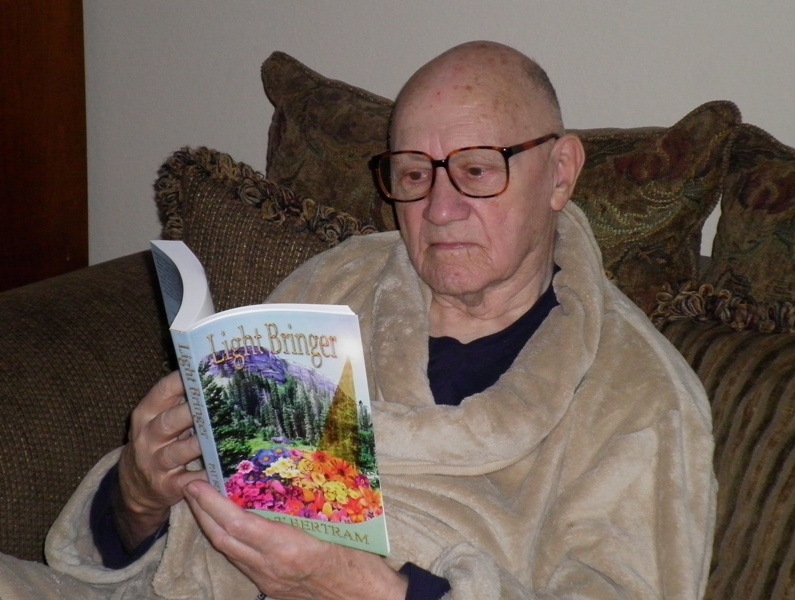
Of all the books I’ve written, the one that saddens me the most is Light Bringer because it never got the notice I thought it deserved. I don’t know what happened — perhaps I never knew how to categorize it, perhaps I am terrible at marketing. Perhaps a lot of things. But there it sits, a magical novel without much of a readership.
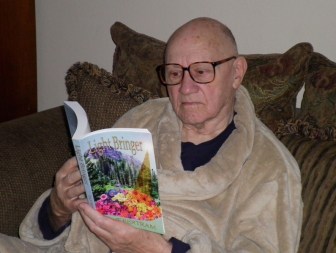 I understand the importance of categorizing novels — giving them a genre — because people like to know what they are getting. But what if the novel you wanted to write doesn’t fit within a genre? Are we supposed to not write it?
But truly, we can only write the novels only we can write.
To me, Light Bringer was mythic fiction — a story based on ancient cosmologies and modern conspiracy theories, but mention of ancient spacecraft and aliens made people want to throw it in the science fiction category, while secret government installations and covert international organizations made others think of it as thriller fare. And yet it is neither. Nor, despite the romances in the book, is it a romance. (It surprised me, but my father, who was not much of a fiction reader, understood all that.)
Writing the book, I never once considered genre. Well, come to think of it, that’s not true. In the very beginning, I thought naively of writing a book that fit all genres, but apparently that is an idea many neophyte writers come up with, and is considered the mark of an amateur. So I stopped trying to fit all genres into the book (though I did keep my cowboy character from the western elements and the ghost town and ghost cat from the horror genre.) I just wrote the book. I didn’t even have to do much research — so much of the book was based on my lifetime of studies into lesser known histories (also known erroneously as conspiracy theories), though I did research color and their meanings because color played a major role in the book, as the following excerpt will show:
After following the path for several minutes, they came to a place where the stream narrowed to no more than four feet. Chester bent over and began hauling out one of the boards stashed beneath a Douglas fir. The boards, withered a silvery-gray, were two inches thick, ten inches wide, and about six feet long.
With Rena and Philip helping Chester, it took only a few minutes to place the boards bank-to-bank, forming a makeshift bridge.
“I set these here for Gertie after she slipped and hurt herself wading across the stream,” Chester said.
Rena turned to Philip. “Gertie used to own this place.”
“She was my godmother. When she died, I dismantled the bridge.” Chester looked from the planks to Rena and Philip and then back again as if trying to make a decision. “I don’t know if you’ll like the place. Most people avoid it. They say it makes them shivery. Some even call it the devil’s garden, but me and Gertie called it . . . blessed.”
Rena touched the old man’s arm. “I’m sure we will, too.”
Chester nodded. He stepped onto the plank bridge and proceeded to the other side. Rena followed him, then turned and smiled encouragingly at Philip.
“It’s surprisingly sturdy. You won’t have any problem.”
A clear blue nimbus of trust emanated from Philip. Without hesitation, he clumped across the bridge.
In the full of the sun, the meadow grasses shone emerald. “Hurry, hurry,” they whispered.
I’m coming.
Rena set off at a run.
“There’s a pathway,” she heard Chester call.
She kept running, needing no footpath to lead her to their destination. She could feel the music tugging at her, guiding her, singing her forward.
At first a faint red trumpeting, the music swelled into a full orchestra: orange church bells, yellow bugles, green violins, blue flutes, indigo cellos, violet woodwinds.
Beneath it all, she could hear the grasses murmuring, “Hurry, hurry.”
And then there it was, spread out before her in a shallow thirty-foot bowl. A lake of flowers—chrysanthemums and tulips, daisies and daffodils, lilies and columbines and fuchsia—all blooming brightly, all singing their song of welcome.
Standing on the brink, waiting for Philip and Chester, she could not lift her gaze from the flowers. Many of them were familiar, but others, in seemingly impossible tints and shades, were new. She inhaled, filling her nose with the intoxicating scent, and felt herself losing her balance as if she were drunk. She flung out an arm to steady herself, and barely missed hitting Chester.
“Are you okay?” he asked.
“More than okay.”
Philip came to stand beside her. Hearing his sharp intake of breath, she knew he felt as stunned as she by the sight, sound, smell of the flowers.
Knowing Chester needed to hear the words, she said softly, “You and Gertie are right. The place is blessed. Thank you for bringing us.”
If you would like to read more of this magical book, you can find it on Amazon: https://www.amazon.com/Light-Bringer-Pat-Bertram-ebook/dp/B004U39WQ6/. And hey, if you can think how to categorize it, let me know!
***
Pat Bertram is the author of the suspense novels Unfinished, Madame ZeeZee’s Nightmare, Light Bringer, More Deaths Than One, A Spark of Heavenly Fire, and Daughter Am I. Bertram is also the author of Grief: The Great Yearning, “an exquisite book, wrenching to read, and at the same time full of profound truths.” Connect with Pat on Google+. Like Pat on Facebook.
 Tomorrow is Super Saturday, a day that rivals Black Friday for total number of sales. An estimated 126 million people will be shopping tomorrow. I won’t be one of them. If I am not comatose from exhaustion (I spent most of today working on clearing out stuff from my storage unit) I will be spending tomorrow in the storage unit again seeking more punishment.