What If an Entire State Were Quarantined?

ASHFbordersmPeople are being quarantined in Texas, healthy people who simply hosted someone who was ill with Ebola. What if the disease spreads? What if more cases are found? What if a whole town or maybe a whole state were quarantined to prevent a pandemic?

This is the premise of my novel A Spark of Heavenly Fire. The disease in the story is not Ebola, the avian flu, or any known disease, but a lab-created disease that had its origins in biological warfare experimentation. This fictional disease was created to be unstoppable, to wipe out entire populations. And it fell into the wrong hands.

Because the disease began in Colorado and that is where most of the victims lived — and died — the entire state is quarantined and martial law is put into effect. The seemingly inhuman measures that take place in the story to keep the non-sick under control are all probable since they are based on executive orders Clinton signed into law. The wonderful thing about writing such a book is that I didn’t have to imagine any of the horrors. Our own president did the work for me.

We are coming up on the supposed anniversary date of the publication of A Spark of Heavenly Fire. (I say supposed because although it wasn’t published until March 25, 2009, Amazon lists the publication date as November 23, 2008.) I hope you will check out this still relevant novel, thinking as you do so of the small quarantine in Texas (small in numbers, and perhaps even small in consequence, but huge to the people whose freedom is being denied). It happened to them. It could happen to you.

To celebrate this faux anniversary, A Spark of Heavenly Fire will be available at 50% off from Smashwords, where you can download the novel in the ebook format of your choice. To get your discount, go here: A Spark of Heavenly Fire and use coupon code ST33W when purchasing the book. Offer expires on November 23, 2014. (After you read the book, posting a review on Smashwords would be nice, but not obligatory.)

***

Pat Bertram is the author of the suspense novels Light Bringer, More Deaths Than One, A Spark of Heavenly Fire, and Daughter Am I. Bertram is also the author of Grief: The Great Yearning, “an exquisite book, wrenching to read, and at the same time full of profound truths.” Connect with Pat on Google+. Like Pat on Facebook.


What Is Your Subconscious Obsessed With?

So often when I am at a loss for a blog topic, Facebook comes to the rescue. Today, was such a day. A friend posted a link to a quiz, “What is your subconscious mind obsessed with?”, and I was bored enough to play along.

Like all such quizzes, there were several questions I found impossible to answer, such as what is my favorite cartoon. Considering I don’t ever watch cartoons and have no idea what any of the cartoons were, I just randomly picked one. Another question was food. I have no preference, really, so I again, I just randomly chose. Same with my favorite day of the week. Who has a favorite day of the week? I never even considered such a thing, so I chose Wednesday because today is Wednesday and I had dance classes. Some of the other questions offered options such as “other,” which made it easy not to choose any of the silly options. I did have a hard time with one question — choosing a quality — because I admire most of the qualities, but I chose loyalty as the best of the lot.

My results weren’t at all what I expected. Apparently, my subconscious is obsessed with the need to be loved. They results said, “You need to feel the warmth and appreciation from the people around you. Without a friendly reminder of how much you are loved or appreciated you start to feel as though things have gone awry with the people around you. There’s nothing wrong with this immense need for love. Be proud that you are so compassionate and caring that you respect and welcome these emotions. Not only do you need to be loved, but you enjoy the act of loving as well. You are kind and compassionate. Even simple interactions reveal your tender heart. We’re all humans and need to be loved; you however, have an extra special sense of gratitude when it comes to being loved.”

Seems sort of pathetic, really, being obsessed with the need to be loved, so I redid the quiz. Chose a different cartoon at random. Chose a different food. Chose Tuesday as my favorite day of the week, and perhaps it is my favorite day — that is when my week truly begins because Tuesday is when my dance classes begin for the week. I even chose a different quality — intelligence this time.

I waited eagerly for the results, hoping for something less pathetic than an obsession with needing to be loved. Happiness, maybe. (Most people seemed to get happiness.) Or knowledge. I’ve always been on a quest for the truth. Some people got sadness, which I wouldn’t have been surprised to get. Some got sex or food or responsibility. (Responsibility would also have been a good fit since I am responsible for my 97-year-old father and his house.

So what did I get after all the changed answers?

The same thing: the need to be loved. Sheesh.

***

Pat Bertram is the author of the suspense novels Light Bringer, More Deaths Than One, A Spark of Heavenly Fire, and Daughter Am I. Bertram is also the author of Grief: The Great Yearning, “an exquisite book, wrenching to read, and at the same time full of profound truths.” Connect with Pat on Google+. Like Pat on Facebook.

Is It Fun Being You?

I watched a tape of an old “Boston Legal” show the other night. Although I don’t particularly like the series — it was mostly smugly rich lawyers in a large firm behaving badly — the byplay between William Shatner (Denny Crane) and James Spader (Alan Shore) was riveting. You don’t see many instances of male friendship in movies or on TV, which is compelling enough, but the two characters often talk about matters that are beyond the general fare of television. (Not that I would know — I seldom watch television, though I have a couple of series and a couple of partial series on tape for no other reason than that I have them.)

One such conversation occurred during the show I viewed. Denny, despite his growing Alzheimer’s, had just experienced a triumph over his ilness by having a significant impact on a trial, and afterward while decompressing with Shore on the balcony of Denny’s office, Denny says, “It’s fun being me.” Then he turns to Shore and asks, “Is it fun being you?”

Such a simple question, one I had never considered. Is it fun being me? Although I can’t get the question out of my mind, I truly have no answer to it. I have fun, of course, and while fun is not my raison d’etre, perhaps it should be. Life dumps plenty of sorrow and responsibility on me — I certainly don’t need to heap more problems on myself, and besides, having fun would help balance my life.

But that was not the question. Denny did not ask, “Are you having fun?” He asked, “Is it fun being you?” — which is something completely different.

I’m the one in glasses.

I’ve always taken life and myself too seriously to have fun being me. Oddly, Alan Shore once described me when I was young without knowing he was doing so. As he says to one of his female associates, “When I look at you, I see one of those little schoolgirls, running around in her plaid skirt, always to class on time, the first to raise her hand, the neatest of . . . penmanship.” Yup. That was me.

I’m trying not to take things so seriously, though it’s hard when I seem to be always in the middle of other people’s life and death situations. Still, I need a more lighthearted approach than simply not taking life so seriously. Since I will need to find a new focus for the next twenty or thirty years (assuming I live as long as my mother did) perhaps that focus should be not just being me as I’ve been trying to do, but having fun being me.

And I’ve already taken the first step. Dance class is teaching me many things besides dancing: to be accepting of (and maybe even celebrating) imperfections in me and everyone else; to be committed to something life changing outside my normal purview; to find joy in movement, especially synced movement; to be happy in the moment; and most of all, to enjoy being someone who enjoys dancing.

***

Pat Bertram is the author of the suspense novels Light Bringer, More Deaths Than One, A Spark of Heavenly Fire, and Daughter Am I. Bertram is also the author of Grief: The Great Yearning, “an exquisite book, wrenching to read, and at the same time full of profound truths.” Connect with Pat on Google+. Like Pat on Facebook.

Get Better Acquainted with Your Devil

I don’t follow astrology, but occasionally a friend sends me a link to particularly interesting horoscope of mine, such as this one:

“My definition of a devil is a god who has not been recognized,” said mythologist Joseph Campbell. “It is a power in you to which you have not given expression, and you push it back. And then, like all repressed energy, it builds up and becomes dangerous to the position you’re trying to hold.” Do you agree? I hope so, because you will soon be entering the Get Better Acquainted with Your Devil Phase of your astrological cycle, to be immediately followed by the Transform Your Devil into a God Phase. To get the party started, ask yourself this question: What is the power in you to which you have not given expression?

Even if this particular prognostication isn’t true (and I seldom find horoscopes to mirror anything in my daily life), it is germane to all of our lives. For example: grief. If we repress grief, it assumes an enormous power over us for the rest of our lives, but if we make friends with grief, or at least acknowledge it and let it run its course. Grief isn’t either a god or a devil of course, but it does seem to be a great evil. It can also be a force for good if you let it, helping turn you into the person who can survive an inimaginable loss.

gift2I’m not sure what devil phase I’m in now, what power in me I haven’t yet expressed. Nor do I know what position I’m trying to hold. If this horoscope is true, I will find out soon enough. And if it isn’t true, well, it poses an interesting question. I don’t like repressing any sort of energy, because it takes so much extra energy to keep anything repressed, but if I am repressing something, chances are I wouldn’t know what it is that I am repressing.

Someone once told me I am suppressing my creative energy since I’m not writing fiction, and I suppose it’s possible, but the truth is, there are all sorts of ways to be creating, including blogging and dancing, both of which I am doing. Besides, writing isn’t a god for me — it’s always been an intellectual choice, rather than something I’m compelled to do.

It would be more interesting, of course, if the alleged energy I am repressing is something I don’t know about, because the surprise of finding it and unrepressing it would be fascinating. Unfortunately, I don’t think I’m all that fascinating. Still, I’ll be open to both my Get Better Acquainted with Your Devil Phase and my Transform Your Devil into a God Phase. Could be illuminating.

***

Pat Bertram is the author of the suspense novels Light Bringer, More Deaths Than One, A Spark of Heavenly Fire, andDaughter Am I. Bertram is also the author of Grief: The Great Yearning, “an exquisite book, wrenching to read, and at the same time full of profound truths.” Connect with Pat on Google+. Like Pat on Facebook.

 

Happy International Day of Peace

I’ve been scrolling through my Facebook feed, checking to see what is happening in the online world. Most people seem to be experiencing momentous events, passages, tragedies and triumphs. But not me. Not today.

No one in my little household died. No one got sick. No one has a birthday or an anniversary. No one had an accident. No one was born. I didn’t adopt a dog or take a cat to the vet. I didn’t get a job or lose one. I didn’t go to the beach or cruising on a lake. I won no awards. Didn’t get a fabulous review of one of my books (not even a bad one). I didn’t travel to far away lands or even close ones, for that matter. I didn’t cook anything special.

All I did was a few minor chores around the house, looked after my father’s needs, and relaxed. It was the perfect way to spend the International Day of Peace — at peace.

Wishing you peace, not just today but every day.

peacesign

***

Pat Bertram is the author of the suspense novels Light Bringer, More Deaths Than One, A Spark of Heavenly Fire, andDaughter Am I. Bertram is also the author of Grief: The Great Yearning, “an exquisite book, wrenching to read, and at the same time full of profound truths.” Connect with Pat on Google+. Like Pat on Facebook.
Back to Living a Quiet Life of . . . I Don’t Know

My sister, who has been here helping look after our 97-year-old father, left this morning, and shortly after she took off for places unkown, I went to dance class, leaving him alone. When I checked on him upon my return, he didn’t seem to have been affected by either of our absences, just went about his life as usual.

I’ve lost track of how many times he’s seemed to be at the end of his life, prompting me to plan my immediate future. The first time, I planned a cross-country trip to promote my books. I started gathering the promotional materials, even went so far as to roadwrite all the independent bookstores in the country. He returned to his normal self, scotching my plans, which was just as well — I got such an abysmal response to my USPS mail campaign, that I lost all interest in visiting the bookstores in person. (I didn’t send just a Hi-I’m-an-author-buy-my-books promo. I sent gift certificates for ebooks and offered to interview each of the storeowners for my interview blog to help promote their stores. Not one responded.)

The second time, I planned to walk to Seattle, either via the Pacific Crest Trail or the various coastal trails. (California, Oregon, and Washington all have a coastal trail in the process of completion.) I spent weeks trying to figure out the logistics of such a trip, taking into consideration my age, the state of my fitness, and the prodigious amounts of water and other supplies I would have to haul. Just about the time I realized how improbable (if not impossible) such a trip would be for me, my father got better.

There were a few other quickly aborted plans during some of his short down times, such as my getting a teardrop trailer, perhaps, or renting a room in a house to make it easier to continue taking dance classes. During this last near-death turn of events, I didn’t even bother to plan (though I did have a few nights of panic when I realized I have no idea how or why or where I will live after I leave here). I finally understood the futility of expecting or fearing anything when it comes to such a tenacious old man. And sure enough, he’s dragged himself back to life.

One of my siblings suggested putting him in a nursing home, but there is no reason for such an action. He’s on hospice, so I have help when/if I need it, though he has refused to wear a medical alert bracelet that would connect him to hospice in an emergency and he has refused to have someone come stay with him when I’m gone. Still, I’m only out of the house about twenty-four hours a week (you know where I am a lot of that time — dance class!). I keep my phone with me when I’m away, and I’m in the house all night every night. (And if he gets worse, my sister has promised to come back.)

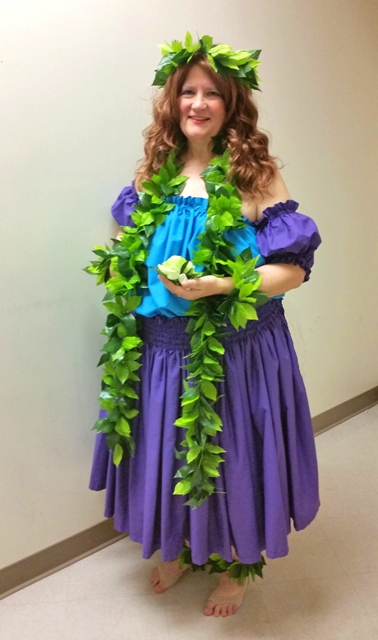
Now that both my dysfunctional brother and helpful sister are gone, I’m back to living a quiet life of . . . I don’t know. Waiting, perhaps, though I’m not sure what I’m waiting for. Maybe my own life, whatever that might be, though for now, this is my life. Or more precisely, dancing is my life, and being here for my father allows me to continue taking dance classes.

At least he’s still alive. To be honest, the thought of perhaps having to live for a few days with a dead body in the house creeps me out.

***

Pat Bertram is the author of the suspense novels Light Bringer, More Deaths Than One, A Spark of Heavenly Fire, andDaughter Am I. Bertram is also the author of Grief: The Great Yearning, “an exquisite book, wrenching to read, and at the same time full of profound truths.” Connect with Pat on Google+. Like Pat on Facebook.
In the Presence of Death…

When one is dealing with the dying or the very old, one ends up having some strange discussions. The most bizarre conversation came about on Tuesday afternoon. The hospice social worker was here to discuss various matters and to bring us current on the procedures hospice has already taken care of and to let us know what they will doing in the future.

To me, one of the greatest benefits of hospice is that no matter what happens or what you need, there is but a single phone call to make — to hospice. Hospice does the rest. The social worker reminded me of this and said to notify them when my father was gone, and they will call the designated mortuary and arrange for the body to be picked up.

RIPI knew hospice performed that service, of course, but this is where things got weird. “Since this is a private home and not an institution,” the social worker said, “according to the law, the mortuary has up to a week to collect the body.”

“A week?” I all but shrieked. It seemed impossible that a body could be allowed to remain in a private residence for so long. At the very least, it has to be insanitary. “But what do we do about . . . ?” Since my father was sitting right there, I didn’t want to put my concerns into words, but the woman understood I was referring to smells and decomposition.

“There shouldn’t be a problem for a week,” she said. “Just close his door. If you’re worried, you can always pack ice around the limbs. That will help.”

My first thought was relief that we have so many gel-packs stored away. My second thought was a bit of macabre humor: so my father is lying there, ice packs around his slowly decomposing body. And what would I do? Go to dance class, of course.

I truly doubt I’ll have to deal with a body in the house for a week. When my mother died, this same mortuary arrived within three hours, even though they are 121 miles away. But yes, if my father lay here dead for a week, I would continue with my dance classes.

It makes sense, of course. My presence would have no effect on him, he would have no need of my help, and there wouldn’t be much for me to do since another sister is in charge of funeral arrangements. But still, the thought of dancing with a dead body in the house does seem a bit coldhearted, and I’m sure people would be appalled.

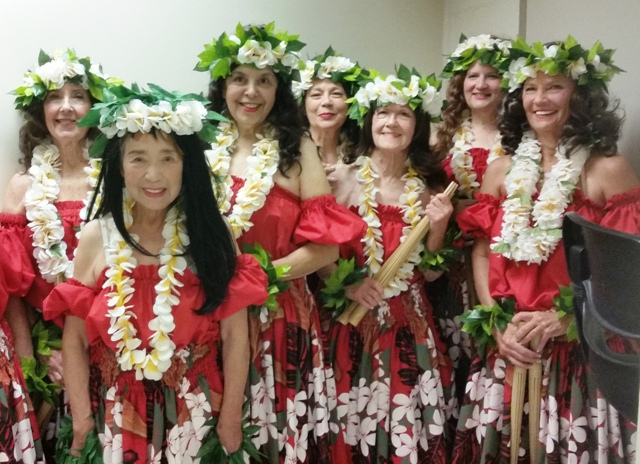
And yet . . . when else should one dance? If dancing is life, and life is dancing, then it is in the presence of death that we need dance the most.

***

Pat Bertram is the author of the suspense novels Light Bringer, More Deaths Than One, A Spark of Heavenly Fire, andDaughter Am I. Bertram is also the author of Grief: The Great Yearning, “an exquisite book, wrenching to read, and at the same time full of profound truths.” Connect with Pat on Google+. Like Pat on Facebook.

When Elvis Kissed Me

Elvis tribute artistI was invited to a luncheon today where Elvis was scheduled to appear, so of course I went. Elvis sang several songs, made a few self-deprecating jokes, and threw trinkets to the delighted audience. I was sitting right up front, and when he started to sing “I Can’t Help Falling in Love with You” he came and took my hand, looked me in the eyes, and sang to me. Then he kissed my hand and moved on.

For just that moment, I was young again, starry-eyed at the attention of an idol. The singer wasn’t Elvis, of course, but he is a celebrity in his own right — one of the top three Elvis tribute artists in the world. And I was never that young, never awed by the presence of stardom. But today, caught up in the fantasy, the moment seemed magical.

My only real experience with celebrity came when I was very young. A friend wanted to go to the airport to see the Beatles, and her mother would only let her go if I went too. (I was always the responsible one, which now seems a bit pathetic for such a little girl, but I didn’t know any other way to be. Still don’t.) I didn’t want to go, had no interest in the Beatles, didn’t want to be her chaperon, and didn’t want to deal with a taxicab (her mother, like mine, didn’t drive), but finally she hounded me into asking my mother. I agreed, knowing my mother would say no as she always did and I would be off the hook. To my shock and horror, my mother said yes. And I was stuck.

My mother always accused me of being naïve, but now I see that in many ways she was the naïf. She hadn’t a clue what “taking a taxi to see the Beatles at the airport” meant or else she would never have said yes. But I knew. At least I thought I did, but the reality was beyond my meager imagination.

Originally, the Beatles were to land at Stapleton International Airport, but when the crowds of onlookers grew to a horde, the landing was moved to Buckley Field. We stood outside the chain link fence, the press of kids keeping me immobile against that barrier between us and the icons. In the distance, I could hear first murmurs then shrieks from the crowd as the car drew near. It must have been a convertible, because I can clearly remember seeing Paul’s face before I was all but crushed between the fence and the frenzied crowd. I would have been pulled under, but luckily I kept a strong grip on the links. As the vehicle passed us, everyone ran after it but me. I stood immobile, terrified by the power of the mob. My friend (who wasn’t much of a friend, if you must know) ran with the crowd. And soon I was the only one left standing.

I have no idea how I got home that day. (At the time, obviously, I knew, but I’ve forgotten.) I imagine someone took pity on me and called my mother or my friend’s mother. (I was in a panic because I was responsible for the girl, and I’d lost her.) I know I took a cab back.

I have made a point of never being in a crowd again. Oh, my, such a wild, uncontrollable beast! (The crowd, not me.)

But today, there were only two or three dozen of us — no mob — and it was sweet, especially when Elvis kissed me.

***

Pat Bertram is the author of the suspense novels Light Bringer, More Deaths Than One, A Spark of Heavenly Fire, andDaughter Am I. Bertram is also the author of Grief: The Great Yearning, “an exquisite book, wrenching to read, and at the same time full of profound truths.” Connect with Pat on Google+. Like Pat on Facebook.

A Fowl Day

Today was clear, dry, and hot. The outside temperature reached 100 degrees, which could be why we didn’t have fowl weather on such a fowl day. (Fowl weather, I imagine, is weather that gets the geese flying south for the winter.)

I’m no spring chicken, which is especially apparent on fowl days such as this. I’ve been running around like a . . .

chickenNope, I can’t say it. I’ve never seen a chicken running around with its head cut off, though I suppose the bodies of chickens can last a few seconds without their brain — after all, the expression “hen-brained” must have come from somewhere. Still, whether I use the chicken metaphor or stick to the unfeathered truth, I have been rather busy today, running seemingly unending errands, dealing with visitors and various hospice workers, fighting an invasion of ants.

When I was out, I stopped to see a small camper for rent, a refinished 1955 Field and Stream 14-foot trailer. I’m not actually looking for something like that. I’m not sure my car could tow it, don’t particularly want the problem of parking it somewhere, and I’m afraid I’d feel cooped up. (Aha! Another fowl metaphor!) Still, it’s fun thinking about perhaps crisscrossing the roads in a portable roost to see what is on the other side of the country.

As much fun as it has been to use so many fowl metaphors, one I will never use is “henpecked.” I once saw a poor hen-pecked rooster, and oh, what a sad and bloody sight that was.

I hope you have a ducky day today!

***

Pat Bertram is the author of the suspense novels Light BringerMore Deaths Than OneA Spark of Heavenly FireandDaughter Am IBertram is also the author of Grief: The Great Yearning, “an exquisite book, wrenching to read, and at the same time full of profound truths.” Connect with Pat on Google+. Like Pat on Facebook.

Nonagenarians and Non-Aging

People in their nineties are called nonagenarians. My mind always processes the word to mean “non-aging,” and to a certain extent, that is true. After 93, people seem to stop aging. In fact, when people are in their late nineties, they are no more likely to die than someone in their early nineties. I just checked an actuarial table, and it seems as if everyone in their nineties has a life expectancy of about two years, and that expectancy of two years is a fairly constant number. On each birthday in your mid to late nineties, your life expectancy is approximately the same as it was the previous birthday, so you basically aren’t aging much at all. In fact, research seems to show that whatever health issues a person had at 93 remain, but new health issues generally aren’t accumulating. Nor are nonagenarians dying from dangerous pursuits such as sky diving or motorcycling. Since many people of that age seldom leave the house, their chances of getting in a car accident are slim, as is their chance of catching a serious illness old manfrom being in crowds.

Michael Rose, a professor of evolutionary biology at the University of California says: We still don’t have a full explanation of the underlying genetics of the cessation of aging. One possibility is that there are genes that are advantageous early on but damaging to health later in life — an effect called “antagonistic pleiotropy.” And these are the genes that cease to be. We now understand that aging is not a cumulative process of progressive chemical damage, like rust. It is a pattern of declining function produced by evolution. Aristotle was wrong (Aristotle thought of aging as a remorseless process of falling apart, until death finally puts us out of our misery), and so are all the present-day biologists who try to explain aging in terms of biochemistry or cell biology alone.

In other words (at least according to my understanding), nonagenarians outlive the process of aging.

There is a chance that my 97-year-old father will live two more years despite his being on hospice, and maybe even because of it. The problems he has have been with him since his early nineties — congestive heart failure, COPD, and prostate cancer with such a low PSA number that his only symptom is occasional bleeding. What usually precipitates a serious decline in his health is a visit to the hospital. (They always seem to admit him when he is feeling his strongest, so whatever it is that bothered the doctor wasn’t bothering him.) Because the doctors take the opportunity to give him a thorough check-up (heart function, breathing problems, removing water build-up in the pleural cavity), he always returns home weeks later much worse off than when he went in. Now, with his being on hospice, he is not at the mercy of doctors who are determined to keep him alive at all costs, so he could remain at the stage he is in for a long time. (Of course, he could just as easily die tomorrow or next month, but statistically, chances are he won’t.)

I truly did not think he would recuperate from this last hospitalization — he wouldn’t get out of bed when he was there, claiming he was asserting his patient’s rights to refuse any treatment, so he ended up with pneumonia and an extended convalescent stay. When he finally got home, he was bedridden, but that robust constitution of his that outlasted a majority of his generation kicked in, and now he is up and about again, fully capable of being left alone. Apparently, he has outlived everything that could have killed him, and now he is drifting in his nonagenarianism.

Despite this cessation of aging in the elderly, they do die, so I know my father won’t be here forever, but still, it’s interesting to see firsthand the principles Michael Rose postulated.

Rose’s idea doesn’t change my mind about my own longevity, though — I’ve never wanted to live into my nineties, and for sure I don’t want to do so knowing that I could linger there for many years in some sort of pre-death limbo. I know we don’t have a choice in such matters, but luckily I take after my mother, so I probably won’t have to deal with either nonagenarianism or non-aging.

***

Pat Bertram is the author of the suspense novels Light Bringer, More Deaths Than One, A Spark of Heavenly Fire, and Daughter Am I. Bertram is also the author of Grief: The Great Yearning, “an exquisite book, wrenching to read, and at the same time full of profound truths.” Connect with Pat on Google+. Like Pat on Facebook.