Interviews with the Police: Who Gets to Lie

I’m still researching what happens after a person or group of persons finds a dead body. A couple of people I know are asking friends and relatives who are in law enforcement what would happen, so I’m hoping I get some good information from them. Meantime, I’ve been researching actual instances of someone finding a body, and the questioning seems to range from nothing more than the cops taking name, age, occupation, and address of each person to five hours of interrogation. That’s a wide spread. It didn’t seem to make any difference if the finder knew the deceased or not — sometimes the stranger was interviewed longer than the relative.

Also, I’ve been researching interviewing techniques, which range from “I’m your best buddy; tell me all” to what amounts to terrorist tactics. (Though such tactics are not at all endorsed by the law, they do exist especially when it comes to interrogating afternoon tea“hardened criminals.”) In the case of my book, I would think the buddy interview with a woman detective would work best since it plays against the stereotypes of both the horrifying interrogation and the woman cop who out-machos the men. (I know just the woman to play the cop, too — a beautiful and very helpful bank employee who was thrilled to let me use her unique name. She was also excited to become a detective, even if just literarily. When I was making changes to an account at the bank, I ended up telling her way more than I intended. I imagine it would be the same if she were a cop.)

It seems as if someone who finds a body can be a bystander, witness, material witness, person of interest, or suspect, so it’s possible that any way I write the interview scene would be okay, but I still need to get the opinion of those who worked such cases. For one thing, it will be more authentic, and for another, the more information I get, the less I have to use my imagination, and that’s the hard part of writing for me. (Well, one of the hard parts. Sitting down and actually writing is the hardest part. I figure if I tell enough people about the book, I’ll shame myself into it so I don’t have to keep offering excuses why the story isn’t being written.)

I did find this article, which should be helpful: 47 Quick Tips for Better Investigation Interviews.

And I found out something very interesting. Russell L Bintliff, in Police Procedural: A Writer’s Guide to the Police and How They Work, says, “A suspect, even when waiving his/her rights and consenting to an interrogation or interview has no obligation under the Fifth amendment to tell the truth if it incriminates him/her. A witness, for example, may be guilty of a crime for lying or giving false information; however, a suspect can legally lie, give deceptive information, or sign false confessions or proclamations of innocence and he/she cannot be charged with a crime for doing these things.”

So I guess, before you lie to the police, find out if you’re a witness or a suspect. And yet, it seems that a witness who lies would soon become a suspect, so then the lies would be okay. (What’s the difference between a witness and a suspect? The Miranda warning? And yet sometimes the cops don’t Mirandize the suspect right away, so that makes the difference all in the cop’s head.)

Making the lie situation even weirder, cops are allowed to lie to obtain evidence. They can lie and tell you you’re free to go when you’re not. They can lie to extract a confession. They can fabricate evidence. The only place they cannot lie is in court. Cops always say that if you’re innocent you have nothing to fear, but it seems to me that if you’re innocent, you have everything to fear because it makes you vulnerable.

When it comes to lying, then, the only person who can be prosecuted for their untruth is a witness. No wonder witnesses lie. They have too much to protect.

I’ll have to see how I can work this information into my book. Could make an interesting twist somewhere along the line.

***

Pat Bertram is the author of the suspense novels Light Bringer, More Deaths Than One, A Spark of Heavenly Fire, and Daughter Am I. Bertram is also the author of Grief: The Great Yearning, “an exquisite book, wrenching to read, and at the same time full of profound truths.” Connect with Pat on Google+. Like Pat on Facebook.
Load Bearing and the Human Body

I know nothing about the mechanics of load bearing or proper ergonomic balance. I don’t even know what ergonomics is. Never really cared. But such topics have been showing up in my research into the best way of carrying loads long distances using only the human body.

I’m considering taking an epic walk, perhaps up the Pacific coast, and I’ve been trying to think outside the envelope, box, and backpack. An envelope, of course, could not contain all I would need to carry; though I do intend to travel light, that is too campinglight even for me. A box would be too awkward. And a backpack — well, for those of us not used to carrying loads on our backs, a back pack can contribute to back and neck problems, gait issues, muscular pain, foot problems, bad posture, and wasted energy.

In my case, even light loads in a backpack are a problem. I recently lost a few pounds, so I figured my body would be able to handle a five-pound backpack load with no difficulty, but that wasn’t the case. After a mere three miles, I ended up with pain on the tops of my feet and in my lower back. Someone suggested that I get orthotics, but why would I need them when I’d been used to carrying more weight without even a hint of discomfort?

I have a short back, and according to Aarne Packs, “With a backpack, the center of gravity of the load is behind the body. The load acts like a lever on your back, increasing the forces acting on the body well above the force of the weight alone. When this lever acts over a shorter distance on a small torso, the forces are magnified. Therefore the reason women with short torsos may not be able to carry such heavy loads is not because they are weaker but because of these increased forces.”

When you carry extra body weight (as opposed to carrying some kind of pack), the weight is distributed all through the body, so no single muscle group or tissue has to deal with the load, which cuts down energy expenditure as well as muscle fatigue, and there is no change in the center of gravity. Ideally, then, an external load-bearing system would need to take those matters into consideration.

Traditionally, humans have used various means of transporting loads on their bodies: a simple hobo pack with a bandanna tied on the end of a stick, a pole balanced on the shoulders with a basket hanging from each end, a trumpline around the head tied to the load hanging down the back (supposedly this allows a person to carry greater loads longer distances than shoulder straps, but . . . ouch; my neck is squealing in pain just thinking about it), and the ever popular balancing the load on top of the head.

Balancing loads on the head, if done right, is supposed to be the best way since there is zero increase in metabolism. It has to do with one’s gait. According to Biomechanics of Locomotion, when we walk, our bodies go “up and down, and faster and slower, within each step. The energy changes associated with these fluctuations in height and speed are out of phase and therefore tend to cancel each other, minimizing the energy required to keep the movements going, much like in a pendulum. But in walking the energy fluctuations are not completely cancelled (as would occur in a perfect pendulum); at most about 65% of the energy fluctuations are cancelled, leaving at least 35% of the energy fluctuations which must be supported by the muscles each step, requiring metabolic energy input. When the African women carry loads on their heads, they are able to increase the amount of energy that is cancelled, reducing the muscular energy required to maintain the walking gait and compensating for any increase in muscular energy required to support the additional load.”

Carrying loads on one’s head might be fine for those who are used to it or even for those trying to improve their posture, but I cannot see me balancing anything on my head (except perhaps a hat) for hundreds, maybe thousands of miles.

I’ve been considering making two shoulder tote bags, one for each side, thinking that might help balance the weight in a more natural way, or perhaps a combination of a light backpack, belly bag, and maybe side bags. Apparently, these are good ideas. In fact, I don’t even have to make these load-bearing packs. Someone already did. One company I found makes a pack with the load balanced on either side of the body, and another company makes a pack with front pockets to balance the weight of the backpack, though the pack itself is much heavier than I would like.

It’s amazing to me all the things one has to consider when going for a simple (well, perhaps not so simple) walk, especially if one doesn’t want to look like the survivor of a wilderness romp.

***

Pat Bertram is the author of the suspense novels Light Bringer, More Deaths Than One, A Spark of Heavenly Fire, and Daughter Am I. Bertram is also the author of Grief: The Great Yearning, “an exquisite book, wrenching to read, and at the same time full of profound truths.” Connect with Pat on Google+. Like Pat on Facebook.

After Kicking the Bucket List

A few days ago I mentioned in a blog that I didn’t have a bucket list because there are too many things in the world that either I’m not aware of that perhaps I would like to do, or if I am aware of the things, I’m not aware that I would like to try them.

Several people pointed out that bucket lists have become a cliché, which they are, but the way I figure it, they are also redundant. A bucket list is a list of things you want to do before you die. As far as I know, every list is a list of things one wants to do before they die. A shopping list is more immediate and a heck of a lot less exciting than a list of activities such as sky diving or mountain climbing, but still, it’s a list of things to do while you are alive.angel

I have yet to see a list of things to do after one kicks the bucket, though I imagine such a list would read:

1) Make an appointment with God.
2) Tell Him/Her what He/She did wrong when creating the world.
3) Learn how to play the harp.
4) Shop for the latest fashion in wings and halos.

Or, in a more dire situation:

1) Amass a stock of aloe for burns.
2) Find your friends, especially those your parents once warned you about.
3) Look for a hot guy.
4) Have a hell of a good time.

Now those are bucket lists!

***

Pat Bertram is the author of the suspense novels Light Bringer, More Deaths Than One, A Spark of Heavenly Fire, and Daughter Am I. Bertram is also the author of Grief: The Great Yearning, “an exquisite book, wrenching to read, and at the same time full of profound truths.” Follow Pat on Google+. Like Pat on Facebook.

Requiem for Online Dating

Six months ago, a married friend urged me to join a dating site, more, I think, to fulfill her own fantasy of going out with a lot of different men than because of any perceived need of mine. She promised to help me weed through the site to find men who might be compatible, but still it took one entire sleepless night for me to make the decision to play her game. I’m not sure what I was afraid of — moving even further beyond my deceased life mate/soul mate perhaps. Or maybe accidentally falling in love again and tying my future to another person.

Although I wasn’t looking for a serious relationship, I was lonely. Thinking it would be fun to meet people, maybe go on a few dates, I signed up for a dating site and paid for a six-month subscription. I originally planned to pay for one month, but I didn’t want to sabotage myself by counting the cost.

At the beginning, I wrote charming messages to all the men my friend thought might be suitable, and even some the site found for me, though the site’s computers seemed to think I was looking for an inarticulate, overweight, tattooed smoker who rides a motorcycle. Um, no.

I suppose it’s understandable I got not a single response to my notes. Inadvertantly, I’d created a profile that guaranteed I wouldn’t catch any man’s attention — I told the truth about myself, used more than 95 words, didn’t downplay my intelligence, didn’t show cleavage, didn’t use words like “fun-loving” that could connote an eagerness for mattress games, and most of all, I didn’t lop years off my age. Eek. I must have seemed like their worst nightmare!

I eventually joined two free sites besides that first fee-based site, but the free ones garnered me no attention either. (In fact, those sites matched me with many of the same unsuitable men the first site did.)

Last night, my paid subscription ended, so I laid my profile to rest. I deleted my photos, deleted the description of myself, deleted my thoughts about what I was looking for in a man. Then I went through the whole rigmarole of deleting the profile. They promised that the profile would be permanently deleted from their site, but a while later, when I tried to sign in to make sure the profile really was gone, there it was along with a welcome back note. So I deleted it again.

The truth is, I am glad I didn’t find anyone to go out with. I am finding my wings, waiting to see if I can fly, and I don’t want to be held earthbound by anyone else’s expectations of me, no matter how potentially rewarding the relationship might be.

Goodbye, online dating. Goodbye, romance.

Hello to . . . whatever might come next.

***

Pat Bertram is the author of the suspense novels Light Bringer, More Deaths Than One, A Spark of Heavenly Fire, and Daughter Am I. Bertram is also the author of Grief: The Great Yearning, “an exquisite book, wrenching to read, and at the same time full of profound truths.” Follow Pat on Google+. Like Pat on Facebook.

On a Pilgrimage

Today when I mentioned my idea of walking up the coast, a friend asked, “Why walking?” I had to stop and think about that. I originally planned a journey by car, crisscrossing the country, so I’m not sure how the idea of driving metamorphosed into walking, or why the idea took hold except that I’ve always had an affinity for walking.

When I first started roaming the desert after the death of my life mate/soul mate, I would follow the paths drawn in the sandy soil by bikes and ATVs, always wanting to see what was up ahead, around the next turning, behind the next knoll. I had to be careful not to wear myself out because I needed to make sure I had enough energy to get myself back to home base, and I couldn’t help wondering what would happen if there were no home base, if I could just walk until I got tired, and when I was rested, continue on. Such practical things as being able to carry enough water, food, and protective coverings to get me to wherever I was going didn’t enter the equation. I just like the idea of walking to see . . . whatever there was to see.

Back then, I was still going through the pain of first grief, and walking was the only way I could find any peace. Somedays I walked for hours, limited only by my strength and the amount of water I’d brought. My walking, though it was always circular rather than to a special place, seemed like a pilgrimage, a long journey to a new life. My old life was dead, cremated along with my life mate/soul mate, and somehow I had to find a new way to connect with the world. My current idea of walking up the Pacific coast seems like a continuation of that grief-born pilgrimage.

“Pilgrimage” has been defined variously as any long journey, especially one undertaken as a quest; a journey or search of moral or spiritual significance; a walk in search of something intangible. Although making a pilgrimage was not my intention when I first thought of walking up the coast, “pilgrimage” seems to define most what I want out of the journey. I don’t want the journey to be one of survival (though I do intend to survive it, of course). My wilderness survival skills are nil, so in any contest between me and the wilderness, the wilderness would win. My ability to carry a heavy pack is also nil. And yet, I would like to see the coast more intimately than from the window of a car passing by at 65 miles an hour, with only periodic stops to rest. I would like to see what I am made of. Could I handle the endless hours of nothing to do after my walking stint is finished for the day? How would I connect with the world? Could I handle the uncertainty of never quite knowing what will happen? Could I spend so much time outside without becoming ill? I’d stay in motels when I could, but for long stretches, there would be just me and whatever was around the next bend.

Meantime, I am on another pilgrimage. Bruce Chatwin in Anatomy of Restlessness wrote, “To dance is to go on pilgrimage.” Some people see dancing just as exercise, but for me it’s a way of connecting with life, of being alive, of searching for something intangible, if only proficiency and grace. Dance is a journey of the spirit just as I would hope an epic walk would be, and it’s changing me in some ephemeral way. For example, for the first time in my life, I have no body image problems. All that time in front of a mirror is making me comfortable with the way I look, both my good points and bad. Dancing also seems to reach inside to hidden places and pull out previously unknown joys.

Dancing is the one thing besides physical inability that would change my mind about walking up the coast. It’s a rare and special privilege to be able to learn how to dance at any age but especially when one is sliding down the banister of life.

At the beginning of my journey into grief, a wise woman told me that I could be entering the happiest time of my life, and though it took longer than I expected, I can see that she was right. The pain of grief seems like a portal I went through, and now on the other side I can feel the possibility of true happiness and joy.

Walking. Dancing. Embracing whatever the future might bring.

My pilgrimage.

***

Pat Bertram is the author of the suspense novels Light Bringer, More Deaths Than One, A Spark of Heavenly Fire, and Daughter Am I. Bertram is also the author of Grief: The Great Yearning, “an exquisite book, wrenching to read, and at the same time full of profound truths.” Connect with Pat on Google+. Like Pat on Facebook.

Is the Handwriting on the Wall for Cursive?

Some schools no longer teach handwriting beyond kindergarten or first grade and some teach it not at all. It seems strange to think that few children growing up now will ever write anything by hand, but they won’t need to. Computers, tablets, phones are all just an itch away. Kids today are in constant contact with their peers, using a form of language — textspeak — that would have been anathema just a generation or two ago, but it is their world, not ours. They will have to be living in their “modern” world when we who are adults now are long gone. (I put quotation marks around modern because people in every age going back thousands of years have considered themselves as living in the modern world. And of course, they were right. To people in each era, their contemporary world is like the head of a comet with past trailing along behind. Someday a future era will be at the head — the new “modern” world — and our current modernity will be lost in its tail.)

I read once that the only place besides the brain where we have grey matter is in our fingertips, and perhaps that is true. I seem to have a better hand/brain connection when I am writing longhand than when I am typing on the computer — or at least I did. I wrote my novels long hand because that is the easiest way for me to delve into into myself for the story. I’m not one of those writers who can sit down and let the words flow. I have to sit and think about everything I want to say, and to figure out the best words to show what I decide to say. I’m getting used to writing on a computer since that’s how I write blogs, but I have a hunch that longhand is still the way to get deeper into my mind, where buried insights might have a chance of showing up on paper. And research bears this out. Apparently, writing by hand helps generate ideas.

In school, I always did well on tests without much studying because I took copious notes during class while other students daydreamed, talked, or doodled. New research explains why that was so — supposedly we have a better chance of retaining what we learn if we write it longhand rather than printing it or using a keyboard.

Other research shows that writing longhand, printing, and keyboarding all produce different brain patterns. For optimum brain usage, then, it would seem necessary to use all forms of writing. And yet, learning is not necessarily about optimum brain usage; it’s about standardizing not just information, but the students themselves. (That’s why they’re called standardized tests. If school was about teaching children to be independent or to develop their unique skills, they would be called something else like “Unique skills tests.”

When I started writing this bloggery, I intended to show that cursive was still important, but considering that kids today will have a different world to deal with than we do, maybe it’s better that they learn computer skills early on. But what do I know? Perhaps if I had written this essay by hand instead of typing it, deeper insights would have shown on the page, and I’d have a better grasp of what I think.

A Spark of Heavenly Fire

Handwritten copy of A Spark of Heavenly Fire

***

Pat Bertram is the author of the suspense novels Light Bringer, More Deaths Than One, A Spark of Heavenly Fire, and Daughter Am I. Bertram is also the author of Grief: The Great Yearning, “an exquisite book, wrenching to read, and at the same time full of profound truths.” Connect with Pat on Google+. Like Pat on Facebook.
Point Where You Want to Go

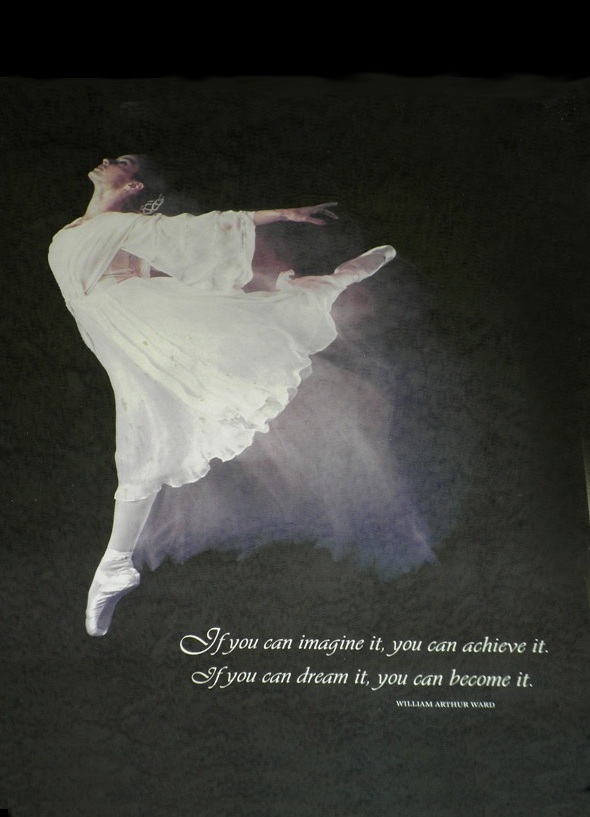
At ballet class the other day, I was practicing chaine turns and not doing a very good job of it. Chaine turns, in case you don’t know, are those often rapid turns performed in a straight line across the floor or a stage, moving from one foot to the other as you go. To keep from getting dizzy, you need to “spot” — to find something to focus on as you’re turning, and when you rotate out of sight of that spot, you need to whip your head around so that you can again focus on the spot. Trying to learn such a step after a certain age is difficult because one’s head does not whip around fast enough, so not only do you get dizzy, you end up not going where you want to go.

Seeing my difficulty, the teacher suggested pointing to the spot as well as looking at it on the assumption that where you are pointing, there you will go. And it worked. I mostly got to where I wanted to go. Still dizzy, but I got there.

twists and turnsIt seemed to me such a profound bit of advice, “Point where you want to go.” If you’re not pointed toward where you want to go, it’s hard to get there because we tend to go where we are looking. If we’re looking behind us or are distracted by side roads, it’s hard to keep focused on the goal. (It seems to me this is both metaphoric and physical, pertaining to actual physical movements and also pertaining to one’s journey through life.) Even something simple like gesticulating as we’re walking tends to keep us from walking in a straight line because we’re pointing everywhere but where we want to go.

One obvious image comes to mind as an example of pointing where you want to go. I’ve seen baseball players sometimes point their bat, in a grandstanding pose, toward the outfield where they aim to hit a home run. (Well, seen it in movies; I don’t know if they actually do it.)

Writers do the same thing, pointing where they want to go. In writing, such pointing is called foreshadowing. We writers need to know where we are going so we don’t get off track. and we need to know where we are going so we know to stop when we get there. We also need to give readers hints of where the story is pointing so they can find their way to the end, but we need to make sure readers don’t know where they are going until they get there, otherwise the suspense is lost. Hence, in writing, dizzying chaine turns keep the reader focused on the constantly changing twists and turns of the plot and not the end.

I feel so very cultured using a ballet term, but ironically, my very use of term is an example of the importance of sometimes not pointing where you want to go. I would never have made a point of taking ballet classes. It would never even have occurred to me, but when the option was offered, I grabbed hold of it. And now I am focused on the classes. (And yet I was looking for something to focus on, so maybe that counts.)

Twists and turns.

It’s what life, dance, and writing is all about.

***

Pat Bertram is the author of the suspense novels Light Bringer, More Deaths Than One, A Spark of Heavenly Fire, and Daughter Am I. Bertram is also the author of Grief: The Great Yearning, “an exquisite book, wrenching to read, and at the same time full of profound truths.” Connect with Pat on Google+. Like Pat on Facebook.

A Perfectly Fair Day

When I mentioned there were no single riders allowed on the Ferris wheel at the county fair and lamented having no one to ride with me, a woman from my dance class volunteered to accompany me if we went on Saturday. Such a lovely surprise, that offer, and I accepted eagerly.

Today, Saturday, turned out to be perfect. Perfect weather. Perfect fair. Perfect company. Usually when I go to a fair with people, they want to spend most of their time at the merchandise booths inside the pavilions, which to me seem like walking into one bad late-night television commercial after another. My friend had no interest in such exhibits. (See? Didn’t I say the day was perfect?) Instead we admired the quilts and, for a small contribution, we had the fun of making pins at the Quilts of Valor booth. 

Sporting our new finery, we looked at the handcrafts and collections, searched for the model of the U.S Constitution a walking buddy had made, and enjoyed the African violet display, especially this lovely flower that was smaller than my thumbnail:

We marveled at a cougar visiting from the zoo, checked out the artwork, passed by the haunted house.

Finally we went searching for the Ferris wheel and found not one but two wheels! (Well, three if you include the kiddy Ferris wheel.) Although there was no apparent difference between the two Ferris wheels, we decided (okay, I decided) to ride both wheels.

For some reason, one ride was both longer and faster, and the polite young man who operated that wheel let us stay on for a second ride. (See? Perfect!)

Afterward, we bought drinks and a taste of the fair. Every year, it seems they come up with something more esoteric to deep fry and this year it was cheesecake. Not something I’d recommend, but then, that’s what fair food is all about, tasting something outlandish, and so that, too was perfect.

We couldn’t find the picnic tables, so we sat on a curb like little girls to eat and rest and chat.

Can you tell I’m smiling as I write this?

Wait! I almost forgot! There was another treat. We drove to the fairgrounds in her convertible. I have no idea how it is possible that I have never ridden in a convertible before, so my first ride with the top down added the exclamation point to my perfect day.

***

Pat Bertram is the author of the suspense novels Light Bringer, More Deaths Than One, A Spark of Heavenly Fire, and Daughter Am I. Bertram is also the author of Grief: The Great Yearning, “an exquisite book, wrenching to read, and at the same time full of profound truths.” Connect with Pat on Google+. Like Pat on Facebook.
To Dance Is to Live

At lunch after a dance class a couple of days ago, a friend and I were discussing why we don’t have bucket lists. We agreed there are too many things in the world that either we’re not aware of, or if we are aware of the things, we’re not aware that we would like to try them.

For example, we’re both taking dance classes, which have become lifesavers to us. (Like me, she’d been mired in grief and took dancing as a way of moving on with her life.) Neither of us ever had such an inclination before, so dancing would never have been on our bucket lists. I’m not even much for dancing around the house, though for a while, I did what I called “dance therapy” in an effort to overcome the lingering grief after the death of Jeff, my life mate/soul mate. This therapy worked to a certain extent, but . . . I don’t know . . . maybe it was too soon, maybe the songs were too sad, maybe it was simply that I didn’t know how to dance.

I took therapy yoga for a whileUntitled-2, which did help with grief. When those classes were canceled after the teacher got an offer of a fantastic job, I played around with learning Tai Chi, which incidentally was something that would have been on my bucket list since I’d always wanted to do it, but I didn’t feel the connection with Tai Chi that I’d expected. And it must not have been in the cards for me anyway. When I went to sign up for classes after the free introductory lessons were over, I found the office closed. (They are closed every other Friday, but since they never said which was the other other Friday, I had no way of knowing what the right day would have been.)

A few days after my aborted attempt to sign up for Tai Chi, I’d planned to meet a friend for lunch. As I waited for her, I paced the sidewalk in front of the row of shops, and there I saw a dance studio. On a whim, I stopped in to see if classes were being offered to adults, what the classes were, and how much they cost. The prices were so cheap it seemed a shame not to try at least one of the classes before I settled for Tai Chi. The only class that didn’t need any props or special clothes was jazz, so that’s what I started with.

And I came alive.

In an effort to find a renewed interest in life, I’d been doing many things I would never have had a chance to do before Jeff’s death, but everything I did was like dropping pebbles in the sand of grief. Although I enjoyed my excursions and activities while I was doing them, none of that momentary happiness rippled through the rest of my life. Yoga did to a certain extent, but with dance . . . oh my. Ripples galore.

By the middle of the following month, I was taking ballet, Egyptian belly dance, tap, and Hawaiian in addition to jazz, and recently I started Tahitian.

Dancing is hard for me. I’m not naturally rhythmic, not naturally musically inclined, not naturally poised or balanced. Nor am I one for doing anything in a group. (Do I need to mention that I am far from having a dancer’s body?) And yet, it was love at first . . . not sight. Feel maybe.

A lot of the joy of dancing for me comes from learning something completely new, since more than anything I love to learn, but it’s the whole of the dance experience I’m enamored with — the music, the various steps, the choreography, dancing as one with the rest of the group, the other women in the class. Most of the women are a lot older than I am, but they are a heck of a lot more graceful and agile. Actually, they are a heck of a lot more graceful and agile than most women half my age.

It seems strange now that I’ve never mentioned my dance classes on this blog, but since I also once took a couple of exercise classes at the same studio, I’ve just lumped all the activity under “exercise classes.” Dancing seemed too sacred almost to use for blog fodder.

So why am I mentioning it now? The teacher, a remarkable woman just a few years short of eighty, is always having to explain to her family why she continues to teach. (You know how older people are often called “spry”? That is not a word you could ever use to describe her. To see her dance, you’d never guess her age. She dances like a girl, looks like she’s in her forties, and is still beautiful.)

Because she was born two minutes before midnight on Friday the thirteen, she laughingly calls herself a witch. And she is — a good witch with remarkable powers of bringing people to life. Bringing people happiness. Bringing people dance.

As Snoopy says, “To dance is to live. To live is to dance.”

I know you’re reading this, Ms. Cicy. So — thank you for teaching me a new way of living.

***

Pat Bertram is the author of the suspense novels Light Bringer, More Deaths Than One, A Spark of Heavenly Fire, and Daughter Am I. Bertram is also the author of Grief: The Great Yearning, “an exquisite book, wrenching to read, and at the same time full of profound truths.” Connect with Pat on Google+. Like Pat on Facebook.
Searching for a Cause

When I mentioned to a hiker friend that I am thinking of walking up the coast from San Diego to Seattle, she suggested that I walk for a cause because if you have a cause, people are more willing to help supply food, water, a shower or even transportation if you need it, and they might even get others to help.

It’s a great suggestion. The Peace Pilgrim walked for peace. She was walking in response to a spiritual awakening, and she’d taken a vow to “remain a wanderer until mankind has learned the way of peace, walking until given shelter and fasting until given food.” Her pilgrimage began in 1953 when she was 44 and ended with her death in 1981. She carried only a pen, a comb, a toothbrush, and a map, trusting to those she met to supply what she needed, though she never asked for anything. (She was also the first woman reported the have thru-walked the Appalachian Trail, which she did in preparation for her pilgrimage.)

Following her example or following their own spiritual wakening, others have walked for peace. Some women have walked for women’s freedom since so many women (perhaps rightfully) are afraid to travel, hike, or camp on their own. These women causewant to show that it is possible to claim one’s freedom and follow one’s adventurous heart. And then there are short walks/runs to raise money and awareness for all sorts of causes and organizations.

My friend suggested I walk for widows or the grief-stricken. Widow Walker. Grief Walker. Or . . . whatever. Her other suggestion, which actually is a fun idea, is to hang a small portable chalkboard on my pack, and change my “cause” as I felt like it.

Having a cause would give people a personal stake in my quest, but I wonder if it’s a bit of a cheat. If the idea of the cause came first, then the walk would be because of the cause. If the idea of the walk came first, as it did, then the cause would be because of the walk.

Still, I would need some sort of support group because I want to walk, not hike, which means no heavy backpacks, no bulky gear, no great stores of food and water. I do understand the need for taking more than The Peace Pilgrim’s sparse kit because I do not want to walk to certain death, but I simply do not want to take everything on a hiker’s “must” list. Of course, if I hike along the coast, there would be plenty of towns or beaches to get provisions and find a motel (and a computer!) for the night if necessary, but there will also be long stretches of wilderness, and in one case, a fifty-mile stretch of highway-shoulder walking.

Grandma Gatewood, like The Peace Pilgrim, was a minimalist hiker, the first woman to solo thru-hike the Appalachian Trail. Although she hiked the Trail three times, beginning when she was 67, she had no special gear. She wore Keds sneakers and took only an army blanket, a raincoat, and a plastic shower curtain which she carried in a homemade bag slung over one shoulder. My kind of hiker! Nor did she have a cause — at least not one that I can find. She simply thought it would be a nice lark. Sounds like my kind of hiker.

My true cause is a soul quest, a mystical journey, a response to a barely heard question deep inside — “Is this all there is to my life here on Earth?” I would like to find a deeper connection to both myself and the world, maybe even to go through some sort of spiritual transformation. I originally planned my journey as a car trip, which is still on my list of possibilities, but walking might give me more of the mysticism I am looking for. (Feet on the ground trumps feet on the accelerator pedal any time.)

So, here’s my question. Do I need a cause? And if so, what should that cause be?

***

Pat Bertram is the author of the suspense novels Light Bringer, More Deaths Than One, A Spark of Heavenly Fire, and Daughter Am I. Bertram is also the author of Grief: The Great Yearning, “an exquisite book, wrenching to read, and at the same time full of profound truths.” Connect with Pat on Google+. Like Pat on Facebook.