The One / Three / Five / Seven / Ten / Fifty Exercises You Should Never Do

A couple of weeks ago, I came across an article entitled, “The One Exercise You Should Never Do.” The never-do was one of those machine exercises that strengthens and bulks up your quadriceps without also strengthening the hamstrings. I didn’t pay attention to the exercise since I never do it and never would do it, so I have only a vague idea of what the exercise is (seated knee extensions, I think). The reason for not doing the exercise interested me, however: not only does the machine put an unnatural strain on the knees, if you build-up the quadriceps without also building up the hamstrings, the powerful muscles in front of the thighs pull at the knees in an unnatural manner.

I wanted to read that article again because I referenced the unnatural weight issue in my Planning Sponteneity post, but I couldn’t find the citation. Instead, I found a whole slew of articles telling me what exercises to do and what not to do — The One Exercise You Should Never Do. The Three Exercises You Should Never Do. The Five Exercises You Should Never Do. The Five Exercises You Should Always Do. The Seven Exercises You Should Never Do. The Ten Exercises You Should Never Do. The Fifty Exercises You Should Never Do. Yikes. What a morass!

One article said to never do Smith Machine Squats, whatever those are. It also listed five must do weight-training exercises: lunges, pull-ups, planks, squats, and burpees. For you uninitiated, “burpees” does not refer to a seed company, but is an exercise you probably know as “squat thrusts.” Despite the endorsemennapt in this article for burpees, other articles say that burpees are the one exercise you should never do.

Some say never do squats, or rather deep squats. Some say never do crunches, some say crunches are a great exercise. Some say never jog, others say to jog. Some say never jump on concrete. (No one, of course, disagrees. Jumping on concrete is a great way of destroying your knees.) Some say seated exercise is the best way of protecting your back, knees, etc. Others say we sit enough and don’t need to do any more sitting. Some say don’t use light dumbbells. Some say never use a Smith machine, others suggest various exercises such as Smith Machine Squats. Some say never do overhead triceps extensions with dumbbells, others recommend doing them. Some say never do clean and jerk, others recommend doing them. Some say don’t ever do bridges, others say do them. Some say don’t do the dead lift because it’s too hard on your back, others say to do it. Others say to eschew working out at a moderate pace for long periods of time.

It seems to me that the exercises to never do are those you don’t like doing. If you don’t like doing them, there’s probably a reason, perhaps they hurt or are they are beyond your ability or strength. And the exercises to do are the ones you will do.

So, where do I fit in all these must-dos/never-dos? Of the first five must-do exercises, the only one I do is the plank: a pose similar to the beginning of a push-up, only you balance on your toes and forearms (or knees and forearms, which is all I can do) for a certain number of counts. It’s also simple and safe, though I can’t attest to its effectiveness. I just do it. As for squats — I can barely do a grande plié, which is sort of a squat without weights. And the only thing close to a lunge I do is a yoga warrior pose, again without weights. And I don’t even want to talk about burpees. I hated doing them in gym class when I was a kid, so even if I could do them (which I can’t) I wouldn’t. I could probably do a pull up if I lost three fourths of my body weight, but maybe not since I’d be too emaciated to do anything, not even pull myself up out of bed.

As for the rest, I use light dumbbells — eleven pounds each for a total of 22 pounds (but only because I’m too lazy to set up my barbells, which would be heavier. Jeff always did that and now somehow I just can’t find the will to do it for myself). Using light weights with many repetitions builds strength, where heavy weights with few repetitions build bulk, or at least that’s what I’ve read. I generally walk at a moderate pace because that way I can walk longer with no pain. And yes, moderate walking burns fat without eating muscle. (Ever wonder why there are no bulky long distance runners?)

All this talk of exercise has worn me out. I think I’ll go take a nap.

***

Pat Bertram is the author of the suspense novels Light Bringer, More Deaths Than One, A Spark of Heavenly Fire, and Daughter Am I. Bertram is also the author of Grief: The Great Yearning, “an exquisite book, wrenching to read, and at the same time full of profound truths.” Connect with Pat on Google+. Like Pat on Facebook.

All is Well, Safely Rest

The story of “Taps” might seem a bit of a stretch for Mother’s Day, but my mother has been gone for six and a half years now, so death is on my mind today.

Apparently, there are all sorts of myths circulating about this touching bugle call. One such story claims that in the middle of a battle near Harrison’s Landing in Virginia, a Union officer found a dying soldier and dragged him back to camp. When he lit a lamp, he saw that the man was a confederate soldier, and that he was dead. He turnedtaps the man over and drew in an agonized breath. The soldier was his son. The boy was supposed to be studying music, not fighting for any army, let alone the confederate army.

The heartbroken father wanted to give his son a full military funeral. His request was granted, but since the son was an enemy soldier, he was only allowed a single musical instrument. The father chose a bugle, and he asked the bugler to play the few notes he’d found in his son’s pocket.

The truth is a bit more prosaic. Taps is a revision of an older bugle call, “Scott’s Tattoo,” first published in 1835. In 1862, Gen. Daniel Butterfield worked with his bugler, Private Oliver Willcox Norton, to rearrange the tattoo, lengthening some notes, shortening others. When the new call met with Butterfield’s satisfaction, the General ordered “Taps” to be sounded at night in place of the traditional French tune “Light’s Out” they’d been using. When buglers from neighboring brigades heard the call, they visited Norton and asked for copies of the music. Within months, both Northern and Southern forces were sounding “Taps” at the end of the day.

There are no official words to the music, but these are the ones most of us know:

Day is done, gone the sun,
From the hills, from the lake,
From the sky.
All is well, safely rest,
God is nigh.

All is well, Mother. Safely rest.

***

Pat Bertram is the author of the suspense novels Light Bringer, More Deaths Than One, A Spark of Heavenly Fire, and Daughter Am I. Bertram is also the author of Grief: The Great Yearning, “an exquisite book, wrenching to read, and at the same time full of profound truths.” Connect with Pat on Google+. Like Pat on Facebook.
Planning Sponteneity

It seems silly at times to spend so much effort in figuring out the future when the future often takes care of itself, and yet I would like to live a more spontaneous life than I’ve done so far, and that takes planning.

For example, I would like to set off on an adventure in an effort to live spontaneously, just go where the wind blows (or, considering how much I dislike wind, go where the wind doesn’t blow), but whether I am on foot or in a car, I will need to be prepared in case my adventure takes a disastrous turn. And even if there is no major disaster, just minor calamities like blisters, such mishaps could take some of the spontaneity and all of the fun out of an adventure.

There are many things I cannot know — or plan — until I am free of my current responsibilities looking out for my 97-year-old father. It could be that my father outlives me. It could be that I would want to hang out in this town for a while longer, especially if I weren’t ready to leave my friends and my various activities. It could be I would want to do a more structured adventure to begin with, such as a women’s wilderness adventure. It could be I would want to — or need to — take a car trip first to get used to living an unsettled life, then gradually work up to a walking trip. It could be that I won’t bemind physically capable of walking for miles on end. It could be that that after all these months — and eventually, perhaps, years — of planning, I decide to quit after a day or two.

For now, thinking about an epic walk is like working a puzzle. What would I do with my glasses at night? What would I need at bare minimum? How would I carry those necessities? What would I wear?

I carried a five-pound weight in a backpack on one of my local walks, thinking it would be a good way to get acclimated to carrying extra weight. I didn’t expect any problem at all — five pounds is not much, and I’d recently lost at least that much weight. After three miles, however, my buttocks hurt and so did the tops of my feet. I still don’t understand why there would have been any noticeable difference, unless it is where I carried the weight. The five pounds was on my mid-to-lower back, but when you carry an extra five pounds of body weight, that weight is distributed throughout your body, so no one muscle would feel the effects. I’ve been wondering if a belly pack would offset some of the weight of a backpack, giving a better distribution of the weight, but my online researches have turned up no answer. I do know that if you develop your quad muscles at the expense of your hamstrings, you can end up with knee problems, so it’s possible the same sort of physiology would hold true when carrying weight. I suppose one of these days I’ll have to get both a pack and a belly pack and see how it goes.

Speaking of backpacks, many of them weigh four to five pounds. Yikes! That’s close to the maximum of what I want to carry. If I do get a pack, I’ll be checking the weight. And size. I always thought you just saw one you liked at the price you liked and bought it. Apparently not.

Then there’s the matter of clothing. Experienced hikers say not to wear cotton, to wear fast drying wicking fabrics, especially for garments that hug the skin, like socks. One woman went so far as to say that anyone who wore cotton socks even for walking short distances was an idiot. Apparently cotton keeps the feet wet, provides no warmth, and causes blisters, while wicking fabrics “wick” the moisture away from the skin and keep the feet dry. My problem is that synthetic fabrics make my skin sweat, so perhaps my skin would be warm and dry, but I’d be walking in a swamp. This past winter I got some wicking ear warmers. I never knew ears could sweat so much! So now I’m back to using silk scarves to tie around my ears for protection. I’ll have to look into silk sock liners. Or alpaca socks. I never even knew there were such things.

The more I try to figure out the logistics of such a trip, the more I want to scrap all my plans. Just take off. Nothing but me, some random clothing, and whatever I can fit into my pockets. Now that’s a plan for spontaneity!

***

Pat Bertram is the author of the suspense novels Light Bringer, More Deaths Than One, A Spark of Heavenly Fire, and Daughter Am I. Bertram is also the author of Grief: The Great Yearning, “an exquisite book, wrenching to read, and at the same time full of profound truths.” Connect with Pat on Google+. Like Pat on Facebook.

Preparing for My Next Adventure

I got an email from NRA’s Woman’s Programs, telling me about a planned wilderness escape. The attendees would learn to shoot smallbore rifle silhouette, scoped/tactical carbine, long range high power rifle, conventional and tactical pistol, historic firearms and shotgun (five-stand), and archery. Other activities included in the program are bow hunting, a mock hunt, and survival training.

campingAlthough I enjoyed the day I spent learning about gun safety and shooting various weapons at the local gun club (I thought someone who has killed as many people in books as I have should know how to shoot), I can’t imagine being steeped in gun culture for eight days. Nor am I certain I’d be willing to pay $1800 for the privilege. Still, the idea does tug at me, as do all things I’ve never done before. If nothing else, the shooting complex would be an interesting setting for a murder, and I could chalk up the week to research.

One thing in the invitation especially caught my attention: Whether you are a novice or a seasoned outdoor enthusiast, it’s an experience that will prepare you for your next adventure!

Do they know about the adventure I’m considering, walking up the Pacific coast? Oh, my, I sure hope I won’t need to know how to shoot for that expedition. Guns are heavy! I tend to take as little as possible, probably way too little (though not as little as The Peace Pilgrim who carried only a pen, comb, map, toothbrush, and the clothes on her back). I’m not planning on walking for peace, exactly, but am aiming for a peaceful walk. Not only would a gun overload my pack, it would make me nervous, as if it were calling out to be used. (Can you feel my shudders?) So not the spirit of peace!

Still, I would take pepper spray or bear spray or some other sort of unfriendly creature spray, and I figure as long as I remember to point it away from me, that’s all the expertise I’d need.

***

Pat Bertram is the author of the suspense novels Light Bringer, More Deaths Than One, A Spark of Heavenly Fire, and Daughter Am I. Bertram is also the author of Grief: The Great Yearning, “an exquisite book, wrenching to read, and at the same time full of profound truths.” Connect with Pat on Google+. Like Pat on Facebook.
Merry, Merry, Quite Contrary

A friend recently accused me of being contrary, said that I had an incontrovertible tendency to go in the opposite direction of whatever anyone requests of me. The friend seemed to think I didn’t know I had such a fault, which is true. I didn’t. (Except for when I feel taken for granted or discounted. Then, yes, I do dig in my heels.)

I took an informal poll of other friends, and it seems as if most people thought I was too accommodating, that I tended to be too conciliatory. I accept my brother’s nastiness, I do what people ask whenever possible, and if in my power, I will do what I can to make people happy. (Yeah, I know — you can never make anyone happy, but still, you can go out of your way too keep from adding to their misery.)

Contrary mechainans “perversely inclined to disagree or to do the opposite of what is expected or desired.” By that definition, contrariness seems to go hand-in-hand with obligation, as if I have an obligation to do what people request of me or expect of me. If there is no obligation, there can be no contrariness, perverse or otherwise, because if I do what I want to do rather than what other people want me to do, I am going in the direction I want to go.

I admit I am contrary when it comes to ideas. I don’t accept ideas just because most other people do. I tend to be a bit of a skeptic, taking the known with a strong dose of curiosity and questioning. I’m not particularly an out-of-the-box thinker since out-of-the-boxness implies more of an imagination than I have, but so often I am not even aware of the box.

I write books that are contrary to genre expectations (for example, my good guy and bad guy never duke it out at the end).

I’ve also lived a contrary life, not embracing the consumerism of our society, not following fashion, not watching television programming (though I do watch taped movies via a television). My plans/hopes/ideas for the future all go contrary to what is normally expected of a no-longer-young woman on her own.

I even go contrary to myself at times — trying things that are out of character, or doing things I am afraid of doing. I try to say yes to any invitation even if I am not so inclined in an effort to continue going contrary to my nature.

Although I started out this post trying to prove how uncontrary I am, I have to agree with the friend who thinks I am contrary. I do, however, disagree with the judgment that my contrariness is a fault. Seems like a necessary attribute to embrace if one wants to merrily go along, living a life of beauty and folly no matter what anyone else expects or desires.

***

Pat Bertram is the author of the suspense novels Light Bringer, More Deaths Than One, A Spark of Heavenly Fire, and Daughter Am I. Bertram is also the author of Grief: The Great Yearning, “an exquisite book, wrenching to read, and at the same time full of profound truths.” Connect with Pat on Google+. Like Pat on Facebook.

Pacific Crest or Pacific Coast

When I first blogged about going on an epic adventure, I mentioned the Pacific Crest Trail, but I have since discounted the PCT for two reasons. The first reason is silly, but still real. Whenever I’ve mentioned the PCT, people invariable tell me about Cheryl Strayed, and I want my own adventure, not a poor imitation of someone else’s. If I really wanted to hike the PCT, being forever overshadowed might not be a consideration, but the truth is, the PCT isn’t a walk in the park, and I like walks in the park. Or any sort of walk. What I’ve recently discovered is that I’m not fond of hiking.

WheLow tiden you walk, you are light and free, just swinging along, your body in perfect rhythm with its surroundings.

When you hike, you have to pick your way along often uneven terrain, sometimes on narrow trails that are eroded in spots, sometimes on logs that pass for bridges over shallow ravines or waterways. That would be bad enough, but generally you are also carrying a heavy pack (even a light pack — under twenty pounds — is heavy for one who is used to walking unencumbered). When you thru-hike the PCT, you have weather considerations and seasonal changes, such as winter, so you are on a stringent schedule. An ice axe is recommended and in many areas a bear canister is required. (An ice axe is to help you self-arrest if you start sliding down a snow-packed slope, which presupposes you have the strength to hang on, which I don’t. A bear canister is for protecting your food in bear country.) And this year, so I have heard, PCT hikers have been chased by killer bees and are having to deal with detours due to certain parts of the trail being burned out. Eek. So not my idea of a fun outing!

What I’m considering instead is walking along the coastline. Although there is no Pacific coast trail, all three Pacific states are in the process of creating one, mostly by connecting existing multiuse trails, bike paths, and boardwalks. Although the coast walk is partly urban, it also incorporates wilderness and desolate areas. And one 50-mile stretch goes along the shoulder of a highway. I suppose in a way a coastal walk would be even worse than hiking the PCT because not only would you have the possibility of meeting untamed creatures of the wild, you’d also risk meeting untamed creatures of the city, such as feral dogs and brutal humans. (Sounds to me as if I need to add pepper spray to my list of necessities.)

Walking such a variety of terrains is different from hiking in the wilderness. In the wilderness, making a pitstop is as easy as stepping behind the nearest bush, but such freedom does not exist on public beaches. In the wilderness, you can pitch a tent almost anywhere there is room, but on the coast you’re more apt to find yourself stealth camping — camping in undeveloped areas — if there’s no official campsite. However, there is a lot more activity along the coast than the crest, especially in beach areas, so food and water might be more accessible.

By definition, a coast walk includes water. Not potable water, but salt water, and a salt water soak is good for aching feet.

So when/if it comes to a choice between coast or crest, I’ll opt for coast.

***

Pat Bertram is the author of the suspense novels Light Bringer, More Deaths Than One, A Spark of Heavenly Fire, and Daughter Am I. Bertram is also the author of Grief: The Great Yearning, “an exquisite book, wrenching to read, and at the same time full of profound truths.” Connect with Pat on Google+. Like Pat on Facebook.
What Do You Absolutely Need?

I’ve been searching the internet for information about ultralight backpacks, tents, and sleeping bags in case I ever decide to walk up the Pacific Coast. Apparently, the lightest weight for all those things combined is about five pounds. Which, since I am interested in walking rather than struggling along with heavy pack, is still too much weight considering everything else I would need to bring. I suppose it would be possible to forget the tent and just sleep under the stars, or rely on relatives of friends and online acquaintances for a place to California sunrisestay, but emergency shelter is still a good idea.

But let’s forget that for now. It seems to take way more planning than the spontaneous adventure I dream of. Let’s also forget food and water, and assume that whatever I need will appear when I need it. As ridiculous as that might sound, it’s quite logical, since the first month or so of walking up the coast would be rather urban — San Diego, Orange County, Los Angeles, Ventura, Santa Barbara.

And let’s not talk about clothes. That too seems to take more planning and research than I want to do, at least for now, though I am thinking something gaudy. Sometimes camouflage is good, but human hunters so often choose their prey from among those who won’t be missed, and I want to make sure I would be noticed and would be missed.

So, what besides sleeping accommodations, food, and water, and clothes do I really need? Emergency supplies, I suppose, such as bandaids and water purifying tablets. A phone. Maybe extra batteries for the phone. Camera. A sun hat. Bug repellent, though supposedly there are few mosquitoes near the ocean. Toothpaste, toothbrush, dental floss. Lip balm. A bit of cream or lotion to keep my skin from chapping. Handkerchief. Toilet paper. Pee rag. Flashlight. A few pieces of duct tape. Treking poles. Pen. A small notebook. A flower or something frivolous for my hat or backpack to remind me that the trip is supposed to be fun.

Sheesh. That’s a whole backpack full of stuff right there!

If you were going off on some sort of adventure, what would you absolutely need to take along?

***

Pat Bertram is the author of the suspense novels Light Bringer, More Deaths Than One, A Spark of Heavenly Fire, and Daughter Am I. Bertram is also the author of Grief: The Great Yearning, “an exquisite book, wrenching to read, and at the same time full of profound truths.” Connect with Pat on Google+. Like Pat on Facebook.
All Good Stories Begin and End in the Heart of a Man . . . or a Woman

I just finished watching Last of the Dogmen for the fourth or fifth time, and I am still under the spell of powerful storytelling. The story itself is good, but what makes it special is the narration by Wilford Brimley. Oddly, the narration was added after filming and over the objection of the writer/director who was so upset by the use of supplementary text that he refused to write Brimley’s words. Apparently, in some versions of the movie, the narration was subsequently cut way down and redone in another voice, probably in response to viewer complaints since most people seemed to think the narrative annoying, so I’m lucky to have the version I do.

What’s interesting about the narration from a writer’s standpoint is that it’s a good example of tell don’t show. Normally, showing is the way to go, but there are many intangibles that cannot be shown, especially in a movie. What’s interesting about the narration from a viewer’s standpoint is that it adds a different dimension to the film, taking it beyond a fantasy/romance/western into the category of myth.

Broken heartThe narration starts out with Brimley intoning that “the story begins where all good stories begin and end — in the heart of a man . . . or a woman.” I like that line, mostly because of its truth. If a story doesn’t delve into what matters, then the story doesn’t matter. Another line of Brimley’s is “Sometimes you have to put your faith in something you can’t see.”

And that, of course, is why the movie speaks to me. Both characters are searching for something beyond their ordinary lives, as am I, and they find wonder and mystery they could never even have imagined.

Perhaps we are all looking for what lies beyond the façade of normal life, because really, how can this culture of ours be the apex of billions of years of creation? There must be a world of wonder running concurrently with this world of wage slavery and commercialism. We can’t all find Dogmen, of course, but we can find . . . something.

For thirty-four years, I did find “something.” Although I wasn’t looking for it, I found love, companionship, connection with another human being, which was magical in its own way. And now that he’s gone, I want a different form of magic, though I couldn’t even begin to define what I am looking for. Just . . . something.

And that “something” lies where the rest of my story is — in my heart. It’s just a feeling I have, that there’s something out there — or in me — to find. In Joe vs. the Volcano, another favorite movie of mine, Meg Ryan tells Tom Hanks, “My father says that almost the whole world is asleep. Everybody you know. Everybody you see. Everybody you talk to. He says that only a few people are awake and they live in a state of constant total amazement.”

While living in a state of constant total amazement sounds exhausting, it would be nice to waken just once.

As for movies, apparently what appeals to me in film is the mythic quest. Joe vs. the Volcano, like Last of the Dogmen, is another story of people finding what they never knew they were searching for. And it’s a story of luggage, but luggage is a topic for another day.

***

Pat Bertram is the author of the suspense novels Light Bringer, More Deaths Than One, A Spark of Heavenly Fire, and Daughter Am I. Bertram is also the author of Grief: The Great Yearning, “an exquisite book, wrenching to read, and at the same time full of profound truths.” Connect with Pat on Google+. Like Pat on Facebook.
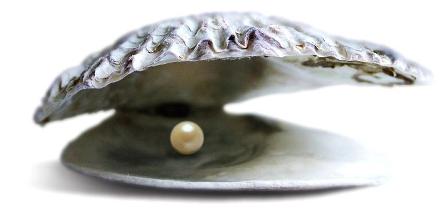
The Peace that Comes from Knowing You are Blessed

I’ve been taking stock of my life lately. Well, to be strictly accurate, my life has been taking stock of me. I am not purposely putting my past into perspective, it’s just that I see the horrible things that happen to people, the terrible physical and mental problems that plague them, the struggles they deal with on a regular basis, and I realize my life hasn’t been so bad. And of course, the request for my resume got me to thinking about what I’ve done (and haven’t done) with my life.

I didn’t have an easy time of it. Money was hard to come by no matter how hard we tried (“we” meaning my life mate/soul mate and I). We often lived hand to mouth; turned the thermostat down in the winter to almost unlivable conditions; didn’t oysterhave an air conditioner, which made the summers just as unlivable; bought food only on sale or at the lowest price available; never bought new cars; seldom bought new clothes or shoes.

And yet . . . I didn’t have a hard life, either.

We always managed to get through the winters and summers, had enough to eat (and it was all delicious and healthy since we cooked everything from scratch). We kept our vehicles running, always had plenty of library books around, planted dozens of trees and bushes and watched them grow. And we had each other. Although his dying about killed me, I got to be there with him through it all, and even was privileged to feel profound grief for him after he was gone.

I’ve been healthy more often than I’ve been ill. I’ve suffered bouts of depression at various times in my life, but my happy days outnumbered the sad/depressed ones. I laughed more than I cried, smiled more than I frowned. My mind works. (At least I think I it does. Since it’s my mind telling me that it works, would I know if it wasn’t?) My immune system is chugging along — even my allergy problems are a sign that my immune system is doing what it’s supposed to do. My body mostly does what I ask of it, and seems to have as much — or rather, as little — balance, elasticity, and endurance it always had.

Even my current situation — looking after my 97-year-old father and doing what I can for my dysfunctional brother — is a blessing. I have free time to indulge in blogs such as this, live in a nice area, enjoy being with friends, have the ability to participate in activities such as walking and exercise classes that help keep my body and mind in working order.

At the moment, I have no regrets, feel guilty about nothing, am angry about nothing. I haven’t even had a grief upsurge in a while. (As a matter of fact, the 27th of the month — the day of his death — passed with but the briefest acknowledgment of the date.)

I’m not sure why I’ve been taking stock — maybe getting ready for the next part of my life when I have to start dealing with the negative aspects of aging, when I have to deal with being on my own with no one to love or care for, when all that stretches before me is unchartered territory. Meantime, I’m enjoying the peace that comes with knowing I am blessed.

***

Pat Bertram is the author of the suspense novels Light Bringer, More Deaths Than One, A Spark of Heavenly Fire, and Daughter Am I. Bertram is also the author of Grief: The Great Yearning, “an exquisite book, wrenching to read, and at the same time full of profound truths.” Connect with Pat on Google+. Like Pat on Facebook.

If You Want to be Happier …

A recent study by the London School of Economics measured the relative value of different leisure activities, giving them the emotional equivalent of a raise in pay.

Their conclusion: dance is associated with the happiest people, and was worth £1,671 ($2,808.28) a year.

Swimming came next with a worth of £1,630

And visiting libraries came in third with a worth of £1,359

Other values of your search for happiness:

Taking part in team sports – £1,127

Arts and crafts – £1,020

Attending plays – £999

Individual sports – £828

Attending concerts – £742

Conversely, keeping fit through classes and gym exercise brought so much unhappiness, it was the equivalent of a pay cut of £1,318.

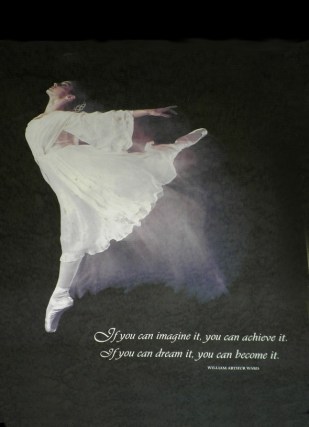
So, if you want to be happier, dance! As Snoopy said, “To live is to dance, to dance is to live.”

Untitled-2

***

Pat Bertram is the author of the suspense novels Light Bringer, More Deaths Than One, A Spark of Heavenly Fire, and Daughter Am I. Bertram is also the author of Grief: The Great Yearning, “an exquisite book, wrenching to read, and at the same time full of profound truths.” Connect with Pat on Google+. Like Pat on Facebook.



