Today is World Gratitude Day

World Gratitude Day supposedly began in 1965 at a Thanksgiving dinner in Hawaii hosted by spiritual teacher and author Sri Chinmoy.  The guests pledged to celebrate their blessings in their own nations each September 21st.   In 1977, the United Nations Meditation Group initiated World Gratitude Day on a global level.  World Gratitude Day is described as a:

“holiday for all peoples, a day of meditation for all religions, a day of celebration for all humanity, united by knowledge of simultaneously shared emotion, a day when triumph of the spirit can make a world community.”

peace

Today I am grateful for this World Gratitude Day. It’s good to have a second day to remind me to be grateful, but even without the reminders of the USA Thanksgiving or the UN World Gratitude Day, I often find myself being grateful for the small pleasures of life — a walk, a good meal, a new insight. Lately, I’ve been finding myself grateful for bigger gifts — a body that usually does what I need it to do, a place to stay, people to visit with both online and offline. And, of course, I’m grateful for what I once had — a deeply commited love, someone with whom I could always be myself, someone to help me become who I am today.

I am especially grateful to have a place where I can post blogitorials such as this one, and even more grateful that sometimes people stop by and read what I have to say. So thank you for celebrating this day with me. I am grateful to all of you.

***

Pat Bertram is the author of the suspense novels Light Bringer, More Deaths Than One, A Spark of Heavenly Fire, and Daughter Am I. Bertram is also the author of Grief: The Great Yearning, “an exquisite book, wrenching to read, and at the same time full of profound truths.” Connect with Pat on Google+. Like Pat on Facebook.

Help Prevent the Disappearance Of Native American Languages

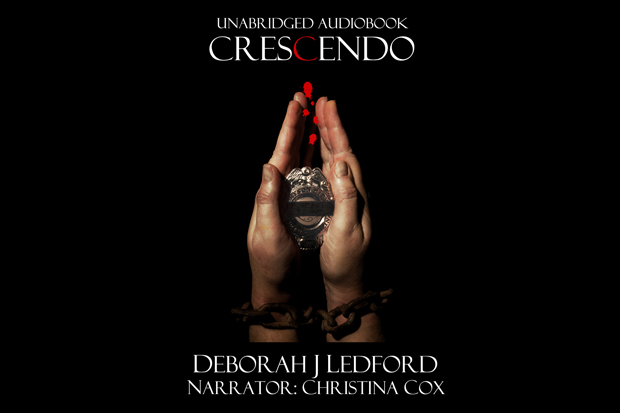
Deborah J Ledford, an award-winning author and one of my very first online (and later offline) friends, has come up with an innovative way to finance her next project. IOF Productions Ltd. established the NatAmGoGo crowd funding campaign on Indiegogo to produce and distribute the audiobook version of her latest thriller novel, Crescendo from Second Wind Publishing.

The NatAmGoGo campaign will also benefit The Blue Feather Corporation, a Native American language and culture nonprofit organization.

The professional audiobook presentation of Crescendo will be narrated by TV and film actress Christina Cox, who has appeared in a variety of films and television episodes including NCIS, Dexter, 24, Castle, Chronicles of Riddick, Better Than Chocolate and Nikki & Nora. IOF Productions Ltd will record Crescendo in November at Costa Mesa Studios in Southern California for download and to purchase as CDs for a December 2013 release.

CRESCENDO_CD“We are thrilled to have Christina Cox set to perform Crescendo. Her exquisite voice and acting prowess will truly bring my words to life,” Ledford says. “The audiobook will be recorded by an experienced staff, with the quality that will equal narrated books presented by top publishing houses.”

Contributor packages for the Indiegogo/ NatAmGoGo project include a PDF version of Staccato, the first book in the Steven Hawk/Inola Walela mystery series; autographed poster of the Crescendo audiobook cover signed by Christina Cox and Ledford; print versions of book series, including Staccato, Snare and Crescendo, signed and personalized by the author; a leather bound package containing all discs of the Crescendo audiobook with booklet signed by Cox and Ledford; a full content edit by Ledford of a manuscript up to 90,000 words, and hand-crafted jewelry created by a renowned Navajo, Hopi and Taos Pueblo artists.

Ledford spent her summers growing up in the Great Smoky Mountains of western North Carolina, where her novels are set. She met Floyd “Mountain Walking Cane” Gomez in 2006 while doing research for her award-winning novel, Snare. Several years later, Floyd expressed the need to protect languages and culture on reservations throughout the United   States, which is why he is establishing the Blue Feather Corporation.

“The storytelling campaign is an effort to prevent the disappearance of Native American languages and culture,” says Arizona author Ledford, who is part Eastern Band Cherokee.

“Native tribal languages and ancient ways are dying on our nation’s reservations,” Ledford explains. “We want to ensure that ancient societies survive.”

The Native American nonprofit foundation will receive 50% of the royalties from downloads and sales of the Crescendo audiobook. “But once the funding goal is reached, any excess will benefit the foundation 100 percent,” Ledford adds. “We can’t let another language or culture disappear,” Ledford concludes. “‘Wado,’ which means ‘thank you’ in Cherokee.”

Grief: Losing Your Grip

There are so many facets and phases to profound grief that even now — three and a half years after the death of my life mate/soul mate — I am still bewildered by some of the symptoms I experienced.

I always assumed “losing your grip” was merely a euphemism for losing your ability to deal with life, but shortly after the onset of grief, I lost my grip. My real grip, not my euphemistic grip. (Well, I lost both, but the second went with the territory.)

I dropped silverware, glasses, cups, plates — just about everything slipped through my fingers. I didn’t particularly notice it at first — I have been known to drop things — but after I moved to a house with hard tile floors, the loss of my grip became explosively apparent. My first night here, I dropped a glass, and it shattered on the hard floor. It sounded like a shot, scaring both me and my 96-year-old father. When the same thing happened a few days later — a mug this time — I realized I had to be careful or I’d give him (and me!) a heart attack. For over a year, I had to make sure of my grip before I lifted something so that it wouldn’t slip from my fingers. My grip gradually tightened, and after two years, I noticed I no longer had to pay attention to how I held something — I was automatically getting a grip.

Obviously, the phrase “lost my grip,” meaning losing your ability to handle a situation, had to come from somewhere, and I have a hunch that it came from the very thing I experienced.

I spent the past couple of hours researching this subject but never found a clinical reason for losing my grip. The weak hands didn’t come from any sort of illness. Not lupus, carpal tunnel syndrome, multiple sclerosis or any of the other 57 medical conditions where people can lose their grip. Nor was it an effect of aging or poor muscle control since the loss of grip came on so rapidly and gradually disappeared without any change of circumstances except the onset and gradual waning of grief.

It’s possible low blood sugar caused the loss of grip in the beginning because I wasn’t eating much, but as the year progressed, I ate more normally and the symptom persisted. Or maybe losing one’s grip is a symptom of emotional shock (rather than physical shock). Or maybe it represented a general enervation from from all the stress. The loss of a mate ranks as one of the most stressful conditions a person can suffer, which is why the death rate for those in the first year of profound grief is so high. Or it could be a physical manifestation of the metaphoric state — grief certainly makes you feel as if you’re losing your grip. In my case, It also seemed to be a reflection of my ability to connect, as if when I lost the connection with him, I lost the ability to connect with anything.

Well, now that I’m nearing what I call the half-life of grief, I’ve regained both my grip (my ability to grasp things) and my grip (my ability to handle life). I’ve also regained my ability to connect — with things and people.

And so grief continues to wane.

***

Pat Bertram is the author of the suspense novels Light Bringer, More Deaths Than One, A Spark of Heavenly Fire, and Daughter Am I. Bertram is also the author of Grief: The Great Yearning, “an exquisite book, wrenching to read, and at the same time full of profound truths.” Connect with Pat on Google+. Like Pat on Facebook.

Life is a Matter of Habit

Life is often a matter of habit. As Aristotle said, “We are what we repeatedly do.” Actually, the whole quote is “We are what we repeatedly do. Excellence, then, is not an act, but a habit.” But this is an article about habits, not excellence.

Most of our lives are repetitive. We do the same things in the same way, eat the same foods, go to the same restaurants, see the same people, watch the same shows. It’s easy to create a habit. If we do the same thing — good or bad — often enough, the synaptic pathways in our brains get rutted, and it’s almost impossible to completely eradicate the ruts if we want to change our habits.

Recently It was easy for me to fall into the habit of playing computer solitaire for hours on end, but now it’s almost impossible to break the habit, though I did it once, so I can do it again. (After the death of my life mate/soul mate, I mindlessly played game after game just to get through another minute, another hour of grief. A couple of years ago I broke the habit of playing games, but in a fit of restlessness a few months ago, I started in again, and now I have to rebreak myself of the habit.) The secret is to do what I need to do on the computer and then get off. Oddly, some habits are easy to break. I’m in the habit of writing a blog every day, and I keep doing it because I know if I skip a day, I’ll skip another and another, until I lose the habit of writing habitually and will only post sporadically.

Sometimes a change of circumstances, such as a move,  forces us to change our habits. When people tell me they have a hard time getting used to a new town, I suggest they go to the same place or do the same thing everyday to help themselves get acclimated. One woman who took this advice went to the same coffee shop every day, another took a walk ever day. And gradually, new comfortable ruts were built into their brains.

One of the collateral problems with grief is the instant loss of habits. In my case, we (my life mate/soul mate and I) had done most things together for decades — watched the same movies, ate the same foods, ran errands, watered the hundred or so trees we planted. As he got sicker, we put one foot in front of the other and kept on going the best we could out of habit. His death catapulted me out of the habits of my life. I still had the ruts of togetherness in my brain without someone to be together with. I also had to move from our home where we’d lived for decades to come look after my now 96-year-old father, so I didn’t even have the habits of living in the same house.

I felt as if the ground had been yanked from beneath me. When I tried to put one foot in front of the other, I became disoriented, as if I were falling into nothingness. I felt like such a baby, since all I could do was crawl in my alien world of no mate, no habits, nothing to connect me to the past but painful memories.

During the ensuing years of grief (in approximately two weeks, it will be three and a half years since he died) people who have been through the same sorrow have told me that grief makes a change around the four-year anniversary. That’s when many people find some sort of renewal, such as a new commitment to life.

I call this four-year mark the half-life of grief. Our cells are continuously dying and being renewed. If it takes seven years for all the cells in one’s body to be renewed, then by four years, less than half our cells will bear the imprint of our mates. And so our physical grief fades. (By physical grief, I mean the physical pain and symptoms of grief as opposed to the emotional pain.) At the same time, the ruts from the habits of our old life have evened out, and we have developed new patterns of living, new habits, new ruts. And as we repeatedly do new things alone, we become persons who can survive — and even thrive — without our mates because in the end, despite love and grief, learning and yearning, life is a matter of habit.

***

Pat Bertram is the author of the suspense novels Light Bringer, More Deaths Than One, A Spark of Heavenly Fire, and Daughter Am I. Bertram is also the author of Grief: The Great Yearning, “an exquisite book, wrenching to read, and at the same time full of profound truths.” Connect with Pat on Google+. Like Pat on Facebook.

Things Your Mother Should Have Told You

There is a post going around on Facebook, “Things your mother should have told you,” and I can’t get it out of my head. From the title of the post, I expected advice such as how to get bullies to stop picking on you, how to be strong and graceful, and how to figure out what you want and go after it while keeping your compassion and consideration for others. Instead, it was a list of silly household tips such as how to clean a toilet using Alka-Seltzer, how to soften hard brown sugar, and how to get glossy piecrusts. Really? These are the things our mothers should have told us? Why?

Perhaps in a nineteen-sixties television show where mother is always home, always perfectly dressed and coifed, always cool tempered with a wry smile for the shenanigans of her family, always ready with the perfect solution to any household problem, then of course, these mothers should have told their children such things because it was all they knew. But who lived like that? No mother I’ve ever known has had the time to pass down mothersuch inanities, especially nowadays when mothers are more apt to be heading corporations or running their own businesses than staying home and having passels of children. (And the stay-at-home moms have plenty of work to do without worrying about passing on such inane tips.)

Besides, today we have Google. If you want to find out how to keep an ice cream cone from dripping, you don’t have to get the information handed down to you from your mother or from a list of things she should have told you — you can Google it, though I can’t imagine why anyone would want to. (Apparently, dripping ice cream cones is a hot issue. I just Googled “how to keep an ice cream cone from dripping” and got 220,000 results.)

Perhaps the list of things your mother should have told you is a leftover from the nineteen-sixties television show era — some of the tips are rather outdated. For example, one of the things she should have told you is that if you want to see if an egg is fresh, drop it in a pan of cool salted water. If it sinks to the bottom, it’s fresh. Frankly, if I want to see if an egg is fresh, I simply look on the egg carton for the expiration date. The few times I have bought eggs fresh from the farm, I had to trust the person selling me the eggs since at the time I wasn’t carrying around a pot of cool salted water.

I think what bothered me most about the list is that it assumed a mother’s place is only in the home, collecting such tips. Can you see Margaret Thatcher, Indira Ghandi, or Hilary Clinton giving their children such tips? Can you see them caring enough about a little leftover wine to freeze it and use it later, let alone take time out from running a country or a constituency to tell their children about it? Can you see them carrying around a bit of raw potato to remove unsightly food stains from their manicured hands? Or worrying about removing burnt-on food from a pan?

There are many important things our mothers should have told us, but using air freshener to clean mirrors is not one of them.

***

Pat Bertram is the author of the suspense novels Light Bringer, More Deaths Than One, A Spark of Heavenly Fire, and Daughter Am I. Bertram is also the author of Grief: The Great Yearning, “an exquisite book, wrenching to read, and at the same time full of profound truths.” Connect with Pat on Google+. Like Pat on Facebook.

Grief and the Loss of Identity

I don’t feel disempowered as a women, perhaps because I seldom define myself by gender, religion, nationality, age, or any other consideration. I am simply . . . a being in flux. I have felt powerless at times, but not because of being a woman. The powerlessness came from being in situations greater than my abilities to cope. Sometimes I developed the necessary abilities, such as when I decided to be a writer, other times I simply endured, such as when grief slammed into me after the death of my life mate/soul mate. Either way, I managed to move beyond the powerlessness and regain my equilibrium.

This is not the way things always were, of course. When I was very young, many limitations were imposed on me because I was “just a girl.” (How I hated those words!) Luckily, the early limitations were offset by my experiences at the all-girl high school I attended. In a school where everyone is female, there is no gender bias — all activities are done by and all offices, honors, and awards are won by young women.

warriorIt’s no wonder then, that when I fell in love, it was with an unbiased man. For thirty-four years, we lived in gender harmony. We played no roles, set no rules, followed no conventions. Never once in all those years did he tell me I couldn’t do something. Never once did I refuse to let him do something he wanted. Never once did he make me do a chore. Never once did I remind him of a task he promised to do. If one of us saw a job that needed to be done, we simply did it. Usually, though, we worked together. Some of my fondest memories are of us fixing meals together — he washing vegetables for a salad, me cutting them up. He reading seasonings off a recipe card, me tossing the herbs into the pot. (Or vice versa. What made it especially rewarding is that we’d created those recipes together.)

During the last few years of his life, I did many things by myself in preparation for the time when I would be alone. I took long solitary ambles, went on trips, learned to use a computer and the internet. This became our life — he dying, me struggling to live.

Somehow I thought this would always be our life, but then he died, and “our” life ended.

My grief was so profound I felt as if part of me had been amputated. The pain, the angst, the loneliness were unbearable, but the worst trauma was the sudden and shocking loss of my identity. Being with him had allowed me to be myself, to be comfortable with both my good points and my bad points. Since I wasn’t in thrall to him (though I did often follow his wishes because I didn’t care what we did or what we ate as long as we were together), it never occurred to me there would be a problem when once again I became single. But I’d grown so used to being with him, that nothing, not even something as simple as watching a movie, seemed important when I did it alone. He’d been the focus of my life for so many years that without him I felt lost, felt as if my life had no meaning. Felt silly for unknowingly letting my identity get so caught up in “us” that when he died, I no longer knew who I was.

The truth is that even for those of us who have a strong identity and know almost everything there is to know about ourselves, a trauma such as the loss of a soul mate shakes our self-concept. Our psyches are like nesting dolls or boxes within boxes or doors within doors (choose your cliché). We never see the doors, so we think we know who we are, but a great emotional upheaval can cause a door to open, letting us see more of ourselves and what we are capable of, revealing a part of our identity that might have been hidden from us until that moment. We get to know who we now are, adding to or changing our idea of ourselves, rethinking the past in light of this new awareness. We might even get comfortable with this revised self-concept until a new trauma opens another door.

And so it is with me. It’s been three and a half years since his death, and until a new trauma comes along, I again know who I am — a being in flux, still strong, still developing my abilities, still learning to empower myself as a person.

***

Pat Bertram is the author of the suspense novels Light Bringer, More Deaths Than One, A Spark of Heavenly Fire, and Daughter Am I. Bertram is also the author of Grief: The Great Yearning, “an exquisite book, wrenching to read, and at the same time full of profound truths.” Follow Pat on Google+. Like Pat on Facebook.

Salad Days

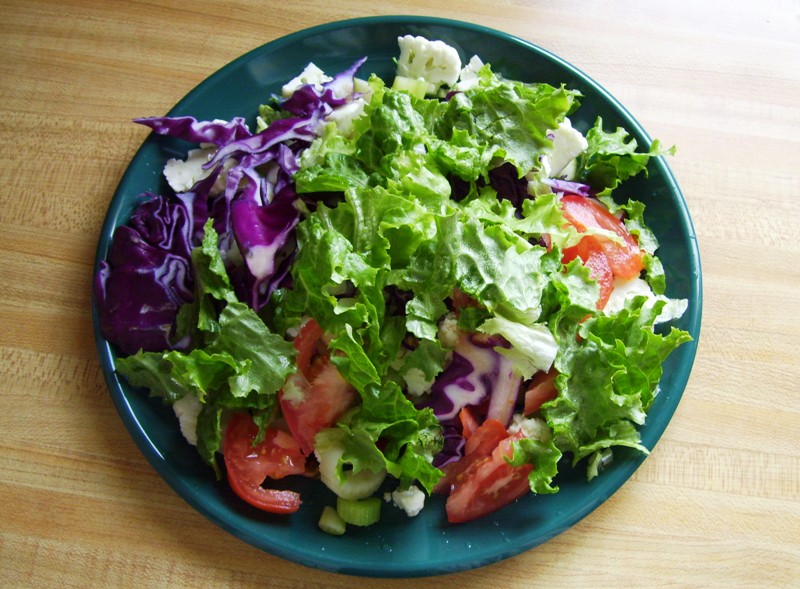
One staple of meals with my life mate/soul mate were salads. During our decades together, we always tried to eat plenty of raw vegetables, so our salads weren’t puny affairs with a few bits of vegetables and lots of iceberg lettuce. We used as many colors as we could — red tomatoes, purple cabbage, yellow squash, orange carrots, white cauliflower, green leaf lettuce. Since the salads were a time-consuming affair, we usually worked together, he washing the vegetables, me cutting them up.

I don’t remember much of the last year of his life (except for the last six weeks — those I remember). After he died I was in too much pain to recall that year, and now it’s too far in the past to recover the details.

But I do remember a time when I came in late from my walk, and he’d already fixed a salad for us. This was shortly before he got too sick to do anything but try to stay ahead of the pain. I don’t understand where he got the energy to fix the salad — his poor body was so ridden with metastases, it must have taken everything he had to do the simplest task, and yet, the salad was waiting for me when I got in.

Yesterday I mentioned how I carelessly let that last year slip by, how I didn’t hang on to his every word, but I was careful that day and took a photo of the salad, perhaps the last one he ever made for me. I wanted the picture because the plate was beautiful, not as a memory of him, but still, it showed I was paying attention to the good things in our shared life.

It seems impossible that he’s been gone for almost three and a half years. Seems impossible that our salad days are over and all that remains is this simple photo.

salad

(Incidentally, “salad days” comes from Shakespeare’s Antony and Cleopatra. At the end of Act I, Cleopatra says, “My salad days, / When I was green in judgment.”)

***

Pat Bertram is the author of the suspense novels Light Bringer, More Deaths Than One, A Spark of Heavenly Fire, and Daughter Am I. Bertram is also the author of Grief: The Great Yearning, “an exquisite book, wrenching to read, and at the same time full of profound truths.” Follow Pat on Google+. Like Pat on Facebook.
Help! I Need a Guest Blog Topic

I’ve been invited to write a guest blog for UniteWomen.org. This is a huge honor since the Facebook group alone has more than 80,000 fans, so of course I said yes. To be honest, though, I would have said yes even if they honly 800 “likes” — I’m a big fan of the woman who asked me, and I appreciate the work she does to help empower women.

Oddly, I’ve never felt disempowered as a women, perhaps because I seldom define myself by gender, religion, nationality, age, or any other consideration. I am simply . . . a being in flux. I have felt powerless at times, but not because of being a woman. The powerlessness came from being in situations greater than my abilities. Sometimes I developed the necessary abilities, other times I simply endured. Either way, somehow I moved beyond the powerlessness and here I am — still strong, still developing my abilities, still learning to empower myself.

(Grief was one of those situations where I felt powerless, but I embraced the experience and endured.)

I have a third way of getting through situations greater than my abilities, such as my current inability to decide on a blog topic — I ask my blog readers for their input.

The woman suggested several topics for the guest blog:

  • Anything relating to women’s rights, gender equality, your identity as a woman (in and/or out of the romantic partnership).
  • Re-establishing your identity as a woman after the loss of your partner.
  • Lessons learned — anything that would empower or inspire other women.
  • How writing can be very healing and that you would recommend it to anyone who has gone through trauma.
  • How female friends supported you through grief.
  • Whatever you want to say to 80,000 women who are struggling for equality.

She also suggested a post about women judging and criticizing other women, like those who told me to “get over it” when I was grieving, but I don’t want to do that one. Sounds too antithetical for the blog.

Do any of these topics strike you as being more interesting than the others? Or is there another topic besides those listed that I should consider doing?

***

Pat Bertram is the author of the suspense novels Light Bringer, More Deaths Than One, A Spark of Heavenly Fire, and Daughter Am I. Bertram is also the author of Grief: The Great Yearning, “an exquisite book, wrenching to read, and at the same time full of profound truths.” Follow Pat on Google+. Like Pat on Facebook.

Life Is Weird Place To Live

Life is weird place to live. Just a few days ago, people were calling me negative — so many, in fact, that I began to believe I really was negative — and now people are calling me positive. Not those same people, of course. I haven’t talked to any of the first group in a while, and some I might never talk to again. Even if I were negative, being called negative creates negative vibrations, and I certainly don’t need any more of those in my life.

I’ve been making an effort to meet new people. I found out that the local Sierra Club does a conditioning walk three nights a week, and I’ve been walking with them, which has been fun. It’s a great activity for introverts and designated listeners since everyone gets a chance to talk. (In most of my friendships, I’m the listener, whether I want to be or not.) Although we walk fast (three miles in an hour or less), it’s a social occasion, and the adrenaline and blood rush keeps us all in good spirits. The walkers are wonderful people, interesting and supportive of one another. And they think I’m upbeat, have a good attitude, am interesting. It does my ego good, though I’m sure the truth of me lies halfway between the two extremes of positive and negative.

Overall, the first group of people seemed more unhappy than this second group, and both groups were seeing themselves reflected in me and I was reflecting off them, like one of those mirrored illusions in a fun house where mirroryou see yourself reflected endlessly. If you see a thousand images of yourself, which one do you choose as the real image? Maybe all are real in one way or another. Our bodied selves might be an illusion, too. Maybe the person we see in a single mirror is but one of our myriad images that we choose to inhabit for that moment.

A better analogy might be the energy between two points. An idea, for example, doesn’t exist in our neurons but in the energy zinging between the neurons. Maybe whoever we are at a given moment are the personas we and the people around us create in the energy zinging between us.

When we are in love with someone, often we love who we are when we are with that someone. We love the persons we create between us. (This could be why the death of one’s mate is so devastating — among all the other horrors and gifts of grief, we truly do have to deal with the loss of ourselves.)

Hmm. I’ll have to think about all this. Are we really so fluid? Are we simply bodies of energy that flow around and through all we encounter, changing and being changed with every brush with another creature? If there is nothing immutable at rock bottom, then life really is a weird place to live.

***

Pat Bertram is the author of the suspense novels Light Bringer, More Deaths Than One, A Spark of Heavenly Fire, and Daughter Am I. Bertram is also the author of Grief: The Great Yearning, “an exquisite book, wrenching to read, and at the same time full of profound truths.” Follow Pat on Google+. Like Pat on Facebook.
Breaking Up is Hard to Do (Or See)

Lately, I seem to be torn by divided loyalties. Not only are my loyalties divided between two family members, they are now being divided between two friends who once were business partners. They need each other and the business needs them, but as intelligent as they are, they don’t seem to communicate well. They hurt each other, expect too much from each other, blame each other. And since I’m close to both of them, I am in the middle. I wish I could sit them down (or better yet, bang their heads together) and get them to listen to the truth of the other beyond recriminations, guilt, and regret, but it is not my place.

windSometimes outsiders can see what those involved cannot see, but we cannot feel the emotions that are driving our friends apart, and so we can only stand by, ready to listen if they want to talk. Even if I wanted to do something, it’s not my fight, and inserting myself between them will add fuel to an already combustible situation.

I grieve for them and what they are losing. I grieve for what I am losing. But, as with my family situation, I can’t run their lives for them, and I can’t change anything. Maybe no one can. Maybe the roots of the conflict go back too far to untangle. Maybe the breakup has gone forward too far to be rewound. Maybe . . . maybe they will find a way to set aside their feelings and make it work after all, but I don’t hold out much hope. Their loyalties to each other and the business were in conflict, and without reciprocity, loyalty becomes a type of servitude, adding even more conflict to a complicated situation.

In fiction, conflict is all important, and even in life, some conflict is beneficial — one partner was aflame with fantastic ideas, the other partner more down to earth and able to put those fantasies into action. But too much conflict puts a strain on even the most congenial relationship, and this partnership was not always congenial.

I’ve never had to deal with a divorce between two people I cared about — usually I knew only one of the parties. But now I know how I would feel — terribly sad and powerless.

***

Pat Bertram is the author of the suspense novels Light Bringer, More Deaths Than One, A Spark of Heavenly Fire, and Daughter Am I. Bertram is also the author of Grief: The Great Yearning, “an exquisite book, wrenching to read, and at the same time full of profound truths.” Follow Pat on Google+. Like Pat on Facebook.