Grief Update: Forty-One Months

Forty-one months ago, my life mate/soul mate died of inoperable kidney cancer. At times his death seems recent, as if he’s just beyond reach, at home maybe, waiting for me to finish with my present responsibilities. At the same time, his death seems very far away. Last night I looked at his photo and was perplexed to realize he no longer seems real to me. I have no concept of him as a person. It’s as if he were merely an idea I had once a long time ago or maybe a character I created for a book. And yet I know he lived, loved, laughed. I know he was real. I feel the loss in the depth of my being, and tears of sadness and yearning for him are always close to the surface, though the tears seldom fall any more.

starbMy life doesn’t seem real, either. I walk, write, make friends, lose friends, make plans and break them, try new activities, see new places, sample new foods, wish on the first star I see at night. (Okay, so it’s Venus — from here, it looks like a star.) Despite all that I’m doing to create a life for myself, I feel as if I’m just going through the motions. I don’t want to live alone, yet I don’t want to live with anyone, either. I don’t want him back to suffer more, yet I wish desperately to see him once again.

Even if I did get a chance to see him, I wouldn’t know what to say — grief has changed me in some fundamental way, and I don’t know if we’d have anything to talk about. Of course, I’d ask him what his life was like, if he were happy, if I seem as abstract to him as he now does to me. We might reminisce a bit, and I’d probably tell him of a few worldly developments, but to be honest, nothing that has happened in the past forty-one months is so important that I’d drag him back from the dead to talk about.

I’ve been looking forward to a time when grief no longer has me in thrall (they say it takes three to five years to find a renewed interest in life, though from talking to people who have gone through a similar grievous loss, I found out it’s more like four to five years). And yet, if I feel this way now — as if he isn’t real — then I’m not sure I want to find out what’s ahead. But I have no choice. In seven months, it will be four years since his death, and twelve months after that, it will be five years. And he will seem even more gone than ever.

***

Pat Bertram is the author of the suspense novels Light Bringer, More Deaths Than One, A Spark of Heavenly Fire, and Daughter Am I. Bertram is also the author of Grief: The Great Yearning, “an exquisite book, wrenching to read, and at the same time full of profound truths.” Connect with Pat on Google+. Like Pat on Facebook.
Negativity Is in the Ear of the Beholder

People who tell me I’m negative make me feel . . . well, they make me feel negative, and for no good reason. I might not be a sunny person, always looking on the bright side, and I might not be one of those who believe you fake it until you make it, but I’m not negative. I’m pragmatic. A thinker. A truth seeker. And the truth is, people who call others negative often want things their own way and are peeved if the others don’t like it.

For example, a friend invited me to go to lunch, so I arranged my schedule around the time she chose. An hour before we were to meet, she called and changed the time. The new time would interfere with my plans for later in the afternoon, so I told her I wasn’t sure I could make it. She called me negative.

Another friend often emails me and asks if I’m available at such and such a time so we can talk, and many times I wait for a call that never materializes. If I express my disappointment or say I’d appreciate being informed of a change of plans, I get called negative.

The other day I mentioned I couldn’t do something, and a person I’d met a scant hour earlier, said, “I hate negativity. Don’t ever say you can’t do something in my presence again.” Huh? I couldn’t do it. That didn’t mean I wouldn’t try to do it or wouldn’t try to learn to do it. Nor was I being negative. It was a simple statement of fact. Being positive and saying I could do it would be a falsehood — a negativity — which is anathema to a truth seeker.

During those horrendous first days, weeks, months, after the death of my life mate/soul mate, grief would so overwhelm me at times that I would scream to the heavens, “I can’t do this!” And at that very moment, I couldn’t. Sometimes it took everything I had to simply breathe, let alone attempt one of the myriad end-of-life chores. Sometimes the pain of grief would well up, obliterating everything but raw agony and angst. But . . . I did what I needed to do. I used the heat of my anger and despair as fuel to accomplish such impossible tasks as clearing out his “effects” or boxing our things to be stored.

Two months after he died, I got up early, cleaned out the few remaining items I’d been using, packed my car ready for the trip to my nonagenarian father’s house so I could look after him. I walked through our rooms, remembering with what hope my mate and I had moved there, remembering the good times, remembering the more frequent bad times. Remembering his last hug, his last kiss. His death.

As I was shutting the front door, I thought of all that lay ahead of me. Pain welled up in me, and I cried out, “I can’t do this.” Then, it dawned on me: Yes. I can. Because I did. I got out my camera, and went through the house one last time, taking photos of the empty rooms to prove to myself that all those things I thought I couldn’t do, I did.

I still have times of screaming “I can’t do this” when life overwhelms me, but it’s not a sign of negativity. It’s merely an expression of the moment. And if someone doesn’t like my saying I can’t do something without finding out why I think so, it’s too bad. I can’t live my life to suit those who call me negative.

***

Pat Bertram is the author of the suspense novels Light Bringer, More Deaths Than One, A Spark of Heavenly Fire, and Daughter Am I. Bertram is also the author of Grief: The Great Yearning, “an exquisite book, wrenching to read, and at the same time full of profound truths.” Connect with Pat on Google+. Like Pat on Facebook.

It Is What It Is

I talked to a friend today about the various problems we are facing in this, our fourth year of grief, and she said, “It is what it is.”

Robert Hartwell Fiske calls such sayings “quack expressions,” saying they “readily explain behavior that the dimwitted otherwise find inexplicable, and justify attributes that they otherwise find unjustifiable.”

He’s right to a certain extent, and yet . . .

My friend is anything but dimwitted. She, like me, is struggling with life, death, grief, change, and other life experiences that are inexplicable to everyone, dimwitted, brightwitted, or somewhere in between. Sometimes it truly is what it is, quack expression or not.

Desp077cite what the positive thinkers and those who believe we create our own reality profess, much of life is beyond our control. We don’t decide who lives and dies. We can’t choose who we love or despise (though we can choose what we do with those feelings). We can’t always help people who need to be helped. We can’t hurry along or slow down natural processes, such as childbirth or old age. Nor can we recreate the world to suit our desires. The sun always rises in the eastern sky and sets in a westerly direction. The moon always affects our world, though  myths tell of a time before the moon came to stay. And, as they say, time and tide wait for no man. (Though I suppose, being a woman and not a man, I should be able to sway such natural phenomena.)

It is what it is.

Lately, I’ve been struggling with a couple of situations that are not of my making, that I have no control over, that don’t affect me in a primary way (besides tearing me apart by conflicted loyalties). I can’t solve any of the problems that have arisen, can’t walk away from them, can’t change anything. All I can do is realize each situation is what it is, and let it go as best as I can. (It helps to realize that in a case of divided loyalties, my loyalties belong to myself.)

In my writing, of course, I stay away from such expressions since I like my writing to have a tinge of elegance, but life is not always elegant.

It is what it is.

***

Pat Bertram is the author of the suspense novels Light Bringer, More Deaths Than One, A Spark of Heavenly Fire, and Daughter Am I. Bertram is also the author of Grief: The Great Yearning, “an exquisite book, wrenching to read, and at the same time full of profound truths.” Connect with Pat on Google+. Like Pat on Facebook.

Planning a Themed Road Trip

I’ve been meeting some well-traveled people lately, which has made me wonder how I want to approach my cross-country trip when I’m finally free set out. I could simply go where the spirit moves me, but when I’m on a road trip, where the spirit moves me is generally on down the road. I am destination oriented, and even though I always plan to make stops and take things easily, I drive straight through. One reason I seldom stop is road hypnosis. Another reason is that I worry what would happen if the car wouldn’t start on one of those back roads with no cell towers within range. But if it doesn’t matter where I am — because no matter where I am, there I will be — I might be more willing to stop every few miles or so. But without a set destination, I have a hunch I’d become subject to road hypnosis, and just keep on driving.

Highway

One possibility to prevent such mindless driving is to plan the trip. Reserve hotels and motels. Be prepared. But the point of an extended trip is to embrace irresponsibility. (At least to a certain extent. I don’t think I would enjoy being completely reckless.) I’ve always been the responsible one, and when my responsibilities end, I need to become free, spontaneous. Capricious, even.

Village Inn and Pub

Another possibility is to decide on a theme for the trip. Some people collect lighthouses, going from one to another, filling in their lighthouse passport books. For some reason, lighthouses have never been that important to me. On the other hand, I’ve fallen in love with piers, especially the long wooden pathways built over the ocean without restaurants, rides, and other amusement. So I could make a circuit around the county, hunting piers.

Ventura Pier at Sunset

Or Ferris wheels. Or any number of things: haunted houses, caves, waterfalls, oddities like the Winchester Mansion.

If everything else fails, I could simply hope that one day I would get tired of driving and find somewhere interesting to hang out for a while.

If you were to take an extended theme-based trip, what would you do, where would you go?

***

Pat Bertram is the author of the suspense novels Light Bringer, More Deaths Than One, A Spark of Heavenly Fire, and Daughter Am I. Bertram is also the author of Grief: The Great Yearning, “an exquisite book, wrenching to read, and at the same time full of profound truths.” Connect with Pat on Google+. Like Pat on Facebook.

Writing: Art vs. Commerce

Ever since the death of my life mate/soul mate, I’ve been struggling to find reasons to write. It didn’t seem important to write another book that would languish in the dark alleys of non-bestsellerdom, and it especially didn’t seem important to write if he, my most avid fan, were no longer here to read what I wrote.

Today, though, I had an epiphany. Writing is separate from selling books. Writing is art, a thing of the spirit, eternal. Selling books is merely commerce, and so is everything that goes along with the business — writing to be read, finding readers, trying to make a niche in the publishing world.

Often, we writers are told that we need to write what people want to read. It’s good advice, especially if we want to make a living as an author, but in my case, I can only write the books I can write. Even if I knew what readers wanted, I couldn’t 531da618f5363c22_mwrite those books. Someone else is already writing them.

Although it would be nice to make a living off writing, money is not the only reason to write. In fact, contrary to popular belief, money is not the reason behind most of what is worth living for.

Take a smile for example. That curvature of the lips and sparkle in the eye is fleeting and ephemeral, not to be stored or purchased anywhere here on this earth, and yet, a smile from a loved one is precious. I would give anything to see my life mate/soul mate smile at me once more, but now his smiles exist only in my memory.

Smiles aren’t the only valuable thing that has no meaning beyond the moment. We go walking on a cool sunshiny day without ever stopping to think what we will get out of it other than a pleasant interlude. We watch a movie or read a book simply to pass the time, without ever worrying about its importance. We talk with friends, and those words become lost in the eternal spectrum of sound waves. Sometimes we talk to a person who is no longer here, such as I do with my lost mate, and as seemingly meaningless as those conversations might be, they are important.

Is writing any different?

Some writers, of course, are so full of their importance they believe their words are immortal, no matter how trite or uninspiring their writing is, but many of us need the possibility of readers to give our writing importance, or at least purpose.

And yet, there is the side of writing that is often ignored in the business of writing — writing is art, or it can be. Art is the expression or application of human creative skill and imagination. Nowhere in that definition does it say art needs readers or viewers or buyers to be art. Art is merely expression. And that is what writing should be.

In a perfect world, writers would never consider their readers, would never put commerce above inspiration, would never count words or the hours spent creating. They would simply write.

For myself, I can create that perfect world

The past few weeks, I have been working a bit on a novel I started three years ago about a grieving woman. Maybe when the book is finished, I will turn the manuscript over to my publisher, but for now, I’m not even considering the commerce of writing. The book is for me — an expression of my grief, inspired by all I’ve gone through the past few years.

My writing.

My art.

***

Pat Bertram is the author of the suspense novels Light Bringer, More Deaths Than One, A Spark of Heavenly Fire, and Daughter Am I. Bertram is also the author of Grief: The Great Yearning, “an exquisite book, wrenching to read, and at the same time full of profound truths.” Connect with Pat on Google+. Like Pat on Facebook.

Camping on the Edge of Life

Too often now I feel as if I am camping on the edge of life. To a certain extent, this feeling comes from my current living situation. I am staying with my 96-year-old father to make sure he retains his independence as long as possible, but since his house is fully furnished, that means most of my stuff is in storage. I have my clothes, of course, my computer, my own towels, a few kitchen items, a couple of furniture pieces (such as the table and chair I’m presently using for my desk) — just enough to connect me to the past but not enough to make me feel settled. I won’t be staying here once my father is gone campingand that knowledge also keeps me from feeling settled, makes me feel as if I am just camping in. (Rather than camping out.)

More than that, though, this feeling of camping on the edge of life comes from being single in a coupled world. It’s been three and a third years since the death of my life mate/soul mate, and I’m still not comfortable with his being gone. Despite that, quite inexplicably I’m forgetting that I once shared my life, once loved deeply, once felt as if I lived smack dab in the middle of life. As my grief continues to wane, as I move further from him, it seems as if this is lonely existence is what my life has always been — and it should be enough, but it isn’t. Not yet.

We live in a world where movies, books, songs, videos, shows, ads and commercials all extol the virtue of being in an intimate relationship. Love makes the world go round. You’re nobody till somebody loves you. All you need is love. Love makes you feel complete. Love makes you feel fulfilled. Love makes life worth living.

This constant barrage of coupled love and happily ever after is a sad message for many of us — either we lost our love too soon through death or divorce, or never found someone in the first place.

Intellectually, I know that whatever I am doing or feeling is life. Being together or being alone, feeling fulfilled or feeling unfulfilled — all of it is life. And yet, I can’t help feeling that something is missing.

It might sound as if I’m looking for someone to share my life with, but I’m not. I’m just aware of the realities of being uncoupled in a coupled world. I suppose there will come a time when I embrace the freedom of my alonehood, and plunge deep into the heart of life, but for now, all logic to the contrary, I feel as if I am camping on the edge of life.

***

Pat Bertram is the author of the suspense novels Light Bringer, More Deaths Than One, A Spark of Heavenly Fire, and Daughter Am I. Bertram is also the author of Grief: The Great Yearning, “an exquisite book, wrenching to read, and at the same time full of profound truths.” Connect with Pat on Google+. Like Pat on Facebook.

Excerpt From “Grief: The Great Yearning” — Day 115

I never actually set out to write a book about grief, never planned to make any of my writing public (except for blog posts, of course), but I was so lost, so lonely, so sick with grief and bewildered by all I was experiencing, that the only way I could try to make sense of it all was to put my feelings into words. Whether I was writing letters to Jeff (my deceased life mate/soul mate) or simply pouring out my feelings in a journal, it helped me feel close to him, as if, once again, I was talking things over with him. The only problem was, I only heard my side of the story.  He never told me how he felt about his dying and our separation. Did he feel as broken as I did? Did he feel amputated? Or was he simply glad to be shucked of his body, and perhaps even of me?

It’s been more than three years now since the following piece was written. I still don’t understand the purpose of pain, loss, suffering. Still don’t understand the nature of life or death. Still don’t know how energy can have cognizance, if in fact, consciousness survives death. The main difference is that the wound where he was amputated from me has healed. I don’t worry about him — at least not much — but I still miss him and I probably always will.

Excerpt from Grief: The Great Yearning

Day 115, Dear Jeff,

Did you use the phrase okie-doke one night at the end when you were saying all those jaunty things like “adios, compadre”? You must have. Every time I see or hear the expression, I start crying. Good thing it’s not in common usage any more.

I am hurtling away from you at incredible speeds. Maybe I’ll come full circle and meet with you again when my end arrives? I wish I believed that, but it makes no sense. How do sparks of energy have cognizance, character, memory? How would we know each other? At least I would no longer have to deal with your absence since I’d be absent too.

You came into my life so rapidly. One day you weren’t there, and the next you were. You went out the same way. One day you were there, the next you weren’t.

Yesterday someone told me that life on earth was an illusion and so you still existed. But if life is an illusion, why couldn’t it be a happy figment? A joyful one? What’s the point of pain? Of loss? Of suffering?

You’ve been gone one-hundred and fifteen days, and I still can’t make sense of it.

Adios, compadre. I hope you, at least, are at peace.

Click here to find out more about Grief: The Great Yearning

***

Pat Bertram is the author of the suspense novels Light Bringer, More Deaths Than One, A Spark of Heavenly Fire, and Daughter Am I. Bertram is also the author of Grief: The Great Yearning, “an exquisite book, wrenching to read, and at the same time full of profound truths.” Connect with Pat on Google+. Like Pat on Facebook.

No More Saturday my Sadder Day

During the past three and a third years, ever since the death of my life mate/soul mate, the date and the day he died have brought an upsurge of grief. Every 27th of the month and every Saturday I felt an increased sadness even when I wasn’t aware of the date and day. And when the 27th fell on a Saturday, I got a double dose of grief.

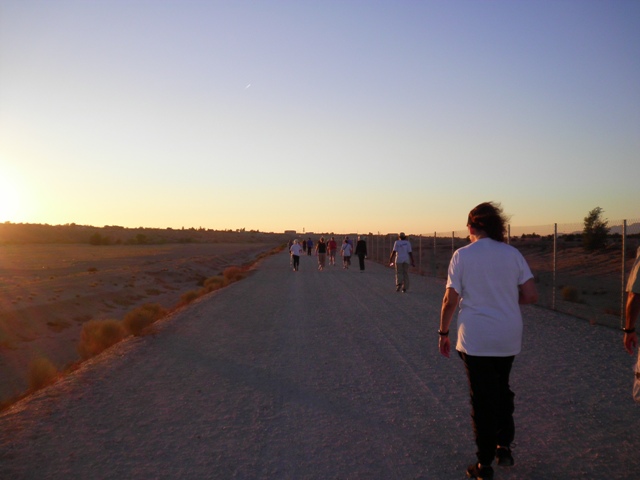
Last Saturday was the 27th, but there was no sadness. I simply noted the date and day, and went on with my life. Not that there was much to go on with — a walk in the desert, a movie (one of the movies he taped for us), some online activity.

Part of me wanted to feel sadness just out of habit — habits are comfortable even when they aren’t particularly productive. Part of me wanted to feel sadness because it was a link to him and to a life that is rapidly receding from me. Mostly it didn’t matter. I’d come to see that being sad or unsad didn’t make much of a difference — it was just a part of my life in the same way the sun rises and sets or the moon grows full and wanes.

It’s been several days since Saturday the 27th, and I still don’t know what to think about the lack of sadness. Three and a third years ago, I was in such pain, I couldn’t have believed this time would ever come. Some people who have lost their spouses still feel connected, but I don’t. I talk to him, of course, but never feel as if he’s listening, let alone responding. Whatever we once meant to each other, whatever we shared, I now know he’s on his own journey, just as I am.

The main problem continues to be emptiness. I don’t feel anything as dramatic as the bleakness I once felt, don’t feel much at all, to tell the truth. I do feel lonely, of course, but I’m getting used to that. I even think it might be my destiny—to be alone so I can . . . and that’s where the thought always ends. So I can do or become . . . what?

I don’t much believe in destiny, and yet it’s hard to completely disbelieve when two such inexplicable and awe-full events helped define my world: the day he came into my life and the day he left.

From somewhere deep inside, “want” is starting to seep up into my consciousness. It’s an indefinable want, perhaps a desire for life, whatever that might be. I’ve been steeped in death and aging for too long (still am — I’m currently looking out for my mostly independent 96-year-old father), and something in me is crying out for more.

Despite a growing restlessness, I need to be patient since my life is not yet entirely my own. But someday, when I am free, I hope I have the courage to run to meet my destiny, whatever that might be. I hope I have the courage for “more.”

***

Pat Bertram is the author of the suspense novels Light Bringer, More Deaths Than One, A Spark of Heavenly Fire, and Daughter Am I. Bertram is also the author of Grief: The Great Yearning, “an exquisite book, wrenching to read, and at the same time full of profound truths.” Follow Pat on Google+. Like Pat on Facebook.

Greedy For Life

If the universe is full of infinite possibilities, does that mean we are infinitely possible too? I’d like to think so, but it doesn’t seem feasible. We seem to be bounded by our genetics, the way our brains are wired, our very thoughts. Can we go beyond such constraints to something else?

Working within natural laws, we can change ourselves to a certain extent. We can get a new job. We can move to a different location. We can divorce or remarry. We can become thinner, fitter, stronger, more serene. We can even look and feel younger, but we cannot actually be younger. Nor can we be anything but what we are — whatever that is. I suppose it’s a good thing our basic nature doesn’t change. It would make life intolerable if every wizardmorning when we woke up we discovered we were something different — a butterfly or a dragon, a flower or a star.

Still, in a universe full of possibilities, there has to be more possibilities than we see or even fathom. But how does one find (or create) these possibilities? I realize that wanting to be something other than ourselves is wasting who we are, but still, there has to be a way of becoming more of what we are, of reaching a greater potential.

I have such a desire to be “other,” though I don’t have any clear concept of what that means. Wiser, of course, and more in tune with the universe. Transcendent, maybe. Able to sense that which I cannot now see.

At the very least, I’d like to be able to just go along for the ride, see where life takes me without worry or fear. But even such a small transcendence seems improbable — I’m a worrier (thinker!) by nature and genetics, and fear is not just a mental state but physical reaction, a body response to danger, and we are such physical creatures. And anyway, aren’t worry and fear part of the experience of life, just as grief is?

Maybe there is more life on the horizon for me than I can now see, and all this cogitation is but a way of occupying myself until that life arrives. Or maybe the cogitation will help get me there by opening up my mind and soul to more, like a flower opening to the sun.

I’ve never been a greedy person — never really wanted much, especially not things — but now I see there is growing.

***

Pat Bertram is the author of the suspense novels Light Bringer, More Deaths Than One, A Spark of Heavenly Fire, and Daughter Am I. Bertram is also the author of Grief: The Great Yearning, “an exquisite book, wrenching to read, and at the same time full of profound truths.” Follow Pat on Google+. Like Pat on Facebook.

Where Would We Be Without Words?

We create with words. Even non-writers create worlds, meanings, stories with their spoken words. When we are not speaking or writing our own words, we are steeped in the words of others — books, songs, movies, telelvision, overheard conversations. Words — and the stories/anecdotes we create with those words — are what makes us different from other creatures here on Earth.

today's wordsNot only do we create with words, we also create the words themselves. Language is evolving every bit as much as if it were a living creature, becoming more diverse, more specialized, more colorful, more adaptable.

Despite what it might seem, this isn’t going to be a laudatory post about the wonder of words. I’ve written that here: Giving Thanks for Words. Instead, I want to explore the possibility that words are creating us as much as we are creating them — for better or for worse.

I think in words — in fact, using words helped me get through my terrible grief after the death of my life mate/soul mate. By putting my feelings into words, I could make sense of what I felt, and because of it, I connected with others who felt the same way. That seems to be the main purpose of language and words — connecting with others. A means of survival. By being able to express ourselves in words, from not having to rely on grunts and gestures, we’ve built a human world that spreads across the entire planet.

Which came first, the potential for world building or the potential for word building? Did the capability for language evolve at the same time as language itself? In other words, did language create us as we were creating it? I don’t suppose it matters. Today, right now, we have both the capability and the language, and we use them copiously.

But here’s what I’ve been wondering. Is language a tool of human evolution, or is it a tool of devolution? Are words a way of dumbing us down while smartening us up? Words seem to keep us focused on the humanness of our world, keep us connected to each other both when we are together and when we are far apart. But are those very words keeping us from a greater connection? Some people believe Earth is a living, breathing creature. Some people think solar systems and galaxies are also alive. Some even believe the universe — all that exists, ever existed, will ever exist — is a living, sentient being. If this is true, are words filling our heads and airways with so much noise that we can no longer feel the breath of Mother Earth, can no longer hear the music of the spheres?

Where would we be without words?

***

Pat Bertram is the author of the suspense novels Light Bringer, More Deaths Than One, A Spark of Heavenly Fire, and Daughter Am I. Bertram is also the author of Grief: The Great Yearning, “an exquisite book, wrenching to read, and at the same time full of profound truths.” Follow Pat on Google+. Like Pat on Facebook.