Another Stage of Waning Grief

Yesterday I wrote about how I am now feeling three and a third years after the death of my life mate/soul mate. I admitted I wasn’t feeling much. My life seems empty. There’s no oomph. No spark.

I wish I wanted something, was in love with something, felt something besides ever-fading sorrow. But I don’t know how to go from where I am to where I need to be.

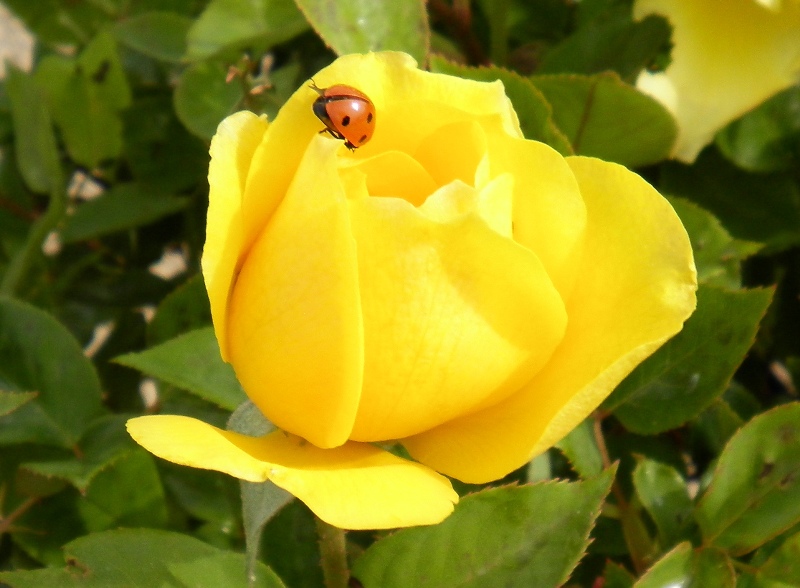
And it’s not just me who feels this way. From the comments and emails I received, it seems as if many others who also lost their mates in 2010 feel the same as I do. Some people who lost their mates that year are in new relationships, have done something opening roseequally significant to jump-start their life, or have children to raise by themselves, but unless fate intervenes, the rest of us have to figure out how to accomplish a new beginning by ourselves. And we haven’t a clue how to do it.
I basically live the same way now as I did when I was coupled, but what took on significance when it was for “us” seems lame when it’s just for me. It’s not that I don’t think I’m worthy — of course I do because I am. It’s more that when the two of us were together, everything we did somehow seemed to help build our shared life. Every idea seemed to expand “us.” Every finished project seemed to fulfill “us.” Even something as simple as jointly preparing a meal was for “us.” Each of those things was also an act of love, a commitment to each other, even if it didn’t seem so at the time, which made them doubly or triply significant.

Now a meal is just a meal. A project finished is nothing more than a task completed. A bright idea is simply blog fodder.

If I were new, starting out in life for the first time, none of this would be a problem since everything is new and exciting when one is young, but I’ve done most of what I wanted to, or at least tried to do it. To be honest, the things I wanted to do were essentially cerebral — reading, researching, thinking, writing. I haven’t traveled the world but never wanted to. Haven’t lived lavishly but see no need for it. Haven’t partied till I dropped but never had the energy for it. I have done volunteer work but now there’s no cause I’m passionate about. (I’m still doing volunteer work, but it’s mostly online, so it doesn’t do much to give me something to live for.)

It’s possible this oomphlessness is simply another stage of waning grief — it generally takes four to five years to fall in love with life again (assuming one was ever in love with life) and most of us 2010ers are still many months away from that magic number. If this is the case, the emptiness will disappear by itself once I’ve come to term with it, or it will metamorphose into another equally confusing phase.

But it’s also possible this is what my life is, in which case I’ll have to find a way to make the insignificant happenings significant again, because frankly, spending the rest of my days feeling like this is unthinkable.

***

Pat Bertram is the author of the suspense novels Light Bringer, More Deaths Than One, A Spark of Heavenly Fire, and Daughter Am I. Bertram is also the author of Grief: The Great Yearning, “an exquisite book, wrenching to read, and at the same time full of profound truths.” Follow Pat on Google+. Like Pat on Facebook.


Three Years, Three Months, Three Weeks, and Three Days of Grief

It’s been three years, three months, three weeks, and three days since the death of my life mate/soul mate. With all those threes, this should be a mystical day, but it’s a day like any other. I’m not especially grieving, though I’m not ungrieving, either. It’s just me and my normal underlying sadness, my missing him, my wondering about the future.

I’m to the point where I need something more, something beyond the bleakness of my daily life, but that “something more” comes in small doses and is not enough to sustain me. I take quick trips, go out to lunch occasionally, write a little, go walking in the desert. Although my 96-year-old father is doing well and is still quite independent, I am on a short leash (or at least it feels that way) since he likes having someone around in case of emergency.

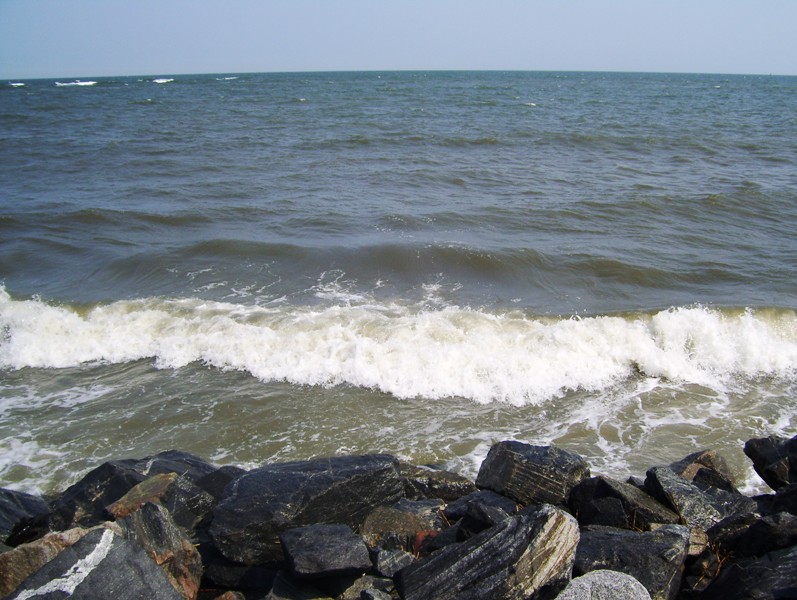
But, that is just an excuse. The truth is, I don’t know what to do and wouldn’t know what to do even if I weren’t here looking Low tideafter my father. I’d travel, of course, but it seems to me that taking an extended trip by myself would be terribly lonely and perhaps even feel pointless. I drove by the ocean the other day and couldn’t think of a single reason to stop. I’ve been to the ocean, so it wasn’t anything new. Just a lot of water. (In my defense, it was very late and I was very tired.)

I try to be upbeat, try to believe in endless possibilities (because of course, that is the nature of the universe), but I don’t yet see those possibilities in my daily life. I try to think differently, to feel differently, to open myself up to change, but I’m always just me. Alone. Waiting.

Maybe things will be different when I’m totally alone, when I am free of responsibilities, but I no longer know if that will make a difference. I feel self-indulgent at times even mentioning any of this, considering what terrible lives some people are forced to live, but I can’t live any life but my own. And my own feels empty.

If it sounds as if I’m feeling sorry for myself, there’s perfectly good explanation for that. Today I do feel sorry for myself. I have managed to get through three years, three months, three weeks, and three days since his death, and I will continue managing, but I wish I wanted something, was in love with something, felt something besides ever-fading sorrow.

***

Pat Bertram is the author of the suspense novels Light Bringer, More Deaths Than One, A Spark of Heavenly Fire, and Daughter Am I. Bertram is also the author of Grief: The Great Yearning, “an exquisite book, wrenching to read, and at the same time full of profound truths.” Follow Pat on Google+. Like Pat on Facebook.
Grief: “It was a long time ago.”

Last night I watched the 2002 movie Heaven Must Wait. In one scene, Andrew McCarthy tells Louise Lombard that his mother died. She told him she was sorry. He said, “It was a long time ago.”

And I started crying.

I don’t know why that line struck me as being so poignant since I’ve heard the same sentiment in dozens of movies during the past few years. Maybe it was the sadly resigned way McCarthy delivered the line. Perhaps it was the underlying truth of the words — that time passes. Probably it was the reminder that my life mate/soul mate is moving further and further away from me. Or am I moving away from him? Either way, time is separating us.

Certain parts of our shared life are still very fresh in my mind: the day we met, the last time I held him in my arms, the moment of his death. It sometimes seems we parted such a short time ago that he could still be at home, waiting for me. But the years are passing. That first year crept by slowly, as if time itself were reluctant to let him go, but the years are beginning to pass swiftly now. It’s been more than three years since he died. Soon it will be four years, then five. And some day, I too will say, “It was a long time ago.”

Who will I be then? What will I have done? Will I still miss him? Of course I will miss him. I will always miss him. He was a major part of my life for thirty-four years, but with the passing years, his influence on my life might wane. Other experiences will have an impact on me. Other thoughts will change the way I view life. And he will have no part in any of it.

I don’t cry much for him any more. Days, weeks go by dry-eyed, though I have occasional upsurges of sadness. “Long time ago” is still a long way away, and yet last night I had the first inkling that such a time is approaching. And so, I cried for the coming years when he will be so very far from me that the tears will no longer come.

***

Pat Bertram is the author of the suspense novels Light Bringer, More Deaths Than One, A Spark of Heavenly Fire, and Daughter Am I. Bertram is also the author of Grief: The Great Yearning, “an exquisite book, wrenching to read, and at the same time full of profound truths.” Follow Pat on Google+. Like Pat on Facebook.

Unplugged!

I did it! Yesterday, I turned off the computer. Stayed unplugged for twenty-four hours. That was the best part of the day — being unplugged. I’ve lost much of the joy I used to get from the internet — it now seems to be mostly a chore. Even the computer games I’ve been playing are more tic than entertainment. So it was great being offline.

I wish I could say that my fishing for life expedition was as successful as being unplugged, but it was hellish. I’d agreed to drive a family member halfway to Santa Barbara. I decided that since I was halfway there, I should go all the way. Spend a quiet evening at the ocean. Take a walk by myself on the beach. Have a leisurely meal alone. Just wing it. But you know what they say about the best-laid plans of mice and men (and women) . . . well, my plans couldn’t have gone more awry.

What should have been an enjoyable trip was ruined by my companion’s ceaseless vitriol toward the people he believes have wronged him. And a quick trip ended up taking eight hours because we went the scenic route. Got to Santa Barbara after dark. Drove around looking for a place he could camp or people he knew, but everything had changed in the past twenty years, so he decided to return with me. By that time, I had no thread of enjoyment (or patience) left, so I came right back instead of spending the night. Got here at 3:30 in the morning (listening to his harangues all the way).

When you fish, you never quite know what you get. Well, despite everything, I did catch some life. I saw lovely views if just through the windshield — mountains by sunlight, ocean by moonlight. I learned how easily homicidal tendencies can rise in even a generally passive person. (I mean really, fourteen ceaseless hours? I might even have gotten off scott-free.) I learned that no matter how badly you feel for someone and would like to help, sometimes there is nothing you can do.  And I discovered I’m nowhere near as nice or as kind as I think I am.

As you can see, today, I’m plugged in again, and let me tell you — the best thing about it is that it is QUIET! (I have the sound turned off so I never hear any of the typical computer noises.)

Ah. Silence.

***

Pat Bertram is the author of the suspense novels Light Bringer, More Deaths Than One, A Spark of Heavenly Fire, and Daughter Am I. Bertram is also the author of Grief: The Great Yearning, “an exquisite book, wrenching to read, and at the same time full of profound truths.” Follow Pat on Google+. Like Pat on Facebook.

Excerpt From “Grief: The Great Yearning” — Day 112

I never actually set out to write a book about grief, never planned to make any of my writing public (except for the blog posts, of course), but I was so lost, so lonely, so sick with grief and bewildered by all I was experiencing, that the only way I could try to make sense of it all was to put my feelings into words. Whether I was writing letters to Jeff (my deceased life mate/soul mate) or simply pouring out my feelings in a journal, it helped me feel close to him, as if, once again, I was talking things over with him. The only problem was, I only heard my side of the story.  He never told me how he felt about his dying and our separation. Did he feel as broken as I did? Did he feel amputated? Or was he simply glad to be shucked of his body, and perhaps even of me?

It’s been three years now since the following piece was written. The wound where he was amputated from me has healed. I don’t worry about him — at least not much — but I still miss him, still feel as if I’m waiting for my life to begin. And though I don’t feel as scattered,  I understand more than ever that wherever I am, there I am.

Excerpt from Grief: The Great Yearning

Day 112, Grief Journal

I’m going through a numb phase right now. I only cried briefly yesterday. That came after I finished watching the Paul Hogan/Michael Caton movie Jeff taped—Strange Bedfellows—and I realized I’d never watch movies with him again.

Cry, not cry. Feel, not feel. It’s all the same. Just different aspects of grief. One thing they’re right about. This is WORK! I’m tired, have little energy, don’t seem to be able to think or to do anything but the most basic chores. And I can’t make myself believe anything is important. I’m still waiting to get a grip on my grief. Still feeling as if I’m in a transitional stage, waiting for my life to start.

Except that I had a life. We had a life.

People talk about “healing” when it comes to surviving a death, and it’s as good a term as any. It does seem as if the wound where Jeff was amputated from me is still bloody and gaping, though it is “healing” somewhat. It’s not as constantly raw as it was at first.

I always felt scattered when we were apart, worried about something happening to one of us when the other wasn’t there. Well, something did happen. And I was there. Now it’s just me. Wherever I am, there I am, but I still feel scattered. Fragmented. As if parts of me are strewn all over the universe. There’s no reason to worry about him, but I still do.

Click here to find out more about Grief: The Great Yearning

***

Pat Bertram is the author of the suspense novels Light Bringer, More Deaths Than One, A Spark of Heavenly Fire, and Daughter Am I. Bertram is also the author of Grief: The Great Yearning, “an exquisite book, wrenching to read, and at the same time full of profound truths.” Connect with Pat on Google+. Like Pat on Facebook.

Saying Happy Birthday to the Dead

Today is the birthday of my life mate/soul mate. I suppose I should say “was” the birthday — he’s been dead for more than three years. We never celebrated our birthdays, and for some reason, that seems sad to me now. I never told him “Happy birthday,” never made him a birthday cake, never gave him a birthday present.

He didn’t believe in continued life after death, and yet, when I went through his “effects” a couple months after he died, I found a quote he had saved: “Life is rather a state of embryo — a preparation for life. A man is not completely born until he has passed through death.”

cakeDid he believe those words? Did he want to believe them? Or was the quote something that caught his attention once upon a time, and he kept it whether he believed it or not? Still, I wonder — if he continues to exist somewhere, does he celebrate his death day as his birthday? Or does he still not believe in celebrating such rites of passage?

We were alike in our disinterest in such celebrations, but ever since he died, I’ve been making a point of celebrating life’s moments. So today I got the birthday cake I never got for him while he was alive. (And hey, if he doesn’t want any, then there’s more for me!) I will watch one of the movies he taped and remember when he used to sit by my side and watch with me. I will think of him, not as he would be today, 67 years old, or even as he was at the end, but as he was when we met — young, radiant, and be-coming.

I will give thanks that he shared his life with me.

And I will say those words I never spoke before, “Happy birthday, Jeff.”

***

Pat Bertram is the author of the suspense novels Light Bringer, More Deaths Than One, A Spark of Heavenly Fire, and Daughter Am I. Bertram is also the author of Grief: The Great Yearning, “an exquisite book, wrenching to read, and at the same time full of profound truths.” Follow Pat on Google+. Like Pat on Facebook.

A Life Full of Possibilities

Connections make life worth living, but more than that, connections make life itself.

At the most quantum level, possibilities connect and become waves. Waves connect and become particles. Particles connect and become atoms. Atoms connect and become molecules. Molecules connect and become cells. Cells connect and become gametes. Gametes connect and become us. We connect and become communities. Communities connect and become countries.

A matrix of connections in our brains makes thinking possible. An entire matrix of connections holds us to the earth and makes living possible.

Despite these long strings of connections, I’m beginning to see that disconnections are almost as important as connections. When my life mate/soul mate died a little more than three years ago, the connective tissue of my life disintegrated, and my world lay in a heap of rubble at my feet.

Since then, more connections have disintegrated, adding to that heap of rubble. Some of those disconnections were interpersonal ones — friends and family. Other disconnections were intrapersonal ones — thoughts, hopes, even my very identity.

Often during these past years, I have despaired at the thought that only bleakness lay ahead of me. But bleakness is but one possibility. Within that pile of rubbish lie many new possibilities. Perhaps I am one of the lucky ones, getting to start all over with a new set of possibilities. As people have been telling me for the past three years, life is such a big place with endless possibilities I have never dreamed of. They have told me the universe is unfolding as it should, and that it is not yet finished working in my life. They have told me that wonderful things lie ahead of me.

What of that is true, I don’t know, but what I do know is that no matter what fate has in store for me, I am not yet finished working in my life. Just as I am gradually sorting through the detritus of my shared life, getting rid of things for which I no longer have any practical or emotional need, I am sorting through the rubble of my shattered world. Maybe I will find enough shards to rebuild my life into something workable, or maybe I will have to go out and look for pieces I can use to rebuild my life into something special.

Since my current responsibilities keep me from actually going out in the world and physically searching for new connections, I am starting with me, rethinking old beliefs, trying on new thoughts, discarding old hopes, and dreaming new possibilities into reality.

Because, at its most basic level, life is nothing but possibilities.

***

Pat Bertram is the author of the suspense novels Light Bringer, More Deaths Than One, A Spark of Heavenly Fire, and Daughter Am I. Bertram is also the author of Grief: The Great Yearning, “an exquisite book, wrenching to read, and at the same time full of profound truths.” Follow Pat on Google+. Like Pat on Facebook.
To Whom Do We Owe Loyalty?

In this age of consumerism, loyalty seems such an old-fashioned quality when used in reference to people. There is more talk of “brand loyalty” than there is of loyalty as a virtue. To be honest, I’m not sure loyalty is a virtue — it seems more of character trait than something to which one aspires.

Still, I’ve always been intensely loyal, especially to those I love, but also to other things. For example, while managing a fabric store once upon a time, I never shopped for fabric at any other franchise. Well, I did once, but never again. I felt as if I were being disloyal to my employer.

For most of my life, I thought love and loyalty were different facets of the same state, and if someone said they loved me, I assumed they would also be loyal, but now I know love and loyalty are two different things. Love is a deep feeling of affection and caring (and sometimes desire) for another person. Loyalty is a sense of allegiance, commitment, and dedication.

Loyalty, more than love, is what makes two people a couple. Loyalty keeps the two parties together, keeps them focused on a common goal, keeps them allied. I was intensely loyal to my life mate/soul mate, so much so that when he died, I wasn’t sure if I had the right to be happy here on Earth. Even the idea of someday being happy seemed disloyal, as if it were negating our life together.

I’m dealing with another situation now that makes me question the concept of loyalty itself. In this case, mUntitleddy loyalties are divided between two family members, and for a while, it was tearing me apart. I can’t ally myself with either party since the two will never agree, never manage to find a way to deal with each other, never even accept the other’s foibles (which, incidentally, are identical, though to varying degrees). Both expect my loyalty and resent my loyalty to the other, but neither has any real loyalty to me.

These matters made wonder to whom I owed loyalty, and I’ve realized that it’s time to transfer my loyalties to myself. There is no way I can takes sides in this current situation, nor can I help in any way, so the best thing for me to do is to do the best thing for me — if I ever figure out what that is.

It’s the same with my deceased mate. Although I will always love him, I can no longer have any loyalties to him. He is not here to be loyal to me, and loyalty, even more than love, needs reciprocation if it isn’t to become a sort of servitude. After more than three years, I now know I have the right to be happy, and if happiness happens to come my way, I have an obligation to grab hold and run with it. Anything else is bondage to a past that is getting further away every day.

***

Pat Bertram is the author of the suspense novels Light Bringer, More Deaths Than One, A Spark of Heavenly Fire, and Daughter Am I. Bertram is also the author of Grief: The Great Yearning, “an exquisite book, wrenching to read, and at the same time full of profound truths.” Follow Pat on Google+. Like Pat on Facebook.

Living on the Edge

Some of my happiest times during the past few years have been when I have been standing on the edge of places.

On the edge of a canyon:

Black Canyon of the Gunnison -- north rim

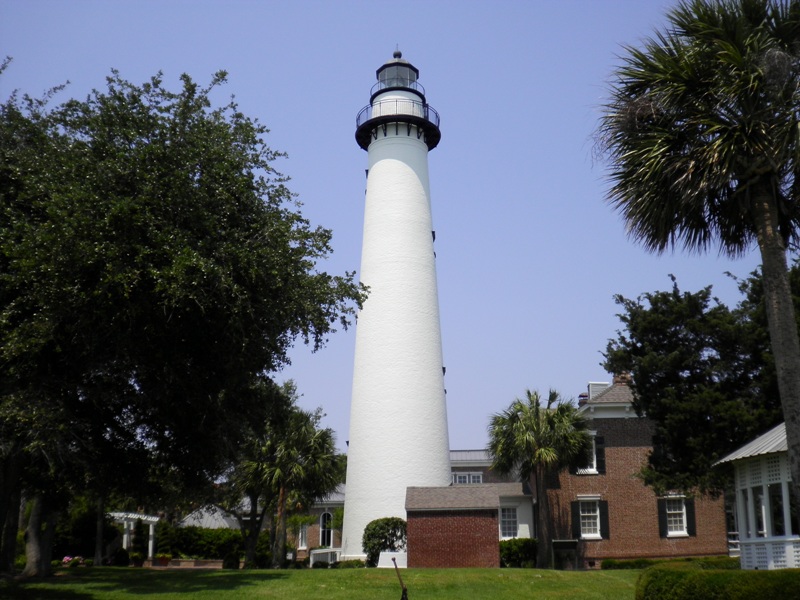
On the edge of a lighthouse:

Lighthouse

On the edge of a pier:

Ventura Pier

On the edge of the continent:

Atlantic Ocean

On the edge of a day:

Ocean Sunrise

I’m not sure why edges have such appeal for me. Perhaps it’s because when I am on an edge, I can see a long way, catching glimpses of possibilities far in advance of their appearance. Or perhaps it’s because edges create a boundary between two very different areas — land and sea; balcony and air, cliffs and gorges, night and day — and such differences mirror my own internal boundaries. Or perhaps it’s more symbolic, a precursor to the time when I will be standing on the edge of life, looking out onto . . . who knows what.

Some people “collect” lighthouses, going from one to another, taking pictures, maybe even getting stamps in a lighthouse passport. I considered making such a trek someday, but what I’d really like to do is visit edges of places.

Maybe that’s where I’ll finally find happiness: living on the edge.

***

Pat Bertram is the author of the suspense novels Light Bringer, More Deaths Than One, A Spark of Heavenly Fire, and Daughter Am I. Bertram is also the author of Grief: The Great Yearning, “an exquisite book, wrenching to read, and at the same time full of profound truths.” Follow Pat on Google+. Like Pat on Facebook.
How Much of the Truth do We Owe to Others?

Today someone told me I was evil. It wasn’t a joke — the person meant it — and I had no response to that.

Being called an evil woman sounds much more romantic than what I am — someone who’s doing the best she can in a world gone awry. I admit my efforts sometimes fall flat, and once in a great while I make a given situation worse rather than better, especially when my loyalties are divided. As do we all. But that’s not being evil. That’s being human.

I don’t believe I’m evil, but the reason I couldn’t find a response to the accusation is that it made me wonder: If I am evil, would I know?

Think of all the wars begun in the name of God. Think of all the prejudice fomented by religious folk who adhered too closely to the dictates of the Old Testament. Think of all the pregnant teenagers thrown out into the snow by self-righteous parents. Think of all the people who have harmed others in the name of doing the “right” thing. Did any of these people believe they were evil? Of course not. I’m sure the devil wouldn’t even consider himself (or herself) evil. Like all villains, he/she is the hero of his/her own story. In his/her mind, he/she is the true force of the universe, while God is the evil one.

UntitledgThis person who believes I am evil based the assessment of me partly on lies I supposedly told, though I have no idea what those lies are. They can’t mean much in the big scheme of things, because I never lie for malicious purposes, though I do occasionally lie to protect me or someone else. And anyway, how much of the truth do we owe others? For example, if someone asks our weight, do we owe him/her the truth? If the person asking is a doctor or a health insurance company, of course, we owe them the truth, just as they owe us the truth about our medical condition, but otherwise divulging information about our weight is not a requirement. Offering a lie, perhaps giving a weight we are comfortable acknowledging, is usually more tactful and much easier than a direct refusal to answer.

We often lie without thinking about it, such as exaggerating our accomplishments a bit so that we come across both to ourselves and to others as being better than we are, but so often these lies are nothing more than hopes verbalized. Sometimes we downplay our accomplishments in the name of modesty. And sometimes we “fudge” the truth, not telling the truth, but not telling a direct lie, either, though the result is the same — a deception.

When it comes to friendship and other relationships, we do owe a certain amount of truth, especially the truth of who we are, but we don’t owe that truth to strangers or to those who don’t have our best interests at heart. In a perfect world, perhaps, we could tell everyone the truth, but in our particular world, divulging too much about ourselves is risky. And it’s especially risky when the person who is asking for our truth is not willing to give up any of his or her truth.

And then there are those who tell us the truth, or at least the truth as they see it, for only one reason, to cause pain.

Which brings me back to my evilness and the lies I supposedly told. I wish I could apologize for these unknown lies and whatever else led to this belief that I am evil, but it is impossible to talk to someone who will not listen. So I’m doing what I always do, dumping my worries and my wonderings onto this blog.

***

Pat Bertram is the author of the suspense novels Light BringerMore Deaths Than OneA Spark of Heavenly FireandDaughter Am IBertram is also the author of Grief: The Great Yearning, “an exquisite book, wrenching to read, and at the same time full of profound truths.” Follow Pat on Google+. Like Pat on Facebook.