A Photo is Not a Living Person (Though Sometimes I Wish it Were)

I only have two photos of my deceased life mate/soul mate. It seems odd in this age of electronic imagery to have so few pictures, but there was no reason to take photos. We were almost always together. We remembered the things we did, the events we participated in, the conversations we had. A camera would have only been an intrusion in our lives.

One of the photos I have is fifteen years old, a formal photo of the two of us, taken at my parents’ 50th wedding anniversary celebration. After he died, his mother wanted a picture, so I took a photo of the picture, cropped me out, and sent it to her. That image of him sat in my computer for over a year without my looking at it. I simply could not bear the pictorial reminder that he was forever gone from this earth. (To be honest, I still cannot bear the thought of his being gone.) Even worse, it didn’t look like him, not the way he looked toward the end (though it had been a perfect likeness at one time), so I barely recognized him. I didn’t want to supplant what images I had of him in my mind with a photo.

About a year ago, however, my memories of him started to fade, and I desperately needed to see him, so I printed out the photo. Somehow, the photo makes him look happy and radiant, as if he were smiling at something only he knew. (Which is odd, because he does not look at all like that in the original photo.)

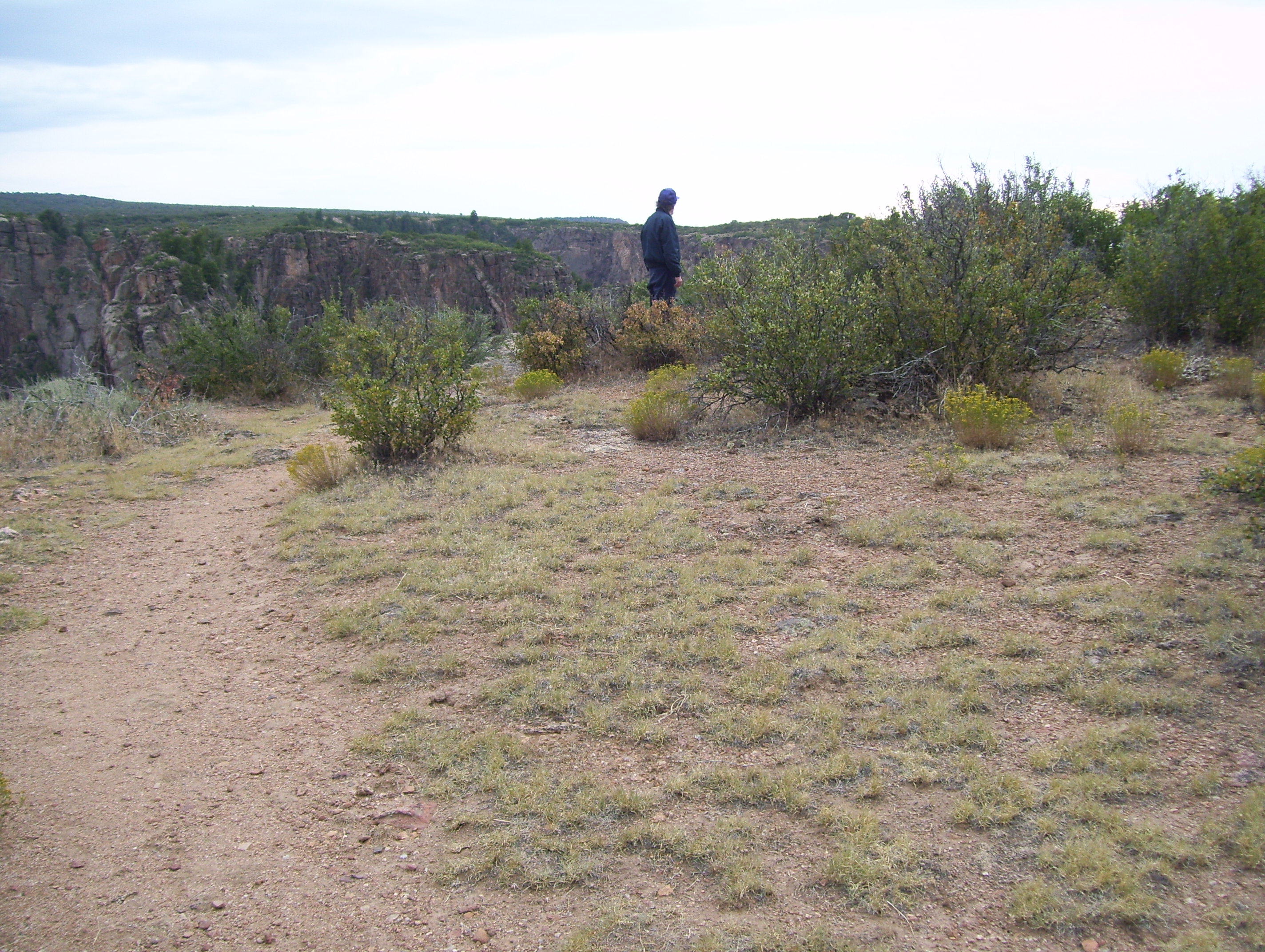
The other photo of him is from a few months before we died. (I can’t believe I made such a typo, but I’m leaving it in because in so many ways, “we” did die.) I’d just come back from a trip in a rental car, and since a rental car is a terrible thing to waste, we took a rutted and sparsely graveled road to the north rim of the Black Canyon of the Gunnison. (Although we lived only twenty miles from there, neither of our old cars could safely make the trip.) I didn’t realize I had a photo of him until months after his death when I went through the pictures I took of the canyon. (By then, I often took photos — seeing life through the lens of a camera was the only way I could deal with his dying and then with his death.) He is standing at the rim of the Black Canyon, his back to me, staring out at . . . eternity? I was able to look at this photo occasionally, for some reason — maybe because I was able to “see” him the way I remembered him.

There is a third photo, one his oncologist took. I’d considered asking for it, but I remember how appalled my mate was when he saw it — he looked old and haggard and gray and very, very ill. I didn’t want to remember him as such, so I never followed through with my inclination.

A few months ago, I put away the photos. I went from not wanting to look at the pictures, to drawing comfort from them, to not wanting the constant reminder he was dead. But yesterday, I set the photos out again. I needed the feeling of connection, no matter how ephemeral. I don’t know how long it will be before I can’t stand to look at them again — perhaps only a day or two. As much as I need to feel connected to him (sometimes that lack of connection is like an itch deep inside), the truth is, a photo is not a living person, and I cannot feel connected to an image on a piece of paper.
How Will the Unfulfilled Dreams of Today’s Youth Create the World of Tomorrow?

Progress is fueled by the dreams of the young, especially dreams that did not come true. Children born into loveless riches will sometimes go to extraordinary lengths to find the love they crave. Children born into poverty will often accomplish impossible tasks in order to have the security or possessions they desperately want. (Me . . . I only wanted to be left alone so I could read. Not exactly a great motivator to become hugely successful.)

I am connected to thousands of people all over the internet who had unfulfilled youthful dreams of being published writers. The sheer mass of people past their first youth (and second and third) who are now pursuing that dream could be the juggernaut that crashed through the boundaries established by the corporate publishers, bypassed the gatekeepers (agents), and helped create a whole new industry to service self-publishers. (If there is a need, there will always be someone out there willing to make a buck fulfilling that need.)

The present generations growing up won’t have those unfulfilled dreams of being published authors because they can sit down right now, write what they want, and publish it. They don’t have to strive for the dream of publishing — they can get it immediately. So how is that going to affect the future of publishing? It’s possible that the human need for storytelling will continue to fuel the book industry. It’s possible the unfulfilled dreams of the young will center more on making a fortune from writing, and so in later years, they will go chasing after corporate publishers. (Despite the myth of being able to make a fortune self-publishing, only a very small percentage of writers ever achieve that goal, and often the fortune comes when the self-publishers end up signing a contract with the corporate publishers.) It’s also possible the world will be completely different when the present generation of nineteen year olds reaches that age when their children are grown and they can indulge their dreams.

I don’t have a clue what this generation is like. Well — I have a smattering of a clue. In a recent article, You’ve lost that lovin’ feelin’?, Paul Eisentein mentions that nearly a third of American 19-year-olds haven’t bothered to get their driver’s licenses yet. Some have no interest in cars, some can’t afford the payments, some have desire to deal with the outside world since they can find all the companionship they want via their various electronic appendages such as cellphones and Ipads. Whatever the reason for abandoning this automotive rite of passage, there is a huge difference between this generation and previous ones. They are just starting their journey, and the world will change to meet their needs. With as rapidly as things change, the gadgets that will run our lives twenty years from now have not yet even been imagined.

If you’re expecting me to provide a response to question in the title, “How Will the Unfulfilled Dreams of Today’s Youth Create the World of Tomorrow?” you’re out of luck. I don’t have an answer. I was hoping you did.

No Life in My Life

I am heading toward the two-and-a-half-year anniversary of the death of my life mate/soul mate/best friend. The breath-stealing pain that I endured for many months has dissipated, so much so that I have a hard time believing I ever went through such agony. The all-encompassing loneliness that followed the pain has also dissipated, and I am comfortable with the idea of growing old alone (or if not comfortable, at least tolerant of the possibility).

I’ve even gotten over the horrendous feeling of always waiting. Not waiting for something. Simply waiting. Nothing has changed, of course, except my attitude. I am training myself to be in the present, to be me, to believe that nothing is important but what is right here, right now. It’s working — I am more at peace than I have been in a long time.

But . . . there is no life in my life, no spring in my step, no spark in my spirit.

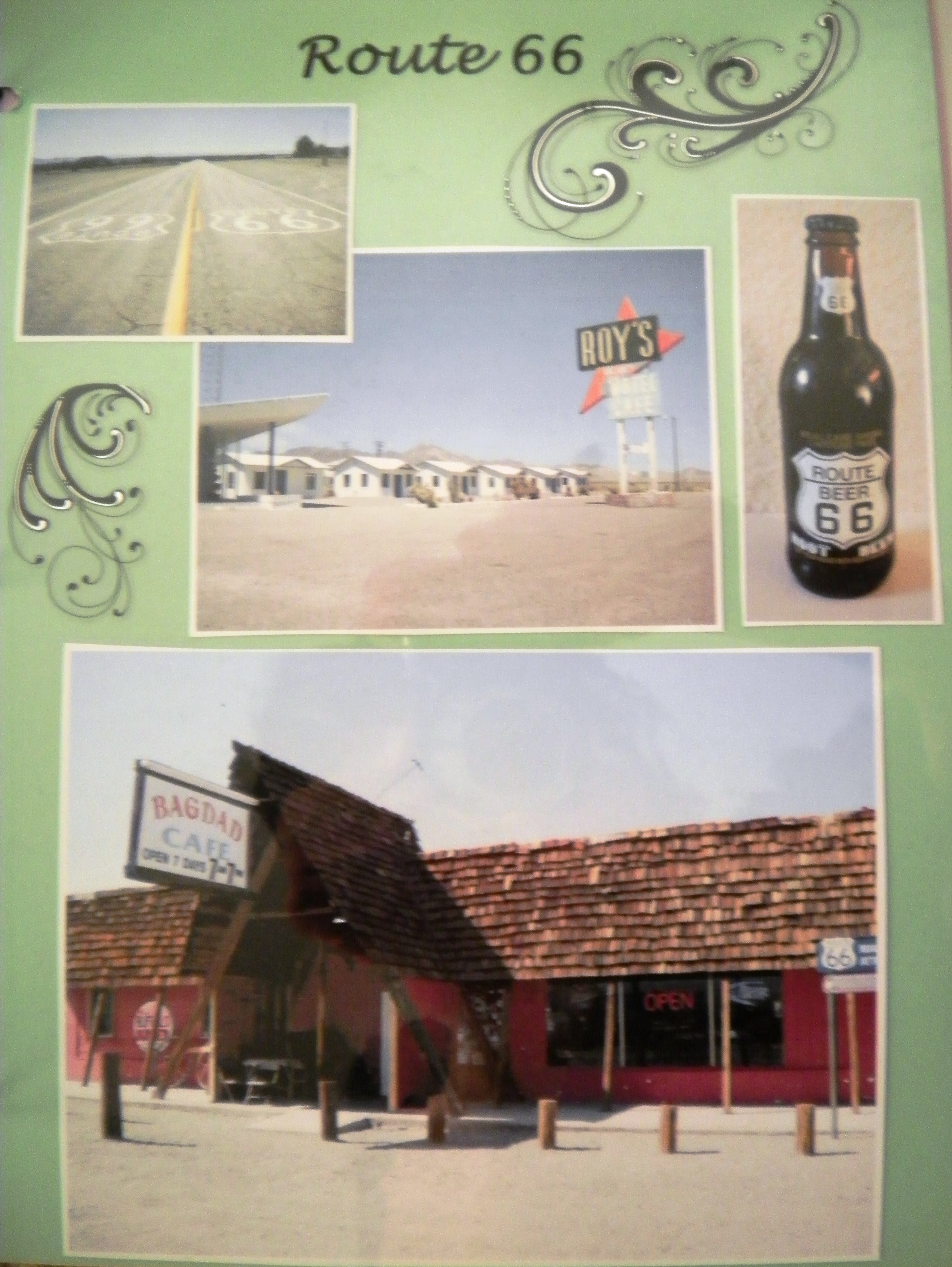
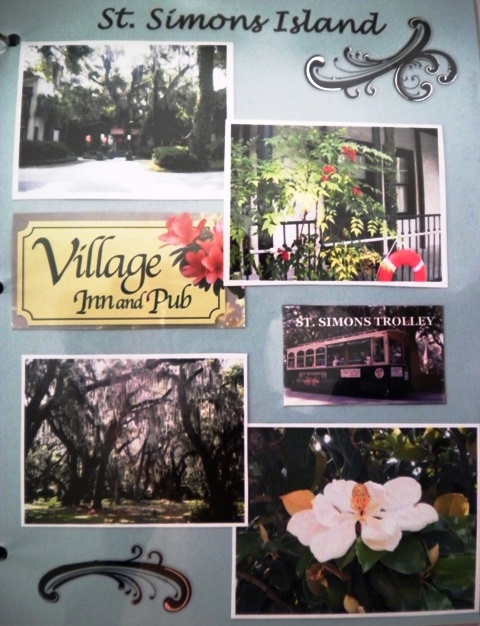
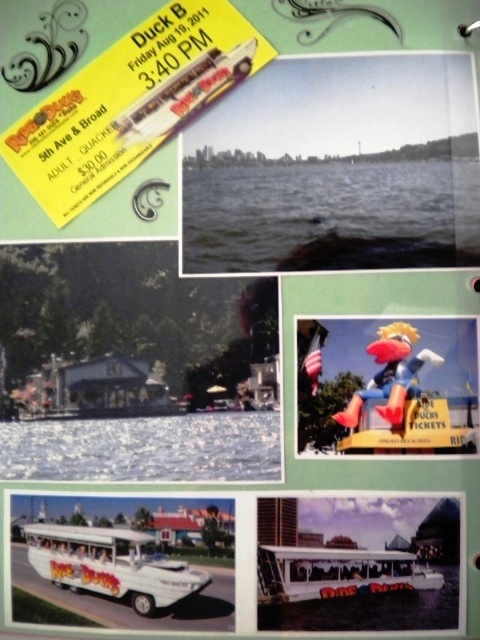
I’m not a sentimental person. I seldom kept keepsakes and I never chronicled my life with photos, but now I do both to prove to myself that yes, I am alive, and yes, I am doing something with my years. It feels as if I have done nothing but stagnate the past two years, and yet I have that scrapbook of paper memories showing me the truth:

Since October of 2010, when I started keeping the scrapbook, I have spent time on both USA coasts, hiked in the desert and on sandy beaches, climbed lighthouses and rocky knolls, ridden an amphibious vehicle and the world’s largest traveling Ferris wheel, fed ducks and sea gulls, walked along rivers and around lakes, visited ghost towns and overgrown cities, trekked the length of four piers on four different beaches, gone to art exhibits and historical museums, attended fairs and festivals, learned to shoot guns and amazing photographs. I’ve traveled alone and with friends on planes, trains, and automobiles. And I have tasted hundreds of different foods, some delicious, some that can barely be considered edible.

So why do I feel as if there is no life in my life? Do I need to be in love to sparkle with vitality? I hope not. I hate the thought that my well-being rests in someone else’s hands. The truth is probably more prosaic — although I am not actively mourning, I am still grieving, still disconnected from the world. After the death of the one person who connects you to the world, it takes years to find a different way of connecting. All of these experiences I have mentioned are ways to keep me busy while the real work of reconnecting to the world is going on deep inside.

Besides, the experiences were good ones.


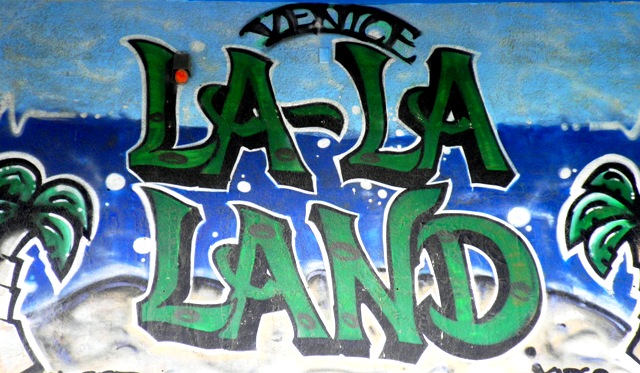
Visiting La-La Land

La-La Land is defined variously as:

  • Los Angeles
  • A place renowned for its frivolous activity
  • A state of mind characterized by unrealistic expectations or a lack of seriousness.
  • A euphoric dreamlike mental state detached from the harsher realities of life

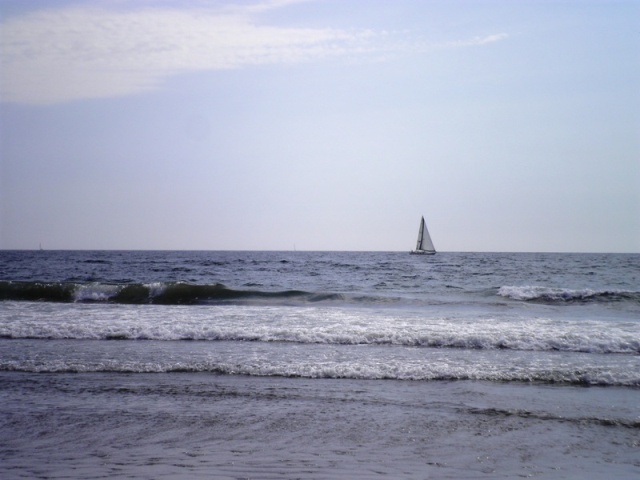
Whatever La-La Land is, I took a trip there. The actual name of the place I visited was Venice Beach, but Venice is part of Greater Los Angeles, so it counts. There was definitely frivolous activity of all kinds, though I’m sure the guys at Muscle Beach and the various street artists and entreprenuers all thought they were involved in serious business. Others were like me, taking a vacation from the harsher realities of life.

These images show a completely unrealistic view of the area since the place was people-packed and smoggy. But still, I managed to get some lovely photos. So, come join me in a pictorial tour of a make-believe land far away.

La-La Land

Venice Beach Pier

Venice Beach as seen from the pier

Sail Away

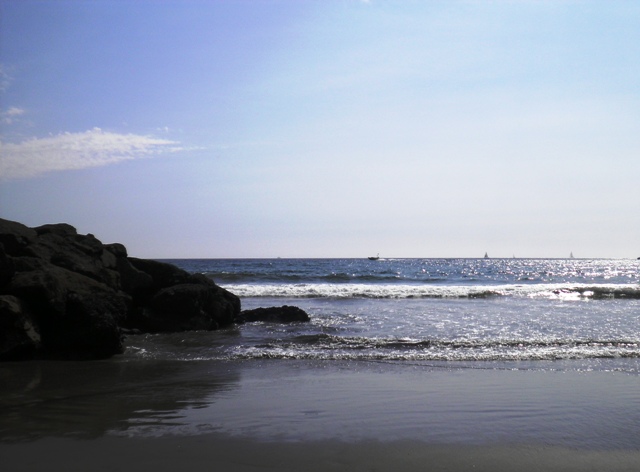
Low tide

Surf shop

Sand by Any Other Name is . . . Beach

I’ve been walking in the desert almost every day and as much as I enjoy my sandy treks, I decided I needed a change, so I took a trip to Santa Monica in California and found . . . yep. Sand.

Santa Monica Beach

It must be sand that brings out the mystic in me, because I sitting on the beach, looking at the ocean, and what should have been a startlingly wonderful experience was lovely, but not startling. It occurred to me that all this practice of being me, of being in my body, of being present, makes every experience unique in it’s own way. Of course, being in the moment at the beach is more fun that being in the moment in a traffic jam, but both add up to the moments of our lives.

Here are a few moments from Santa Monica.

Santa Monica Pier

Santa Monica Pier

One-Man Band — part of the never ending human carnival on Santa Monica Pier

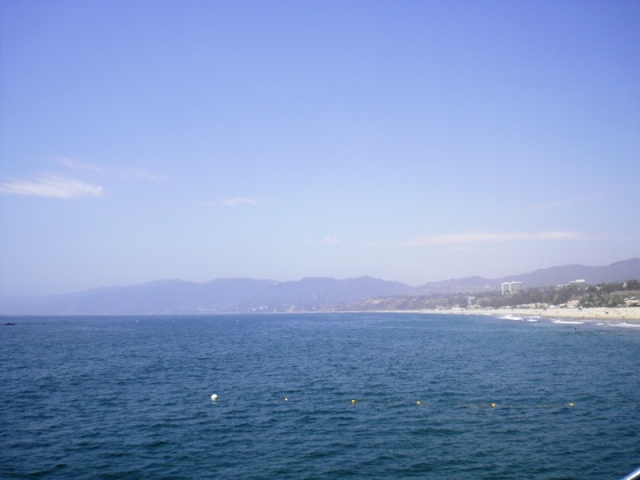
Santa Monica Mountains as seen from the pier

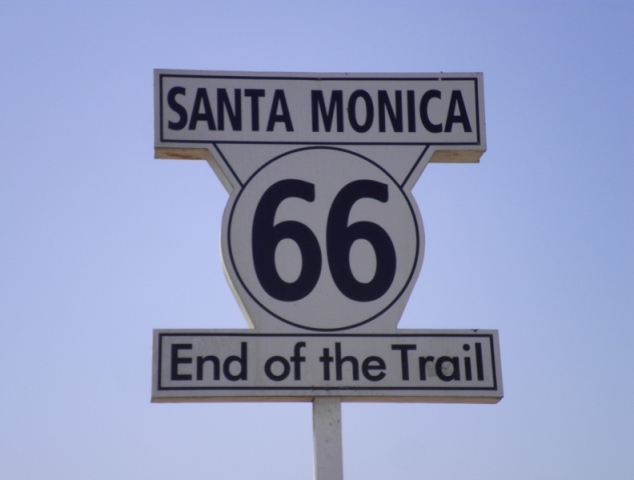
End of the Trail

Who Decides What Books are Worthwhile?

I watched Incognito the other day, a story about an art forger. One of the most interesting bits of dialogue was when a gallery owner says (screams it, actually) that whatever he says is art, that is art. The comment caught my attention because lately I’ve been blogging about the publishing industry, the writing community, and where (or how) I fit into this modern world of books. And a big part of that equation is the meaning of art as it applies to writing.

I have no fondness for the corporate publishers. For the most part, the books they’ve been publishing for a long time now seem boring and trivial, and hold no real truth for me. I am not one who can read the zillionth book in a series and still maintain my interest in the characters. The writers I have always liked are non-literary authors, such as David Westheimer and Nevil Shute, who wrote stand-alone books that did not fit into any particular genre. (To me a literary author is one who is more focused on how something is said than on what is said, and who is more focused on what is said than on the story itself.) In fact, the very reason I decided to write my own books was that I could no longer find the sort of novels I liked to read.

On the other hand, I have no special fondness for self-publishers. Many write the same sort of drivel that the major publishers put out — trivial books that lack individuality and truth. Even worse, many are badly written, and the plethora of errors shows a complete disregard for readers. Originally, I assumed these writers who go it alone were better than those published by the corporations, since the major publishers seem to specialize in a high degree of mediocrity, but unfortunately, the reverse is too often the case. Worst of all, in an effort to get noticed and make a living, many authors write a book every three or four months. Without time to think, without the grueling months of rewriting, editing and copyediting, authors will be foisting increasing numbers of less than stellar books on the market.

In this avalanche of books, what distinguishes one from another? Who decides what is worth reading? Who decides what books will succeed? The critics? Just because they say a book is worthwhile doesn’t mean that it is. Some of the books that have won major awards stun me with their ghastliness. The corporate publishers? The books they choose aren’t picked for worth; they are chosen for salability. The masses who self-publish? The masses who read? (I hate using the word “masses,” because really, who among us ever considers themselves one of the masses? But I can’t think of a better one to describe huge numbers of people who do the same thing as everyone else.) Look at the self-published books that have achieved icon-hood — few have little value as literature or art, few have a modicum of “truth.”

So who is to decide what is art or literature? My books are published by a small press, and so are the books by many writers I have met online. Someday, maybe, these small presses will provide a literary haven between the two extremes of self-publishing and corporate publishing, but the truth is, no one has to decide what books are art, which books have merit. It doesn’t matter.

In the beginning, stories were told wherever humans gathered. It is one of the very few things that separate us from any other species — our ability to tell stories. It is what makes us human. Perhaps even what makes us divine. We are a species of mythmakers, telling ourselves the story of our lives, telling each other the stories of other lives, both real and imagined.

The pen was the first great technological advance in story telling, followed by the printing press. The printing press allowed certain businesses to control what stories were told, and that control held true for centuries. Now, in this electronic age, the control is gone, and anyone can publish anything, no matter how terrible. This puts a burden on readers since often they get stuck buying something that is poorly written and badly edited, if edited at all, but this is the way things are going to be for a long time to come.

And perhaps the situation is not such a bad thing. We could be moving away from literature as art (as defined by self-styled critics) and returning to our very beginnings . . .

Storytellers.

The Future of Publishing

Some people have predicted a dire end to the publishing industry as we know it, and perhaps it needs to die. The old system of advances, where publishers subsidized the careers of a few specially chosen writers (literary authors or potentially lucrative authors who had not yet garnered a lot of attention) with the proceeds of bestselling commercial writers is a ridiculous anachronism in this world of corporate monoliths, and it is already being phased out.

The new publishing model of anyone publishing anything, no matter how trivial or poorly written, is no better. It still comes down to the same thing — that only a few writers will ever be able to make a living at the profession. As the anachronistic industry conforms more to the digital age of “content creators,” there will be fewer writers making millions and millions more writers making almost nothing.

In the old system, the publishers made the profits, not the writers. In the new system, the content distributors, such as Amazon, will make the profits. To Amazon, it makes no difference if they sell a million books by one author or one book by a million authors. It still comes down to the same thing — one million books sold (with absolutely no capital outlay). In fact, it doesn’t even matter if those books were sold or given away — Amazon still makes money from advertisers.

The price of books is constantly sliding downward. The $.99 ebook is becoming expensive in a world where readers expect books to be free. Unless there is a book they want to read (generally because everyone else is reading it) and so will plunk down cash, readers will most often choose the free item. In other words, writers will become drones feeding the machine with an ever-devalued product. There will always be a few writers making big bucks, of course, simply because hopes of financial success oil the machine. (In the same way, ordinary people occasionally become millionaires, perhaps by winning the lottery, which keeps taxes for the rich at a relatively low level, since people won’t vote to tax the rich if they expect one day to become rich themselves.)

In the end, what does all this say about the publishing industry? Perhaps nothing. Writers will still write. Most of us write not to make money, but to write and ultimately to be heard, if only by a few discerning readers. (Though a living wage would be nice.) People will still want stories. That is, after all, what we humans are — storytellers.

Print books will become scarce, but will probably always be available for those who want them, since books can be printed one at a time. (At least until the machinery breaks down.) Ebooks themselves will eventually be replaced by something else — interactive stories, perhaps, where the readers get to choose the ending. Or maybe stories that are fed directly to our heads via implanted computer chips. Who knows — certainly not me. All I know is that technology changes so rapidly that in twenty-five years, a book might bear as little resemble to today’s ebook as an ebook does to a print book.

There’s also a vague chance that the entire industry will burn itself out. When everyone can do something now, without working for it — such as publishing a book — there is no dream for the future. And what are we if we have no dreams?

(Perhaps that last paragraph needs an explanation. Many businesses were fueled by unfulfilled dreams of the young.  For example, the miniature business. So many girls didn’t get the dollhouses they wanted when they were young, that when they hit middle age and had the money to fulfill their love of the miniature world, they fueled an entire business. However, their daughters and granddaughters, who got the houses those women made, did not have unfulfilled dreams of a miniature world,  and now that those women are aging beyond the need for hobbies, the miniature business is fading.  I look at the publishing world and see how many writers middle-aged and older have come to writing because of unfulfilled dreams of being published. The new generations don’t have those dreams because they can write what they want and publish it. They don’t have to strive for the dream of publishing — they can get it immediately. So how is that going to affect the future of publishing? That’s all I meant.)

Do Writers Need To Be Supportive Of Each Other?

Do writers need to be supportive of each other, as if we are all part of one big dysfunctional family, as if all writers are the same, or at least connected in some way? I can see that it’s important not to be envious of those who make it big, since envy destroys the envier, but I see no reason to be glad of the success some writers attain, especially those who write books I would not read if they were the last books left on the face of the earth. Nor do I see any reason to celebrate the success of someone I have never met or have never exchanged so much as a single eword. Nor do I see any reason to encourage writers to write. Those who want to write, write. It’s as simple as that.

To some extent, almost all people are writers, even if they just jot shopping lists, post status updates, and respond to email messages, but this doesn’t make me connected to them except in the cosmic sense that we are all connected. (To be crankily honest, some who call themselves writers should have stayed with writing shopping lists.)

I’ve never felt any great bond to other writers, perhaps because I never really considered myself a writer. I don’t always write — sometimes I do, more often I don’t. I have no great passion or deep need for writing, no burning desire to create, no characters that scream to be born, no story that demands to be written or that writes itself. I don’t define myself by what I’ve written or what I might plan to write. My books are not my children, my characters are not my friends. When I write, I do have moments of being in the “zone,” but mostly I have to dig for each word, which is okay since that’s the part of writing that’s fun for me — finding the perfect word to say exactly what I mean. (The other day someone posted a question in a writing group asking for help figuring out a word since he didn’t have time to find it for himself. To me, that’s not a writer. Words make a writer. If you have no time for words, what’s the point of writing?)

Speaking of words, I don’t understand why so many writers brag about their word counts. What does a word count mean? It doesn’t impart anything about the quality of writing. For all I know, the authors could have been stringing nonsense syllables together or writing shopping lists, so why should I care how many words they wrote? Word counts mean nothing, what counts is the meaning of the words.

I really do sound cranky, don’t I? Well, perhaps I am, but it does irk me that just because I’ve written a few books and gotten them published, I am supposed to accept other writers as my “family.” Someone who slaps together a draft and posts it on Amazon as a published book doesn’t have anything in common with me. Someone who sits down and spews out thousands of words — good or bad — doesn’t have anything in common with me. Someone who scribbles an erotic book that catches the fancy of the masses doesn’t have anything in common with me. (Nothing I write will ever go viral. I have taste.)

Still, I do what I can to be supportive of other writers. I have two blogs that cater to writers — one is for book excerpts, and one is for interviews. (Feel free to send me an interview or book excerpt according to the instructions on the blogs.) I also have a writing discussion group on Facebook to help writers develop their craft, and I host a self-promotion extravaganza every Saturday to give writers a forum to promote. So maybe this is a case of my actions speaking louder than my words.

Don’t Buy My Books

With millions of people out there urging you to buy their books, I’m going to do the opposite and tell you not to by mine. Considering the books that make it big in this anything-goes book world, chances are you won’t like my novels, anyway. Here’s the truth of it — don’t buy my books if:

You are looking for vampire, ghouls, zombies. There are no such beings in my novels, though there is a brief mention of zombies in A Spark of Heavenly Fire, and there are plenty of sub-humans, such as unscrupulous scientists and bureaucrats, but they bleed and eat the same as any human.

You are a romance junkie. Love is a theme in each of my books, but the conflicts are never romantic ones. The characters gradually fall in love as they band together against a greater villain than their own feelings could ever be.

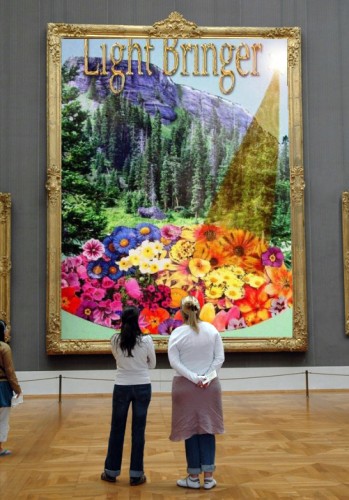
You are a fan of Fifty Shades of Grey. There is no eroticism in my books, no women who want to be subjugated by men, no kinky sex. In fact, the only graphic sex scene is in More Deaths Than One. Each of my books had less sex in it than the previous one, so my last novel, Light Bringer, had no sex. The story did not call for it, and it never occurred to me to add a few gratuitous sex scenes to help the books sell. (Also, unlike FSofG, my books are well-written.)

You only read thrillers. Although my books all have thrilling moments, and although people often stay up late to finish reading one of my books, they are not thrillers as such. In thrillers, the reader knows who did it from the beginning and learns why from the villain since part of the book is told from the villain’s point of view. In my books, the villain’s identity is not revealed until the end, except in Light Bringer, where the villain turned out to be maybe not so villainous after all.

You want books that are the same as all the rest, only different. My books aren’t the same as all the rest. I’ve read over 15,000 works of fiction, and I made sure my books weren’t like any of them. The endings are not predictable. If by chance you do guess the ending, there will still be a bonus surprise for you.

You like stories with flawed heroes. Not one of my characters was purposely flawed to make them more interesting. They are real in their own right, struggling to survive as best as they can, learning the truth of themselves and their world, growing into who they need to become.

You like raunchy humor. There is much humor in my books, particularly Daughter Am I, but the humor comes from character interaction without a single tinge of raunch, or it comes from a sly sense of irony.

You like a particular genre. My books have no particular genre. When I was growing up, the libraries had small sections for genres such as mystery, science fiction, romance, westerns, but the rest of the books were all shelves alphabetically. That’s where my books belong — with the rest. When I have to pick a genre, I usually say the books are conspiracy fiction since they are all based on various so-called conspiracies. Some readers call Light Bringer science fiction , but to be honest, it was written as myth fiction — based on modern conspiracy myths and ancient cosmological myths.

You only “buy” free books. My books are not free, and except for rare promotions, they never will be free. You can, however, download 20-30% free at Smashwords to give you a sense of what my books are like. (You can find my Smashword’s profile here: Pat Bertram. Scroll down below the book trailers to find my books. Click on the one you’d like to download.)

I Don’t Call Myself An American

I just saw a photo on Facebook: I’m not a Democrat. I’m not a Republican. I’m an American and I want my country back.

I was going to keep my mouth shut, but this American thing has been griping me for a long time. The following diatribe is not a political commentary but a semantical one. (I don’t want arguments, but I’m already getting one — I’m writing this on MSWord, and MS says there is no such word as semantical and there definitely is such a word.)

I have no politics, but I am a word lover, and I believe in using proper terms.

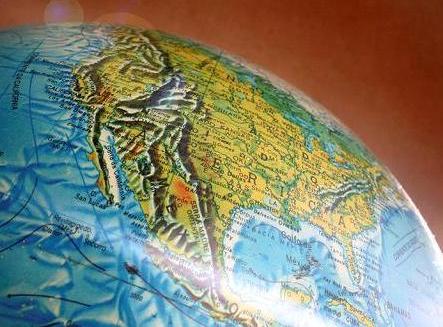
Everyone from the top of Canada to the tip of South America is an American. We who live in the United States are OF America. We are not America, nor are we the only Americans, though somewhere along the way, the term was usurped by people in this country for their sole use, perhaps because Unitedstatesian is awkward.

We were never supposed to be Unitedstatesians, anyway — we were supposed to be Coloradans and Minnesotans and Oregonians. Each state was to be a strong political entity, a sovereign territory loosely united under a weak central government. That is not how things have ended up and that is not the issue here (though anyone who has read my books knows how I feel about strong central governments). The point is that we in the United States are not Americans. Or rather, the United States is not “America.” We don’t even have our own continent. We share the North American Continent with Mexico, Canada, and Central America. In fact, in Europe (or so I’ve read), North America is not even considered a continent in its own right — it’s a subcontinent of America. So most Americans are not even “American.” Although the United States is the most populous of the American countries by far, most Americans are actually Peruvians and Canadians, Brazilians and Panamanians, Mexicans and Columbians.

I don’t call myself an American. The term is too general to have any meaning, and it is too ethnocentric. Despite what my fellow Unitedstatesians believe, The United States of America is not the center of the world, though geographically, it might be in the center of the American continent. But still, that is no reason to act as if we are the only Americans.

You say you’re an American and you want your country back? What country is that?