100 Plants Planted

Well, I did it — planted the 100 dayliles I’d ordered. It turns out I needed that many. I really thought I only needed twenty-five for each side of my walkway, and I would have made them work if that’s all I’d ordered, but since one hundred pretty much cost the same as fifty when I took such things as shipping into consideration, I’m especially glad I ordered twice as many. And especially glad that the planting is now done. It took me several days to prepare the soil, so today’s planting took only about three hours. Three hard hours.

They sure doesn’t look pretty, but that’s the way the plants came — yellow and scraggly. With any luck and a bit of water, they ought to green up and maybe even establish themselves before winter comes.

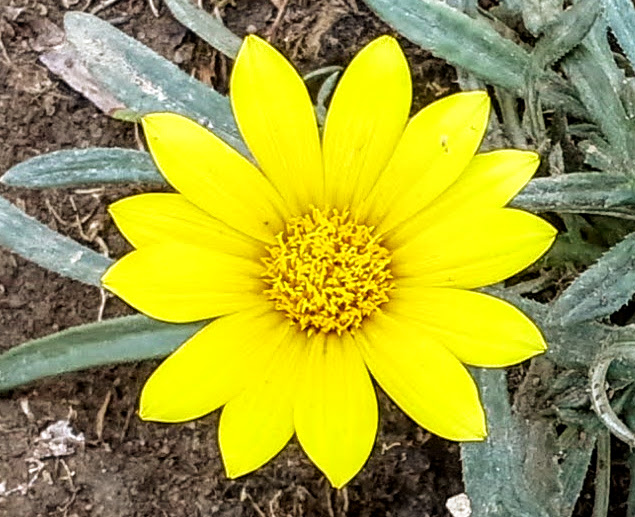
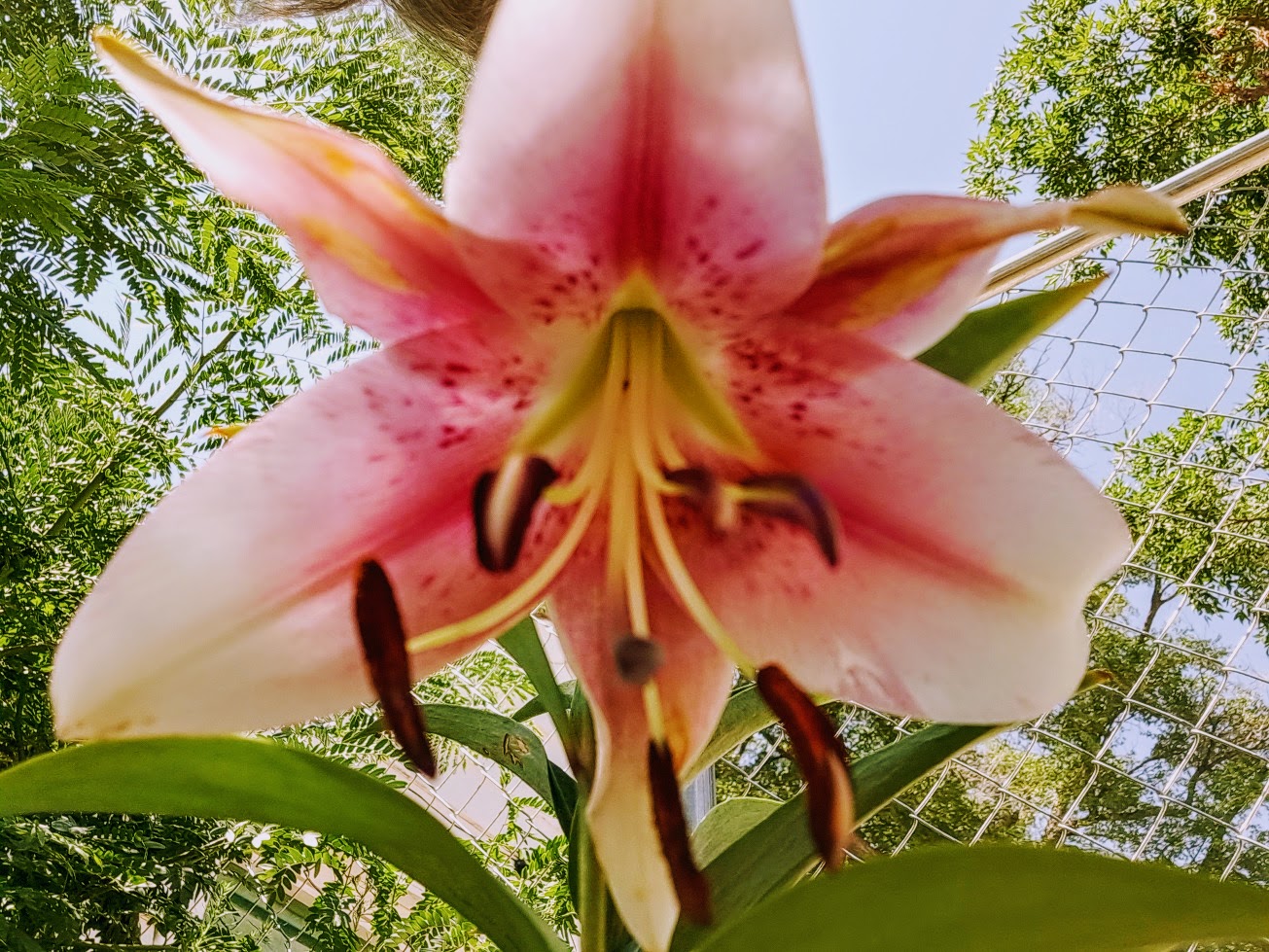
A prettier surprise was the blossom on this mangus echinacea. The tag I’d planted with along with the echinacea had blown away, so I had no idea what the plant was until it bloomed and I was able to look it up. So now I know.

And my zinnias are doing great.

Anyone who plants a garden is planting hopes and dreams and perhaps poems, and this is even more true when it comes to an amateur gardener. Without any extensive knowledge about how to care for plants, one can only hope and dream that one day blossoms will appear.

So, in a couple of years, when the newly-planted daylilies take hold, I hope I will have copious blooms to show you!

***

Pat Bertram is the author of Grief: The Inside Story – A Guide to Surviving the Loss of a Loved One. “Grief: The Inside Story is perfect and that is not hyperbole! It is exactly what folk who are grieving need to read.” –Leesa Healy, RN, GDAS GDAT, Emotional/Mental Health Therapist & Educator

Busy Day Tomorrow!

I am going to be busy tomorrow — busier than I normally am, that is. I just received my shipment of daylilies, which are supposed to be planted immediately. Immediately, in this case, has to mean tomorrow because I go to work this afternoon. Besides, it’s very hot and very humid right now, so I wouldn’t want to take a chance on getting heatstroke.

Everything takes longer and is harder than I expect, and I suspect it’s going to take a long time to plant one hundred daylilies. Luckily, I prepared the garden beds, removing the weeds and grass and digging down several inches, so it’s mostly going to be a matter of putting the plants to bed.

Still, one hundred is a lot of plants!

I’m hoping the two beds I prepared, one on each side of my front ramp, will be big enough for all the daylilies. If not, I’ll probably have to store the remainder in wet dirt until I can prepare other areas.

I hadn’t planned on getting so many of the plants — I figured I needed about twenty-five per bed since they have to be planted at least a foot apart, but two batches of twenty-five with postage cost the same as four batches with free postage,, which is why I ended up with that many plants. So tomorrow I get to work!

Touch-up paint for my car also came today. The paint below the gas cap rotted either because of the fumes or because of drips, and that discolored strip of paint recently fell off. Luckily, the gray primer is intact, so all I have to do is hope that the paint people sent the right color and that I can paint it on without it looking too sloppy.

That chore can wait a couple of days or even weeks, if necessary, but the planting can’t wait. It will be good to have something fun growing in those front-yard areas. Weeds and thick-bladed grass are not the sort of things I want greeting me when I get home from work.

I’d planned to take it easy today so I wouldn’t be too sore for the chore tomorrow, but the contractor assigned a worker who assigned a different worker to come and fill in the moat around the house that they’d dug up when they fixed the cracks in the foundation. That wouldn’t have been a problem, but the guys who were supposed to have come on Saturday to whack the weeds around the house never showed up, so I ended up helping dig out the worst of the weeds so the worker could fill in the moat. (Some of my stories about the contractor and his workers sound like a Judge Judy show waiting to happen, but I’m not a litigious sort, and besides, the work will get done. Eventually.)

Still, I’ll rest this evening, perhaps with a bit of luck even go to sleep early, so that I can play in the dirt tomorrow before it gets too hot.

***

What if God decided S/He didn’t like how the world turned out, and turned it over to a development company from the planet Xerxes for re-creation? Would you survive? Could you survive?

A fun book for not-so-fun times.

Click here to buy Bob, The Right Hand of God.

Mucking Around in the Dirt

I wasn’t outdoorsy when I was young, nor was I particularly prissy. I was a bit of a dreamer, but more than that, I was a reader. All I ever wanted to do was read, so any digging in the dirt was done vicariously between the covers of books. To be honest, I don’t remember any instance of soil in books, though there must have been. I read stories about farming and archaeology and escaping from prison camps via tunnels, but somehow I never really associated such literary activities with dirt. When I inserted myself into the books I read, I was always relatively clean, no matter what the activity.

As an adult, my jobs were of the clean variety — no getting dirt under my fingernails — and reading continued to be my preferred method of escape and entertainment and education.

So it mystifies me that I’ve become rather fond of mucking around in the dirt. I spent the morning preparing a bed for the daylilies that will be arriving next week, and to fill in the low areas where deep clumps of weeds and grass were removed, I hauled buckets of dirt from a dirt pile left behind when the stumps of my felled trees were removed. A couple of the buckets were pure mud, and I found myself spreading out the damp soil using my gloveless hands. I never even thought anything of it until a person who happened to see me doing so chuckled and said, “I love mucking around in the dirt, too.”

It’s funny sometimes to get a glimpse of how others see us. To me, I was just gardening. It never occurred to me that I might actually like the feel of dirt. And, as it turns out, I do. Usually I wear gloves when I “muck,” but I hadn’t planned on doing anything this morning but a bit of digging, so I’d left my gardening gloves in the garage. I’m glad I did. There’s something so elemental about one’s hands in the dirt; it’s only when we become civilized and have to worry about grooming and manicures and such that dirt on our hands becomes the enemy.

Oh, and reading. One can’t read with dirty hands. To do so seems a desecration of the written word.

I’ve gone through many changes, not just of me but of my lifestyle, during the years after Jeff died, and this mucking around in the dirt is a surprising one, though it does go along with my new-found love of gardening.

***

Pat Bertram is the author of Grief: The Inside Story – A Guide to Surviving the Loss of a Loved One. “Grief: The Inside Story is perfect and that is not hyperbole! It is exactly what folk who are grieving need to read.” –Leesa Healy, RN, GDAS GDAT, Emotional/Mental Health Therapist & Educator

Eventually

I spent most of the morning digging up weeds and grass, mostly prostrate knotweed, which serves for grass in this usually arid part of the state. Knotweed is hard to dig up because not only are the roots deep and extensive, but each grass blade ties itself to the ground with myriad roots. As always, I ended up doing more than I planned, and wore myself out, but that’s a good thing because it shows that I am strong enough to get the job done.

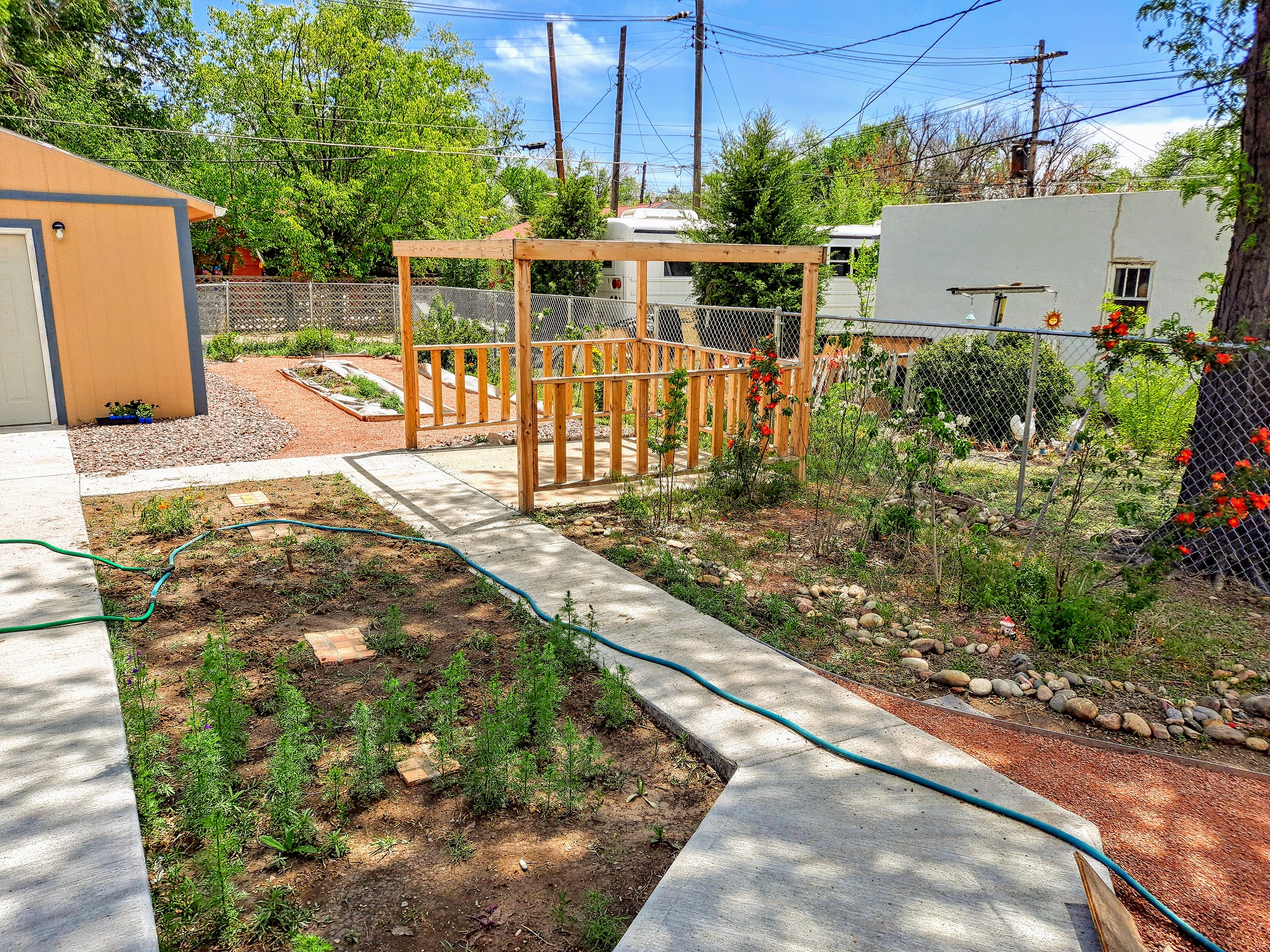
My original plan for today was simply to map out a garden area on the left side of the ramp going up to the house. On the right side of the ramp, there is a half-moon garden area, defined by the reddish path that leads to the back yard. It was so pretty a few weeks ago when the larkspur were in bloom, but I want to plant day lilies there so something will bloom once the larkspur is gone.

I found a place online that sells mystery daylilies ((lilies without a specific name or classification), and I wanted some for the right-side garden area. I figured I’d need more than twenty-five for all the places I want to plant a few, but if I bought two lots of twenty-five, it would cost as much as a lot of hundred. So I ordered a hundred. I’m not sure when they will arrive — it might not be until fall — but I thought I ought to be prepared to plant when they eventually get here. I also figured that the worker who will come eventually to lay the rock wouldn’t want to measure the ramp-side gardens to get them more or less even, so that was my self-appointed task today — to stake out the garden area. Of course, where the stakes needed to go were deep rooted weeds, grass, and knotweed, so I had to dig up the rim of the half-moon in order to pound in the stakes, and that prompted me to dig up the whole garden area.

The plan is to eventually put in a red rock (breeze) path on the left side that sort of matches the one on the right side until it needs to swing wide to go around the house. The left side of the house will have rock around the foundation just as on the right side.

On the right side of the photo, you can see sort of a squared-off mess of rock and gray weed barrier fabric where they’ve been dumping the loads of rock they’ve been bringing in. When that area isn’t needed for a dump site, it will be a gray slag parking spot. Not that I need another place to park since I have the garage and just one car, but there is a double gate in the fence right there, so it makes sense to have a corresponding parking area.

I haven’t done much with the lawn on the left-hand side of the yard. What grass there was in the midst of the weeds died back in the extreme heat we suffered through during most of May and June, but there really is no point in trying to revive it yet. The area needs loads of dirt to level it off before grass and an ornamental tree is planted. And before that, the weeds will need to be dug up. Eek. A lot of work to be done eventually

There still are too many “eventually”s in my landscaping plan, but at least I am doing my part, which, of course, is the only thing I can control — at least to some extent. Most of the time, I’m okay with the “eventually”s because what is going to take the longest is planting bushes and flowers and waiting for them to grow.

Now that the property is starting to take shape, at least in my mind, I’m getting excited. It should be rather awesome when it is finished, and hopefully, not that difficult for me to take care of in my perhaps feeble old age.

***

What if God decided S/He didn’t like how the world turned out, and turned it over to a development company from the planet Xerxes for re-creation? Would you survive? Could you survive?

A fun book for not-so-fun times.

Click here to buy Bob, The Right Hand of God.

The Love of Gardening

A friend sent me the following quote today: The love of gardening is a seed that once sown never dies, but grows to the enduring happiness that the love of gardening gives. ~ Gertrude Jekyll

I often think of something a bereaved woman told me back in my actively grieving days. She said she knew a woman who had lost everyone she had ever loved, but that woman was the most joyful person she had ever met. The woman was elderly, but still gardened. We marveled at the incongruity of the woman’s joy despite all her loss, but perhaps her secret to happiness was her love of gardening.

One of the many surprises of my current life is how much I have grown to love gardening. Even when the weeds take over, there is a certain satisfaction to clearing the area to make my plants pop into view. When they die, there is some satisfaction in learning a lesson, perhaps the plant is in the wrong place, I need to take better care, or I should just let it go and concentrate on the plants that are doing well. And there is a special joy in watering the garden areas by hand because it allows me to get acquainted with each plant, watch its progress, and enjoy any flowers that might bloom that day.

Today I had a special treat:

A squash blossom! The zucchini seeds I planted are flowering and perhaps someday I might even have a few zucchini to eat, but if not, the flower is a joy in itself.

I found some radish blossoms. Apparently, I didn’t find this radish in time to eat it.

There are also some petunia blossoms,

and more hollyhocks. The fence is five feet high, so you can see how tall the plants can get!

Several people have mentioned that they’d love to see my garden, but the truth is, you’ve seen it all. Every flower that has ever grown in my yard has been posted here, which makes it seem as if I have a lush garden. Some year I might, but for now, there is one flower here, one there, and another somewhere else. Still, I enjoy showing off my small successes to those who stop by, telling the story of each plant and sharing my newly found love of gardening.

***

Pat Bertram is the author of Grief: The Inside Story – A Guide to Surviving the Loss of a Loved One. “Grief: The Inside Story is perfect and that is not hyperbole! It is exactly what folk who are grieving need to read.” –Leesa Healy, RN, GDAS GDAT, Emotional/Mental Health Therapist & Educator

There’s Always Something

We had big winds last night that blew leaves and twigs all over my yard, especially in the gravel areas and pathways. What seems strange to me, is that the winds always blow these things into my yard, but once here, they never get blown back out again. They just stay, which makes the ornamental rock around my garage and house look terribly unkempt.

The people who are laying down the rock told me I will have to get a leaf blower to keep the rocks clean, otherwise, the leaves decay and sink to the bottom of the graveled area, and will eventually destroy the weed-blocking fabric. I figured I’d have to blow the leaves off the rocks once a year or so, but the way things look, I’ll have to do it rather frequently. Also, to my surprise, plants do grow in the rocks, though supposedly, they are easy to pick out because of shallow roots, which is only partly true. Some are easy, but some are as difficult to remove as they would be from soil.

I always thought the purpose of xeriscaping at least part of a yard was to make it maintenance free, but as it turns out, I was wrong about that. Still, my main reason for the rocks around the house and garage was not easy maintenance so much as to protect the foundations, and the reason for the pathways was for my safety as I age. I don’t suppose I’d mind the work as much if it were my leaves and twigs settling in the yard, but they’re not. I don’t have any big trees any more. Mine were diseased, and had to be cut down. I will plant new trees, but it will be years before they would affect the xeriscaping areas of my yard.

Looking on the bright side, I get to buy a new tool! I’ll probably get a leaf blower that plugs in rather than a battery-operated one to make sure it’s not too heavy for me to carry around because there is a lot of area to cover.

Unless there is a way to redirect the wind to send the detritus back where it came from? I’ll work on that.

Meantime, the good news of the day is that the mechanic came to pick up my car so he could fix the brakes. Yay! I also enjoyed showing off my garage to the mechanic and his helper. It really is quite a wonderful building, and well organized, if I do say so myself, with metal shelves along one side, racks to hang long-handled tools on the other, and counters under the window for a work space.

More good news is that a daylily I planted a couple of years ago finally bloomed! I was surprised to see it was orange for some reason, perhaps because the other daylily, which did bloom last year, was yellow.

I’ve been checking out daylilies, and found a company that will sell untagged batches, so I wouldn’t know what I was getting. Sounds like fun! I discovered that it’s possible to plant them in the summer, so it would give me a more interesting project for the next few months than blowing leaves and twigs and such.

Good or not-so-good, there’s always something new, it seems, when it comes to landscaping and gardening.

***

What if God decided S/He didn’t like how the world turned out, and turned it over to a development company from the planet Xerxes for re-creation? Would you survive? Could you survive?

A fun book for not-so-fun times.

Click here to buy Bob, The Right Hand of God.

A Possible Showplace

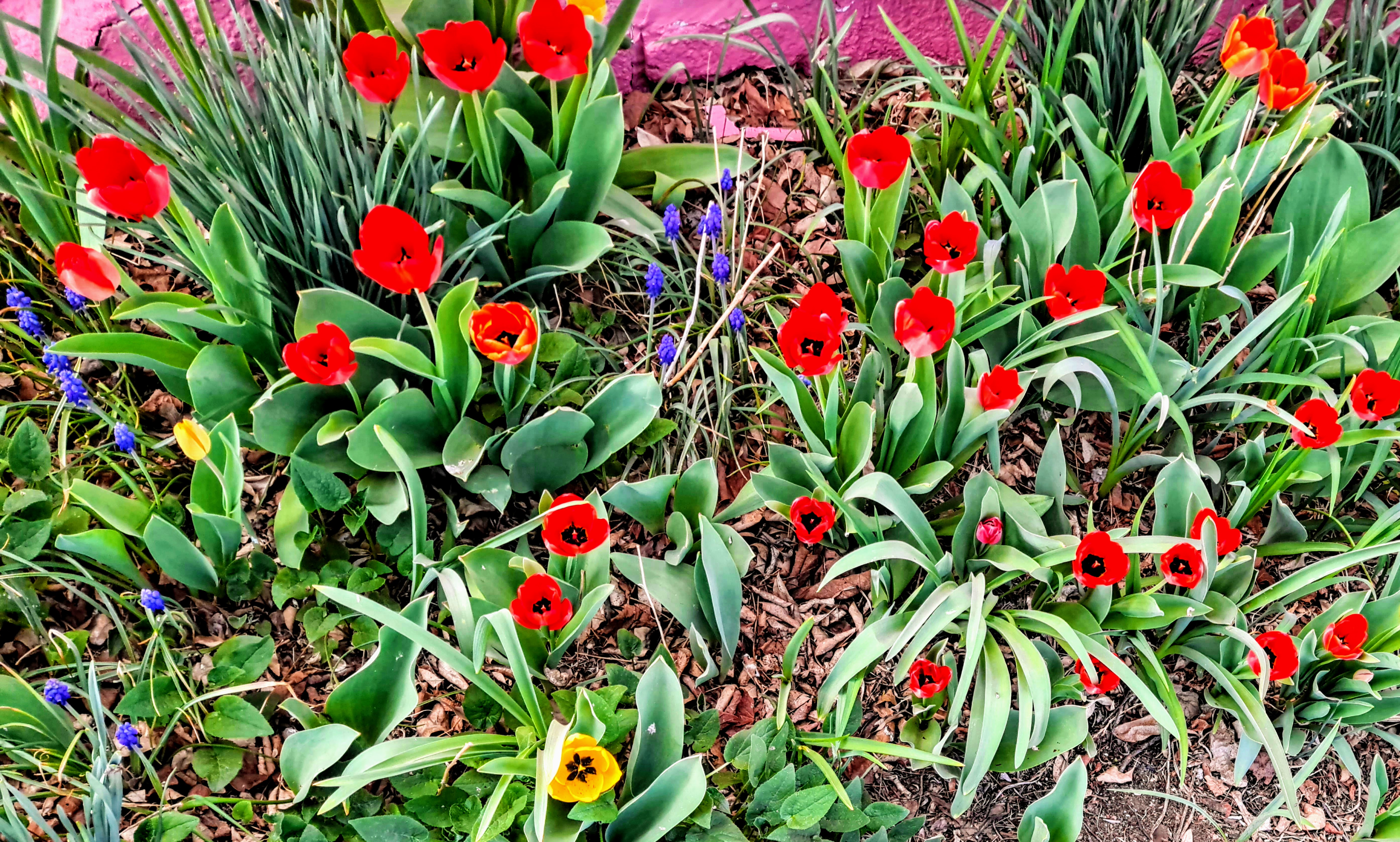
After my tulips and other spring bulbs faded, larkspur grew in that same garden. I harvested what seed I could, then had to cut down the dead larkspur stalks, so now nothing is growing in that area.

I now know I have to do a better job of “layering” for lack of a better word, making sure that after the larkspur are gone, something else grows in its place. It’s too late in the year to plant anything, so I will have that bare spot to look at for the next several months. In the fall, chances are more larkspur will grow, but meantime, it’s not very pretty.

A friend has this “layering” thing perfected. After her tulips bloomed lavishly, other types of flowers grew, and now that the second generation of flowers are gone, her garden is filled with bluebells and orange daylilies.

Admittedly, her garden is a lot older than mine and has been well-established for perhaps decades, but if I do things correctly over the next few years, perhaps I too can have flowers for many months.

I’m thinking of borrowing her idea of daylilies, even though I never done well with them, which is odd because they are supposed to be so easy to grow they have a tendency to take over a garden. Still, it’s worth a try. Or I could plant zinnias — in another area where I cleared out the larkspur, zinnias are beginning to blossom. In this case, though, they are not “layered,” but were planted next to the larkspur. So only half of that garden area is bare. Zinnias are just about the only flowers I can grow from seed, probably due more to this area than anything I am doing — at one time, 90% of the world’s zinnia seeds were grown not far from here.

I’d worry more about my lack of knowledge and experience, but this is supposed to be the project of a lifetime, so perhaps in five to ten years, I will have a showplace.

Or not. There’s still the harsh sun, lack of moisture, and alkaline clay soil, and an inexperience gardener (me) to deal with. I’m amazed I can keep anything alive. It seems the most prolific growers around here are weeds and trees that have been chopped down. Luckily, I just got word that the workers are on the way to pick up a stump grinder so they can get rid of the stumps and the unwanted “forest” that is growing from the exposed roots of the downed tree.

One more step to that possible showplace.

***

Pat Bertram is the author of Grief: The Inside Story – A Guide to Surviving the Loss of a Loved One. “Grief: The Inside Story is perfect and that is not hyperbole! It is exactly what folk who are grieving need to read.” –Leesa Healy, RN, GDAS GDAT, Emotional/Mental Health Therapist & Educator

Grief and Gardening

When I was out weeding earlier, it dawned on me that grief and gardening have something in common. With gardening, you have to concentrate solely on what is within arm’s reach. If you think of the whole yard as a single entity, you’d never get anything done because the totality of the work involved is immense, more than one mind can hold. So the only way to get a yard or garden the way you want is to do what you can when you can and hope that someday the whole will be worth it.

That’s pretty much the same as grief, though with grief, you also have to deal with a whole lot of pain and trauma and sorrow. The totality of the loss and the pain is beyond the comprehension of most of us, so all we can do is concentrate on each day, each hour, sometimes even each minute. As with a garden, you can only hope that there is something at the end of all the grief work you’re doing that will be worth it.

Nothing, of course, will ever be commensurate with the death of that one person who was intrinsic to your life, but there needs to be the hope that someday, somehow, you will find a new way of being — of being you alone, not you as half of a couple.

It’s a long time coming, that hope. For years, most of us can’t even imagine having any sort of hope, and yet we get up each day, survive each minute the best we can, deal with all the tasks that can’t be put off. That all of this is accompanied by tears or anger or screaming or any of the other ways we have of dealing with the pain and stress of grief doesn’t mitigate the hope that getting up each day signifies. Even if we don’t feel hopeful, the mere act of living shows hope. A rather despairing sort of hope, to be sure, but hope nonetheless.

It’s only in retrospect that I can see the bigger picture of grief. For a very long time, all I had were the small increments, though over the years, the increments did expand from seconds and minutes to hours and days, and finally to years. And now I am in a place where I have a house and yard and garden and thoughts of bigger pictures.

I can’t say that that all the grief work was worth it to get me here because while the work of a garden might be worth it, “worth it” is meaningless when it comes to grief. Once I lived a shared life and now I don’t. In the end, after years of pain and sorrow and grief, that might be all it comes down to.

But I am here. And I am surviving on my own. That has to mean something.

***

Pat Bertram is the author of Grief: The Inside Story – A Guide to Surviving the Loss of a Loved One. “Grief: The Inside Story is perfect and that is not hyperbole! It is exactly what folk who are grieving need to read.” –Leesa Healy, RN, GDAS GDAT, Emotional/Mental Health Therapist & Educator

Clean Slate

There were several things I wanted to remember to do today, so I made a list. The first thing on the list was to remember to water the plants that need it, but it rained last night, enough that I had to close the windows, so I crossed “watering” off my list when I woke this morning. Instead, I went out to pull weeds because, as I’ve learned, they come out so much easier when the ground is sodden. I pulled the first fistful. Then pulled and pulled. And nothing budged. Except me. I almost fell backward from all that pulling. It turns out the clay soil was so dry adobe bricks could have been cut out of ground to build some sort of structure, but since I didn’t need any adobe bricks (and had no way of cutting them out anyway), I gave up on pulling weeds and decided I better water my poor desiccated plants.

Apparently, it only rained inside my house. (Raindrops blown through my windows caused a bit of a puddle.) I have no idea what happened to the rest of the moisture — I’m fairly sure it couldn’t have been vaporized by all that sheet lightning keeping me awake last night. If any rain did fall, it certainly didn’t do the plants any good. The storm cooled things down, though, which did me good. It’s 66 degrees Fahrenheit (18.9 C) right now. Temperatures are expected to climb back into the hundreds by tomorrow, but I prefer not to think about that and simply enjoy the cool.

Other things on my to do list were to call my mechanic and reschedule an appointment to get my brakes fixed (they were supposed to be done last Friday, but he took that day off) and to call my contractor to see if he’d forgotten me (he was supposed to send one of his guys to work here starting last week, but except for a few hours, the guy was a no-show).

The last thing on my list was to get ready for work. Since this isn’t my regular day, I had to make a note to make sure I got there when I was supposed to. Because I am neither a mechanic nor a contractor with more business than I can handle, I need to honor my obligations.

I have a clean slate now, with nothing on my list, and I hope to keep it that way because the problem with a list is that it’s only good if you remember to read it. Luckily, today I did remember.

***

What if God decided S/He didn’t like how the world turned out, and turned it over to a development company from the planet Xerxes for re-creation? Would you survive? Could you survive?

A fun book for not-so-fun times.

Click here to buy Bob, The Right Hand of God.

The Day Before Summer

Today was my day for watering the garden and since I had to go to work mid morning, I went outside fairly early to take care of my gardening responsibility. And eek. By 8:00 o’clock, it was 80 degrees with 80 percent humidity, and 80 parts fleas and mosquitos.

We generally have low humidity here, which makes the days of high humidity an especial affront. And the mosquitoes . . . they must be new to the area because they didn’t get the message that mosquito repellants were supposed to repel them. Still, I got through the task, though it was an effort, not just because of all the annoyances but because of the toll the high heat and searing sun and no rain is taking on my yard. Many of my poor plants are desiccating; I have brown stalks where once the larkspur held pride of place; and too much dying grass and invading weeds are making my various garden patches unsightly. It’s simply been too hot to spend much time outside cleaning out the beds.

Even worse, a few baby bushes look as if they’re giving up. Not that I blame them. Except for trying to keep the plants alive and doing whatever non-gardening jobs I need to do, I too have more or less given up. And it won’t even be summer here until 9:31 tomorrow night. I can’t imagine another three months of this heat, though I suppose I will make an accommodation with the weather as I have done with every other obstacle in my life.

Just not today.

I couldn’t bear to be outside even long enough to take a photo of the few flowers that are so bravely blooming. The cactus flower that accompanies this article was taken yesterday as I left the house to go to work. It’s gone today, and there will be no more pretty yellow blossoms to mask the vicious prickles on the plants.

***

Pat Bertram is the author of Grief: The Inside Story – A Guide to Surviving the Loss of a Loved One. “Grief: The Inside Story is perfect and that is not hyperbole! It is exactly what folk who are grieving need to read.” –Leesa Healy, RN, GDAS GDAT, Emotional/Mental Health Therapist & Educator