My Life After All

It probably hasn’t escaped your notice that I’ve been ambivalent about taking dance classes lately. I still love dancing, but now frustration and unhappiness seem to occur more often than joy. It’s not just having to deal with people I don’t want in my life, it’s also feeling that I’m living someone else’s life. I’m not sure why I feel this way after all these years of classes, though I suppose it has a lot to do with my never having had any inclination to be a dancer, not having any natural aptitude for dance, being too heavy for grace, and lacking musicality. I suppose it has even more to do with my sinking back into myself after Jeff’s death catapulted me to hell and beyond, and so I feel more myself than I have in ages, and “myself” is … well, not a dancer, which makes me feel more and more like an imposter. (Oddly, I dance more than I write, but I consider myself a writer even when I don’t write.)

And, of course, there’s my dubious financial situation, which adds even more ambivalence to the issue because I really should be working rather than depleting my savings on ungainful activities.

It’s no wonder then, that I woke the other morning with these words echoing in my post-dream-state brain: You can teach an elephant to dance, but that doesn’t make her a dancer.

Still, I have the strange idea that I can get stronger, more agile, and more balanced by combining the dance classes with the backpacking saunters, and before I settle down to some ridiculous job, I want a chance to see what I can do physically.

If I am ambivalent about dancing, it’s nothing compared to my ambivalence about long distance backpacking. Even if by some miracle, sheer determination, or a combination of the two, I am able to carry the weight I need, it’s still remains to be seen if my body will cooperate.

For example, I’d been feeling a pinch in one knee occasionally when I went uphill and a pinch in the other when I went downhill, so I researched how to walk downhill properly, and then my knees really started to hurt! Apparently, the advice was all wrong for me. It was more for powering down a hill rather than saving one’s knees. So now that I’ve found the right “right way” (hypothetically, by shifting weight side to side as you walk downhill, you use more hamstrings than quadriceps, which helps keep the muscles in balance and protects the cartilage), we’ll see if I can keep from destroying my knees.

Still, ambivalent or not, living my life or a borrowed life, I plan to keep moving ahead with the combined strength and agility training. And maybe, someday, whatever I end up doing will feel like it’s my life after all.

***

Pat Bertram is the author of the suspense novels UnfinishedMadame ZeeZee’s Nightmare, Light BringerMore Deaths Than OneA Spark of Heavenly Fireand Daughter Am IBertram is also the author of Grief: The Great Yearning, “an exquisite book, wrenching to read, and at the same time full of profound truths.” Connect with Pat on Google+. Like Pat on Facebook.

Grief’s Gravity

I’ve had requests to continue writing about grief, but the truth is, it’s hard to write about something I no longer particularly feel. And yet, whether I write about it or not, grief is still part of my life.

It’s been almost a year since my last real upsurge in grief, and though I’m just as glad not to have to deal with the horrendous sorrow and the bleak outlook that comes from grief, I feel that something is missing — not just Jeff, because of course he is missing from my life, but also a wildness that came from grief.

I had never experienced anything as massive as grief before Jeff died, except perhaps falling in love. Grief is an all-consuming state that seems to swallow you whole. In addition, if you have been deeply connected to the deceased loved one, you often feel as if you are straddling the line between this life and eternity, as if part of you went to the other side with him, and part of you remains here. Gradually, you move away from the abyss, but that feeling of being on the edge of eternity, as much as the death itself, leaves its mark.

Whenever I have to explain what my life is like, I usually mention how little I have to anchor me to the world, with no house, no children, no living parents, no place I really want to be, and no mate. The other day a woman told me, “You say Jeff is gone, but he is still in your life.” This wasn’t a patronizing remark; it was said more as an observation.

The truth is, he is gone from my life in any real concept of the term — I cannot touch him, cannot hear his voice, cannot see his smile, cannot take care of him, cannot be comforted by him.

His absence, however, is in my life. His absence bounds my life.

If I were still with him, I would never have come to the desert, never have taken dance classes, never have gotten the madcap idea of an epic hike or even a short backpacking trip. I wouldn’t be searching for something to fill the hole in my life because there would be no hole. I wouldn’t be looking to experience “something more,” because I probably wouldn’t know there was more.

It’s grief that taught me about “more.” If there is such an awe-full and awful state as grief that we humans can experience, a state that changes our very being, perhaps there are other unknown states to experience. Love, of course. But could there be more?

A downside to this lingering phase of grief, for lack of a better term to describe it, is difficulty in putting up with some people’s spirit-draining chatter and their perpetual self-aggrandizement. Even if their narcissism comes from a sense of their own inadequacy, I can understand and sympathize, but in no way do I want to have to deal with their negativity. Because if there is more, I don’t see why I should have to settle for so little.

To be honest, no one — grief-stricken or not — should have to settle for less than pure wonder. There is a whole lot of world out there to experience. If you can walk, you don’t even need to go to other countries, don’t need to do tours and such to see the wonders. Every step shows you a new marvel, every turn of the path gives you a new view to contemplate.

What it comes down to is that even though I’m not exactly grieving anymore, not trapped in the wild center of the whirlwind we call grief, I am still caught in the outer fringes by grief’s gravity.

And chances are, I always will be.

***

Pat Bertram is the author of the suspense novels UnfinishedMadame ZeeZee’s Nightmare, Light BringerMore Deaths Than OneA Spark of Heavenly Fireand Daughter Am IBertram is also the author of Grief: The Great Yearning, “an exquisite book, wrenching to read, and at the same time full of profound truths.” Connect with Pat on Google+. Like Pat on Facebook.
The Moment the Future Begins

In a little over two months, it will be eight years since Jeff died. It seems unfathomable to me that he’s gone. Seems unfathomable that it’s been so long. Seems unfathomable that it’s been such a short time.

Sometimes my shared life feels like it happened to someone else, and in many respects, it did happen to someone else. I’m not that same person. I don’t know what happened to her, don’t know exactly what (or who) has replaced her.

At other times, although I am no longer caught up in the breath-stealing agony of new loss, I feel as if my life stopped when grief began, and in a way, that is also true. I cannot live in the past. Although I am way too introspective for my own good, I never, ever, think about what my life would be like if he hadn’t gotten sick. If he hadn’t died. There is too much pain in that thought, too much negation of the reality of our lives.

At the same time, I cannot live in the future. We can never know what the future holds, can’t guess the traumas, such as my horrendous fall, can’t even guess what good might happen.

So, like this heron sculpture I photographed in the botanical gardens in Wichita, Kansas, I am forever poised in the moment with the past gone and the future not begun.

It seems odd to feel in any way that my life stopped when Jeff died since I truly have had an incredible number of experiences and adventures in the past years, experiences I would not have had if Jeff were still alive. I sometimes wonder what he would think of what I have done, what I have yet to become.

But that thought brings pain, too.

I used to think living in the moment was living on a knife’s edge, but now I prefer to think of it as living in the very instant before I take flight. It seems a bit more hopeful, as if I will eventually soar, but for now, all I have is that frozen flight.

I was going to add that I wish I knew that my life would work out (rather than the dread I have of being lonely and broke and old) but I really don’t want to know. If wonders are in store, then they will be a joyful surprise. And if not? Well, I’ll deal with that dreaded future when it happens.

So here I am — as we all are — poised forever at the very moment the future begins.

***

Pat Bertram is the author of the suspense novels UnfinishedMadame ZeeZee’s Nightmare, Light BringerMore Deaths Than OneA Spark of Heavenly Fireand Daughter Am IBertram is also the author of Grief: The Great Yearning, “an exquisite book, wrenching to read, and at the same time full of profound truths.” Connect with Pat on Google+. Like Pat on Facebook.

New Year’s Letter to the Newly Bereft

I’ve been corresponding with a fellow who lost his life mate/soul mate a few short months ago, and after the holidays, he emailed me, telling me how unimaginably difficult it was going into the new year without the love of his life.

I wish I had comforting words to say to him and all the others who are new-born into the world of grief, or a bit of wisdom to help them get through this terrible time, or even a pat of encouragement, but I have no comfort, wisdom, encouragement. All I have is the truth. As I wrote to this new friend in grief:

Yes, it is unimaginably difficult. There is no way to sugar coat it. All the firsts are going to be hard — the first Christmas, the first New Year, the first Valentines day, etc. etc. etc. And such days will always hard.

I wish I had something more to offer than simply a validation that what you are feeling is normal and right and to be expected. Doesn’t help with the pain, though, does it? Sometime this year you will go through a period of peace. Savor that against the long haul. Because it is a long haul.

Wishing you a new year of health and peace.

Whether you are looking forward to a new love or looking back to your lost love, I wish you all a new year of health and peace and renewal.

***

Pat Bertram is the author of the suspense novels UnfinishedMadame ZeeZee’s Nightmare, Light BringerMore Deaths Than OneA Spark of Heavenly Fireand Daughter Am IBertram is also the author of Grief: The Great Yearning, “an exquisite book, wrenching to read, and at the same time full of profound truths.” Connect with Pat on Google+. Like Pat on Facebook.

The Courage to Grieve

I’ve mentioned before — many times before — that I started writing about grief when I got frustrated with all the misconceptions of grief I found in fiction. And I continue to write about grief because the misconceptions continue.

In the book I just started to read but probably won’t finish, the guy’s very rich wife was murdered. When he told his wife’s secretary about the death, the secretary cried a few minutes, vomited, then took a deep breath, and said, “No more tears. We have to be brave.”

He, of course, had been “brave” from the beginning, and hadn’t shed a single tear. Had no trouble breathing, thinking, planning, and yet, his dead wife was the love of his life. I can understand a writer not wanting the character to succumb to grief, and I can understand the writer not knowing the full impact of grief, not just tears and sorrow, but the horrendous physical and mental changes that occur when you lose someone who has meant everything to you — changes that you cannot control, and changes that (if you’ve never experienced them) you cannot even imagine.

What I cannot forgive is that “we have to be brave” sentence. Blocking out grief (to the extent that it can be blocked out), is not bravery. It is rank cowardice. (I’m not talking about people blocking out grief because of shock or a true inability to accept the truth. I’m talking about a fictional character deliberately blocking out grief in a misguided attempt at being brave.)

True courage is facing the loss, experiencing grief in all its permutations, going where grief takes you. And that means tears, explosive anger, inability to breathe or think and the dozens of other insane ways that grief flogs you. I understand the character’s need to find the murderer in a timely manner, but you don’t do that by blocking out the grief. You use grief’s own energy — and your own anger — to catapult you into action. Blocking the grief enervates you because it takes a huge dam of energy to shut off grief’s demands. (Only people who have been in that situation know that you don’t go through grief; grief goes through you. Grief is the one in control.) And the block only lasts so long, anyway. Eventually, like any tsunami, grief will break through the dam with greater energy than if you’d have had the courage to face it in the first place.

I know I’m being idealistic here — a character, especially a male thriller/adventurer character must be macho no matter what (with only miniscule chinks of vulnerability to shed light on the true depth of the character), but the stereotype still perpetrates the myth of grief that so many of us believe — that we must not cry because we must be strong at all costs and we must be brave and tears make us weak.

Tears do not make us weak. Tears actually make us strong because they relieve stress of all kinds and enable us to continue when we think we can’t. Maybe there wouldn’t be so much nastiness in the world if people would just let themselves cry. If cowboys had wept, the west (at least the mythological west) would have been a more genteel place. But then, there would be no “westerns.” And if soldiers wept . . .

Well, now I’m getting ridiculously idealistic. But the truth remains: it takes courage to grieve. Refusing to face grief because of a fictional need to be brave is cowardice. Pure and simple.

***

Pat Bertram is the author of the suspense novels UnfinishedMadame ZeeZee’s Nightmare, Light BringerMore Deaths Than OneA Spark of Heavenly Fireand Daughter Am IBertram is also the author of Grief: The Great Yearning, “an exquisite book, wrenching to read, and at the same time full of profound truths.” Connect with Pat on Google+. Like Pat on Facebook.

The Massive Mission of Grief

Now that my own sorrow has considerably lessened, there have been many times when I have felt strange continuing to talk about grief. But despite the long years that have passed since the death of my life mate/soul mate, I am still bound by my grief. What I do, think, hope, even dream or not dream are because he is dead. Interestingly, I am discovering that these latter posts are perhaps as important as the early ones. Friends, relatives, and coworkers of the bereft are a lot more understanding those first months and even that first year of grief, but long before the end of the second year, they get impatient with any signs of continued grief. Most bereft stop talking about what they are feeling long before they are ready (and in way, I did, too. I spewed out my thoughts on this blog and mostly kept my mouth shut in real life).

And yet, grief is a life-long thing. And how can it not be? The pain might diminish, the hole might be filled to an extent with the gold of new relationships and new experiences, but the loved one is still dead. Even for those who believe their mate is in a better place, even for those who believe they will see them again, life is long and lonely without that special person.

If it were only about emotion and loneliness, grief would still be a massive mission, but all the physical, mental, chemical, hormonal upheavals change us and leave us feeling . . . not like us. Like some alien who no longer fits in this earthly environment.

But over the years, we do change and adapt. For this, I am glad to have continued these grief posts — people need to know they are not alone. They need to know that grief isn’t something you get over. They need to know that, unlike what some people believe, grieving long after others think you should stop is not a sign you lack resilience. Although people seldom admit it, there are gradations of grief. The death of a total stranger is not the same as the death of a soul mate. The death of a pet is not the same as the death of a child. (Yes, I understand that one grieves the loss of a beloved pet, but it is not the same, and I will delete any comment that says it is.) It’s easy to get over grief for a person you seldom saw, but grief for a person who shared your every waking moment is something you never get over. Everything that happens reminds you they are gone. Even after the pain has diminished, every moment of their not being with you makes you want to twitch with the feeling that something is not right.

But life — and grief — do go on, just maybe not the way we would prefer.

I am far enough away from those first horrendous years that I can start to see a pattern, and when I get a comment from someone who wails, “when will it be over?” I can give them an estimate. When they ask when life will get back to normal, I can safely say it will never get back to the old normal, but will eventually feel normal, though it will be a lot different from the normalcy of their shared life.

Although there is a pattern to dealing with grief after the death of a long-time spouse (or even a short time partner because you not only grieve what you lost but also what you will never have), all grief is different because all relationships are different.

I can’t, of course, tell people when it is time to find a new love — that is dependent on the person. I do know that those who manage to incorporate their first spouse’s memory into their new marriage are a lot happier than those who marry someone who feels injured by that grief, or who urges you to forget that previous marriage. I know one woman who incorporated her grief for her first husband into her marriage vows. Though she cried as she talked about her first husband, and her voice shook with emotion as she vowed to love the man she was marrying, she radiantly straddled those two worlds. It was beautiful to see.

So, if you know someone who is still grieving the loss of a spouse (or a child), please be kind; the bereft don’t live according to your timetable but according to the timetable of grief. And if you are the one who is still grieving long after others think you should have “moved on,” know that you are doing exactly the right thing, and someday you will get to where you need to be.

***

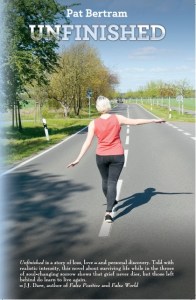
See also: What Do You Say to Someone Who is Grieving at Christmas? And if by chance you know someone who is grieving, either of my books about grief — Grief: The Great Yearning or the novel Unfinished would make a nice gift.

***
Pat Bertram is the author of the suspense novels UnfinishedMadame ZeeZee’s Nightmare, Light BringerMore Deaths Than OneA Spark of Heavenly Fireand Daughter Am IBertram is also the author of Grief: The Great Yearning, “an exquisite book, wrenching to read, and at the same time full of profound truths.” Connect with Pat on Google+. Like Pat on Facebook.

Dandelion Fluff and Veins of Gold

A friend left this comment on yesterday’s post.  Your blog titled 1000 Days of Grief read: “But now I know freedom was his final gift, though it was as unwanted and as unasked for as the grief. I haven’t learned yet what to do with this freedom. Perhaps if I embrace it as I did my grief, it will also take me where I need to go.” In the grief blogs I have read so far you never apologize for following your grief, actually quite the opposite, you give all of us permission to feel what we feel. I may be wrong but you sound apologetic for your ambiguity now. It strikes me as “OK” you feel two ways, even three, four or more about freedom as you follow it, trusting it will take you where you need to go.

Very astute of her!

A few days ago, I wrote about impossible dreams and how important they might be. I followed up with a post congratulating myself (more or less) on having found a direction to point myself, as if the impossible dream was perhaps not quite so impossible after all. Meantime, in an article about how to get in shape for a backpacking trip, I read that the best way to prepare is to fill your pack with however much weight you were going to carry, add five pounds, then strap a two-and-a-half pound weight to each ankle, and go out and hike five miles.

And so the whole pack of cards came crashing down on me. Not only did I re-realize the impossibility of the impossible dream (with all that weight, I wouldn’t even have been able to stand up, let alone walk a single step) I felt foolish for my on-again/off-again dreaming, as if I were a child pretending to be an adult. And because of my posting all these thoughts, my wishy-washiness was out there for all to see (or at least the “all” who manage to find me in the blogosphere), which seemed . . . well, embarrassing.

It wasn’t until the end of yesterday’s blog (the blog that seemed apologetic) that I connected my ambiguity with grief, because how can any of this have to do with grief? After all, I haven’t had a massive upsurge (or even a mild upsurge) of angst for nine months. It was easy to write unabashedly about grief when I was pouring out my heart along with my sorrow, but it seems less heroic just to . . . waffle. And yet it is all about grief. When you have lost the most important person in your life, no matter what you do, it is always about grief.

And in the world of grief, I am but a child, a child in the eighth year of life.

People talk about grief as if it were merely an emotional aberration and that soon we will be back the way we were. They talk about us going through, moving on, healing, journeying, all different ways of describing the grief process, but the truth is, more than anything else, grief is a matter of being. Of becoming. Of Kintsugi.

Kintsugi is roughly translated as “golden joinery” and is the Japanese art of embracing damage, of mending broken pottery with veins of gold, turning what might have once been a simple ceramic piece into a work of art.

And that is exactly what grief is. When you lose the most important person in your life, a person who seems connected to your very soul, you can never be the same. Oh, sure — you look the same, people still treat you the same (or try to), but you know you’re not the same. What you do, however, is embrace all the shards of your shattered life, and one by one you glue each piece back to the whole with veins of gold, and if a piece is missing, you fill in the void with more gold. As time goes on, you turn your life into something new, a work of art that maybe only you can appreciate because only you know the effort it took to put yourself back together again.

So yes, I am ambiguous. I say one thing one day and another thing on a different day. Sometimes I hold on to dreams, and sometimes I blow dreams away as if they were dandelion fluff. Like a child, I pretend I can do anything, pretend that I can be anything (with no regard for reality). And like a Kintsugi artist, I carefully add one vein of gold at a time.

And so I grow.

And there is no need to ever feel apologetic about that.

***
Pat Bertram is the author of the suspense novels UnfinishedMadame ZeeZee’s Nightmare, Light BringerMore Deaths Than OneA Spark of Heavenly Fireand Daughter Am IBertram is also the author of Grief: The Great Yearning, “an exquisite book, wrenching to read, and at the same time full of profound truths.” Connect with Pat on Google+. Like Pat on Facebook.

Grief as a Subversive Act

From the beginning of my grief, people urged me to move on, to drop the mantle of grief, to look to the future rather than the past (without their realizing that grief is about the future as much as or even more than the past), but I went my own way. The power of my grief shocked me, and I couldn’t help writing and blogging about it in an effort to understand what was going on with me. (Most novels I’ve read did not touch on the truth of grief, and when they did, the grieving character was portrayed as unstable or half crazy, and I knew I wasn’t crazy. Which is why I wrote Unfinished — I wanted to show a character dealing with grief and all that goes along with it.)

Despite my being long past the wilds of grief, I still occasionally blog about that awful and awe-full state, though sometimes I am a bit embarrassed to do so — I don’t want people to think I am grief mongering for the sake of collecting sympathy. And I especially don’t want people to think that I am still crying myself to sleep at night, because I am not.

I simply don’t want grief to go unrecognized for what it is. Our society has a tendency to cover wild emotions with platitudes and false cheer, and I believe it is important to tell the truth (my truth). I certainly don’t want to participate in the great cover-up, hiding grief from the non-bereft to keep them from being uncomfortable at having to face unpalatable truths.

Death is more a part of life than we acknowledge. Grief is possibly more important than even we grievers can know.

Stephen Jenkinson, a Harvard-trained theologian and the subject of the documentary Griefwalker wrote:

Here’s the revolution: What if grief is a skill, in the same way that love is a skill, something that must be learned and cultivated and taught? What if grief is the natural order of things, a way of loving life anyway? Grief and the love of life are twins, natural human skills that can be learned first by being on the receiving end and feeling worthy of them, later by practicing them when you run short of understanding. In a time like ours, grieving is a subversive act.

Grief is more than that a skill or an emotion, of course. The problem with grief is that it is so physical — affecting hormones, brain chemistry, equilibrium, sleep and eating patterns, and so much more — that it is almost impossible to prepare for it or to even get a handle on it. (Adding in the emotional, spiritual, and mental aspects along with the incredible stress of it all makes grief unbelievably complicated, especially when it comes to the death of a soul mate or a child.)

Still, Jenkinson makes a good point about the necessity of grief. And being the quietly rebellious person that I am, I especially like thinking that by writing about grief, I am not grief or fear mongering, but am participating in a subversive act.

***

See also: What Do You Say to Someone Who is Grieving at Christmas? And if by chance you know someone who is grieving, either of my books about grief — Grief: The Great Yearning or the novel Unfinished would make a nice gift.

***
Pat Bertram is the author of the suspense novels UnfinishedMadame ZeeZee’s Nightmare, Light BringerMore Deaths Than OneA Spark of Heavenly Fireand Daughter Am IBertram is also the author of Grief: The Great Yearning, “an exquisite book, wrenching to read, and at the same time full of profound truths.” Connect with Pat on Google+. Like Pat on Facebook.
Validating Grief

I’ve been corresponding with a fan of my book Grief: The Great Yearning who is dealing with the loss of a life mate/soul mate.

In my last response to an email from this griever I wrote:

I understand. I really do. I remember thinking I’d never make it through . . . well, any of it. His death. Clearing out our home. Going to stay with my father. Jeff’s birthday, then all the holidays. (I was lucky, if there is such a thing when it comes to grief, but I didn’t have to deal with the holidays for several months. You’re getting everything all at once.) The couplehoodness (for lack of a better word) of our society about did me in. Everywhere I went were couples. Couples walking. Couples eating. Couples doing things together. And there I was. Alone. It seemed such an affront. As if grief itself wasn’t enough to bear.

It truly is hard, especially since for every step towards some sort of light (or lightness of being) you fall back two, three, ten steps. There is no other thing you can do when faced with the Sisyphean task of grief but to pause to cry or scream, and then to take a deep breath and keep on going. It takes years longer than you can ever imagine, but eventually, I promise, it does get better. You just have to keep going one minute at a time. There is no way to handle more than that.

After I sent the email, I felt a bit guilty because there was no real comfort, nothing to hang on to, just the bitter truth that grief is hard and lasts a long time. To my surprise, the response I got in return for this harsh email was a warm message telling me how much my words help.

On reflection, it makes sense that those stark words describing the bleak reality of grief would be a help. I think what grievers most want from others is acknowledgement of their pain, maybe even validation of their grief. Oddly, even though everyone dies, not everyone goes through profound grief. (The math explains it — when one of a couple dies, only one is left to experience the grief.) And when you lose a partner at a relatively young age, there aren’t many people around who understand.

At the beginning of my grief, I was offered plenty of platitudes, a lot of blank stares, even some wary looks, as if a mournful woman was a bizarrely alien creature. The most helpful comments were from people who had gone through the same thing, people who told me that even ten years later, they still missed their partner. The least helpful comment came from people who said that grief took as long as it took, which contains an underlying feeling of exaggerated patience or that something is wrong with you if you don’t “get over” grief as quickly as others. (Sort of like telling the unathletic kid to take as long as she needs in order to run around the track even though all the athletic kids finished ages ago.) The most bewildering and least welcome comments were from people who told me they wished they could take away my pain. I didn’t want my pain taken away. It was the only thing connecting me to him, and besides, the pain wasn’t the problem. The problem was that he was dead, and no one could fix that.

If you’re one of the bereft, you know what I’m talking about. If you’ve never experienced the death of a life mate/soul mate, a child, or any other profound loss, I hope you will listen when people tell you of their grief, even if you don’t understand. Don’t try to mitigate their pain with words that make you feel better but don’t address their reality at all.

But then, what do I know. The world has managed to struggle along without advice from me for billions of years. Just know that if you are experiencing any sort of grief, profound or not, I understand.

***

See also: What Do You Say to Someone Who is Grieving at Christmas? And if by chance you know someone who is grieving, either of my books about grief — Grief: The Great Yearning or the novel Unfinished would make a nice gift.

***
Pat Bertram is the author of the suspense novels UnfinishedMadame ZeeZee’s Nightmare, Light BringerMore Deaths Than OneA Spark of Heavenly Fireand Daughter Am IBertram is also the author of Grief: The Great Yearning, “an exquisite book, wrenching to read, and at the same time full of profound truths.” Connect with Pat on Google+. Like Pat on Facebook.

Seven Years and Seven Months

Seven years and seven months ago, Jeff, my lifemate/soulmate, died after a long illness, catapulting me out of not only our coupled life, but the very house we shared for decades. After dismantling our home, getting rid of what I could and packing the rest, I went to stay with my father, who needed someone to be there for him. Although he was mostly able to look after himself, he was getting feeble enough that he needed someone in the house to make sure he was okay. And me, being newly loose in the world, undertook the task. If he were alive, my father would be over a hundred years old, but he died three years ago today, and once again I was catapulted out into the world.

I’ve become somewhat of a nomad, or maybe I should say a serial nester. In the past three years, I’ve lived over a dozen places (and those are only the places I’ve stayed more than a couple of weeks. If you include places I stayed a week or less, they are too numerous to count.) Because I’ve spent most of the past couple of decades taking care of friends and relatives, my financial situation is precarious, so I should be trying to find a place to settle down and get a job, but . . . well, I’m not. After the emotional rigors of the past ten years (starting with Jeff’s rapid decline and my mother’s death and ending with the fall eleven months ago that pulverized my left wrist, destroyed my left elbow, and smashed my radius, leaving me with a deformed arm, and wrist and fingers that don’t quite work the way they should), it’s nice to just go with the flow — not trying to do anything, not trying to think anything, not trying to push my recalcitrant spirit into a semblance of vitality. Just drifting.

Occasionally I correspond with the newly bereft who discover me through my book, Grief: The Great Yearning. They appreciate knowing they aren’t alone in how they feel, and they seem to find solace in my words. And that’s all I have left of grief now — just words. (Well, that and compassion. Not everyone comprehends the total horror that one lives through after the death of the one person you shared everything with, the one person who anchored you to life, the one person who understood you.)

Oddly, in the same way that I can no longer “feel” the exact pain of my arm when it shattered, I can no longer actually “feel” the pain of new grief. I remember not being able to breathe. Not being able to think. Not being able to get a grip on the immense agony of my grief. I remember feeling as if I were standing on the brink of the abyss, remember thinking that if I reached out far enough, I could still touch Jeff. But I cannot actually recall the feeling of new grief itself.

Even more oddly, I’m not sure if the man in my memory is the real Jeff. Has my memory of him changed over the years to fulfill his changing role in my life? I no longer know, and don’t want to know. To try to resurrect the real him, if only in memory, will eventually lead to losing him again, and that I can’t handle.

So I drift.

I am doing what I can to exercise my hand, wrist, elbow — I won’t gain the maximum usage of the joints for another year, so I am still diligently following instructions. And I am still taking dance classes. And slowly, I am gaining strength, better balance, and maybe even a modicum of grace.

What I have not been doing is writing, even though finishing my decade-old work not-in-progress tops my to-do list (or would top my to-do list if I had one. A to-do list seems the antithesis of drifting.)

Although today is the anniversary of my father’s death, it is Jeff I think of. If Jeff hadn’t died, I would never have gone to take care of my father, would never be where I am today.

Drifting.

This photo is twenty years old, the only one ever taken of me, Jeff, and my parents. Although I am the only one still alive, that “me” in the photo is long gone. I don’t even remember being her. Maybe she’s just as lost as the other three.

***
Pat Bertram is the author of the suspense novels UnfinishedMadame ZeeZee’s Nightmare, Light BringerMore Deaths Than OneA Spark of Heavenly Fireand Daughter Am IBertram is also the author of Grief: The Great Yearning, “an exquisite book, wrenching to read, and at the same time full of profound truths.” Connect with Pat on Google+. Like Pat on Facebook.