Grief: The Great Learning, Day 445

I’ve saved the letters I wrote to my life mate/soul mate after he died, thinking that one day I would write a sequel to Grief: The Great Yearning, the story of my first year of grief. I’d planned to call the sequel Grief: The Great Learning, and detail the lessons gleaned from the second and third years of my grief. Because I no longer want to keep revisiting such angst, there will be no sequel, so I’m publishing the letters here on this blog as a way of safeguarding (and sharing) them.

Although this letter was written three and a half years ago, it reflects much of what I am thinking about now. My father recently died, and now I am facing what I could only think about back then — the vast open plain of the future before me.

I am packing to leave this house and go . . . I know not where. I’ll probably stay around here for a while. I have made new friends after those referred to in this letter disappeared out of my life, and it just occurred to me that I can speak about all of my concerns to at least one of those women. It’s nice and helps offset the loneliness that still hits me every evening.

And oh, yes. I still keep hoping for major changes — good changes.

###

Day 445, Hi, Jeff.

I’ve been going through an upsurge of grief, missing you so damn much. It stuns me, like a snake stunned by a rock thrown at it, to think I’ll never see you again. You’d think I’d have come to an accommodation with that, but such ”acceptance” of that fact does not bring acceptance of what it means — death for you, loneliness for me.

Life involves people, doesn’t it? I’m trying to “people” my life, but it’s not the same thing as being connected to one specific person. We were often lonely even when we were together, but this loneliness is incomprehensible. I’m considering staying here after my father dies because at least I know people here, but so many of the people I have met, especially those from my grief group, have already faded from my life. And if the rest disappear, then what?

It should be exciting to have the vast open plain of the future before me, but all I see is bleakness and aloneness. I have no one to talk to about my concerns. I don’t know how to cope with that. I keep hoping for major changes (good changes), but all that seems to be happening is a slow descent into inevitability.

I hope you’re not lonely. I couldn’t bear that.

***

Pat Bertram is the author of the suspense novels Light Bringer, More Deaths Than One, A Spark of Heavenly Fireand Daughter Am I. Bertram is also the author of Grief: The Great Yearning, “an exquisite book, wrenching to read, and at the same time full of profound truths.” Connect with Pat on Google+. Like Pat on Facebook.

Letter to Jeff, Day 435


Day 435, Hi, Jeff.

Another Saturday. I’m tearing up again, though I’m not sure why. Loneliness, I guess. Feeling sorry for myself. I need to get on with my life, concentrate on myself. But how lonely is that? Perhaps it’s better to have no hope. Just try to take the days as they come. It sounds a lot easier than it is. The damn emotions get in the way.

Will this sorrow ever end? Will anything good ever happen to me? Do you miss me? Do you still exist? Will I ever love again? Will anyone ever love me? Is this all there is — this emptiness? I can fill the emptiness with doing things — reading, writing, walking, whatever comes my way — but as soon as I stop concentrating on the “fill,” the emptiness shows up again.

I need something to hold on to. I need something concrete to build my life on, but there isn’t anything but maybe survival. Survival — that’s what your life ended up being about. Is that all there is? Survival until there is no more survival?

How did you manage to survive as well as you did? Was it worth it living with such pain? I guess, in the end, there isn’t really a choice. You have to play out the hand you’re given. Damn. I wish I weren’t so lonely. I might be able to deal with your being gone if not for that. And I really should be able to deal with it. For cripes sake, I am not a child.

What a mess my life is, well, if emptiness can be called a mess. I wish I cared about something. I wish I could talk to you. I wish you weren’t dead. I wish you hadn’t been so sick for so long.

Maybe I’m being insensitive, whining about my life when you no longer have a life. But then, maybe you got the better end of the deal. I hope so.

I love you.

***

Pat Bertram is the author of the suspense novels UnfinishedMadame ZeeZee’s Nightmare, Light BringerMore Deaths Than OneA Spark of Heavenly Fireand Daughter Am IBertram is also the author of Grief: The Great Yearning, “an exquisite book, wrenching to read, and at the same time full of profound truths.” Connect with Pat on Google+. Like Pat on Facebook.
As Long As We Are Alive, We Are Alive

During the last months of my life mate/soul mate’s life, his brain was so riddled with cancer, he lost the ability to hold a thought long to enough to have a conversation, so his communications seemed more like lectures than exchanges. I remember bristling during those lectures — gritting my teeth and clenching my fists. It seemed as if he were being paternalistic, as if he didn’t trust me to take care of myself.

I knew he was ill, of course, though at the time, I didn’t know how bad off he really was. He’d been ailing for so long, I thought that’s the way it would always be, his getting weaker and weaker, maybe for many more years. But he died, shocking me to my core. And then guilt and regret descended on me. How could I not have listened to every single word he spoke during the time of his dying? How could I not have treasured his concern for me? How could I have been so impatient, so irritable, so resistant to what he had to say?

In the five years since Jeff’s death, I’ve worked through my guilt and regrets, even came to the realization that it wasn’t he I was resisting but his dying. Still, it wasn’t until my father’s death when my personal history repeated itself that I truly understood the dynamics of what had happened between Jeff and me. (In the case of my father’s last days, he wasn’t lecturing me so much as expecting to be waited on, and I simply did not want to do for him what he could do for himself.)

In my writing, I’ve been calling the last months of both men’s lives “the time of his dying,” but it was only their “dying” in retrospect. It was actually still a time of living for them, which makes my less than perfect behavior understandable. We were still involved in our relationships and roles, and it was only death that made my reactions seem horrific. If they both had continued to live, of course I could not have tolerated spending many years being lectured to or being expected to wait on someone who was able to do things for himself. These are just normal conflicts of living. And though they dying, they were still alive. Still living. And so was I.

I remember crying to the hospice social worker after Jeff died, lamenting his ill health. “He never had much of a life,” I wailed. She said, “He had a life. Being sick was his life.”

It seemed like such a terrible thing to say, but now I understand what she meant — that he was alive until he wasn’t.

This is one case where understanding can’t change anything. If I am ever thrust into such a situation again, I’d still do the same thing — carry on as if the person were alive and going to be alive for a long time. The one change will be that I won’t have regrets. Although my regrets over Jeff loomed large, I have no regrets over anything I did or did not do for my father. We were involved in playing out our roles the best way we could up to the end. And there is nothing to regret in that, nothing to feel guilty about.

I did learn something from both men, though, and that is to live until the very end. As long as we are alive, we are alive.

***

Pat Bertram is the author of the suspense novels Light Bringer, More Deaths Than One, A Spark of Heavenly Fire, and Daughter Am I. Bertram is also the author of Grief: The Great Yearning, “an exquisite book, wrenching to read, and at the same time full of profound truths.” Connect with Pat on Google+. Like Pat on Facebook.

We Are Not Our Stuff

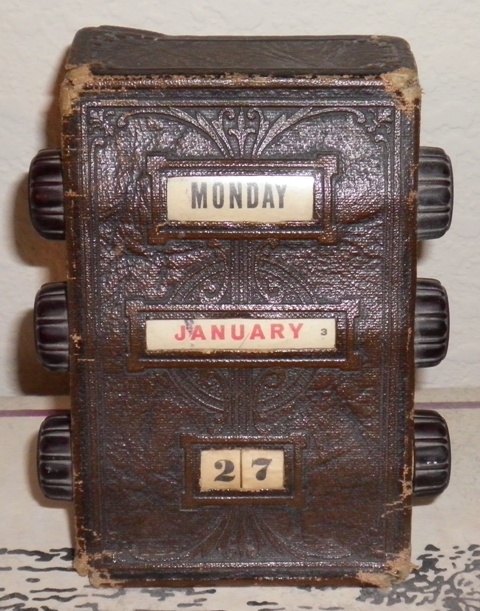
Strange day today. I packed what was left of Jeff’s things, both the items he asked me to save and the items I still can’t get rid of such as the sweater he was wearing when we met and his “new” jacket. I’ve had his antique perpetual perpetual calendarcalendar and several of the smaller items on my dresser ever since I got here to my father’s house. They brought me comfort then, and I thought I would feel sad now that they are packed away, but it just seems part of the process of my moving on.

Only two things caught me off guard. I have two original copies of his death certificate, and I opened the envelope to pull out one so I could put it with my papers to make it more accessible if I need it, and in the envelope I found the certificate of cremation. Did I ever read it? Did I ever know it was there? I can’t remember, but oh, the pain when I read those stark words today. “This is to certify that the remains of ____________ were cremated by authority of Pat Bertram.” Cripes. Even worse was the label they gave me to put on the urn if I ever traveled with those remains: This package contains the remains of _______________ whose body was cremated on March 31, 2010. Apparently, it’s illegal to travel with unmarked human remains. Well, that’s just too bad. One of these days, I will figure out what to do with those remains, and I sincerely doubt I will be labeling him (it? them?) like a commonplace parcel. (Unless you are on the human remains regulatory committee, then of course I will be labeling them.)

But the pain of dealing with his remains is reserved for another day. Today, after I packed up what is left of his possessions, I hesitated, not sure how to label the box. If he were alive, of course, I’d just put his name on the carton, but I didn’t want it to seem (even to me) as if he were inside that box. We are not our stuff. In the end, I just wrote, “J’s things.”

One amusing note (amusing to me, anyway). When I came here after Jeff’s death, a local mover gave me a great rate since his driver was going to be passing this town, and he had empty space in his moving van. I asked him if he would come pick the stuff up when I was ready to leave, and mentioned that there would be less to move back. He laughed and said, “That’s what everyone says, that they are going to get rid of things, but they always end up with more.” Not me. I have done a good job of getting rid of stuff. By the time I figure out where I want the stuff moved, I hope I will have gotten rid of even more.

***

Pat Bertram is the author of the suspense novels Light Bringer, More Deaths Than One, A Spark of Heavenly Fire, andDaughter Am I. Bertram is also the author of Grief: The Great Yearning, “an exquisite book, wrenching to read, and at the same time full of profound truths.” Connect with Pat on Google+. Like Pat on Facebook.
Letter to Jeff, Day 434

Hi, Jeff.

It seems so damn pathetic that after all the trauma of your dying, all the grief, all I’ve done in the past fourteen-and-a-half months, all the striving to fill my life with newness, I’m still basically the same I was before you died. I tried to explain this to my grief group today when they were talking about the changes that a death brings, but after I spoke, they backtracked and said that death brought changes to our lives, not us. That we didn’t change. Shouldn’t we? More specifically, shouldn’t I? After all I’ve gone through, how can I sroadtill be so much the same?

They talked about the importance of hope at the meeting, too. For all these months, I have had hope. Hope for a new direction in life, hope for success, hope for some sort of personal growth (and I don’t mean a tumor). But now it seems as if all my hopes have died stillborn.

If my continued survival isn’t about hope, if it’s causing me more pain than happiness, what’s the point? I’m curious how this hand will play out, and that’s what’s keeping me going. Maybe it’s enough, particularly since I think people are wrong about needing hope. It’s easier (and less hurtful) to live without hope. So many of my dreams never came to fruition. So much of my grief was about hopes that were never fulfilled. Wouldn’t it have been better if I hadn’t hoped for anything in the first place? Sometimes I wonder if what I miss is what I never had. It’s just too damn sad — you, me.

Adios, compadre.

***

Pat Bertram is the author of the suspense novels UnfinishedMadame ZeeZee’s Nightmare, Light BringerMore Deaths Than OneA Spark of Heavenly Fireand Daughter Am IBertram is also the author of Grief: The Great Yearning, “an exquisite book, wrenching to read, and at the same time full of profound truths.” Connect with Pat on Google+. Like Pat on Facebook.

Tears. Again.

If you’re sick of hearing about my sorrow, you can leave. I don’t mind. I’m sick of my grief and tears, too, but I’m stuck with them.

Ever since my father’s death two months ago, I’ve been in a strange state. Not only has his death brought back the memory of the death that devastated me (the death of Jeff, my life mate/soul mate), it’s set in motion a whole new set of changes in my life. I came to look after my father after Jeff died, and now that they are both gone, I have to look to my own life and figure out where I want to go and what I want to do.

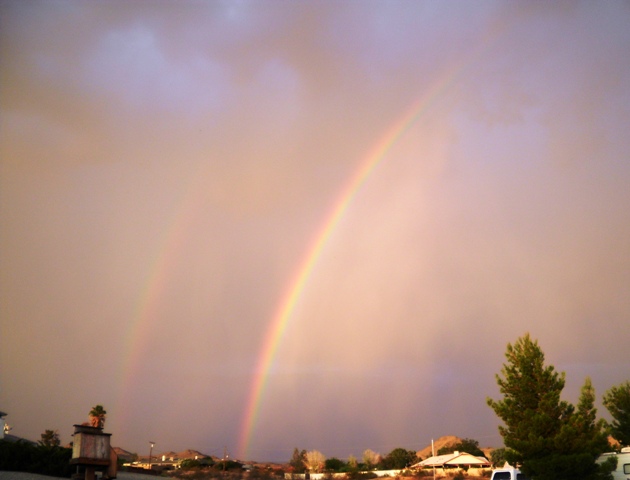
Do you really think I want to walk the Pacific Crest Trail, live a nomadic life in some sort of camper/van, or any of the other things I blog about? Of course I don’t. But the one thing I do want — to go home to Jeff, the Double Rainbowonly person who truly understood me — is forever denied me. And so I try to find new wants, which isn’t easy because I’m not a person who wants. (I never wanted anyone, either, but like a mythical being clothed in light, Jeff appeared in my life one incredible Saturday morning in August thirty-eight years ago. And then, almost five years ago, he left to go back from wherever he came.)

I’m fine most of the time. Really, I am. But today, I was with friends watching a movie — Patrick Swayze’s The Last Dance — and one woman piped up, “Divorce is so much worse than death.” I’d heard her make that same stark remark many times before, but today, I couldn’t let it pass. I said, more sharply than I intended, “You keep saying that, but it’s not necessarily true.” She went on her normal spiel about how when someone is dead, they don’t keep coming back, and I again spoke sharply. “Don’t you think I would give anything if Jeff came back? Your ex-husband has finally left you alone, but Jeff is still dead.” Her response was her oft-repeated, “But you didn’t have to deal with him rejecting you.”

I could have told her about the thousands of rejections one has to deal with when someone is dying, how they leave you every single day, how they have no time to think of you because their own concerns loom so large, how your heart breaks and breaks and breaks with the constant rejection until finally you don’t feel anything any more. I could have said a lot of things, but I wasn’t able to continue the conversation. I’d started crying when I spoke the simple words, “Jeff is dead,” and I couldn’t stop.

I pulled myself together to take my leave after the movie, but I cried all the way home, and I’m crying still.

How is it possible that almost five years later, I can be pulled back to the pain of his dying so quickly? Sometimes I wish I were as stoic as I once thought I was — I presumed I’d take his death in stride — but grief is more than simply feeling sad or rejected. It’s even more than those insipid 5 (or 7) stages of grief that everyone seems to believe in. Sure, we feel shock, denial, anger, guilt, sadness, depression, and acceptance, but most of us also feel anxiety, frustration, loneliness, confusion, despair, helplessness, panic, questioning (both as a need to know why and as a cry of pain), loss or gain of faith, loss of identity, loss of self-esteem, resentment, bitterness, isolation, inability to focus, suspended animation, waiting for we know not what, envy of those who are still coupled or who have yet to suffer a loss. And we suffer myriad physical symptoms such as queasiness, dizziness, sleep problems (too much or too little), eating problems (too much or too little), bone-deep pain, inability at times to breath or swallow, exhaustion, lack of energy, restlessness, and seemingly endless bouts of tears. (Yes, I know, those who get divorced also feel many of these things, and I empathize with them, but they do not have to deal with the angst of death, which adds a whole other layer of pain to the equation.)

My grief has mostly wound down since I’ve dealt with so many of the various aspects of grief, but still, days like today remind me that I will never be over Jeff, never stop missing him. And so I try to be tolerant of other’s condescension, try to create new possibilities, try to want something enough to make a life out of it.

And yet, no matter what I do for the rest of my life, he will still be dead. Nothing will ever change that — not my thoughts of an adventurous future and most certainly not my tears.

***

Pat Bertram is the author of the suspense novels Light BringerMore Deaths Than OneA Spark of Heavenly Fireand Daughter Am IBertram is also the author of Grief: The Great Yearning, “an exquisite book, wrenching to read, and at the same time full of profound truths.” Connect with Pat on Google+. Like Pat on Facebook.
Christmas Eve With the Living

This will be the fifth Christmas since the death of Jeff, my life mate/soul mate. (I had to count, because it didn’t seem right. The fifth anniversary of his death isn’t until March. But yes, five Christmases — 2010, 2011, 2012, 2013, 2014.)

We never did much for Christmas except by default. Since the rest of the world was busy with the holiday, we were left to our own devices, so usually we strung some lights around the living room (he Christmas lightsloved Christmas lights), heaped plates with finger foods, and watched favorite movies. Since his death, every Christmas Eve I’ve been taking him for a walk around the neighborhood to show him the light displays. (I figure if he still lives in my heart as people tell me he does, then he will see what I will see.)

This Christmas Eve, I will be forgoing this new tradition. A friend invited me to a family Christmas party, and I accepted. An eve with ghosts or an eve with lights, laughter, and lots of Polish food? Not a hard decision to make.

Tomorrow, I will spend the day as we always did, though it will be only me watching our favorite movies, eating delicacies, and drinking a toast to the life we once shared. Despite the conceit that he lives in my heart, I know he is gone. He came, brought the light of knowledge to my life, and then he went back to wherever it was he came from. (Stardust, perhaps. I wish there was a way of sending his remains out to the stars, but his ashes will be forever earthbound).

It seems fitting that I spend one more Christmas in this house, my father’s house. This has been a house of transition for me, a place of refuge to live out my sorrow. But my father is gone now, as are my mother, the brothers closest to me in age, and Jeff, of course. During the next month or two, I will be embarking on a new life (one I have yet to envision), and for the most part, I will be leaving my ghosts behind, with only an occasional tear to remember them by.

But now is not a time to think of those who are gone. I’m going to go put on my sparkly clothes, and spend the evening with the living.

***

Pat Bertram is the author of the suspense novels Light BringerMore Deaths Than OneA Spark of Heavenly Fireand Daughter Am IBertram is also the author of Grief: The Great Yearning, “an exquisite book, wrenching to read, and at the same time full of profound truths.” Connect with Pat on Google+. Like Pat on Facebook.

Letter to Jeff, Day 432


Hi, Jeff.

Just in case you really are somewhere, I wanted you to know I haven’t forgotten you, still miss you, still wish there could have been a better resolution to your health problems than death. But what do I know? Maybe death was the best resolution. I’m not sure I see much hope of things working out for me, but I am trying. I’m getting out and doing things. It still seems as if the only way I can make sense of your death (from my perspective) is to do things I wouldn’t have done if you were alive.

I took a trip along Route 66 with some friends, which was fun. I kept a soda bottle for a souvenir. “Route Beer.” Tasted like plain old root beer, but I thought the name was cute. I’ve been going to lunch about once a week, sometimes after the grief group, sometimes with a couple of women I met there. I’m not sure I like the women, but for now, it’s enough that they like me. Yep. I’m that starved for affection.

In a couple of days, I’ll have been here a year looking after my dad. Who knows how much longer it will be. Maybe years. And then after? I truly don’t know.

I feel so hypocritical with all this grief — I wanted the horror of our life to be over, but I didn’t want you dead. Ironically, if you hadn’t been dying, I wouldn’t have wanted our life to be over, but the truth is, I wanted your dying done with. The stress was incredible for me, so I can only imagine how much worse it was for you.

My dying is still to come. It scares me to think of having to deal with infirmities alone, though I think it will be easier knowing that my death will not grieve anyone the way yours did me.

Did I tell you? I finally and forever understand what you mean by the pilot light of anger. I don’t want to be consumed by anger, but a quiet pilot light to keep me going, that is important. I can’t simply accept what life did to us — it’s not right. Maybe the universe is unfolding as it should, as people tell me, but from my standpoint, here and now, I need that pilot light. Maybe it will be a “pilot” taking me where I need to go, though I don’t know where that would be.

Part of me wants to find someone so I don’t feel so alone, but I’m not ready for that. It’s a matter of learning to deal with the loneliness. I lived with it before I met you, and I imagine I’ll learn to live with it now that you’re gone. I hope wherever you are that you aren’t lonely. I hope you’re not in pain. I hope you’re delighting in being free of that diseased body. I still have your ashes. I wish we could talk about what I should do with them. I wish we could talk about what I should do with my life. I wish . . . oh, so many impossible things.

I love you. Take care of yourself. I’ll try to take better care of me.

***

Pat Bertram is the author of the suspense novels UnfinishedMadame ZeeZee’s Nightmare, Light BringerMore Deaths Than OneA Spark of Heavenly Fireand Daughter Am IBertram is also the author of Grief: The Great Yearning, “an exquisite book, wrenching to read, and at the same time full of profound truths.” Connect with Pat on Google+. Like Pat on Facebook.

Stressed to My Limits

I’m sitting here, wondering if I should write this post. I don’t want to make anyone feel bad, so I’m hoping the women involved don’t read this or if they do that they don’t fret, and yet, ever since my life mate/soul mate died, I’ve tried to write my truth.

I had lunch today with some friends after dance class. (Got to replenish those expended calories!) I was the only single woman at the table. All the rest were divorced and remarried. Not that their marital state is a problem for me anymore. I’ve gotten used to being the only uncoupled person in most situations. Nor did I think anything of their topic of conversation at first. I’ve heard it before — they all contend that losing a husband to divorce is worse than losing him to death because with divorce, he’s still around, especially if there are offspring involved.

But today I am feeling fragile. It’s only been a month since my father’s death, and although I am not grieving him the way I grieved for Jeff, my life mate/soul mate, my father’s demise has upset my equilibriumtugofwar. I am aware of his empty place at the couch, his books, reading glasses, and magnifier stacked neatly the way he left them. I know he led a long and happy life, but his absence still is ever present.

Even worse, this is the second time in less than five years that my living situation has been thrown into upheaval by death, and this time I do not have a fall back position. The whole world lies open before me, but I don’t know what to do with it. To add to the complications, I need to pack in anticipation of leaving this house, which will be put on the market in a few weeks. I’d already gotten rid of the bulk of Jeff’s things before I came here, but what remains are “our things” along with what is left of his effects — things so emotionally laden that I simply could not dispose of them during that worst day of my life when I cleaned out his closet and drawers and prized possessions. And now I have to figure out what to do with it all. Oddly, the only thing so far that set off an emotional storm was the container of refrigerator magnets we used to use. Other things, like his favorite jacket and the sweater he wore when we met, I stoicly repacked because I still can’t deal with them.

Did I mention the sun sets at 4:30 around here? And I am prone to SAD (seasonal affective disorder).

So this was my state of mind as I listened to my lunch companions talk. And oh, my poor heart ached. I would give anything to see Jeff one more time. Even if he had gone to be with another woman and left me destitute in the process, I would still be glad to know that he was alive and well. I’d be angry, of course, heartbroken and humiliated, but I so loved him that his well-being meant more to me than my own. (I’m only now learning to put myself first, but that could be because there’s no one left in my life to care about that deeply. I’ve lost them all one way or another — Jeff, the two brothers closest to me in age, my parents, a very special friend.)

I no longer know who has it worst when it comes to grief — the divorced, the widowed, those who lost a child, parent, lover, sibling, best friend, pet. I no longer care. We all suffer heartache and grief in our lives. We all deal with it as best as we can (or let it deal with us). In my case, this conversation mostly served to show me how vulnerable I still am, how much I still miss him, how much his being dead is still a part of my life.

God may provide, the universe might be unfolding as it should be, everything could be falling into place, my destiny might be waiting, life could be what is happening while I am making other plans (or whatever aphorism it is that you believe), but the truth is, at the moment, I am stressed to the limits.

I keep saying that however things turn out, I’ll be okay. And I mean it. Just not today.

***

Pat Bertram is the author of the suspense novels Light Bringer, More Deaths Than One, A Spark of Heavenly Fire, and Daughter Am I. Bertram is also the author of Grief: The Great Yearning, “an exquisite book, wrenching to read, and at the same time full of profound truths.” Connect with Pat on Google+. Like Pat on Facebook.

Letter to Jeff, Day 423


Hi, Jeff.

I went to St. Simons Island where I gave a speech on creating characters. My talk went well — I dazzled. I could see it in their eyes. I met soLighthouseme authors, toured the town, climbed the lighthouse, steeped myself in island culture, even ate fried green tomatoes, though I didn’t like them — too much rosemary. Then, on the last day, I got sick. Might be a cold, might be an allergy flare-up, might be psychological (I couldn’t bear the idea of coming back here rather than to you, and it was a way of keeping me isolated.)

I refused to think about you this past week — didn’t want to suffocate. The stuffiness of tears on top of the stuffiness from being sick would have made it impossible to breathe, but Saturday, my sadder day, I did cry. Just kept crying, crying, crying.

I’m doing okay mostly, but I miss you. I hate that you’re gone, both on your behalf (though I doubt you care) and on my behalf. I still panic at the thought of dealing with life alone. Growing old alone. Dying alone. Living alone. I never expected to be so lonely, but I am. I’m lonely for someone generically and for you specifically. You’re so far out of reach! It seems pathetic that I need you — needed you — to give my life shape, form, focus, but it seems even more pathetic to be alone.

What’s to become of me? How can I go on alone? I know I’m strong enough, but shouldn’t there be more to life than simply endurance?

I miss you. I yearn for you. Just one more word. One more smile. Doesn’t seem too much to ask, but it kills me they are things I can never have again. How can it be over? And how can it still be painful after all these months?

I love you. Take care of yourself.

***

Pat Bertram is the author of the suspense novels UnfinishedMadame ZeeZee’s Nightmare, Light BringerMore Deaths Than OneA Spark of Heavenly Fireand Daughter Am IBertram is also the author of Grief: The Great Yearning, “an exquisite book, wrenching to read, and at the same time full of profound truths.” Connect with Pat on Google+. Like Pat on Facebook.