I Am a Three-and-a-Half-Year Grief Survivor

Three and a half years ago today, my life mate/soul mate died of inoperable kidney cancer. It seems an impossibly long time ago, as if I knew him in another life. It also seems as if it’s only been a few months since I last saw him.

Yesripplesterday I watched his version of Fly Away Home (he edited out parts of movies he/we didn’t like, such as heavy drama and prolonged arguments, which makes what he did leave in very personal). When Jeff Daniels told Anna Paquin that she had to continue the flight by herself, that she had to leave him behind and follow her dream, it seemed as if were a message to me from my mate to just go on with my life, follow whatever dreams I can muster, and leave him behind. (In fact, he often told me I’d have to that very thing — just leave him behind. He was losing his sight, his hearing, his strength, and he didn’t want me to hang around if he became a lingering invalid.)

Well, now I do have to leave him behind. Or maybe he left me behind. (I still don’t have any firm belief about what actually happens when one dies.) Either way, I am becoming comfortable with being single in a coupled world. I don’t panic about growing old alone as I did at the beginning — it seems oddly inevitable, as if it had been written long ago.

During all these painful months and years, those who have lost their mates often told me that around the four-year mark, they found a renewed interest in life, and so it is with me. I find myself coming alive again. Feeling eager to do new things, meet new people. I’m becoming more active physically — taking exercise classes and walking with a group two or three nights a week in addition to my solitary desert walks.

It seems fitting, in a way, all this physical activity. During the first months after we met, I was often restless, going for long ambles around the city (Denver had an interconnecting system of parks and parkways, and I could walk for hours along greenbelts). And now I am again restless, needing more than a single walk to get me through the day.

I still don’t know where I am going with my life, don’t know what I want other than to be more than I am (though at the same time, I am more accepting of who I am and how I look than ever before). Lately I find myself wishing on the first star I see at night, but the only thing I can think of to wish for is to be spectacular. I’m leaving it up to the universe or fate or a future me to decide what “spectacular” means.

It seems strange that of all the grief updates I’ve posted during the past three and a half years, this one is more about me and less about him, and that too is how it should be since my life is now more about me and less about him. I still miss him, still feel his absence in my life the way I once felt his presence, but I no longer feel as if I am a remnant of a shattered couple. I am just me — a woman alone who one day might be spectacular.

***

Pat Bertram is the author of the suspense novels Light Bringer, More Deaths Than One, A Spark of Heavenly Fire, and Daughter Am I. Bertram is also the author of Grief: The Great Yearning, “an exquisite book, wrenching to read, and at the same time full of profound truths.” Connect with Pat on Google+. Like Pat on Facebook.
Grief: Losing Your Grip

There are so many facets and phases to profound grief that even now — three and a half years after the death of my life mate/soul mate — I am still bewildered by some of the symptoms I experienced.

I always assumed “losing your grip” was merely a euphemism for losing your ability to deal with life, but shortly after the onset of grief, I lost my grip. My real grip, not my euphemistic grip. (Well, I lost both, but the second went with the territory.)

I dropped silverware, glasses, cups, plates — just about everything slipped through my fingers. I didn’t particularly notice it at first — I have been known to drop things — but after I moved to a house with hard tile floors, the loss of my grip became explosively apparent. My first night here, I dropped a glass, and it shattered on the hard floor. It sounded like a shot, scaring both me and my 96-year-old father. When the same thing happened a few days later — a mug this time — I realized I had to be careful or I’d give him (and me!) a heart attack. For over a year, I had to make sure of my grip before I lifted something so that it wouldn’t slip from my fingers. My grip gradually tightened, and after two years, I noticed I no longer had to pay attention to how I held something — I was automatically getting a grip.

Obviously, the phrase “lost my grip,” meaning losing your ability to handle a situation, had to come from somewhere, and I have a hunch that it came from the very thing I experienced.

I spent the past couple of hours researching this subject but never found a clinical reason for losing my grip. The weak hands didn’t come from any sort of illness. Not lupus, carpal tunnel syndrome, multiple sclerosis or any of the other 57 medical conditions where people can lose their grip. Nor was it an effect of aging or poor muscle control since the loss of grip came on so rapidly and gradually disappeared without any change of circumstances except the onset and gradual waning of grief.

It’s possible low blood sugar caused the loss of grip in the beginning because I wasn’t eating much, but as the year progressed, I ate more normally and the symptom persisted. Or maybe losing one’s grip is a symptom of emotional shock (rather than physical shock). Or maybe it represented a general enervation from from all the stress. The loss of a mate ranks as one of the most stressful conditions a person can suffer, which is why the death rate for those in the first year of profound grief is so high. Or it could be a physical manifestation of the metaphoric state — grief certainly makes you feel as if you’re losing your grip. In my case, It also seemed to be a reflection of my ability to connect, as if when I lost the connection with him, I lost the ability to connect with anything.

Well, now that I’m nearing what I call the half-life of grief, I’ve regained both my grip (my ability to grasp things) and my grip (my ability to handle life). I’ve also regained my ability to connect — with things and people.

And so grief continues to wane.

***

Pat Bertram is the author of the suspense novels Light Bringer, More Deaths Than One, A Spark of Heavenly Fire, and Daughter Am I. Bertram is also the author of Grief: The Great Yearning, “an exquisite book, wrenching to read, and at the same time full of profound truths.” Connect with Pat on Google+. Like Pat on Facebook.

Life is a Matter of Habit

Life is often a matter of habit. As Aristotle said, “We are what we repeatedly do.” Actually, the whole quote is “We are what we repeatedly do. Excellence, then, is not an act, but a habit.” But this is an article about habits, not excellence.

Most of our lives are repetitive. We do the same things in the same way, eat the same foods, go to the same restaurants, see the same people, watch the same shows. It’s easy to create a habit. If we do the same thing — good or bad — often enough, the synaptic pathways in our brains get rutted, and it’s almost impossible to completely eradicate the ruts if we want to change our habits.

Recently It was easy for me to fall into the habit of playing computer solitaire for hours on end, but now it’s almost impossible to break the habit, though I did it once, so I can do it again. (After the death of my life mate/soul mate, I mindlessly played game after game just to get through another minute, another hour of grief. A couple of years ago I broke the habit of playing games, but in a fit of restlessness a few months ago, I started in again, and now I have to rebreak myself of the habit.) The secret is to do what I need to do on the computer and then get off. Oddly, some habits are easy to break. I’m in the habit of writing a blog every day, and I keep doing it because I know if I skip a day, I’ll skip another and another, until I lose the habit of writing habitually and will only post sporadically.

Sometimes a change of circumstances, such as a move,  forces us to change our habits. When people tell me they have a hard time getting used to a new town, I suggest they go to the same place or do the same thing everyday to help themselves get acclimated. One woman who took this advice went to the same coffee shop every day, another took a walk ever day. And gradually, new comfortable ruts were built into their brains.

One of the collateral problems with grief is the instant loss of habits. In my case, we (my life mate/soul mate and I) had done most things together for decades — watched the same movies, ate the same foods, ran errands, watered the hundred or so trees we planted. As he got sicker, we put one foot in front of the other and kept on going the best we could out of habit. His death catapulted me out of the habits of my life. I still had the ruts of togetherness in my brain without someone to be together with. I also had to move from our home where we’d lived for decades to come look after my now 96-year-old father, so I didn’t even have the habits of living in the same house.

I felt as if the ground had been yanked from beneath me. When I tried to put one foot in front of the other, I became disoriented, as if I were falling into nothingness. I felt like such a baby, since all I could do was crawl in my alien world of no mate, no habits, nothing to connect me to the past but painful memories.

During the ensuing years of grief (in approximately two weeks, it will be three and a half years since he died) people who have been through the same sorrow have told me that grief makes a change around the four-year anniversary. That’s when many people find some sort of renewal, such as a new commitment to life.

I call this four-year mark the half-life of grief. Our cells are continuously dying and being renewed. If it takes seven years for all the cells in one’s body to be renewed, then by four years, less than half our cells will bear the imprint of our mates. And so our physical grief fades. (By physical grief, I mean the physical pain and symptoms of grief as opposed to the emotional pain.) At the same time, the ruts from the habits of our old life have evened out, and we have developed new patterns of living, new habits, new ruts. And as we repeatedly do new things alone, we become persons who can survive — and even thrive — without our mates because in the end, despite love and grief, learning and yearning, life is a matter of habit.

***

Pat Bertram is the author of the suspense novels Light Bringer, More Deaths Than One, A Spark of Heavenly Fire, and Daughter Am I. Bertram is also the author of Grief: The Great Yearning, “an exquisite book, wrenching to read, and at the same time full of profound truths.” Connect with Pat on Google+. Like Pat on Facebook.
Being Comfortable With Who I Was And Who I Am

During all these years of pouring my heart out online, I’ve never known anyone offline who checked out my online writings except for an occasional glance by a sibling. Lately, I’ve been meeting people offline, and when the conversation gets around to my telling them about my published books, they come online to check me out.

It’s one thing to meet people because of my grief blogs and grief book, but these people knew me before reading my emotional outpourings. When a couple of these new friends bought Grief: the Great Yearning, I thought I’d find it awkward for them to know so much about me — until the death of my life mate/soul mate, I was reticent about putting myself on shadowdisplay — but oddly, it hasn’t been a problem. Perhaps I’m so used to living wholeheartedly online that being so upfront has become a habit. Perhaps psychologically, I know longer see a difference between online and offline — the two are melding together so that often after an exchange of emails with an online friend, I feel as if we have visited for real. Or perhaps it’s that the woman in the book is no longer me.

When I post excerpts from the book on this blog, sometimes I find myself crying for the woman who had to deal with such trauma, as if the person who wrote the passages were a stranger. And she is a stranger. I’ve come a long way since I wrote those entries — from coupled to uncoupled, from a deep connection to another human being to a solitary connection with the world around me, from a woman who’d lost her identity to someone who is coming to a new realization of who she is.

At the beginning of my grief, I used to bemoan that despite all the trauma, I was always just me, and it’s true — I am always just me. But that “me” has progressed (or at least sidestepped) into a different way of seeing, a different way of being. I used to feel as if everything were over, but now I sometimes feel as if everything is still to come. (Since in many ways I am starting over from scratch, by definition, everything is still to come, though at times it’s hard to maintain such a belief considering that I’m not young anymore.) I can feel the ebb and flow of life a bit better, accept the losses and even the joys that come my way. I still hope for more, of course (though I don’t know what that “more” might be — an even greater wisdom or openness perhaps), but at the moment I am comfortable being me.

And in the end, that’s probably the real reason I’m not uncomfortable with people knowing the truth of me — because I am comfortable with who I was and who I am.

***

Pat Bertram is the author of the suspense novels Light Bringer, More Deaths Than One, A Spark of Heavenly Fire, and Daughter Am I. Bertram is also the author of Grief: The Great Yearning, “an exquisite book, wrenching to read, and at the same time full of profound truths.” Follow Pat on Google+. Like Pat on Facebook.

Salad Days

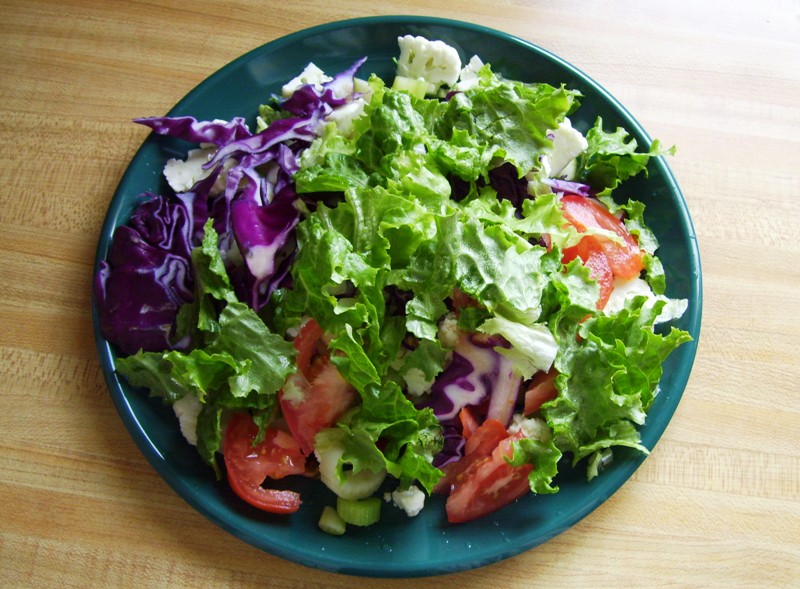
One staple of meals with my life mate/soul mate were salads. During our decades together, we always tried to eat plenty of raw vegetables, so our salads weren’t puny affairs with a few bits of vegetables and lots of iceberg lettuce. We used as many colors as we could — red tomatoes, purple cabbage, yellow squash, orange carrots, white cauliflower, green leaf lettuce. Since the salads were a time-consuming affair, we usually worked together, he washing the vegetables, me cutting them up.

I don’t remember much of the last year of his life (except for the last six weeks — those I remember). After he died I was in too much pain to recall that year, and now it’s too far in the past to recover the details.

But I do remember a time when I came in late from my walk, and he’d already fixed a salad for us. This was shortly before he got too sick to do anything but try to stay ahead of the pain. I don’t understand where he got the energy to fix the salad — his poor body was so ridden with metastases, it must have taken everything he had to do the simplest task, and yet, the salad was waiting for me when I got in.

Yesterday I mentioned how I carelessly let that last year slip by, how I didn’t hang on to his every word, but I was careful that day and took a photo of the salad, perhaps the last one he ever made for me. I wanted the picture because the plate was beautiful, not as a memory of him, but still, it showed I was paying attention to the good things in our shared life.

It seems impossible that he’s been gone for almost three and a half years. Seems impossible that our salad days are over and all that remains is this simple photo.

salad

(Incidentally, “salad days” comes from Shakespeare’s Antony and Cleopatra. At the end of Act I, Cleopatra says, “My salad days, / When I was green in judgment.”)

***

Pat Bertram is the author of the suspense novels Light Bringer, More Deaths Than One, A Spark of Heavenly Fire, and Daughter Am I. Bertram is also the author of Grief: The Great Yearning, “an exquisite book, wrenching to read, and at the same time full of profound truths.” Follow Pat on Google+. Like Pat on Facebook.

Excerpt From “Grief: The Great Yearning” — Day 165

During the first year after the death of my life mate/soul mate, I often wrote to him in an effort to bridge the gap between us. The only problem was, he never wrote back and told me how he felt about his dying and our separation. Did he feel as broken as I did? Did he feel as if part of him had been amputated? Or was he simply glad to be shucked of his body, and perhaps even of me?

It’s been three years now since the following letter was written. I still don’t understand the purpose of pain, loss, suffering. Still don’t understand the nature of life or death. Still don’t know how energy can have cognizance, if in fact, consciousness survives death. The main difference is that the wound where he was amputated from me has healed. I don’t worry about him — at least not much — but I still miss him and I probably always will. Most of all, I am learning to get on with my life.

Excerpt from Grief: The Great Yearning

Day 165, Dear Jeff,

People keep telling me that you’re in a better place, but that I have to get on with my life because life is a gift. Huh? If you’re in a better place, why aren’t I there? If life is a gift, why was it taken from you?

I still can’t figure out the point of it all. Is there anything universally important? Love, perhaps, but not everyone loves or is loved. Creativity? But not everyone is creative. Truth? But what is truth? If nothing is universally important, does anything matter? You’re probably tired of this constant questioning, but your death has posed such a conundrum for me that I’m totally lost. I need to find the bedrock of life, a foundation on which to rebuild my life.

I had no idea I had all these tears in me. The drops are huge, like a badly dripping faucet. I am still stunned by the depth and breadth of my grief. I grieve for the good times and the bad. I grieve for what I got from our relationship and what I didn’t. I grieve for me, what I’ve lost, and what I’ll never have. I grieve for you and all you lost, all you never had, all you never will have. I grieve for that young man, that radiant man I met so many years ago because I know the end of his story. And I grieve for the man whose life was cut short.

It can’t be normal, this protracted grief, but people in the grief business keep assuring me I’m doing well.

I hope you’re doing well, too. I love you. I always will.

Click here to find out more about Grief: The Great Yearning

***

Pat Bertram is the author of the suspense novels Light Bringer, More Deaths Than One, A Spark of Heavenly Fire, and Daughter Am I. Bertram is also the author of Grief: The Great Yearning, “an exquisite book, wrenching to read, and at the same time full of profound truths.” Connect with Pat on Google+. Like Pat on Facebook.
Dirty Tricks and Dirty Dealing

I’ve lived long enough now to know what I have always suspected — most expected behaviors are not realistic. For example, if someone plays a trick on us, we are supposed to be good sports about it, to grin and bear it. Why? Why is it incumbent on us to smile when someone treats us badly? Why aren’t dirty tricks and dirty dealing frowned on?

When I was young, my best friend hid my school books, then she went inside her house, locked the door, and left me outside to search for my books. I couldn’t find them so I rang the door bell, knocked, and called to her. She didn’t doorrespond, just left me standing there alone. I got scared. It was getting late, and I had to get home or else I’d be punished. When it started to rain. I grew frantic, thinking of having to explain those sodden books to my strict teachers and stricter parents. I couldn’t think of any way to get my friend’s attention, so I decided to play the baby. I sat on the porch and pretended to cry. She flounced out of her house, got the books, threw them at me and called me a crybaby and a bad sport.

I could see where maybe hiding the books for a few seconds might be fun. It might even have been funny. But to leave me searching for my books for at least fifteen minutes in the rain? That was cruel. When she grew up, she became a lawyer, and was never heard from again. I’m sure she forgot about the incident shortly after it happened, but I always felt guilty that I hadn’t been a good sport. And I still don’t know what I could have done differently. Well, that’s not true. I would have done one thing differently — I would have immediately dropped her as a friend.

I used to think friendship was the most important thing in the world, and since I didn’t make friends easily, I did everything I could to keep the ones I had. I might not have borne their disregard with a grin, but I did bear it.

Not any more.

When my life mate/soul mate died, I figured I had to let myself be vulnerable and get to know people (or rather let them get to know me), otherwise I’d end up friendless and alone. Opening up worked for a while, but for some reason recently (maybe my Karma coming back to run me over?), some of these friends and online aquaintances have decided to tell me all the things they dislike about me. If people don’t wish me well in my journey through life, they aren’t friends. And I see no point in being a good sport about their ill will. Nor do I grin and bear it. I simply say good-bye.

Oddly, I’m not as worried about being friendless and alone as I was at the beginning of my grief journey. If it happens, so be it, but there are billions of people in the world. Somewhere, I’ll meet people who appreciate my struggles to rebuild my life. In fact, I’ve been meeting a lot of new people lately, both on and offline. Now that’s a wonderful trick!

***

Pat Bertram is the author of the suspense novels Light Bringer, More Deaths Than One, A Spark of Heavenly Fire, and Daughter Am I. Bertram is also the author of Grief: The Great Yearning, “an exquisite book, wrenching to read, and at the same time full of profound truths.” Connect with Pat on Google+. Like Pat on Facebook.

A Few Moments in an Unsettling Dream

I woke too early this morning and a hard time getting back to sleep. When I finally dozed off, I dreamt of my deceased life mate/soul mate. The events in the dream must have taken place at the end of his life when he was so often disoriented, because he was trying to cook something, and he continued pouring whatever it was into the pan after the pan was filled, getting the food all over the stove, him, the floor, even me. I tried to catch his attention so he’d stop, and when I couldn’t, I slapped him to bring him back to reality.

I don’t know where that dream came from. I seldom dream of him, and never once did I slap him in real life, especially not at the end when it took all he had just to get through another hour — or even minute — of life. I never even considered slapping him. I hate women who slap men. If it’s not okay for men to raise a hand to women, it’s just as not okay for women to raise a hand to men, no matter what the provocation.

During those last weeks of his life, I was so eaten up with sorrow for him and for me, so focused on him and his well being, or rather his as-well-as-possible being, that I found infinite patience. (It was the year before that, when I didn’t know what was happening to him, when he became a stranger I didn’t even particularly like, that too often I found myself impatient. But even then I never raised a hand to him, though I did sometimes bristle and clench my fists in frustration.)

Still, whatever the origin of the dream, it’s left me feeling teary and even ashamed as if I really had slapped him. Although I always miss him and never forget him, I sometimes forget that once I lived a different life — a life with him — and the dream reminded me of that life. I do know that if he had continued to live, life would have been pure torture for both of us, and the dream reminded me of that particular reality. But oh, it was so good to see him, if only for a few brief moments in an unsettling dream.

***

Pat Bertram is the author of the suspense novels Light Bringer, More Deaths Than One, A Spark of Heavenly Fire, and Daughter Am I. Bertram is also the author of Grief: The Great Yearning, “an exquisite book, wrenching to read, and at the same time full of profound truths.” Connect with Pat on Google+. Like Pat on Facebook.

Excerpt From “Grief: The Great Yearning” — Day 159

I’ve come a long way in the three years since I wrote the following letter.  I still don’t understand the nature of life or death. Still don’t understand the point of it all, but I am embracing life, trying to create my own meaning out of small occurrences.  The main difference is that the wound where he was amputated from me has healed. I don’t worry about him — at least not much — but I’m still sad and l always miss him.

And oh, yes. I did finally get to the point where sometimes I make his chili when I need to feel the continuity of our shared life — too often now, our life together doesn’t seem real, as if it were but a story in a book. And in a way, it is a story in a book. Grief: The Great Yearning is not simply the story of my grief after his death, but the story of us, our connection, our love.

Excerpt from Grief: The Great Yearning

Day 159, Dear Jeff,

There is such a hole in me, such an inability to grasp the meaning of your absence, that I am totally lost and bewildered. I want—need—something I can never have. It’s like a hunger—a skin hunger, a mind hunger. I cannot comprehend what your death means except that I’m left alone to find my own way.

Damn it! I know we’re not the only people this ever happened to—I’ve heard so many sad tales these past months—but it happened to us.

You worked so hard to be healthy, you deserved to be healthy. You worked so hard to be strong, you deserved to be strong. Even with all the reality we had to face, I believed somewhere, somehow it would all work out for you, for me, for us. I know you were impatient with that belief—you wanted me to face the truth and to understand what was going to happen, but I was naïve in so many ways. I had no idea what death meant—the total end, the line that can never be recrossed, the sheer absence of the dead one. I still don’t know what it means, still can’t comprehend your goneness.

Does anything happen by our choice? In small matters, yes. But in big ones? I don’t see it. I look back at the past few years, trying to figure out what we could have done differently so that everything would have worked out for us, but all our efforts seemed to have led inexorably to your end.

What’s the point of it all? Why do we cling so much to life? In the eternal scheme of things, does it matter how long or short a life is? Does it matter that you only had sixty-three years? It sure matters to me! I want you in my life. I want you to have a life.

I read an article in the paper today that talked about stream-of-consciousness being the brain’s default mode. The journalist said that in depression, the default mode network appears to be overactive, that a depressive brain shows a pattern of balky transitions from introspective thought to work that requires conscious effort, and it frequently slips into the default mode during cognitive tasks. A depressive brain also shows especially weak links between the default mode network and a region of the brain involved in motivation and reward-seeking behavior.

Is this why I so seldom see the point in anything, why it’s hard to find a reason to do things? Is this why stream-of-consciousness writing is easy for me, but fiction is so difficult?

I’m surprised I’m not severely depressed with your being gone. I’m sad and in pain, but not in the black hole of despair. I can cry and be sad, but when the episode passes, I’ll be fine. Or I can be fine until something tilts me over the edge. Taking supplements does that occasionally. I cry as I swallow them, thinking of how you always cared enough for me to make sure I was getting the right nutrients. Other times, taking the supplements brings me comfort for the very same reason.

I still can’t eat the meals we ate together, so mostly I’m snacking. Just what I need, right? I usually have a salad though, so that’s good. I have a craving for your chili, but I’ll probably never eat it again. It won’t taste the same—I never could make it the way you did—and it would make me too sad.

It’s been nice visiting with you here—I wish it were for real and not just in memory. I think often of how brave you were. I need to be brave, too. I thought I’d just need courage to get through the final stages of your illness and the first months of grieving, but now I know I’m going to need courage to live the rest of my life without you.

I love you, Jeff. I hope you’re well. Adios, compadre.

Click here to find out more about Grief: The Great Yearning

***

Pat Bertram is the author of the suspense novels Light Bringer, More Deaths Than One, A Spark of Heavenly Fire, and Daughter Am I. Bertram is also the author of Grief: The Great Yearning, “an exquisite book, wrenching to read, and at the same time full of profound truths.” Connect with Pat on Google+. Like Pat on Facebook.
Grief Update: Forty-One Months

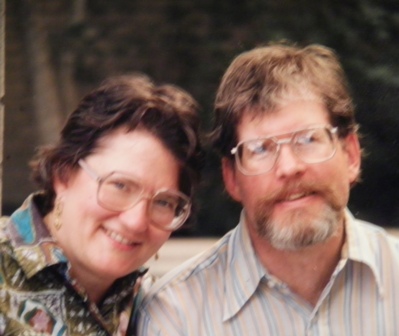
Forty-one months ago, my life mate/soul mate died of inoperable kidney cancer. At times his death seems recent, as if he’s just beyond reach, at home maybe, waiting for me to finish with my present responsibilities. At the same time, his death seems very far away. Last night I looked at his photo and was perplexed to realize he no longer seems real to me. I have no concept of him as a person. It’s as if he were merely an idea I had once a long time ago or maybe a character I created for a book. And yet I know he lived, loved, laughed. I know he was real. I feel the loss in the depth of my being, and tears of sadness and yearning for him are always close to the surface, though the tears seldom fall any more.

starbMy life doesn’t seem real, either. I walk, write, make friends, lose friends, make plans and break them, try new activities, see new places, sample new foods, wish on the first star I see at night. (Okay, so it’s Venus — from here, it looks like a star.) Despite all that I’m doing to create a life for myself, I feel as if I’m just going through the motions. I don’t want to live alone, yet I don’t want to live with anyone, either. I don’t want him back to suffer more, yet I wish desperately to see him once again.

Even if I did get a chance to see him, I wouldn’t know what to say — grief has changed me in some fundamental way, and I don’t know if we’d have anything to talk about. Of course, I’d ask him what his life was like, if he were happy, if I seem as abstract to him as he now does to me. We might reminisce a bit, and I’d probably tell him of a few worldly developments, but to be honest, nothing that has happened in the past forty-one months is so important that I’d drag him back from the dead to talk about.

I’ve been looking forward to a time when grief no longer has me in thrall (they say it takes three to five years to find a renewed interest in life, though from talking to people who have gone through a similar grievous loss, I found out it’s more like four to five years). And yet, if I feel this way now — as if he isn’t real — then I’m not sure I want to find out what’s ahead. But I have no choice. In seven months, it will be four years since his death, and twelve months after that, it will be five years. And he will seem even more gone than ever.

***

Pat Bertram is the author of the suspense novels Light Bringer, More Deaths Than One, A Spark of Heavenly Fire, and Daughter Am I. Bertram is also the author of Grief: The Great Yearning, “an exquisite book, wrenching to read, and at the same time full of profound truths.” Connect with Pat on Google+. Like Pat on Facebook.