Salad Days

One staple of meals with my life mate/soul mate were salads. During our decades together, we always tried to eat plenty of raw vegetables, so our salads weren’t puny affairs with a few bits of vegetables and lots of iceberg lettuce. We used as many colors as we could — red tomatoes, purple cabbage, yellow squash, orange carrots, white cauliflower, green leaf lettuce. Since the salads were a time-consuming affair, we usually worked together, he washing the vegetables, me cutting them up.

I don’t remember much of the last year of his life (except for the last six weeks — those I remember). After he died I was in too much pain to recall that year, and now it’s too far in the past to recover the details.

But I do remember a time when I came in late from my walk, and he’d already fixed a salad for us. This was shortly before he got too sick to do anything but try to stay ahead of the pain. I don’t understand where he got the energy to fix the salad — his poor body was so ridden with metastases, it must have taken everything he had to do the simplest task, and yet, the salad was waiting for me when I got in.

Yesterday I mentioned how I carelessly let that last year slip by, how I didn’t hang on to his every word, but I was careful that day and took a photo of the salad, perhaps the last one he ever made for me. I wanted the picture because the plate was beautiful, not as a memory of him, but still, it showed I was paying attention to the good things in our shared life.

It seems impossible that he’s been gone for almost three and a half years. Seems impossible that our salad days are over and all that remains is this simple photo.

salad

(Incidentally, “salad days” comes from Shakespeare’s Antony and Cleopatra. At the end of Act I, Cleopatra says, “My salad days, / When I was green in judgment.”)

***

Pat Bertram is the author of the suspense novels Light Bringer, More Deaths Than One, A Spark of Heavenly Fire, and Daughter Am I. Bertram is also the author of Grief: The Great Yearning, “an exquisite book, wrenching to read, and at the same time full of profound truths.” Follow Pat on Google+. Like Pat on Facebook.

Excerpt From “Grief: The Great Yearning” — Day 165

During the first year after the death of my life mate/soul mate, I often wrote to him in an effort to bridge the gap between us. The only problem was, he never wrote back and told me how he felt about his dying and our separation. Did he feel as broken as I did? Did he feel as if part of him had been amputated? Or was he simply glad to be shucked of his body, and perhaps even of me?

It’s been three years now since the following letter was written. I still don’t understand the purpose of pain, loss, suffering. Still don’t understand the nature of life or death. Still don’t know how energy can have cognizance, if in fact, consciousness survives death. The main difference is that the wound where he was amputated from me has healed. I don’t worry about him — at least not much — but I still miss him and I probably always will. Most of all, I am learning to get on with my life.

Excerpt from Grief: The Great Yearning

Day 165, Dear Jeff,

People keep telling me that you’re in a better place, but that I have to get on with my life because life is a gift. Huh? If you’re in a better place, why aren’t I there? If life is a gift, why was it taken from you?

I still can’t figure out the point of it all. Is there anything universally important? Love, perhaps, but not everyone loves or is loved. Creativity? But not everyone is creative. Truth? But what is truth? If nothing is universally important, does anything matter? You’re probably tired of this constant questioning, but your death has posed such a conundrum for me that I’m totally lost. I need to find the bedrock of life, a foundation on which to rebuild my life.

I had no idea I had all these tears in me. The drops are huge, like a badly dripping faucet. I am still stunned by the depth and breadth of my grief. I grieve for the good times and the bad. I grieve for what I got from our relationship and what I didn’t. I grieve for me, what I’ve lost, and what I’ll never have. I grieve for you and all you lost, all you never had, all you never will have. I grieve for that young man, that radiant man I met so many years ago because I know the end of his story. And I grieve for the man whose life was cut short.

It can’t be normal, this protracted grief, but people in the grief business keep assuring me I’m doing well.

I hope you’re doing well, too. I love you. I always will.

Click here to find out more about Grief: The Great Yearning

***

Pat Bertram is the author of the suspense novels Light Bringer, More Deaths Than One, A Spark of Heavenly Fire, and Daughter Am I. Bertram is also the author of Grief: The Great Yearning, “an exquisite book, wrenching to read, and at the same time full of profound truths.” Connect with Pat on Google+. Like Pat on Facebook.

Dirty Tricks and Dirty Dealing

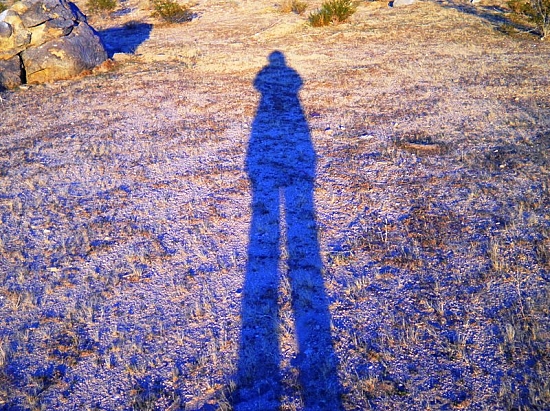
I’ve lived long enough now to know what I have always suspected — most expected behaviors are not realistic. For example, if someone plays a trick on us, we are supposed to be good sports about it, to grin and bear it. Why? Why is it incumbent on us to smile when someone treats us badly? Why aren’t dirty tricks and dirty dealing frowned on?

When I was young, my best friend hid my school books, then she went inside her house, locked the door, and left me outside to search for my books. I couldn’t find them so I rang the door bell, knocked, and called to her. She didn’t doorrespond, just left me standing there alone. I got scared. It was getting late, and I had to get home or else I’d be punished. When it started to rain. I grew frantic, thinking of having to explain those sodden books to my strict teachers and stricter parents. I couldn’t think of any way to get my friend’s attention, so I decided to play the baby. I sat on the porch and pretended to cry. She flounced out of her house, got the books, threw them at me and called me a crybaby and a bad sport.

I could see where maybe hiding the books for a few seconds might be fun. It might even have been funny. But to leave me searching for my books for at least fifteen minutes in the rain? That was cruel. When she grew up, she became a lawyer, and was never heard from again. I’m sure she forgot about the incident shortly after it happened, but I always felt guilty that I hadn’t been a good sport. And I still don’t know what I could have done differently. Well, that’s not true. I would have done one thing differently — I would have immediately dropped her as a friend.

I used to think friendship was the most important thing in the world, and since I didn’t make friends easily, I did everything I could to keep the ones I had. I might not have borne their disregard with a grin, but I did bear it.

Not any more.

When my life mate/soul mate died, I figured I had to let myself be vulnerable and get to know people (or rather let them get to know me), otherwise I’d end up friendless and alone. Opening up worked for a while, but for some reason recently (maybe my Karma coming back to run me over?), some of these friends and online aquaintances have decided to tell me all the things they dislike about me. If people don’t wish me well in my journey through life, they aren’t friends. And I see no point in being a good sport about their ill will. Nor do I grin and bear it. I simply say good-bye.

Oddly, I’m not as worried about being friendless and alone as I was at the beginning of my grief journey. If it happens, so be it, but there are billions of people in the world. Somewhere, I’ll meet people who appreciate my struggles to rebuild my life. In fact, I’ve been meeting a lot of new people lately, both on and offline. Now that’s a wonderful trick!

***

Pat Bertram is the author of the suspense novels Light Bringer, More Deaths Than One, A Spark of Heavenly Fire, and Daughter Am I. Bertram is also the author of Grief: The Great Yearning, “an exquisite book, wrenching to read, and at the same time full of profound truths.” Connect with Pat on Google+. Like Pat on Facebook.
A Few Moments in an Unsettling Dream

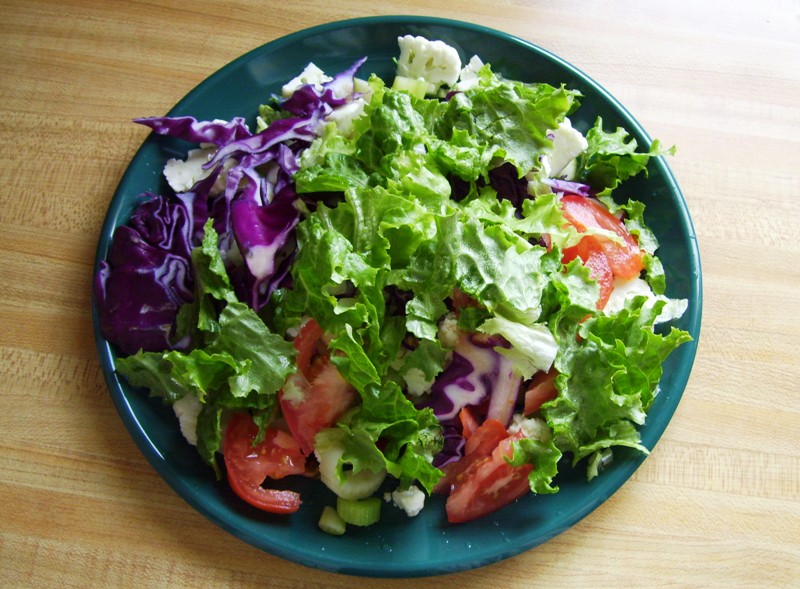
I woke too early this morning and a hard time getting back to sleep. When I finally dozed off, I dreamt of my deceased life mate/soul mate. The events in the dream must have taken place at the end of his life when he was so often disoriented, because he was trying to cook something, and he continued pouring whatever it was into the pan after the pan was filled, getting the food all over the stove, him, the floor, even me. I tried to catch his attention so he’d stop, and when I couldn’t, I slapped him to bring him back to reality.

I don’t know where that dream came from. I seldom dream of him, and never once did I slap him in real life, especially not at the end when it took all he had just to get through another hour — or even minute — of life. I never even considered slapping him. I hate women who slap men. If it’s not okay for men to raise a hand to women, it’s just as not okay for women to raise a hand to men, no matter what the provocation.

During those last weeks of his life, I was so eaten up with sorrow for him and for me, so focused on him and his well being, or rather his as-well-as-possible being, that I found infinite patience. (It was the year before that, when I didn’t know what was happening to him, when he became a stranger I didn’t even particularly like, that too often I found myself impatient. But even then I never raised a hand to him, though I did sometimes bristle and clench my fists in frustration.)

Still, whatever the origin of the dream, it’s left me feeling teary and even ashamed as if I really had slapped him. Although I always miss him and never forget him, I sometimes forget that once I lived a different life — a life with him — and the dream reminded me of that life. I do know that if he had continued to live, life would have been pure torture for both of us, and the dream reminded me of that particular reality. But oh, it was so good to see him, if only for a few brief moments in an unsettling dream.

***

Pat Bertram is the author of the suspense novels Light Bringer, More Deaths Than One, A Spark of Heavenly Fire, and Daughter Am I. Bertram is also the author of Grief: The Great Yearning, “an exquisite book, wrenching to read, and at the same time full of profound truths.” Connect with Pat on Google+. Like Pat on Facebook.

Excerpt From “Grief: The Great Yearning” — Day 159

I’ve come a long way in the three years since I wrote the following letter.  I still don’t understand the nature of life or death. Still don’t understand the point of it all, but I am embracing life, trying to create my own meaning out of small occurrences.  The main difference is that the wound where he was amputated from me has healed. I don’t worry about him — at least not much — but I’m still sad and l always miss him.

And oh, yes. I did finally get to the point where sometimes I make his chili when I need to feel the continuity of our shared life — too often now, our life together doesn’t seem real, as if it were but a story in a book. And in a way, it is a story in a book. Grief: The Great Yearning is not simply the story of my grief after his death, but the story of us, our connection, our love.

Excerpt from Grief: The Great Yearning

Day 159, Dear Jeff,

There is such a hole in me, such an inability to grasp the meaning of your absence, that I am totally lost and bewildered. I want—need—something I can never have. It’s like a hunger—a skin hunger, a mind hunger. I cannot comprehend what your death means except that I’m left alone to find my own way.

Damn it! I know we’re not the only people this ever happened to—I’ve heard so many sad tales these past months—but it happened to us.

You worked so hard to be healthy, you deserved to be healthy. You worked so hard to be strong, you deserved to be strong. Even with all the reality we had to face, I believed somewhere, somehow it would all work out for you, for me, for us. I know you were impatient with that belief—you wanted me to face the truth and to understand what was going to happen, but I was naïve in so many ways. I had no idea what death meant—the total end, the line that can never be recrossed, the sheer absence of the dead one. I still don’t know what it means, still can’t comprehend your goneness.

Does anything happen by our choice? In small matters, yes. But in big ones? I don’t see it. I look back at the past few years, trying to figure out what we could have done differently so that everything would have worked out for us, but all our efforts seemed to have led inexorably to your end.

What’s the point of it all? Why do we cling so much to life? In the eternal scheme of things, does it matter how long or short a life is? Does it matter that you only had sixty-three years? It sure matters to me! I want you in my life. I want you to have a life.

I read an article in the paper today that talked about stream-of-consciousness being the brain’s default mode. The journalist said that in depression, the default mode network appears to be overactive, that a depressive brain shows a pattern of balky transitions from introspective thought to work that requires conscious effort, and it frequently slips into the default mode during cognitive tasks. A depressive brain also shows especially weak links between the default mode network and a region of the brain involved in motivation and reward-seeking behavior.

Is this why I so seldom see the point in anything, why it’s hard to find a reason to do things? Is this why stream-of-consciousness writing is easy for me, but fiction is so difficult?

I’m surprised I’m not severely depressed with your being gone. I’m sad and in pain, but not in the black hole of despair. I can cry and be sad, but when the episode passes, I’ll be fine. Or I can be fine until something tilts me over the edge. Taking supplements does that occasionally. I cry as I swallow them, thinking of how you always cared enough for me to make sure I was getting the right nutrients. Other times, taking the supplements brings me comfort for the very same reason.

I still can’t eat the meals we ate together, so mostly I’m snacking. Just what I need, right? I usually have a salad though, so that’s good. I have a craving for your chili, but I’ll probably never eat it again. It won’t taste the same—I never could make it the way you did—and it would make me too sad.

It’s been nice visiting with you here—I wish it were for real and not just in memory. I think often of how brave you were. I need to be brave, too. I thought I’d just need courage to get through the final stages of your illness and the first months of grieving, but now I know I’m going to need courage to live the rest of my life without you.

I love you, Jeff. I hope you’re well. Adios, compadre.

Click here to find out more about Grief: The Great Yearning

***

Pat Bertram is the author of the suspense novels Light Bringer, More Deaths Than One, A Spark of Heavenly Fire, and Daughter Am I. Bertram is also the author of Grief: The Great Yearning, “an exquisite book, wrenching to read, and at the same time full of profound truths.” Connect with Pat on Google+. Like Pat on Facebook.

Grief Update: Forty-One Months

Forty-one months ago, my life mate/soul mate died of inoperable kidney cancer. At times his death seems recent, as if he’s just beyond reach, at home maybe, waiting for me to finish with my present responsibilities. At the same time, his death seems very far away. Last night I looked at his photo and was perplexed to realize he no longer seems real to me. I have no concept of him as a person. It’s as if he were merely an idea I had once a long time ago or maybe a character I created for a book. And yet I know he lived, loved, laughed. I know he was real. I feel the loss in the depth of my being, and tears of sadness and yearning for him are always close to the surface, though the tears seldom fall any more.

starbMy life doesn’t seem real, either. I walk, write, make friends, lose friends, make plans and break them, try new activities, see new places, sample new foods, wish on the first star I see at night. (Okay, so it’s Venus — from here, it looks like a star.) Despite all that I’m doing to create a life for myself, I feel as if I’m just going through the motions. I don’t want to live alone, yet I don’t want to live with anyone, either. I don’t want him back to suffer more, yet I wish desperately to see him once again.

Even if I did get a chance to see him, I wouldn’t know what to say — grief has changed me in some fundamental way, and I don’t know if we’d have anything to talk about. Of course, I’d ask him what his life was like, if he were happy, if I seem as abstract to him as he now does to me. We might reminisce a bit, and I’d probably tell him of a few worldly developments, but to be honest, nothing that has happened in the past forty-one months is so important that I’d drag him back from the dead to talk about.

I’ve been looking forward to a time when grief no longer has me in thrall (they say it takes three to five years to find a renewed interest in life, though from talking to people who have gone through a similar grievous loss, I found out it’s more like four to five years). And yet, if I feel this way now — as if he isn’t real — then I’m not sure I want to find out what’s ahead. But I have no choice. In seven months, it will be four years since his death, and twelve months after that, it will be five years. And he will seem even more gone than ever.

***

Pat Bertram is the author of the suspense novels Light Bringer, More Deaths Than One, A Spark of Heavenly Fire, and Daughter Am I. Bertram is also the author of Grief: The Great Yearning, “an exquisite book, wrenching to read, and at the same time full of profound truths.” Connect with Pat on Google+. Like Pat on Facebook.
Negativity Is in the Ear of the Beholder

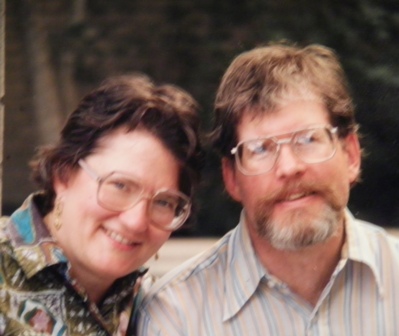
People who tell me I’m negative make me feel . . . well, they make me feel negative, and for no good reason. I might not be a sunny person, always looking on the bright side, and I might not be one of those who believe you fake it until you make it, but I’m not negative. I’m pragmatic. A thinker. A truth seeker. And the truth is, people who call others negative often want things their own way and are peeved if the others don’t like it.

For example, a friend invited me to go to lunch, so I arranged my schedule around the time she chose. An hour before we were to meet, she called and changed the time. The new time would interfere with my plans for later in the afternoon, so I told her I wasn’t sure I could make it. She called me negative.

Another friend often emails me and asks if I’m available at such and such a time so we can talk, and many times I wait for a call that never materializes. If I express my disappointment or say I’d appreciate being informed of a change of plans, I get called negative.

The other day I mentioned I couldn’t do something, and a person I’d met a scant hour earlier, said, “I hate negativity. Don’t ever say you can’t do something in my presence again.” Huh? I couldn’t do it. That didn’t mean I wouldn’t try to do it or wouldn’t try to learn to do it. Nor was I being negative. It was a simple statement of fact. Being positive and saying I could do it would be a falsehood — a negativity — which is anathema to a truth seeker.

During those horrendous first days, weeks, months, after the death of my life mate/soul mate, grief would so overwhelm me at times that I would scream to the heavens, “I can’t do this!” And at that very moment, I couldn’t. Sometimes it took everything I had to simply breathe, let alone attempt one of the myriad end-of-life chores. Sometimes the pain of grief would well up, obliterating everything but raw agony and angst. But . . . I did what I needed to do. I used the heat of my anger and despair as fuel to accomplish such impossible tasks as clearing out his “effects” or boxing our things to be stored.

Two months after he died, I got up early, cleaned out the few remaining items I’d been using, packed my car ready for the trip to my nonagenarian father’s house so I could look after him. I walked through our rooms, remembering with what hope my mate and I had moved there, remembering the good times, remembering the more frequent bad times. Remembering his last hug, his last kiss. His death.

As I was shutting the front door, I thought of all that lay ahead of me. Pain welled up in me, and I cried out, “I can’t do this.” Then, it dawned on me: Yes. I can. Because I did. I got out my camera, and went through the house one last time, taking photos of the empty rooms to prove to myself that all those things I thought I couldn’t do, I did.

I still have times of screaming “I can’t do this” when life overwhelms me, but it’s not a sign of negativity. It’s merely an expression of the moment. And if someone doesn’t like my saying I can’t do something without finding out why I think so, it’s too bad. I can’t live my life to suit those who call me negative.

***

Pat Bertram is the author of the suspense novels Light Bringer, More Deaths Than One, A Spark of Heavenly Fire, and Daughter Am I. Bertram is also the author of Grief: The Great Yearning, “an exquisite book, wrenching to read, and at the same time full of profound truths.” Connect with Pat on Google+. Like Pat on Facebook.

My Tree Bark Heart

When I lost my life mate/soul mate to inoperable kidney cancer a little more than three years ago, people told me that my shattered heart would heal, and that it would grow back bigger. In this respect, apparently, hearts are like tree trunks. The bark on a tree is where the trunk breaks to allow new growth. So now I have a tree bark heart, but instead of being more receptive to love, I seem to be more receptive to grief. Or maybe the bark hasn’t hardened yet, and the soft, easily hurt trunk is still showing through.

IBroken heart’ve been going through a series of upheavals in my life recently, most of which I can’t talk about. One is a family situation and the people involved would be terribly hurt if I were to make the drama public. It’s a sadly inevitable predicament, with roots dating back to my childhood, and it grieves me deeply.

The other situation has weaker roots since it dates back only a couple of years, but still, it saddens me. I’d agreed to do the online promotion for an internet company in return for a percentage of the profits, and those hopes disappeared this weekend in a series of emails and a cloud of dust as some of the major players decamped, leaving me rootless. I hadn’t realized until it was over how much I needed feeling as if I were part of something, even if it was more hope than reality.

I’ve also lost a couple of friends who have moved beyond me, either into committed relationships or . . . whatever. I still am not sure what is going on with one friend.

When my mate died, I played endless games of computer solitaire. It was a mindless way of passing the time, and I find myself doing that again. Just game after game after game.

Restless. Sad. Lost. Expanding that poor shattered tree bark heart.

***

Pat Bertram is the author of the suspense novels Light Bringer, More Deaths Than One, A Spark of Heavenly Fire, and Daughter Am I. Bertram is also the author of Grief: The Great Yearning, “an exquisite book, wrenching to read, and at the same time full of profound truths.” Follow Pat on Google+. Like Pat on Facebook.

Camping on the Edge of Life

Too often now I feel as if I am camping on the edge of life. To a certain extent, this feeling comes from my current living situation. I am staying with my 96-year-old father to make sure he retains his independence as long as possible, but since his house is fully furnished, that means most of my stuff is in storage. I have my clothes, of course, my computer, my own towels, a few kitchen items, a couple of furniture pieces (such as the table and chair I’m presently using for my desk) — just enough to connect me to the past but not enough to make me feel settled. I won’t be staying here once my father is gone campingand that knowledge also keeps me from feeling settled, makes me feel as if I am just camping in. (Rather than camping out.)

More than that, though, this feeling of camping on the edge of life comes from being single in a coupled world. It’s been three and a third years since the death of my life mate/soul mate, and I’m still not comfortable with his being gone. Despite that, quite inexplicably I’m forgetting that I once shared my life, once loved deeply, once felt as if I lived smack dab in the middle of life. As my grief continues to wane, as I move further from him, it seems as if this is lonely existence is what my life has always been — and it should be enough, but it isn’t. Not yet.

We live in a world where movies, books, songs, videos, shows, ads and commercials all extol the virtue of being in an intimate relationship. Love makes the world go round. You’re nobody till somebody loves you. All you need is love. Love makes you feel complete. Love makes you feel fulfilled. Love makes life worth living.

This constant barrage of coupled love and happily ever after is a sad message for many of us — either we lost our love too soon through death or divorce, or never found someone in the first place.

Intellectually, I know that whatever I am doing or feeling is life. Being together or being alone, feeling fulfilled or feeling unfulfilled — all of it is life. And yet, I can’t help feeling that something is missing.

It might sound as if I’m looking for someone to share my life with, but I’m not. I’m just aware of the realities of being uncoupled in a coupled world. I suppose there will come a time when I embrace the freedom of my alonehood, and plunge deep into the heart of life, but for now, all logic to the contrary, I feel as if I am camping on the edge of life.

***

Pat Bertram is the author of the suspense novels Light Bringer, More Deaths Than One, A Spark of Heavenly Fire, and Daughter Am I. Bertram is also the author of Grief: The Great Yearning, “an exquisite book, wrenching to read, and at the same time full of profound truths.” Connect with Pat on Google+. Like Pat on Facebook.

Excerpt From “Grief: The Great Yearning” — Day 115

I never actually set out to write a book about grief, never planned to make any of my writing public (except for blog posts, of course), but I was so lost, so lonely, so sick with grief and bewildered by all I was experiencing, that the only way I could try to make sense of it all was to put my feelings into words. Whether I was writing letters to Jeff (my deceased life mate/soul mate) or simply pouring out my feelings in a journal, it helped me feel close to him, as if, once again, I was talking things over with him. The only problem was, I only heard my side of the story.  He never told me how he felt about his dying and our separation. Did he feel as broken as I did? Did he feel amputated? Or was he simply glad to be shucked of his body, and perhaps even of me?

It’s been more than three years now since the following piece was written. I still don’t understand the purpose of pain, loss, suffering. Still don’t understand the nature of life or death. Still don’t know how energy can have cognizance, if in fact, consciousness survives death. The main difference is that the wound where he was amputated from me has healed. I don’t worry about him — at least not much — but I still miss him and I probably always will.

Excerpt from Grief: The Great Yearning

Day 115, Dear Jeff,

Did you use the phrase okie-doke one night at the end when you were saying all those jaunty things like “adios, compadre”? You must have. Every time I see or hear the expression, I start crying. Good thing it’s not in common usage any more.

I am hurtling away from you at incredible speeds. Maybe I’ll come full circle and meet with you again when my end arrives? I wish I believed that, but it makes no sense. How do sparks of energy have cognizance, character, memory? How would we know each other? At least I would no longer have to deal with your absence since I’d be absent too.

You came into my life so rapidly. One day you weren’t there, and the next you were. You went out the same way. One day you were there, the next you weren’t.

Yesterday someone told me that life on earth was an illusion and so you still existed. But if life is an illusion, why couldn’t it be a happy figment? A joyful one? What’s the point of pain? Of loss? Of suffering?

You’ve been gone one-hundred and fifteen days, and I still can’t make sense of it.

Adios, compadre. I hope you, at least, are at peace.

Click here to find out more about Grief: The Great Yearning

***

Pat Bertram is the author of the suspense novels Light Bringer, More Deaths Than One, A Spark of Heavenly Fire, and Daughter Am I. Bertram is also the author of Grief: The Great Yearning, “an exquisite book, wrenching to read, and at the same time full of profound truths.” Connect with Pat on Google+. Like Pat on Facebook.




