Underestimating Gardening Tasks

I am enjoying the unseasonably warm temperatures. The late mornings are still a bit chilly when I go out to work in my yard, so I don’t get the full benefit of the 70+ high temperature, but it’s still nice to be able to work without freezing my fingers and toes.

I have learned that when it comes to gardening, I always underestimate the time it takes to any task, and planting this last batch of bulbs is no different. I am placing them between the daylilies I planted a couple of months ago, so I figured the ground would be easy to work, but unfortunately, I let the prostrate bindweed take hold. I started out digging it up, but discovered that I was also digging up the newly planted daylilies, so I decided to wait until it was time to plant the tulips and do it all at once (weed and plant). And so I really have my work set out for me.

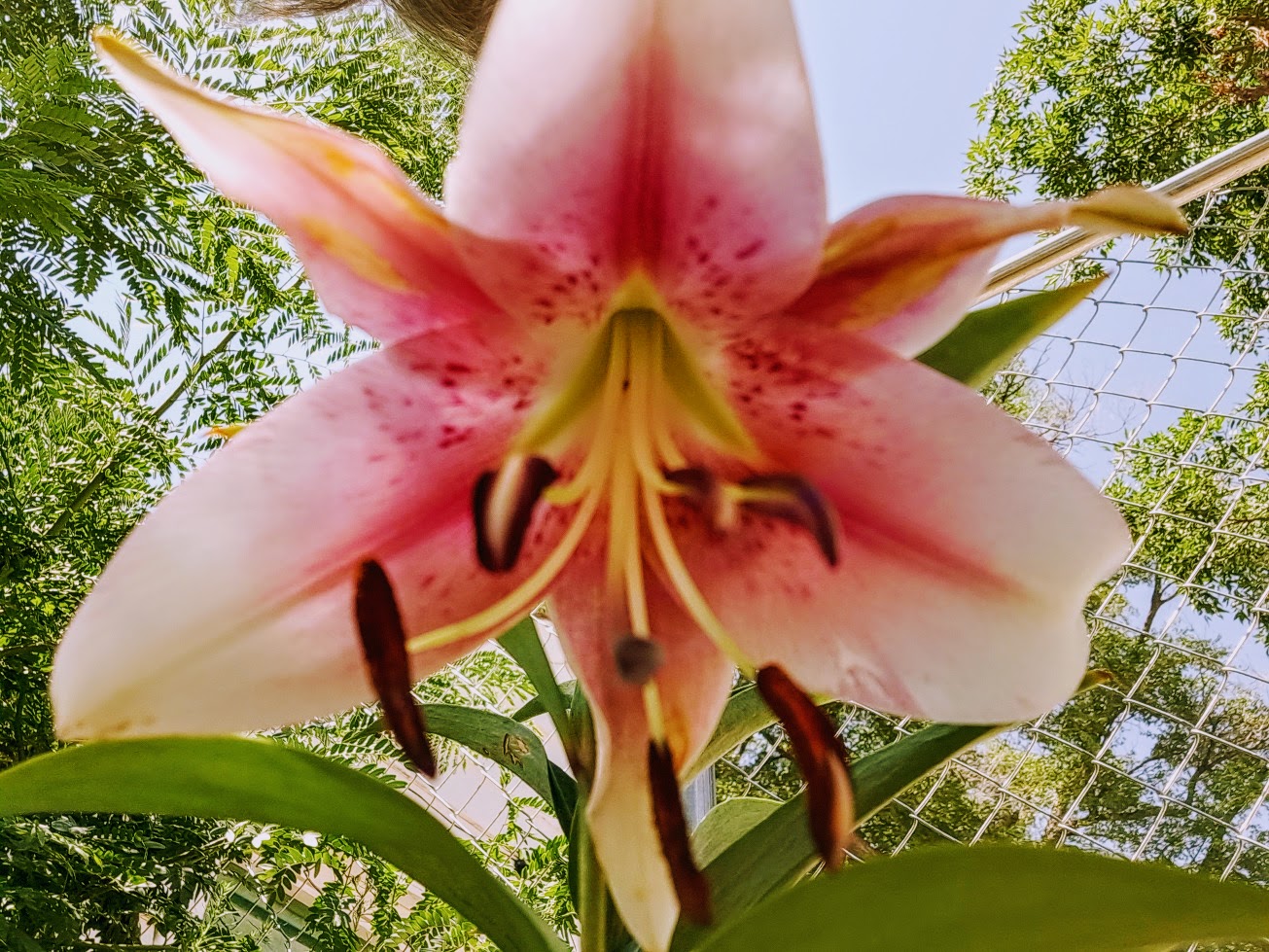
I also have to decide what to do with the lily trees I planted. The first twenty had a note on the package to plant 3” deep, which I did. A second batch from another company that I received ten days after the first batch said to plant 6” deep, which I also did. Concerned about the disparity of depths, I checked online, and the online instructions from the company where I bought the first twenty said to plant 10” deep. If I can figure out where the bulbs are (I raked the area flat, so it’s anyone’s guess), I might try to dig them up and replant them, but if the cooler weather comes too quickly or if my knees give out, I will have to wait until next fall and buy the bulbs again. Which I do not want to do because they are relatively expensive.

I am so not a gardener! Though I suppose, by the time I get my yard landscaped, I’ll at least know a bit more about what I am doing. It’s too bad about the lilies — I was really looking forward to an eventual lily tree forest of six-foot-tall plants. Apparently, the plants die back every winter, and every spring for three or four years, they come back taller than ever until they eventually grow to their full height. Planting new bulbs next fall would put the “forest” back another year so I wouldn’t see the full growth until the fourth year.

The good news is that if I decide to try to replant, and if I can find the bulbs, it should be an easy enough task since the ground was worked to at least a 6” depth.

But then, there is that comment I made earlier, that I always underestimate the time it takes to do any gardening task. Still, I can take comfort from knowing that at least the weather will be warm for a my bulb hunt.

***

What if God decided S/He didn’t like how the world turned out, and turned it over to a development company from the planet Xerxes for re-creation? Would you survive? Could you survive?

A fun book for not-so-fun times.

Click here to buy Bob, The Right Hand of God.
Taking It Easy

Laziness doesn’t pay, at least not for me. Although I’m supposed to water my new lawn every day, yesterday, I refrained — it was too cold and chilly for me to go out, and the high temperatures weren’t going to get very high. I figured when it warmed up today, I could give it a good soaking.

It was a good plan, but plans tend to be overthrown by other plans. As it turned out, I had to work a full day today, so I needed to water before I left. That early, it was much colder than it was yesterday, and all my digits about froze.

I don’t seem to be able to water, either by hand or by sprinkler, without getting soaked. I thought I was being smart by wearing nitrile gloves to keep my hands from getting wet, which did work for that purpose, but those gloves didn’t do anything to stave off the cold.

Luckily, we will have a respite from the cold for several days starting tomorrow. And since I gave the grass a good soaking today, if by any chance I have to miss tomorrow, I’ll be okay.

It’s funny to me that after my dad died, the last person I had any responsibility for, I eschewed every responsibility except for taking care of myself. I didn’t even want a houseplant — it overwhelmed me just thinking of having to care for it. And now here I am, with a house, plants (both indoor and out), a yard and grass. And a job helping to care for an older woman. That’s a lot of responsibility for a person who wants none. But surprisingly, it’s not a problem. I do what I need to do when I need to do it, and then take it easy the rest of the time.

So far so good.

***

Pat Bertram is the author of Grief: The Inside Story – A Guide to Surviving the Loss of a Loved One. “Grief: The Inside Story is perfect and that is not hyperbole! It is exactly what folk who are grieving need to read.” –Leesa Healy, RN, GDAS GDAT, Emotional/Mental Health Therapist & Educator.

The Coming Seasons

It’s been ten days since the grass was put in, and it’s still alive! Yay! Maybe my brown thumb is gradually turning green. I’ve still been watering the grass every day, but strong winds are bringing in cooler temperatures, so it won’t be long before I switch to every other day, and then gradually fade out as winter pushes its way into my world.

I’m not especially fond of winter, but I have a hunch this year I will appreciate it more than normal — no watering grass and plants, no digging, no landscaping. Except for the watering, I’m mostly done with the digging. My final two hundred bulbs should be here Friday, and after they are planted, all I have to do is watch the forecast for the first snowfall, then scatter my wildflower seeds and tramp them into the ground before the storm hits.

Then it’s all about waiting for spring. Or not. Too much of my life has been about waiting, so perhaps I should change my focus to something beyond my yard and garden. Playing house and cleaning all the corners that have been neglected during the past few months perhaps. Walking, probably. All too often, I was too tired from the gardening chores or my knees too incapacitated to walk this summer, so winter would be a good time to concentrate on mobility. Ooops. But snow! I don’t walk in the snow, so that might not be the best thing to concentrate on. Still, there are my knee exercises to do to make sure they are as strong as possible as I sink deeper into old age.

The only thing worse than waiting is planning, so I’ll be better off not planning what I will do when the yard chores are finished especially since there is a good chance they won’t be finished for a long time. After all, the neighbors on all sides have trees, and somehow most of the leaves end up in my yard. It will be good to have the leaves, but I don’t particularly relish raking them off the grass and blowing them off the rocks. Still, tools are always fun to use, so it will be just a different focus.

It is interesting the way having a yard and spending time in that yard every day makes one cognizant of the seasons in a way that merely staying inside and switching from heat to air-conditioning and back to heat does. Even walking didn’t make me as aware of the seasons, perhaps because I wasn’t as involved with my environs as I am with yardwork.

Next year should be interesting. I’ve dug up about all the weeded areas I could, and those I couldn’t will be sown with wildflower seeds. If my raised garden is built by then, I will have a garden to plant, but if not, I’ll mostly be taking care of what has already been planted. Though, come to think of it, the lure of bedding plants is strong, so I’m sure I’ll find some place for a few. Or even more than a few.

Last night I was thinking about age, brought on by a neighbor’s comment that I was too old to go tent camping, which I might be. But I do think in another decade, I will look back on this year, my first year of unarguable elderliness as a time of relative youth. I mean, look at all I’ve accomplished with the landscaping. Admittedly, I did not lay the sod, the ornamental rocks, or the crushed rock for the pathways, but I have been out there every day doing something to turn my property into a micro estate.

It has been a good experience, and I’m looking forward to seeing where all this takes me in the coming seasons.

***

What if God decided S/He didn’t like how the world turned out, and turned it over to a development company from the planet Xerxes for re-creation? Would you survive? Could you survive?

A fun book for not-so-fun times.

Click here to buy Bob, The Right Hand of God.

Hatching a New Book

I just finished reading a book where a couple moved to an small town where the families of the inhabitants go back generations. As in most stories using this particular scenario, the couple had a hard time fitting in because they were outsiders.

A counterpart of this story is the Hallmark movie version where a big city success goes home to the small town where she was raised and suddenly, she finds everything she’s ever wanted.

Basically, these are the same story, just told from different points of view. The returnee, of course, is welcomed because she is one of them, and left unsaid is the part where if she had been a stranger, things would not have worked out as well for her.

There is a third version of this story, where a person is stranded and finds a home in the town. Bagdad Café and Doc Hollywood are two examples.

When I moved here, I expected the first version to hold true, especially since I’ve lived in small towns before and never found in them a home except what Jeff and I created between the two of us. In fact, when I left the area where Jeff and I had lived for two decades, only one grocery clerk and a librarian bothered to say good-bye. When we left the previous place, no one but our landlady noticed. And the place before that, not even the landlady cared.

Obviously, the second version can’t hold true because I am not coming back to my roots. I have no real roots. My parents left the east coast where they were raised, camped out in Denver to grow their family, then headed on to the west coast where they’d planned to go all along.

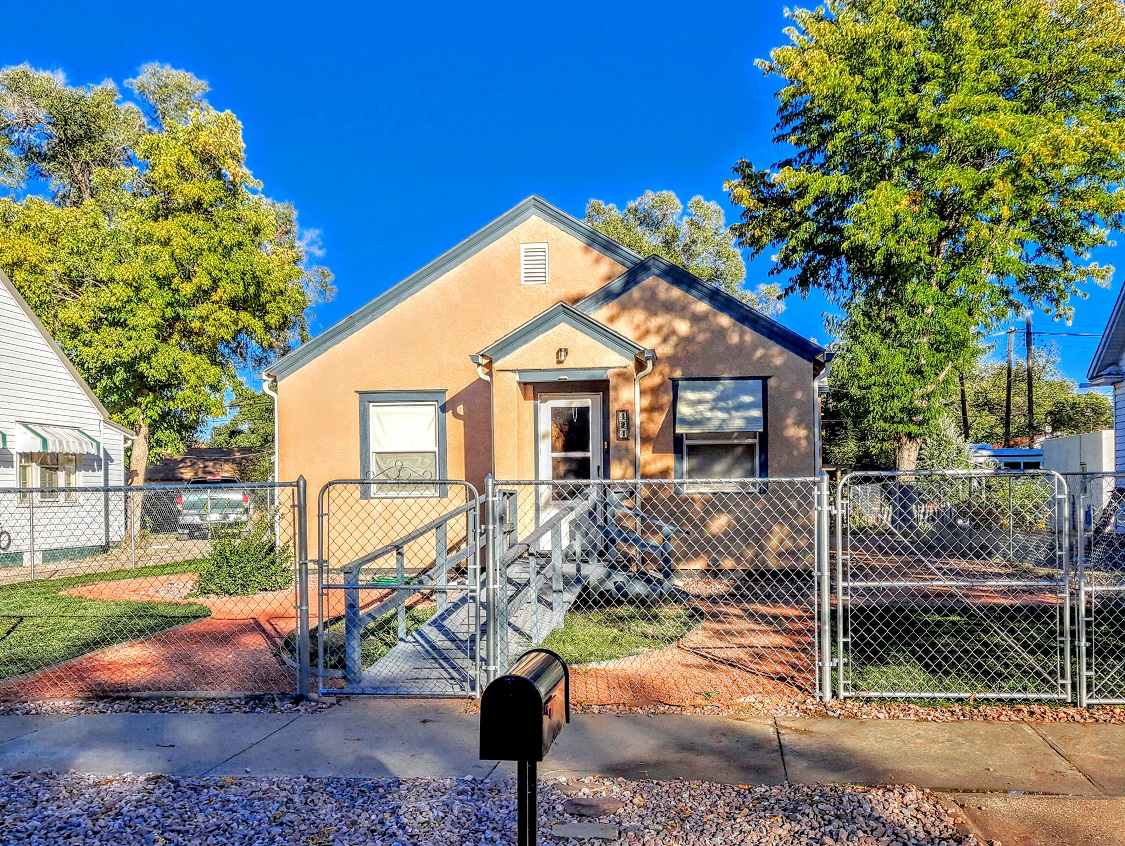
I’m also not stranded here accidentally, but it was accidental (perhaps) how it came about. Although I had never signed up with Zillow, they sent me an email one day saying, “This is your new house.” I looked at the photos, and I agreed. It was my house, the one I had been conjuring in my mind, and a person goes where their house is, regardless of what problems she might encounter once she moves in. (I never even saw the house in person before I moved in, which freaked out my real estate agent, but didn’t bother me because . . . well because it was my house.)

Luckily, my story is a happier version of the first example. Although most people who live here have generational roots, some going back to when the town was founded, some people seem more than willing to accept new people, especially if the new people are willing to get involved, such as writing mysteries for local events. There might be undercurrents I am unaware of, but it seems as if this is a town on the cusp of a new identity, no longer dependent solely on agriculture and ancestry, but not yet sure where it is going or where it can go. (Businesses seem reluctant to come here, except for marijuana businesses — those seem quite willing to move here, though some of them are having a hard time getting employees, and some are having a hard time finding housing for the employees they import. One problem with the area is that less than half of the houses are owner occupied, a transiency that makes businesses nervous.)

This changing identity might explain in part the willingness to accept strangers, but the willingness also comes from the long-time newcomers (those who have been here for a decade or more) and from the returned natives (those who left to find a different life, and then returned to look after aged parents).

Despite my acceptance from others, I do think that some of the small town clichés should find their way into my new book, the one that’s currently hatching in my brain. And there certainly should be examples of the way people around here talk: “She’s the sister of my nephew’s ex-wife.” “Her grandfather is my uncle.” “He is the son of my aunt’s sister-in-law’s mother.”

Some of these relationships boggle my mind. I can’t even imagine knowing so much of one’s family tree let alone other people’s. Oddly, despite all the knowledge of one another’s ancestry, no one seems to know anything about the people who lived in this house before 1965 or so. Not that it matters, I can make up my own history for the house, but I am curious about previous tenants. It seems so much an old woman’s house. The owner before me was a man, but he had to move out because it was my house, at least that’s what I jokingly tell him, but both owners before him were old women. One of those women had a relative who was able to help her get grants to upgrade the electricity, the heating, some windows, the plumbing, the roof, leaving the kitchen, the rest of the windows, and stucco work for the previous owner to take care of. But before those women? No one seems to know.

I don’t think I need to go back that far for my story to be as mysterious as I hope it to be. After all, there are other houses in the neighborhood where nefarious folk can live and have lived. (A murder took place in the house across the alley a few months before I moved here.)

And, if I want my story to have an elder-related sub story, then the people should be more contemporary to help emphasize the current issues of the very old. Which means, I have to create the characters and figure out how they fit into the story. Luckily, I have no deadline for finishing the book. I don’t even have a deadline for starting it.

All I know is that I somehow the unique smalltownishness of this place needs to be reflected in the story.

***

Pat Bertram is the author of Grief: The Inside Story – A Guide to Surviving the Loss of a Loved One. “Grief: The Inside Story is perfect and that is not hyperbole! It is exactly what folk who are grieving need to read.” –Leesa Healy, RN, GDAS GDAT, Emotional/Mental Health Therapist & Educator.

Grief and Finding “Home”

Because of my writings on grief, I have met people from all over the world. One woman who contacted me after reading Grief: The Inside Story – A Guide to Surviving the Loss of a Loved One, was from Holland. We became pen pals for a while, and in fact, she was the first to send me a card wishing me happiness in my new home.

Now she’s the one in a new home.

Like many who have lost their mates, she needed a new life, and to that end, she felt she needed to find a new place to live. Apparently, Holland is too crowded and too expensive for her now that she’s living on a single income, so the last I heard, she was looking for a place in the south of France. Today I got a postcard from her, from Aveyron in France.

It’s good to know she’s finally realized her dream — that new dream born from grief and loss.

I’d never heard of Aveyron in southwestern France, but that “department” looks fabulous! (From what I can tell, a department is a division of a region.) According to a guidebook, it is home to ten of the most beautiful villages in France, as well as gorges, castles, and gastronomic delights. Sounds like a wonderful place to live. I hope she’ll find herself at home in her new home.

That’s one of the hardest things to find for us who are left behind after our mates die — a feeling of home. For many of us, our “homes” resided not in a place but in a being with that special person. And when they are gone, every place seems alien for way too many years. The lucky ones — relatively speaking — are those of us who finally find a place to call home. In my case, the area I settled on isn’t especially spectacular, certainly nothing like Ayeyron, though it does have its moments. Nor is the town picaresque, though that too has its moments. (It’s this lack of monumental scenery and mountain views that has prompted me to try to turn my yard into a vista worth looking at.) But it has given me a sense, first of coming home, and now of being home.

Back in my first days of grief, I felt as if I were totally unanchored, as if I were being blown willy-nilly by the winds of fate. It’s not until we find home in ourselves that we can find home in a place (or perhaps it’s the other way around), but it does seem as if we can’t stop feeling unreal and untethered until there is once again a sense of home, a sense of belonging somewhere. (For a long time, I took comfort from the idea that I belonged to and on the earth, but it helps even more to have anchored myself to a specific place on that earth.)

I wish my Holland friend — and all who have been left adrift by the death of the person intrinsic to their life — peace in her new home.

***

Pat Bertram is the author of Grief: The Inside Story – A Guide to Surviving the Loss of a Loved One. “Grief: The Inside Story is perfect and that is not hyperbole! It is exactly what folk who are grieving need to read.” –Leesa Healy, RN, GDAS GDAT, Emotional/Mental Health Therapist & Educator.

My Changing Identity

Before I bought my house, I rented a room in a house. There were three of us — the owner, another tenant, and me. Sounds so Judge Judyish, doesn’t it? Though truly, my only problem was the owner’s careworker who used up one of my favorite spice mixes. But that was minor. And none of this introduction has anything to do with what I plan to write about except to explain why I watched certain movies.

A television and basic programming came with the room rent, but I didn’t watch until the last few months when it occurred to me that I might never have television programming again. (I actually have two televisions, one hooked up to a DVD player and one hooked up to a VCR, but I don’t have programming and I don’t watch any of the movies I’ve stockpiled.) Anyway, that Christmas, I watched Hallmark movies galore. In fact, I watched so many, I was able to tell when the next twist would come. (For example, twenty minutes before the finish, the couple had a huge misunderstanding, and then, five minutes before the end, they finally found out the truth and made up.)

One of the big drivers of such movies is that because of the main character’s problems or her parent’s problems, she has to leave her power job and adopted big city behind and move back to her hometown.

It always seemed such a contrived plot, especially since once she was there, her values suddenly changed, going from a power player to a more laid-back lifestyle. I didn’t have that experience moving here because I’ve always been something of a small-town person even though I grew up in Denver. Back then, though, there wasn’t so much driving every which way — we all more or less lived in our parishes and congregations in our own discrete neighborhoods. Each move I made as an adult took me to smaller towns, except, of course, when I went to look after my father in California, and even that conglomerate of three linked towns had a small-town feel, mostly, I think, because again, I mostly lived in one particular neighborhood, the only one close to the desert.

What I am discovering, however, that despite my feeling at home in this small town, the movie scenario, while trite, it isn’t all that contrived. I noticed that when I moved into a place of my own — a very nice place, probably nicer than I had any right to expect — my sense of self began to change. I was no longer one step away from being homeless but instead was fully homed. My habits changed and I became more of a neatnik than I ever imagined. (Well, except for my office. I still have piles of paper on my desk, heaped blanket and pillows on my daybed, and an empty cup on the bedside table.) I also became houseproud — proud that this house belongs to me as well as being proud of the way it looks and the way I keep it up.

I’ve settled into that version of me — the houseproud one — and now it looks as if I will have to rethink who I am based on the looks of the grounds the house sits on. I’m more of a dirt and weeds with a few scraggly flowers kind of person. And now . . . well, now I’m not. I’m the proud owner of an — almost — landscaped property with reddish paths meandering through brilliant green grass and skirting around bushes that are still too small to be noticeable. But one day those bushes will grow up, the wildflower sections will bloom, and I will live in a showplace.

This all seems so . . . not me. And yet, obviously, it is.

I just need to get my head around that.

***

What if God decided S/He didn’t like how the world turned out, and turned it over to a development company from the planet Xerxes for re-creation? Would you survive? Could you survive?

A fun book for not-so-fun times.

Click here to buy Bob, The Right Hand of God.
Working on My Yard

I had a lovely surprise today. It’s not just me who is working on my yard, but a couple of men were sent by my contractor to work on the paths in the back yard.

The metal strips in the photo define one edge of the path, and they surround the area I’ve been digging up for my mini wildflower meadow. As you can see, I still have a lot of digging to go, but with the area defined as it now is, it seems doable.

I’m always amazed by how even a little progress can be so attractive. Although the metal edging is about the pathways and the rock, the dirt area turns out to be special in its own right, with those lovely curving lines. I can imagine how beautiful it will be when the wildflowers bloom, though there is no guarantee that they will. I’m still such a neophyte, that many plants don’t make it. But I’ll keep working on it. If the seeds I plant this fall don’t sprout, I plant more in the spring.

From the photo, it seems to be a sun-dappled area, shaded by a neighbor’s tree, but in the summer, when the sun is high, it’s sunny enough for most flowers, with a bit of shade in the hottest part of the afternoon to keep the poor things from desiccating.

My gardens and the yard — my micro estate — are still mostly a fantasy created out of gardening dreams, but if I keep learning, keep trying, keep doing, eventually, I will end up with a beautiful place.

Oddly, I never intended any of this. I just wanted some sort of ground cover I could throw out there that would take care of itself and look pretty. It was the contractor who thought the paths would help make the place safe for me since he knew I wanted to elder-proof my yard, and I went along with it because it sounded like a good idea. It never occurred to me that the finished product (in the areas where there is a finished product) would be so charming.

***

Pat Bertram is the author of Grief: The Inside Story – A Guide to Surviving the Loss of a Loved One. “Grief: The Inside Story is perfect and that is not hyperbole! It is exactly what folk who are grieving need to read.” –Leesa Healy, RN, GDAS GDAT, Emotional/Mental Health Therapist & Educator.

A Place That’s Uniquely My Own

It’s hard for people to understand one another because each of us come with particular problems, needs, and perhaps even assets that help define who we are. If we don’t take all that background information into consideration, we can never truly understand another person’s point of view. That’s a good thing for me to remember as a writer because it might make for a deeper character portrayal or put the story in a different light, but in real life, it’s not so interesting.

I talked to someone yesterday who harangued me for quite a while about my keeping the same contractor. The word “sucker” was even bandied about. To be honest, most people don’t approve of this particular choice, but they tend to keep their opinions to themselves. And admittedly, they do have a point since the contractor is way behind on the work he’s promised to do, but that’s not the issue here.

The person I talked to is young (well, younger), married, strong, has an extended family in the vicinity, has lived in the same area his whole life so he has a solid place in the community and knows where to go and who to call to get things done that he can’t do himself. He probably also has people who owe him favors from years back.

Then there’s me. Old. Alone. No family in the area. No ties to the community except those I’ve managed to secure in the past couple of years. No idea how to take care of a house or where to find honorable people who will get things done.

Not surprisingly, the only person who agrees with me about sticking with the same contractor is also an older widow with a house to take care of and no family nearby. She knows, because she’s been there, how almost impossible it is to find someone who will do all that is necessary, and who will respond to calls and concerns, and who will show up in an emergency. All of that is as important as the work getting done.

I do get frustrated at times, but the truth is, in some odd way, it doesn’t really matter. The work will get done. Or it won’t. Someone told me that the Chinese have a proverb that when your house is done, you will die. At the rate I’m going, I will live forever. (And, since I’m paraphrasing proverbs, the Irish have one they’ve used since the 1300s about better the devil you know.)

The other thing that’s hard to admit to anyone but myself is that I’m not sure I want the work to be finished. Certainly, I want the jobs that are started to be completed because I get tired of tripping over things that are in the way, but there is an excitement to having people come and work on my place and even offer suggestions. (Some of the unfinished projects are ideas they’ve come up with that I would never have thought of and that will vastly improve the accessibility of the property as I age.) It’s almost . . . familial . . . having someone else care about and get invested in creating a safe and attractive place for me to live out my final years.

And when the work is all done, that part of my life will be finished.

Perhaps these are simply excuses for keeping the status quo, but they’re my excuses, coming from a place and a point of view and a set of requirements that’s uniquely my own.

***

Pat Bertram is the author of Grief: The Inside Story – A Guide to Surviving the Loss of a Loved One. “Grief: The Inside Story is perfect and that is not hyperbole! It is exactly what folk who are grieving need to read.” –Leesa Healy, RN, GDAS GDAT, Emotional/Mental Health Therapist & Educator

A Witness to My Life

This morning, I cleared away the patch of seven-foot-tall weeds that had been growing unchecked behind a construction rubbish pile in my yard. Having them gone — both the weeds and the rubbish — makes me feel so much better! With the weeds growing like that, it made me feel slovenly, which isn’t at all how I like to think of myself.

I was going to pack it in when the work was finished, because I really did overdo it in my zeal to finish the task, but then clouds came and obscured the sun, and it felt cool enough to do a job I’ve been putting off.

I never considered bindweed a weed — it looks like small morning glories, and is pretty when it covers a field, or even when it entwines itself around the links of a chain-link fence. The problem with the fence is when the season is over, the plant dies back but leaves the vines wrapped around the links. I worked a bit on clearing off the fence the past couple of days, but so much of the weed was still left to clear off, that today, in the coolness, I got out a chair, sat down, and picked and picked and picked all that weed off the fence.

It looked so nice after it was finished, I hoped someone would notice and tell me that they noticed. I felt silly thinking that — I’m not a child, calling to her mother to witness some derring-do, “Lookame, Mommy. Lookame.” And yet . . . it is nice to have our feats noticed, even if they are as trivial as a clean fence. To be honest, I think it’s more than just nice. I think it’s a fundamental need.

In the movie Shall We Dance, Beverly Clark (Susan Sarandon) says: “We need a witness to our lives. There’s a billion people on the planet . . . I mean, what does any one life really mean? But in a marriage, you’re promising to care about everything. The good things, the bad things, the terrible things, the mundane things . . . all of it, all of the time, every day. You’re saying ‘Your life will not go unnoticed because I will notice it. Your life will not go un-witnessed because I will be your witness.’”

Jeff, of course, had been the witness to my life. He gave it meaning by that witnessing. After he died, I used this blog as my witness, writing about grief and all that I went through because of his absence. This witnessing of my grief gave it importance — because of what I wrote, I connected with people in a similar situation, and we helped each other get through each new phase of grief.

I am still using this blog as a witness to my life, telling about all the large and small things that make up my life, but even if I didn’t have this blog, I’d still have a witness: me. I witness my own life. I see what I do. I see the end result of my labor and, in this case, I appreciate the cleared fence.

Incidentally, the lack of tall weeds — or any weeds — by the gray slag and along the other side of the fence is due to my labors at the beginning of the week where I dug up all the waist-high and shoulder-high weeds.

***

Pat Bertram is the author of Grief: The Inside Story – A Guide to Surviving the Loss of a Loved One. “Grief: The Inside Story is perfect and that is not hyperbole! It is exactly what folk who are grieving need to read.” –Leesa Healy, RN, GDAS GDAT, Emotional/Mental Health Therapist & Educator

Impact of Owing A House

On my way home from the library yesterday, I passed the hardware store and exchanged a few words with the workers who were outside taking a break. When I continued on, it dawned on me that owning a house has had some odd impacts on my life, including this one. I had never before been on a first name basis with any hardware store employee. Nor has any hardware store employee ever known where I lived. One of the workers lives around the corner from me, but that’s just a coincidence. Mostly they know me because of deliveries they have made to my house.

I’m also on a first name basis with contractors and other laborers.

Those aren’t the only impacts on my life because of home ownership, they are just the ones that got me to thinking. Some of the changes to my life since moving here would be the same whether I owned or rented, such as a library within a few blocks, easy access to a grocery store, and nice neighbors. I tend to think the neighbors are a bit nicer to me because I own the house; after all, if I own, I am one of them and will be around for a long time if everything goes as planned. Also, I’ll take care of my property unlike most of the renters around here.

The most basic impact is a feeling of being at home. As long as Jeff and I were together, I always felt at home because as long as we were together, that was my home. After he died, I tried to find a sense of home in myself, and mostly succeeded. Oddly, until now, the feeling of being at home was strongest when I was camping in a national park because to a certain extent, the parks belong to me (to all of us), and when I paid my camping fee, that small plot of land was specifically mine for the nights I stayed there.

Almost as important as a feeling of being at home is peace of mind. For almost the entire decade after Jeff died, I was unsettled and uncertain. I often brooded about what I wanted, where I wanted to move, where I could afford to live, how to start over. That last point was a major one, because truly, how does one start their life from scratch? Well, I’ve done it — started my new life — so I don’t have to think about that anymore. Nor do I have to think about where to go because I’m here. And, since I’m working, I don’t have to worry how to pay for this new life.

Also, for the first time in a decade, I don’t think about what I have to get rid of. I got rid of a huge amount of stuff after Jeff died, and then again before I moved my things into storage after my father died, and yet again before I moved here. Even though the current philosophy seems to be that if you haven’t used something in a year, you should get rid of it, I don’t subscribe to that idea any more. I’ve gotten rid of so many things over the years I needed to repurchase, that as long as I have space, I might as well keep what I have. Obviously, as time goes on and I reach my expiration date, I’ll have to get rid of almost everything so no one will have the huge chore of sorting through my stuff when I’m gone, but until them, everything I own has a place. After the huge increase in possessions when I bought this house and furnished it as well as adding a garage, I’ve made no major additions to my possessions. Well, there are all the outside things I’m doing — the landscaping and plants and such — but those aren’t really possessions, they are simply additions to the property that will remain in place.

Having a permanent address is another benefit of owning my house since I won’t have to change the address until . . . well, until I have to because of age or whatever.

I’m sure there many other ways that home ownership has affected my life but they don’t come to mind at the moment. What does come to mind, however, is the thought — still so surprising to me — of how much I love owning my own home. I can feel it wrap around me like a well-worn and comfortable garment. Any place I’ve lived in the past was simply a place to park myself, but owning a house makes me feel as if I have a partner in life, as if the house and I are in this together. I take care of it, and so far, it has taken care of me.

And yes, I am exceedingly grateful for this blessing.

***

Pat Bertram is the author of Grief: The Inside Story – A Guide to Surviving the Loss of a Loved One. “Grief: The Inside Story is perfect and that is not hyperbole! It is exactly what folk who are grieving need to read.” –Leesa Healy, RN, GDAS GDAT, Emotional/Mental Health Therapist & Educator