Getting Back on My Horse

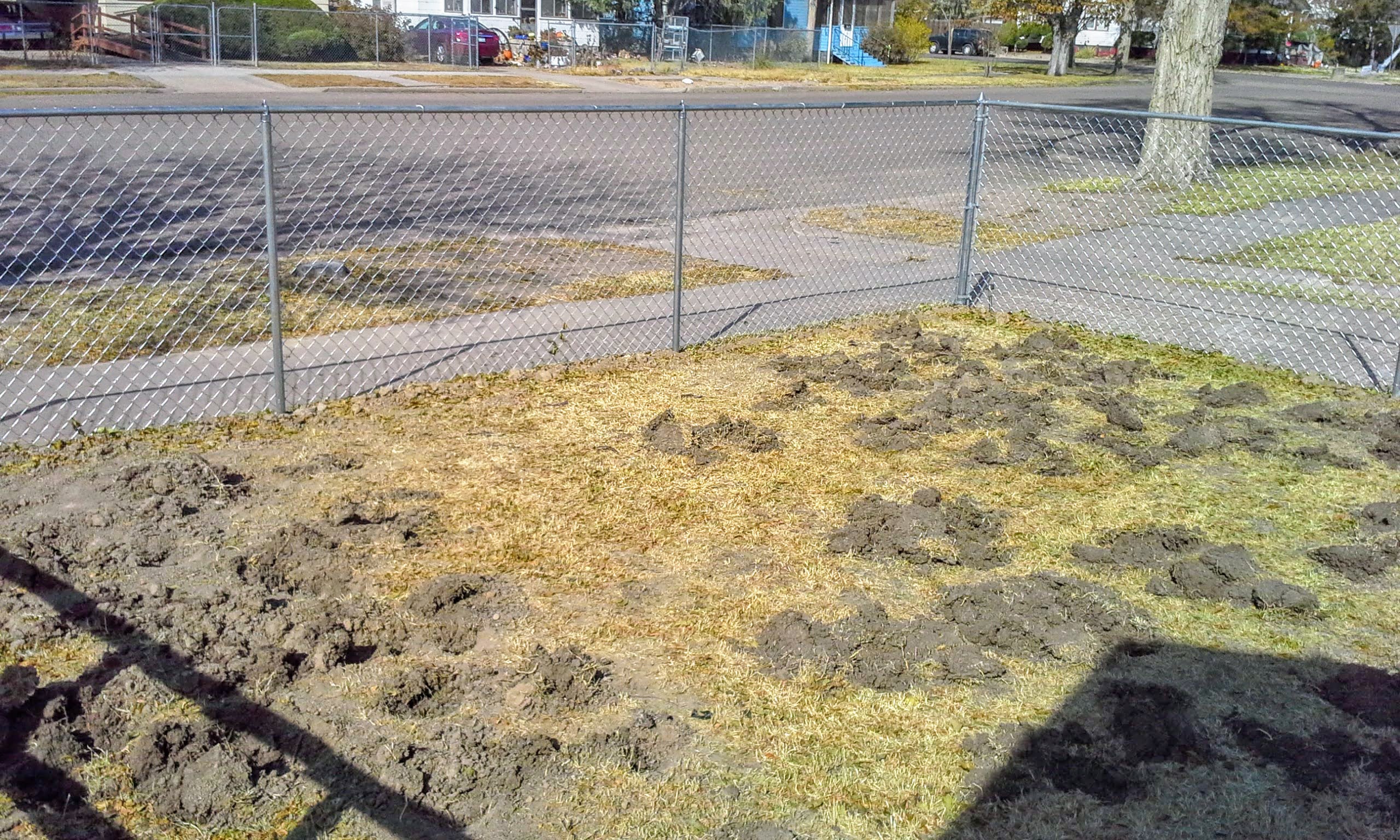
If getting back on a horse after falling off is a good thing to do, then I figure it’s just as good to get back on shank’s mare after taking a tumble. I really was leery about going for a walk, though walking isn’t the fear — falling is. I try to be careful, but accidents do happen (did happen!), especially when one is concentrating on something other than carefully walking around tools and supplies littering one’s yard.

I still hurt today. My knees are a bit sore, though worst pain is on the side of my foot that was caught in the strap, and my triceps. I can’t figure out why those arm muscles hurt. Maybe I jarred them when I fell or perhaps I somehow strained them when I pushed myself up onto my feet.

But arm muscles aren’t necessary for walking. So I did. Go for a walk, that is.

You will be pleased to know that, before leaving my yard, I removed the strap from the carport support pole. There might be other falls, but it won’t be because of that murderous piece of webbing.

I didn’t go very far — just to the grocery store. When I’d been there right before my fall, I’d seen Bailey’s Irish Cream chocolate chips, but I passed on by. I mean, really, who needs something like that?

Apparently, I do.

That was my excuse for the walk, those Bailey’s baking chips. Despite the stiffness and soreness, I did fine. Even better, I didn’t fall.

I’d planned to back out from my plans to get together with some friends and acquaintances at Christmas, but on my walk, I met a couple who offered to take me with them, so I might still go. I know I won’t be the only one suffering some sort of pain, and though I liked the idea of spending my first Christmas in my first house by myself, it will probably do me good to get out.

Or not.

I’ll see how I feel. It’s hard to be sociable when one is hurting.

Meantime, getting back on the horse with ten toes was the smart thing to do. At worst, I put any fear to rest. At best, I got those Bailey’s chips!

***

Pat Bertram is the author of Grief: The Inside Story – A Guide to Surviving the Loss of a Loved One. “Grief: The Inside Story is perfect and that is not hyperbole! It is exactly what folk who are grieving need to read.” –Leesa Healy, RN, GDAS GDAT, Emotional/Mental Health Therapist & Educator.
All That Glitters

I haven’t done a lot for Christmas in recent years. When I was caring for my father, I made sure to make the day festive for him — decorating his small tree (which I inherited), making a requested meal (usually ham and potato salad), and getting token gifts. After he was gone, I did very little for Christmas, though I did exchange a couple of presents.

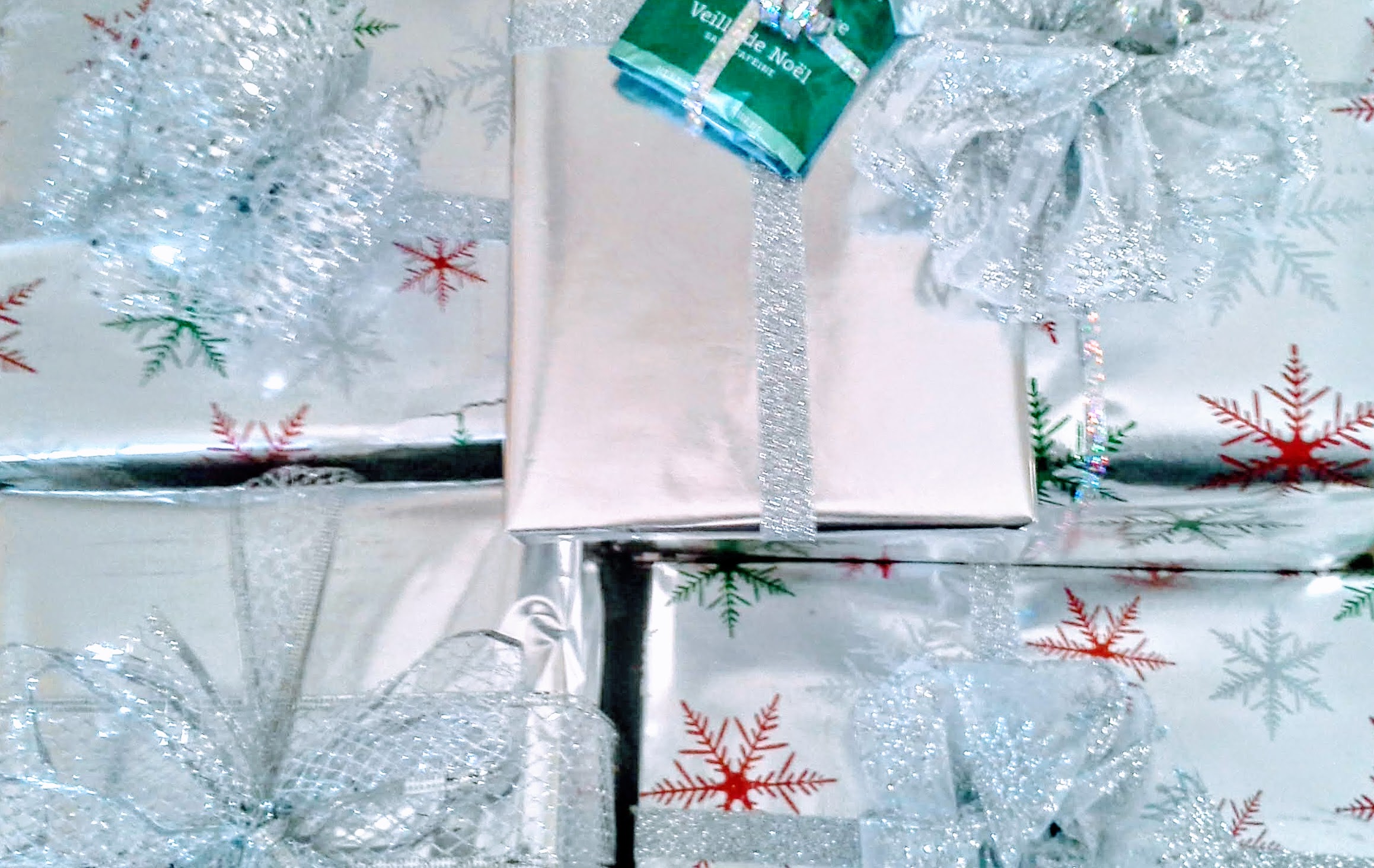
Since I’ve always saved wrappings and ribbons, I never had to purchase either. This year, however, I decided to go all out for Christmas — after all, it is the first Christmas/holiday season in my own home in my very own house. I’d used all the ribbons I had for hat decorations, and I had gotten rid of any paper when I condensed the stuff in my storage unit at the beginning of last year, so I needed to buy wrapping things.

The wrapping paper was cheap and pretty, and though I prefer blank undersides (to make gift cards and such), I had to admit the cutting lines made things easier. But oh, what a shock to find, at the end of the roll of wrapping paper not a cardboard tube (which I had plans for!) but simply rolled up brown paper. I did manage to roll that heavy brown paper tight enough to make an okay tube for what I needed (to store leftover window screening). But jeez. What’s the fun of buying rolls of wrapping paper if you don’t get a long tube with it?

And the ribbons. Oh, my. The upside: so glittery. The downside: so glittery.

When I finished wrapping my packages last night, I noticed that glitter was everywhere. I was covered with glitter. The floor was covered with glitter. The countertops and table were covered with glitter.

I dry mopped, thinking that the trap-and-lock cloths would easily pick up all the glitter. Nope. Some, sure, but not even most. Then I tried vacuuming. Again, nope. Those little suckers stuck to the floor and wouldn’t budge. Then I wet mopped — twice — which got up most of the remaining glitter, but now, when the lights are on, I can see glitter between the floorboards. My floor is the original antique flooring that has never been refinished, and some of the boards have shrunk a bit in this dry climate, leaving space for glitter to settle. I have a hunch I’ll be cleaning up glitter until next Christmas.

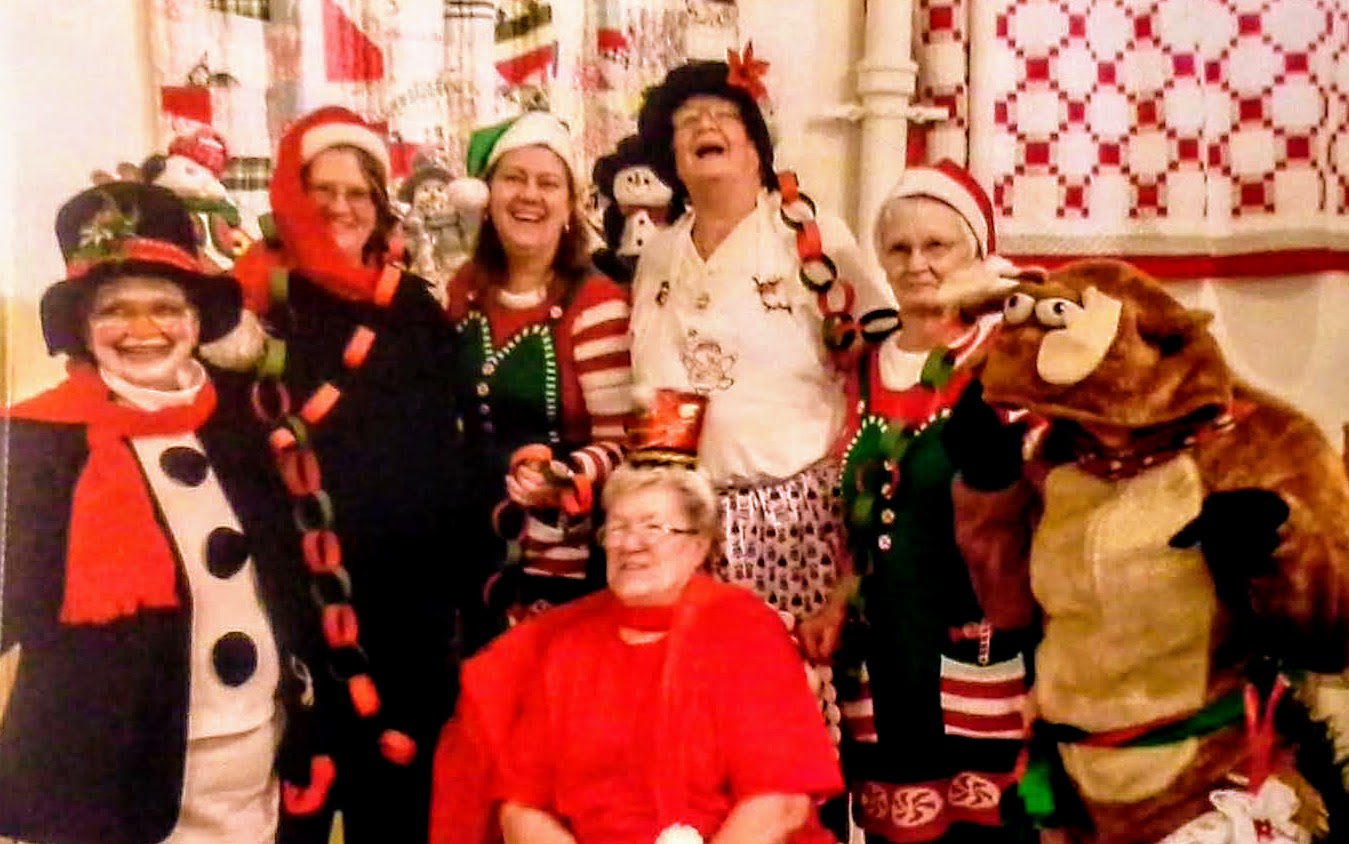
I was already tired from a full day of festivities at a Christmas event put on by both the museum folks and the art guild. (Here’s some of us art guild members all decked out in holiday gear.)

All that cleaning took me way past my bedtime (and I am not an early-to-bed-early-to-rise person) and wiped me out.

I try to end every blog post with some sort of hook or moral or lesson gleaned from the experience I’d written about — because otherwise, what’s the point — but the only thing I can think of to end this post is a note to myself: No matter how enticingly glittery the glittery things are, next year, be sure to buy plain old non-glittery ribbon and paper.

***

Pat Bertram is the author of Grief: The Inside Story – A Guide to Surviving the Loss of a Loved One. “Grief: The Inside Story is perfect and that is not hyperbole! It is exactly what folk who are grieving need to read.” –Leesa Healy, RN, GDAS GDAT, Emotional/Mental Health Therapist & Educator.
A Toast to Mother

Today is the twelfth anniversary of my mother’s death. I have thought about her more since I moved here to my new home than in all the years I lived at her house.

Admittedly, by the time I got to her house to take care of my father, it wasn’t really her house any more. During the last nine months of her life, she’d cleared out all of her things, and returned all the presents we’d given her over the years. (As one sister said, “If I had known we’d get this stuff back, I’d have given her better gifts.”)

There were a few things left that reminded me of her, like the cupboard full of unmatched stemware. I kept those goblets, and so now I too, have a cupboard of unmatched stemware. I also kept a few interesting utensils, ones that I didn’t already have, and a tiny cutting board, just perfect for cutting an apple. Also a few bits of furniture.

Ah ha! Now I know why I think of her so much. After my father died, I’d packed away the gifts she’d returned to me along with the few pieces I kept when I closed out their house. Now those things are part of my daily life, and every one of them reminds me of her.

When I got my first apartment, I asked her for the recipes that I especially liked — things like pierogis, tuna roll with cheese sauce, and hamburger rolls (known to others as Runzas or bierocks). I found it interesting that I was the only one of my siblings who had those recipes, so several years ago, I made each of my siblings a “Taste of Childhood” recipe book, which included those recipes as well as a Friday staple of our youth: creamed tuna and peas on toast. (Sounds disgusting but was actually quite tasty.)

I didn’t copy all of her cookie recipes. Neither cherry winks nor date nut pinwheels were favorites of mine when I was young, but luckily, my sister kept them, thinking that mother’s treat recipes shouldn’t be thrown away so now I am collecting some of the recipes I didn’t back then. Also, I imagine that at the time I got that first bunch of recipes, I wasn’t considering the distant future when she’d be gone.

Well now, she is.

She wasn’t much of a drinker, though she did love Bailey’s Irish Cream, so in honor of her this day, I offer a toast — in a Bailey’s glass that once belonged to her!

Here’s to you, Mom. I hope your new life is what you’ve prayed for.

***

Pat Bertram is the author of Grief: The Inside Story – A Guide to Surviving the Loss of a Loved One. “Grief: The Inside Story is perfect and that is not hyperbole! It is exactly what folk who are grieving need to read.” –Leesa Healy, RN, GDAS GDAT, Emotional/Mental Health Therapist & Educator.

Living in a Gated Community

Four years ago, I rented a room in a modular house in a 55+ gated community, and the experience gave me the creeps. Although the people I generally hung around with were older than me, I didn’t like being forced into an area with only retired folks. It seemed too segregated. That these people were a mixed lot, all colors, nationalities, and opinions, did not mitigate their age-related sameness.

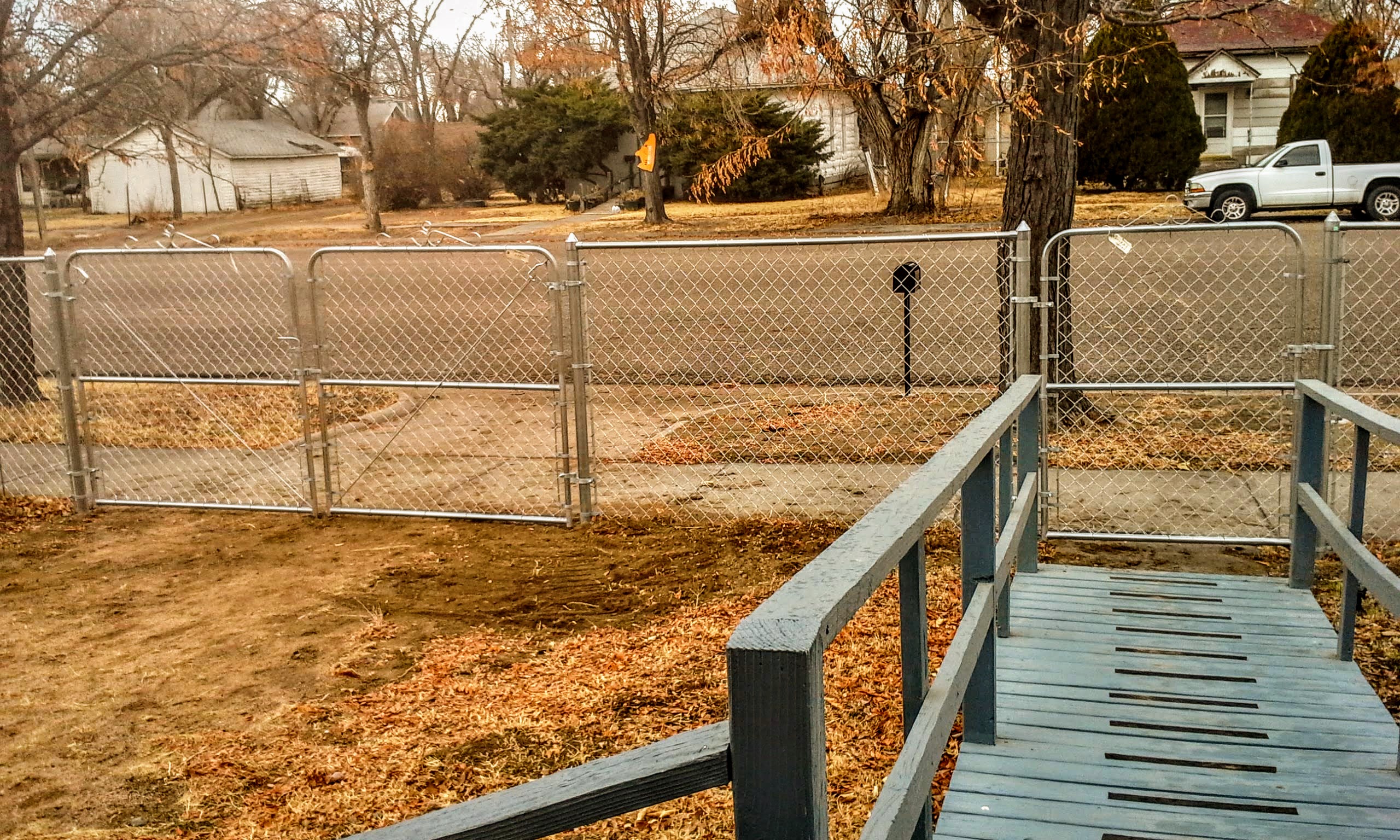
I vowed never to live in a gated community, and yet here I am:

In my defense, these gates enclose a community of one — me. (Can one person be a community? It seems rather oxymoronic.)

When I moved here, I liked that only a portion of the backyard was enclosed. It didn’t intimidate me the way a large yard would have; it was less yard to take care of, and I am not a fan of lawn pampering. When the safety factor of a fence was pointed out to me, I had to agree that fencing the whole place was important. After all, this is my old age home, and the person I am now has to look after the person I will become.

As it turns out, I like the fence. I like having a large yard. I like looking around and greedily thinking, “This is mine!” At least it’s mine for now. Obviously, I can’t take the property with me after I’m gone, so it’s more that I have a life tenancy. Which is okay. That’s all I need.

Most of my life, I have done without. In a culture that seemed bent on accumulating as much as possible, I tried to keep my possessions to a bare minimum. Now, when the fad is to get rid of one’s excess and to declutter, I am cluttering.

Still, part of the decluttering movement is about keeping things that bring you joy, and seeing my things after so many years of being in storage, seeing my pristine kitchen and my cozy living room with its beautiful furniture, seeing my winter-brown yard, all make me smile. Even something so mundane as those gates make me smile.

Yep, a whole lot of smiling going on in this little gated community of one!

***

Pat Bertram is the author of Grief: The Inside Story – A Guide to Surviving the Loss of a Loved One. “Grief: The Inside Story is perfect and that is not hyperbole! It is exactly what folk who are grieving need to read.” –Leesa Healy, RN, GDAS GDAT, Emotional/Mental Health Therapist & Educator.
Janus-Faced Town

Generally, a town with a low-rate of owner-occupied houses is a sign of a transient population and people who are not vested in the community. Because of this, I hesitated to move to this town since more than half of the houses are rentals; I thought it boded ill. But my house was here, and so now I am too.

For the most part, I’ve had a great experience, almost idyllic, and this is the face of the town that I generally write about.

But there is another face that makes me leery, such as a drug dealer who rents a house on the corner, who allegedly steals tools, and who plays his music way too loud (that thumping can be heard a block or two away, which someone told me is code for his “store” being open). Making matters more tense, his girlfriend is a dispatcher at the sheriff’s department, so the complaints of those who call seldom get past her, and, even worse, she knows exactly who is calling.

In a house across the alley, a pair of drug dealers apparently had a falling out right before I moved here, and one shot and killed the other. I don’t know the truth of that. Another story has it that the killer was never charged and that the dead guy is alive and living in a nearby town. The story goes that the two purported drug dealers were actually DEA agents scoping out the local drug scene, which seems specious at best, since they lived within sight of a known dealer.

Four marijuana shops are in the process of opening, and one friend, who moved here to get away from the legal marijuana trade is worried. It’s not those who buy for themselves that concern him, but he says that too often people “trade up,” buying pot and trading to the dealers for the heavy stuff, which increases the overall drug traffic.

Adding to this whole situation, not far from here is a residential program for the homeless, which helps them recover from any substance problems and then transitions them back to self-sufficiency. Hundreds of people are brought in from Denver and other big cities in Colorado, as well as veterans from all over the country. This is a great program, but people who drop out are not sent back where they came from, so they hang around here.

Worst of all, mostly because they are so ubiquitous, are the dogs. There is a leash law, but it is not enforced, and too many dogs end up roaming the streets. This is the only place I’ve ever lived where I feel the need to carry pepper spray.

A few months ago, a woman who lives at the far end of my street was ravaged by dogs, and her husband had to shoot one to save her. Nothing happened to the dog owners, but the husband is in big trouble for shooting off a gun within the city limits. And the dog owners are tormenting them. What they once thought was a Mayberryish town turned into a nightmare for them, so they are leaving.

It sounds like a horrible place, doesn’t it? And yet the life I am building for myself in this community really is close to ideal. My nearest neighbors are great, as are the people I see most frequently. When I was forced inside because of a bad cough, I had more offers of help than I did in all months I was dealing with a shattered arm. People I’ve never met recognize me. Almost everything I need is within walking distance. My house is lovely, it and feels safe (will even feel safer when the fence is finished.)

Maybe all places are like this — half horror, half heaven — but this seems a particularly Janus-faced town.

***

Pat Bertram is the author of Grief: The Inside Story – A Guide to Surviving the Loss of a Loved One. “Grief: The Inside Story is perfect and that is not hyperbole! It is exactly what folk who are grieving need to read.” –Leesa Healy, RN, GDAS GDAT, Emotional/Mental Health Therapist & Educator.

Such a Great Adventure

Periodically, I write about the frustrations of being a homeowner, but those frustrations are minor, and generally have to do with workers not showing up when they say they are going to. But even that, now, isn’t much of an issue. I’ve simply adjusted my thinking to accepting the vagaries of the repair business. If they come, they come. Either way, being a houseowner is such a great adventure!

For the past few years, I’ve rented rooms in houses in various stages of cleanliness, though I should say in various stages of filth, since most of the places were not at all clean. (My room was always as clean as I could get it, but the ground-in dust made it difficult to get it truly clean.)

The owner of the last place I lived had a maid who came once a week to clean the common areas, such as the kitchen, but an hour after she left, the place reverted to a state of unpleasantness. I could never understand the stickiness of the kitchen floor, the mess in the microwave, the absolutely disgusting sponge scrubber. I couldn’t believe it was that difficult to keep things clean; I even wondered at times if the problem was me, since obviously, I was the common factor in all those places.

But no.

Now that I have a kitchen of my own, I realize the problem wasn’t me. I continue to clean up after myself as I’d done these past years living in other people’s houses, but now the kitchen stays clean. And oh! I find such joy in the spotless microwave, non-sticky floor, pristine scrubber.

I wasn’t always this way, of course. When I was younger, I could barely make it through a day of work, let alone take care of my apartment too, so dishes piled up, clutter seemed to rule the day, and the carpet didn’t get vacuumed nearly enough. (I’ve always disliked vacuuming. Don’t know why, but it just seems too much of an effort to get out the machine, unwind the cord, and push it around. Now, with wooden floors, I don’t have to vacuum. Yay!!)

Somehow, over the years, I’ve developed a sense of order. (Just don’t look at my desk! That is still one place that my natural disorderliness holds sway.) Which makes things so nice in this lovely little house of mine. And makes the adventure of owning a house such a joy.

There’s Always Something

I’ve been a house owner for only a little over seven months, and I’ve already learned an important lesson: there’s always something going wrong, and whatever that something is, it’s never simple to fix.

Actually, I already knew that about houses, which is why I never wanted one, but after a lifetime of dealing with landlords and ladies, I’ve discovered that it’s so much better dealing directly with repair people than through a middle party who doesn’t care about the comfort and convenience of renters.

Still, no matter what needs to done, it always entails so much more than originally expected. For example, when the enclosed porch foundation needed to be fixed, it turned out there was barely any foundation at all, so that an entirely new concrete footer had to be built. Then we discovered that the iron sewer line under the porch was rusting out.

And so it’s been going with all the repairs.

My latest “fix” is a pipe. A neighbor told me a few months ago that the kitchen pipes had a tendency to freeze, so the contractor said he’d insulate the pipes before winter. The previous owner said he’d fixed the problem with an insulated cover for the outside faucet, but I wanted to be doubly sure that the pipes wouldn’t freeze in this time of frigid temperatures. So yesterday, the contractor showed up with pipe “noodles” and discovered a leak in the pipe. Not having the time, tools, or parts to fix the pipe, he left with the pipes uninsulated and with instructions to leave the water dripping in the kitchen to ensure that the pipes don’t freeze.

Which I did, but oh, my, it sure was hard it was for my waste-less soul to leave water dripping!

Whether due to the drip, the insulation for the outside cover, or simple good luck, the pipes made it through the snowy night.

And so did I.

***

Pat Bertram is the author of Grief: The Inside Story – A Guide to Surviving the Loss of a Loved One. “Grief: The Inside Story is perfect and that is not hyperbole! It is exactly what folk who are grieving need to read.” –Leesa Healy, RN, GDAS GDAT, Emotional/Mental Health Therapist & Educator.
Field of Hopes, Field of Dreams

A friend asked how many holes I’d dug, and what I planted. It was easier to answer here than as a comment, and besides, it brings me one day closer to my goal of 100 continuous days of blogging.

I must have dug a hundred holes. I had more than three hundred bulbs, and approximately three went into each hole (all properly spaced properly). In retrospect, it was silly doing it all in one day because I worked too hard and ended up with a bad cough that is preventing me from doing anything, especially not planting the last ten bulbs (lilies) that I’d planned to put along the fence in the backyard.

I really don’t see how I could have done it differently, though. I wanted the bulbs intermixed so that the yard will look less like a formal garden and more like a splurge of flowers in a field, and so it pretty much all had to be done at the same time.

I planted lots of tulips and daffodils. Anemones. Snowdrops. Crocuses. Dwarf iris. Larkspur. Grape hyacinth. Aconite. Bluebells.

And I planted hopes and dreams. Dreams of a lovely yard come spring. Hope that spring will in fact come, that the bulbs will flower, that I will still be here, that I will continue to find joy in the little (the best!) things of life.

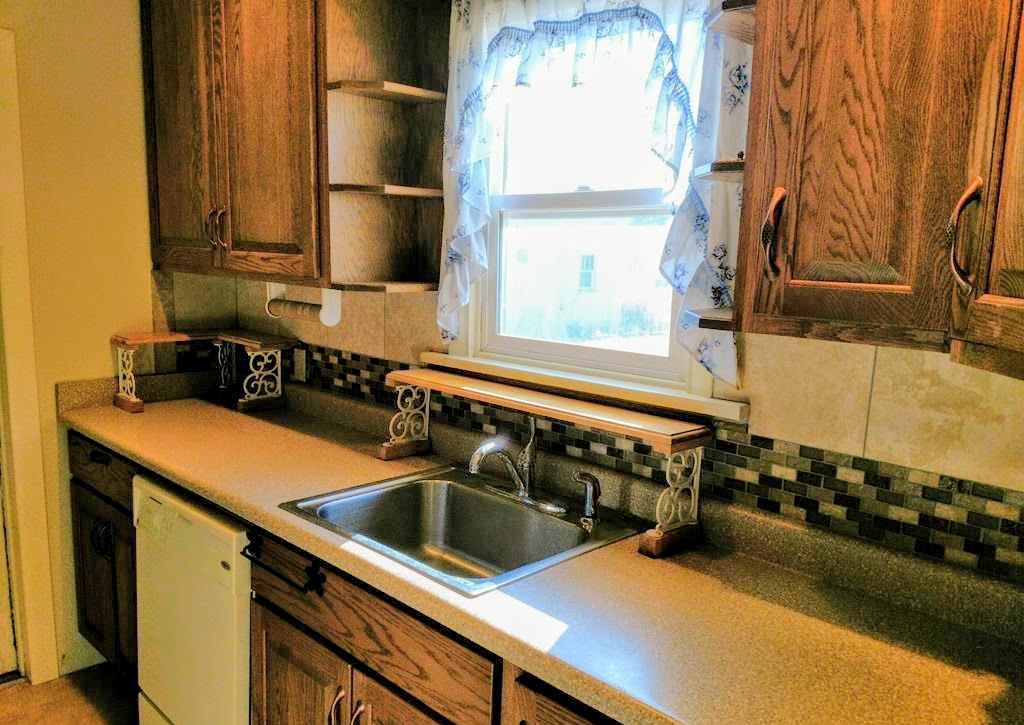
(The photo was taken this morning and shows the frost on my field of hopes and dreams.)

***

Pat Bertram is the author of Grief: The Inside Story – A Guide to Surviving the Loss of a Loved One. “Grief: The Inside Story is perfect and that is not hyperbole! It is exactly what folk who are grieving need to read.” –Leesa Healy, RN, GDAS GDAT, Emotional/Mental Health Therapist & Educator.
Holes!

I dug holes yesterday. Lots and lots of holes!

I’ve been told (and I’ve read) that one needs a plan when gardening, and my plan was to plant as many bulbs as I could as quickly and as easily as possible. There’s no real design to my holes — I just dug where it was easy to dig; if my shovel hit a hard spot where I planned to plant, I moved to another spot where the soil was softer. I don’t really care if there is any discernable design. I just want some color mixed in with the mostly brown grass. Also, once the flowers die and the leaves turn brown, the whole thing can be mowed, which seems like an interesting idea.

I’d gotten a bit carried away when ordering bulbs, and as it turned out, for the holes I dug, I got the right amount since the holes were big enough to house more than one bulb.

Of course, now my muscles are stiff and my throat sore, but it’s good to have it all done.

Now it’s a matter of waiting for spring to see what I have wrought!

***

Pat Bertram is the author of Grief: The Inside Story – A Guide to Surviving the Loss of a Loved One. “Grief: The Inside Story is perfect and that is not hyperbole! It is exactly what folk who are grieving need to read.” –Leesa Healy, RN, GDAS GDAT, Emotional/Mental Health Therapist & Educator.

Nest Building

I’d been counting the days until it got cool enough to start planting the three hundred spring bulbs I bought. The instructions said not to plant until the highs were consistently in the mid-60s or cooler, and today was supposed to be the day. A couple of times during the past weeks I’d almost given in to the urge to start plant, but considering what a non-green thumb I have, I figured I needed to give those poor plants the best start possible.

So I waited.

After a few unexpected (and lovely) eighty-degree days, the temperature did drop today as forecast, so I got all gussied down and went out to play farmer.

And then the winds came. Severe winds.

Being stubborn, I didn’t let a little — or a lot — of wind force me inside, but I postponed the precision work of planting the bulbs for another time. Just as well. The guys who’d put up the fence hadn’t yet finished burying the bottom of the chain link fabric, and they’d left the dirt they were going to use piled in the middle of front yard where I’d planned to plant. So I raked leaves away from the fence and moved the dirt — shovelful by shovelful — where it belonged. Then I gathered up the leaves, and smashed them to use for mulch.

Such excitement!

I’m laughing to myself. A friend made a remark the other day about certain blogs that said nothing important (she wasn’t referring to mine; she hadn’t known I had a blog), and well . . . I sure hope she doesn’t read this one. Talk about nothing important!

Not important in the grand scheme of things, that is. The job was very important to me — to be outside despite the wind, to work physically, to accomplish something. To continue building my nest. And that nest building, of course, is the most important of all.

It’s taken me my whole life to get to the point where not only could I own a house but that I wanted to. And anything I do for my home is a way of honoring the house, and me, and the painful journey it took to get here.

***

Pat Bertram is the author of Grief: The Inside Story – A Guide to Surviving the Loss of a Loved One. “Grief: The Inside Story is perfect and that is not hyperbole! It is exactly what folk who are grieving need to read.” –Leesa Healy, RN, GDAS GDAT, Emotional/Mental Health Therapist & Educator.