Balance

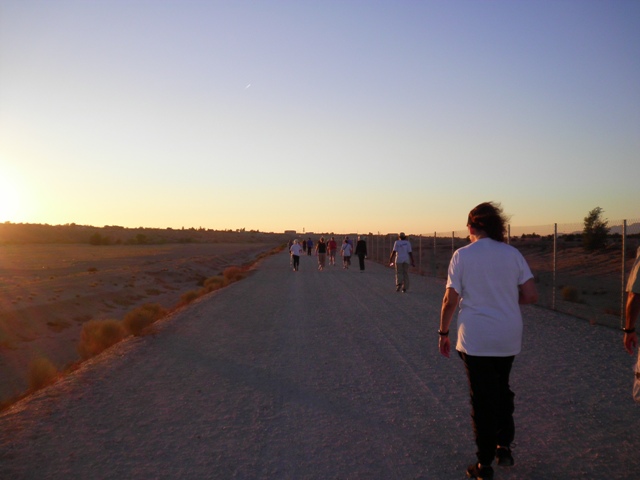
I got caught in a time warp where I watched videos of the Buddhists walking for peace. I call it a time warp because I thought I was online for just a few minutes, but when I finally looked away, hours had passed, and I had tears in my eyes. The scenes were that mesmerizing and that touching — not just the serene marchers in their distinctive clothing treading on matching flower petals, but the hundreds of thousands of people silently watching them pass by or joining their walk for a while. Oh, there were those who didn’t appreciate what they were seeing and wanted to divert the walkers from their “satanic” path, but from the vast majority, there emanated a feeling of awe, perhaps reverence. A sense of history being made. Even from those who went to see the walkers simply out of curiosity, there was still a great deal of respect for the monks.

It was such a huge disconnect for me because what I’d been seeing online was something completely different. Chaos, screaming, hatred. Crowds that were anything but respectful. In that hostile environment, peace seemed a thousand miles away. Um no. Not seemed. It was literally a thousand miles away since the Buddhists were walking a thousand miles to the south of the chaos.

As I was thinking about these two events, all of a sudden, I didn’t see them as disconnected but as two parts of a balanced whole. This amused me — not the events, of course, but my idea of a balanced whole. Apparently, I’ve spent too much time in the dual cosmology of the Wheel of Time world, where opposing forces work against each other and with each other to create a balance in the world. Light and dark, male and female, good and evil, yin and yang. (It’s no wonder that when these books were made into a television series, the creators of the show changed Jordan’s world to erase the duality, which, considering today’s flexible morality, they ostensibly thought a weakness of the story rather than its very foundation.)

It also showed me something else. In the books, it seems as if “walking in the light” is the default setting; one must expressly go against the light to choose the darkness. Going by the numbers of people I’ve been seeing in the southern videos, it seems as if the default setting in this country is peace, or at least a desire for peace. Lawfulness. A need to get along without major confrontation. Maybe even a need to share something spectacular with one another. (Come to think of it, I’ve always thought peacefulness was our default setting. For example, while some people fudge on traffic laws, most people do follow close enough to the law that traffic flows smoothly without chaos, and the vast majority of drivers arrive at their destination safely. And though it’s long forgotten, the citizens of this country had to be dragged kicking and screaming into the world confrontations the leaders of the first half of the twentieth century got us into.)

Lately, I’ve had to fight a sense of sadness that borders on doom, as if we’re balancing on the brink of . . . something. It’s possible this is a result of my Seasonal Affective Disorder or even my sinus issues (allergies always make me depressed, but not as depressed as allergy medications), but seeing those beautiful monks? Well, to be honest, that made me sad, too, but in a different way, as if the peace they engendered is what life should always be but isn’t.

Still, for today, it was nice to participate in their walk — and its meaning — if only vicariously.

When Online Friends Disappear

For almost twenty years now, I’ve been a quiet presence on the internet. Nothing I’ve posted has ever gone viral, though a few posts have accumulated thousands of views over the years. Most of those, I think, were posts about grief that apparently resonated with people, but for whatever reason, people have found me. Many of the people I met through this blog, as well as through various networking sites, became online friends. Some even became offline friends.

Once I stopped blogging about grief, stopped blogging every day about anything, and stopped participating in places like Facebook (Facebook banned all links to this blog, so I had no real reason to participate since all I had to say, I said here), I didn’t “see” those friends as often, but I did catch a glimpse of them online now and again, so I knew they were well.

Facebook has recently lifted their 7-year ban of this blog, so I have no real reason to continue my boycott, except that the ban pretty much put the kibosh on book sales since most of my buyers came from there, and that’s hard to forgive. I did log in to check on a friend, one who I admired and with whom I had a wonderful visit on my cross-country trip, but he was gone from the site. No record of his ever having been there. It turns out, it wasn’t his choice. Facebook just arbitrarily deleted his account. No reason. No recourse.

I’ve seen a lot of really horrible things posted online over the years, but this author, who I’ve followed almost from the beginning, has never posted anything the least bit controversial. He’d mention books, the ones he wrote and the ones he read. He’d share a joke. He’d write about his research. Oh, any number of interesting, totally benign subjects, and then . . . nothing.

He was understandably angry and mentioned his troubles a couple of times in a blog post, but then he even stopped posting anything on his blog. I emailed him, and when I got no answer, I checked obituaries. (But he wasn’t there, either. Whew!)

Obviously, we weren’t close or otherwise we would have kept in contact more frequently after our visit, but to tell the truth, I lost contact with a lot of people. I settled down, eventually began to live more offline than on, stopped writing. Most of my online friends were people I met through various author groups, some groups of which are now defunct (that’s why so many of us reluctantly migrated to Facebook). When I lost interest in writing novels, I also lost interest in talking about writing, so there went most of my online activity.

If I hadn’t met him in person, I would begin to think this disappeared friend was a figment of the internet, perhaps an avatar of some artificial intelligence, but I know for a fact he existed and that his intelligence was anything but artificial.

I may never know what happened to him, though I hope he is doing well.

Other people I have lost track of occasionally check in here with me, just to say they’re still around, which I appreciate. But then, I suppose that’s the way of the ever-turning wheel of the internet. It spins us together and then whirls us apart.

Though come to think of it, that “apart” part might just be life. Or aging. Many of the friends I’ve made since moving into my house I seldom see. Even a friend who lives a mere two blocks away!

So, for all of you I’ve lost track of, know I am thinking of you and hoping you are well and at peace.

***

Pat Bertram is the author of Grief: The Inside Story – A Guide to Surviving the Loss of a Loved One.
My First Contact with Computers

Daily writing prompt
Write about your first computer.

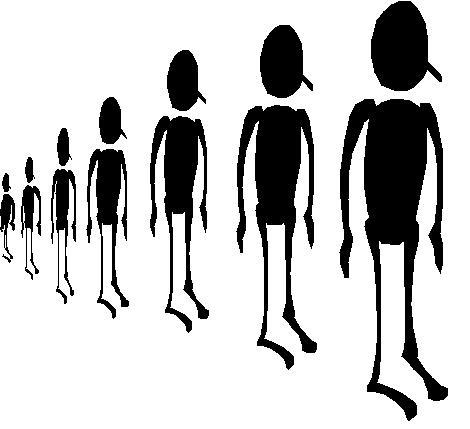
My first computer wasn’t really a computer. It was a Smith Corona Wordsmith 250 electric typewriter with a few computer-like features, such as a 50,000-word dictionary, a small memory where you could type what you wanted before it printed on the page, and being able to change to italics or bold with a shortcut.

By the time I got my first taste of a real computer, a 10-year-old hand-me-down IBM Thinkpad, I had some inkling of what was possible. Still, I was a bit nervous having to learn an entirely new way of writing, especially since I’d heard horror stories of the early days about how hard it was to boot up a computer and getting it all set up. Then I remembered that a vast majority of people who were adept at computer usage were children, or at least children compared to me, and that gave me courage to forge ahead. But there was no problem. I turned on the computer and immediately started typing. (I cheated, though. When I found out I was going to be getting a computer, I got some general usage books from the library and read them.) By that time, so much of the fiddling with setting up a computer was gone and the computer did most of the work, and I took to it immediately. Never had a problem figuring things out. Once I knew the basics of Word, the rest seemed intuitive. I’d also read that there was almost nothing done on a computer that couldn’t be undone, so I was fearless in trying whatever came to mind.

That computer didn’t last long, just long enough to scan my typed manuscripts, edit them, format them according to publishing standards, and start sending them out.

As the Thinkpad started having problems, I asked around to see if any relative had a computer they wanted to get rid of, and one said that he’d see what he could do.

A couple weeks later, UPS delivered a package. I opened that box and completely lost my breath, stunned by what I saw — a brand-new Dell Inspiron. No one had ever given me such a fabulous (and expensive!) gift. The date of receipt is one of those dates I will never forget, it was that important to me.

I wish I could say that Dell computer jumpstarted my career as a published author and made me an instant success, but that wouldn’t be true. What it did start me on was a lifelong relationship with computers and the internet. And with friends all over the world. (I was lucky enough to meet many of them on my various travels, which truly was a thrill!)

One of the first things I did once I was set up with the internet at home was to start this blog. And here I am, eighteen and a half years later. All because of that Inspiron.

And yes, I thanked him — many times, actually, probably to the point of embarrassing him.

I still have that computer, though it is defunct. The battery is worn out, and even if I could get a new battery, I doubt there’s enough power in the machine to run today’s programs. What I have now is another Inspiron, one I gifted to myself, and though it’s developed a couple of idiosyncrasies during its seven years of life, it still does everything I need it to. (The major problem is that doesn’t like being put to sleep — it needs to be rebooted when it’s awakened — and hibernation isn’t a power option, so I have to shut it down every time or just walk away and let it do what it wants.)

And oh, in case you’re wondering, the photo is of the computer I was gifted way back when.

***

Pat Bertram is the author of Grief: The Inside Story – A Guide to Surviving the Loss of a Loved One.

A Sort of Apology

I feel as if I should apologize for all these Wheel of Time posts, and yet, here I still am.

In an effort to find an alternative to posting here, I looked for book discussions, thinking it would be fun to talk about the story, characters, and implications of the various events with other students of the work, but the discussions fell into a few distinct categories:

Discussions during the long years while fans waited for a new book to be published, most centering on where they thought the story was going, and which are now defunct because the series of books is finished and the ending, or at least an ending, is known.

Discussions centered on who loved what character, and how foolish were those who didn’t like said character. That sort of non-discussion gets old, especially if you hold a minority opinion and don’t want to be lambasted.

Discussions about the end of the book, and how wonderful the ending was, or if not how wonderful the ending was, how wonderful the substitute writer was for writing it (ignoring the fact that he got paid, and even more importantly, that the project catapulted him into fantasy superstardom).

None of those discussions fit with anything I wanted to discuss, and anyway, most were many years old. Any newer discussions revolved around the now cancelled television series, and how terrible/wonderful the show was. (Terrible because it turned the story into something completely different from the books, wonderful because . . .  well, because it was the Wheel of Time.)

I tried starting my own discussion, but only got the usual fan-type comments such as “I liked character A, I hated character B.”

I considered resurrecting one of my dormant blogs and doing a chapter-by-chapter discussion, but that didn’t appeal to me. I like the puzzle the books present, and I like that in some ways it is (was?) a cultural phenomenon, with many more millions of words written about the books than were actually in the books (the first book was published right around the time the internet, discussion boards, and social sites were just beginning, and the story happened to be geared to the age group that first embraced the online world). To be honest, I didn’t want to spend that much effort on what is really just a way for me to pass mental time. (Physical time, too, but I like having something to occupy my mind, more than the issues of the day or . . . whatever.) Besides, however much I determine that upon this rereading, for sure, I will read every word, I never do. I find myself skimming or even skipping the characters I find annoying and the parts that include too much torture, both mental and physical.

I make sure, however, that I never skim or skip some of the most lyrical of Jordan’s writing. At one point, a character got lost in thoughts of the past, remembering that “They danced beneath the great crystal dome at the court of Shaemal, when all the world envied Coremanda’s splendor and might.” That’s pretty much all we ever find out about the lost nation of Coremanda, but that one sentence is haunting, conjuring in just a few words a long-forgotten time.

And then there’s a song that the same character remembers from long ago, a song that seems to be a theme of the books (NB: the Aes Sedai are the women power wielders):

Give me your trust, said the Aes Sedai.
On my shoulders I support the sky.
Trust me to know and to do what is best,
And I will take care of the rest.
But trust is the color of a dark seed growing.
Trust is the color of a heart’s blood flowing.
Trust is the color of a soul’s last breath.
Trust is the color of death.

Anyway, that lyricism is beside the point . . . actually, no — it’s not beside the point, it is the point of my rereading the books. It’s just not the point of this blog post and my feeling I should apologize for dumping my thoughts on the books here.

So, if you want an apology, you got it, but it’s not truly an apology because a sincere apology connotes a promise of not repeating the offense, and perhaps unfortunately for you, I will continue posting my thoughts until I’ve finished this reread or until I’ve given up blogging again.

***

Pat Bertram is the author of Grief: The Inside Story – A Guide to Surviving the Loss of a Loved One.
Uninventing

Daily writing prompt
If you could un-invent something, what would it be?

I spent a lot of time thinking about this question because it seems as if there should be things in our lives that need uninventing, but I can’t think of any. There are a lot of things that have far reaching ramifications that I don’t like, such as generative artificial intelligence, but since it’s a direct result of computers and the internet, if it was un-invented, it would simply be reinvented.

There are things I don’t like, of course, but I try to stay away from them. It’s easy enough to do, most of the time. Keep the computer off, put the phone on airplane mode (as I do at night since no one is depending on me, and even if there were, there is nothing I could do about it that late anyway), don’t read books published after 2022 unless I’m familiar with the author.

Even though in some form, artificial intelligence has been around since the 1960s, models for the public like ChatGPT weren’t released until late 2022, and it seems as if the writing world has gobbled up the technology. People like that they can write a book in a day! Yay! Well, yay for them, not for me. I read to connect with the author’s view of the world, to find perhaps more depth to my own world. Connecting with artificial intelligence would not be the same thing at all. I’m sure, with time, generative AI will master even the complexity of human thought and emotions, developing novels that have layers to them, but I’m not interested.

Actually, I’m not interested in most authors who were first published in the past ten or fifteen years. There seems to be an underlying nastiness to so many of them, with unreliable characters lying in their own POV about what they did and about other characters, so the reader doesn’t know and can’t guess how appalling the unreliable character is until the end when you find out they were the bad guy all along. Eek. I don’t know if this is the sort of story new writers prefer or if it’s what editors are looking for, but either way, I don’t like being left with a feeling of squalor, as if there’s a thin film of filth on my soul.

But I am getting away from the point of what I would uninvent — nothing. On the other hand, if I could get rid of some policies, that I would gladly do.

***

Pat Bertram is the author of Grief: The Inside Story – A Guide to Surviving the Loss of a Loved One.

Wishing You A Day Filled With Light And Lightness Of Being

For the past six months, ever since the summer solstice, darkness has been creeping into our days here in the northern hemisphere and stealing our light. Today, the shortest day of the year, we have reached the end of the creeping darkness. Tomorrow the light begins to gradually to make its way back into our lives.

This year, I haven’t been quite as aware of the creeping darkness as usual since I’ve been trying to stay in bed until the first fingers of dawn lighten my windows. Well, that’s usually what I do, though in the summer, that has me rising at the horrendously early hour of 4:30 or 5:00. Not my choice — apparently, my body has its own mind, though admittedly, that habit of early rising makes staying in bed in winter until dawn a bit difficult. Such an onerous job, but I persevere!

The problem comes at 4:30 in the afternoon when it gets dark around here, but if I don’t pay attention to the clock, and simply turn on the light as I always do when it gets dark, it’s easy to pretend the days aren’t as short as they are. Of course, then, the evenings tend to stretch out, but that’s okay, too. More time to read! Besides, we have had an inordinately warm and sunny fall. (We seldom think of December as a fall month, but it’s way more fall than winter since this year winter didn’t begin until this morning at 8:03 Mountain Standard Time.) The sunshine helps brighten the short days. (I’m trying to ignore the distressing part of such a long autumn — my lingering seasonal fall allergies, but oh, well. There’s always a drawback.)

Still, today is the end of the creeping darkness and a day to celebrate the growing of the light.

Wishing you a day filled with light and lightness of being.

***

Pat Bertram is the author of Grief: The Inside Story – A Guide to Surviving the Loss of a Loved One.
Days Slipping By

The days slipped away without my paying attention, until suddenly, it’s not midsummer anymore, with its intensive heat and bright sunlight, but is now mid-November with its cool days, cold nights, and creeping darkness.

Even worse, I’m not snug in my insulated life, with no real knowledge of the world around me, but have been slammed into the middle of a lot of confusing issues.

It all started with Charlie Kirk’s assassination. Because of my mostly sequestered life (and even, admittedly, because of my age), I didn’t know who he was, so I started watching snippets of his talks. Which led me to more snippets of controversy. Which led to more snippets of life and how scary it is out there. No, not “out there” beyond Earth. Just “out there” beyond my own horizons.

Which has left me absolutely lost and confused and so very ready to go back to my cloistered life.

For example, there is a lot of talk about microplastics and how dangerous they are both to us individually and to the environment. The underlying message seems to be one of blame to us consumers, which is nuts. At least in my case, it is. Whenever there was a choice, I always bought products in glass jars or bottles. Not only did the food taste better since there was no leaching of plastic flavors or plastic particles, but the containers served as food storage containers, which cut down the use of even more plastics. But now almost everything comes in plastic. Whose fault is it that there are no glass containers anymore? Not mine, certainly, and yet there is that undercurrent of finger pointing. Well, point that finger elsewhere.

Then there are crises in energy, as well as crises in water management, with again, the undercurrent of blame on the consumer. If that were all, it would be understandable, but here’s the deal — one generative artificial intelligence data center uses as much electricity as a small city and millions (no, billions!) of gallons of water.

Climate change. Yep. That’s our problem, right? Yours and mine? We have to be economical and conserve water and power, even to the point at times of dealing with rolling brownouts and unpalatable water in our faucets. But oh, yes, those people foisting generative artificial intelligence on us (in many cases, the very people who are screaming about climate change) can do whatever they want, including building their data centers in fragile ecosystems like water-deprived deserts. (Although “water-deprived deserts” is redundant, because what makes a desert is water deprivation, I used the phrase to emphasize the stupidity of it all.)

And oh, yes. Artificial intelligence. For decades, we’ve been told that AI will remove the back-breaking and demeaning jobs leaving us time for creativity. You know, like writing, composing, and art-making. Yeah, right. Generative AI is making inroads into all those creative endeavors. In fact, using Gen AI you can write a book in just a few minutes! Yay! Well, not yay. I’m being sarcastic. The whole point of writing is to write what you need to write as a unique human being. The whole point of reading is to connect to the human experience via that author’s unique perspective. In no way does “artificial” enter into the process. (To be honest, going by a lot of new books on the market, there’s not a whole lot of intelligence entering into the process either.)

I’m sure there are other areas of confusion. Actually, I know there are, but I don’t want to go into the gaslighting that seems to hold true in today’s politics. Nor do I want to get into the whole indoctrination thing and the conformity of thought that seems so prevalent. (When people mention Orwell’s 1984, they always talk about “big brother” but more important are his ministries: the Ministry of Peace propagates war, the Ministry of Truth spreads lies, the Ministry of Love dispenses fear, and the Ministry of Plenty creates scarcity. Seem familiar to the shenanigans going on today?)

Of course, I could be wrong about all this. Maybe it’s only the contrast with my quasi-hermitage that makes the world and its inhabitants seem so insane. With any luck, by writing this, I have excised these dichotomous thoughts from my head, and can go back to my normal, so very quiet and unconfusing life where the days slip by unnoticed.

***

Pat Bertram is the author of Grief: The Inside Story – A Guide to Surviving the Loss of a Loved One.
We Know Everything

We all think we know everything because we know everything we know. The corollary to that statement, of course, is that we don’t know what we don’t know, and often we don’t even know we don’t know what we don’t know.

Whew! That’s a convoluted thought! But I come by it honestly. Honestly, I do.

I happened to fall down a dark hole of baby boomer hatred, not in real life, but on the internet. It astonished me that so many people hate “boomers,” even though their reasons don’t apply to any boomer I know. I was going to enumerate each of those reasons with a rebuttal, but decided that was a waste of my time and yours. No one can know a generation. Despite the names so arbitrarily given to the alleged generations, generations are made up of individuals, not generic beings. In fact, I have a hunch most of those who dislike certain older generations have no idea what years truly comprised those generations; the epithet “boomer” seems to be a derogatory term used to describe a mindset that younger people ascribe to any older person who doesn’t see life the way they do. (Generation gap, anyone?)

Much of what is attributed to “boomers” is really a leftover from the so-called greatest generation. When the boomers came of age, that generation was still in control. It wasn’t the boomers who destroyed the economy, but those older folks. (And it wasn’t even them. They just lived their lives. It was the politicians and global corporations who did and are still doing the damage.) The boomers got caught in a vise — although they were raised in a time of unprecedented economic stability, by the time they were raising families themselves, everything had changed. It was no longer economically feasible for a single salary to support a family. Two-incomes were suddenly necessary. And despite what people believe about the boomer economic well-being, millennials have a higher net worth than baby boomers at the same age. Although the millennials bought their first house later than boomers, and paid more, finances weren’t always the reason for the delay — many prioritized other life experiences over owning a home and starting a family.

Also, I was surprised to find that boomers are no longer the largest generation; millennials are. And the alpha generation is forecast to be the largest generation in history.

But all of that is beside the point, which is that we don’t know what we don’t know. What some people don’t like about boomers is that they aren’t grateful for the unprecedented economic and educational time they lived in, but how can they be grateful for something they didn’t know was something to be grateful for, especially since each of them was struggling in their own way? As I said, generations are made up of individuals, and each individual, no matter what generation they belong to (or don’t belong to: the generations, after all, are just marketing designations) lives their life as best as they can under the conditions they are given.

I have a hunch that, since “generation” isn’t really an intrinsic thing (we aren’t born with the name of our generation tattooed on our foreheads), most people who dislike a particular generation simply dislike certain people they have met from that generation (and if the disliked generations are older, those people are most often parents, grandparents, teachers, and other authority figures.)

But whatever the reason, “boomer” hatred does seem to be a thing. Luckily, I don’t know any generations, only people. I have never blamed younger people for the hardships they find themselves dealing with. And I don’t blame older people for the hardships they find themselves dealing with. All any of us can do is deal with is what we know, not what we don’t know.

Still, I am utterly grateful to be on the downward slope of my life. I wouldn’t want to live in the world that is shaping up around the younger generations.

(Just out of curiosity, since I’ve been thinking about all of this: has any other generation had to deal with so much change as the boomers? Especially technological change. To young boomers, television was a brand-new thing. Phones were wired into the wall. Vinyl records and radio were the sole sources for listening to music. Only girls learned typing — on manual typewriters, no less. And yet look at those people today: most are proficient on their various electronics. Those still working are as proficient as anyone.)

***

Pat Bertram is the author of Grief: The Inside Story – A Guide to Surviving the Loss of a Loved One.

Look What I Found!

I was walking around my yard today, enjoying a bit of sunshine, and look what I found!

Such a glorious ending to a few not-so-pleasant days. Oh, I’m fine, there’s nothing really wrong, I’ve just had to deal with changing my primary email address as well as wherever I used that email for online sites. This change wasn’t by choice and I’m not happy about it, but it was necessary.

A few years ago, the free email that was provided by my website domain provider was changed to a paid Outlook account. I was so daunted by the idea of making the change, that when I got a good deal on Outlook, I went ahead and paid ahead for several years. (Money that is now wasted.) I’ve gradually been changing over as I open new accounts or lose friends or whatever, but last week Microsoft informed me I would have to download an authenticator to my phone so I can continue using the email account. The bizarre thing is that this particular email was never able to be downloaded to my phone, and the authenticator doesn’t work for PCs, so they were demanding something utterly unnecessary. I was supposed to have two weeks until the authenticator was mandatory, but since I knew how discouraging the whole process would be, I started immediately to do the work. Good thing. Instead of having two weeks, I ended up with a single week. Luckily, I think I got everything, and if I didn’t, I will just have to presume it’s not important.

Along the way, as I had to update accounts, I ended up deleting one or two. Pinterest, for example. I never did understand that site, and when I tried to update the email address, they wouldn’t do it unless I provided a date of birth. I gave a fake one, of course, then when I was finally able to access the site, I deleted the whole thing.

At least, that was easy. Worse, I found two places for my online banking where I needed to change the address but alerts still went to my old address. I had to call to the bank to get them find the third place. Both the gas company and the internet company had those same issues. One important account had nowhere to change the address, so another call. And then, of course, there were all those places where I used a different email address but used my primary one for backup.

With any luck, I made all the changes, but oh! What a mess!

Then, considering that Microsoft was the company that put me in this situation, I decided I needed to back up all my pictures and documents elsewhere in case they do the same thing with that email. I had used OneDrive to back up my previous computer just because it was an easy way to move them to my new computer. (Which, come to think of it, is now elderly in computer years.) And then, because I was in a snippy mood, I ended up deleting photos and documents I haven’t looked at in years. (Snippy meaning not happy, snippy meaning feeling like snipping things away.)

So, finding those sunny crocus faces beaming at me this morning sure made my day brighter.

***

Pat Bertram is the author of Grief: The Inside Story – A Guide to Surviving the Loss of a Loved One.




