All the World’s a Stage

It’s only recently that I’ve become aware of politics as identity and identity as ideology. Somehow, I thought people were bright enough to stand apart from what they believed, to see themselves as a person believing a thing, not believing that they were the thing believed. But apparently not. When some people buy into a political ideology, they identify with that ideology, and when the ideology is attacked, they think that they themselves are being attacked, not just their idea.

I can’t imagine holding any idea so strongly that a destruction of that belief would destroy me, but that is not the case with a lot of people. Decades ago in a theology class, the teacher broke down everything we believed. His intent, if I remember correctly, was to make us rethink what we thought we knew. To get us to start building up a new way of thinking. Before he got to that point though, a student in the class got really upset, and told him he was destroying everything we believed without giving us anything to replace it. It was as if he had destroyed us, since those beliefs were the foundation of our lives until then, and most of the class were as upset as that one student, but it didn’t bother me. It was just something else to learn, is all. (As far as I was concerned, nothing I learned in school was ever about me. It was just the curriculum.)

To be honest, that’s the only thing about that class I remember. Well, there was one other odd thing that has stuck in my mind all these years. He taught that “Love is the movement of an appetite toward a recognized good.” (His exact words.) I think the discussion that day centered on the supposition that if this were true, then what we think of love is really like and vice versa. But the upshot of that class is lost in the shadows of time. Or rather, in the shadows of my mind. Odd that I remembered those two bits.

A more recent example comes from The Wheel of Time. In the books, there is a people, a warrior society, that takes their entire identity from their belief that they were always warriors, that what sets them apart from others and makes them morally superior is that they use spears rather than swords, their thinking being that spears can also be used for hunting while swords can only be used to kill other humans. When this ideology was proven false, a huge percentage of those people couldn’t handle it and ran away, not just from their culture but from themselves. (It often seems to me that these books are a brand-new allegory instead of a decades-old fantasy series.)

The odd thing is that the story of this warrior society helps me understand many politically motivated people today, while at the same time, these people today help me understand the people in this warrior society.

Another odd thing is that in the book, the chiefs of this society knew that the destruction of their beliefs and their people had been prophesied, but as a chief said, “It’s one thing to know prophesy will be fulfilled eventually, another to see that fulfillment before your very eyes.”

This statement certainly rings true to me. It’s one thing to spend a lifetime studying “prophesy,” aka history, both overt and hidden, and to know that one day we will be balanced on the knife edge of keeping our country a constitutional republic or turning into another sociologic cesspool, but seeing it happen before my eyes is . . . disheartening. It’s also weird to see all the political, global, and economic machinations that had been going on behind the scenes my whole life, suddenly appearing on stage as if it’s no big deal. I’d always presumed I’d be gone by the time this new world order would be put into effect, but it’s happening faster than I expected. I try to look at it as seeing history in the making — both the push toward socialism and the pushback of the republic — but it’s hard to continue to see it all as “out there.” It comes too close, at times.

Still, whatever happens, I will still be me. My identity is only as a truth seeker, not as a victim or oppressor. (And even “truth seeker” is only a surface identity. I am . . . me. Period. I am not my ideas. Not my writing. I’m just me. No further definition needed.) And, if I am being truthful, there is a chance I will never see the fruition of this current push since part of the “ideology” has always been to get rid of the old folks who are perceived by the young as using up too many resources without contributing anything.

But who knows. The curtain is up. The play is still going on, and we have yet to discover the plot.

***

Pat Bertram is the author of Grief: The Inside Story – A Guide to Surviving the Loss of a Loved One

Betrayer of Hope

Daily writing prompt
What villain actually had a good point?

In The Wheel of Time books, there are several villains, all with their own reasons for turning to the Shadow aka the Dark One. A music lover wanted to be able to make and listen to music forever, so he figured it was a good bargain. Some turned because they wanted immortality and power beyond imagining. A few turned because they were simply evil. And then there is Ishamael, also called the Betrayal of Hope.

In the prologue of the very first book, after a horrendous ten-year war, Ishamael tells “The Dragon,” (the defender of the light and the hero of the story):

“This war has not lasted ten years, but since the beginning of time. You and I have fought a thousand battles with the turning of the Wheel, a thousand times a thousand, and we will fight until time dies and the Shadow is triumphant!”

The Dragon is a man who was created to fight this eternal battle, though he doesn’t remember his previous lives. (Ishamael apparently does remember.) And since The Dragon never had a choice in the matter, he was just reborn at the proper time to fight the Shadow, I can only presume (on this reading, anyway), that Ishamael himself has no real choice in the matter, either, and was always born to fight the Light.

That’s assuming, of course, that Ishmael is telling the truth. One of the interesting aspects of the books is that each point of view character isn’t privy to the whole of the story, and sometimes they mistake what is going on. Another interesting aspect is how that world runs — the wheel of time keeps turning, and ages come and go and then come around again. Although there might be small variations each time, I get the impression that each age is pretty much the same as it was before.

Which means that these two men are fated to fight forever.

That is why Ishamael turned to the dark — the only way for him to get off the wheel, to end this terrible and terribly meaningless cycle, is to destroy the wheel, which, in his mind, means that the Dark One must be the winner of this eternal battle. Whether he saw this destruction as the ultimate act of mercy for the world or only for himself, isn’t clear. But still, to be stuck forever in a life he sees as futile, remembering fighting the same battle over and over again seems so very tragic.

Although some of the other minions try to kill the current Dragon Reborn at various times, Ishmael sometimes helps him stay alive because if the Dragon Reborn dies before the final battle, then Ishmael continues to be stuck forever in the endless cycle.

It makes me so very glad we live in a linear world, or at least we presume we do, where the past stays in the past and doesn’t come again. There is a fatalism to the books stemming from the wheel, where each age will be repeated when the wheel comes around again to that age again. Which also gives them their belief that you can change your life in small ways, but not large ones. Not an easy philosophy to live under.

Ishamael sees that fatalism, too, so unlike the other minions of the Dark One, he doesn’t seem evil, just driven to end the interminable cycle. And, in the world of The Wheel of Time, he has a good point.

***

Pat Bertram is the author of Grief: The Inside Story – A Guide to Surviving the Loss of a Loved One
Changing a Book Ending

Daily writing prompt
If you could change the ending of any book, which one would it be?

If you’ve been with me any length of time, you know the answer to this one: I would change the ending of The Wheel of Time. Of all the books I have ever read, this is the only ending that gags me. If The Wheel of Time were a single book, it wouldn’t matter. I’d do the same thing I always do with books that have unforgivable endings — forget them and never read them again.

The Wheel of Time is different. A lot of it is utterly brilliant. As with any novel of four million words, most of those words are banal — some are unimportant, some are fill, and some are storylines that could easily be edited out. But it’s the brilliance that keeps me coming back.

If you don’t know, The Wheel of Time is a series of fourteen books that comprise what is, in effect, a single novel. The first eleven books were written by Robert Jordan, the last three by a substitute author who is so bad I can’t even mention his name. Oddly, a huge percentage of fans prefer those last three books. But then, I’m not a fan. As with everything in my life, I am a student, a truth seeker, a pattern recognizer, and The Wheel of Time happens to be the literary focus of those traits and has been for a long time. I first read the books about ten years ago and have read them several times since. In fact, on this very day, in 2020, I did another blog about these books.

Although I’ve figured out in my own mind what the ending should be, it no longer matters. To me, since I’ve mentally erased the last three books from the series, it’s a series without an ending. Which is as it should be since Robert Jordan’s writing ended when he did.

It’s funny when I think about it — the only two series of books I ever study are both unended. One because the author died and I refuse to acknowledge the ending by the substitute, and the other because he . . . I don’t know what happened, but he (Patrick Rothfuss) never managed to finish the third book of his trilogy.

Still, it’s the written words that count, and an ending (or not) doesn’t change their legacy.

***

Pat Bertram is the author of Grief: The Inside Story – A Guide to Surviving the Loss of a Loved One.

Literary Irony

I’ve been leafing through The Wheel of Time books and reading the parts that catch my interest. I’m quickly bypassing all the utterly boring sections, especially when it comes to the teenage girls and their individual grabs for power. These sections could have all been done through gossip or news being passed hand to hand or any number of ways to show their rise to power without readers being crushed beneath the banality. Some readers like those sections, the same people who think those two are the real heroes of the story, though I can see nothing of value to their stories other than that they became forces to oppose and perhaps help the hero.

Mostly I’m interested in the parts of the story that we aren’t bludgeoned with by a plethora of words, parts that slip through the cracks of “backstory” to become something else.

For example, one of the “bad guy” characters showed up in the army of male power-wielders that the hero had been gathering to help him fight the Last Battle. By chance, this particular bad guy was chosen from the ranks to be one of the hero’s personal helpers. Although the bad guy claimed to be a farmer, he seemed rather inept, could barely ride a horse, acted mentally slow, and was often found staring in consternation at the simplest things. He became part of a rebellion that tried to kill the hero, and in turn was himself killed by a “dark friend,” one of those sworn to the Dark Lord because the dark friend assumed he was nothing but the low-level soldier he pretended to be.

But if we turn that story around, piece together what we’ve learned about this bad guy throughout the story, and see it from his point of view, it’s a completely different and ironic tale.

In the first book, the hero kills a bad guy who was trying to kill him. Later, as we find out, this same bad guy is given a new body and sent to be one of the hero’s power wielding soldiers. It was pure happenstance that our bad guy ended up actually being in contact with and in service to the hero. Ouch. Having to serve the very person who killed you? So not fun! At least not for him.

Then we find out this same bad guy, some 3,000 years ago, had been a genius, a genetic researcher who created all the horrible monsters that currently plague the “good guys.” When the Dark Lord had been sealed up after a long-protracted war, this bad guy, along with a bunch of his fellow bad guys had been sealed up, too.

Back when he was sealed up, the world was way more advanced than we today can even dream of being, and so this poor guy wakes up into a backward world he cannot fathom, has no tools and no way to do anything he knows how to do, and so seems to be less than ordinary. And the final irony — this one-time genius, though being one of the premier bad guys, ends up getting killed by another baddie because he’s . . . ordinary.

Gotta love irony!

Another striking irony to me is that some of the characters hated by readers were not written as such by Robert Jordan but by the substitute. One character is a woman who helps the hero as she can, but seems a hard taskmistress since she demands to be treated with courtesy. I don’t think people would have hated her so much if Robert Jordan had been able to finish his books. Most of her worst characteristics ended up in the last three books that had been written by a decidedly inferior writer. So, since those three books don’t exist as far as I’m concerned, she turns out to be a woman who starts out demanding respect and ends up earning it. (I was one who didn’t like her, but she’s a good character up until those final three books, so I’ve come to like her.)

Another such character is a prince who was sworn to protect his sister, the daughter-heir, but she’s disappeared, no one will tell him where she is, and so he’s lost. He doesn’t know what to do and ends up — maybe — making bad decisions based solely on the chance of finding his sister. He’s also in love with a woman who is off doing self-important things, who says she loves him but doesn’t want his protection (even though that’s all he’s been trained to do). His bad luck was to be tied to both the power-hungry teenagers mentioned above.

To me his storyline is sad, and he only becomes an incompetent fool in the last three books under the pen of the substitute.

So, here’s another irony — readers love the substitute author, think he’s better than the original author, but blame Jordan for the characters they hate even though it was the substitute that mangled the characters. Yep! Gotta love irony.

I have those last three books, but as I’m leafing through Jordan’s books this time, I can see more and more mistakes the substitute made, and so I know for a fact I will never want to reread them. I just don’t know what to do with them. If I need the room on my bookshelf, I suppose I’ll take them to one of the little libraries around town since I still can’t force myself to go to the city library. Meantime, there they sit.

Because this post is about irony, I’m trying to find the irony in that previous paragraph, but it seems straightforward to me. Unless the irony isn’t in the paragraph so much as in the books. Although a lot of Robert Jordan’s Wheel of Time is utterly brilliant, an equal amount is plebian at best.

***

Pat Bertram is the author of Grief: The Inside Story – A Guide to Surviving the Loss of a Loved One.

Rereading and Re-rereading

Daily writing prompt
What book could you read over and over again?

I’ve spent the past couple of years rereading various mystery series from start to finish so I could get the full story of the character. Normally, I just picked books at random so sometimes a character is married, sometimes is just meeting the love of his/her life, sometimes is in full parental mode. All while being a cop or agent or private detective, of course.

After reading more than twenty thousand novels (plus thousands of non-fiction books), I’ve found a sameness to the stories, characters, situations, so that novels tended to overlap, which is why I didn’t think it would matter if I read these series again. Unfortunately, I didn’t enjoy the books as much as I thought I would since (for me, anyway) most novels don’t have a lot of depth. What you see is what you get. I even went back and read books I’d read over and over when I was young, but the stories didn’t have the same pull for me now that they did back then. Of course, I’m not the same person now as I was back then, either.

Lately I’d been rereading the first eleven books of The Wheel of Time. (I have no interest in ever rereading the last three books by the makeshift author. Although readers seem to prefer them to the first eleven books, I find them to be overhyped drek.) There are so many layers to the books that Robert Jordan himself wrote, there are so many inspirations from and references to real life, so many interlocking characters to keep track of, that it’s taken me a long time to piece it all together. I’d think the difficulty of remembering in book ten what happened in book two would be a failing of my aged memory, but I do know one thing — I would not have had the patience for these books when I was younger, so any comparison is irrelevant. Nor would have read them then — I never liked that whole good vs. evil theme. It always seemed contrived. Besides, I know more of the world and its culture now than I did then, so the underpinnings of the story are more obvious to me, and those that aren’t are fun to discover.

I’m to the point, though, where I might have gleaned as much of the meaning and found as much of the puzzle as possible, so I might have to pack the books away, but for now, they still sit prominently on my book shelf while I read The Kingkiller Chronicle. Only the first two books of that Patrick Rothfuss trilogy have been published, but I’ll probably reread these books, too. Although there doesn’t seem to be much referencing to our myths and legends, there is a lot of inworld referencing that I’ll need to piece together someday.

I’ve been trying to find more rereadable books and series that I can sink my life into, but so far, no luck. The problem is, I’ve developed an aversion to going to our library (I’ve searched those shelves a thousand times and just can’t force myself to look even once more), so I will have to find rereadable books if I want to continue my lifelong habit of reading. There are a few other books on my shelf to go through, and there are the books I’ve written, of course, which are enjoyable to reread. (Though I have to confess, I’m a bit embarrassed by the reviews I posted here of those books. Talk about self-aggrandizement! So not my thing. Besides, every author feels the same way about their books, which makes those reviews even more cringeworthy.)

And after I’ve finished reading and rereading the books on my shelf? I don’t know. With any luck, I’ll find books to serve my reading needs.

On a completely different slant about these two series: I found a chapter-by-chapter outline by a reader showing where the final book of the The Kingkiller Chronicle might be going, which would be a good way to conclude the series if the author doesn’t ever manage to do it. I’d hoped to find something similar for The Wheel of Time, where the fans outlined what they hoped would happen, but I suppose having the finale written, no matter how badly, put the kibosh on any such online project. And anyway, I pretty much created my own ending, if only in my mind.

***

Pat Bertram is the author of Grief: The Inside Story – A Guide to Surviving the Loss of a Loved One.

Story Endings

I’m sitting here chuckling to myself. I’ve just gone through several novels in a row where I read the first couple of chapters, got bored, then read the ending with no desire to go back and read the bulk of the book I missed. What amuses me is that this is the way I read most books now, reading just the ending, and yet with The Wheel of Time, I skip the ending completely.

Well, maybe it isn’t that funny, but for a minute there, I saw the humor.

I just had the terrible thought that for the rest of my life, I’m going to be rereading those same eleven books because I simply can’t find anything else to keep my attention. In too many novels, the minutia of the character’s lives and their inane conversations seem to serve no purpose except to fill up the page. Oh, things do happen, but those doings aren’t worth suffering through those banal pages. Even the endings seem ho-hum, as if the authors themselves had lost interest.

I used to be able to read anything. Cereal boxes, ingredient lists, one-dimensional books, just . . . anything. I don’t know if the change was a result of all the time I spent reading and studying the multi-layered Wheel of Time, or if the change would have come anyway. Because of age maybe? Loss of patience for inanity?

Maybe I’m looking at the situation wrong. Maybe I should be grateful something keeps my attention, even if it’s a series I’ve read a half-dozen times before.

Or maybe I should settle down and try reading the Kingkiller Chronicle again. I’ve had the first two books in the Kingkiller Chronicle trilogy for some time now, but have never been able to get into it. From what I can tell, it’s another one of those series that people love because of the beautiful writing or hate because it’s poorly executed. Either way, they spend hours discussing the books online. Apparently, one of the major problems with the “trilogy” is that the author never wrote the final book, though some people think the writing is so great that it’s worth reading anyway. It’s a “framework” series, where the “frame” is the present day third-person story of an innkeeper, who tells stories of his past in the first person. I never did like that kind of book, and I really don’t like fantasy, but I have the books, so I might as well try again.

Unfortunately, since there is no ending, I can’t do my usual thing of reading the first part and skipping to the ending.

And if I can’t get into it, well, there’s always The Wheel of Time.

Or hey! I could write my own series about a tired old woman chosen to save the world from evil. Assuming that tired old woman cared — to write the books or to save the world, either one.

***

Pat Bertram is the author of Grief: The Inside Story – A Guide to Surviving the Loss of a Loved One.

An Alternative to The Alternative Ending to The Wheel of Time

In yesterday’s blog, I postulated an alternative ending to The Wheel of Time that I thought more fitting than the published one, but in my own “wheel” universe, I only reread the first eleven books, so there is no ending, which leaves two possibilities for an alternative to that alternative ending.

The first possibility is foreshadowed in The Great Hunt where the main hero gets trapped in a time loop by one of the bad guys. He keeps living the same few minutes over and over again. He’d been determined never to use the power of the universe since the male half is tainted and ends up making men go mad. He doesn’t know how to use the power, anyway, since the power users who could teach him are three thousand years dead. Still, frantic, needing a way out of the time loop, he finally manages to reach the power and save himself.

So, one ending is that evil doers, who are told by some of their evil masters that they can’t kill the hero and told by others that they must kill him, end up trapping him in a time loop because they don’t know what else to do. Hence, the hero keeps repeating the same eleven books without ever finding a way out. He doesn’t even know he’s caught in a trap since it’s a loop of a couple of years duration rather than a couple of minutes, so he has no memory of what has gone before. But it’s a wheel, right? So what goes around comes around. Maybe forever. Or at least until I finish playing my own private Wheel of Time game.

The second possibility is foreshadowed in Lord of Chaos, where the Dark One asks one of his minions if he’d use balefire in his service. He also tells him to let the lords of chaos rule. In The Wheel of Time, balefire is an immensely powerful magic weapon that destroys targets by burning them backward in time, so the target, anything they’d done, and anything resulting from their actions is erased. In a previous age, both sides used so much balefire that it practically unraveled existence, so the use has been banned except, apparently, in service to the Dark One.

So, the second ending is that the minion, who was mostly offscreen where we never really saw what he did, follows the Dark One’s dictates and creates chaos using balefire, but he uses so much and for so long, that he erases everything that happened back to the moment where the first book began. Hence, as in the scenario above, the wheel keeps turning, replaying those eleven books over and over again. Sort of a takeoff on Dorothy’s dream where she ends up back in the same place she started but without the hero knowing it was a dream and without having learned anything.

It’s funny that I forget so much of what I read as soon as a book is closed, but I can’t forget those last three cringeworthy books by the substitute author. Perhaps someday, as the wheel turns, I will, but for now I purposely try to put any memory out of mind as it arises. And anyway, this current preoccupation with the books will eventually pass so none of it will matter. Except that I do own those last three books. I keep wanting to get rid of them, but I don’t. I don’t know why.

***

Pat Bertram is the author of Grief: The Inside Story – A Guide to Surviving the Loss of a Loved One.

Fool’s Game

I spent a lot of time researching the final books of the Wheel of Time saga, trying to figure out what parts Robert Jordan wrote and what parts the substitute wrote. Since there was no one place for the information, I had to comb through hundreds of sites and interviews until I came as close as possible to knowing who wrote what.

It was all suspect, of course, because even the parts that Jordan himself wrote were added to by the substitute. Occasionally, the substitute added just a few words, but those few words sometimes changed the thrust of the scene or at least diluted it. And even when the substitute hadn’t changed parts that were written by Jordan, they would have been subject to change if Jordan been able to write the entire ending himself.

Jordan was both a pantster (one who writes by the seat of his pants, who creates and discovers the story as he is writing) and a plotter (one who outlines, who knows the story before he writes). He knew the major points he wanted to hit as well as the end to aim for, but the journey to get there wasn’t plotted out. Which means that even if he had written a significant scene ahead of time to give himself something to aim for, by the time he got to that scene in the writing, things might have changed. In the books he finished, that was often the case, so it would probably have been the same with the finale.

He had supposedly written the final scene while writing the first book, which is why the end seems somewhat sketchy (both in the meaning of not being fully drawn and of not being totally true). The woman who helped the hero at the end was never named, had never appeared previously in the story, and was someone the hero didn’t know because I think at the time he wrote that, Jordan himself didn’t know. And yet, through several of the last books Jordan did write, he was developing a character who was foretold as someone who would help, so I have a hunch by the time he reached the end, this woman would have replaced the unnamed one. And if not, it would have been a grievously misplaced use of Chekhov’s gun. (Chekhov’s gun is a principle where every element in a story should be necessary. As Chekhov pointed out, “One must not put a loaded rifle on the stage if no one is thinking of firing it.”)

Jordan did seem to delight in turning assumptions on end, and even though he said that not every prophecy needed to have a major resolution, still, to have a character who was fated to help the hero and who was central to other characters’ actions (they thought she would kill him), to end up simply having her place a pile of clothes and money aside for him to use if he happened to survive the last battle is not a big enough payoff for all the drama instigated by that prophecy, especially since the hero could have done that himself.

The point I’m trying to make, at least to myself, is that even the parts Jordan wrote are not canonical.

So, basically, for me, the entirety of the final three books are not worth the paper they’re written on.

I am beginning to see, however, why people revere the substitute so much. Not only do they prefer his style of writing (though why people would slog through millions of words of a saga if they didn’t like Jordan’s style, I don’t know), but otherwise they’d be left with the utter sadness of Jordan never being able to finish his epic. Sad for him, of course, and sad for us. I have a hunch his ending would have been visionary if not spectacular — all the issues readers had with his getting sidetracked had pretty much been resolved, and he was again focused on getting the characters to the last battle. Most readers, I’m sure, are just as glad not to have to contemplate what could have been and are willing to settle for what they were given.

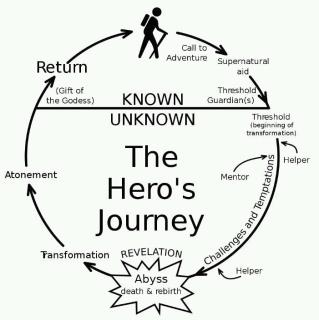
Most. Not all. Not me. I keep thinking I should be able to figure out what the ending would have been because of all the clues Jordan had laced into the saga with foreshadowing and prophecies. The “hero’s journey” concept could be a clue, too, since that was a big part of the origin of the books, but in the end, it’s a fool’s game since there’s no way of knowing what would have come out of Jordan’s subconscious and what he would have discovered as he wrote.

Still, as a person who gets caught up in literary mysteries, I’m sure I’ll continue to do what I can to puzzle out the end, fool’s game or not.


***

Pat Bertram is the author of Grief: The Inside Story – A Guide to Surviving the Loss of a Loved One.

Jordan’s Women

One common complaint about Robert Jordan and his Wheel of Time saga is that he didn’t know how to write women and that all his women characters are interchangeable. They aren’t interchangeable, and each has their place in the story, but because of the way Jordan inverted traditional gender roles, I can see why people think it’s true. Fans also say the characters don’t act like any woman they know, but the characters aren’t supposed to act like women we know.

In the Wheel of Time world, women have the assumption of power (in our world, boys and men used to have the assumption of power and the rest of us, no matter our age, were “just girls”). It was one of Jordan’s themes — turning gender assumptions on end. Those of us who grew up in his era understand why all his women characters treat men as if they are naive boys and why they never bothered to see things from their point of view — because that’s how boys and men treated us “girls.” As if we had no sense. As if we had no point of view worth seeing. As if we were so empty-headed we needed to leave all thinking to them.

But the world today is different from the one that existed when Jordan began developing his saga 50 years ago. (The first book was published almost forty years ago, but before the first word was written, he spent ten years researching and developing his ideas.) To younger generations, gender assumptions are . . . fluid, to say the least, so they can’t relate to that particular theme of Jordan’s. Still, the saga is a fantasy, a creation of a different world, so it should be read only from the point of view of Jordan’s world and not judged by current beliefs in our world.

Admittedly, I don’t like one of his major women characters, and don’t read her point-of-view chapters on rereads. Fans of this teenage character complain that other readers don’t like her because she’s a woman, that if she was a man, there would be no problem with her. (Which sort of illustrates Jordan’s theme, that she was acting like a man from an earlier generation.) But the thing is, people — men or women — who will walk all over anyone, lie, do anything to garner power, might be compelling characters, but will never be someone I like in real life and definitely not in fiction. This woman did not have a character arc — it’s a straight shot upward.

Whenever she saw someone with power, she did all she could to be like them, to become one of their group, use them, and then move on to the next group who could further her objectives. This is the most divisive character among fans — some women think this character is the real hero of the story (which isn’t surprising, since that’s what the character herself believes), while some (like me) see her as evil. The only reason as far as I can see that she doesn’t go over to the Dark One is that she’d have to swear fealty and be second-in-command at best. If she isn’t evil, she certainly portrays the dark triad of personality traits: narcissism, Machiavellianism, and psychopathy. She never changed, never had a moment of self-discovery or reckoning. Anything heroic she did was a side effect of her power grab. And she never stopped grabbing.

A second major character isn’t unreadable so much as she is the young heir to a throne, raised to believe in her right to rule and that she was superior to everyone else, always “sticking her nose in the air,” as one character described her. Despite that, of the three main women characters, she tended to be the most considerate (which isn’t saying a whole lot) and also sometimes acted as peacemaker between the other two. But even that isn’t as much of a problem as that a large portion of a couple of books are devoted to her claiming her throne, a story line that is way out of balance to the rest of the books and one, moreover, that does nothing to move any of the many plots forward. I have a hunch that Jordan planned to go somewhere with that whole subplot to make it less of an add on and more intrinsic to the story, but since the substitute author killed off her realm first thing when he took over, it became even more of a waste of words. As it is, her character arc is meandering, sometimes up, sometimes down, but never going anywhere since she doesn’t really change, just goes from being heir to the throne to being queen, simply becoming more of who she always was.

I started out liking the third one of his major women characters. She was a bit older than the other two, a healer and moral caretaker in the small town most of the heroes came from. Because of her youth, she had to bully people to make them see her authority, but still, she did her best to take care of everyone. She joined with the other heroes so she could look out for them but ended up dealing with a quest of her own. She became more and more of a bully as she tried to keep her place in the world, which irritated me until I saw her character arc. One by one, those she once had authority over turned the tables and she ended up subservient to each until there was only one left for her to bully. When she finally realized she had to give in to his authority too, she cried. That was the end of who she’d been. From there, though, she gradually built up her power base, starting with herself, until she became a true hero, the only one of the three women who did. An actual character arc.

(I wonder if Jordan planned that — one was too much, one too little, and one just right.)

There is another female triumvirate in the saga based on the legend of the three wives of King Arthur, who in Jordan’s books also represent the three aspects of the goddess — maid, mother, crone. (The maid is not a child but rather a warrior, a Maiden of the Spear. The mother is the queen mentioned above, who will have the hero’s children. The crone, though almost as young as the other two, represents the “truth teller” aspect of the crone archetype.) This “three wives” subplot is an unsettling part of the story for many readers (me, included), though it does make sense since Jordan is playing with our myths and legends, imagining what the sources might have been. The maid and crone have similar character trajectories to the queen/mother — ups and downs, with minor changes and an acceptance of their place, but mostly just becoming more of what they’d always been with no major arc that I can see.

Readers often point to the women’s annoying characteristics, such as straightening their clothes, messing with their hair, crossing arms, sniffing loudly, as proof that these characters are written badly, but these are tics, something every writer has. I can’t imagine writing four million words and having to constantly come up with different ways to show vexation or nervousness or disdain. The characters also spend a lot of time describing clothes, but the clothes give hints as to where they are and what they are thinking. It does make me wonder about his wife, though. Jordan says he gave every one of his women characters one of his wife’s characteristics, though he’d never tell her which ones.

In writing this, I developed a better sense of who these characters are, so I might decide someday to read every word of the whole series, including the parts that annoy me.

But maybe not. Since I know their arcs, such as they are, I don’t need to know anything beyond that. At least, I don’t think I do.

***

Pat Bertram is the author of Grief: The Inside Story – A Guide to Surviving the Loss of a Loved One.

Stringing Stories Together

I happened to read an old review of the Wheel of Time book saga, where the reviewer dismissed the massive work by saying all Jordan did was string together stories like The Lord of the Rings and Dune.

That made me laugh because that was sort of the point — an iteration of previous tales, stringing them together to create his world. No, Jordan didn’t copy those books. He simply paid homage to writers he loved, though there could be more similarity than maybe he intended because he used a lot of same sources as did those authors. What he did do, during the ten years he spent researching his world before writing one single word of the first book, was . . . well, research. He researched world myths, legends like King Arthur, folklore, history, costume, culture, war. Then he broke all that up into little pieces and rebuilt his world from those fragments of our past and an imagined future. There are few if any direct parallels to our word but instead there are multiple parallels for each character and culture.

For example, a lot of people think Jordan’s warrior culture, the Aiel, is based on the Fremen from Frank Herbert’s Dune since both are desert-dwelling warrior cultures, and perhaps Jordan did give a nod to Dune, but Jordan’s warrior culture is an amalgam of Zulu, Bedouin, Apache and Japanese cultures, and maybe some others. Their looks (pale skin, light hair, and light eyes) and their system of clan and sept is a parallel of old Scottish and Irish clans and septs. The Aiel are further connected to the Irish through the Tuatha’an, a Wheel of Time culture named after The Tuatha Dé Danann. And something I just discovered — their system of ownership, where women own the houses and everything in them, comes from the Cherokees. (In case you’re wondering, this puzzle aspect of the books is one of the reasons I keep rereading. It’s fun for me to dig out all the references.)

Jordan said over and over again that he wanted his world to be both our past and our future. As he pointed out, “You can look two ways along a wheel.” Also in his world, what goes around, comes around so that the characters in the books are the source of many of our myths and legends and we are the source of many of theirs. He said he wanted to explore what the nature and sources of our myths might be.

His explanation for why the myths and even the histories that the characters experience in The Wheel of Time are so different from ours is that what is remembered and how it’s remembered changes throughout the ages, like the game of Whisper, or Telephone, or Gossip, where someone passes a secret to the next person, who passes on what they heard to the next person, and in the end, what results is generally unlike what was originally said. His point was that things change over time, that stories change, that names change.

He points this out at the beginning of the first chapter of every book: “The Wheel of Time turns, and Ages come and pass, leaving memories that become legend. Legend fades to myth, and even myth is long forgotten when the Age that gave it birth comes again.”

When asked where he got the idea of a wheel, he said, “The name comes out of Hindu mythology, where there is a belief that time is a wheel. Many older cultures believe that time is cyclic, that it repeats. In fact, I believe the best thing the ancient Greeks gave us was (the idea) that time was linear and change was possible.”

That’s for sure! There is a fatalism to the books stemming from the wheel, where everything will be repeated when the wheel comes around again, though perhaps with minor differences. Which also gives them their belief that you can change your life in small ways, but not large ones. Not an easy philosophy to live under.

But I’m getting away from my original point: to say that Jordan strung a bunch of stories together is true. Sort of. But it completely negates the brilliance of the world he created — our distant past and perhaps our distant future.

***

Pat Bertram is the author of Grief: The Inside Story – A Guide to Surviving the Loss of a Loved One.