Is it Really so Important to Label Ourselves and Others?

My four-mile saunter today wasn’t quite as exciting or as heartening as yesterday’s. The pack weight was the same, the distance the same, but various parts of me ached at different times. (I haven’t been able figure out how to stop the slight chafing of the shoulder strap, but it’s possible it’s a design defect of the pack since it was mentioned in at least one review.) Still, I met the challenge. And the whole experience was fabulous in its own way.

Although I might be sore, and I might be staggering a bit after all that effort (I have a hunch I didn’t eat enough yesterday), my mind is at rest.

It’s always a joy getting away from the city, even if my “wilderness” is just the expanse of desert beyond the neighborhood. Out there, by myself, there are no labels. There is just me, whatever that might be.

I sometimes call myself a writer but only when it pertains to my books. I don’t call myself a blogger even though I blog more than write. I don’t call myself a hiker even though I hike more than blog. I don’t call myself a dancer even though I dance more than hike. And I don’t call myself a sleeper even though I sleep more than all of those activities put together.

Most especially, in today’s world where gender is such a hot topic, I don’t bother to place myself anywhere on the gender spectrum, nor do I place myself anywhere on the political spectrum.

I am.

What more do I need?

What more do you need?

Is it really so important to label ourselves and others?

I’ve been deleting “labelers” from my Facebook page, even those I’ve kept because I thought it diplomatic not to delete them during past purges, but I am tired of all the labels we slap on others. Ists and isms. Gender classifications. Political views and identity politics.

Even if people deserve being called racist or sexist or ageist or bigot or anything else, why say it? Labeling makes us feel superior because we, of course, are none of those things. Labeling puts people in what we feel is their place, and keeps us from seeing their greater (or lesser) truth.

One thing that grief taught me is that we are all works in progress, even those we dislike or those who anger us. We are all on our own personal Ferris wheel, filling every one of the buckets, but the wheel keeps turning and so all the buckets are us at various moments during the day, at various times during our lives. It’s only when someone dies that the Ferris wheel stops, allowing us (perhaps) to see each of their many parts. By labeling a person, you put a spoke in their Ferris wheel as relates to you, stopping it at that particular view of the person. You never see all the rest of the buckets. Never see that beyond your label, the wheel keeps turning.

I tried to explain this to a friend who insists that I am opinionated, though I do not think I am arrogantly and conceitedly assertive and dogmatic in my opinions. (Which is the definition of opinionated.) And every time she tells me I am opinionated, she uses the same example, “You don’t just say ‘I don’t like Meryl Streep,’ like other people do, you say, ‘I hate her.’” Frankly, I can’t remember the last time I ever thought about the actress, can’t remember the last time I spoke her name, can’t remember the last time I saw one of her movies, but apparently, years ago when we were discussing movies and she was extolling Streep’s virtues, I said I hated the actress. And forever after, in my friend’s mind, that proves I am opinionated.

(As an aside, I told her that the one-time friend who called me contrary was perhaps the most contrary person I ever met. The person who called me negative was so negative I could barely handle being in her presence. Before I could suggest that this friend turn the opinionated finger to herself, she said, “I can see where this is going.”)

So, here’s a thought. What would happen if everyone stopped labeling everyone else? Calling someone racist ignores all the blatantly unracist things the person does. Calling someone leftist ignores . . . etc, etc, etc. But even if they were consistently racist (or whatever label you put on them), why say it? It might not make the world a better place if we stopped the labels, but it sure would make Facebook a much more pleasant place to hang out.

Meantime, there is always the desert, where there are no labels. Just sand and wind and sun and me.

***

Pat Bertram is the author of the suspense novels UnfinishedMadame ZeeZee’s Nightmare, Light BringerMore Deaths Than OneA Spark of Heavenly Fireand Daughter Am IBertram is also the author of Grief: The Great Yearning, “an exquisite book, wrenching to read, and at the same time full of profound truths.” Connect with Pat on Google+. Like Pat on Facebook.
A Lilt in My Heart

Ever since I made the commitment to do a solo backpacking trip in May, I’ve had a strange feeling, one to which I am so unaccustomed that it’s taking a while for me to recognize the emotion. Maybe excitement. Perhaps anticipation. Or could it be . . . happiness?

It’s hard to tell. I haven’t felt lighthearted since Jeff fell ill decades ago. Watching him waste away destroyed my happiness, and the long years of grief after his death certainly didn’t do anything to remind me what happiness felt like. And even though dancing has been good for me, brought me back to life after Jeff died, it hasn’t been a consistently lighthearted endeavor. Sometimes it’s frustrating learning a new dance. Sometimes it’s hard making my body do what it’s supposed to do. (Yeah, point those toes!) And then there always seems to be one individual I have a hard time dealing with. (For me, dancing is about paying attention, everyone doing what they are supposed to, all moving as one — the zen of it. And some people insist on doing their own thing, no matter what the teacher says. I try not to let it bother me, but the truth is, their improvisations destroy the energy, pain amelioration, mental stimulation, and the joy that synchronized dancing brings.)

Still, it could be that this feeling has to do at least partly with dance classes. We are learning fabulous dances in both Hawaiian class and Belly dance, as well as reclaiming a great tap dance I sort of learned at the very beginning that got lost from disuse. And Hawaiian class was great this past week, going through all our old routines, which truly gave me the zen of dance feeling.

But that can’t be all of it, because there have been many such dances and days over the years. Mostly, I think, the lightheartedness has to have come from the idea of the backpacking trip.

A long time ago I read an article about dreams. If, for example, your dream is to visit Paris, and you are unable to go there for whatever reason, the suggestion was to figure out exactly what you want from the visit and what would give you the feeling you craved. Do you want the joy of sitting in an outdoor café eating brioche and sipping Café au Lait? Eating delicious French food in a fancy French restaurant? Visiting art galleries? Then try to find a substitute for whatever it is that you want. If you can’t go to a French café in France, find one near you. If you can’t afford an expensive French restaurant, save up your money and treat yourself — though it might be outside your budget, it would be a heck of a lot cheaper than airfare to France, and might give you a taste of the dream. And if art galleries are what you most desire, then visit those you can in this country. Or look for traveling exhibits from the Louvre.

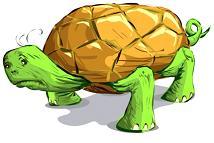
What I’m getting at here is that whatever it is that I want from a remote backpacking trip, I am apparently getting at least a part of it now, though I have no idea what it might be. It’s possible that roaming the desert with a twenty-pound pack makes me feel as if I am already on that mythical trip. It could be the thought of walking around with my house (a tent, a sleeping system, and a camping stove qualifies as a house, right?) on my back like a turtle amuses me, even though at the moment, the turtle effect is only in my mind since the pack is filled with water bottles. (Each .5 ml bottle weighs approximately a pound, which makes it easy to add weight and calculate the total.) It could be that I like the challenge of training. It could be a lot of things, but I don’t suppose the reason matters.

All I know is that I woke this morning with a lilt in my heart that even the soreness of today’s saunter couldn’t dissipate.

***

Pat Bertram is the author of the suspense novels UnfinishedMadame ZeeZee’s Nightmare, Light BringerMore Deaths Than OneA Spark of Heavenly Fireand Daughter Am IBertram is also the author of Grief: The Great Yearning, “an exquisite book, wrenching to read, and at the same time full of profound truths.” Connect with Pat on Google+. Like Pat on Facebook.
Running Away

I was talking to a couple of friends today about my upcoming trip to Seattle and my plans for a solo backpacking trip when I’m there. They asked me why I even wanted to go out into the wilderness by myself, and I had to admit I wasn’t sure. All I know is that after Jeff died, the idea took hold of me, and that every time I had an upsurge of grief, the idea came back even stronger, and now it just won’t let go. (The desire for such an adventure is a common reaction to grief.)

One woman said it sounded as if I were running away. Well, yes. Of course I am.  But then, I am also running toward something I can’t yet imagine. When I explained that the trip is a spiritual journey, a vision quest, the other women said she hoped I would find what I was looking for.

Am I looking for something? I don’t know. Do I expect to find something? Not exactly.

“Aren’t you afraid to be out in the wilderness by yourself at night?” they asked. Well, sure. But I think that’s sort of the point. To feel the breadth and breath of the night. To be aware of danger but at the same time bask in the vastness. To be afraid and in awe of the very world we live in. We’re used to thinking of the wild world as our own backyard, and yet the world exists in and for itself, without a single thought for the oh, so arrogant humans who live on the surface. Perhaps a respectful fear is a good thing to cultivate — at least it’s a recognition that we are not the center of the universe or the galaxy or even the world. In many respects, we are superfluous. If we did not exist, the earth still would continue revolving around the sun. If the earth weren’t here, we’d be . . . nowhere.

I try not to have any expectations. I know it’s dangerous to be out there alone. I know even experienced wilderness hikers get lost, get hurt, meet up with dangers — not bears so much, but clouds of mosquitoes, lightning, corroded trails, raging streams, and unleashed dogs are all very real dangers. And yet, I can’t let my fears dictate my future — otherwise, I’d never leave the house. (Being a crazy cat lady sans cats is as realistic a fear as any of those I might encounter on the trail.)

So maybe what I am running away from is that untenable future? Maybe what I’m running toward is a way to change what seems fated?

The way I see it, only good can come from seeking the goal. (Not necessarily the trip itself, but the push toward the trip.) Using hiking poles is helping my miracle arm. (The one that was broken in twenty-five places but now acts mostly normal.) Carrying a backpack is strengthening my body. Projecting myself into possible unpleasant situations is strengthening my resolve. Research is stretching my mind. Eating a clean diet is making me healthier.

At least, that’s the theory.

I’m still a long way from actually doing the trip, but every time I go to ballet class or saunter with my pack or forgo a sugary snack, I am taking another step on the trail.

And that seems as good a reason for planning on going out into the wilderness by myself as any other.

***

Pat Bertram is the author of the suspense novels UnfinishedMadame ZeeZee’s Nightmare, Light BringerMore Deaths Than OneA Spark of Heavenly Fireand Daughter Am IBertram is also the author of Grief: The Great Yearning, “an exquisite book, wrenching to read, and at the same time full of profound truths.” Connect with Pat on Google+. Like Pat on Facebook.
The Sad Story of Chocolate

I try to stay away from current issues because — well, they are current, and my focus is more on timeless topics, such as being, connecting to the world, creating meaning. But today I read something that irritated me so much that here I am.

According to the article, global warming will cause the extinction of chocolate in the next thirty or forty years because it’s getting too hot to grow cacao plants.

Um, no. I’ve known about the chocolate demise practically my whole life, long before the term “climate change” was ever coined. The threat to chocolate is that cacao trees need the shade of the rain forest to grow seedlings, the soil of the rain forest to nourish them, and full sun to grow. So chocolate farming is done on the edge of rain forests on cleared rain forest land. And rain forests are geared to go extinct in about forty years. So, no more rain forests, no more chocolate.

As a citizen of the United States, I am not one to talk about clearing forests. The land here used to be covered with vast forests, but the first thing any settler did as they moved west was clear the land. In fact, so many of the stories in our readers as schoolchildren were about those great folks and their great work ethic as they chopped down the great trees to build this great country. Cutting down trees has for hundreds of years been considered a good thing to do. It would be hypocritical of me, as one who has enjoyed the “benefits” of that destroyed primeval forest, to castigate others for doing the exact same thing.

But the truth is, half the world’s rainforests have been cleared in the past one hundred years, and at the rate they are continuing to be cleared — every year an area the size of England and Wales is gone — the rain forests will be erased in forty years.

If the rain forests were only cleared to grow chocolate, that would be one thing because the demise of the forests would be quite slow, but it’s a huge business — not just for the trees themselves, but the land for palm oil, soy, rubber, cattle. Not only does a percentage of the carbon dioxide emissions come from the downed forests — 12% — the forests themselves help clear human made pollution from the atmosphere. And with no rain forest, the pollution builds.

By the time the rain forests are gone, the population of Earth will be way over nine billion folks. (Hopefully, minus one — me.) What interests me is how few people talk about overpopulation anymore. Such an unpopular topic! How dare anyone suggest that people limit their reproduction or, horrors, not reproduce at all. But then, no one really wants zero population growth because zero population growth also means zero corporation growth. No growth, no profits.

Still, when I was young, I made the decision to ignore my own ticking biological clock and listen instead to the world’s ticking biological clock. And so I have no children. My footprint on this earth ends at my death. I met a woman my age recently who has more than sixty-five grandchildren and great-grandchildren. What could I possibly do to the earth in my lifetime that would equal even one tenth the effect this one woman has? Even if I never did anything to conserve, to recycle (recycle in the old use of the term meaning to use up and wear out), I would have done my part, but I walk very softly on this earth. I don’t need governments to try to change the climate for me, don’t need pundits to scare me with worst case scenarios, don’t need reactionaries to tell me how best to live my life. I’m doing everything I can for the world as it is.

Well, except for chocolate. I do sometimes eat chocolate.

***

Pat Bertram is the author of the suspense novels UnfinishedMadame ZeeZee’s Nightmare, Light BringerMore Deaths Than OneA Spark of Heavenly Fireand Daughter Am IBertram is also the author of Grief: The Great Yearning, “an exquisite book, wrenching to read, and at the same time full of profound truths.” Connect with Pat on Google+. Like Pat on Facebook.
Mentors!

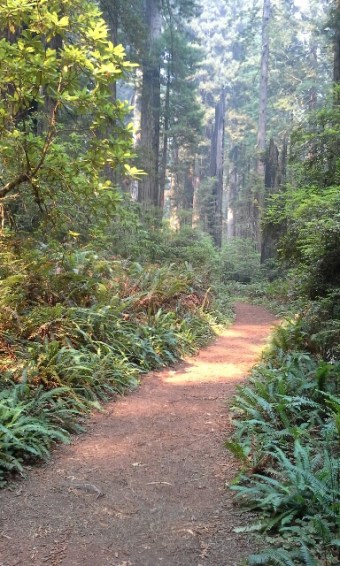
It’s hard for me to escape the status quo of my life, to be spontaneous and just take off, so when I accepted an invitation from my sister in Seattle to visit her around mother’s day to make candy turtles in our mother’s honor, I immediately began making plans for what I will do once I have escaped my bonds. Camping. Sauntering. Visiting friends.

As if that weren’t enough to pile into one short month, I also thought it would be a good time to try my hand at dispersed camping or a short pack backing trip, something that would take me out of the relative comfort and safety of a national park campground and put me alone in the wilderness for a night or two. (Which is why I’ve been wandering around the neighborhood carrying fifteen pounds on my back — I need to get used to carrying a pack.)

I couldn’t even begin to guess where to start in my search for an appropriate beginners backpacking trip, but apparently, both my sister and her husband are experienced wilderness campers, so when I mentioned my problem to my sister, the two of them volunteered to help me plan a multi-day saunter during my stay. Not only that, they will know where I am, and if I don’t wander out of the wilderness in a reasonable length of time, they will be able to send rescuers or come look for me themselves.

When I spent those months in northern California a couple of years ago, my friend would drop me off at a trailhead and pick me up at the other end. Although there was always a moment of trepidation before I took that first step onto the trail, the nervousness didn’t last long, partly because I knew she had my back.

I’m sure the same thing will hold true this May — that awful realization I was on my own, then the fullness of the experience and the comfort of knowing that someone was waiting to hear how things went.

I have so many questions that need answering before setting out, but I am thrilled to actually have someone (two someones!) who can help me figure out the right trail for me, places to camp, where to look for water and how to use my water purifier, what weather to expect, and oh, so many other things! (And help me adjust my backpacking straps. Every time I add more weight to the pack, the straps need adjusting, but I can’t adjust them because of all the weight.)

I could, of course, do what I have always done — research, make the most informed decisions possible, and then hope for the best, but it will be so much better to know, rather than guess. And this is such an important step for me. It might kill the whole idea of an epic hike or it might stoke the desire even more. Either way, it will be nice to know that with the help of my mentors, I will be giving the project my best shot.

***

Pat Bertram is the author of the suspense novels UnfinishedMadame ZeeZee’s Nightmare, Light BringerMore Deaths Than OneA Spark of Heavenly Fireand Daughter Am IBertram is also the author of Grief: The Great Yearning, “an exquisite book, wrenching to read, and at the same time full of profound truths.” Connect with Pat on Google+. Like Pat on Facebook.
Sauntering

John Muir, an early advocate for the preservation of the wilderness, was involved in the creation of some of our national parks. Since so many hikers (those who have heard of him, that is) seem to revere him, I always assumed he was an avid hiker. Not so. He once said, “I don’t like either the word or the thing. People ought to saunter in the mountains — not hike!”

He continued, “Do you know the origin of that word ‘saunter?’ It’s a beautiful word. Away back in the Middle Ages people used to go on pilgrimages to the Holy Land, and when people in the villages through which they passed asked where they were going, they would reply, “A la sainte terre,’ ‘To the Holy Land.’ And so they became known as sainte-terre-ers or saunterers. Now these mountains are our Holy Land, and we ought to saunter through them reverently, not ‘hike’ through them.”

This might be only Muir’s interpretation of the word saunter because most definitions say the origin of the word is unclear. And yet, there is this from another source: “Usually the pilgrims [to Saint Terre , the Holy Land] — traveled in caravans for safety. Many saints, and good priests and bishops, from the East and West, preached against what they often saw in such journeymen as a spirit of uncertain and sometimes even scandalous restlessness. The French coined the word saunter to describe such peripatetic meanderings of vagabond types on their way to Saint Terre.”

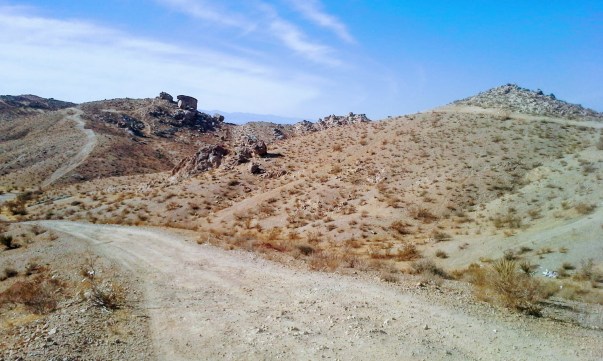
Sauntering, with its connotation of a spiritual ramble, is exactly what I do. Even though I use the term “hike,” the truth is, I don’t really hike. Or even walk. I saunter. I stop to look around. Breathe in the ambiance. Listen to the stillness. Smell the air. Feel the holiness of the land. Touch the spirit of the place. Sometimes even reverently touch a rock or a tree. (Or, not so reverently, the ground, if I trip.)

I used to go on group hikes, but even though there is supposed to be safety in numbers, I never felt safe. I always had to “hike.” To go at their speed. To hurry to catch up after stopping to savor a place. So not my idea of a proper wilderness experience!

Although my dream is of an epic hike, for me the challenge and the joy would be the time spent on the trail, not the distance traveled. Although thru-hikers deny that that hiking one of the major trails such as the Pacific Crest Trail or the Appalachian Trail is a competition, there’s really no other way to describe it. The competition might not be against each other, but there is definitely a race against time, the weather, even one’s own ability. There are only so many months to travel the trail before the winter snows make hiking impossible, and so sometimes grueling paces have to be set. And sometimes people try to break the record of how long it takes to hike the trail.

Not my idea of a spiritual journey or even just a good time.

Now a saunter — yep, that’s for me.

20180107_113937.jpg

***

Pat Bertram is the author of the suspense novels UnfinishedMadame ZeeZee’s Nightmare, Light BringerMore Deaths Than OneA Spark of Heavenly Fireand Daughter Am IBertram is also the author of Grief: The Great Yearning, “an exquisite book, wrenching to read, and at the same time full of profound truths.” Connect with Pat on Google+. Like Pat on Facebook.
 

Epiphany

The epiphany I mentioned in the title has nothing to do with the three kings, though, considering what day this is, I won’t rule out the possibility that this particular epiphany is a gift from the magi — the insight had to have come from somewhere.

This morning, after I stretched, I put on my two-pound belly pack and shrugged into my fifteen-pound backpack, grabbed my trekking poles and went out for a trudge. Actually, I am getting used to the weight a bit, so it’s more of a slow walk now than simply a plod.

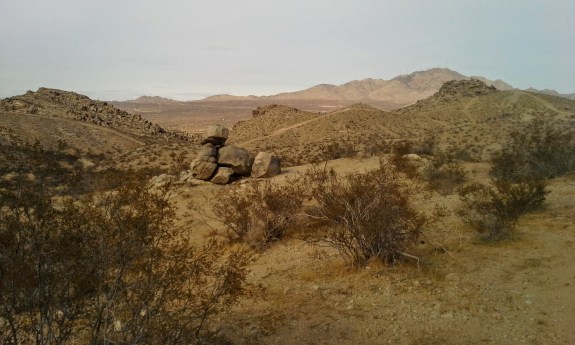
My normal three-mile route goes up the road to the desert about a mile away, a mile turnaround in the desert, and a return down a parallel street on one of the few sidewalks in the area. Today, I spent a few extra minutes in the desert, enjoying being out in the open, enjoying the very thought of being away from civilization if only for a few minutes.

On the walk back, I marveled that I seem to be in the perfect place to train for some sort of extended backpacking trip. Proximity to nature. Winter weather conducive to walking. The right gear and clothing.

And then the epiphany hit me — maybe I really am supposed to do this. “This” meaning my impossible dream of an epic backpacking trek

At lunch with friends a week or so ago, we talked about our lives and the future. They have houses, responsibilities, family. And me — all I have is this dream. They couldn’t understand why I would even want to go camping, let alone backpacking, and I couldn’t explain the pull of the quest. I’m not athletic at all — spent too many years lounging around reading to be really fit. I’m not an outdoorsy sort of person — except for walking, of course. I certainly have no lifelong love of camping — until recently, I’ve always been too much of a comfort seeker to easily embrace the discomforts inherent in a camping trip.

And yet . . . and yet . . .

The quest is not — obviously — a quest for discomfort, though in a way it is. It is in stretching our boundaries, in embracing discomfort, in reaching for the unreachable that we see the truth of ourselves, learn how we connect to the world around us, understand that we are nature, that nature is us. If we could see the world and us as energy or a quantum state, we would see that there is no real separation between us and our surroundings. I understand this, but I would like to feel it — to be alone, just me and the world, to go past what is comfortable or convenient to whatever is beyond the ordinary. A spiritual quest, in other words.

Yoda (what or whoever that might be) said, “Do or do not. There is no try.” I’m wondering if the opposite is true. “Try or not try. There is no do.” It could be that in my case, the trying is the doing. Or the doing is in the trying.

There is a good chance that this trying — this training — is the quest. (Wait! Is that another epiphany?)

After Jeff died, I thought my move away from our home of two decades would be the start of a life change — a real journey. But it turned out the drive to my father’s house was simply a trip — the journey had been in all the changes I’d undergone before taking the trip.

I wonder if this quest is the same sort of thing — that if I am ever able to do some sort of long backpacking trip, it might simply be another walk, that the quest is in all this preparation.

Should be interesting to find out.

***

Pat Bertram is the author of the suspense novels UnfinishedMadame ZeeZee’s Nightmare, Light BringerMore Deaths Than OneA Spark of Heavenly Fireand Daughter Am IBertram is also the author of Grief: The Great Yearning, “an exquisite book, wrenching to read, and at the same time full of profound truths.” Connect with Pat on Google+. Like Pat on Facebook.
Golden Day

Yesterday seemed a particularly bright and golden day. (I was going to say, “compared to the rest of the country,” but that’s not fair — it was golden in its own right.) A long summer of excruciatingly hot days (way over 100 degrees) does have a bright side — winters that aren’t as bitterly cold as cooler climes. Although we’ve gone through a cold spell here in the desert, yesterday was warm and sunny and perfect for my two short walks.

Normally, I would have walked more, of course, perhaps even ventured into the desert, but I’m still feeling the effects of my New Year’s flu. (Though to be honest, it might not be the flu but the salad with Romaine lettuce I ingested the day before the symptoms began.)

But this isn’t a post to talk about dreary things. It’s a day for gold.

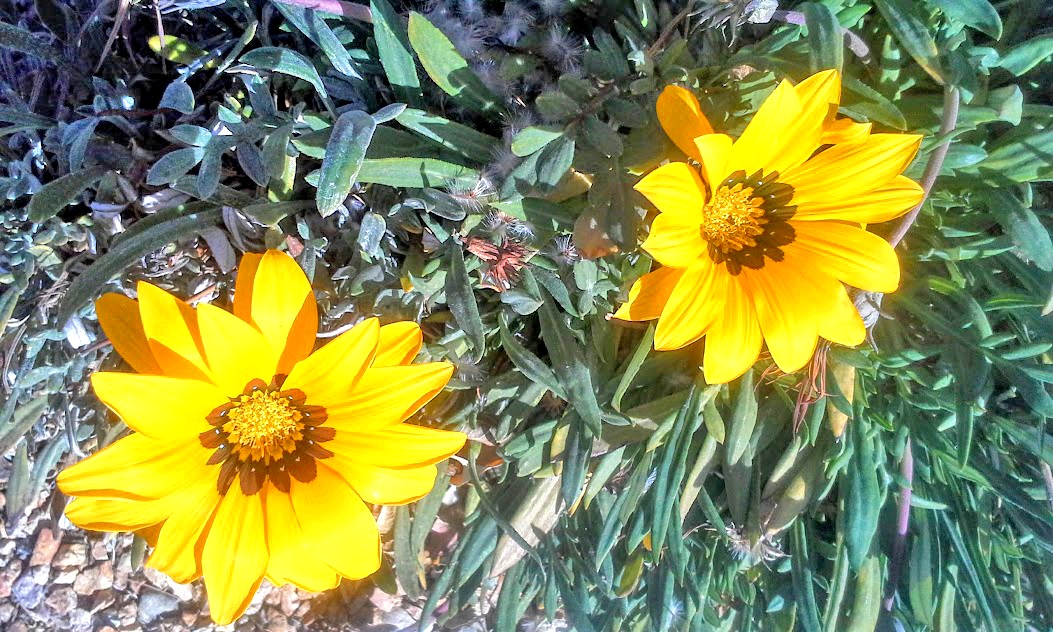
As I was striding backpackless up the street, I saw a bit of color out of the corner of my eye. I went to investigate, and lo and behold, there were these beauties, basking in the pale winter sun. I’m not sure if these gazanias are a sign of perseverance or the first tenuous hope for spring, but they certainly cheered my day.

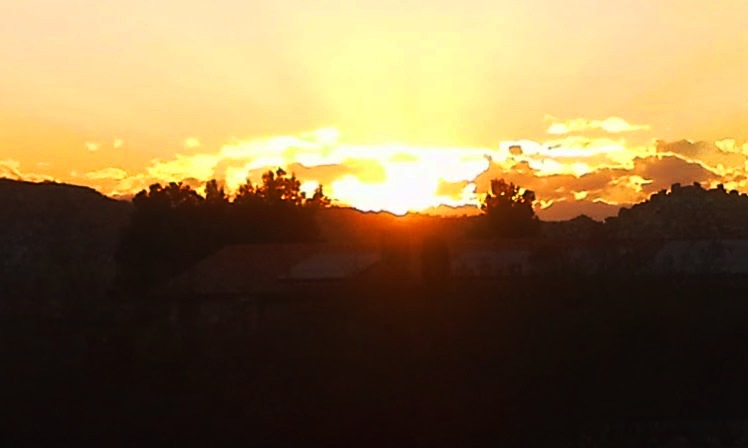
Then later, when I took the other small walk, I ended up seeing not gold at my feet, but gold in the sky.

Robert Frost claimed that nothing gold can stay, but what does it matter as long as we have gold for even a single day.

***

Pat Bertram is the author of the suspense novels UnfinishedMadame ZeeZee’s Nightmare, Light BringerMore Deaths Than OneA Spark of Heavenly Fireand Daughter Am IBertram is also the author of Grief: The Great Yearning, “an exquisite book, wrenching to read, and at the same time full of profound truths.” Connect with Pat on Google+. Like Pat on Facebook.
 

New Year’s Letter to the Newly Bereft

I’ve been corresponding with a fellow who lost his life mate/soul mate a few short months ago, and after the holidays, he emailed me, telling me how unimaginably difficult it was going into the new year without the love of his life.

I wish I had comforting words to say to him and all the others who are new-born into the world of grief, or a bit of wisdom to help them get through this terrible time, or even a pat of encouragement, but I have no comfort, wisdom, encouragement. All I have is the truth. As I wrote to this new friend in grief:

Yes, it is unimaginably difficult. There is no way to sugar coat it. All the firsts are going to be hard — the first Christmas, the first New Year, the first Valentines day, etc. etc. etc. And such days will always hard.

I wish I had something more to offer than simply a validation that what you are feeling is normal and right and to be expected. Doesn’t help with the pain, though, does it? Sometime this year you will go through a period of peace. Savor that against the long haul. Because it is a long haul.

Wishing you a new year of health and peace.

Whether you are looking forward to a new love or looking back to your lost love, I wish you all a new year of health and peace and renewal.

***

Pat Bertram is the author of the suspense novels UnfinishedMadame ZeeZee’s Nightmare, Light BringerMore Deaths Than OneA Spark of Heavenly Fireand Daughter Am IBertram is also the author of Grief: The Great Yearning, “an exquisite book, wrenching to read, and at the same time full of profound truths.” Connect with Pat on Google+. Like Pat on Facebook.
The Courage to Grieve

I’ve mentioned before — many times before — that I started writing about grief when I got frustrated with all the misconceptions of grief I found in fiction. And I continue to write about grief because the misconceptions continue.

In the book I just started to read but probably won’t finish, the guy’s very rich wife was murdered. When he told his wife’s secretary about the death, the secretary cried a few minutes, vomited, then took a deep breath, and said, “No more tears. We have to be brave.”

He, of course, had been “brave” from the beginning, and hadn’t shed a single tear. Had no trouble breathing, thinking, planning, and yet, his dead wife was the love of his life. I can understand a writer not wanting the character to succumb to grief, and I can understand the writer not knowing the full impact of grief, not just tears and sorrow, but the horrendous physical and mental changes that occur when you lose someone who has meant everything to you — changes that you cannot control, and changes that (if you’ve never experienced them) you cannot even imagine.

What I cannot forgive is that “we have to be brave” sentence. Blocking out grief (to the extent that it can be blocked out), is not bravery. It is rank cowardice. (I’m not talking about people blocking out grief because of shock or a true inability to accept the truth. I’m talking about a fictional character deliberately blocking out grief in a misguided attempt at being brave.)

True courage is facing the loss, experiencing grief in all its permutations, going where grief takes you. And that means tears, explosive anger, inability to breathe or think and the dozens of other insane ways that grief flogs you. I understand the character’s need to find the murderer in a timely manner, but you don’t do that by blocking out the grief. You use grief’s own energy — and your own anger — to catapult you into action. Blocking the grief enervates you because it takes a huge dam of energy to shut off grief’s demands. (Only people who have been in that situation know that you don’t go through grief; grief goes through you. Grief is the one in control.) And the block only lasts so long, anyway. Eventually, like any tsunami, grief will break through the dam with greater energy than if you’d have had the courage to face it in the first place.

I know I’m being idealistic here — a character, especially a male thriller/adventurer character must be macho no matter what (with only miniscule chinks of vulnerability to shed light on the true depth of the character), but the stereotype still perpetrates the myth of grief that so many of us believe — that we must not cry because we must be strong at all costs and we must be brave and tears make us weak.

Tears do not make us weak. Tears actually make us strong because they relieve stress of all kinds and enable us to continue when we think we can’t. Maybe there wouldn’t be so much nastiness in the world if people would just let themselves cry. If cowboys had wept, the west (at least the mythological west) would have been a more genteel place. But then, there would be no “westerns.” And if soldiers wept . . .

Well, now I’m getting ridiculously idealistic. But the truth remains: it takes courage to grieve. Refusing to face grief because of a fictional need to be brave is cowardice. Pure and simple.

***

Pat Bertram is the author of the suspense novels UnfinishedMadame ZeeZee’s Nightmare, Light BringerMore Deaths Than OneA Spark of Heavenly Fireand Daughter Am IBertram is also the author of Grief: The Great Yearning, “an exquisite book, wrenching to read, and at the same time full of profound truths.” Connect with Pat on Google+. Like Pat on Facebook.