Pat’s Big Adventure

In April, when I moved into my current rented room, the desert across the street called to me, especially the trail I could see in the distance, but I had to ignore the siren’s song. I’d just had surgery on my hand, multiple drugs had been pumped into me, and I had a hard time finding my equilibrium. Even worse, the thought of falling panicked me.

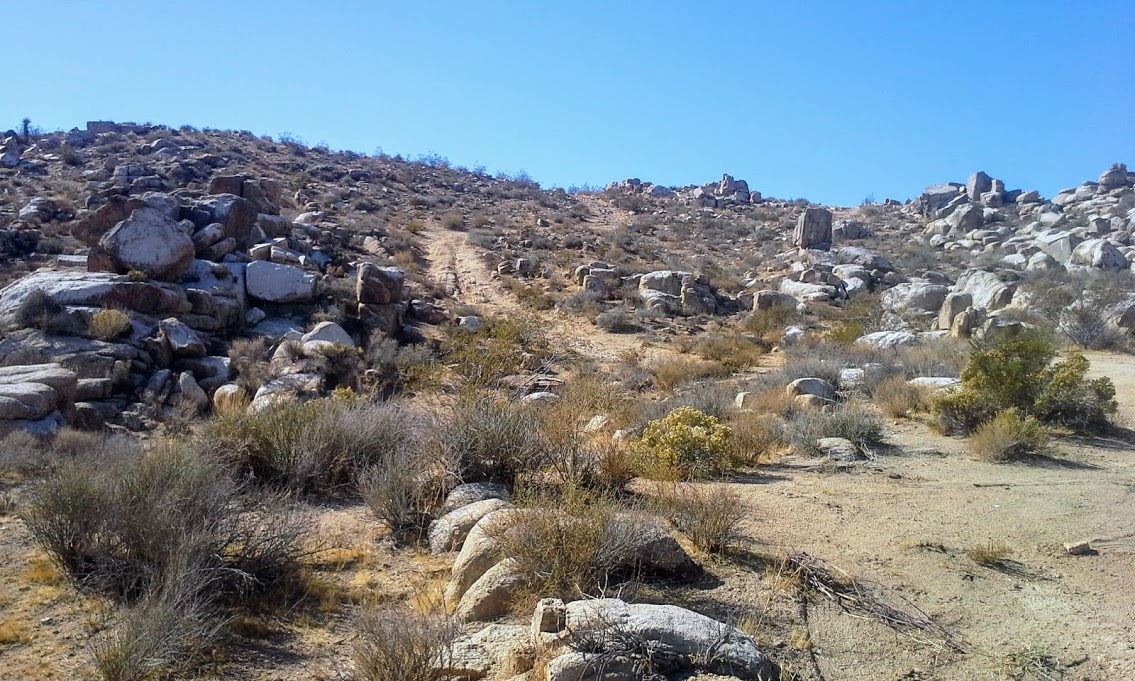
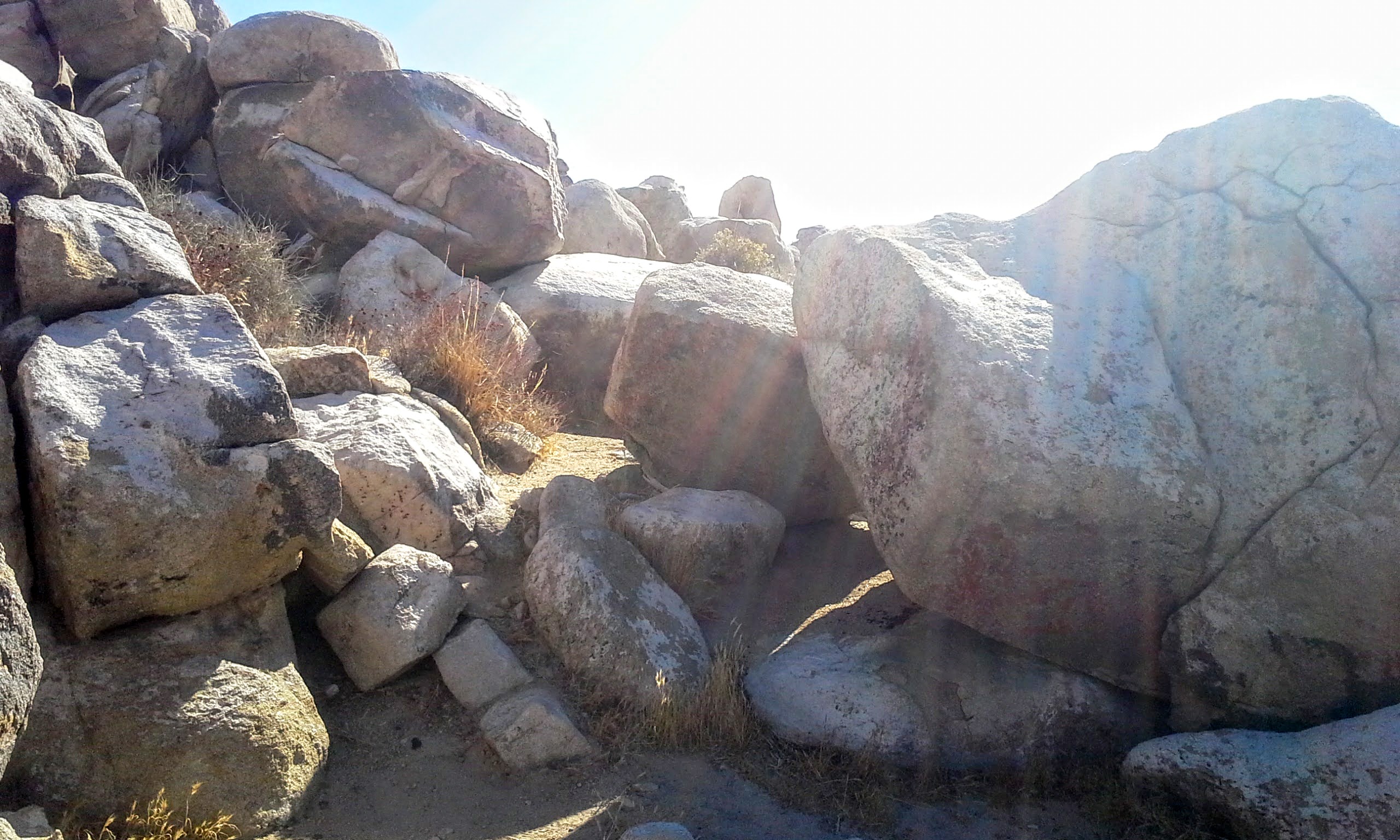
Today, finally, I followed the trail over the hill. It wasn’t much of an adventure as compared to climbing Mt. Everest, but it was a huge milestone for me.

As it turns out, it was a good thing I waited. I needed to use both hiking poles (which I couldn’t have done six months ago) because the trail was rocky, and in some places, I had to pick my way carefully through narrow rocky paths.

At the best of times, I’m not much of a hiker — I’ve seen people clambering hills as sure-footed as a mountain goat, but not me. Still, slow and steady keeps me going and gets me home safely. Despite some briefly treacherous places, the worst thing was entering a gated community from the back side, and not being able to get out. Luckily, I only had to wait about ten minutes until someone drove through the gate. I had to scurry to get through before the gate closed, but I managed to exit the neighborhood.

20171122_112039.jpg

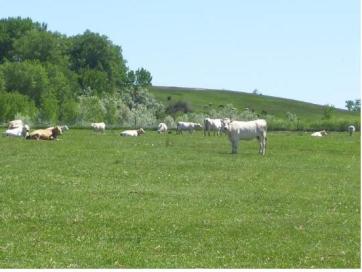
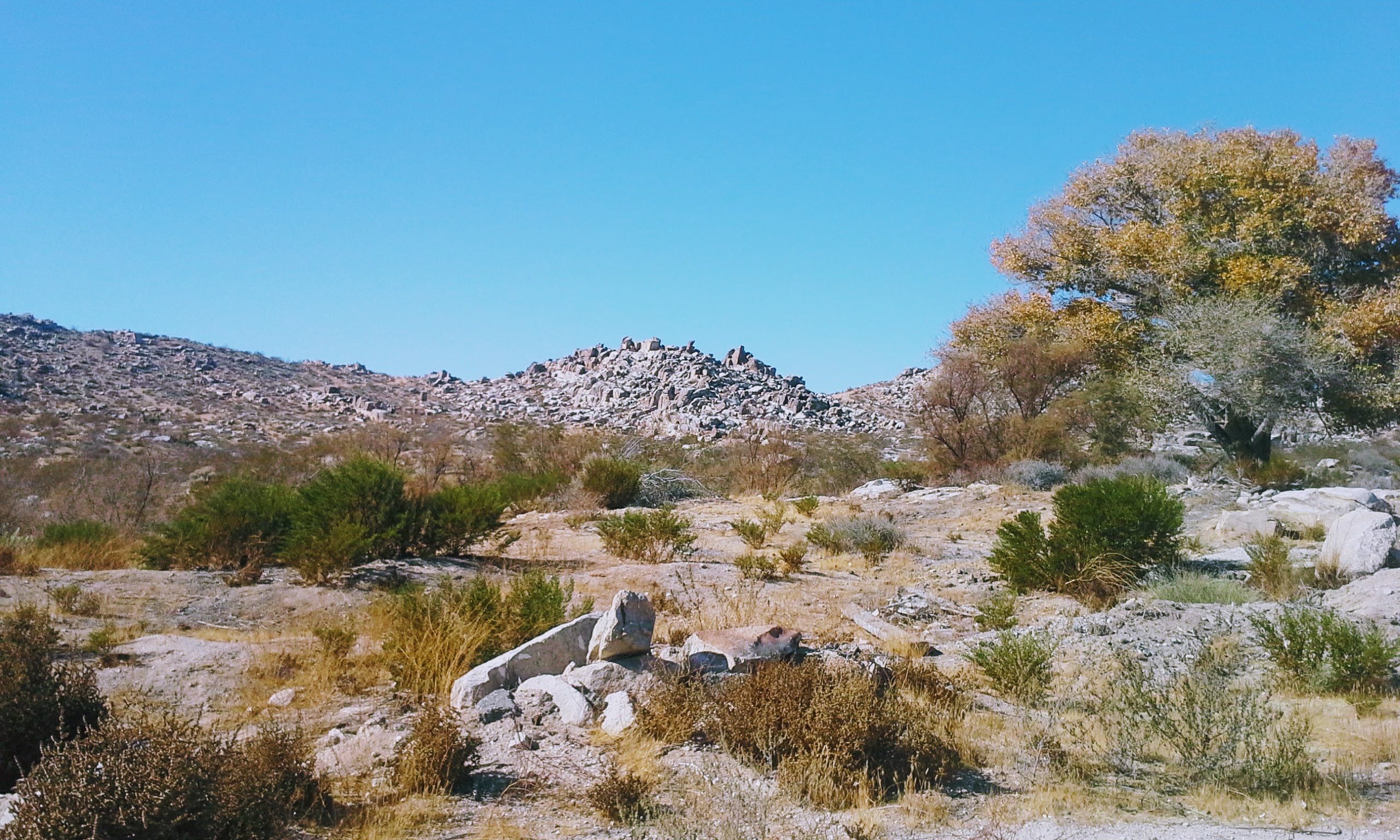
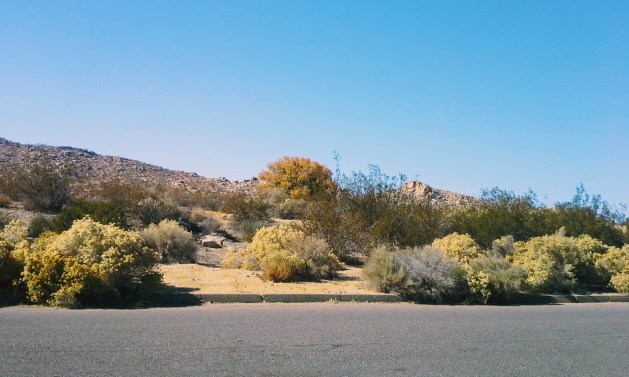
One great thing about getting out in the wilds, even if it’s only the wilds across the street, is being able to get a different perspective on life. For example, in this final photo, the city between the boulders in the foreground and the hills in the background looks like just another field of scattered rocks.

***
Pat Bertram is the author of the suspense novels UnfinishedMadame ZeeZee’s Nightmare, Light BringerMore Deaths Than OneA Spark of Heavenly Fireand Daughter Am IBertram is also the author of Grief: The Great Yearning, “an exquisite book, wrenching to read, and at the same time full of profound truths.” Connect with Pat on Google+. Like Pat on Facebook.

Fabulous Fall

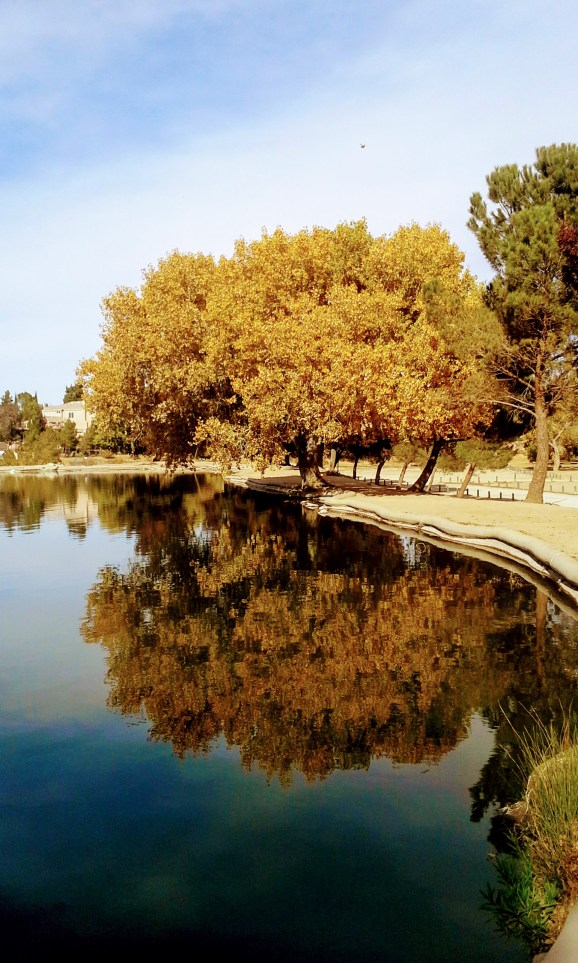
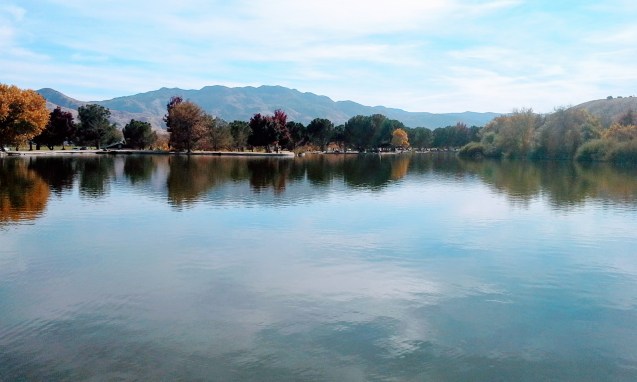
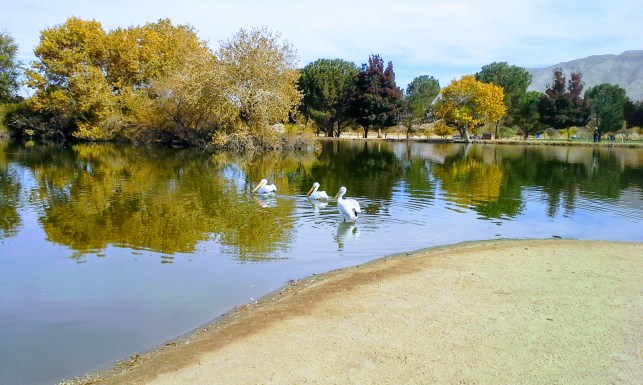
Today was an astonishingly beautiful day, the sort that makes up for the summer days of blistering desert heat.

20171121_123627.jpg

It was an especially nice day because I was able to share it with a friend I haven’t seen in over a year. There’s been too many traumas for both of us, which shouldn’t surprise me since trauma was always something we had in common. We met at a grief group at the absolutely worst times of our lives. I still remember the look on this woman’s face the first time I saw her — absolutely disbelieving, eyes wide with indescribable pain,  clutching the arm of a friend as if afraid grief would swallow her.

20171121_121500.jpg

Well, grief didn’t swallow either of us. And today, the sparkle in her eyes along with her easy smile was, I am sure, matched by my own.

And the day smiled at both of us.

We walked twice around “our” lake, the place we’ve most often gotten together, and afterward promised each other we’d do it again.

It might even be so.

20171121_123112.jpg

***
Pat Bertram is the author of the suspense novels UnfinishedMadame ZeeZee’s Nightmare, Light BringerMore Deaths Than OneA Spark of Heavenly Fireand Daughter Am IBertram is also the author of Grief: The Great Yearning, “an exquisite book, wrenching to read, and at the same time full of profound truths.” Connect with Pat on Google+. Like Pat on Facebook.

Anniversary of a Dubious Miracle

I’m  not one for remembering dates of my anniversaries and such — the practice doesn’t fit well with a live-in-the-moment attitude, and besides, I seldom know what day it is anyway, and it’s almost impossible to remember what you never knew in the first place. For example, I have no idea what day I met Jeff, and even though I knew at the moment that he would be important to me (I just didn’t know how important), it never occurred to me to mark the date. Years later, when I did want to know, I could only remember that it was the first or second Saturday of August that year. (I wonder if it ever occurred to me before now to make the connection — he came into my life on a Saturday, and left it on a Saturday.)

Still, with my penchant for not paying attention to dates, there are some things so stunningly ghastly that the date can never be forgotten. Jeff’s death, of course. And also the destruction of my arm.

A year ago today, at this time, I was perfectly perfect (in my own overweight way), but by the end of the day, I would have sustained such a devastating injury that from one minute to the next, my life would never be the same.

If there is such a thing as a miracle that brings horror rather than joy, this particular event would have to qualify.

It started in dance class a month or so before the date. The class was going to perform a couple of dances as part of the local college end of semester dance concert, and I did not want to be a part of it. For days, weeks, the class members badgered me to change my mind, and I remember almost crying when I finally told them to leave me alone. “If I do it,” I said, “Something awful will happen.” I did finally agree to be understudy for one particular dance since if any of the principal dancers couldn’t do it, they would be in big trouble.
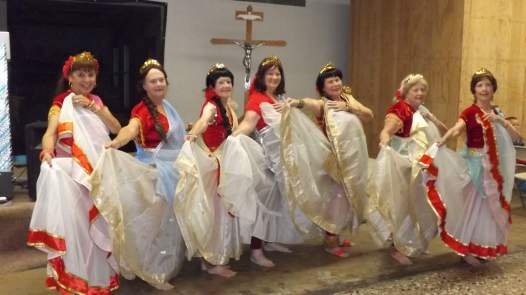
They finally left me alone, but then a whole string of events occurred. First of all, instead of being at the beginning of December as it always is, the program was scheduled for the middle of November. Second, a major wildfire destroyed the venue of my teacher’s grandson’s wedding, causing the wedding to be changed to the same day as the performance. And one of the best dancers had been absent for a couple of months due to an illness that threatened her grandson’s life.

And so, there I was on that fateful night.

Even then, all would have been well, but just as I turned to cross the parking lot between two cars, the motion-activated lights went out. (I guess from the lights’ perspective, I had disappeared.) Next thing I knew, I was on the ground, screaming in utter pain. When I finally was able to look to see what had happened, I discovered I had tripped over a parking berm. Instead of the parking lines lining up with the berm, they lines forced the cars to park in the space. (Utter idiocy!!)

Well, I finally stopped screaming in pain, and started screaming for help. And not a single person came, not even the security guards who were supposed to be patrolling the area. I considered going back inside to get one of my friends to help me, but after going through all the aggravation to make sure the class could perform, it seemed contraindicative to get them riled up. (And anyway, I didn’t want to trudge that long distance back to the performing arts center — what if there was another unseen obstruction waiting to trip me up?) I considered calling an ambulance, but since it was a Saturday night (Saturdays are sure fateful for me!!) with sirens already sounding in the background, I feared it would be a long time before I could get help. So I wrapped my destroyed wrist (with the bone sticking out) in my veils from the dance and drove myself to the hospital. (At the time, it seemed logical, but now I shudder at the thought.)

And events still conspired to exacerbate this “miraculous” event. For one, the surgeon on call at the hospital told me my elbow wasn’t broken, and as it turns out, it was broken in so many places I eventually had to have the elbow replaced. For another, the surgeon only put on an external fixator without fixing the bones, so that when I finally had the necessary surgery, scar tissue had already began forming. Luckily, this on-call surgeon didn’t want to perform the follow-up surgery, so he sent me to a specialist. That surgeon didn’t want to perform the surgery, either, so he tried to pawn me off on a specialist’s specialist, but when he couldn’t find anyone else to do it, he reluctantly agreed to do the surgery.

At my final follow-up appointment with the surgeon, I thanked him for taking care of me, mentioning that I knew he didn’t want to do the surgery, so I especially appreciated his fixing my elbow/wrist/arm. He laughed and said, “I really, really, really didn’t want to do it.” He went on the explain the difficulty — with a normal wrist fracture, the radius is still connected to the elbow, but with my injury (a pulverized wrist, a shattered elbow, and more than a dozen breaks in the radius due to all my weight landing on the wrist), the radius was unconnected to any other bone (not even to the ulna, since those connecting tendons had also been destroyed in the fall), which made the surgery horrendously difficult. And then, there was the problem of it being an “old” injury. (Even injuries a couple of weeks old apparently cause problems for the surgeon because of the necessity to scrape the scar tissue from fragmented bones.)

Although he told me it would take two years to get back partial use of my hand, wrist, and elbow, I didn’t believe him. But today I do. After a year, I can do many of the things he didn’t think I’d ever be able to do, such as open a door with my left hand. He’d also said I “should” be able to type and drive again, but the tone of his voice expressed doubt. He also said I’d have chronic pain in the ulna (which hadn’t been broken) and the fingers (which hadn’t been broken but which had been pushed out of line) and he was right about that. He also promised arthritis, which is apparently nothing I can avoid. But that won’t come for awhile.

Meantime, after the fear of never being able to use my hand/arm/wrist/fingers, and despite pain and a deformity that apparently only I notice, I am grateful to be able to type, open doors and bottles, drive, carry sort-of-heavy items, and oh, so many things.

In the end, it wasn’t the fall that was miraculous. In a strange sort of way, it was inevitable. The miracle is that I am doing as well as I am.

So as it turns out, this is not a day to remember horrendous event and mourn the loss of some mobility, but a day to give thanks for being able to use my left hand/wrist/elbow/fingers at all.

***
Pat Bertram is the author of the suspense novels UnfinishedMadame ZeeZee’s Nightmare, Light BringerMore Deaths Than OneA Spark of Heavenly Fireand Daughter Am IBertram is also the author of Grief: The Great Yearning, “an exquisite book, wrenching to read, and at the same time full of profound truths.” Connect with Pat on Google+. Like Pat on Facebook.
A Gift of Frankincense and Myrrh

Once, long ago and far away, three wise men gave gifts of gold, frankincense, and myrrh to a baby. Today, a wise woman gave me a gift of frankincense and myrrh, which could prove as valuable as gold if they work as promised to relieve the pain of my poorly functioning hand.

It seems odd to know of those ancient substances without ever knowing what they were or what they were for. Seems even odder to take the story of the wise men and their gifts for granted. I mean, really — would you bring something so obscure to a baby shower? No, you’d stick with something practical like . . . I don’t know . . .  whatever is practical to give to a baby. But perhaps those aromatics weren’t merely valued for their scents. (I think that is what we were told, I don’t really remember.) Maybe the frankincense and myrrh were valued for medicinal purposes, for keeping the baby healthy and the mother pain-free.

One of the many weird aspects of growing older is the way the body’s fat migrates. The protective fat pads from my feet and hands have disappeared, which makes long distance walking painful (the tops of my feet, oddly, not the bottoms). Perhaps these gifts from the wise woman will enable me to ramble again (though, admittedly, when I did ramble for hours, it was not during a time I was taking dance classes. Those classes range from an hour on the shortest day to four hours on the longest day, as well the mile walk to and from class, so I am not actually as lazy as I think I am).

If nothing else, these mythic gifts bring me a wonderful feeling of strange, as if somehow I am connected to the ancient story of the magi and that journey they took so very long ago.

***
Pat Bertram is the author of the suspense novels UnfinishedMadame ZeeZee’s Nightmare, Light BringerMore Deaths Than OneA Spark of Heavenly Fireand Daughter Am IBertram is also the author of Grief: The Great Yearning, “an exquisite book, wrenching to read, and at the same time full of profound truths.” Connect with Pat on Google+. Like Pat on Facebook.
Pleasure Banking

We are often asked, “Business or pleasure,” especially when travelling — at hotels, border patrol checkpoints, and airlines. The phrase has become so ubiquitous, that when I drove past a Citizen’s Business Bank, I immediately wondered about a Citizen’s Pleasure Bank.

Sometimes there seems to be a surfeit of good things, especially those that come all at once, and it’s hard to appreciate each pleasure appropriately. Well, with pleasure banking, you can have your cake, and eat it, too. In a manner of speaking. In the example of cake, you can always eat a piece and freeze the rest, but what about all the glorious sunsets you were too jaded to go out to see, the travels that you were too tired to enjoy, the funny antics of children or pets that inexplicably annoyed you, the friends who visited when you wanted to be alone? With pleasure banking, you could experience the pleasure when it would be most pleasurable for you. Perhaps you could even gain interest on the pleasurable occurrence before you take it out of the the bank to live it.

We do have a memory bank, of course, but the interest gained on remembered experiences is not compounded the same way as an experience we are currently living. With pleasure banking, though, when you finally claimed the deferred pleasure, it would be a true experience, not a memory. At least not until after you experienced it.

I doubt I would have much to deposit — I try to live for the day, and if I’m too tired to enjoy, I would still hang to on the pleasure, no matter how unpleasurable it is at the moment. Also, I would worry that in the future, interest would decline, and the pleasure would be even less pleasant. Still, even though I enjoyed every day of my cross country road trip, if I had been able to save some of the driving days where nothing much happened except driving, today I would be able to experience the zen-like nature of highway driving without actually having to leave my room.

At the pleasure bank, would also be able to borrow other people’s pleasures, and as with monetary banking, those pleasures will still be there for the person who deposited them. So, while I might not want to defer my own pleasures, I sure would love to experience some of the wonders of the world depositors might have saved, without my actually having the tedium of travelling to far distant places. (Hmmm. Makes me wonder how the accountants of the pleasure bank would determine the cost. Pleasure minus tedium, perhaps. Or maybe you’d have to pay more interest for pure pleasure without the tedium.)

So, would you open an account in a pleasure bank? If so, what would you deposit there? What would you borrow?

***
Pat Bertram is the author of the suspense novels UnfinishedMadame ZeeZee’s Nightmare, Light BringerMore Deaths Than OneA Spark of Heavenly Fireand Daughter Am IBertram is also the author of Grief: The Great Yearning, “an exquisite book, wrenching to read, and at the same time full of profound truths.” Connect with Pat on Google+. Like Pat on Facebook.
Authority

All my life, or at least all my life that I can remember, I wanted to be an author. When I was much younger, I wrote allegories and parables, stories that mimicked children’s books but with messages for adults. I also wrote snippets of poetry, such as this one:

In a strange sort of way
It’s comforting to know
That no matter what we do to this earth
It well accept and accept
Until it comes to the end of its resources
And then, as though we were no more
Than an unwanted cloak
It will shrug us off
And begin again

Not that there is any particular significance to this poem, it’s just the only one I found on my computer.

When I was in my mid-twenties, I decided to become serious about writing. I quit a job, sat down at the kitchen table, put a pen to paper and waited for the story to come. I knew what I wanted to write — a novel about a love that transcended time and physical bonds, told with sensitivity and great wisdom — but no words came. I had always assumed that writing a book was sort of like automatic writing, and for many authors it is. When that approach to writing failed, I tried to pull the words out of my head one by one, in an attempt at telling the story. Unfortunately, I discovered I had no talent for writing and no wisdom, either, so I gave up writing.

Many years later, I decided the heck with it — talent or no, wisdom or no, I wanted to write. And so I did. That first book is so spectacularly bad that it is packed away where even I can’t see it. But I am not one to do things haphazardly, so I kept on writing, kept studying books on how to write (most of which made no sense to me). And gradually I learned.

I thought writing would help solve my financial woes (I can hear you writers out there laughing at such naiveté), and even though I did find a publisher (after 200 rejections), I never did find the pot of gold at the end of the publishing rainbow.

Besides financial gain, I’m not sure what I wanted by being an author. Acclaim? I don’t know if I ever did want much acclaim (being of a rather self-effacing nature), but I wanted something. Maybe the knowledge that huge numbers of people loved my books. Maybe respect. Maybe to make a difference. I don’t know. Still don’t, actually. (I guess I figured that if I made a living by writing, whatever else I wanted would come along with it.

And then Jeff died. When I discovered that few writers (including writers who write about grief) understood the devastating nature of losing a life mate/soul mate, I decided to blog about my grief, how it felt, how it changed my world, how I learned to live again.

As it turned out, for a small group of people — those who had also lost their mates — I made a difference. Even today, years after they were written, those grief posts are still making a difference, helping the bereft understand what they are going through, offering the words to describe what they themselves can’t describe, showing them that no matter what other people tell them, their long period of grief is not only understandable and normal, but is a necessity. Would you really want the person you loved more than anything in the world to disappear without tears and sorrow? No, off course not. Our pain is a way of honoring them. And, despite what people say, grief is not emotional, or at least not just emotional. It’s physical, spiritual, intellectual, hormonal, chemical — it affects every single part of ourselves and our life.

It awes me at times to think that my words matter to people. It awes me at times to reread those old posts when someone leaves a comment and realize how . . . inspired . . . they were. Maybe there is a bit of that automatic writing going on after all. How else would I be able to be a conduit for such wisdom and understanding and even author-ity?.

And so, after all, it turns out I really am an author — a person with the ability to influence others and to make their lives easier.

***
Pat Bertram is the author of the suspense novels UnfinishedMadame ZeeZee’s Nightmare, Light BringerMore Deaths Than OneA Spark of Heavenly Fireand Daughter Am IBertram is also the author of Grief: The Great Yearning, “an exquisite book, wrenching to read, and at the same time full of profound truths.” Connect with Pat on Google+. Like Pat on Facebook.
Blogging for Peace and Other Matters

It’s only the second day since my resolve to blog every day until the end of the year, and I’m already finding excuses why I should bail on idea. Too tired. No ideas. Nothing to say.

Well, that’s not exactly true. I’ve been planning on doing a follow-up to the Blog4Peace project I participated in on November 4th, but the drift of life had me in its grip. I suppose now is as good a time as ever to offer my retrospective, even though that day is long past.

I’ve been a peace blogger since 2012, though I’m not sure why I decided to participate in the first place. I don’t believe in “world peace” as a cause. People always talk about the human race as if we are warmongers, and yes, some people are, most notably those who make money and take power from wars, but think about it. How many wars have you personally started? For the most part, we (you and me, anyway) are peace lovers. We shy away from violence. Most of us don’t even start personal conflicts, though sometimes we do unwillingly get involved in contretemps we don’t quite know how to end.

Nor do I believe that nature itself is peaceful.

Just think about it — there you are, having a nice pleasant walk through the woods, having a picnic in a meadow, or perhaps standing on top of a mountain. All is peaceful. Or is it? If your ears were hypersensitive, as is the hero from my decade-old work-in-progress:

All seemed silent, still.

His ears became attuned to the quiet, and he heard insects cricking and chirring and buzzing.

Then other sounds registered, sounds so faint several seconds passed before he comprehended what he was hearing: the relentless hunger of nature. The larger prairie creatures and the most minute devoured each other in a cacophony of crunching, tearing, ripping, gnashing, grinding.

At the realization he was sharing space with things that must be fed, he took a step backward and bumped into a tree, a gnarled oak that hadn’t been there a moment ago. Leaning against the ancient tree, he heard the roots reaching out, creeping, grasping, wanting, needing. He jerked away from the tree and fell to hands and knees. Blades of grass moaned under his weight, and the screams of wildflowers being murdered by more aggressive vegetation almost deafened him.

He opened his mouth to add his own shrieks to the clamor, but closed it again and cupped his ears when he became aware of a long sonorous undulation deep beneath the ground. The heartbeat of the earth.

Yeah. Peace.

If we expand peace to a microscopic or even a cosmic plane, we see a stasis created by opposite but equal forces in conflict.

And yet . . . and yet . . .

On November 4, hundreds, maybe thousands of people were peacefully blogging about peace, creating peaceful images, sharing peaceful words, contemplating peace, visiting each other’s peace blogs. A lovely day. A peaceful day.

We may not have stopped wars or violence. We may or may not have attained peace within ourselves, may or may not have been at peace with our world.

But we mattered.

***
Pat Bertram is the author of the suspense novels UnfinishedMadame ZeeZee’s Nightmare, Light BringerMore Deaths Than OneA Spark of Heavenly Fireand Daughter Am IBertram is also the author of Grief: The Great Yearning, “an exquisite book, wrenching to read, and at the same time full of profound truths.” Connect with Pat on Google+. Like Pat on Facebook.

Shoes. Sheesh.

I normally try to write blog posts that touch on my insights, things I’ve learned, or questions I have about life — not just my life, but life in general. Occasionally, I even mention issues that irk me, but never, as far as I can remember have I talked about something so shallow as shoes.

I do blog about what is on my mind, though, no matter the depth of the topic, and today shoes are on my mind.

I have three pairs of shoes I’ve been wearing — one pair is completely worn out, one hurts the tops of my feet, and one hurts my heels. I still wear them because, well, shoes. Mostly, though, I wear them because I can almost never find shoes to fit. But now that it’s cooler, I need shoes I can wear for walking more than a mile or two, so off I went to hunt the wild shoe.

One store I planned to go to has disappeared, perhaps a victim of the trend toward internet shopping, though how anyone can buy shoes online, I don’t know. There doesn’t seem to be any consistency to size, as this little fable will show.

I was left with two stores: a national shoe store chain and a sporting goods store. At the national chain, I found one pair that seemed comfortable, but I couldn’t figure out where my toe was since the top of the toe seemed to be reinforced. I asked the salesclerk if she could tell where my toe ended. She felt the toe and said there was plenty of room. Yay!

Still, since I was in shoe shopping mode, I stopped by the sporting goods store. The first thing I saw was a pair of hiking shoes on sale for less than half price. They seemed a bit big, but thick hiking socks should make them fit. (Not that I’ve been doing any hiking, but ridiculously, I still think about doing an epic hike.)

Figuring I was on a roll, I tried on various other shoes and ended up buying a couple of pairs that fit as well as any shoe in a store ever fits.

The next day, I decided to try on the first pair of shoes I bought, and after walking around the house for a few minutes, I realized the left shoe was so short, it was cramping my toe. So I packed those shoes back in their box, and tried on another pair. Or tried to. I couldn’t even fit my foot into the shoe. And the third pair was huge.

As if that wasn’t weird enough, each pair of shoes was a different size. (For comparison, my foot measures 7 1/2.) The size 8 shoe was excessively wide. The size 8 1/2 was too short. The size 9 shoe was remarkably small.

Sounds like a fairy tale, doesn’t it? The grim sort. Or maybe a fable, but if it is a fable, I have no idea what the moral could be. I’ve gleaned no insights. Learned nothing.

I returned all the shoes except the hiking shoes, which puts me back at the beginning, with only shoes that hurt or are worn out. So . . . more shopping. Someday.

Shoes. Sheesh.

***
Pat Bertram is the author of the suspense novels UnfinishedMadame ZeeZee’s Nightmare, Light BringerMore Deaths Than OneA Spark of Heavenly Fireand Daughter Am IBertram is also the author of Grief: The Great Yearning, “an exquisite book, wrenching to read, and at the same time full of profound truths.” Connect with Pat on Google+. Like Pat on Facebook.
Seven Years and Seven Months

Seven years and seven months ago, Jeff, my lifemate/soulmate, died after a long illness, catapulting me out of not only our coupled life, but the very house we shared for decades. After dismantling our home, getting rid of what I could and packing the rest, I went to stay with my father, who needed someone to be there for him. Although he was mostly able to look after himself, he was getting feeble enough that he needed someone in the house to make sure he was okay. And me, being newly loose in the world, undertook the task. If he were alive, my father would be over a hundred years old, but he died three years ago today, and once again I was catapulted out into the world.

I’ve become somewhat of a nomad, or maybe I should say a serial nester. In the past three years, I’ve lived over a dozen places (and those are only the places I’ve stayed more than a couple of weeks. If you include places I stayed a week or less, they are too numerous to count.) Because I’ve spent most of the past couple of decades taking care of friends and relatives, my financial situation is precarious, so I should be trying to find a place to settle down and get a job, but . . . well, I’m not. After the emotional rigors of the past ten years (starting with Jeff’s rapid decline and my mother’s death and ending with the fall eleven months ago that pulverized my left wrist, destroyed my left elbow, and smashed my radius, leaving me with a deformed arm, and wrist and fingers that don’t quite work the way they should), it’s nice to just go with the flow — not trying to do anything, not trying to think anything, not trying to push my recalcitrant spirit into a semblance of vitality. Just drifting.

Occasionally I correspond with the newly bereft who discover me through my book, Grief: The Great Yearning. They appreciate knowing they aren’t alone in how they feel, and they seem to find solace in my words. And that’s all I have left of grief now — just words. (Well, that and compassion. Not everyone comprehends the total horror that one lives through after the death of the one person you shared everything with, the one person who anchored you to life, the one person who understood you.)

Oddly, in the same way that I can no longer “feel” the exact pain of my arm when it shattered, I can no longer actually “feel” the pain of new grief. I remember not being able to breathe. Not being able to think. Not being able to get a grip on the immense agony of my grief. I remember feeling as if I were standing on the brink of the abyss, remember thinking that if I reached out far enough, I could still touch Jeff. But I cannot actually recall the feeling of new grief itself.

Even more oddly, I’m not sure if the man in my memory is the real Jeff. Has my memory of him changed over the years to fulfill his changing role in my life? I no longer know, and don’t want to know. To try to resurrect the real him, if only in memory, will eventually lead to losing him again, and that I can’t handle.

So I drift.

I am doing what I can to exercise my hand, wrist, elbow — I won’t gain the maximum usage of the joints for another year, so I am still diligently following instructions. And I am still taking dance classes. And slowly, I am gaining strength, better balance, and maybe even a modicum of grace.

What I have not been doing is writing, even though finishing my decade-old work not-in-progress tops my to-do list (or would top my to-do list if I had one. A to-do list seems the antithesis of drifting.)

Although today is the anniversary of my father’s death, it is Jeff I think of. If Jeff hadn’t died, I would never have gone to take care of my father, would never be where I am today.

Drifting.

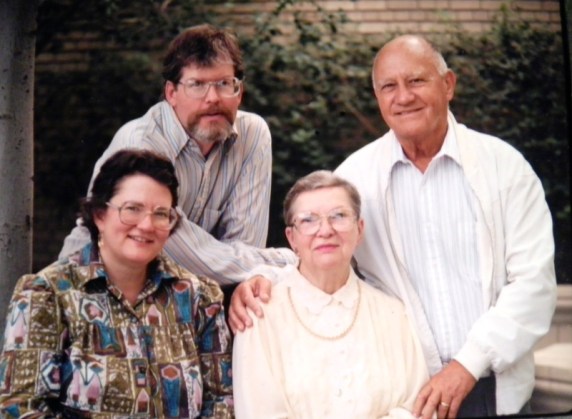
This photo is twenty years old, the only one ever taken of me, Jeff, and my parents. Although I am the only one still alive, that “me” in the photo is long gone. I don’t even remember being her. Maybe she’s just as lost as the other three.

***
Pat Bertram is the author of the suspense novels UnfinishedMadame ZeeZee’s Nightmare, Light BringerMore Deaths Than OneA Spark of Heavenly Fireand Daughter Am IBertram is also the author of Grief: The Great Yearning, “an exquisite book, wrenching to read, and at the same time full of profound truths.” Connect with Pat on Google+. Like Pat on Facebook.
Don’t Forgive Yourself

[A new grief friend emailed me yesterday in angst because he doesn’t know how to forgive himself for the way he acted when his life mate/soul mate was dying. What follows is the email I sent him. I hope he doesn’t mind my sharing my own words because I think they are important enough to preserve on this blog.]

Dear Friend,

Try this: Don’t forgive yourself.

I just looked at Grief: The Great Yearning to see how long it took me to forgive myself. Day 211. That is a very long time from where you are. And it’s not so much that I forgave myself but that I realized there was nothing to forgive.

In my book on day 211, I mentioned the numbness of that last year, and why it had to be that way, why it was okay I acted the way I did without actually enumerating all the problems of that last year, but there truly were a lot of things I had to learn to accept. For example, I often bristled when Jeff talked to me. Because of the cancer in his brain (which I didn’t know about), he could no longer hold a thought in his head long enough to have a conversation, so he “lectured” me. I clenched my fists and jaw while I choked on his words. Sometimes I walked away from him when he was talking because he wouldn’t listen (or as I now understand, couldn’t listen) to anything I had to say. During that last year, I hated when he used “my dishes,” though up until then, we shared everything. (It took me a long time to understand why I hated that he used those dishes, but I now see those dishes as a metaphor for our lives. As long as we had a life together, they were our dishes. When he began moving away from our shared life, leaving me to find my own way, they reverted to being my dishes.) We bickered about what I would do when he was gone — he wanted me to go stay with my father so he wouldn’t have to worry about me, and staying with my father was the very last thing I wanted (well, second to last — the very last thing I wanted was for Jeff to die.) And the month before Jeff died, we had the only truly horrific fight we ever had.

Would I have given anything to go back and redo that year? Of course I would. After he died, I suffered over every disconnect, over every time I could have been, should have been kinder, over every word I didn’t treasure.

The truth is, I lived the best I could under horrible circumstances. The truth is, you lived the best you could under horrible circumstances. And, the truth is, you reacted normally to something that was done to you, then you went on with your lives. The only reason it is a problem is that your life mate died.

It wasn’t until day 335 that I realized the nature of grief. When the loved one is alive, we are on a Ferris wheel, riding up and down and around, up and down and around. Always, we are ourselves, being kind and nasty, loving and angry, always it seems as if we are in the same moving seat, paying no attention to the other seats on the ride. When our loved one dies, the Ferris wheel stops, and we see that we are in every single one of those seats. Something that passed is no longer past. Something that was vital and in motion is now static. We have to grieve every damn one of those seemingly infinite seats, seats that we never would have paid any attention to if the ride had just kept going.

So what if you got angry? You were alive. You were in a relationship. People get angry. It sounds to me as if you had reason to be angry. You were hurt. And underlying all of that was the soul-destroying knowledge that your mate was dying, which makes you really, really angry. (Even when you know a person is dying, though, you don’t really know it. In my case, I just figured Jeff would be forever dying and I would be forever struggling to deal with it.) When the dying goes on for a very long time, you can’t be your optimum self. Because of that damn Ferris wheel. You are on the ride, dealing with stresses that no human should have to deal with, and since you are still on the ride, you see only that single seat.

And then the damn thing stops.

I understand you cannot unsee the seats of the ride you wish to unsee. They are there. Every single now-stationary seat has to be grieved. So don’t forgive yourself. Grieve for that which you lost. Grieve that you reacted in a human way. Grieve that the Ferris wheel stopped. But don’t try to forgive yourself. Wait. Cry. Scream. And some day, maybe day 211, maybe day 345, maybe day 763, you will understand that you were simply living, simply doing the best you could under untenable conditions.

Do we want to be better? Of course we do. Do we want to have done better? Of course.

But the tragedy is not the hurt, not your anger, not whatever you did to try to relieve the stress. The tragedy is death. If you had lived to an old age as a couple, your anger would have been long forgotten. It’s only death that makes it relevant.

So grieve. Face the real culprit: Death itself.

(And oh, my gosh, do I sound ridiculously pedantic. Take what you can from this email and disregard the rest.)

But know that I understand, and one day, you will too.

Wishing you strength as you carry this burden of grief. Wishing you peace.

***

Pat Bertram is the author of the suspense novels UnfinishedMadame ZeeZee’s Nightmare, Light BringerMore Deaths Than OneA Spark of Heavenly Fireand Daughter Am IBertram is also the author of Grief: The Great Yearning, “an exquisite book, wrenching to read, and at the same time full of profound truths.” Connect with Pat on Google+. Like Pat on Facebook.