A friend sent me an article This Is Your Brain on Writing, thinking I might get a blog post out of it, and as you can see, I did.
The article explains about research into the neuroscience of creative writing. The experiment, led by Martin Lotze of the University of Greifswald in Germany, showed a broad network of regions in the brain working together as people produced their stories, but they found a big difference between novice and professional writers. According to Lotze, the inner workings of the professionally trained writers showed some similarities to people who are skilled at other complex actions, like music or sports. They also showed more activity in the regions involved with speech, while the novice writers seemed to activate more their visual centers.
Dr. Steven Pinker, a Harvard psychologist, wasn’t convinced that the experiments provided a clear picture of creativity, saying that “creativity is a perversely difficult thing to study.”
I don’t know who is right, but I don’t quite see how this experiment showed any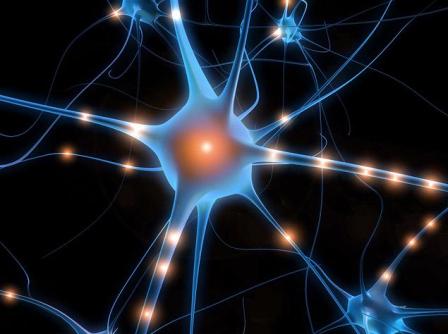 thing about how authors write a story.
According to the article, Dr. Lotze wanted to scan people while they were actually writing. But he couldn’t give his subjects a keyboard to write with, because the magnetic field generated by the scanner would have hurled it across the room. So Dr. Lotze ended up making a custom-built writing desk, clipping a piece of paper to a wedge-shaped block as his subjects reclined. They could rest their writing arm on the desk and scribble on the page. A system of mirrors let them see what they were writing while their head remained cocooned inside the scanner.
Um, yeah. That’s exactly how I write — lying on my back with my head wedged into a neuroscanner, my arm reaching up to scribble on papers clamped to a desk I can only see through mirrors.
How could that very process of the experiment not affect the ultimate creativity of a writer? Perhaps the professional writers were more used to working under diverse conditions. Maybe they couldn’t relax enough to visualize their story, and so told it to themselves as they wrote. Maybe the novice writers were able to visualize their stories because they found it harder to actually write under such conditions. Maybe the novice writers were novices because they were involved with a whole slew of other creative mechanisms — etching or sculpting, for example. Maybe professional writers might not have time to indulge in various art forms, so were more linear. Maybe . . . well, as you can see, there are a whole lot of possible maybes not touched on in the article.
The way I see the experiment is that the scientists didn’t learn anything about true creativity in the wild, but only in captivity. Most of us create our own milieus for writing — in perfect silence or with music in the background, writing by hand in bed or sitting at a desk clicking a keyboard, whenever life permits or within strict timeframes.
We generally don’t let others to dictate how we write, and if we did allow such interference, for sure it would change our process in the same way that dancing on a miniscule stage in an informal setting is different from dancing on a vast stage with thousands of people watching, and both are different from dancing in a studio. (If it weren’t different, all dancers would be satisfied with simply dancing in their living rooms.) So obviously, one’s outer space helps determine one’s inner space, which pretty much negates the experiment since they didn’t take environmnet into consideration.
Besides, our brains are only a small part of the creative process. We write with our souls, our bodies, our very beings. And anyway, why do we need to know how our brains create creativity? It won’t make our writing better. Only writing (and living) can make our writing better.
***
Pat Bertram is the author of the suspense novels Light Bringer, More Deaths Than One, A Spark of Heavenly Fire, and Daughter Am I. Bertram is also the author of Grief: The Great Yearning, “an exquisite book, wrenching to read, and at the same time full of profound truths.” Connect with Pat on Google+. Like Pat on Facebook.
 while, then when I got tired of watching my father sleeping in the emergency room because they didn’t have a bed for him, we went out to dinner. Afterward, she took me back to the hospital so I could check on him once more, and it’s a good thing because they hadn’t fed him. And he was cold.
 tao seeds were brought to New Zealand in the early part of the twentieth century, the new cultivators renamed the fruit “Chinese Gooseberries” or “melonettes.” At the beginning, it was mostly a novelty plant for gardens and small markets. Through cultivation, the fruit became bigger and sweeter, and its appeal grew. In the nineteen fifties, the growers wanted to expand their sales to the United States, but neither of these names were acceptable for the American market. They couldn’t call the fruit “Chinese Gooseberry” because the United States was in the midst of a cold war, and anything smacking of Communism was immediate death. Nor could they call it “melonette” because the United States had high tariffs for melons. Someone (several people claim the honor so there’s no point in naming names) came up with the label “kiwifruit” after the small brown fuzzy New Zealand bird, which distanced the fruit even further from its Chinese past. As I’m sure you’ve figured out, the ploy worked, and now kiwis are a staple of most people’s diet, but not mine. I don’t particularly like the fruit, no matter what its name. It seems to me the fruits are again becoming small and not very sweet, but most people still buy it.
 I know you’re dying to know what this is all about, so I’ll tell you — it’s just life.
 I sometimes think of moving on and leaving my father and brother to fend for themselves, but I’m not sure I want to be the sort of person who can walk out on her aged, increasingly confused father and leave him to care for himself. (My brother sure couldn’t do anything to help. He doesn’t seem to be able to recognize that anyone but himself needs help.)
 e spider dead. “Why,” Grissom asked, “did the spider die? Because one life impinged on another.”








