Spending Too Much Time in Shuttered Rooms

After my life mate/soul mate died, it was all I could do to get through the day. I couldn’t imagine a future without him in the world. Didn’t want to imagine it. When my grief started to wane and I could again contemplate the future, I would wonder where I should go to settle down, but my mind always rebelled at the thought. Settle down? Alone? How? He was my home. Without him, there was no home, just a place, and one place seemed the same as another.

Although I am gradually coming to terms with both my loneliness and my aloneness, I still rebel at the thought of finding somewhere to settle when I leave here. (I am currently staying with and looking out for my 97-year-old father.) For a person with hermit tendencies, such as I, settling down alone sounds like stagnation. At the beginning, I would do things, of course, but then as time passed, I would become entrenched in my habits, would get tired of the same sights, the same errands, the same . . . everything. And my world would shrink and continue shrinking until I became the crazy cat lady sans cats.

Most people have not been able to identify with this scenario. They see me now, embracing new ways of living, and say that it will always be so. Perhaps they are right, but still I do fear the stagnation that would come from being too long entrenched in one place alone.

The truth is, whether we are aware of it or not, some form of stagnation happens to all of us. In “It’s a Nomad, Nomad World,” Bruce Chatwin spoke of our heritage as nomads and explained the necessity for keeping on the move, especially by foot. Chatwin wrote:

Some American brain specialists took encephalogram readings of travellers. They found that changes of scenery and awareness of the passage of seasons through the year stimulated the rhythms of the brain, contributing to a sense of well being and an active purpose in life. Monotonous surroundings and tedious regular activities wove patterns which produce fatigue, nervous disorders, apathy, self disgust and violent reactions. Hardly surprising, then, than a generation cushioned from the cold by central heating, from the heat by air conditioning, carted in aseptic transports from one identical house or hotel to the another, should feel the need for journeys of mind and body, for pep pills or tranquillisers, or for the cathartic journeys of sex, music and dance. We spend far too much time in shuttered rooms. . . . 

The best thing is to walk. We should follow the chinese poet Li Po in “the hardships of travel and the many branchings of the way”. For life is a journey trough wilderness. This concept, universal to the point of banality, could not have survived unless it was biologically true. None of our revolutionary heroes is worth a thing until he has been on a good walk. Che Guevara spoke of the “nomadic phase” of the Cuban Revolution. Look what the Long March did for Mao Tse Tung, or Exodus for Moses.

I have no interest in being a revolutionary hero or even a spiritual leader who wanders in the wilderness until fate thrusts me into a new role. But somehow, I instinctively knew the truth — that settling down means mental stagnation. When you live with someone, you don’t stagnate quite as much because there is someone to help disrupt the rhythms of your life. But who disrupts the rhythms of your life when you are alone? (Cats, I suppose, which could be why so many old women alone end up tending  a houseful of cats, but that’s not for me.)

I do not know if I am physically capable of a life on foot — I’ve never been athletic. Even if my capabilities weren’t an issue, the problem of getting enough water seems insurmounatble. The sheer volume of water a person needs is staggering. Some areas in the west, you can go up to hundred miles between towns, and in the wilderness sometimes it’s almost as far between watering holes. Considering that a gallon of water weighs 8.34 pounds (just the water, not the container), and considering that a someone on foot needs to drink almost that much a day, and considering that at the most I could walk 10 miles a day (and that is being optimistic),  I’d need to drag along almost 84 pounds of water. (I read about a college student who dragged that much water with him on a cross-country trip. Actually, he didn’t drag it, he pushed it. Used some sort of cart.)

I don’t know what the answer to my conundrum is, but I have a hunch it will take care of itself. I’d probably start out in my ancient vehicle, and if it broke down or fell apart . . . well, then I’d have to finish the trip on foot.

It’s also possible that I end up doing what everyone does in the end — spend my life in shuttered rooms.

As a matter of fact, right at this moment, I am in a shuttered room. It’s not so bad.

***

Pat Bertram is the author of the suspense novels Light Bringer, More Deaths Than One, A Spark of Heavenly Fire, and Daughter Am I. Bertram is also the author of Grief: The Great Yearning, “an exquisite book, wrenching to read, and at the same time full of profound truths.” Connect with Pat on Google+. Like Pat on Facebook.

A Perfect Day for Hunting

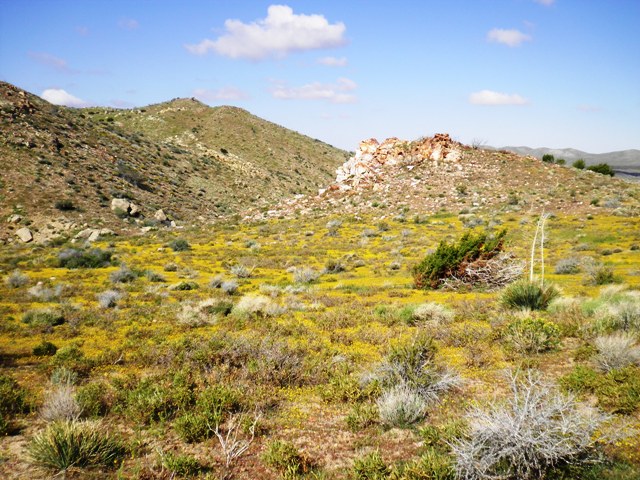
The sun was warm today, but the air was cool and breezy — perfect weather for hunting. Armed and ready to shoot, I went out to the desert with a group of hikers to search for . . . wildflowers.

It wasn’t hard to find what we were looking for. Lupine and coreopsis lined the road.

lupine

Goldfields carpeted vast swaths of land.

goldfield

Patches of poppies and chia sprung up on hillsides.

poppies and chia

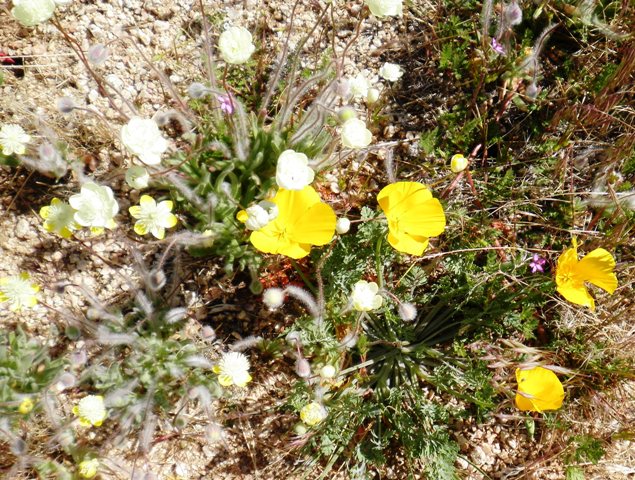
And dainty cream cups soaked up the sun alongside poppies.

poppies and cream cups

Most of the time, the desert seems drab, with little color to break the beige monotony, so today was a real treat!

***

Pat Bertram is the author of the suspense novels Light Bringer, More Deaths Than One, A Spark of Heavenly Fire, and Daughter Am I. Bertram is also the author of Grief: The Great Yearning, “an exquisite book, wrenching to read, and at the same time full of profound truths.” Connect with Pat on Google+. Like Pat on Facebook.

We Are Public Property

”You own everything that happened to you. Tell your stories. If people wanted you to write warmly about them, they should’ve behaved better.” The author of these words, Anne Lamott, was speaking about writing, but her comment also holds true of life. Everything that happens to you, everything someone did to you, everything someone said to you, all belong to you. These things are a part of you and your life story, and you can do with them as you wish. (Ownership doesn’t negate Untitledtresponsibility or consequences, however. If you write or talk about what people said or did to you, they have no obligation to like it. You might even lose them as friends, assuming you were friends in the first place.)

The corollary to the quote is that other people own everything you do or say to them.

We are savvy enough online not to write or post anything we don’t want coming back and slapping us in the face or kicking us lower down on our anatomy, long after we’ve forgotten what we posted, but offline, we are much more casual, saying whatever comes into our minds whenever there is someone around to hear our voice. Most people, don’t really pay attention, so what we say drifts past their ears or in and out of their mind moments after our words are spoken. Except, of course, when we say something we wish we hadn’t. Those words remain hanging in the air long enough for them to register. Many times people have quoted something I said back at me, and it stunned me, usually because I didn’t remember telling them, or at least not the way they understood my words to mean. Not that it’s a problem. I have no secrets. Offline, as well as online, I am what you see.

Still, it is a bit of a revelation to think that we extend way beyond ourselves. If people own what we do to them, then our actions are public property. If people own what we say to them, then our words are also public property. We are not the autonomous creatures we think we are, safe within our own little sphere of noninfluence. Just as we are continually affected (and infected) by others, they are affected (and infected) by us.

It’s a sobering thought, and one that should make us think twice about what we say to people and how we treat them.

***

Pat Bertram is the author of the suspense novels Light Bringer, More Deaths Than One, A Spark of Heavenly Fire, and Daughter Am I. Bertram is also the author of Grief: The Great Yearning, “an exquisite book, wrenching to read, and at the same time full of profound truths.” Connect with Pat on Google+. Like Pat on Facebook.
Stepping Outside My Comfort Zone

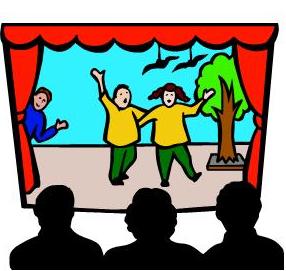
A couple of months ago when my exercise class was asked to do a demonstration for a seniors’ expo, I agreed to do it. It seemed like a life-altering experience since I’d never performed in front of a group before. I had once given a speech at a writers’ conference, and after the first few minutes of nervousness and a shaky voice, I did great. But speaking about a subject I know well is one thing, and doing a new, physical activity is another thing completely, and way out of my comfort zone.

Despite all my walking and exercising, I am not really fit. (When a friend found out about all my physical activities, she asked if I had an ounce of fat left on my body. I could only laugh.) I’m not being self-denigrating when I say I’ve never been particularly graceful or rhythmic. (Except for walking of course. One foot in front of the othstageer — I can do that!) Despite this, I thought it would be good for me to go in front of a crowd with my classmates, do the best I can, and let the mistakes fall where they may — a celebration of who I am at this moment.

The past two months have been a flurry of practice, costume discussions and creations, and more than a few disagreements, followed by a disastrous dress rehearsal and even more upsetting final practice. At one point, I thought of dropping out, but I reminded myself of how important the experience would be. I mean — me? Going in front of a crowd? Performing?

The exhibition was on Saturday. All the participants were asked to get there at noon, though my group wasn’t on until three. So there was plenty of time for nervousness, and I was, just a bit. But then we got on stage, did our number, and . . . that was it. Oddly, although I’d been looking forward to the applause, it never registered. I can’t even remember it.

Afterward, I waited for the triumphant feeling I expected, waited for a shift in myself. Waited for . . . I don’t know what. But nothing was different. Then this morning it dawned on me — as so often happens with life-altering experiences, the changes came in the doing. All those weeks of preparation turned me into the sort of person who could go on stage and give it her all without much ado.

Bad things seem to have an effect all at once, but good things have a slower, less obvious demarcation. (A therapy friend says that this is survival. It’s important to remember the bad things and the bad effects so we can try to keep them from happening again, but good things don’t matter much when it comes to survival.) Still, in my case, I did get the effect I wanted, just not the great emotional payoff. And that’s okay. Emotions fade. Confidence and competence remain forever.

***

Pat Bertram is the author of the suspense novels Light Bringer, More Deaths Than One, A Spark of Heavenly Fire, and Daughter Am I. Bertram is also the author of Grief: The Great Yearning, “an exquisite book, wrenching to read, and at the same time full of profound truths.” Connect with Pat on Google+. Like Pat on Facebook.
Happy Astrological New Year’s Eve!

There is a new moon tomorrow, and this new moon in Aries signifies the beginning of the Astrological New Year. Not that I know anything about astrology, but a friend keeps me abreast of the changing sky and how it affects us, and she sent me to Mystic Mamma.

According to Mystic Mamma, we are entering a time of collective rebirth and that “It is time to find and trust our own unique expression, and use our voice, our being, and our vibration to embody the changes and the energies we wish to experience.

ariesCathy Pagano says, “The best thing you can do is stay centered, married to yourself, so you can open up to the energies in a conscious way.”

Dipali Desai says, “This New Moon, suggests to embrace your individual spark and to have the courage to take action in life. Even if you do not know where it leads, the Archetype of the Inner Compassionate Warrior (symbolized by Aries) will help you explore a new way of life or expression. Go forth with gusto as this may just bring delightful surprises you may not expect.”

Divine Harmony says, “This New Moon cycle also takes us into a radical month of shake ups, wake up calls, breakdowns and breakthroughs of massive proportions.

Robert Wilkinson says, “This is a heavily transmutational New Moon, with the ability to ‘raise the natural to the human,’ or see the natural magic in who we are once we drop old emotional sludge or baggage that may not have ever been ours to begin with.”

I’ve never seen a correlation to the stars and my life except perhaps in my birth chart — horoscopes sure don’t seem to match up with anything I am going through — but I do like what this new moon supposedly means. New beginnings. Delightful surprises. Change. Embracing our individual spark. Having the courage to take action. Breakthoughs. Seeing our own natural magic.

I especially like the part about dropping emotional sludge that might not ever have been ours to begin with. I have a lot of such sludge, some leftover from childhood, some a legacy of my thirty-four year union with my now deceased life mate/soul mate. I’m sure some is even left over from my own past, with me hanging on to ideas or feelings that no longer pertain.

And most especially, I like the idea of being married to myself. Centering myself. Being true to myself. Finding harmony within myself. Connecting with a deeper aspect of myself. (To me this “marriage” is metaphorical, but I googled “marrying yourself” and there were one heck of a lot of hits. Apparently, people actually marry themselves, with a ceremony and everything else that goes along with marriage.)

Whatever this new lunar month brings, whatever the astrological new year signifies, the truth is, I will do what I always do — embrace life to the fullest and see what happens.

***

Pat Bertram is the author of the suspense novels Light Bringer, More Deaths Than One, A Spark of Heavenly Fire, and Daughter Am I. Bertram is also the author of Grief: The Great Yearning, “an exquisite book, wrenching to read, and at the same time full of profound truths.” Connect with Pat on Google+. Like Pat on Facebook.
Everything Happens for the Best?

A couple of days ago I wrote about an item I lost. Although the item lost was relatively unimportant in the grand scheme of life and death, it reminded me of a loss that was important — the loss of Jeff, my life mate/soul mate — and I was swept by a huge upsurge of grief. This was just a few days before the fourth anniversary of his death, so everything that happened that day took on a greater meaning than it might otherwise have done.

ripplesAlthough I can never replace him, I was able to make a replacement for the lost item. The replacement wasn’t as ornate or as perfect as the first one, but as it turns out, it actually worked better for my purpose. So perhaps it was best that I lost the item.

My father is fond of saying, “Everything happens for the best,” which has always made my teeth grate because I don’t believe that things really do happen for the best. In books, everything does happen for the best, whether good or bad. That is the point of writing — to make sense of senseless happenings. There has to be a lesson to be gleaned from the story events — perhaps character growth or a fitting resolution. If the story events happened without reason, the way things happen in life, readers would throw the book across the room and never pick up another one.

Oddly enough, our brains do that same work for us. When a tragedy has passed and we have come to terms with it, when we have found a way to live despite the pain life dishes out, we often look back and think, “Everything did happen for the best,” though the truth is that we made the best of what happened. But what if my father is right? What if things do happen for the best? What if it was best that Jeff died, best for both of us? (Well, it was best — he couldn’t have continued to live with such pain and debility, but was it best he got sick?) I don’t know the answer, of course, since I am not privy to the inner workings of the universe, but the whole lost item/replaced item lesson seemed a bit pointed considering the nearness to the anniversary.

Maybe the universe really is unfolding as it should (assuming the universe is made up of shoulds rather than coulds). Once a very long time ago, I believed Jeff was a being of light — a cosmic teacher — come to accompany me on my journey to truth. (He really was radiant when I first met him, long before ill health became a way of life, which made the conceit seem reasonable.) At the end of his life, he used to give me all sorts of unwanted advice, and when I would bristle, he’d say, “I won’t always be here to teach you.” Obviously, I don’t know the truth of why he was here or why he left, but maybe he had taken me as far as he could and went back whence he came. (This idea seems a bit far fetched when I remember the pain he went through. What makes the idea even more bizarre is that I’m not sure how much of our consciousness survives. Maybe we simply become subsumed back into the whole.)

In the end, it doesn’t matter if everything happens for the best or not. Things happen, and we deal with them the best we can. There’s not much else we can do.

***

Pat Bertram is the author of the suspense novels Light Bringer, More Deaths Than One, A Spark of Heavenly Fire, and Daughter Am I. Bertram is also the author of Grief: The Great Yearning, “an exquisite book, wrenching to read, and at the same time full of profound truths.” Connect with Pat on Google+. Like Pat on Facebook.
Fourth Anniversary of Grief

It’s very windy today, with gusts up to 40mph, but the sun is shining through the clouds.

And so begins my fifth year of grief.

Four years ago today, my life mate/soul mate died without a sound, not even so much as a whimper. His Adam’s apple bobbed once, twice, and then he was gone.

100_1807aThe world is poorer because of his absence. I am poorer. He was the best person I ever knew, kind and helpful to all, not just those who were close to him. (In fact, it was his unfailing kindness to others that cemented my love for him.) He was smart and wise and witty. He was exceedingly knowledgeable about many things — movies, music, mobsters, history, humans, health. It always seemed odd to people that someone so interested in health had physical problems, but his lack of good health is what made him interested in how the body worked and what could be done to make it work even better. He believed in self-discipline and, even at the end, despite pain and debility, he strived to learn, to be better, stronger, wiser.

I’ve gone through a couple of days of sorrow and tears as I neared this anniversary, and I’m glad I did. I seldom cry any more — in fact, I didn’t even know there were tears left in me — and oddly, I miss the tears. Tears kept me connected to him in a way nothing else has since he departed this earth. Besides, he deserves my sorrow now and again. I don’t want to live blithely without a thought for him and what he meant to me.

As always, once the time of his death passed (12:50a.m. MDT), I started to regain my equilibrium. I miss him, but the reality is that as much as I hate it, he isn’t here.

And I am.

Many of my grief mates (those who lost their mates within a few months of when I did) still have relationships with their deceased spouses. Their belief in the continued survival of their soul mates is so strong, they know without a doubt they are still connected; some people can even feel the connection. Others have moved into new relationships. While I . . . I do the best I can on my own, taking each step as it comes, trying not to cling to the past, trying not to fear the future.

And I strive to learn, to be better, stronger, wiser.

It’s what he always did, and I can do no less.

***

Pat Bertram is the author of the suspense novels Light Bringer, More Deaths Than One, A Spark of Heavenly Fire, and Daughter Am I. Bertram is also the author of Grief: The Great Yearning, “an exquisite book, wrenching to read, and at the same time full of profound truths.” Follow Pat on Google+. Like Pat on Facebook.

Terrible Anniversaries of Grief

I always dread the terrible anniversaries of grief, and this up-coming fourth anniversary is no exception. I don’t dread the pain of the day — I have learned that the days of remembrance are easy; the hard part is the grief that visits us beforehand. What I dread even more now than grief’s presence is its absence because the lack of sorrow seems to diminish him from my life even more. Once I was loved. Once I loved greatly. But “once” isn’t much to build a life on.

And so it goes . . . this awful and awe-filled journey we call grief.

In a strange sort of way, I feel lucky that I don’t have to dread grief’s absence today. I was upset over a lost item yesterday, and to console myself, I reminded myself that it wasn’t much in the grand scheme of life and death. And that, of course, reminded me of the loss of my deceased life mate/soul mate, and I couldn’t stop crying.

speedBy now, I’m used to his being gone, but I don’t know if I’ll ever get used to the enormity of death. He isn’t just gone from me, perhaps enjoying a new love or new life thousands of miles from here. He is gone from this earth, so far away I can’t even fathom the distance. The earth hurtles around the sun at 67,000 mph. The sun hurtles around the galaxy at 140 miles per second. The entire universe is also moving and expanding, so today we are a very long way from where we were when he died. (Considering only the speed of the earth, he died 2,349,221,000 miles ago.)

I too am a long way away from where I was when he died. In blog post after blog post during those first couple of years, I remarked that I hadn’t changed at all — it seemed to me that having gone through such a devastating loss, I should have grown stronger or kinder or wiser or changed in some fundamental way. I don’t know about wiser, but I do know I am vastly different from the woman who watched a man slowly die, who wanted the suffering to end, yet whose love was so ineffectual she couldn’t make him well or take away a single moment of his pain. That woman who still felt so broken months after his death. That woman who screamed the pain of her loss to the winds.

Oddly, I didn’t expect to feel any upsurge of sadness this anniversary. It has been four years, and I don’t think about him much any more. If thoughts of him come to me, I don’t hold tightly to them as I used to do, but let them drift away again. If the thoughts brought me closer to him, of course I’d hold on tightly, just as I’d hold him if he showed up on the doorstep.

But the sad truth is (or maybe it’s not a sad truth, maybe it’s a glorious truth), life does go on. The hole he left in my life is gradually closing, as is the hole he left here on earth. And when I am gone, there will be no one left alive who remembers him.

I bought a bottle of sparkling apple-cranberry juice to wash away my sorrows (hard drinker that I am!), but maybe I’ll use it instead to toast his life, and mine.

***

Pat Bertram is the author of the suspense novels Light Bringer, More Deaths Than One, A Spark of Heavenly Fire, and Daughter Am I. Bertram is also the author of Grief: The Great Yearning, “an exquisite book, wrenching to read, and at the same time full of profound truths.” Follow Pat on Google+. Like Pat on Facebook.
 

Small Losses and Great Losses

I lost something today. It wasn’t important in the grand scheme of life and death, but it was important to me. It made me feel good, for one thing, and it was perfect, for another. I can cobble together a replacement, but I will never find the joy that I did in the original item. It was a symbol, in a way, of my struggles to create a new life for myself, and now . . . well, now the symbol is gone. But only the symbol. My new life is still here. I am still here.

In two days, it will be the fourth anniversary of the death of my life mate/soul mate. The fourth anniversary of my new birth. I’ve come a long way in those years, so much so that I’m not sure the woman I was would recognize the woman I am today, but the inexplicable loss of this symbol reminded me of that other loss, the most important one I ever experienced, and I can’t stop crying. I haven’t cried for him in a long time. When I think of him, I don’t try to hold on to the thoughts as I have in the past. I just let them drift away. But today, when I felt that sick sinking feeling of an inexplicable loss, I was reminded once again that he is gone.

Sometimes it feels as if he’s been gone for decades, yet in some respects, his being gone is still very new. My plans, my thoughts, my dreams continue to be tinted through the dark glass of his goneness. Someday, as he recedes even further from me, the influence of his absence will wane. Or perhaps not. The truth is, it’s his death that inspires my life. He faced the end so courageously, I can only face my life with as much courage. In a strange sort of way, his death set us both free, he from pain, and me from being tied to an invalid (which he would have hated — he always told me that if he ever became incapacitated, I was to walk away. But I couldn’t). A small life, a life of not much, a life of not trying new things would dishonor that act of freedom.

I no longer expect him to call and tell me it’s time to come home, as I did for the first couple of years after he died. I no longer feel his vast goneness from my life, yet I always miss him. I’ve stepped back from the abyss of death, back into a celebration of life. I’m adding so much to my life — friends, excursions, dance — that I feel silly at times for still yearning for one more smile from him. I guess if I want smiles, I’ll have to generate them myself.

And I will. Just not tonight.

***

Pat Bertram is the author of the suspense novels Light Bringer, More Deaths Than One, A Spark of Heavenly Fire, and Daughter Am I. Bertram is also the author of Grief: The Great Yearning, “an exquisite book, wrenching to read, and at the same time full of profound truths.” Follow Pat on Google+. Like Pat on Facebook.

Look What I Caught!

Did you miss me? I was gone from the internet for 24 hours. Went fishing for life. And look what I caught!

Some friends and I went on an excursion to see Les Ballets Trockadero de Monte Carlo, an all male dance troupe that parodies classical ballet. The men, of course, played the women’s parts, too, and it was amusing seeing hairy chests rising above the costumes. The Trocks stumbled at inopportune times, tried to upstage one another, and played up every romantic ballet cliché. Adding to the fun, the performers sported evocative names such as Innokenti Smoktumuchsky, Maya Thickenthighya, and Jacques d’Aniels.

As funny as the performance was, the real treat came in seeing how athletic, graceful, and truly accomplished these men are. The simplest thing they did is beyond most of us. You try standing on tiptoe on one foot, the other foot poised delicately behind with the toe barely skimming the ground, and arms rounded above your head. And do this for many seconds at a time without wobbling. Yeah, right.

A special joy for me was sitting between two accomplished dancers who pointed out any feats or bits of humor that a neophyte such as I might have missed.

More than anything, though, I enjoyed the company of the people I went with. During lunch, they suggested I write a book centered around a dance studio. They all volunteered to be characters in the book, and one lovely woman offered herself up as a victim, though why anyone would want to off her is beyond my imaginings. Interestingly, the would-be-victim’s husband is a criminologist, and she also offered his expertise if I needed help keeping the investigation accurate, which is tempting indeed.

Who knows, I might even follow through on the book someday.

***

Pat Bertram is the author of the suspense novels Light Bringer, More Deaths Than One, A Spark of Heavenly Fire, and Daughter Am I. Bertram is also the author of Grief: The Great Yearning, “an exquisite book, wrenching to read, and at the same time full of profound truths.” Follow Pat on Google+. Like Pat on Facebook.