What are You Going to Do With the Last 100 Days of the Year?

Tomorrow begins the last one hundred days of the year. What are you going to do with those days? Will you finally get around to the New Year’s resolutions you made and promptly forgot? Are you going to slack off, giving yourself permission to take a break from the breakneck speed of your life? Are you going to get going on that novel you wanted to start, continue, finish, or edit? Are you going to make inroads in the pile of books on your nightstand, or finally read some of those ebooks you downloaded? Are you going attempt the photography project you always wanted to do? Are you going to make a commitment to blog every day?

That’s what I’m going to do — make a commitment to blog every day. I’ve been blogging every day for the past 364 days, and I intend to extend that commitment to the end of the year. (I’ll try to make the blogs interesting because posting something just to post something sort of negates the “challenge” part.) Feel free to join me! We can help each other, offering encouragement or topics when the will begins to wane.

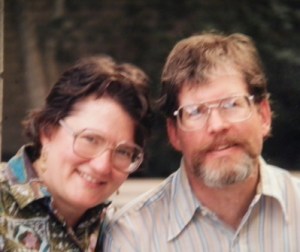
Just to make things fun, I’m also going to give up sugar (and sweets of all kinds). I used to forego sugared products except for occasional splurges of chocolate, but after the death of my life mate/soul mate, I got on a sugar jag, eating all sorts of sweets I hadn’t eaten for years. When one is grieving, it always feels like three o’clock in the morning — your mental and physical defenses are down and your blood sugar feels as if it’s at a low ebb — so I got in the habit of treating myself. I stopped eating sugar and flour a couple of weeks ago, and I intend to continue doing so. (Sugar is a poison, screwing up the system, causing myriad problems, including weight gain. This has been known for many decades despite the front page news this morning that “new research offers the disturbing suggestion that regular consumption of high calorie sugared beverages may turn on genetic switches that incline our bodies to becoming fat.” Duh. Can you believe researches actually got grants for that? And artificial sweeteners are even worse — true poison! Besides, they make you crave sugar, and have been implicated in obesity, so I won’t be substituting artificial sweeteners for sugar.)

And a final challenge (the hardest of them all) — I’m going to stop obsessing over things I cannot change. When things happen that I have no control over, I tend to work them over and over in my mind, trying to make them come out right, but that only puts me on the treadmill of circular thinking. As I wrote once a long time ago (showing that I’ve always had this tendency):

it is real, yes
and it does exist
but that does not mean
i should have given it
so much of my reality

So, have I shamed you into taking a 100-day challenge?

Using the Whole Sphere of my Being

In a yoga class I took yesterday, the teacher made a comment that caught my attention. She said that we live in a personal sphere, the space taken up by outspread arms and legs. As we age and become more fearful of missteps, we shrink into the center of our spheres, shortening our stride, hunching into ourselves.

Even if we’re not to the point where age is making us shrink into that sphere, our sedentary ways certainly do. Here I am sitting at a computer, taking up very little space, making tiny movements of fingers, eyes, head. Not exactly using the whole sphere of my being, am I? So I paused, stretched out my arms, and suddenly I’m not so hunched into my space any more, and I feel a tad more alert.

Grief has the effect of drawing us away from the outer limits of that sphere, too. Life has dealt us the worst blow of all when it removes the one person who connects us to the world, and we shrink from additional punches.

As my grief has waned, I have tried to open myself up to the world, going out to the desert, flinging my arms wide, taking deep breaths, but until now, I’ve never paid any attention to my personal sphere. A beautiful image, isn’t it? Living in our own sphere, on the sphere of the earth, in the sphere of our solar system, on the edge of the sphere of our galaxy. Okay, so the galaxy isn’t a sphere, but still, it’s an interesting concept, all these spheres within spheres.

It doesn’t take any training to live more fully within one’s sphere. All we have to do is unfold our arms, raise our ribcage, lift our head, roll back our shoulders, take longer strides. I tried taking longer strides today while out walking, and it felt good for the first twenty minutes or so, and then — ouch, ouch, ouch. I could feel the painful stretch of my inner thighs. Apparently, without my even being aware of it, I’ve been taking smaller and smaller steps.

I will keep at it and see where this awareness of my personal sphere takes me. Perhaps it will help me live more expansively, maybe even help me think more expansively. At the very least, using more of my personal space will help my posture, and that in itself is not a bad thing.

There is No Journey Through Grief

People often talk of the journey through grief. (I myself have iterated this adage.) During the past few months as my grief is waning, I’ve come to see that there is no separate journey through grief. There is only the journey through life. Grief accompanies us part of the way, maybe even most of the way, though not always with the intensity of new grief. Grief, in fact, has driven me through the steep rocky path of my life during the past few years, first a numbing grief at my life mate/soul mate’s dying, and then later, a soul-shattering grief at his death.

Like many bereft, I was not always sure I want to continue living, but I wasn’t particularly ready for death, either, so I did the only thing I could do — continue my journey, taking each day as it comes, trying new things, finding comfort in knowing that nothing lasts forever.

By sheer waves of happenstance, I’ve been temporarily beached in a residential area that borders the desert. (If you have been following the Second Wind online collaboration called Rubicon Ranch, you will be familiar with this community, though so far, unlike my hapless alter ego, widow Melanie Gray, I have not yet stumbled upon body parts out in the desert.)

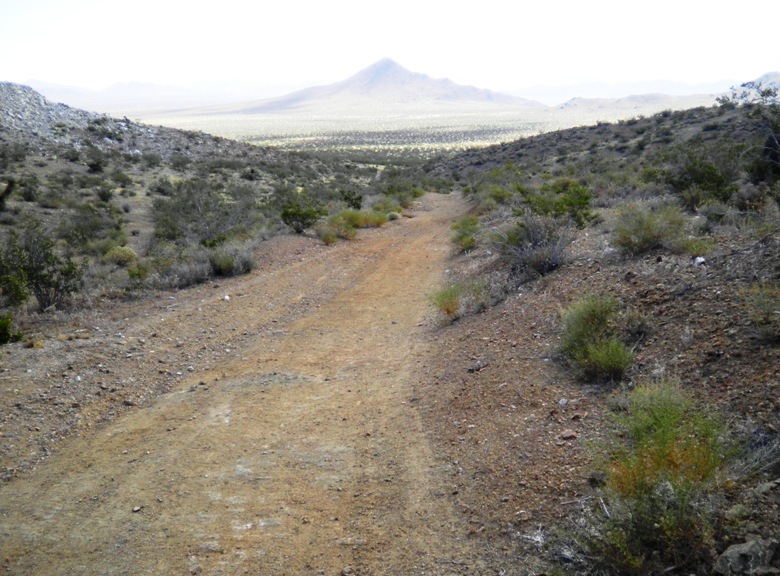
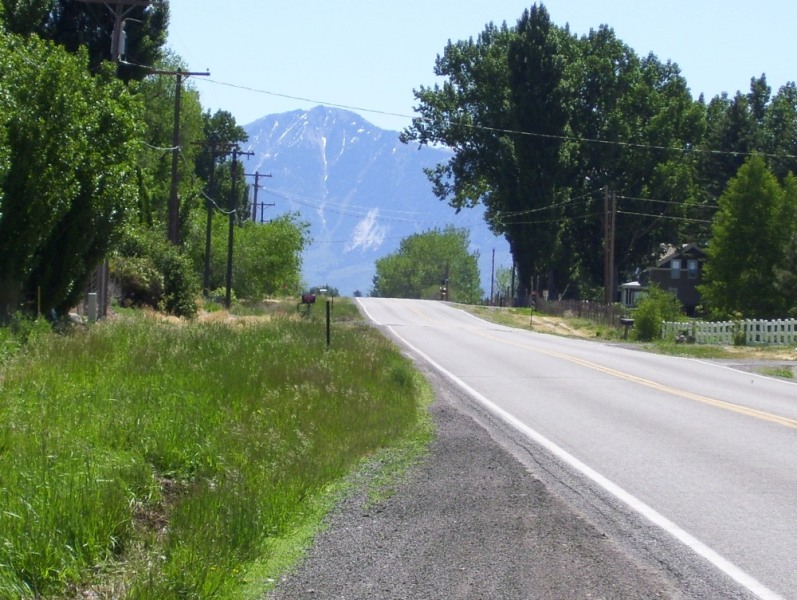
Someday, those waves of chance might sweep me into other climes, so I am making sure I use this opportunity to get to know my desert self. There are few frills in the desert, no vibrant colors or showy flowers (though brilliant cactus flowers do bloom in the spring). There are just stark hills, creosote bushes, hard-packed sandy soil. The bleak landscape suited me when I first came here, sodden with tears and steeped in pain, and it suits me still. There is peace in starkness — no particular sight rivets my attention, no exotic sounds or aromas tantalize my senses. There’s just me, the hills, the air I breathe.

Other waves of happenstance landed me in a yoga class. The teacher has a different approach, focusing not on the forms so much as breathing and being. That, too suits me.

I’ve added a few of those exercises to my morning perambulations. I stand out in the desert, away from the things of humankind, open my arms and breathe in the desert. In that moment, I am happy. There are no shadows of grief, no sad memories or niggling fears. There’s just me, believing I am where I am supposed to be.

Why the Struggle to Write?

While checking my Facebook feed yesterday, which is mostly comprised of updates by other authors, it struck me how many of them are struggling with writing. They are struggling to find the time to write. They are struggling to reach word-count goals. They are struggling to overcome writer’s block. So much struggling!

One writer posted an article about how to find the time to write, and the post had such a drill sergeant approach that it appalled me. The point of the article was that we must find time to write every day, and to do so we might have to sacrifice an outing with a friend, a trip to the movies, and other such “treats.”

Why? What is so important about writing that we need to forego time with family and friends in order to string a few words together? Truly, it is an unimportant skill. It can’t comfort a crying baby, can’t smile at a friend, can’t add another minute to a dying man’s life. It’s an inherently selfish activity since it’s about communing with ourselves. It’s also an unhealthy activity because we sit with limited motion for hours at a stretch. The hope is that ultimately others will read and understand what we write (and so understand us), and perhaps even allow us to make a living from our efforts, but still, writing is communication at one reserve. We are not sitting conversing with a loved one, and to supplant such a real conversation in the now with one in our heads seems a paltry trade.

Of course, if you have a contract that must be fulfilled, that is one thing, but if you are merely writing to satisfy yourself (and if you’re not, what’s the point of writing?) that is something completely different.

I can hear you now. “But I have to write!” If writing fulfills a need, then you don’t need to be urged to write — you are already doing it. If you have to write but don’t, then obviously, you don’t have to write. The world is not coming to an end because you are not writing. It hums along just fine without your words.

Many people do feel more in tune with themselves when writing, and why not? It’s therapeutic to let all the built-up words and pent-up emotions flow out of your head, just as blowing out a deep breath lets pent-up stress flow out of your body. And yet, for some people, such as mothers with small children and a demanding outside job, there simply is no time. To make such writers feel as if they are doing something wrong by not writing every day is unconscionable. For other people, such as those caring for a dying spouse or an aged parent, they might have the physical time but not the mental time — they might not be able to let themselves get immersed in their writing since their inattention could have disastrous results.

Nowadays, books aren’t even a physical thing — they are merely stray electrons temporarily held together by creative energy. So why the struggle to write? I truly don’t know. It seems simple to me: write, or don’t write.

For me, writing is a tool I use to help me make sense of life. It’s a means of being creative, a way of being playful, even, but writing is not life. Living is what’s important. If I don’t live, sense, experience, there’s nothing to write about. When I don’t feel like writing, I don’t struggle to overcome that feeling, and I certainly don’t let drill sergeant tactics make me feel bad about not writing every day. I know the truth: it’s not how much you write that makes you a writer, but what you say.

So I go with the flow, being me, living each day as it comes, and eventually, when the time is right, when I have something to say, I simply start writing.

Yet Another Saturday, My Sadder Day

Yesterday was Saturday, my sadder day. The love of my life died one Saturday almost two and a half years ago, and I have not yet managed to get completely over it. You don’t ever get over such a grievous loss, of course, but you can come to an accommodation with the absence, develop a new focus, perhaps even find happiness. It just takes a very long time — three to five years, or so I’ve been told. I’m doing well, all things considered, but I still struggle to find my way.

I loved him with all my being, and I continue to love him. My love for him has no outlet — I can no longer do anything for him or with him — so his share of my love fills my heart like a pool of unshed tears. I try to use that love to propel me into my future, knowing he wouldn’t want me to be sad for him, but the truth is, he has no say in the matter. (I don’t always a have a say, either — grief comes and goes as it pleases, following a timetable I seldom understand.) He’s gone, and that goneness continues to shadow my life. I feel his absence like an itch deep in my soul. I feel it in the world around me, in the very air I breathe. I’m practicing being part of the world, planting my feet on the ground, feeling connected to my self and my surroundings. Still, the world feels alien with him not in it.

I’ve come a long way from the shattered woman who screamed her pain to the uncaring winds. I’ve made new friends, seen amazing sites, tried different activities, sampled exotic foods, wrote hundreds of blogs, walked more than a thousand miles. I’ve done the best I can to life fully, but the truth is, I’m tired. I’m tired of his being dead, tired of having to put a positive slant on a situation that has no upside, tired of trying to live whole-heartedly with half a heart. Just . . . tired.

I’m not young anymore, but I’m not old, either. Sometimes the future yawns before me like a bleak and empty landscape. Most times, of course, I can look to the future with hope, though I probably will always be saddened and bewildered by his goneness, especially on Saturday, my sadder day.

A Place Where I Can Connect With Myself And The Mystical World

It’s amazing we ever manage to communicate with each other, considering that different words mean different things to different people. We do have common ground, though, so perhaps that keeps us connected. We know basically what words mean, such as “desert,” “reading,” “writing,” but we also imbue the words with our own connotations, and that’s where it gets interesting.

For most people around where I am staying, “desert” means a place of rattlers, a place to ride dirt bikes, ATVs, and other noisemaking machines, a place to honk their dogs. (That’s what I call it anyway. They let their dogs run free and drive behind them, honking to keep the animal from straying too far.). But for me, “desert” means a place away from the bustle of everyday life, a place where i can connect with myself and the mystical world around me, a place where I get in touch with the truth inside me (the truth that resides in all of us.) Even those who do see the desert as a place away from every day life, see it as a place to run, all the while connected to an ipod or whatever is connected to those wires coming out of their ears.

For most people, “reading,” fiction, in particular, means entertainment, a way to kill a few hours, an indulgence in fantasy. There’s nothing wrong with that, of course — it makes people happy and fuels the book industry — it’s just not what reading means to me. For me, “reading” means a place away from the bustle of every day life, a place where I can connect with myself and the mystical world of books, and get in touch with the truth inside me. It came as a real shock when I discovered that’s not what reading means to others. It’s often true that people see reading as a place away from the bustle of every day life, but for most people it’s an escape from themselves, not an escape into themselves.

Writers each have their own meaning for the word “writing.” Most often it’s the same as reading — to entertain, to communicate with readers. Sometimes they don’t know what it means to them, except that it fulfills a need. Occasionally, it means a way of making money. It should come as no surprise that writing, for me, means a place away from the bustle of every day life, a place where I can connect with myself and the mystical world of my own story, and get in touch with the truth inside me. Writing bloggeries, such as this one, helps me figure out what I think, but writing fiction puts a “face” on what is inside me, creating a metaphor or a parable for my thoughts and experiences.

I’ve never been one to count words since the number of words don’t count. What counts is what the words say, what they mean. I’ve never been one to inform others of how my writing is going since the writing is for me. Once the book or bloggerie is published, however, it becomes something else, not something that was written so much as something to be read. Does that make sense? I might have walked too long in the desert this morning, and brought some of its mysticism back with me.

Using Twitter the Wrong Way

People tell me I tweet wrong. I use Twitter.com like a bulletin board, mostly posting links to my blogs, sometimes retweeting my publisher’s book links, and occasionally posting links to samples of my books. All that is considered spam, though what I post is closer to ham than spam — it has a bit of meat to it. But of course, it’s all in how you look at it. (Are unwanted posts really spam, though? When you are spammed in your email, you often have no recourse, but if someone posts things you are not interested in at a social networking site, you can unfollow or unfriend.)

Most people seem to post the same sort of things I do, though some are heavy on quotes, some are heavy on retweeting, and others push their agendas (and books) incessantly, posting every few minutes. Yikes.

I once participated in a reciprocal promotion where each of us authors agreed to tweet everyone else’s book links several times a day every day for two weeks. Now that embarrassed me. I felt like a shill, particularly since I had no interest in the books. Still, I try to follow through on my promises, so I tweeted and tweeted and tweeted until I discovered that most of the others weren’t doing anything at all. That was the last time I ever did anything of the sort.

I’ve tried to do different things on Twitter, commenting on other people’s posts, joining in on discussions or starting discussions of my own, but I don’t see the fun in it, especially since few people ever respond. Those who do respond generally know me from Facebook, so it seems a duplication of effort.

So, if I’m using Twitter the wrong way, what is the right way? According to Twitter help, they are an information network, andreading Tweets and discovering new information whenever you check in on your Twitter timeline is where you’ll find the most value on Twitter. Some people find it useful to contribute their own Tweets, but the real magic of Twitter lies in absorbing real-time information that matters to you.” They also suggest that you retweet and reply to other people’s tweets rather than tweet your own, especially those of celebrities you admire.

Truth be told, I often unfollow those who use Twitter “correctly.” I have no interest in “news” in 140 characters. For all the talk about grassroots news and news from the people themselves, most of the news articles that get retweeted into virality originate from the major media.

I also have no interest in celebrities, in pithy sayings, or one-liners. And I certainly am not interested in following private conversations. (Some people use twitter to keep in touch with their friends and families rather than text. Reading those texts makes me feel as if I am at a party where I know no one and no one knows me. Do people have no sense of privacy anymore?)

Hmm. Doesn’t leave much, does it?

I guess I’ll continue to use Twitter wrongly. After all, if anyone doesn’t like what I tweet, they are free to unfollow.

Putting a Good Face on Facebook

Apparently, this is Facebook Week on Bertram’s Blog. This is the fifth in a series of posts I’ve written while trying to make sense of the clamor called Facebook. If you’ve read any of the previous posts (Why Facebook is Not the Great Promotional Tool It Once Was, Feeding the Facebook Beast, Trying to Be Heard Above the Facebook Noise, Unfriending Facebook Un-Friends), you might think I hate Facebook. The truth is, I am fascinated by the site. What I don’t like is how I’ve used it, in the beginning by sending friend requests to strangers and then later by accepting all friend requests indiscriminately and now having to fix the unwieldy mess by unfriending those who don’t engage with me. (I worry about offending people, but truly, if they have 5,000 friends, will they even notice I am gone?)

In a perfect world, being connected to what amounts to the entire population of a small town should create book sales, but it doesn’t. Just like with any town, most people you’re connected to don’t know who you are. I once lived in a town with a population of five thousand people, and after living there a couple of years, there were only a few people who even knew my name.

Being connected to so many thousands of people should create a community of people who are truly connected to each other, supporting each other through good times and bad, but it doesn’t. In fact, FB often works to isolate people. If you’ve lost your spouse, for example, seeing a constant stream of anniversary announcements, photos of happy couples, and travel plans for romantic getaways makes you feel even more isolated than you already do.

Being connected to so many people should help dispel loneliness, but it doesn’t. For the most part, facebook is about being upbeat, about bragging of all the good things that come your way, (one person’s “sharing” is another person’s “bragging”), about putting on a good face. (Well, of course. It is Facebook, after all.) But if your life isn’t going great, if you’re experiencing loss or failure, then you feel doubly alone.

Still, Facebook is a microcosm of life (though to be honest it more often resembles the worst of high school). Voltaire wrote, “Each player must accept the cards life deals him or her, but once they are in hand, he or she alone must decide how to play the cards in order to win the game.”

Like life, Facebook deals out a lot of cards everyone rails against, such as adding features we don’t want and taking away features we do. If we stay on the site, we have to accept those “cards,” but it is our choice how to play them. Like life, we reap the effects of bad choices made on Facebook (such as my indiscriminate “friending”). Like life, we have to deal with knowing we have unintentionally hurt some people. (Such as the guy who blocked me because I said something he took to be an insult, when the comment had nothing to do with him and everything to do with my philosophy of writing. See? High school.) Like life, we have to take responsibility for moments of tactlessness, and either repair the damage or take our lumps and move on. No matter how much we want everyone to like us, there will always be those who don’t.

But . . . and this is the key. Our life is our life to do with as we wish within certain parameters, and our Facebook is our Facebook to do with as we wish within the site’s parameters. With life, we have to decide what game we are playing so we know how to play our cards. With Facebook, we also have to decide what we want with the site and play our hand accordingly.

And me — I’m still trying to figure out what the game is, both with life and Facebook.

A Dream Come True For Bibliophiles

My publisher, Second Wind Publishing, is going to be at the Bookmarks Festival of Books in Winston-Salem on Saturday, Sept. 8, 2012 and I’ve been trying to get information about the festival to write a promo for the Second Wind blog. It’s hard. I don’t want to mention all the big names that will be there because . . . well, because it’s a Second Wind company blog, and it just doesn’t seem right to promote non-Second Wind authors, especially when they don’t need the promo. A lot of new Second Wind authors will be there signing books, but since they are so new I don’t know yet who they are, and since I’ve never attended the festival, it’s difficult to write an exciting article.

I must have been more focused on the article than I realized, because last night I dreamt I was at the festival. (Well, a festival anyway. Mine was a nightmare, and I’m sure the real Bookmarks Festival is a dream come true for bibliophiles.) I set up my computer at a side table, and left it there while I busied myself with other tasks, and whenever I turned around, someone was using my computer. The last time I turned around, the computer was gone. Someone had taken mine and left a piece of junk in its place. Of course, since this was a frustration dream, I dashed around, looking for the computer, getting more and more lost nd frustrated by the minute. Every time I found someone to tell of the theft, they’d make scathing comments about leaving something so valuable unattended. My response, “But it’s never happened before,” sure didn’t win me any friends.

I woke up thinking that the sleeping me sure was stupid. I would never in a million years leave my computer unattended in a crowd. I would never even set it up in a crowd. It’s too valuable to me, being an eye into the electronic world where I have friends and even a smattering of respect.

But all’s well that ends well. Despite the frustration of the dream, I awoke rested, I did not get my computer stolen, and the Bookmarks Festival will carry on without me.

Even though I will not be at the festival, my books will be. So, if you are going to be in Winston Salem this Saturday, be sure to check out the Bookmarks Festival of Books. It’s from 10 a.m.-5 p.m. in the Downtown Arts District in Winston-Salem, centering on Trade and Sixth Streets. And don’t forget to stop at the Second Wind Publishing booth and check out my books. Even better, buy one!

(In case you don’t know what books I’ve written, check out the right sidebar of this blog. They are all listed.)

An Incidental Tourist

I’ve watched thousands of movies over the years, but I’ve never considered myself a fan so much as a student. I don’t gush over movie stars, though I have paid attention to how they act, the way they deliver their lines, and the characters they play. I’ve never felt any desire to see places where movies were filmed, such as the field from The Field of Dreams. (In truth, I don’t understand the attraction. The field in Iowa is not a magical field as it was portrayed in the movie. It is simply a prosaic place where the magic of filmmaking once happened.)

Still, quite incidentally during my travels the past couple of years, I’ve seen several places made famous by movies: Monument Valley, Ridgeway (where much of True Grit was filmed), the LaBrea tarpits, Bagdad Cafe, the house where Sam Baldwin lived in Sleepless in Seattle, and the Bradbury Building. I’m sure I’ve passed by dozens of other film-famous settings without being aware of their significance, so it’s amazing to me that I recognized as many places as I did.

One of the hardest things about having lost to death the person connecting me to life is that when I see such places, I can’t tell him what I have seen. He was the one I watched all those movies with, and he would have appreciated seeing those settings way more than I did. The irony is that when he was alive, we couldn’t travel due to his health, so it’s only his death that has brought the world to me (or do I mean me to the world?).

One movie he enjoyed was Wolf, and he was especially taken with the office building where Will Randall worked.  On a recent excursion to downtown LA, I stopped in to see the Bradbury Building, which had been described as an architectural marvel, and there it was — the office building from Wolf.

I thought I’ve been keeping a scrapbook of my excursions to prove to myself that I am real, but the other day it struck me that I’m really keeping it for him — my deceased mate. I can’t tell him in person what I’ve been doing (as I always did), so the photos are a way of sharing my experiences in abstentia. He would have loved seeing the Bradbury Building — it’s even more incredible than in the movie — light-filled, soaring ceilings, ornate iron grillwork, marble stairs, and cage elevators — so I marveled in his stead.

(If you don’t know the name of the building, I’m sure you still recognize it. The place has been featured in many television series, music videos, and movies, most notably, Blade Runner, Chinatown, Murphy’s Law, Lethal Weapon 4, and of course, Wolf.)