Let It Be . . . Me

I know you’ve seen the video, everyone has. It’s been emailed and remailed, Facebooked and Twittered, blogged and Gathered, clogging cyberspace with the message: Let It Be. At first I thought that perhaps this was the answer to my confusion over the death of my mate of thirty-four years. Just go on with my life and let it be. Forget my grief. Forget the pain of losing him. Forget trying to make sense of it all. Just . . . let it be.

My second thought as I continued watching this very looooong and repetitive song (Sheesh! What was Paul McCartney thinking when he wrote it? Not much, apparently) was how my mate would have enjoyed seeing all those faces as they are today. We have so many of them in his movie collection, and they are always that age, the one they’d reached when they made that particular movie (such as a much younger Sherilyn Fenn in The Don’s Analyst or a very young and fit Steve Guttenberg in Surrender).

My third thought was let what be what? And that’s where the thoughts stalled — in a semantics word jam.

I finished watching the video, thinking nothing, just watching the parade of faces, but now I’m wondering if Let it Be is really a philosophy I want to embrace. It seems too accepting of life’s vagaries and not enough of . . . well, embracing.

The whole purpose of going through grief is to process the pain and the loss, to mend your shattered life and heart so that one day you can embrace life in its entirety once again. I haven’t dealt with all these months of tears, anger, frustration, emptiness, loneliness, pain, just to spend the rest of my life letting it be. I want to let it be me —  the one who’s strong enough not to have to simply let it be.

Grief: Loose Cannon on Deck

A loose cannon conjures images of a weapon wildly firing in all directions, but it actually refers to a cannon on the deck of a ship. Cannons needed to be lashed down, but in turbulent waters, cannons sometimes came loose and rolled around the deck. Their great weight (some weighed as much as 1800 lbs!) made those loose cannons a dangerous liability and they could crush a hapless sailor who got in the way.

That’s exactly the way grief feels. Every time you feel as if you’re getting a solid footing despite the turbulence of your new life, whack! That cannon comes loose and crushes you again.

It would be so much easier if the so-called stages of grief were actually stages that you can check off after you’ve experienced it. Denial. Check. Pain. Check. Anger. Check. Depression. Check. Acceptance. Check.

All done, right?

Wrong!

After you’ve gone through the list, there it comes again, the pain or the anger or the disbelief that he is gone, and you have to do it all over again. Add to that the innumerable stages that aren’t commonly known such as isolation, anxiety, low self-esteem, confusion, panic, frustration, hopelessness, loneliness, bitterness, missing the person, fretfulness, hanging on, waiting for you know not what, and dozens of others. Not everyone who has experienced a significant loss goes through all the stages, but no matter what, we’ve all felt that loose cannon and wish we could just tie the dang thing up and get on with our lives.

So we do.

And then, comes another storm, there’s that loose cannon again.

Can you sense the pettishness of my tone? Must be another stage I’ve never heard of. Well, check this one off, too.

Owing His Memory?

I found this paragraph in a book I read recently, and it’s a graphic example of why I want to write a novel about a grieving woman — so few understand the nature of grief:

Jean-Pierre was gone; nothing could bring him back, and her feelings for him, feelings that had risen suddenly, had been ebbing just as quickly as evidence of his involvement with illegal drugs had surfaced. If Jean really had been running drugs, she owed his memory nothing.

Owed his memory? What does that mean? This example seems to have been written by a person who knows little of grief. In all these months of steeping in the world of grief, I have not heard a single person mention owing the dead person’s memory anything.  Memories are all we have left and we treasure them, but we also know that memory is not a living creature to whom we must pay homage. We might feel obligations to those who are gone, obligations such as honoring their wishes as to funerals and disbursement of treasured possessions, but we fulfill those obligations out of love and because we find comfort and continuity in still being able to do things for our loved ones. But owing the memory we have of the person? Doesn’t even make sense.

We bereft are all struggling to find a way to live with the hole in our lives, with the ongoing sadness, with the reality that grief is an unending (though perhaps diminishing) journey. No griever I have met has said, “Wait! I can’t be happy. I owe too much to his memory.” Grieving is a process, something we do, something that happens to us, but it is seldom the choice that is hinted at in the above example. Quite frankly, we are all sick of grieving, of being sad, but the only way not to be sad is to have our loved ones back with us, and since that is impossible in this world, we continue on as best as we can with our shattered lives. But we owe that to ourselves, not to his memory.

Finding Inspiration From Uninspiring Sources

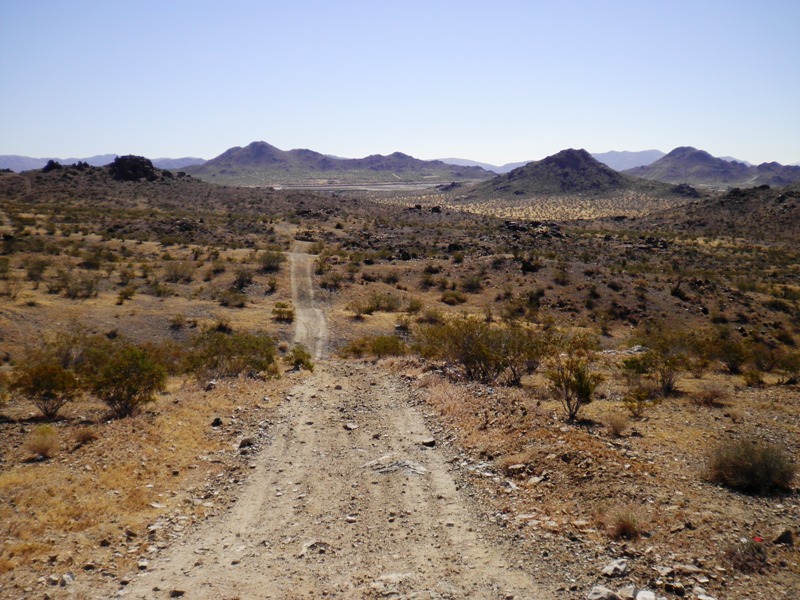
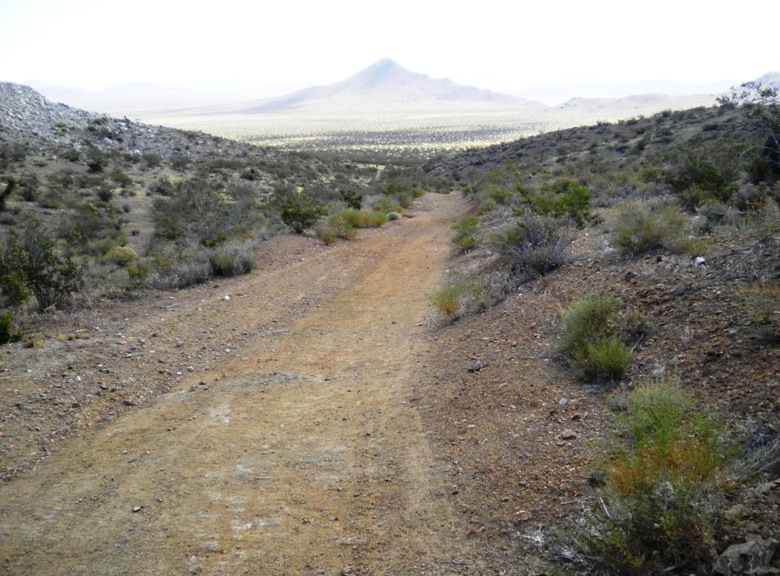
Deserts have traditionally been mystical places where one goes to find inspiration, themselves, the meaning of life, but nowadays people use the desert as a park, a place of recreation rather than re-creation. They whiz by on dirt bikes and all-terrain vehicles, they honk their dogs (let the dogs out of the vehicle and and follow along behind, honking whenever the creatures go to far astray), they have drunken parties, and they dump trash, including old furniture.

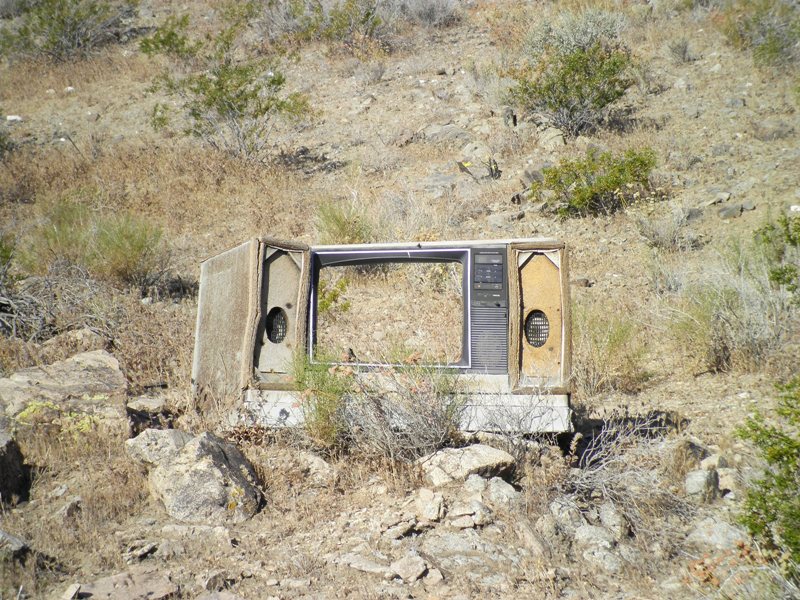
I used all of these bits to set the scene for the first chapter of Rubicon Ranch: A Collaborative Novel, a novel being written online by me and eight other Second Wind authors, especially the discarded furniture. I do believe I have seen enough old furniture in my walks to furnish a living room, but the piece that most captured my imagination was the television sitting out in the middle of nowhere. No road led to the television, just a footpath. Yet there it was. And so it appears in my chapter:

She turned around to get shots of the trail she’d just climbed and saw a glint of metal reflecting the sun. She squinted. What was that? A television? She found herself smiling—her first smile since Alexander died. She scrambled back down the trail. The television had been dumped a long time ago judging by the creosote bushes that had grown up around it, but footprints leading to the box suggested it had been visited recently. She took several shots from the trail, about fifteen yards from the television, then moved closer. The television had no screen, and she could see that something had been stuffed inside. A doll? She crept closer. Ten feet away, she stopped to take another photo, and the truth washed over her. Not a doll. Crammed inside the console was a child, a girl, her eyes half-eaten by some desert predator.

We’ve now posted the first six chapters of Rubicon Ranch, the latest one by Christine Husom, author of the Winnebago Mystery Series.  The most fun of a project such as this is that we do not yet know who killed the little girl (if in fact, she was killed) and we won’t know until all but the final chapter has been written. I hope you will enjoy following our story as we write it.

  • Chapter 1: Melanie Gray — by Pat Bertram
  • Chapter 2: Seth Bryan — by Lazarus Barnhill
  • Chapter 3: Jeff and Kourtney Peterson — by J B Kohl and Eric Beetner
  • Chapter 4: Dylan McKenzie — by Nancy A. Niles
  • Chapter 5: Mary “Moody” Sinclair — by JJ Dare
  • Chapter 6: Cooper Dahling — by Christine Husom
  • Thinking While Writing

    Although I finished the challenge of writing 50,000 words in a month, I am still writing, though I’m back to my usual snail pace and my habit of thinking while I write. It’s not so much that I’m reverting to my old ways, but that I’ve written all the easy parts. Now, besides figuring out how to put the book together, I have to write any missing scenes, write the connective tissue that turns isolated scenes into a cohesive story, and write descriptions, which has always been hard for me. I am not fond of long descriptive passages, but I understand the need to anchor a reader to the story with visuals, so I try to describe a scene in as few words as possible. Generally I do this by finding a significant detail — the one thing that will make a scene come alive, such as a green lizard on the ceiling of a hotel room in Thailand or a razor-wire-topped fence hidden in the trees.

    All those parts of the story take thought, which means no more writing at break-finger speed. Still, I’ve come away from the experience with a better appreciation for the writing process (though, drat it! It was supposed to be a vision quest, and I had nary a vision.)

    The most important lesson I’ve learned from this experience is that by jumping around and writing scenes as I think of them rather than trying to write them chronologically, I can see what I need to include. For example, in my other WIP, the apocalyptic allegory that’s been paused for the past three years while I dealt with life, I need to have my hero preparing for the future. I couldn’t think of all that he would need, but after writing a scene where he assisted at the birth of a baby, I could see he needed something with which to cut the cord. I already had him sharpening a bit of flint, but since these end-of-the-world-as-we-know-it-survivors have no clothes but loincloths, which traditionally do not come equipped with pockets, he pulled the flint out of a pouch. Aha! So now I not only have to have him make the flint, I have to have him carrying it around. He started out working on it in secret and hiding it before returning to the group, no he will have to make a pouch (out of what? and how?) and start carrying the makeshift knife. But why would he go through all that trouble? Perhaps too many people have shown an interest in his activities. Perhaps someone went searching for the knife. Perhaps he just likes knowing it is available if he should need it.

    Answering why is a vital part of keeping our writing cohesive. Without character motivation, we end up with a series of happenings that aren’t connected, which means no story. Knowing what the story needs, such as the flint in the pouch, I can go back and figure out why he’d have it, otherwise it seems too coincidental. And to keep from things being coincidental, I have to think, which means writing at a slower pace. At least for a while.

    NaNoWriMo Winner!

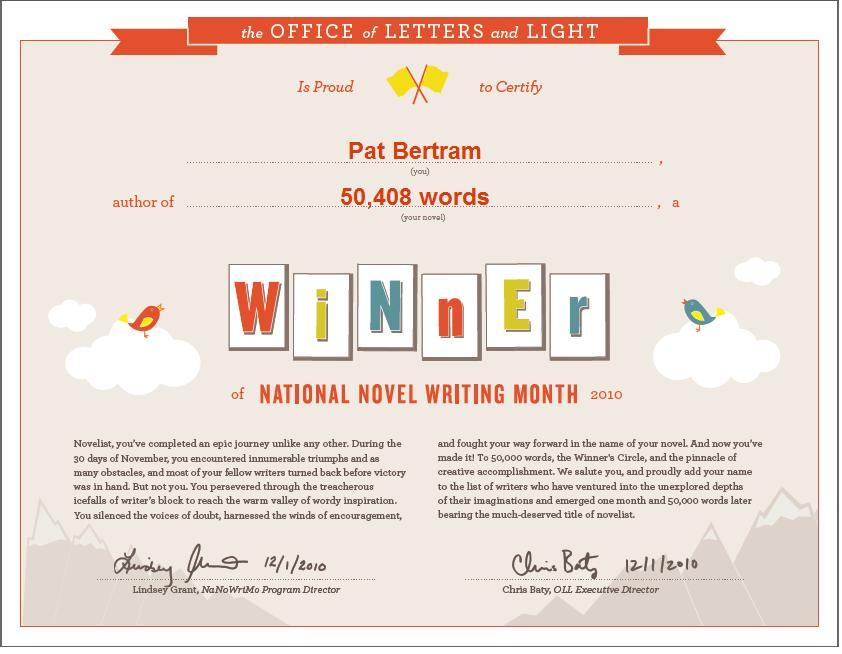
    This might be Black Friday for you, but it’s a red letter day for me! I actually wrote 50,408 words so far this month, which makes me a winner of NaNoWriMo. (National Novel Writing Month.) Although I already validated my entry, I’m going to continue writing the rest of the month because half of the challenge for me was to write every day in November.  The final part of the challenge, digging for buried wisdom hasn’t happened — but I did find all those words, and that’s a major step for me. Haven’t written that much in years!

    A Thanksgiving Card for You

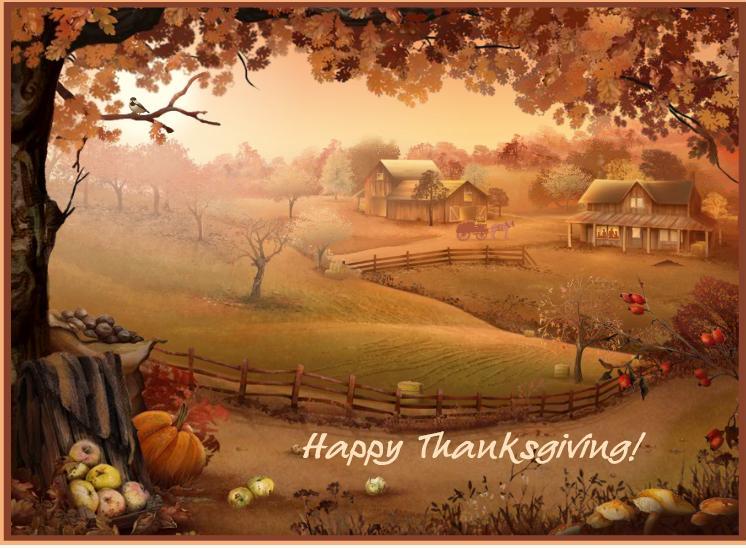
    A friend sent me this card, and I’m sharing it with you. Happy Thanksgiving! Click on the image to get the full effect.

    Grateful Even in Grief

    Mairead Walpole, author of A Love Out of Time posted an article on the Second Wind Publishing Blog entitled “Thanksgiving: A holiday or the trigger for the countdown to Christmas?” I read the article more for her observations than because of an interest in the holidays, thinking I had nothing for which to be grateful, then it struck me how wrong I was. I have a lot to be grateful for despite my continued (though much gentler) grief.

    I am thankful I have a place to sleep, food to eat, desert trails to walk, books to read, words to write.

    I am thankful for the people who have entered my life to give me support during this bleak time.

    I am thankful I had my life mate to love and care for.

    I am thankful my life mate loved and cared for me.

    I am thankful for the emotional security offered by our relationship, which gave me the freedom to try new things.

    I am thankful he shared his life — and his death — with me.

    I am thankful for our added closeness at the end.

    I am thankful he is no longer suffering.

    I am thankful he didn’t linger as a helpless invalid. He dreaded that. 

    I am thankful for his legacy. He faced his death with such courage that he gave me the courage to face my life.

    I am even thankful for my grief. It reminds me that he shared part of this journey called life with me, and it is helping me become the person I need to be to continue my journey alone.

    So, this Thanksgiving, I am grateful even in grief.

    Tell Them Pat Sent You

    I am doing NaBloPoMo (National Blog Posting Month), which is why I am temporarily back to blogging the way I started out — a post a day. It’s been fun; I’d forgotten how much I enjoyed blogging. I started this blog soon after I hooked up to the internet because I heard that all authors should have a blog as the foundation for promotion. I hadn’t a clue what a blog was, hadn’t any idea what blog platform to use, but wordpress seemed intuitive to me, and so I signed up — a bit timidly, I admit. That timidity didn’t last long. I took to blogging like a frog to a bog, and never looked back.

    The fun of blogging comes in saying whatever you wish, but the most fun is saying something that touches people enough that you get comments and have conversations. Thank you, everyone, for making this such a great experience.

    A special thank you to frequent commenters: Carol Ann HoelMalcolm R. Campbell, Carol J. Garvin, Sheila Deeth, Joylene Nowell Butler, Leesis. Not only have they helped me through a very dark time in my life, which is reason enough to salute them, they all have wonderful blogs of their own. Clicking on their names will take you to those blogs. If you leave a comment, tell them Pat sent you.

    No Wisdom, Just Words

    I’ve been sticking to my self-imposed writing schedule this month, doing a blog a day (sorry to all my subscribers who have been getting an email each day announcing a new post. I promise I’ll go back to my more sporadic posting next month). I’m also racking up the word count on my novel for NaNoWriMo.

    I normally don’t obsess over word counts. The way I figure, I either write or I don’t, the scenes are either workable or they’re not. But this month, it’s about the word count. I hoped that by writing so quickly I couldn’t stop to think, I’d stir up my depths, and words of wisdom would automatically appear on the page. Nope. No wisdom yet. Just words.

    I did have an odd experience this morning, though. I sat down to write a scene for my grieving woman book, and ended up writing a scene for my poor old work-in-pause, an apocalyptic allegory.

    Makes sense, I guess. That novel has been rattling around in my head for years. I started writing it months before I started this blog. Since then, I’ve dealt with three deaths (none of them mine), learned how to use a computer, learned how to navigate the internet, made dozens of online friends, started a dozen blogs (most of which are now clogs — abandoned blogs clogging cyber space), participated in hundreds of writing discussions, gotten three books published, edited those three books plus a fourth (which will be published in the spring), spent hundreds of hours trying to promote those books without actually promoting them (the only thing more annoying that a full email inbox is an inbox full of annoying emails), and  . . . well, you get the point. I’ve been doing everything imaginable except working on my WIP. So today — ta da! A couple of scenes for that book appeared instead of the one I planned to write for my grieving woman book.

    I always liked the idea of working on whatever book stood out most in my mind when it time to write each day, but I never tried it before. It might help put the fun back in writing, and who knows what I’ll end up with!