Black as Ink

A phrase in the book I’m reading slapped me in the face. It wasn’t a literal slap, of course, but the phrase was so incongruous that it took me out of the story as surely as a slap would have done. What was this brutal simile? It wasn’t anything special, to be honest. In fact, it’s so common as to seem almost invisible, but I noticed it.

As black as ink.

That’s it. Not a big deal, right? And yet, when was the last time you saw pure black ink? For me, it was decades ago, when I bought some calligraphy supplies with the thought of learning how to do fancy lettering. That ink truly was black, totally opaque, without a hint of light or any other color. Even back then, black wasn’t the only ink available for calligraphic needs, or any needs. My mother used a fountain pen for many years, and that ink was blue. When I was in school, perhaps middle-school age, cartridge pens were all the rage, and I used the peacock ink. Such a gorgeous color! And not black.

Nowadays any ink we see is generally in ballpoint pens, and although black used to be the prevalent color, blue now seems to be preferred for official documents, which is odd to me. Doesn’t blue tend to fade into the “blue nowhere” of computer screens? And yet, any bank document or other official paper I’ve had to sign recently required a blue signature.

I once had a multitude of pens with bright non-black colors. I just checked my ballpoint pen stash, and I have a red ink pen as well as a green one, though the green is dried up. So, since I tossed it out, I guess I can’t count green among ink colors. Nor can I count purple, though once I had a ballpoint pen with that color ink that I used up.

There are still a lot of pens around with black ink, though none of those inks are truly black. Some are charcoal, some are rather translucent with a tinge of blue or red, others are a muddy black, and some are licorice color (which is a very, very dark brown unless one is talking about red licorice).

Some printers do use ink instead of toner, and again, there are more colors available — and necessary — than black. My printer uses cyan, magenta, and yellow, which along with the black, can create just about any shade or hue of any color.

If the book had kept my interest, this rather inoffensive though clichéd simile would have passed unnoticed, so that’s two strikes against the author — ill-chosen words and a less than compelling story.

I’m just glad that people who read my books are kinder than I am, and refrain from pointing out my own literary faux pas. I do try to remove anything I would not like to see in a book, but some phrases are so common as to be invisible — such as “black as ink” — so who knows what cringeworthy phrases are buried in all my rhetoric.

***

What if God decided S/He didn’t like how the world turned out, and turned it over to a development company from the planet Xerxes for re-creation? Would you survive? Could you survive?

A fun book for not-so-fun times.

Click here to buy Bob, The Right Hand of God
An Emotionally Neutral Day

I’m sitting here with a blank “page” in front of me, doing my daily mental scrounge for a blog topic. A reader wants me to write about Grief and Peace, and I will because it’s a great topic, but I need to put it off for a while. Although I’ve been fine during the day, I felt a bit sad the past couple of nights. I’m feeling emotionally neutral at the moment, and I want to keep it that way, so I’m staying away from blogs and books that might turn what was a tiny dent of sadness into a sinkhole of despondency.

For most of my life, I read a book a day. The only vacation from reading I ever took were six or seven years after Jeff died. I started out reading as always, but every book I read set me off on a crying jag. Either a couple got together, which made me sad because Jeff and I were no longer together. Or the couple didn’t get together, which made me sad since Jeff and I were no longer together. Or people died. Whatever happened in a novel — be it gruesome or horrifying, mysterious or charming — set me off, so I stopped reading fiction and didn’t start again until I was housebound after I destroyed my wrist, arm, and elbow. (Which, incidentally, are doing well. Although there is some pain that could be the beginning of the post traumatic arthritis the surgeon promised me, I have full mobility of the wrist though he said I never would. But that was before he understood I would do the exercises he gave me. It shocked him, I think, because he told me almost no one ever did what he asked them to do.)

I am back to reading a book a day, but occasionally one of those endings — togetherness, apartness, or death — get to me. This time it was the togetherness, and I felt sorry for myself at being alone. Not that I mind. I generally prefer being by myself, but sometimes . . . sometimes it does get to me.

It’s not that I want a relationship. I don’t. And I certainly wouldn’t know what to do with a relationship if one came my way. It’s more that the relationship I did have has become nothing more than me talking to photograph.

I’m over that sad spell, probably because I talked it out. (Jeff was always a good listener, but he seems to be even more so now.) To be on the safe side, I made sure all the books I got from the library yesterday were emotionally neutral mysteries or thrillers. (Emotionally neutral because none of those authors ever make me care about their characters.) I’m also writing an emotionally neutral blog today and will save the Grief and Peace piece for another day.

Speaking of going to the library: a couple of times I left without getting a slip that tells me the due date, and both of those times, something happened so that I had to contact the library to make sure everything was okay. The librarian and I joked about that yesterday, and guess what? I left without getting a due date receipt. I sure hope that doesn’t mean there will be a problem because that would sure put a dent in my emotionally neutral day.

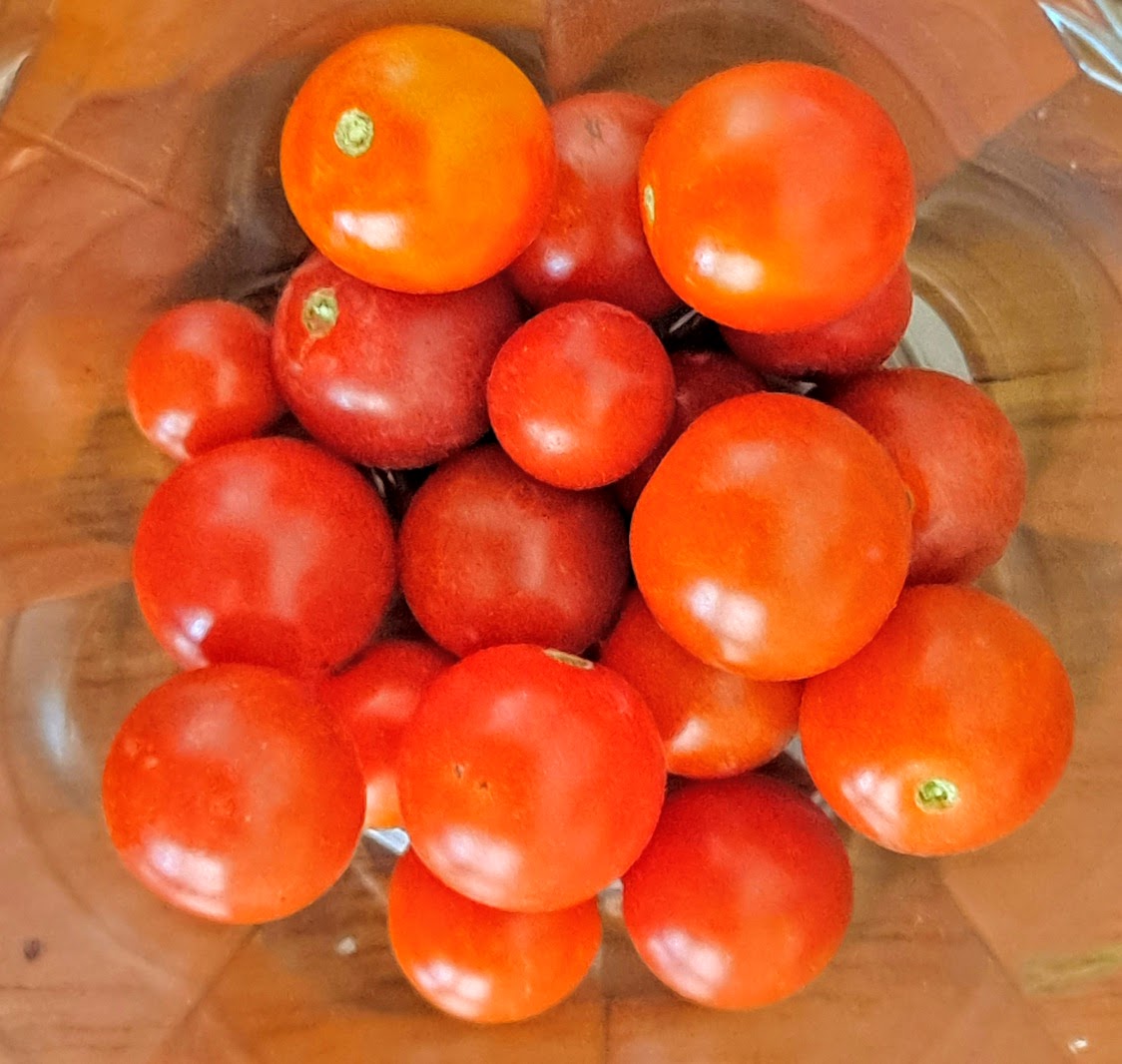
One thing did happen that tipped the neutrality a bit — I harvested a few cherry tomatoes! Delicious.

***

Pat Bertram is the author of Grief: The Inside Story – A Guide to Surviving the Loss of a Loved One. “Grief: The Inside Story is perfect and that is not hyperbole! It is exactly what folk who are grieving need to read.” –Leesa Healy, RN, GDAS GDAT, Emotional/Mental Health Therapist & Educator

What’s With Those Commercials?

It’s a good thing I don’t watch much television, otherwise I’d probably have a flat forehead from banging my head against the wall. The only reason I watch at all is that the woman I work for likes to watch Judge Judy, and so I watch with her.

I don’t really mind the show, even those I’ve seen a couple of times before, because they offer good object lessons such as: have written contracts that spell out exactly what is contracted for; don’t rent from shady characters; don’t rent to shady characters; don’t let other people drive your car; and always, always, have car insurance. It also shows the sense entitlement so many people have, though I already knew that. People will encroach and encroach and encroach on your space, and when you draw the line and say, “no further,” suddenly you’re a defendant in a case before Judge Judy.

What I do mind are the commercials. The idiocy drives me wild. For example, in a series of particularly annoying paper towel commercials, somehow something gets spilled. People scream, “Nooooooo,” and run to get this special paper towel to protect a precious item from getting damaged. None of these objects is immovable, so I sit there gritting my teeth and wonder why the fools don’t simply lift the laptop or lottery ticket or tablet or whatever out of the way of the spreading liquid.

Then there’s all the lawyer commercials. With sad faces, people talk about the bad vehicular accident they were in, and then suddenly they grin and say, “But these lawyers got me $210,000,” as if they’d won the lottery. It seems to me a bad imitation of a scene from the movie Office Space, where a character in a full-body cast from is throwing a party because he’s free from working now that he’s won a huge settlement. The scene wasn’t funny in the movie, and it isn’t funny in the commercials.

Speaking of happy — the myriad prescription drug commercials all show happy, happy people, dancing and laughing as a voiceover explains all the terrible side effects those very happy people are in danger of getting, side effect that are often worse than the ailment they are supposed to cure. (You’re constipated? Take this drug and you won’t have to worry about constipation anymore because you’ll have a heart attack or become arthritic or become comatose from a stroke.)

And what’s with those oh, so anal blue bears?

See why I prefer reading? No commercials!

***

What if God decided S/He didn’t like how the world turned out, and turned it over to a development company from the planet Xerxes for re-creation? Would you survive? Could you survive?

A fun book for not-so-fun times.

Click here to buy Bob, The Right Hand of God

Another Mystery at the Museum

A couple of years ago, I devised a murder game for the local historical museum based on characters who once lived in the area. Last year, due to The Bob, there wasn’t any such event, but here we are, slowly getting back into activities, and so once again, I need to create a murder.

It’s a good thing I keep my documents because until I looked at what I wrote for that first Murder Mystery at the Museum, I’d forgotten I’d based it on the game of Clue, using colors for the characters names — Mrs. Peacock, Colonel Mustard, etc. I also used some historical figures for the victim and various backstory folk, which I will probably do again because, after all, this is a fundraiser for a historical museum.

This new mystery will take place in the 1890s, about fifteen historical years later than the first. The date isn’t arbitrary. The murder will take place in a hotel that was built in 1890, more because of the research I did on the woman who owned the hotel than for any other reason.

Because of the setting of the mystery, the characters can be almost anyone because so many people traveled through the area and stayed at the hotel, such as a circuit judge, traveling salespeople, preachers, cowboys. Any of the various employees, such as chambermaids and waitresses as well as the proprietor herself could also play a part.

Then there is the possibility of other popular characters of the day, such as a lady reporter or a kid detective. Or perennially popular characters such as a medicine man or even a ghost.

Lots of possibilities! As always, the challenge is figuring how to pepper clues around the museum to help people solve the mystery. I didn’t do that well with solid clues the first time, relying more on the written clues in the handout and on the characters who played the part rather than clues for people to find.

Luckily, I still have a couple of months to figure all this out.

If you have any suggestions, I’ll be glad to hear them!

***

Pat Bertram is the author of Grief: The Inside Story – A Guide to Surviving the Loss of a Loved One. “Grief: The Inside Story is perfect and that is not hyperbole! It is exactly what folk who are grieving need to read.” –Leesa Healy, RN, GDAS GDAT, Emotional/Mental Health Therapist & Educator

Standing Still

For lack of a better topic, today I’m going to write about . . . me. That, of course, is a joke because all I ever write about is me, in one way or another. Writers are often told to write what we know, and pretty much all I know is me, at least to the extent that any of us know ourselves.

Oddly, I seem to be standing still, always in the same place, waiting for workers to come on Friday, waiting for my brakes to be fixed on Monday. I’m not sure what the problem is with the workers not showing up — probably the contractor, as always, is way behind, and so has no one to send over here. Getting the brakes fixed is a different story every week — either the part didn’t come in or the wrong part was sent or the mechanic is dealing with lingering “Bob” issues from his very bad bout with the virus or . . . something.

And so, once again, I am standing in that same place, where the workers are supposed to come on Friday and I’m supposed to take my car to the mechanic on Monday.

On the brighter side, one of my new day lilies has bloomed!

And one of my original daylilies has bloomed again.

Surprisingly, my cherry tomato plants are fruiting. I didn’t really expect to get any tomatoes; I just planted them because I could. There aren’t a whole lot, just a small handful every other day, which actually is perfect for me. Never having planted tomatoes of any kind before, I am amazed at how big the plants get! I might need to invest in tomato cages next year to keep them contained because stakes and string don’t really do the job.

Despite these small successes, I seem to be standing still in regards to my gardening, too, always planning for next year — what to try, what to do differently, how to battle the ever-encroaching weeds.

I suppose standing still isn’t so bad. At least I’m not running in place, wearing myself out, and getting nowhere.

***

What if God decided S/He didn’t like how the world turned out, and turned it over to a development company from the planet Xerxes for re-creation? Would you survive? Could you survive?

A fun book for not-so-fun times.

Click here to buy Bob, The Right Hand of God
The Quiet After the Questioning

As I talked to Jeff when I was getting ready for bed the other night, it suddenly dawned on me that I no longer asked myself — or him — the hard questions, or any questions at all, for that matter. It could be a good thing, perhaps a sign that I have reached an accommodation with life and death. It might be a not-so-good thing, possibly resignation or stagnation or exhaustion from trying to make sense of it all. Or it could be something else, neither good nor bad, maybe just letting my mind filter out the unanswerable questions. Most probably, it’s simply an acceptance that so much of what we want to know is unknowable.

But oh, at the beginning of my grief, there were way too many questions. Those questions kept my brain so busy trying to come up with solutions, that I often felt muddled and unreal.

Even years after his death, I was haunted by the hard questions. You know the ones: Who are we? Why are here? Is this all there is? Where did our loved ones go? Will we see them again? What is the meaning of life? And probably the most haunting of all, what is the meaning of death?

It wasn’t only grief that brought out these questions. When I was young, I’d often pondered such questions during my quest for truth and a greater reality, and I’d come to believe that God is the spirit of creativity that fuels the universe, and we are each a part of that creativity. For most of my adult life, I was content believing that our spirit/energy returned to the whole . . . until Jeff died. Then all of a sudden, I didn’t want that to be the truth. I wanted him to continue existing as him, as the man he was, not as part of an amorphous energy source.

And so the questions pounded at me. Not just the hard questions I mentioned, but others, too, such as: was it fate that we met, fate that he died? If he’s in a better place, why aren’t I there? If life is a gift, why was it taken from him? Is he proud of the woman I’ve become? Would he still like me if we were to meet?

It seems as if all I had were questions, but now? The questions, although they remain unanswered, don’t haunt me, at least not at the moment. The main effect of this silence is . . . well, silence. And the main effect of that mental silence is a struggle for blog topics.

For a while, I was invested in trying to come up with answers as to what this “Bob” situation is all about, but eventually I realized that with most of the questions I’ve asked over the years, there is no real answer, just a lot of speculation, and eventually, speculation loses its luster.

I must admit, I do enjoy not having my brain roiling with unanswerable questions.

Luckily, I still manage to find something to blog about. Luckily for me, that is, though perhaps not for you.

***

Pat Bertram is the author of Grief: The Inside Story – A Guide to Surviving the Loss of a Loved One. “Grief: The Inside Story is perfect and that is not hyperbole! It is exactly what folk who are grieving need to read.” –Leesa Healy, RN, GDAS GDAT, Emotional/Mental Health Therapist & Educator

The Powers That Be

In almost every book I read lately, the author mentions, at least once, “the powers that be.” The expression irritates me because . . . well, because it’s irritating. It’s a cliché, and like so many clichés, it’s too general. If “the powers that be” refer to the people who decide what is allowed or acceptable in a group or organization or government, then in any given situation, the powers that be are different. For example, if the author is referring to the board in charge of a homeowner’s association, then those powers that be are completely different from those governing a country.

So to use the phrase “the powers that be” is not just a cliché, but it’s also pure laziness on the author’s part. If “the powers that be” in a book are important enough to be mentioned in such a haphazard way, then they are important enough to be mentioned more specifically, by occupation if nothing else.

Sometimes the author puts those words in a character’s mouth, which is even worse because truly, no one ever uses that phrase in everyday conversation. They say, “the cops” or “the governor” or the “president’ or they mention the person by name or title.

I took time out of from this diatribe to see where the phrase came from, and it’s an old one. Many centuries-old phrases come from Shakespeare or the bible, and this one is no different. Do you care to hazard a guess before I tell you?

If you guessed the bible, you’re right. The first time the phrase showed up in print was in William Tyndale’s 1526 translation of the New Testament: “Let every soul submit himself unto the authority of the higher powers. There is no power but of God. The powers that be, are ordained of God.”

The King James version is: “Let every soul be subject unto the higher powers. For there is no power but of God: The powers that be are ordained of God.” (Romans 13:1)

It seems to me the common literary usage has come to mean something, if not completely different, then a sideways skew, because in no usage I’ve ever read do “the powers that be” have anything to do with getting their authority from God. Generally, they are given their power by other (secular) powers that be or they take upon themselves whatever power they have.

Another phrase I frequently come across in books are “the authorities,” which basically means the same thing — that the author is too lazy to figure out who those authorities are. I have to confess, I think I might have used “the authorities” once for that very reason: I didn’t know who my particular authorities would be, so I copped out.

Now that I got that off my chest, I can go back to reading the book, though I imagine I will still grit my teeth whenever I come across either “the authorities” or “the powers that be” just as I grit my teeth and bear it whenever I come across authorities or powers that be in real life.

***

What if God decided S/He didn’t like how the world turned out, and turned it over to a development company from the planet Xerxes for re-creation? Would you survive? Could you survive?

A fun book for not-so-fun times.

Click here to buy Bob, The Right Hand of God
Nothing is Something

In a book I just finished reading, a kid insisted that nothing was something. The comment was irrelevant to the story; it was just one of those things authors throw in there because they can. My mind did not skim over the idea as it normally would have, nor did it start philosophizing about somethings and nothings. Instead, my mind immediately shifted to thoughts of the “nothing” that is left behind after someone intrinsic to our life dies. That void inside us — that nothing — is definitely a something. We feel it in the very depths of our being long after the loved one leaves us.

The definition of “nothing” is “the absence of a something or particular thing that one might expect or desire to be present.” And boy, do we desire the presence of our loved one. We also expect them to be present. For years, every time I answered the phone, I expected it to be him telling me I could come home. I knew it was impossible, and of course, that expectation came to naught.

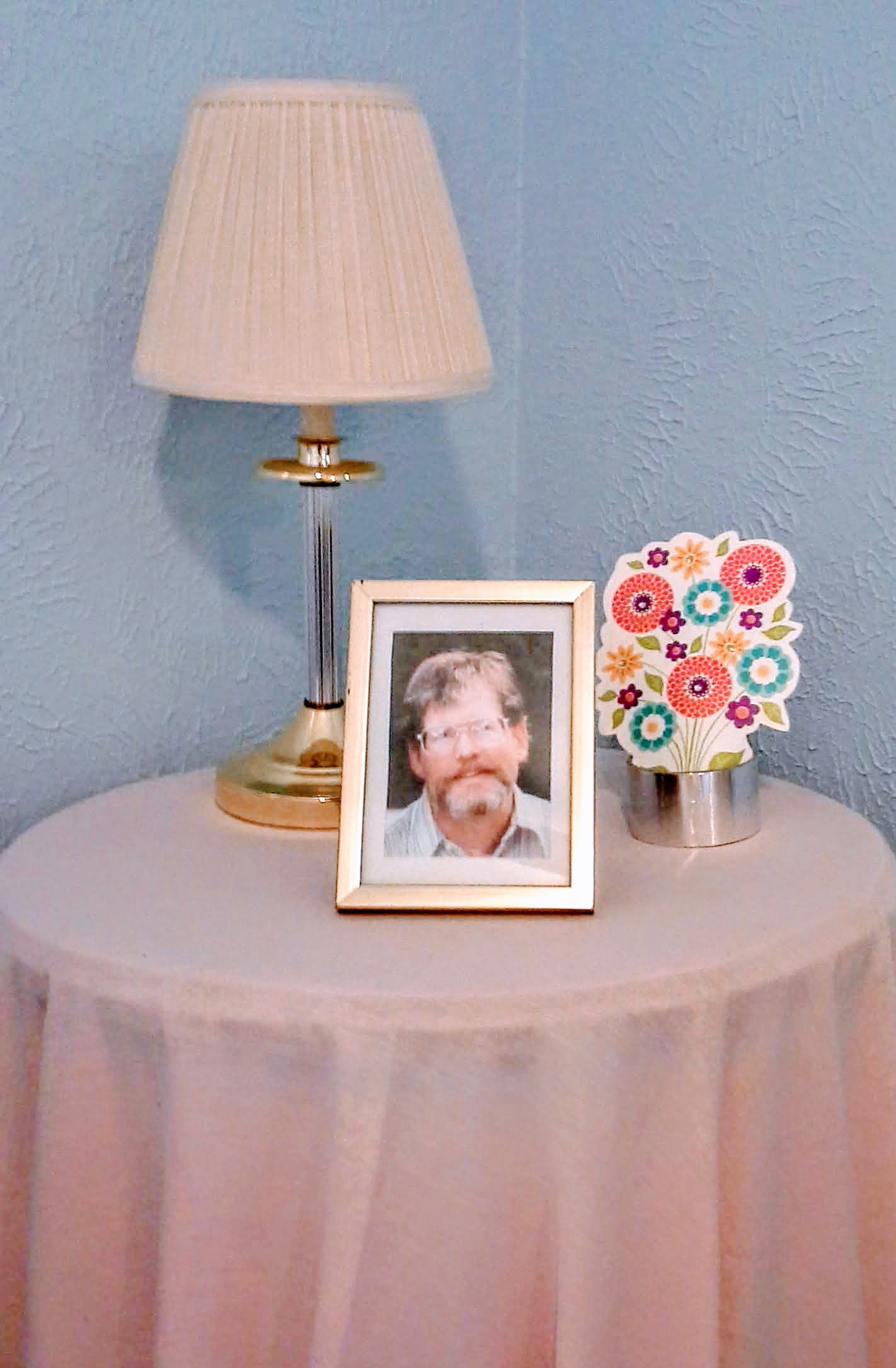
That expectation as well as the great yearning that so consumed me during the first years of grief are finally gone, replaced by . . . I’m not sure what, exactly. It’s not really nostalgia, more like a restructuring of his absence. Instead of yearning for him, I talk casually to him. Or rather, I talk to his picture. The photo — the same one I could not look at for years after he died because it brought me great pain — sits on the bedside table on the opposite side of where I sleep. I’ve gotten into the habit recently of telling him I miss him, talking about my day, and asking him about what’s going on with him. This is a very short conversation, mostly just a few sentences on my part as I get ready for bed, and none on his part. Though to be honest, if that photo ever answered me, I’d be scared out of whatever wits I have.

Despite this new, rather pleasant permutation of my grief, I can still feel the void he left behind as a physical thing. I shouldn’t be able to feel that — right? — because after all, a void by definition is an empty space. And yet, there it is, an emptiness, a nothingness that seems to color my life, just as his somethingness once colored it.

And, after more than eleven years of his being gone, it’s beginning to look as if that nothing/something inside me will be a permanent fixture for the rest of my life.

***

Pat Bertram is the author of Grief: The Inside Story – A Guide to Surviving the Loss of a Loved One. “Grief: The Inside Story is perfect and that is not hyperbole! It is exactly what folk who are grieving need to read.” –Leesa Healy, RN, GDAS GDAT, Emotional/Mental Health Therapist & Educator

Rain on the Plain

It must be very difficult for the weather folk to determine a forecast for this area. Way too often they send frantic alerts for storms that never show up. Other times, like yesterday, they say there is zero chance of rain. Even later in the afternoon, when a few clouds blew in, they still insisted we had only a minuscule chance of rain.

And then, suddenly, from one second to the next, it seemed, the mostly clear skies gave way to gray clouds, and rain poured down.

Although the people I work for often offer me a ride back to my house, until yesterday, I have always refused. I live a mere two blocks away, and neither rain nor snow, nor heat, nor gloom of night ever kept me from walking home. I know they worry about me, but I don’t. As I always said, when they offered a ride, was, “It’s only two blocks.”

Last evening, for the first time, I was grateful for the offer of a ride. Even though I’d only be outside for the few minutes it would take to walk home, it seemed an almost insurmountable task. I mean, it was RAINING! I’ve often heard a cliché about rain and turning on a faucet, and it truly did seem as if someone up above opened a faucet a mile wide and was dumping water on us. (That’s how clichés become clichés — because they are true often enough that they become overused.) Yikes.

Poor visibility, flooded streets, chilly temperatures are the very reasons I I hesitate to accept rides. I figure if it’s hard walking, then it’s also hard driving. But yesterday, with a ride, at least I didn’t get quite as drenched as I would have otherwise.

Of course, if I had known about the rain, I would have come prepared with a waterproof hat, an umbrella, and appropriate clothes. I must admit, I was more concerned about my hat — a gift from a friend — than I was about me. I was afraid the rain would ruin the hat. As it turns out, the hat still got damp enough to be bent out of shape.

But I got home safely and not too wet.

And I have a better respect for the volatility of the weather out here on the plains.

***

What if God decided S/He didn’t like how the world turned out, and turned it over to a development company from the planet Xerxes for re-creation? Would you survive? Could you survive?

A fun book for not-so-fun times.

Click here to buy Bob, The Right Hand of God

Widow’s Brain

A friend whose husband recently died mentioned, quite frantically, that she isn’t able to think or keep any thoughts in her head anymore. Although she worried that such a state was abnormal, which it normally would be, it is perfectly normal for a new widow or widower. During that first year of grief and sometimes beyond, almost all of us have to deal with some sort of mental fogginess. This state is more commonly known as “widow’s brain,” and though I used the term in the title of this blog, I generally refrain from the term because men also suffer from this condition.

As bad as the shock and pain and fogginess are that first year, they do seem to offer some sort of protection. Although we know the deceased loved one is gone, we don’t KNOW it, don’t really want to know it. We feel their goneness, of course, in the very depths of our being, but one part of us holds out hope that, as impossible as it may be, the whole thing is a test. When we get through that first year, all will be well. Then, of course, dawns the 366thday, and we are faced with the unpalatable and undeniable truth that their being dead is no test, no mirage created out of a foggy brain, but the reality of our situation. Because of this raw realization, sometimes the second year is worse than the first. It was for me, and it was for many widows and widowers I know.

Although the friend didn’t ask for my advice, I still suggested that she be patient with herself and not make any important decisions without thinking and thinking again. Very few people understand the reality of this brain fog —the grief-induced amnesia, dazedness, and fogginess that shroud us after the death of a life mate — but it is a real condition. And we need to protect ourselves from ourselves as best as we can.

As I wrote in Grief: The Inside Story — A Guide to Surviving the Loss of a Loved One:

The whole brain is involved in the grief process, but the prefrontal cortex is the part of the brain that seems to contribute the most to brain fog. The prefrontal cortex is considered the executive branch of the brain and is associated with rational thinking and making sense of emotions, developing and pursuing goals as well as coordinating the brain’s activities. Because we grievers are on total emotional overload, our prefrontal cortex is unable to process all the information it is being fed from all parts of the brain. The more we try to suppress our emotions and try to think our way out of grief, the more overloaded the brain becomes.

Although short-term memory loss, inability to concentrate, missing memories and memory gaps are common, they all add to the general chaos and stress of grief, and make us feel as if we are crazy. Or worse. Denise, a Facebook friend, said she felt like she had a traumatic brain injury after the sudden death of her husband. But we are not crazy. We did suffer a traumatic brain injury of sorts when we lost the person fundamental to our lives, and now we are overwhelmed by the shock and horror and stress of that loss.

Although this fog numbs us to protect our hearts and bodies from the worst effects of losing our life mates, it can be a financially damaging condition.

Three finance professors from major business schools investigated Danish CEOs who lost someone significant in their lives, and they found that family deaths were strongly correlated with declines in firm operating profitability.

So yes, the newly bereaved need to be cognizant of brain fog, widow’s brain, whatever one calls the state, be patient with themselves, and be aware of the possibility of making disastrous decisions.

***

Pat Bertram is the author of Grief: The Inside Story – A Guide to Surviving the Loss of a Loved One. “Grief: The Inside Story is perfect and that is not hyperbole! It is exactly what folk who are grieving need to read.” –Leesa Healy, RN, GDAS GDAT, Emotional/Mental Health Therapist & Educator