Promises to the Dying

How long must we keep our promises to the dying? Obviously, when we ourselves are dying, those promises will be broken, so does it matter if we break them before we get to that point?

Part of me thinks the promises mean nothing, because after all, the promisees are gone and with it any obligation to them, especially when they bequeathed us such sorrow, but another part of me thinks a promise is meant to be kept.

It’s not a major thing that I’m concerned about. Just a very large coffeetable book. He wasn’t one to make spontaneous purchases, and he seldom spent money on himself for non-essentials, but he saw an ad for this particular book on an inflight magazine and, all out of character, he ordered it. This book was one of the few things he asked me to keep. (Another thing he asked me to keep was a perpetual calendar he’d had since he was a boy, and the rest of the things were items I made that he rescued after I’d thrown them away.) Although it’s not a book I’d ever look at, I have been keeping it, not just because of my promise, but because it reminded me of a different side of him. But now . . . it’s just a very heavy book.

I’m going to have to put my stuff in storage when I leave here, and as big as the book is, it truly is just one thing among many. Still, I have been getting rid of my unnecessities because I don’t want to pay to store a lot of useless things or things I might never need and I almost tossed the book in the bag with the rest of the items I’m getting rid of. But my promise stayed my hand.

So, do promises to the dying have an expiration date? Obviously, if we promise something impossible to pacify them, such as (perhaps) never falling in love again, that promise has no validity. But what about other promises?

***

Pat Bertram is the author of the suspense novels Light Bringer, More Deaths Than One, A Spark of Heavenly Fire, and Daughter Am I. Bertram is also the author of Grief: The Great Yearning, “an exquisite book, wrenching to read, and at the same time full of profound truths.” Connect with Pat on Google+. Like Pat on Facebook.
 

Wonderful Outlook or Being Negative?

It’s a special thing to have written a book that touches people’s lives. When a friend wanted to read Grief: The Great Yearning, I thought it would be uncomfortable for both of us afterward — it is such a personal book, where I turn myself inside out to show the truth of me and my grief, that I wasn’t sure a fledgling friendship could hold up under those powerful revelations, but my fears were unwarranted. She was able to see herself in many of the situations, and was able to understand some of what she has been feeling but was never able to put into words. And she thinks I’m not only a wonderful writer but an incredible person.

Oddly, as much as I appreciate her esteem, (and as much as I wanted to say eagerly, “tell me more!”) I don’t feel as if her opinion of me has anything to do with me.

SayingOnce a long time ago, I saw a plaque, “What others think of you is none of your business.” I thought it a silly saying because of course, what others think of you is your business. What a child thinks of his parents is often a key to his emotional health, so what the child thinks of his parents is definitely the parents’ business. If you are in a romantic relationship, a marriage, or some other long-term coupling, what your loved one thinks of you is your business. If you think yours is a love match and the other only lusts after you or your money, you need to know that so you can make informed decisions about your future. If someone hates you enough to want to harm you, then definitely that is your business.

I often think of that saying now when I get a compliment or a rare insult. If one person thinks I have a wonderful outlook on life and another thinks I am being negative . . . well, the truth probably lies somewhere in between. So neither opinion is truly my business. It is their business what they think of me, just as it is my business what I think of them. It’s not that I think hurtful things, but so often, the things I like or enjoy about someone are the very things they hate about themselves and they would be appalled I noticed their charming (and not so charming) peccadilloes.

We can’t live our lives trying to figure out what others think of us and then work our life around their opinions. We have to consider what we think of us and live life accordingly. Conversely, we often feel the need to tell others what we think of them — simply to help them, of course — but if what we think of them is none of their business, we might as well keep our opinions to ourselves. (And perhaps save a friendship in the process.)

Still, it is nice to get a compliment, and it is especially nice when the compliment concerns such a special book as Grief: The Great Yearning.

***

Pat Bertram is the author of the suspense novels Light Bringer, More Deaths Than One, A Spark of Heavenly Fire, and Daughter Am I. Bertram is also the author of Grief: The Great Yearning, “an exquisite book, wrenching to read, and at the same time full of profound truths.” Connect with Pat on Google+. Like Pat on Facebook.

Excerpt From “Grief: The Great Yearning”

GTGYwpDuring the first horrendous months after the death of my life mate/soul mate/best friend, I was so incredibly lost that sometimes the only way I could deal with my confusion was to write a letter to him in an effort to feel connected. I’ve come a long way in the four years since I wrote the following letter. I still don’t understand the nature of life or death. Still don’t understand the point of it all, but I am embracing life, trying to create my own meaning out of small occurrences. I’ve learned to live without him, but I still miss him, and sometimes I still wish I were going home to him when my current responsibilities end.

 I’m grateful we met and had so many years together. Grateful I once had someone to love. Grateful that when my time comes to die, he won’t be here to see me suffer. Grateful he won’t have to grieve for me.

Excerpt from Grief: The Great Yearning:

Day 197, Dear Jeff,

It’s been a while since I’ve written, but I’ve been thinking about you. Are you glad you’re dead? You said you were ready to die, to be done with your suffering, yet at the very end you seemed reluctant to go.

Despite all the problems with your restlessness and the disorientation from the drugs, I wasn’t ready for you to leave me. I still am not. Nor do I want to go back to where we were that last year, waiting for you to die. We were both so miserable, but honestly, this is even worse. I can live without you. The problem is, I don’t want to, and I don’t see why I have to.

I want to come home. Please, can I come home? I have a good place to stay, but without you, I feel homeless. Sometimes I watch movies from your collection and imagine you’re watching with me, but that makes me cry because I know you’re not here. Your ashes are, but you’re not.

I broke a cup today, one more thing gone out of the life we shared. Our stuff is going to break, wear out, get used up. I’ll replace some of it, add new things, write new books, and it will dilute what we shared. Is there going to be anything left of “us”? I feel uncomfortable in this new skin, this new life, as if it’s not mine. As if I’m wearing clothes too big and too small all at the same time.

There’s so much I hate about your being gone — hate it for me and hate it for you. It might be easier if I knew you were glad to be dead, but so far you’ve been mum about your situation. Just one more thing to hate — the silence of the grave. (Well, the silence of the funerary urn.)

Adios, compadre. If you get a chance, let me know you’re okay.

***

Click here to download 20% free at Smashwords or to buy any ebook format, including Kindle.
Click here to find Grief: The Great Yearning in print or on Kindle from Amazon.
Click here to find Grief: The Great Yearning for the Nook

***

Pat Bertram is the author of the suspense novels Light Bringer, More Deaths Than One, A Spark of Heavenly Fire, and Daughter Am I. Bertram is also the author of Grief: The Great Yearning, “an exquisite book, wrenching to read, and at the same time full of profound truths.” Connect with Pat on Google+. Like Pat on Facebook.

The Yin-Yang of Friendship

I feel sad today, though I shouldn’t. The weather is lovely — cool with wonderfully clear azure skies. I had a delicious lunch with a friend and afterward we sat beneath a tree by the shores of a lake (human-made, but still a lake) and enjoyed a quiet interlude.

If the sadness isn’t a belated response to my four-and-a-half-year anniversary of grief, and if it isn’t simply a general malaise stemming from the change of seasons, then it could be due to an ongoing disagreement I am having with another friend. This other friend periodically accuses me of being contrary or negative when I resist being taken for granted, and I never know how to yinyanghandle the accusations, so I often make the situation worse by trying to explain my position. This time, I’m not explaining, and perhaps that’s what’s making me sad — I value my friends and I don’t like passing up an opportunity to put things right.

Last year, another friend accused me of being negative. (When most people look at me, they don’t see someone negative but a smiling woman who is doing the best she can with what life throws at her.) I told her I was sorry she felt that way, and that’s pretty much how we left it. We reconnected recently, and she apologized for her behavior, saying I wasn’t negative and she had no idea why she accused me of being so.

I don’t know why she said it, either. To be honest, I don’t know why anyone would accuse a person of being negative. I can’t think of a single instance where I accused someone of being negative, perhaps because I don’t put much faith in being positive. I’m one of those people who don’t care whether the glass is half-full or half-empty. I simply drink what’s there and refill the glass if possible, which could be why I have no idea how to deal with the infrequent person who calls me negative.

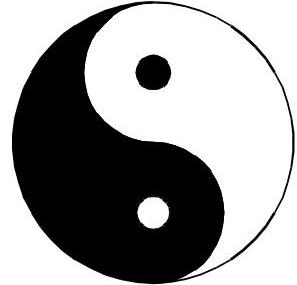
The truth is, negativity isn’t necessarily negative. Negativity is simply yin to positivity’s yang. Everything is a duality — complementary forces that interact to form a dynamic whole. Light and dark. Male and female. Hot and cold. Fire and water. Good and bad. Positive and negative. In Taoism, there is no real distinction between these forces that we in the west see as opposites. Since negativity is a matter of perception, the problem lies with the person who perceives me in such a light. And so it goes, the yin-yang of friendship.

Now if the friend had accused me of over thinking everything, I’d have to agree with that. If nothing else, this post is an exercise in over thinking. But I had fun writing this bloggerie and now don’t feel quite so sad — I even have a small smile on my face.

I hope you do too.

***

Pat Bertram is the author of the suspense novels Light Bringer, More Deaths Than One, A Spark of Heavenly Fire, and Daughter Am I. Bertram is also the author of Grief: The Great Yearning, “an exquisite book, wrenching to read, and at the same time full of profound truths.” Connect with Pat on Google+. Like Pat on Facebook.
Blogging and Disloyalty

Sometimes I feel disloyal blogging about all the problems I have with my family’s various infirmities, whether physical or mental, as if I am betraying them, my father and brother especially. And yet, these problems are the same ones other people are struggling with — aged parents and dysfunctional siblings or offspring. It’s in talking of these matters that we discover how un-unusual the problems are — we all have seem to have the care of someone thrust on us, disrupting our lives.

Some people have to deal with various other problems, of course, such as caring for a spouse’s infirmities, but I don’t have much to say about such matters since my coupled days are behind me.

While my life mate/soul mate was dying, I seldom talked privately and never publicly about his decline or the problems it caused me — that truly would have felt like a betrayal, as if I were exposing him or as if I were talking about matters that did not belong to me. To cope, I simply drew within and continued to live as best as I could. His death catapulted me out of that state, enatugofwarbling me to launch my angst-ridden cry into cyberspace. I’m not sure he would have approved of my being so open about my feelings, but by then, he no longer had a say in my life. Besides, my grief belonged to me alone.

I doubt I will ever feel that intense loyalty again, which is good. I no longer want or am able to live in the empty spaces in my soul.

Last night I blogged out my frustration with my father’s panic attack and the mindlessly mean way he acted. It enabled me to sleep peacefully (well, sort of) last night and wake up encouraged enough to go on.

The time is coming, perhaps soon, when my father can no longer be allowed to have his way about staying alone when I am out of the house, but despite the minor emergency last night, I’m inclined to let things remain as they are awhile longer. He is terrified of losing control, and he is someone who has always had to have steely control — of himself, his family, his surroundings. (You’d think I’d take delight in this gradual erosion of his control, considering how domineering he was in my youth, but I find no joy in watching his decline.)

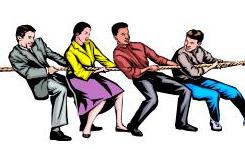
Still, disloyal or not, I will need to continue blogging about my problems as life and death persist with their game of tug of war. It’s a matter of my survival.

***

Pat Bertram is the author of the suspense novels Light Bringer, More Deaths Than One, A Spark of Heavenly Fire, andDaughter Am I. Bertram is also the author of Grief: The Great Yearning, “an exquisite book, wrenching to read, and at the same time full of profound truths.” Connect with Pat on Google+. Like Pat on Facebook.
Killing My Father

Some days are just more than I can handle. Well, not the whole day. I took dance classes today, and that was as wonderful as always. Everything was even fine when I got back to the house. My father was up, seemed content, so I told him I’d be gone all day next Thursday and Friday, and into the evening on Friday. He was okay with that, but when I asked if he would be okay if I went to the Sierra group walk for a while tonight, he got upset with me for leaving him alone. Then I noticed he was gasping for breath.

I went to check his oxygen concentrator machine, and it didn’t seem to be working — the regulator ball was at zero. My father came and pushed me away from the machine (he still has a lot of strength for a 97-year-old man). He was all in a panic, pushing buttons, turning the machine off and on, twisting the regulator knob, and he refused to go sit down so I could check out the machine. Finally, I steered him away from the machine, told him he was panicking from loss of oxygen, and rather sternly told him to just lie still while I got the problem taken care of.

wind“I don’t want to die,” he kept screaming, and at one point, “you’re killing me.” (Not sure why he said that. Maybe because I wasn’t moving fast enough to suit him. The truth is, he is fine without oxygen for several hours. He simply panicked.)

Meantime, I called hospice, who called the oxygen people. When I told my father the oxygen people were going to call me back, he got mad and said I was supposed to call “hostage.” I explained I did call hospice, and they were the ones who called the oxygen supplier. I finally got him calmed down enough so I could go get the temporary tank from another room and set it up for him. Now we’re waiting for a replacement tank (or maybe just new tubing — I didn’t see any kinks, but that doesn’t mean there aren’t any).

Considering his panic, I asked if he was still willing to be left alone during those two days next week. I said I could ask my sister to come back, and he refused to let me ask her, just said to leave the emergency tank set up. It’s not possible to leave the tank set up — such a tank holds only four hours of oxygen, and if it was set up, it would be out of oxygen by the time he needed it. He said he was still able to remember fundamentals such as how to work a machine once it was explained to him, and I didn’t say anything. Under normal circumstances, it could be true, but when he is panicked, thinking he is going to die from lack of oxygen, I have my doubts.

But it’s still his choice . . . for now.

(An hour later: The machine is fine — it turned out the electric socket is dead. My father is fine too. It turned out I did not kill him.)

***

Pat Bertram is the author of the suspense novels Light Bringer, More Deaths Than One, A Spark of Heavenly Fire, andDaughter Am I. Bertram is also the author of Grief: The Great Yearning, “an exquisite book, wrenching to read, and at the same time full of profound truths.” Connect with Pat on Google+. Like Pat on Facebook.

Nonagenarians and Non-Aging

People in their nineties are called nonagenarians. My mind always processes the word to mean “non-aging,” and to a certain extent, that is true. After 93, people seem to stop aging. In fact, when people are in their late nineties, they are no more likely to die than someone in their early nineties. I just checked an actuarial table, and it seems as if everyone in their nineties has a life expectancy of about two years, and that expectancy of two years is a fairly constant number. On each birthday in your mid to late nineties, your life expectancy is approximately the same as it was the previous birthday, so you basically aren’t aging much at all. In fact, research seems to show that whatever health issues a person had at 93 remain, but new health issues generally aren’t accumulating. Nor are nonagenarians dying from dangerous pursuits such as sky diving or motorcycling. Since many people of that age seldom leave the house, their chances of getting in a car accident are slim, as is their chance of catching a serious illness old manfrom being in crowds.

Michael Rose, a professor of evolutionary biology at the University of California says: We still don’t have a full explanation of the underlying genetics of the cessation of aging. One possibility is that there are genes that are advantageous early on but damaging to health later in life — an effect called “antagonistic pleiotropy.” And these are the genes that cease to be. We now understand that aging is not a cumulative process of progressive chemical damage, like rust. It is a pattern of declining function produced by evolution. Aristotle was wrong (Aristotle thought of aging as a remorseless process of falling apart, until death finally puts us out of our misery), and so are all the present-day biologists who try to explain aging in terms of biochemistry or cell biology alone.

In other words (at least according to my understanding), nonagenarians outlive the process of aging.

There is a chance that my 97-year-old father will live two more years despite his being on hospice, and maybe even because of it. The problems he has have been with him since his early nineties — congestive heart failure, COPD, and prostate cancer with such a low PSA number that his only symptom is occasional bleeding. What usually precipitates a serious decline in his health is a visit to the hospital. (They always seem to admit him when he is feeling his strongest, so whatever it is that bothered the doctor wasn’t bothering him.) Because the doctors take the opportunity to give him a thorough check-up (heart function, breathing problems, removing water build-up in the pleural cavity), he always returns home weeks later much worse off than when he went in. Now, with his being on hospice, he is not at the mercy of doctors who are determined to keep him alive at all costs, so he could remain at the stage he is in for a long time. (Of course, he could just as easily die tomorrow or next month, but statistically, chances are he won’t.)

I truly did not think he would recuperate from this last hospitalization — he wouldn’t get out of bed when he was there, claiming he was asserting his patient’s rights to refuse any treatment, so he ended up with pneumonia and an extended convalescent stay. When he finally got home, he was bedridden, but that robust constitution of his that outlasted a majority of his generation kicked in, and now he is up and about again, fully capable of being left alone. Apparently, he has outlived everything that could have killed him, and now he is drifting in his nonagenarianism.

Despite this cessation of aging in the elderly, they do die, so I know my father won’t be here forever, but still, it’s interesting to see firsthand the principles Michael Rose postulated.

Rose’s idea doesn’t change my mind about my own longevity, though — I’ve never wanted to live into my nineties, and for sure I don’t want to do so knowing that I could linger there for many years in some sort of pre-death limbo. I know we don’t have a choice in such matters, but luckily I take after my mother, so I probably won’t have to deal with either nonagenarianism or non-aging.

***

Pat Bertram is the author of the suspense novels Light Bringer, More Deaths Than One, A Spark of Heavenly Fire, and Daughter Am I. Bertram is also the author of Grief: The Great Yearning, “an exquisite book, wrenching to read, and at the same time full of profound truths.” Connect with Pat on Google+. Like Pat on Facebook.
After This Death, There Will Be No Other

A friend and I talked last night about the themes of our lives, and he mentioned that a theme of my life seems to be taking care of the dying. First there was my mother (though I was not her principle caregiver, I did help when I could). Then there was my life mate/soul mate. And now there is my father. It seems as if I’ve been fighting with death for more years than I care to remember, but this final fight will be ending sometime in the not too distant future. And after his death, there will be no other — no other that I am responsible for, that is, except my own.

heavenMy father signed up for hospice yesterday. (He is strong enough and mentally alert enough that he was able to sign all the papers himself.) It seems like a big step, but the truth is he is no better or worse than he was the day before. Actually, that’s not true — he says he is doing worse, but to my eyes, he is doing better, thriving on the attention of nurses and home health care workers. I haven’t seen him so charming or jocular in years.

Hospice is not just for the actively dying, but also for those who will never get better, so just because he is now on hospice, it doesn’t necessarily mean he is close to death. I’ve talked to people whose parents were on hospice for five and even ten years. Although there is no way of knowing how long a person has, I don’t think my father is in any danger of dying soon. Getting older and tireder, yes. Dying? Not so much. He just doesn’t seem that much worse off than he was six months ago. He eats less than he did, but he drinks more Ensure. (I think he’s the one person in the world who actually likes the stuff.) So the calories add up to about the same.

This latest step is, strangely, more of an adjustment for me than it is for him. Even with my dysfunctional brother gone, we’ll never go back to the quiet days when I first got here to help him. There will be people coming and going, deliveries of drugs and other paraphernalia, reassessments and new schedules. And, of course, there will be visits from siblings who are suddenly frantic at what they think is the imminent death of our father.

I’ve gone through this so many times before, where I thought he was dying, and he proved me wrong, that I’ve learned not to make plans for when he’s gone. So, whatever the rest of the family thinks signing up for hospice means, I’m just taking things as they come.

Still, he is ninety-seven. One day his life will be finished, and so will this particular theme of mine. And then? I’ll just have to wait to find out what my next theme will be.

***

Pat Bertram is the author of the suspense novels Light Bringer, More Deaths Than One, A Spark of Heavenly Fire, and Daughter Am I. Bertram is also the author of Grief: The Great Yearning, “an exquisite book, wrenching to read, and at the same time full of profound truths.” Connect with Pat on Google+. Like Pat on Facebook.

Trauma and Conflict vs. Happiness And Harmony

Trauma and conflict are much more compelling than happiness and harmony, which is why fiction is filled with terrible events such as murder, wars, killer weather, and other horrors. It’s the same in every day life, or at least the life we write about. Grief, pain, illness, conflict make for great news stories and blog posts. But happiness and harmony? Not so much.

danceToday was a great day for me. I took two dance classes: ballet and jazz. The combination of steps we practiced in ballet was especially hard for me. I knew the steps, but there was a glitch somewhere between my brain and my feet that kept me from getting the proper sequence and rhythm. And we’ve been learning a new dance in jazz, which is always tough for me — it takes all my concentration to keep up with the rest of the class, most of whom have a background in dance. But still, despite those problems, there’s not much to write about. It’s the difficulties I encountered today that made them good classes — learning is what galvanizes me. (And oh! The joy when I finally get the steps right!)

When I got back from class, my sister (who is here helping take care of my father) and I went shopping. She wanted art supplies and I wanted paper raffia to make i’is (Tahitian hand tassels) for Tahitian class. We got neither, though I ended up with a multi-colored feather boa to decorate a hat. (A wild purchase for me!) Later we fixed a meal together. I’ve heard it said that two women can’t share a kitchen, but the few meals we’ve cooked together have been harmonious events. She does what she wants, I do what I want, and we end up with something special. In this case, tuna melts with sunflower bread and gouda cheese, and fabulous double-cocoa brownies studded with chunks of 70% Belgian chocolate for dessert.

In fact, after a rocky beginning (although we had talked frequently on the phone over the past year, we hadn’t seen each other for many years and didn’t know each other’s habits or the meaning of each other’s gestures, and we had the added problem that we disagreed on how to deal with my problematic brother), we’ve consistently been dealing harmoniously with each other. She’s leaving next week, unless, of course, I can talk her into staying. My father doesn’t really need care. He’s ambulatory, still fairly strong, stays up most of the day, but he refuses to get himself food — he doesn’t want to be bothered, though he has no objection to bothering us when he’s hungry — so it’s been nice having someone else help wait on him. (Such duties irritate me. I will gladly do anything he needs done, but I have no interest in simply indulging him, though he finds that surprising. He keeps saying he thought I liked doing for him. I wonder if he’s confusing me with my mother?)

So, no wild emotions today. No grief. No trauma. No conflict. Just happiness and harmony.

I hope you had a harmonious day too.

***

Pat Bertram is the author of the suspense novels Light Bringer, More Deaths Than One, A Spark of Heavenly Fire, and Daughter Am I. Bertram is also the author of Grief: The Great Yearning, “an exquisite book, wrenching to read, and at the same time full of profound truths.” Connect with Pat on Google+. Like Pat on Facebook.

Shredding the Past

Four years and three months ago (a mere fifty-five days after his death), I cleaned out my life mate/soul mate’s “effects.” It was truly the worst day of my life.

You would think the worst day would have been the day Jeff died, but that was a sadly inevitable day, one I actually had looked forward to. He’d been sick for so long and in such pain, I was glad he finally let go and drifted away. But the Thursday I spent cleaning out his stuff broke my heart. I cried the entire day, twenty-four sleepless hours. I have never felt such soul-wrenching agony. I didn’t want to block out the pain — didn’t want to risk becoming hardened and unable to feel — but I sure as hell don’t want to ever go through anything like that again. (The only good thing about living the worst day of your life is that every day afterward, no matter how bad, will be better than that day.)

I couldn’t bring myself to dispose of all of his things on that fateful day, so I’ve kept several cartons in storage. I knew I’d have to sort through those boxes someday, but I hoped it would come at a time when it wouldn’t hurt.

Well, today was one of those somedays. And it didn’t hurt.

A couple of weeks ago, when I had to make a copy of his death certificate so I could finally get his name removed from our joint account, it struck me that I shouldn’t even have the certificate. It belongs to him, and he no longer belongs to me. (Not that he ever did belong to me, but we were connected in a very profound way that neither of us ever understood.) All these years of grief and all the effort to regain a new interest in living and trying create a new life for myself has severed the feeling of connection.

It seems strange now to remember that I was once so connected to another human being that his death shattered me. It seems strange to think of how I screamed my agony to the uncaring winds, how I spent hours every day in the desert walking off my sorrow. How I wept so uncontrollably for hours, days, weeks.

Now, whoever he his, whatever he is, wherever he is, he is his own being. He lent himself to me for more than three decades, for whictrashh I am eternally grateful, but life and time have separated us. (Odd that I wrote that “life and time have separated us” rather than that “death and time have separated us.” Just another example of how much I’ve changed during the past four years and five months.)

Today I sorted through some of the stored boxes, and disposed of much of the contents. Files of our old bills (well, they weren’t old at the time I saved them, though they are old today). Our joint bank statements. Notes he’d made. Magazines he’d started to read. Lists of books he’d read or wanted to read.

Our life. His life.

The past. Ripped to shreds.

I threw away a lot of other things such as boxes of music he’d taped from the radio and our old rotary phone.

I have many more boxes to go through — his, mine, and ours — but I stopped when both the trash bin and the recycle bin were full. And not a teardrop in sight.

It’s still possible the sorrow will hit me a bit later, but if so, it will only be for a minute or two. My current life with my aged father and my recent dealings with my dysfunctional brother have been so traumatic that I can barely remember the life I shared with Jeff. (I keep his picture to prove to myself that I once loved, once was loved.)

None of us know where the future will take us, but in my case, I won’t be dragging the past along. Or at least not as much of it.

***

Pat Bertram is the author of the suspense novels Light Bringer, More Deaths Than One, A Spark of Heavenly Fire, and Daughter Am I. Bertram is also the author of Grief: The Great Yearning, “an exquisite book, wrenching to read, and at the same time full of profound truths.” Connect with Pat on Google+. Like Pat on Facebook.



