Grieving the Nothings

I’m gradually moving away from the influence of grief. I’m not moving away grief itself, since there is a good chance that somewhere deep inside I will always be crying (I can feel the gathering tears even when I am not overtly sad), but I am moving away from grief’s influence. I can think clearly again, though the answers to many of my questions about life and death and the meaning of it all remain unanswered. I can focus without being distracted by thoughts of my deceased life mate/soul mate. I am not revved up with anger or guilt or adrenaline. I don’t feel quite as soul-shattered or heart-broken as I did at the beginning, and my yearnings for him are not quite as vast. His absence looms almost as large as his presence once did, but I am getting used to working around the void. I am also getting used to the unwelcome knowledge that I will never see him again in this lifetime, never hear him talk, never be warmed by his smile. (I’m just getting used to the knowledge that I will not see him; I will never get used to the fact.)

But . . . now that the big losses are a bit tamer, the small losses are becoming more apparent. I have no one with whom to share a moment with. You know what I mean — you’re watching a movie and, after a particularly touching scene, you turn to each other and smile. If I turn, no one is there. I sometimes look at his photo at such moments, but there is not much “sharing” when it is between you a piece of tinted paper.

I was also going to say I have no one to share anything with, but that’s not strictly true since I do have people I can share major happenings with. What is true is that there’s no one to share nothing with. There are so many little nothings in a day — miniscule victories or insignificant happenings that aren’t worth talking about, but that you want to mention anyway. And there are times when you’re sad or lonely or restless, and just want a moment’s connection before continuing your daily tasks. You can call someone perhaps, or email, but it’s not the same thing. By the time you make the connection, the moment of nothing has become something.

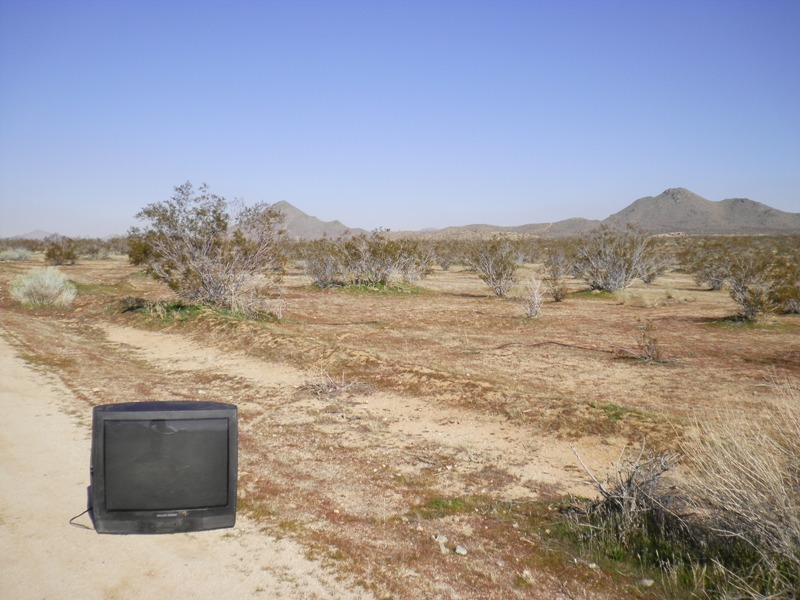
I also have no one to share the small incongruities and ironies of life with. Once walking in the desert, I saw a television on the road. So totally incongruous, it seemed as if it were an art piece in the making, and I had no one to tell about it in passing.  Today I went to the dentist to have him check on a small matter, and he told me to eat lots of sticky candy. The irony of the advice tickled me (I mean, really, when was the last time your dentist told you to eat lots of sticky candy?), and I had no one to tell that to in passing, either.

Come to think of it, there is no “in passing” anymore.

I made it through some of the major traumas of grief. Now I have to try to make it through the nothings.

Facebook Makes Us … (Fill In the Blank)

Facebook has become an icon, a symbol for our times. We are lonelier than ever — disconnected from family and friends in offline life — yet at the same time we are more connected online. Various recent articles have suggested that Facebook makes us sick, narcissistic, depressed, lonely, and anxious, partly because of the shallowness of Facebook relationships. But honestly, does anyone consider “liking” a comment an actual relationship? I doubt it.

Facebook is good or bad depending on how you use it. An article in The Atlantic that suggested Facebook makes us lonely used Yvette Vickers, a former Playboy playmate and B-movie star (best known for her role in Attack of the 50 Foot Woman) as an example. Apparently, the actress had been dead for almost a year before anyone realized she was gone. (This is hard for me to believe. Perhaps all her bills were automatically paid out of her bank account every month, but what about taxes? Wouldn’t someone from any of the various tax collecting bureaucracies have noticed her delinquency?)

Still, the story goes that a neighbor found her and was so concerned about Yvette’s ignominious end that she scanned Yvette’s phone records and discovered that the former actress’s last calls were to old fans who found her via Facebook. Ignoring the neighbor’s decided lack of concern for the actress while the woman was alive, what business was it of hers how Yvette spent her last days? What business is it of ours? There is no way of knowing how Yvette felt. Perhaps it made her happy to connect with her past, to remember that she once had a life, to know that she once touched people. Perhaps everyone she knew and loved had died, and she needed to reach out and connect somehow. We don’t know the truth. We can never know another’s truth. The story is only pathetic because of our own fears of ending up alone.

Facebook doesn’t create loneliness. It might exacerbate a loneliness that already exists, (and face it, if we really had full offline lives, would we be spending so much time online?), but it also gives us the opportunity to connect with our past and maybe our future. I know several people who fell in love online, and the connection continues offline even now.

Facebook makes us informed. If it weren’t for Facebook, I would never have seen the above-mentioned articles, hence I would never have known about the deleterious effects of Facebook. Nor would I have seen these incredible before and after photos of Nagasaki.

Facebook makes us humble. You’re feeling thrilled that you sold ten books that day and then someone boasts they sold 10,000. Brings you down a peg, that’s for sure. Is humility such a bad thing? In a world that seems to revere aggrandizement, a bit of modesty is good for one’s soul.

Facebook makes us grateful. Mixed in with all the brags and too-cute animal photos are the heartbreaking posts. People talking about how their chemo is going, sharing their angst at the death of a loved one, giving updates on their hospital stays, telling us about the traumas their children and aged parents are facing. Such posts make us realize that no matter how bad things are for us, someone has it worse.

Facebook makes us aware of community. Or at least that’s the goal of my various groups. In the Suspense/Thriller Writers Group, I’m trying to keep writers focused on the craft of writing, on helping each other attain our writing goals. Perhaps together we can do what each of us can’t do alone.

In other words, Facebook doesn’t make us do anything. We make of it whatever we can.

Grief Update — Two Years and One Month

Grief continues to confound me. It is now two years and one month after the death of my life mate/soul mate. I would have thought I’d have moved beyond grief’s ability to disquiet me, but I still have times where tears rush in to fill the void he left behind.

Some of my grief now is the poking-at-a-sore-tooth-to-see-the-extent-of-the-pain kind rather than the overwhelming agony and angst of the first year. There are still sore spots, most notably the obvious one — that he is dead. I cannot fathom death. My mind just cannot work itself around the conundrum of a once living person being so very gone from this earth. And there is the corollary murmuring deep in my psyche, “and someday you will be gone, too.” But . . . gone where?

When my grief was new, I often wandered in the desert crying out in desperation, “Where are you? Can you hear me?” I don’t call out any more, though I still wonder where he is, if he is, what he is. I envy those who believe without a doubt that their deceased loved ones still exist and that they will see them again because I have no such constant belief, though I do have flickers.

One of the many paradoxes of my grief is that I hope he still exists somewhere, but for myself, I’d be okay with oblivion. Is his death worse for me if he still exists somewhere beyond my ability to connect with him? Or is it worse if he is completely deleted except for a spark of indestructible non-conscious energy? Either way, he is gone out of my life. Either way, I have to deal with the mysteries of death, love, grief, and what the heck am I going to do with the rest of my life?

I met my life mate when I was young and believed in fate and destiny and a mystical connection with the universe. I subscribed to the belief that when the student is ready, the master will appear. And he appeared. He was so radiant, it seemed to me he was a higher being come to earth to help me on my life’s quest. In the few ups and many downs of our shared life, I forgot that feeling. And no wonder — as he got sicker and sicker, his radiance dimmed and all but went out.

During that last year, when he could no longer carry on a two-sided conversation, he would lecture me on what I should do after he was gone. He kept saying, “Listen to me. I won’t always be here to teach you.” I didn’t accept that his dying was imminent, so these lectures aggravated me, as if he thought I was so stupid I couldn’t live on my own. (I’d give anything to hear one of those “lectures” again. How could I not have treasured every word?) But the point is, apparently, deep in his subconscious, he believed what I had once believed, that he came here to be my teacher.

There is not a single question (except the unanswerable ones such where he is and if he is) that has arisen in the past twenty-five months that I didn’t know the answer to. We had discussed everything, sometimes all day, day after day, year after year. He took me as far as he could, imparted his wisdom, and left.

If there is any truth to this scenario, rather than being the rather romantic idea created by a bereft woman grasping hold of life any way she can, then the question of what I am going to do with the rest of my life takes on even greater significance. What is so important about me and my life that this radiant creature would share half his lifetime and all of his long and painful dying with me? I suppose that is what I am left to find out.

Was a Horoscope Ever More Wrong?

On a jaunt around the internet, I happened on my horoscope for 2012.

The year 2012 is going to be favorable for you. You will surprise your partner and add some spice to your relationship. Harmony will be there, but you will have to put in more effort on your life partner to keep him satisfied.

An explosion of emotions is most likely to happen in the second half of the year. Neither you nor your life partner will be ready to compromise. If the relationship is already dead, it is no use giving any advice. You will be more inclined to retreat and you will feel more comfortable with some distance between you and the outside world. It is your way of regaining your strength. Your partner might be surprised by your wish for solitude if you refuse to share certain moments with him — that’s why it is essential you talk to him to avoid any misunderstanding.

Well, they got one thing right — the relationship couldn’t be deader. It’s hard to add spice to a relationship when only one of the people in the relationship is still alive, or to satisfy someone who has been dead for two years. There isn’t much space for compromise between the living and the dead. Nor is there any need to avoid misunderstandings.

(I thought I could write an amusing rebuttal to this horoscope, but apparently I’ve run out of “amusing.” I don’t seem to have the knack of black humor, and I see nothing to laugh at when it comes to death. Perhaps death is too important not to joke about, but I can’t make light of it. Death devastates the living, and grief for sure is no joking matter.)

Excerpt From “Grief: The Great Yearning” — Day 3

So many people have told me lately that I should write a book about grief, that I realized somehow I’m not getting the point across — I did write a book about grief, and it is now published.

I never actually set out to write a book, never planned to make any of my writing public (except for the blog posts, of course), but I was so lost, so lonely, so sick with grief and bewildered by all I was experiencing, that the only way I could try to make sense of it all was to put my feelings into words. Whether I was writing letters to my deceased life mate/soul mate or simply pouring out my feelings in a journal, it helped me feel close to him, as if, once again, I was talking things over with him. The only problem was, I only heard my side of the story.  He never told me how he felt about his dying and our separation. Did he feel as broken as I did? Did he feel amputated? Or was he simply glad to be shucked of his body, and perhaps even of me?

People always mention how my pain shines through my words, yet at the beginning, I was in such shock, I didn’t feel much. Two years later, I still miss him, still hate that he’s dead, though I don’t have the physical trauma that I did, and I have regained some of my energy. It truly shocked me how exhausting grief is, but then, most of what I experienced shocked me. I never expected to feel this sort of grief. Never knew it was possible.

Excerpt from Grief: The Great Yearning

Day 3, Grief Journal

This was a hard day, though I don’t suppose any of them will be easy for a while. It’s amazing how little energy I have. I can’t do much at all. Today I rewound some of Jeff’s video tapes, the ones we watched toward the end. Perhaps tomorrow I will find the strength to put them away.

The hospice nurse came and got rid of the drugs. (Dumped them in a plastic bag of kitty litter, which turned them into a solidified mess, and took them with her.) The medical supply people are supposed to come tomorrow to pick up the oxygen tank. It’s like I’m rewinding his life. I wish I could rewind it back to the good times. We did have good times. I know we did. But everything got so muddled at the end. All we were doing was struggling to survive.

I can’t believe there was ever a time I wished the struggle were over so I could start my new life. How could I not have known I’d feel such pain? I heard today that losing a long-time mate was like an amputation, and that’s exactly what this feels like.

Good, bad, indifferent—it was all the same. We were together. We took care of each other. And now he’s been amputated from me and my life.

I got furious on his account today. It’s so unfair that he had such ill health, that his life ended too soon and too terribly. It seems unreal, now, that we took for granted he would die young. Shouldn’t we have railed against it more? But he was so disciplined, focusing his energies on trying to prolong his life and be productive.

I don’t know which is worse, the times I miss him dreadfully or the times I concentrate on doing something and he drifts from my thoughts. It seems such a betrayal. If he only exists in my memory and I don’t think about him, it’s as if he’s dying again. And once was hard enough. It takes my breath away when I realize I will never talk to him again. Well, I will talk to him, and I do, but we will never converse. I will never hear his voice.

I thought I was through telling people our sad little tale, but I’ve remembered a few others I have to notify about his being dead. I hope I don’t start crying when I talk to them. I’m tired of crying, tired of feeling sick to my stomach, tired of the hole in my chest. How do people endure such grief for months on end? I truly hate that he’s gone. Hate it!!

***

Click here to find out more about Grief: The Great Yearning

What is Life? What is Death? And What do Such Questions Have to do With Grief?

I always like when people think out loud here on my blog, when something I have said strikes an answering chord, and often when they’re not sure if they are making sense, they make the most sense to me. The only good thing about my grief is that I’ve met some wonderful people who are struggling with the same questions I am, and I’ve had some thought-provoking discussions about the meaning of life, death, grief, and whether any of it matters.

Leesa from Leesis Ponders believes that it does matter. She wrote on her blog:

I have spent my whole life asking if there is a god and if so what does it have to do with me.

And for me, life matters.

The search for self that blends into all matters.

The way we act towards others matters.

The way we raise our kids matters.

The way we treat the less empowered matters.

Leesa has been here with me through almost two years of grief, letting me know that my grief matters, that life matters.

In a previous post, Falling Into Grief, I wrote: Before people fall in love, they haven’t a clue of its true power, and then it washes over them in a life-changing moment. Before you fall into grief, you haven’t a clue of its true power, but it too washes over you in a life-changing moment, and all but drowns you. Even though I’ve experienced so much of what grief does to a person, I still can’t believe its power. The way grief reflects falling in love as in a very dark mirror, there has to be a hormonal component. I know stress releases hormones, as does shock. Adrenaline courses through your body, and there are changes in brain chemistry that produce hormones. Your immune system goes on hold.

Leesa responded: one thing you are absolutely spot on about is that we don’t know the power of falling in love nor the power of grief, nor indeed the power of love when ones baby is born until we actually experience it. The reality of life seems to be that our most intense experiences in life are about our deepest connection to each other. These experiences are life altering and this goes way beyond the DNA imperative.

For me personally then questions upon questions arise. Why is this intimate connection our deepest need, our greatest joy?  What is pain about? What is the sense of being alone about? How does our idea of separating off into couples and nuclear families contribute to our sense of loss when death occurs? Why are we so interdependent on each other, on the planet on everything else. And, what is death about? 

I know that many people feel they have their answers to that last question, some theologically, some via science but personally I don’t. Another bunch of folk seem to think we can’t answer such questions. I don’t agree. I think since many of us have dumped traditional theological answers or scientific reductionist responses as inadequate we’ve kind of given up questioning. I think we need to keep questioning because whilst we are subject to many biochemical reactions to life events there is a deeper reality.

Of course none of this helps a person smack bang in the middle of grief. It still has to be lived through. But I’m convinced that we need to keep asking. I hope this makes sense to what you’ve written…I’m not sure it makes exact sense to me. I guess I just feel that once we truly understand more our experience of these events will be perceived differently…perhaps the pain will be the same but perceived differently. I’m not sure really but I am sure we don’t know enough to interpret meaning yet.

Leesa’s question, “What is death about?” haunts me. She’s right — many people do think they know the answer, but there is no way to know for sure, which is why it’s called a “belief” and not a “surety.” I do think there is a deeper reality, I’m just not sure our conscious selves are a part of it. We are so much a product of our genetics, our hormones, our brains (anyone who has had to cope with an Alzheimer’s sufferer or a loved one who had cancer in their brains, and found a stranger in that familiar body, knows how much the brain controls who we are), that I’m not sure how much of “us” survives.

There is a theory that our bodies are like television channels, receptors for certain wavelengths, so that our “souls” actually reside outside our bodies, but what does that have to do with life in our bodies?.

My friends laugh at me (affectionately) when I ask what we’re supposed to do with eternity. We have no mouths to talk, no hands to write, no arms to hug, no eyes to read or watch movies, no legs to walk.

On the other hand, if human life is a spectrum as I postulated a few days ago, then perhaps the spectrum of a human life is the same sort of spectrum as light — beginning long before the visible part appears and ending long after the visible part disappears. Of course, the non-visible parts of the electromagnetic spectrum aren’t light but sound and radiation and other invisible waves, so whatever exists outside of the visible human spectrum might be something completely different from we can ever imagine.

When I get lost in the questioning, I hold tight to Leesa’s credo that such such questions matter, that life matters.

Feeling Small

When you have a long-term relationship with someone, you are involved with something that is both you and bigger-than-you. By definition, love and a deep connection to another makes you bigger than you are, expanding your self beyond the barrier of your skin. After he dies, your grief is so enormous that it, too, expands beyond your self, filling some of the empty space he left behind.

And then one day, your grief shrinks into the confines of your body, and all you are left with is you and the unfilled empty space around you, and you begin to feel very small. Doing something to fill in that empty space doesn’t really help because you can’t replace something you were, such as being part of a couple or feeling grief, with something you do, such as volunteer work.

That’s where I am right now — feeling small — as if I am wearing clothes way too big for me. I miss being part of something that expands beyond my self, miss feeling as if I am part of something important.

I still have importance, of course. I am important in my 95-year-old father’s life — he needs someone to stay with him so he can continue to maintain his independence. I am important in my siblings’ lives since my being here with my father gives them peace of mind. I’m important to those who find comfort in my words. I am important to those I do volunteer work for. And yet . . . and yet . . .

My whole life has been a search for meaning, and somehow the importance of the quest is eluding me. I hope life has meaning — I’d hate for my mate’s death to be the end of what he was — but I no longer have any great desire to find out what that meaning is. If there is meaning, it’s there whether I search for it or not.

I sound as if I’m feeling sorry for myself, don’t I? But I’m not, or at least, not very. One day, this shrunken me will feel normal, and I might even forget that once I was more than I am. But until then . . . I’m just me, and right now that doesn’t feel like it’s enough.

Grief: Feeling The Absence

I must be getting a grip on my grief despite the recurring upsurges of sadness because more and more I’m seeing the bizarreness of the process rather than simply experiencing it. On Friday, it will be twenty-two months since my life mate/soul mate died and though I’ve never felt his presence the way some people sense a connection with their dead mates, sometimes I feel his absence as if it’s a living entity.

I was sitting in the dentist chair yesterday, waiting alone for the verdict on my gum infection, when all of a sudden I started crying. We’d always gone together to the dentist, doctors, optometrists, etc, and yesterday, sitting alone, I could feel that he wasn’t waiting for me. I could actually sense that he wasn’t in the reception area, could feel the substance of his absence like a white hole (as opposed to a black hole). Just one more bizarre aspect of grief.

Oddly, I didn’t realize what a comfort his presence was at such times until it was gone. I took his presence for granted (not him — I never took him for granted), but it was as if his presence were part of the very air I breathed, and now that he has disappeared from my life, I’m stuck breathing the standard nitrogen/oxygen mix. And it’s not enough.

I don’t mind that I don’t feel his presence. If he still exists somewhere, I hope he has something more thrilling to do than watch over me, and I certainly hope he has something more thrilling to do than wait at the dentist’s office for me. But . . . I truly don’t understand how he can be dead. Don’t understand where he has gone. Don’t understand what death is. Don’t understand what life is, either, to be honest.

All I know is that he is gone from my life, and never again will I feel the comfort of his presence.

But it makes me wonder: did he feel the comfort of my presence? I was there at the end of his life. I was there when he took his last breaths. I hope he felt my presence the way I used to feel his. I hope it gave him comfort. Hope it still does.

Grief Update: Twenty-one Months

Twenty-one months ago, my life mate/soul mate died. How much is a month in grief time? A year? If that’s the case, then today I have reached my 21st birthday in the world of grief. Sometimes it feels as if twenty-one years have passed since his death, our shared life so distant that it could be a dream conceived in present-day loneliness. Other times, it seems as if a mere twenty-one days have passed, as if he recently left — or I did — and soon I will be going home to resume my life with him. Sometimes the pain of separation feels old, as if it is a long-faded scar, other times it feels fresh and raw. Sometimes I see him as clearly as if we’d just parted, other times I have to struggle to remember what he looked like.

During the first year after he died, I was focused on getting through the pain so I could start a new and wonderful life. Somewhere deep inside, beneath thought, resided the feeling that only a great good could offset such a trauma, and I wanted to be ready to embrace my new life. Perhaps something wonderful will happen, but so far, I’m still struggling with the same old life, still struggling with a vast and unending loneliness.

I’ve been making friends, trying to assuage my loneliness, but always I feel his absence. He was the only person who ever truly listened to me, listened beyond my words to the truth of what I was saying, and no matter what I said, he never filtered it through his own  prejudices, opinions, and emotions, but could talk dispassionately and intelligently about even the most passionate subjects. Electric energy crackled between us when we went on one of our ping-ponging conversational excursions from history to music to movies to philosophy to books to science and back again to history.  I know I should be grateful for having him as long as I did, and I am grateful. I should be glad we were able to converse the way we did since that is something so few people have. And I am glad. But still, life is bleak without his being here to pong my pings, conversationally speaking.

I’m trying not to think about where to go from here, trying to trust in the rightness of my path wherever it will take me, but to do so somehow makes me complicitous in his death, as if I’m agreeing it was right that he died. Oddly, back then, I was glad he died. He’d suffered enough, and death was the only way to end his agony. The further away I get from his death, the worse it gets because I only remember that he died. How can he be dead? I don’t even know what “dead” means, just that he is gone from this earth, and has been gone for twenty-one months.

Giving Thanks for Words

Every day I find something to be grateful for, even if it’s only that the sun is shining, that the pain of loss is muted, that I once had a great love, that I have open spaces to explore (both in my head and in the world). Even when all else seemed bleak these past nineteen months, even when I had no hope, there was always something to be grateful for (most often that my mate was no longer suffering), so I don’t need to set aside a special day of thanksgiving.

Still, during this season of giving thanks, there is something I am especially grateful for, something worth celebrating . . . words.

Words convey thoughts, ideas, hopes from one person to another. They connect us from continent to continent, enabling us to bond with like-minded people all around the world. I have exchanged words — and friendship — with people from New Zealand, Australia, Canada, the Nederlands, India. And for this I am grateful.

Words allow us to read and to write, to find entertainment and enlightenment in worlds created out of nothing but letters strung together. Words allow a story, concocted in one mind, to come to full realization in another. For most of my life, these worlds of words have been my life, or at least a major part of it. Now that I too am a world-creator, I am grateful for the words with which I build my stories.

Words give comfort, especially when distance (either geographic or emotional) does not allow a touch of commiseration. I am especially grateful for all the words of encouragement you (the readers of this blog) have given me during my time of grief, words that touched me. I hope some of my words touched you.

Words mean hope. With words, there is always the hope that we will be able to come to an understanding of each other, and perhaps find peace. (Of course, people would have to shut up long enough to listen to each other’s words; one-way words cause conflict and confusion.)

Words mean community and continuity. Words, both spoken and written, presuppose that there is someone to listen, and that is community. Telling our his-stories and her-stories to each other creates both community and continuity. They tell us who we were, who we are, and who we hope to become.

If there were no one to hear our words, if we existed solely in ourselves, we’d still need words to communicate our feelings and ideas to ourselves. This ability to put our thoughts into words gives us the power to know ourselves and to understand greater truths.

So this week, whether you celebrate the U.S. Thanksgiving or not, stop for a moment to give thanks for words. They are we.