Blogs I Never Wrote

I was cleaning out my desk today and found a bunch of notes for blog articles. There were some great titles with no indication of what I intended to say: “Pot Holes and Plot Holes”, “Plotting vs. Plodding”. Maybe someday I’ll write those articles, assuming, of course, I can think of anything to say.

I found a note to answer the questions I collected from readers for an interview about Facebook back in  . . . gasp . . . January. Has it really been that long? Eek.

I found a note to write a blog about the gatekeepers — those who are still working diligently to make sure that no one from a small press gets the same advantages as those published by the majors. Both the Romance Writers of America and Mystery Writers of America have rules which exclude us from entering contests and other activites since our publishers don’t yet meet their criteria for an approved publisher. Click here: for the Requirements for inclusion on MWA’s list of Approved Publishers.

I found a note about writing: The finished product is public but the process of getting there is intensely personal and different for everyone. Someday I might write that blog, but it seems that sentence summarizes it nicely.

I found a note for March 25 to celebrate the anniversary of my book release, and as part of the festivities, I planned to write an article on what I learned about book promotion during that first year of publication. Life intervened preventing me from doing that blog, but I can tell you now what I learned: absolutely nothing. I’ve sold fewer books than some fellow authors who did relatively little promotion, so apparently I have no idea how to promote. I’m still hoping to learn, though, and when I do find out, you will be the first to know.

And last but certainly not least are several notes on examples from books about editing properly. For example: She didn’t notice the motion behind her. Since the story was from her point of view, how could she have noticed the motion so as not to notice it? Another example from the same book: The light tinted her face green. How did she know that her face was green? It would have been better to say the light tinted her hands green.

These examples of wordiness came from another book: Inside him he felt a gnawing frustration. Where else does one feel frustration except inside? Unless, perhaps in a horror story where Frustration is the name of a beast with great teeth that gnaws on the outside of a person’s body. And what about this bit of baffling dialogue: “To a certain extent, you are entirely correct.” To what extent? Either one is entirely correct or one isn’t. And this one is the worst of all: He became convinced in his own mind that  . . . If anyone can tell me how you can be convinced in any one else’s mind, then I’ll let that one pass, but you can’t. If you think I’m being too picky, there were instances of such wordiness on every page. Ugh.

Since I’ve been on a hiatus from the internet while I deal with my traumatic offline life, my blog readership has slipped to almost nothing, so it seems that when I finally get a grip on my new life, I will have my work cut out for me, both to regain my blog readership and to gain a book readership. I hope it will be as rewarding the second time around.

Personal Totem Pole

Totem poles told stories, recounted historic events, celebrated cultural beliefs, symbolized a person’s life. Some were simply artistic presentations. The most important symbol went on top, the least important on the bottom. (Of course you knew this because of the saying “low man on the totem pole.”)

An animal was often used to represent a person. For example, a raven stands for introspection, courage, and self-knowledge. I just picked “raven” randomly, but oddly enough, that seems to be a good totem for me (at least I hope it is — I still have my doubts about the courage). And, coincidentally, my last name means “bright raven.” Since a raven is a bird, it could also mean that I am ready to try my wings. Or I will be someday.

My totem would also include a rose hip. A rose hip grows after the rose has died, and it becomes the source of a new life. (Okay, that may be a bit fanciful, but that’s the point of this particular exercise.)

A pen would be a part of my totem. So would an aquamarine — it protects health, and since I am at high risk because of grief, I need all the protection I can get. I could include a seesaw because I always seem to second-guess myself, but I will leave it off since I would want my totem to represent hope for the future.

If you were to create a personal totem pole, what would you include to represent your life, your dreams, your beliefs? What would your totem animal be? (You can find your totem animal here: Native American Totems and Their Meanings.)

Coming of Age in Middle Age

Coming of age novels chronicle a young person’s transition from childhood to adulthood, and often (in movies anyway) the term refers to the first sexual experience. In a broader sense, however, coming of age refers to a young character’s growth during the course of a story, either by losing innocence, assuming responsibility, or by learning a lesson.

It is not only in youth that one has to deal with such growth. Every transition in life leads to a new coming of age, and the death of a mate is probably the greatest of these events. Death is undoable. Irrevocable. By middle age or late middle age, we have all lost people who are dear to us, but losing a mate is different because not only is the person gone, so is the life you shared and the plans you made. Adding to the difficulty, everything you do, everything you eat, everything you see is a reminder that he is gone. Forever. That is a bit of innocence that can never be recouped. A bit of hurt that can never be repaired. A true coming of age that makes one’s adolescent transition seem trivial by comparison.

I have not written fiction for a very long time. Perhaps the story I was meant to write had not yet been lived, so I had nothing to say. But now I do have something to say. I am steeped in grief still, but when I can step away from myself for a moment and am not involved in the pain, it strikes me as such an all-encompassing experience that I would like to explore it in a novel. It is a story that needs to be written — it is so little understood, this coming of age in middle age.

Consuming Words

According to a new report, the average American consumes 34 gigabytes and 100,000 words over the course of about 12 hours every day. Nearly half of that time is spent watching television; about a quarter on the computer; and the rest on radio, print media, telephones, computer games, recorded music, movies and other sources. Maybe those average Americans need to go on a word diet. Many of those words are superfluous. (If you consider the inanity of most television shows, radio programs, newspaper and magazine articles, music lyrics, movie scripts, telephone calls, and blog posts — this one included — perhaps most words are superfluous, but for the purposes of this article, I will pretend that word gluttony adds meaning to your life and hence has some value.)

For example: In this headline, the removal of one word would cut down word consumption (of this particular phrase anyway) by 20%: Nursing Student Mysteriously Vanishes. Um . . . yeah. Seems as if “vanishing” implies mysterious. Have you ever heard of a vanishing that wasn’t mysterious? Unless the nursing student had planned to vanish, called all her friends together, and said, “Good-bye. I’m going to vanish now.” Still, that in itself would be mysterious. How would she do it, and more importantly, why?

Or what about this headline: Imagine how ‘revolted’ he must have felt when daughter Erin Andrews told him what happened between sobs. I guess it’s more of a blurb than a headline, still, there are superfluous words here. Perhaps “between sobs.” Perhaps “revolted.” At the very least, there is a comma missing. Truly, what could happen between sobs? There isn’t much time to do anything between sobs except perhaps take a breath.

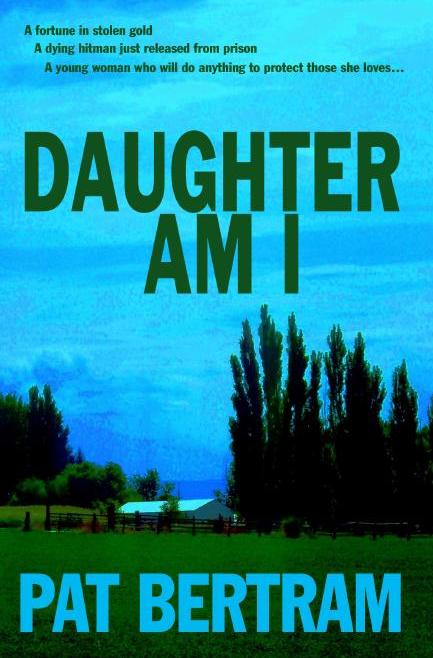
And speaking of consuming words — I took the total number of comments people left for my Blogmania giveaway, went to random.org and had them pick a number. The winner was the person who left the 177th comment — Wanda Hughes. Lucky Wanda will be consuming a great number of words — there are about 88,000 in Daughter Am I, though I did put it on a diet and got rid of at least 5,000 superfluous words during the final editing. Happy consumption, Wanda!

add to del.icio.us : Add to Blinkslist : add to furl : Digg it : Stumble It! : add to simpy : seed the vine : : : TailRank : post to facebook

“Daughter Am I” Giveaway. One Day Only!


Thank you, everyone, for making this Blogmania event such a success! The giveaway is ready to be given away, and the winner (chosen by Random.org) is Wanda Hughes. Congratulations, Wanda!


WELCOME To BLOGMANIA !

(My Blog is 98 of 123)

You’ve arrived at exactly the right time to explore lots of new blogs, all of which feature a very special Blogmania giveaway for one day only – April 30th.

All the work has been done for you. No hunting or surfing. Each blog will have a number and each new blog link will have a number. These numbers will allow you to keep track of which blogs you’ve visited and how many are left to visit.

DAUGHTER AM I GIVEAWAY and RULES: All you have to do to enter is leave a comment below. The winner, chosen at random, will receive a print copy of Daughter Am I. Since the novel is the story of a quest, I am also including a couple of travel essentials to accompany the winner on his or her journey — a journal to note your own travel experiences and a Burt’s Bees travel shower kit. This package will only be shipped within the United States. If the winner lives outside the states, he or she will receive an ebook of Daughter Am I.

Be sure to stop by these other blogs on April 30th and register for their giveaways.

Blog- 1 – HOST OF BLOGMANIA) Between The Pages – http://betweenthelinesandmore.blogspot.com/

(Blog -2 – CO-HOST OF BLOGMANIA) The Black Sheep Dances – http://www.theblacksheepdances.blogspot.com

(Blog-43 – CO-HOST OF BLOGMANIA) Books, Books Everywhere – http://bookywooks.blogspot.com/

(Blog-100) Reading Teen – http://ReadingTeen.blogspot.com/

(Blog-83) The Cajun Book Lady – http://thecajunbooklady.blogspot.com/

(Blog-70) DK’s Book Reviews – http://dkay401-bookreviews.blogspot.com/

(Blog-32) Satisfaction for Insatiable Readers – http://insatiablereaders.blogspot.com

(Blog-9) A Writer’s Life – http://carolineclemmons.blogspot.com

(Blog-108) Queen of the Castle Reviews – http://queenofthecastlereviews.blogspot.com

(Blog-41) The Lost Entwife – http://thelostentwife.net

(Blog-47) Joyfully Retired – http://joyfullyretired.com/

You can find all the participating blogs here: http://betweenthelinesandmore.blogspot.com

Blogmania! “Daughter Am I” Giveaway

I am participating in Blogmania, a whacky free-for-all giveaway encompassing 123 blogs. If you stop by my blog on April 30th and leave a comment, you will be entered into a contest to win a print copy of Daughter Am I. Since the novel is the story of a quest, I am also including a couple of travel essentials to accompany the winner on his or her journey — a journal to note your own travel experiences and a Burt’s Bees travel shower kit.

This giveaway is one day only, so be sure to stop by my blog on April 30 and leave a comment. The winner will be chosen at random. Hope you win! You can find my blog here: https://ptbertram.wordpress.com

I Am a One-Month Grief Survivor

I have survived my first month of grieving. I’m surprised it was so hard, and I’m surprised I survived it (at times my lungs stopped working and my heart felt as if it would burst with all the pain) but in the world of grief, a month isn’t much. Still, I’ve come a long way. I can look to the future, though I know the best way to deal with that future is to deal with each day as it comes — thinking of living the rest of my life without my mate makes me sick to my stomach.

And I have moments when I can stand outside my grief and see the process for what it is. Grief is an enormous undertaking (I hesitated using the word “undertaking” since it’s so close to “undertaker,” but it’s a good analogy because grief is, to a certain extent, facing the death of a part of you). Grief involves physical, emotional, psychological, spiritual, and in my case, geographical changes. Grief rocks you to the very depths of you being — a soul quake. Grief changes your sense of self, your sense of your place in the world. Grief affects your self-esteem. There is only one other experience of such immensity — falling in love.

I have come to realize hate is not the opposite of love, grief is. Grief encompasses all the wild emotions, the life-changing experiences, the immensity of love, but in reverse. Falling in love with the man I was to spend decades with and grieving for him are the bookends of our life —  not my life, my life will continue, though changed —  but our life, the life we shared.

I wonder sometimes if I’m going to change out of all recognition. I’ve gone through so many life-changing experiences in the past year that I no longer know who I am. And if one doesn’t know who they are, how can they write? Because isn’t writing is essentially an expression of who we are? If, as L.V. Gaudet rebuts, writing is more of a discovery of our inner selves, then when I get back to writing, the writing itself will change me.

Will he recognize me if we ever meet again? Will he be proud of what I become? I guess that is part of the future, not of this day. And right now, this day is all I can handle.

The Best Thing About Writing Fiction

This morning, author Lazarus Barnhill posted an article on the Second Wind Blog about why he writes fiction. He wrote:

”When you write about a controversial issue, you don’t have to make it the center of your story to express it fully.  You just work it in.  For instance, when I wrote The Medicine People, I dealt a lot with the quiet underlying bigotry Native Americans and Western European descendants still harbor for one another but never express out loud.  And while it was essential to the story, it didn’t overwhelm the novel.  Stories have the power to make an issue live in the mind of the reader the way a speech never can.

“And the best thing about being a fiction writer is, you don’t have to brag to get your point across.  The best writer is one whose reader gets absolutely lost in the narrative.”

When I began writing, I had a lot to say about the way we are manipulated to suit the needs of big business and big government, and that theme underlies my first four novels. Though that theme was important to me, I tried to make the story even more important so as not to overwhelm the readers. I used up that theme, so I don’t know what I want to say in my future books, which is perhaps why I haven’t been able to write — I don’t know what I want to say, or rather, why I want to say it. I tried to write a story simply for the story’s sake, but that manuscript is stalled halfway through. I do have a theme for that — freedom vs. security vs. responsibility — but the book is not a thriller, has no mystery, is more of an apocalyptic allegory, which is something I would never read, so I don’t imagine anyone else would want to either. The point being, I write fiction because . . . Apparently I have no reason since I am not writing fiction at the moment. 

So, why do you write fiction? What is the best about being a fiction writer? What do you hope to accomplish with your writing? How do you make sure readers get lost in your fiction?

Let’s talk.

The group No Whine, Just Champagne will meet for a live discussion about writing and the writing life on Thursday, April 22, 2010 at 9:00pm ET. I hope you will stop by — it would be nice to see you. You can find the discussion by clicking here. If you can’t chat live, we can chat on this blog.

The Problem With Grief

The problem with grief is its immensity. If it were only a matter of being sad that the loved one is gone, as I thought grief was, it would still be hard but doable. Instead, grief affects every part of your life. It’s not just a matter of the person being dead, but also all hopes, dreams, plans, expectations that you had with him. If there was a misunderstanding of any kind, it can never be put right. If a person filled many roles in your life, as my lifemate did for me, then all those needs go unmet. And grief is not just about sorrow. It’s about anger, fear, depression, loneliness, despair, and many emotions I have not yet identified.

Grief is also physical. Losing a mate ranks at the very top of stressful situations, and that stress itself causes physiological changes. Sometimes I can barely breathe. I don’t sleep well, though that is nothing new. Food nauseates me. I have trouble concentrating, and I am always exhausted — grieving takes an unimaginable amount of energy.

Grief also affects one’s self-esteem and identity. He was my focus for so many years. Without that focus to give my life meaning who am I? How do I find meaning, or at least a reason to continue living? The irony of this particular aspect of my grief is that I never wanted to be so involved with anyone. I always thought I was independent. And perhaps I once was and will be again, but I apparently I haven’t been for many years.

Because of all these different aspects of grief, grief is ever changing, so one can never get a handle on it, at least not for a long while. And grief grows the further one gets from the loved one’s death, because you see more of the person’s life. In my case, the man he was at thirty, at thirty-five, at forty, are all gone now too. Which is another aspect of grief I had never considered: The sheer goneness of the person.

During my mate’s last years, I’d started doing things on my own, such as finding a new life and friends online, and I thought I was doing well in my aloneness. But there is a vast difference between being alone with someone and being alone with aloneness. As William Cowper said: How sweet, how passing sweet, is solitude! But grant me still a friend in my retreat, Whom I may whisper, Solitude is sweet.

That is one more thing for me to mourn — the friend in my retreat. He is gone. And solitude is no longer sweet. Do I have the courage to grow old alone? The courage to be old alone when the time comes? I don’t know.

Grief changes a person in ways I cannot yet fathom, but one’s nature does not change, and I always tended toward solitude. Perhaps someday I will welcome the solitariness, or at least come to terms with it. As Jessamyn West said, “Writing is a solitary occupation. Family, friends, and society are the natural enemies of the writer. He must be alone, uninterrupted, and slightly savage if he is to sustain and complete an undertaking.”

Until then, I will continue to find a reason to get up each day. And always, I will miss him.

Blogmania — One Day Only. Mark Your Calendar!

On April 30, 2010, I am going to participate in Blogmania, a one day massive blog giveaway.  Picture it as one of those 200 mile long garage sales that attract thousands of shopaholics because of its size. The people who go to those events love the pure adventure of seeing how many miles of garage sales they can personally cover in one or two days. On Blogmania, you don’t have to purchase anything. Nor do you have to wear out your shoes tramping from sale to sale. It’s all online. And every participating blog is giving away something special.

I will be giving away summer traveling companions. Sort of. Everyone who leaves a comment on my blog on April 30 will have a chance to win a print copy of Daughter Am I  — the story of an incredible journey — along with a Burt’s Bees Travel Shower Kit and a journal to record your adventures. Hope to see you at the end of April!

For more information: http://betweenthelinesandmore.blogspot.com/2010/04/blogmania-early-bird-check-list.html