Ugly Book Cover

A recent reviewer of More Deaths Than One liked the book well enough, but thought the cover was SO UGLY. (The capital letters were the reviewer’s.) Perhaps it is. The printed version is not what I had envisioned. It was supposed to be an eerie night-vision-goggle-green painting with purple lettering (as you see on the right sidebar) and it turned out to be emerald and raspberry sherbet pink. The painting also lost much of its detail. However, whatever the vagaries of the printing process that gave More Deaths Than One a less than appealing cover, they gifted Daughter Am I with a stunning cover. Instead of the happy turquoise you see on my sidebar, the cover printed up as a gorgeous deep and brooding turquoise that is a perfect match for the story.

I have no idea any more if my covers are good or bad. They are what I wanted at the time. I do know they are not standard fare, and they do have an untextured glossy cover, which, apparently, readers equate with self-published books. The fad today in the publishing industry is embossing, foil accents, textures, and matte finishing, but once upon a time if a book didn’t have a glossy cover, it wasn’t considered worth reading. I found an interesting article about shunning glossy covers here: “An open letter to Trade Publishers“.

Like all prejudices, this prejudice against glossy covers is based on ignorance and assumption. Covers do entice people to buy books and covers put people off from buying books, but a cover isn’t the book. Nor do glossy covers mean self-published books. Even so, some self-published books are better than the books published by the major publishers, and all of the books I have read recently that were published by small independent presses are vastly superior to any recent book published by the majors.

I’m not sure what the answer is. People will buy what they want to buy, or rather they will buy what they are trained to buy. That is the nature of fad and fashion. Personally, if I see one more book cover with a man’s naked torso on the cover, I am going to scream. We are no longer allowed to objectify women, but apparently it’s okay to objectify men. But that’s beside the point. The point is that naked chests are the current fad for romances and so that is what readers have been trained to look for. Before naked chests, the fad was jewelry on the cover. Before that, it was men and women together. Will small presses ever have the clout of the big ones so that they can dictate the public’s taste and prejudice to this extent when it comes to covers? I doubt it, yet that doesn’t mean small press books are less enticing, nor does it mean the independent presses should become “me too”s, trying to catch the leftovers from the big guys by copying their phony fads. 

It’s nice to think that there are real readers out there, readers who will buy books based on the quality of the words, but I wonder how many there are. Not enough, probably, to afford small press authors the esteem given to those published by the major presses. But the major presses publish pap — stories so homogenized and tasteless that all they have going for them is fancy coverings, so where’s the esteem in that?
A Spark of Heavenly Fire Outtake #5

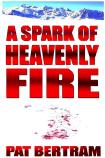
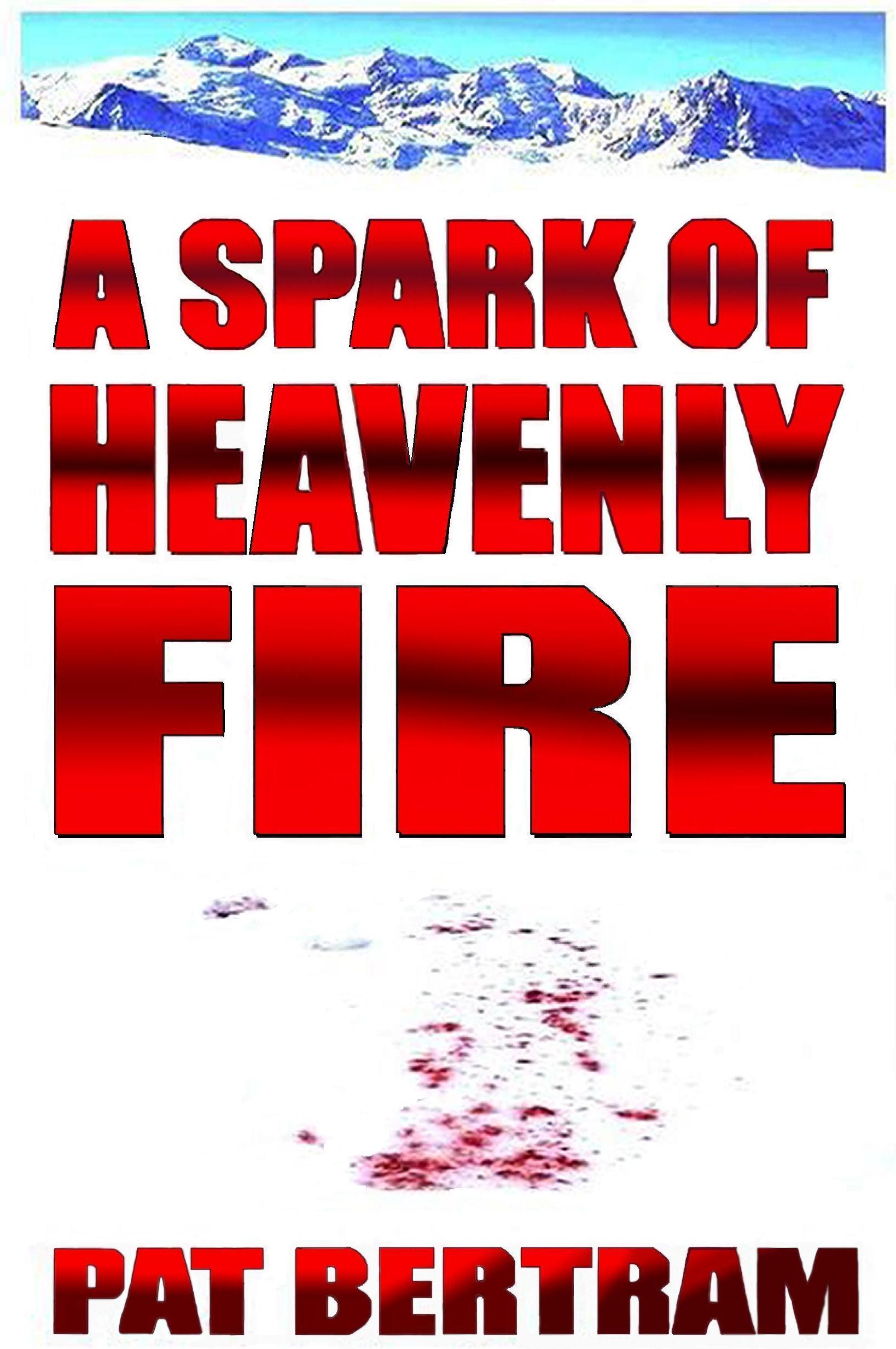
A Spark of Heavenly Fire takes place during the month of December. To celebrate, I am posting outtakes from the book. Like movie outtakes, these are scenes that were deleted from the final version.  Posting them is not as easy as it sounds. Since the original version is no longer in my computer, I have to retype the pages from my handwritten draft copy.  Still, it’s fun being able to revisit some of my original scenes. Hope you enjoy this look at my characters. Oh, and if you’d like to see a photo of the handwritten book, you can find it here: A Spark of Heavenly Fire Pre-Anniversary.

The mansion on Seventh Avenue that housed the Bowers Clinic had stood empty for many months before Dr. Bowers discovered it.

Though the simple classical lines of the façade had promised large, airy spaces, the rooms had actually been small and dingy with few windows. Full spectrum fluorescent lights, pale gold paint, and a forest of greenery, however, had transformed the dreary interior into an elegant medical establishment.

The Bowers Clinic had been a place of refuge for Kate, but now, walking up the curved driveway, butterflies filled her stomach. No, nothing as gentle as butterflies. Death’s head moths, perhaps.

She felt as if she were a heroine in one of the gothic romances she had relished in her youth. Here was the requisite brooding mansion, the glowering skies, the looming trees.

What was that? She lifted her head. There is was again — the sound of long, yellowed fingernails clawing at a window.

She scanned the front of the building, but saw nothing amiss. She stopped to listen. The eerie rhythmic sound was coming from behind her.

She looked back. An old homeless woman was laboriously pushing an overflowing shopping cart along the sidewalk. For one endless second, Kate stared into the woman’s eyes, then the old woman smiled — a sly, knowing smile.

Panicked, Kate raced up the driveway and into the clinic. While struggling to catch her breath, she surveyed the plant-filled reception room. Everything looked shockingly normal.

Two of the patients glanced up at her; the others continued to leaf through magazines or gaze into the distance. All had the resigned, almost shell-shocked look of refugees, but that, too, was normal. Though the doctors at the clinic prided themselves on their efficiency, they still kept their patients waiting much too long.

A little too melodramatic? Just a touch! I had fun writing this bit but it really had no place in the story.

See Also:
A Spark of Heavenly Fire Outtake #1
A Spark of Heavenly Fire Outtake #2
A Spark of Heavenly Fire Outtake #3
A Spark of Heavenly Fire Outtake #4

A Spark of Heavenly Fire Outtake #4

A Spark of Heavenly Fire takes place during the month of December. To celebrate, I am posting outtakes from the book. Like movie outtakes, these are scenes that were deleted from the final version.  Posting them is not as easy as it sounds. Since the original version is no longer in my computer, I have to retype the pages from my handwritten draft copy.  Still, it’s fun being able to revisit some of my original scenes. Hope you enjoy this look at my characters. Oh, and if you’d like to see a photo of the handwritten book, you can find it here: A Spark of Heavenly Fire Pre-Anniversary.

Only a few hardy souls had braved the frigid early morning air: joggers in bright warm-up suits, an elderly couple swaddled in layers of heavy clothing, a scantily clad young man running as if he didn’t have a care in the world.

Kate frowned. Shorts and a tee shirt in this weather? Oh, well. He was young and obviously in good shape; probably no harm would come of it.

The runner neared, moving so swiftly and lightly his feet barely touched the ground. As he passed her, Kate caught a glimpse of a rapturous smile.

And bright red eyes.

She whirled just in time to see the runner spewing blood and swiftly, like a mannequin, toppling into his vomitus. Heart pounding, Kate ran to help. She knelt down beside him to take his pulse. Prickles of fear crept up her spine when she realized he was dead.

First Rachel Abrams, now this young man.

For just a moment Kate felt disoriented as if the earth had slipped on its axis.

Another jogger, a middle-aged man with well-groomed hair, joined the growing crowd of spectators. Kate caught a whiff of aftershave. What kind of man shaves before jogging? She eyed him curiously. The same kind of man who wears designer sweatpants with creases ironed in them, she noticed.

Kate thought it odd that such a fastidious person would stoop so low as to gawk at a corpse; then she saw the look on his face. Fear, maybe. And recognition.

“Dead?” the man asked quietly.

“Yes,” Kate answered. “Did you know him?”

“No.” He tugged at a nonexistent beard. “Yesterday, a colleague of mine died the same way. What the hell is going on?”

“I don’t know,” Kate said. “I’m not sure I want to know.”

The man nodded. “I know what you mean. It’s too bizarre, like something out of a horror movie. The colleague who died was a quiet, unassertive man, but yesterday he showed up for work dancing and jiggling as if he were hopped up on amphetamines. He charged around the office, ranting that the Broncos really stink again this year, and if they didn’t make it to the Super Bowl, he’d never buy another ticket. When I asked him if he felt all right, he beamed at me and said he felt great, had never felt better in his life. Then he vomited blood, and fell down. Dead.” He snapped his fingers. “Just like that.”

I thought this jogger was a well-drawn character, but since he added nothing to the book besides an iteration of how people were dying from the red death, he really served no purpose, so out he went. The dead runner made it into the final version, but instead of the second death, he turned out to be the first death Kate experienced — and experienced physically. He toppled into her arms.  Rachel was moved from the first scene of the book to an unimportant second scene. Poor Rachel. Like the colleague in the above story, Rachel felt great for the first time in years, and then she died.

See also:
A Spark of Heavenly Fire Outtakes #1
A Spark of Heavenly Fire Outtakes #2
A Spark of Heavenly Fire Outtake #3

Books Make Good Christmas Gifts

Of course books make good Christmas gifts. You know that. Here’s a list of books you may not have heard of by relatively unknown writers — at least they are relatively unknown at the moment. I wouldn’t be surprised if one or two or even all of the authors are household names by this time next year.

The Medicine People by Lazarus Barnhill is a deceptively lighthearted mystery with great characterization and surprising twists and turns.  Why has triple murder suspect and fugitive Ben Whitekiller returned to his hometown to give himself up? Click here to read the first chapter.

Staccato by Deborah J. Ledford is a well-orchestrated thriller about three world-class pianists, two possible killers, one dead woman and a great mental soundtrack for those who know music. Ledford draws you into her world and doesn’t let go until the final crescendo. Click here to read the first chapter.

Jock Stewart and the Missing Sea of Fire by Malcolm Campbell: Though Jock Stewart is a throwback to the Hollywood’s film noir reporters, Campbell’s delight in words and wordplay shows through the hardbitten shell, and the novel has a gleeful undertone. Click here to read: an excerpt or the first chapter.

Heart of Hythea by Suzanne Francis is an epic novel full of romance and adventure, with a strong female protagonist who isn’t always sweetness and light. Suzanne’s world is filled with colorful details and captivating characters. Click here to read a synopsis and an excerpt.

Dead Witness by Joylene Nowell Butler is a novel of international intrigue and danger with a hero who fights criminals and the FBI to take control of her life “with every ounce of fury a mother can possess”.  Click here to read the first chapter.

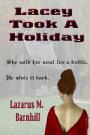
Lacey Took a Holiday by Lazarus Barnhill is an unlikely romance between a man who has lost everyone he ever cared about and a womanwho has been betrayed and abused by every man she has ever met.  Click here to read the first chapter.

And be sure to check out the books from Second Wind Publishing Company. You might even see a familiar cover or two.

The Place is More Than Scenery

I am pleased to welcome Malcolm R. Campbell as a guest on this blog. Not only has he left myriad thoughtful comments on my posts, he has written one of my favorite books, a delightful mystery called Jock Stewart and the Missing Sea of Fire. Though Jock Stewart is a throwback to the Hollywood’s film noir reporters, Campbell’s delight in words and wordplay shows through the hardbitten shell, and the novel has a gleeful undertone. If you are searching for a Christmas gift for a booklover, look no further.  You don’t have to take my word that this is a wonderful book, you can see for yourself. Click here to read: an excerpt, or the first chapter, or download 35% free at Smashwords. About scenery, Campbell writes:

“The breakout novelist does not merely set a scene; she unveils a unique place, one resonant with a sense of time, woven through with social threads and full of destinies the universe has in store for us all. She does not merely describe a setting, she builds a world. She then sets her characters free in that world to experience all it has to offer.” –Donald Maass, “Writing the Breakout Novel”

In his 1974 classic “Zen and the Art of Motorcycle Maintenance,” Robert Pirsig said that he disliked traveling across country by car because the world outside the windows was too much like television. Pirsig preferred a motorcycle because it placed him solidly within the place as an engaged participant rather than a passive observer.

Young writers often focus on plot and characters, viewing the setting’s importance as minimal, a dated nineteenth century writing technique or filler to be skipped over in a modern novel. Their resulting fiction resembles a cheaply drawn animated film with talking characters in the foreground and sequence of meaningless doors, trees, and buildings scrolling past in an endless loop in the background—like the Pirsig’s unimportant scenery outside a car window.

Maass writes that “In the twenty-first century, we may have less patience for scenery, but we certainly expect a novel to show us the world as a vital force in which the characters move.”  The reality of this vital world is built on specific detail that goes beyond unsupported assertions such as “a grand old house” or “a lovely meadow” to the very heart of the place the characters willingly or unwillingly find themselves.

Place, like everything else in a story, is filtered through the character’s point of view. This makes it an interactive tool that engages all of the senses. It facilitates the creation of three-dimensional characters, a harmonious or counterpoint tone and mood, and a dynamic plot and action. Readers see, hear, touch, taste and feel only what the character perceives and believes about places. One character sees the forest as random trees, another knows their names. One character sees house as structures, another notices architectural styles. One character running from a pursuer finds a random boat and causes it to founder, another understands how to escape in it.

Detail supports assertions about the place, bringing an otherwise vague setting into three-dimensional authenticity. What–within the POV character’s knowledge and experience–makes the house grand and the meadow lovely? Symbolically, psychologically or empirically, place always tells the reader something about the character, plot and theme.

It’s a barometer indicating a character’s circumstances and attitude. For example, a snow-covered path is exciting during a sleigh ride but grim when one is lost in the woods. Frightened characters experience dark houses differently than confident characters. Same woods, same houses, different interpretations.

When place is utilized as a vital component in fiction, the characters experience, interpret and interact with settings like men or women on motorcycles rather than bored kids staring out the window of a car on a family vacation. Whether authors write about clean, well-lighted places or dank, dimly lit places, they’re not showing readers random backdrops. They’re showing worlds that mirror the characters’ moods and circumstances, worlds those characters must often navigate or fail to navigate en route to the climax of the story.

When readers hear the oak falling in the forest, feel the harsh limestone cliff below a mountain’s summit, and smell the dank stink of Cyprus swamp, then the setting has been well conjured, the spell properly cast, and the magic of enchantment into an imaginary world has been accomplished. At this moment, the novel’s world is more real than the reader’s comfortable chair.

See also: Pat Bertram and Malcolm R. Campbell Discuss the Writer’s Journey

A Spark of Heavenly Fire Outtake #3

A Spark of Heavenly Fire takes place during the month of December. To celebrate, I am posting outtakes from the book. Like movie outtakes, these are scenes that were deleted from the final version.  Posting them is not as easy as it sounds. Since the original version is no longer in my computer, I have to retype the pages from my handwritten draft copy.  Still, it’s fun being able to revisit some of my original scenes. Hope you enjoy this look at my characters. Oh, and if you’d like to see a photo of the handwritten book, you can find it here: A Spark of Heavenly Fire Pre-Anniversary.

One of Hollywood’s highest paid actors, Jeremy King had a tendency to take himself and his status too seriously, but here, on his vast Montana ranch, he felt centered. A man, not an icon.

After a satisfactory day riding fence, he crawled into bed so blissfully drowsy he felt no need to take a sleeping pill.

His wife Nora rolled over into his arms, enveloping him in her inimitable scent: jasmine, cinnamon, woman. He felt a momentary tug of arousal, but it dissipated when she didn’t respond to his exploratory kiss. Before he even had time to register a flicker of disappointment, he fell asleep.

To his annoyance, he woke an hour later. As he started to get out of bed, Nora grasped his wrist.

“Don’t go,” she said, still half asleep.

“I have to. This damn prostate.” He gently disengaged her fingers and headed for the bathroom.

When he returned, Nora was sitting up, the heirloom quilt clutched to her throat.

“Don’t go,” she repeated.

“I won’t.” He laughed humorlessly. “Not for an hour or two, anyway.”

“That’s not what I mean.”

“It’s late, honey. Go back to sleep.”

“I had a dream.”

Jeremy yawned. “Can’t it wait? We can talk tomorrow before I leave.”

“I don’t want you to go to Denver,” Nora said. “Something terrible is going to happen to you there.”

“I’m only going to be gone two days, just long enough to shoot a few exterior scenes. That’s all.”

Jeremy’s latest film, Cry of Hope, was the story of a Colorado cattleman who, while trying to survive a severe drought, discovers that his son has leukemia.

Test audiences had been singularly unmoved. In an effort to rescue the movie, the producers had decided to shoot a few more scenes showing the rancher’s despair. Jeremy had readily agreed to take the extra work; he was at that age where one disappointing film to could an end to a long career.

Nora knew this too, so why was she giving him grief? Maybe she was lonely now that their two children were away at college.

“Why don’t you come with me?” Jeremy said. “Go shopping at Cherry Creek Mall, eat at some fancy restaurants.”

“You think that’s what this is about?”

“Look, it was just a suggestion.”

“Oh, never mind.” Nora flopped down on the pillow, pulled the covers up to her chin and turned her back on him.

Jeremy had just about drifted back to sleep when Nora sat up again and turned on the light.

He squinted at her in the sudden brightness. For just a second he wondered who the worried old woman was. What had happened to the slim, raven-haired beauty he had married twenty-five years before?

With a pang of compassion, he sat up, put his arms around his wife and pulled her close. “What is it, honey?”

Nora started to cry, loud gulping sobs like a child.

Jeremy patted her back and made soothing noises.

“I don’t want to lose you,” she said after she had calmed down.

“You’re not going to lose me. What can happen in Denver? There’s no earthquakes, no hurricanes, no tornadoes, no tidal waves or flash floods. There’s an occasional blizzard, but eh weatherman says it’s going to be clear this week-end.”

She pulled away from him to study his face. “You’re making fun of me.”

“No, I’m not.” He smiled at her. “Well . . . maybe a little.”

She snuggled back into his arms. “The dream really scared me. You and someone else — a girl, I think — were alone in a very desolate place. There were a few skeletons of buildings in the background, and some trucks and bulldozers parked haphazardly around an immense smoking pit, but that was all. The sun was just setting. Because of the smoky haze, the sun was red, like the sun of a dying planet, and it made everything else look red, too. Blood red.”

Jeremy felt Nora shudder. “It’s just a dream,” he said. “Remember when I was doing The Sultan’s Pride? You called me in Mozambique, all frantic because you dreamed I was going to be tortured. You were right. I was. But it was just a scene in the movie. And that time you dreamed I was going to be hit by a car and end up in a coma? Another scene from one of my films.”

“I still feel terrible about accusing you of having an affair with your co-star while you were making Mesa Grande — what was her name? Janet Richards? — but I did see the two of you in a dream.” Nora sighed. “You must think I’m a foolish old woman.”

When he opened his mouth to speak, she kissed him, stifling his protests. “You’re a good man, Jeremy King,” she said, then she turned off the light.

Within minutes, she was sound asleep. Jeremy, however stared up at the ceiling, unable to get her words out of his head.

His affair with Janet Richards has been very discreet, so it had come as a shock when Nora had confronted him with it. He had managed to sidestep a battle by swearing the affair was nothing more than a protracted love scene that had been cut from the movie, but he had never understood how she had found out about it in the first place. Could she really have seen it in her dreams?

An hour later, still wide awake, Jeremy took two sleeping pills.

I always liked this scene. It put a different slant on Jeremy’s flirtation with the gorgeous Pippi O’Brien, and it foreshadowed the terrible sight that greeted them when they fled Denver, but too much of Jeremy at the beginning pf the book overwhelmed the story and made it drag. I can’t believe I had the courage to eliminate it. 

Read the first chapter of the published version here: A Spark of Heavenly Fire 
Free download: get the first 30% of A Spark of Heavenly Fire free at Smashwords
Read blurb at  Second Wind Publishing: A Spark of Heavenly Fire
Blatant hint: Books make great Christmas gifts!

A Spark of Heavenly Fire Outtakes #2

A Spark of Heavenly Fire takes place during the month of December. To celebrate, all month I will be posting outtakes from the book. It’s not as easy as it sounds. Since the original version is no longer in my computer, I have to retype the pages from my handwritten draft copy.  Hope you enjoy this behind the scenes look at my characters. It’s a continuation of the scene posted in here: A Spark of Heavenly Fire Outtakes. Oh, and if you’d like to see a photo of the handwritten book, you can find it here: A Spark of Heavenly Fire Pre-Anniversary.

The waitress brought a Coke, which Jim drank in one long gulp. He hauled himself out of the booth.

“I’d better be going.” He started to leave, then turned back. “I almost forgot. When we talked earlier today, you said you had some news.”

“It can wait,” Greg said. “You have more important things to worry about.”

Jim sat back down. “Tell me.”

“I asked Pippi to marry me.”

A big grin softened Jim’s forbidding face. “Hey, that’s great! I’ll bet Pippi’s thrilled. She’s had that look in her eye for quite a while now.”

“What look?”

“You know—that ticking biological clock look.”

“She’s only thirty. I didn’t think their biological clocks started ticking  until they reached thirty-five, at least.”

Jim shrugged. “Depends on the woman. Letisha’s clock started ticking when she was only twenty-four. Just think, if she hadn’t proposed to me, I would have been a swinging single, too.”

Greg ignored the comment. Jim always pretended to lament the loss of his bachelorhood, but Greg knew the truth—Jim loved being married.

“Have you set a date yet?” Jim asked. “Letisha will feed me leftovers for a month if I can’t give her all the details. It’s only fair to warn you, she’ll want at least one of out kids in your wedding party.” He stopped and peered at Greg. “Hey, you okay? You don’t look too happy.”

Greg tried to smile, but his face refused to cooperate.

“Don’t worry, kid,” Jim said, sounding as if he were twenty years older than Greg instead of just eight. “Everyone gets pre-wedding jitters.”

Greg shook his head. “It’s not that.”

“Then what? Pippi didn’t say no, did she?”

“Not exactly.”

“Did she say yes?”

“Not exactly.”

“Hell, kid, you’ve got me so confused I don’t know whether to slug you or congratulate you.”

Greg toyed with his beer. “You’re confused? What about me? I thought she wanted to get married—she’s been hinting at it for months, so I finally decided to ask her. Know what she said?”

“What?”

“She said she’d think about it.”

“Ouch.”

“I asked her what there was to think about and she said she wasn’t sure if I knew what love was. Then she said that even if I did know what love was, she wasn’t sure if I was capable of loving her the way she wanted to be loved.”

“Sounds to me as if it’s herself she’s unsure about.”

“Could be. I don’t get it though. Marriage, I mean. It’s not like it’s forever any more, so what’s the big deal?”

Jim raised his eyebrows. “Very romantic.”

“I didn’t tell her that. I may be unromantic, but I’m not stupid, you know. And I do love her.”

When Greg was alone once more, however, it was not his would-be fiancé who occupied his thoughts, but the unknown woman whose corpse had been so savagely mutilated.

Read the first chapter of the published version here: A Spark of Heavenly Fire 
Free download: get the first 30% of A Spark of Heavenly Fire free at Smashwords
Read blurb at  Second Wind Publishing: A Spark of Heavenly Fire

A Spark of Heavenly Fire Outtakes #1

A Spark of Heavenly Fire takes place during the month of December. Originally, the story began on the first with the climax at Christmas, but during one of the rewrites, I got rid of most of the first chapter. So, oddly, the story now begins on December 2.  I could have have changed December 2 to December 1, but that seemingly innocuous change would have rippled throughout the book, and I didn’t want to make inadvertant mistakes. I make plenty of vertant ones! It may not have mattered so much if it were any other month, but the Christmas activities needed to take place on the 25th. 

To celebrate A Spark of Heavenly Fire‘s month, I will be posting outtakes from the book. It’s not as easy as it sounds. Since the original version is no longer in my computer, I have to retype the pages from my handwritten draft copy.  Hope you enjoy this behind the scenes look at my characters:

Greg was idly running his finger around the rim of the empty beer mug when Jim appeared in the seat opposite him.

“Jeez, you startled me,” Greg said.

If Greg looked like a matinee idol, Jim was surely a stock Hollywood villain — big and black, ugly and menacing. But one who could move as quickly and as silently as a jaguar. Cat or car, take your pick.

A hefty waitress with a rose tattoo peeping out of her considerable cleavage brought Greg’s second beer, slamming it down on the table so hard that some of the liquid sloshed out of the mug.

“Bring me a coke, will you, Joyce?” Jim said.

Joyce glowered at him, then trudged off, perhaps to get his drink.

“Still on duty?” Greg asked.

“A cop’s always on duty.”

“You know what I mean.”

Jim massaged the back of his neck. “I’ll have to go back to the station, probably have to work all night.”

“What’s up?” Greg could smell a news story — a big story — and wanted a piece of it.

“Off the record?”

Greg hesitated a second. “Okay.”

“I don’t know if it amounts to much, but the brass want it kept quiet. Afraid of starting a panic, I guess.”

“Over what?”

“There’s been a lot of deaths from something the medical examiner called ‘projectile hemorrhagic vomiting, cause to be determined.”

Greg hunched his shoulders. “That’s it?”

“If you’d seen the bodies, you wouldn’t ask that. In all my years on the job, I’ve never seen so much blood. Some of the younger guys are spooked. Can’t say I blame them. It’s truly gruesome. And when you consider that most of the victims were driving when they died, you can imagine what it was like out there.”

“Bumper cars.”

“Right.”

Greg studied his friend’s grim face. “There’s something you’re not telling me.”

Jim let out his breath in a loud whoosh. “You’re right. Did you hear about the woman who was bludgeoned to death and left lying in the street in a pool of her own blood?”

“I heard about it, but someone else at the paper was sent to cover it.”

“I talked to the pathologist assigned to do the autopsy. She said she won’t know anything for several days, but form a cursory look, the beating was post mortem.”

“Someone beat up a corpse?”

“Yep.”

“Jeez, how weird is that! Where does one get a corpse anyway?”

“Unfortunately, tonight there’s no lack of dead bodies lying around. The perp must have stumbled across a woman who died from the hemorrhagic disease and decided to have a little fun. The pathologist said it looked as if the woman had been run over by a semi — just about every bone in her body was broken. At first we thought the beating was done by a gang of teenagers, but we found only one weapon — an eighteen-inch-length of metal pipe.”

“Wow. This is great stuff.” Greg pulled a small notebook and a pen out of his pocket and began scribbling. “The guy who covered the story didn’t get any of this.”

“We’re still off the record,” Jim warned.

“I know, I know. But I can be prepared, can’t I? The proverbial lead pipe! I thought that only showed up in detective novels.”

“Not lead. Galvanized iron.”

Greg looked up in surprise. Jim was either very tired or very worried to have let the detective novel remark pass. A real-life detective, Jim considered most of the books to be simplistic or cartoonish, and he was usually quick to voice his opinion.

Read the first chapter of the published version here: A Spark of Heavenly Fire 
Free download: get the first 30% of A Spark of Heavenly Fire free at Smashwords
Read blurb at  Second Wind Publishing: A Spark of Heavenly Fire

Writing About “Ahem”

Someone just sent me an email suggesting I look at a BBC article on writing about “ahem.” (His words.) Okay, it was my brother, so he’s forgiven for being a bit too discreet. The suggestion probably has to do with a remark I made once about writing erotica, and he and my sister-in-law dared me to do it. I told them I would. But after I finish my WIP, and after I finish my graphic novel, and after . . .

Oddly enough, I really am considering it — by now you know I like a challenge. The thing that’s weird about my considering it (okay, one of the weird things — there are many strangenesses, including the simple fact that I am considering it) is that each of my books has less sex in it than the last. For Light Bringer, which will be published in the late spring of 2010, I completely forgot to include a sex scene — or rather, the story didn’t demand it, so I didn’t include one. My first book, a poor deformed — unacknowledged — creature I have hidden away in the dark recesses of my closet, is so full of sex scenes that it wouldn’t take much to turn it into an erotic novel.

There seems to be two thoughts about writing erotica. One, that the story should hold together even if there wasn’t any sex; and two, that the sex must be such an integral part of the story that it will fall apart without the sex. I subscribe to the second theory because it holds true for any sex scene — it must be a scene rather than simply a depiction of sex. This means the scene must advance the story, tell us more about the characters, show us how having sex changed the hero, or show a change in the relationship between the participants. So many authors seem to have the attitude that they need to arbitrarily insert a sex scene into the story, but such scenes need to be written in response to the demands of the story, not just because “it’s time to insert a sex scene”. 

One comment appended to the BBC article was written by Alexander from Durham. He says: I never know what most sex scenes are trying to achieve in books (and in other media, come to that). It’s hard to tell if they’re going for an emotional response from the reader or just arousal. I think the problem is that the reader doesn’t know either and ends up reading the scene and trying to take the wrong thing from it. And he’s exactly right. The reason the reader doesn’t know what the sex scene is trying to achieve is that the author doesn’t know. 

The article about “ahem” asked: Is it Difficult to Write Well About Sex? I tend to think it isn’t, as long as the authors know what they are trying to accomplish with the sex scene. Once authors know their goal, they can write the scene with that goal in mind. On the other hand, maybe sex is difficult to write well. John Littel just won the “bad sex in fiction” prize. That there is such a literary award speaks for itself.

Frivolous Post Month

Writers have NaNoWriMo, bloggers have NaBloWriMo (National Blog Writing Month), which is also known as frivolous post month. Since I was going to post most of the month anyway because of my blog tour, I signed up for NaBloWriMo, though I haven’t had time to participate in the forums. Getting the articles posted every day was enough of a challenge! Today is the second to last day of the month, and I almost reneged. I’ve got nothing to say (though that hasn’t stopped me before!) Anyway, that’s why it’s called frivolous post month — because of all the people who have nothing to say but say it anyway.

Oh, wait! I do have something to say. I’ve been meaning to tell you about a way cool WordPress tip that you might not have heard of. You know how on the sidebar, there is a monthly archive? Doesn’t do much good, because if you or your readers are looking for a particular post, chances are you haven’t a clue as the the date you wrote it. Well, WordPress has a shortcode for an archive that lists all your articles. See the page here on my blog entitled “Archives — All My Posts”? It lists the title and link to every single one of my blog posts. Bet you thought it was difficult. Nope. All I had to do was start a new page, title it,  and put the word archives in brackets [ ] in the body. That’s it. Magic! 

So perhaps this wasn’t such a frivolous post after all!

I tried to put archives in the brackets to show you how it was done, and ended up with my archives in the body of  this post, so I had to remove it. If you need any further information, check out the wordpress article: Archives Shortcode.