Want. Not Want.

At lunch with friends today, the topic of “wanting” came up. I said I didn’t want anything. “You have no ambition,” one woman remarked. Ambition is defined as an earnest desire for some type of achievement or distinction, as power, honor, fame, or wealth, and the willingness to strive for its attainment. So yes, she’s right. I have no ambition. Since I have no earnest desire for anything, I have no particular willingness to strive for its attainment. I would like to be renowned as a writer, of course, but that’s not really an earnest desire, more of a wistful longing. Still, some people love my writing, so that’s renown of a sort, maybe even more so than being recognized by an admiring (or unadmiring) bog.

I do want to dance yinyangbetter, and I am willing to strive for that goal by doing my best at as many classes as I can take, but dancing is not really a “want,” maybe more of a need. Learning is what I do — the ability to learn is the one true talent I have — and at the moment, I am focused on dancing.

I softened the blow of my non-ambition by admitting that I did want to want something. My family, my life mate/soul mate, my various loves — both human and inanimate — have defined my life at different times, but now there is only me. Wanting something would help set a path, create a passion, establish a goal. Wanting something would define my life for me.

And yet . . . I am just mystical enough to not want to want anything — to simply go with the flow of life and see where it takes me, to be open to possibilities of all kinds, to be spontaneous and follow my instincts of the moment, to experience the world in a more intimate way than through the shutters of a familiar room. (Besides, the very act of definition imposes limits, and I am trying to open up my life, not limit it.)

Taking dance classes came from a spontaneous flowing when I noticed a nearby dance studio. I never had any desire to dance, never even conceived of such a possibility, in great part because I am not limber, disciplined, or musical. (To show how non-musical I am, for the past seventeen months in Hawaiian class, we’ve been doing two different types of warm-up exercises to the same piece of music, and I never even noticed that the music was the same until someone pointed it out to me a couple of days ago. Eek. How is that possible?)

I also want an epic adventure, and to that end, I consider such foreign ideas (foreign to my nature, that is) as walking across the country, hiking a national trail, stealth camping wherever I might find myself, and whatever else my magpie mind fancies at the moment. But whether I physically set out on such a journey or just live as fully as I can, there will always be epic adventures. Dancing is such an adventure for me. Leaving my father’s house after it is sold, will be another adventure since I have no idea where I am going or what I will do (except continue to take dance classes).

So . . . Want. Not want. Either way, it doesn’t make much difference to me. Seems as if that’s an adventure in itself.

***

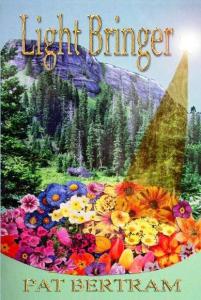
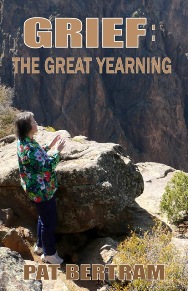
Pat Bertram is the author of the suspense novels Light Bringer, More Deaths Than One, A Spark of Heavenly Fireand Daughter Am I. Bertram is also the author of Grief: The Great Yearning, “an exquisite book, wrenching to read, and at the same time full of profound truths.” Connect with Pat on Google+. Like Pat on Facebook.
I Am So Romantic!

sleeping bearNichole Bennett, author of Ghost Mountain and Sleeping Bear, wrote a blog post in honor of Valentine’s Day next month, entitled Are you romantic? Or romantic? She admits that she’s not romantic, “at least not in the “wine me, dine me, we live happily ever after” way. Then again, if you mean “romantic” in the Edgar Allen Poe, basing your writing on the Supernatural, I’m so romantic it’s not even funny.”

I can relate to that. I used to enjoy a bit of traditionally defined romance in movies, books, and in my own writing, but I’ve noticed lately that I’ve become something of a romance-phobe. I think it has to do with dealing with my loneliness, getting on with my single life, and accepting aloneness as my current normal.

I first noticed a change about a year ago. I could no longer handle books with a happy ending for the romance subplot (I don’t read romances per se; the romance always has to come as an adjunct to a more compelling story.) I didn’t like that the character got to have a romance when I no longer could. (It made me cry, if you must know.) On the other hand, if there was no happy ending to the romantic subplot, well, that made me cry too, and quite frankly, I’m sick of crying. So . . . no more reading.

Lately I’ve noticed that the romantic subplot in movies makes me itchy. Not only does secondhand romance seem pathetic, it makes me feel lonely, and I certainly don’t need anything to a) remind me that I don’t have a romantic relationship and b) make me feel lonelier than I already am.

Which brings me to writing. I’ve been thinking about writing fiction again. I want to find time and space (mental space, that is) to write the dance murder mystery that was once suggested to me, but beyond that, I haven’t a clue what to write. My work-in-progress features a necessary romance (necessary because they have to have a baby. Although that baby doesn’t show up until the very end of the book, he is the crux of the story). But I begrudge those poor characters their romance and so the book remains a work-in-pause. In two other WIPs, the poor girl goes off into the sunset by herself, which at one time fit my idea of romance, but now just seems . . . lonely.

So . . . no books, no movies, no writing. No coupling of any kind. If that’s romance, then yes, like Nichole, I am so romantic it’s not even funny.

Click here to read Nichole’s post: Are you romantic? Or romantic?

Click here to read an interview with Nichole R. Bennett, Author of “Ghost Mountain”

***

Pat Bertram is the author of the suspense novels Light Bringer, More Deaths Than One, A Spark of Heavenly Fireand Daughter Am I. Bertram is also the author of Grief: The Great Yearning, “an exquisite book, wrenching to read, and at the same time full of profound truths.” Connect with Pat on Google+. Like Pat on Facebook.
Wishing . . .

waterlilyfrontI just read a lovely blog by Sherrie Hansen, author of Love Notes, Wild Rose, Water Lily, and whole lot of other romances. In her post Give Me a Kiss to Build a Dream on…And My Imagination Will Make that Moment Live, Sherrie talks about her life, the wild times interspersed with times of drawing back and being the one taking the pictures instead of the one in the center of the photo.

I envy Sherrie’s self-proclaimed wild times — at least she has that to look back on. I was never wild. I was responsible from the time I was five, always doing the right thing (or trying to) and I was sensible, always weighing the payoff against the pain or pleasure. I acted silly at times, both as a child and as an adult, and I often felt lighthearted and even carefree, but never wild. (My adventures were the literary kind. All I ever wanted to do was read.) Now, however, I’m learning to be bold, to embrace my untamed soul, which is a good alternative for me — fearlessness without recklessness. (Though some people are appalled by my recklessness in thinking of traveling alone, either on foot or in a vehicle. I guess one person’s recklessness is another person’s deliberateness.)

What really struck me about Sherrie’s piece, however, was her cry: It’s time to start wishing again, to go to the places I dream of seeing and – more importantly – experiencing. It’s time to live life to the fullest and seize every opportunity – because a kiss to build a dream on is fine, and I do have a great imagination, but sometimes a kiss isn’t enough. Sometimes, I want wild, passionate lovemaking all night long. I want to live. I want to fly – to be the one in the picture instead of the one holding the camera.

Oh, my, yes.

I’m trying to teach myself to wish. Whether by nature or nurture, my wishbone seems to be missing, but I can see that wishes are important. Wishes can help us fly (even if only on an airplane), can help us find a way into an unimaginably wonderful future, can be the impetus to find the wild woman within.

Still, for me, for now, there’s dancing. In a way, dancing is about wishing, about big dreams, about taking us a step further than is comfortable, about being bold, about just . . . dancing.

Click here to read Sherrie’s article:

Click here to read interviews with Sherrie Hansen.

***

Pat Bertram is the author of the suspense novels Light Bringer, More Deaths Than One, A Spark of Heavenly Fireand Daughter Am I. Bertram is also the author of Grief: The Great Yearning, “an exquisite book, wrenching to read, and at the same time full of profound truths.” Connect with Pat on Google+. Like Pat on Facebook.
 

Truth and Literature

A World Without MusicJ. Conrad Guest, author of A Retrospect In Death and A World Without Music (plus several other books) just posted a blog about truth and its importance to literature. Like J. Conrad, I believe that fiction should impart “Truth” with a capital letter or even just “truth” with a small letter. If there is no truth in fiction, it is merely entertainment, and that seems a waste of both the human mind and human potential. For sure, it is a waste of my time.

J. Conrad quoted Susan Sontag as saying, “In my view, a fiction writer whose adherence is to literature is, necessarily, someone who thinks about moral problems: about what is just and unjust, what is better or worse, what is repulsive and admirable, what is lamentable and what inspires joy and approbation. This doesn’t entail moralizing in any direct or crude sense. Serious fiction writers think about moral problems practically. They tell stories. They narrate. They evoke our common humanity in narratives with which we can identify, even though the lives may be remote from our own. They stimulate our imagination. The stories they tell enlarge and complicate — and, therefore, improve — our sympathies.”

Then J. Conrad asks, “How many writers today seek truth in their work, and how many simply identify an audience — for instance, unhappy housewives, or fanatics of vampires or werewolves — and simply write to that audience? The mercenary who writes for a paycheck is really saying that sales are more important than truth.”

It’s interesting to see someone besides me lamenting the lack of truth in fiction — I thought I was the only one who thought fiction should help us see the truth of the world, to see the truth of what is beyond the world, to see the truth of our place in the world. One does not need big words, convoluted sentences, and ponderous tomes to show truth. Simple words and engaging stories can make truth more readily accessible to even someone like me who has spent a lifetime searching for truth.

Literature can take us beyond ourselves, take us deeper into ourselves, take us into the minds and hearts of others to help us understand a greater truth or to see the world in a fresh manner. Good stories are like the first pair of eyeglasses to someone with poor vision. I still remember as a child being bewildered by other people’s uncanny ability to know what even unfamiliar streets were called, but then I got my first pair of glasses, and oh! I understood! They weren’t somehow superior to me in their understanding of the world. They had simply been able to see that which I couldn’t. And that is what fiction should do — enable us to see that which we couldn’t.

Truth seems to be something writers and readers shy away from, especially since so many people believe that truth is relative and so there is no point in discussing it or showing it or even alluding to it. But the truth is, Truth is never relative. Truth is Truth. Only our perception varies. At rock bottom, there is immutable truth. I couldn’t even begin to tell you what that immutable truth is — no one can. It’s bigger than any of us, and yet we all add to and reflect the truth in what we do, and especially what we write. In addition, we each have our own immutable truth. Whether we know ourselves or not, there is truth in us, and perhaps this individual truth is what people mean when they say truth is relative. (Some people do not accept my assessment of myself as being true, for example, and their perception could be right for all I know, but neither their opinion nor mine changes who or what I am.)

I seldom read any more. When writers don’t bother to show me Truth or even their own truth, then the writing seems trivial to me. I’d rather do something more truthful. Dance, perhaps. Executing a perfect triple time step is truth, too.

J. Conrad Guest ends his post with: “In today’s book industry, if it doesn’t sell, it isn’t relevant. But if truth isn’t relevant, what’s that say about the world around us?”

Good question.

***

Click here to read: What Is Truth? by J. Conrad Guest

***

Pat Bertram is the author of the suspense novels Light Bringer, More Deaths Than One, A Spark of Heavenly Fireand Daughter Am I. Bertram is also the author of Grief: The Great Yearning, “an exquisite book, wrenching to read, and at the same time full of profound truths.” Connect with Pat on Google+. Like Pat on Facebook.
A Little of a Lot of Things

Hurray for blogging! I’ve been on my feet all day, and if it weren’t for my wanting to continue the discipline of daily blogging, I’d be on my feet still.

I’ve been sorting and packing, which I’m sure seems as ludicrously long a task to you as it does to me since I’ve been working at getting packed for more than four months now. I don’t even have much personal stuff, maybe two dozen boxes of household goods, office supplies, and personal items, and that’s it. Well, three dozen if I include Jeff’s video collection and his VCRs, which I’m keeping for now. I have no furniture, no massive shoe collection, no clothes dating back to my youth, no vast number of books (no shelves to put them on, you see).

But when you’ve done a little of lot things for decades, you end up with a little of a lot of things. And that’s what I am having to deal with — a little of a lot of things and a lot of little things.

handmade miniature rosesToday I sorted through a few boxes of flowers and flower-making supplies and condensed it all down to two boxes. Took me all day. I can see the frown on your face. Why would that take so long, you’re wondering. Well, the flowers are very, very small. To show you how small, I took a photo of this pot of roses sitting on a quarter. Each petal of each rose was individually made, and if you look closely, you can probably see my fingerprints.

I don’t know if I will ever make any more flowers or flower arrangements, but I’m not about to toss out or give away the thousands of hours of work I have stored in those two boxes. And that’s just one of the many things I have had to sort through during these past months.

For most of my life, I made crafty things for a living (a sparse living, but what the heck. I never starved), and I got good at creating unique items. Because of this, I can do anything within a very narrow range. (Successful marketing, unfortunately, is outside that range.) My two or three remaining wholesale customers for miniature cloth dolls (1-1/2” tall, fully clothed) want me to keep making the dolls. My few fans and my publisher want me to go back to writing. The people who have seen my jewelry, think I should go back to plying my pliers. Those who have seen my various scale miniatures think I should go back to trying to make a living at it. (Strangely, though thousands have seen the only piece of art I ever did — a one-inch-tall oil painting — no one has ever suggested I go back to painting. Do you recognize the painting? I tweaked it and used it for the cover of More Deaths Than One, which some people have called the ugliest cover of all time.)

The problem is I don’t want to go back to anything. I want to go forward to . . . I don’t know what. I keep hoping that someday my fingers will fill in the “I want” so I can look at it in amazement and say, “Aha! Why didn’t I think of that?” (My dance teacher wants me to keep dancing, as do I, but we both know there is no career in dancing in my future. Dancing is one of those things that if you start in your teens, you’re already too old.)

Meantime, I am sorting, clearing out what I know I will never use (and of course, those discards could be the very things I will need, but I’m okay with that), and packing the rest until I can figure out what to do with the stuff — or even better, until I can figure out what to do with me.

***

Pat Bertram is the author of the suspense novels Light Bringer, More Deaths Than One, A Spark of Heavenly Fire, and Daughter Am I. Bertram is also the author of Grief: The Great Yearning, “an exquisite book, wrenching to read, and at the same time full of profound truths.” Connect with Pat on Google+. Like Pat on Facebook.
Collaborating on an International Novel

Yesterday I wrote about collaborating on the Rubicon Ranch mystery series, but that wasn’t the only collaboration I’ve done. I also worked on Break Time with authors I met online, some of whom were good friends of mine even though we have never met. Break Time was supposed to be similar to the Rubicon Ranch series, where the authors took turns writing chapters, with each round of chapters delving deeper into the mystery and the relationship with the deceased and the other characters. Because we had decided on a time travel and Steampunk theme for Break Time, the characters lived in different eras. It was hard to intermix the individual stories as we did for Rubicon Ranch, so in the end, Break Time was published as an anthology, with each story being connected by my character’s story.

Break TimeMy character, Flo Giston was the widowed daughter-in-law of the time traveler. She is grieving the loss of her husband Robert, but when she goes back to the past for the second time, she is shocked to realize how her feelings have changed. In this excerpt, she is standing outside the house, watching her husband, her past self, and the Gistons:

So far, the Gistons hadn’t noticed her, and perhaps it was just as well. Robert had never seemed to be able to handle one of her; two might overtax his feeble imagination.

Horrified at the direction of her thoughts, Flo slipped back into the lab. She’d loved Robert dearly, had mourned him twice, so what prompted her to be so dismissive of him now? Remembering how besotted she’d been, she wondered if love hadn’t been the blessing she’d always presumed it to be, but had instead been a prison, keeping her emotionally shackled to a man for whom she had little respect.

They’d had a good life, though, and had only lived with the older Gistons for two years until Robert had saved enough to buy a starter home in Sun City, a new village on the eastern plains of Colorado. Robert appreciated the proximity to his parents’ place, but Flo loved the house itself with all its new appliances run by steam from a nearby plant.

The sex had also been good. She’d always enjoyed the small buzz of pleasure she’d felt in her husband’s arms. Then an appalling idea hit her. What if the sex hadn’t been good? Robert had been the only man she’d ever made love with, so she had nothing to compare the experience to except the romance novels he hated her reading. She’d always suppressed her passionate impulses since Robert had been satisfied with a quick in and out every Saturday night, but what if there were more to love—and life—than what she’d shared with her husband?

She put a hand to her mouth to stifle a gasp. What would the rest of her life be if death hadn’t parted them? Would she have been the anxious dowd she saw on the porch with Robert, or would she have turned into her mother-in-law, hiding her intelligence and passion behind increasingly vibrant raiment?

While all the authors of the Rubicon Ranch writers were from the USA, the Break Time authors spanned the English-speaking world — Canada, Australia, New Zealand and Britain, western USA, central USA, southern USA. Now that I think of it, Break Time was an incredible accomplishment — a truly international book. You can buy Break Time at Amazon.

About the authors of Break Time:

Joylene Nowell Butler, Metis Canadian, lives in Cluculz Lake in central BC with her husband and six stray cats. In her spare time, she teaches T’chi.

Dale Cozort, a computer programmer, lives in a college town near Chicago with his wife, daughter, three cats and a lot of books. He is a long-time science fiction fan and writer.

Suzanne Francis has written two series of novels set in a fantasy universe of her own creation. British born, she presently makes her home in Dunedin, New Zealand.

J. Conrad Guest lives in Michigan and is the author of seven novels including the time travel novels, January’s Paradigm, One Hot January, and January’s Thaw.

J J Dare is a native of Louisiana and has been an author since age seven. Love for the amazing worlds the written word opens up keeps Dare writing, mostly mysteries, thrillers, and dramas.

Rod Marsden was born in Sydney, Australia. He has three degrees; all related to writing and to history. His stories have been published in Australia, England, Russia and the USA.

Pat Bertram is the author of the suspense novels Light BringerMore Deaths Than OneA Spark of Heavenly Fireand Daughter Am IBertram is also the author of Grief: The Great Yearning, “an exquisite book, wrenching to read, and at the same time full of profound truths.” Connect with Pat on Google+. Like Pat on Facebook.

 

Collaborating on Writing a Mystery Novel

Someone asked me today how it was possible to do a book collaboration with people I’ve never met. The simple answer is “email,” but that is really no answer because it leaves a lot out of the process, such as how I got the idea for such a collaboration, how I found the authors, and how we managed to write a cohesive book (three books, actually).

A few years ago, I did a round robin with a group of writers, where we each took turns writing the story. It was fun and frustrating at the same time because it seemed as if some of the authors tried to sabotage the others by introducing silly elements. I wondered if it were possible for a group of authors to do some sort of book collaboration, but with the authors having sole control of their character to keep anyone from sabotaging what the original creator of the character might wish to do.

I broached some of my fellow Second Wind Publishing thriller writers and asked if they would be interested in doing such a project as a blog promotion. Several agreed to try the experiment.

It took a long time before a singlRubicon Ranche word was written because each author had his or her own vision of the project. Some demanded a contract for when the book was made into a movie (this was before a single word was written, mind you). Although the book was always intended to be available on the Rubicon Ranch blog, some of the authors thought we should post all but the last chapters and make people buy the book to find out what happened. I did agree to the contract, but refused to agree to cheating readers by withholding the ending.

We decided on a murder mystery, beginning with a child found dead in the desert, and continuing with each of the authors creating a character who had reason to kill the little girl. But we couldn’t agree on how to resolve the murder. Some of the authors wanted to know the killer ahead of time to make it easier to write their chapters, some wanted to be the only one to decide on the killer, some (me) wanted us to write the book first, then all decide on who did what and why.

By the time we actually started writing, the whole collaboration had moved away from my original idea of a blog promotion where the writers would post their own chapters with no one having to shepherd the book through to completion, and I ended up being den mother, drill sergeant, secretary general, and editor all rolled into one. (The authors were busy so they didn’t always get their chapters done on time and often didn’t have a chance to read the previous chapters so inconsistencies kept creeping in.)

And all this was done by email. Lots of emails.

Despite various starts and stops, confusions and conflicts, we did finish the book. Although it turned out to be a good story, it was a far cry from the fun and easy collaboration I had envisioned, so I tried again with a sequel. And then again. By the time we did the third book, the kinks were ironed out, the authors got their chapters in on time (mostly), and some of them finally understood what I had originally intended, for the collaboration to be sort of a literary role-playing game.

All three Rubicon Ranch novels are available to read online at http://rubiconranch.wordpress.com.

Or, if you prefer to read on some sort of e-reading device, you can click here to download a free ecopy of Rubicon Ranch Book One: Riley’s Story in the ebook format of your choice from Smashwords.

Click here to download Rubicon Ranch Book Two: Necropieces in the ebook format of your choice from Smashwords. Only 99 cents!

Rubicon Ranch, Book Three: Secrets is coming soon!

Although the books are part of a series, with many of the same characters, they can be read as stand-alone novels.

***

Pat Bertram is the author of the suspense novels Light BringerMore Deaths Than OneA Spark of Heavenly Fireand Daughter Am IBertram is also the author of Grief: The Great Yearning, “an exquisite book, wrenching to read, and at the same time full of profound truths.” Connect with Pat on Google+. Like Pat on Facebook.

Back to Class

It’s been a long time since I’ve had the experience of a break from school, but I’ve been taking dance classes, and since the year-end holidays all fell in the middle of our class week, we haven’t had lessons for a long, long, long time. Well, it wasn’t that long, but considering how important those sessions have become to me, it seemed as if I’d started leading a whole other danceless life during the break.

Luckily today, our first day back, we took it slowly. Much strength and elasticity is lost with just a couple of weeks of inactivity, and there is no way to make up the loss in two-and-a-half hours. (One and a half hours for ballet, one hour for Arabic dancing.) Supposedly every day lost to dancing takes a week to make up when one is young, so there’s no telling how long it will take now. I’ll just be patient with myself and hope the teacher will do the same.

danceStill, it was good to be moving, to feel alive. Since most of today’s ballet class wasn’t taken up with all our usual barre exercises and stretches, we had time to learn a little dance. “Dance” might be too grand a word for those few basic steps, but it was elegant for all that, with développés, pas de bourrées, glissades, sauté arabesques, and soutenu turns. (I’m showing off. Can you tell?)

It’s amazing to me that anyone is willing to teach someone who comes to dance at such an advanced age, particularly since I will never be a “real” dancer, just as I will never be a “real” writer. Neither dance nor writing will ever be the sole focus of my life. I will not tolerate suffering for the sake of either art. (Quite frankly, I have no interest in suffering at all.) I have no passion to bring to either activity — I seem to be missing the passion gene, and the consensus seems to be you need passion to be a dancer or a writer. Although writing and dancing bring much life to my life, both seem to be not ends so much as means to what I really want, though continuing to be frank, I have no idea what I really want. (Which is sort of the problem, because of course, if I knew what I wanted, I could start doing whatever it is I needed to do in order to get what I wanted.)

But I’m getting off the topic of this particular bloggerie, which is today, dance, life.

Today I danced. Today I lived. Can’t ask for better than that.

***

Pat Bertram is the author of the suspense novels Light BringerMore Deaths Than OneA Spark of Heavenly Fireand Daughter Am IBertram is also the author of Grief: The Great Yearning, “an exquisite book, wrenching to read, and at the same time full of profound truths.” Connect with Pat on Google+. Like Pat on Facebook.

A Good Day

I woke this morning with no energy, no enthusiasm for anything, no ideas. I lay there dozing until long after the time I would ever admit to staying in bed. I finally dragged myself from the warmth to take a walk. Took more energy than it should have. In fact, when I sat to put on my shoes before I left, I just sat. And sat. Not thinking anything, not doing anything. Just sitting.

Eventually, I did make it out the door. It was a lovely day — blue skies, moderate temperatures, barely moving air currents. Due to other activities, I haven’t been out to the desert in two or three weeks, so it was nice reconnecting to that wild world. (Or as wild as land so close to a housing development ever gets.)

desert roadAs I walked, I found myself wondering what it would be like to simply continue walking, heading . . . wherever. And it dawned on me why the idea of an epic walk keeps nagging at me. I feel most myself when I am walking. To be honest, I’m not sure exactly what that means except perhaps that when I am walking, I want nothing else, need nothing else. The easy movement, the ever-so-slightly changing scenery, the present moment are all enticingly hypnotic.

I am not so naïve as to believe that an epic walk would be as beguiling. There would be no shelter from the night or unpleasant weather, no home base, no ready source of water or food once I used up the small amount I carried. And yet. And yet . . . I’m sitting here smiling at the very idea.

I often express my worry about settling down — not just creating a nest for myself, but settling for less than I want. When I expressed that sentiment to a friend today, she first asked me what I wanted. I had no answer other than that I wanted to become enlightened, stronger, wiser, more courageous. She told me that I was too far on my path ever to settle even if I did settle, which is comforting. Life is a terrible thing to waste, and I want . . . I want . . . I want something I can’t even imagine.

Luckily for me, all I have to deal with is today. And today, I got out of bed. Went for a walk. Lived in the moment. And now I am writing.

As it turned out, despite the inauspicious beginning, this was a good day.

I hope your day was rewarding, too.

***

Pat Bertram is the author of the suspense novels Light BringerMore Deaths Than OneA Spark of Heavenly Fireand Daughter Am IBertram is also the author of Grief: The Great Yearning, “an exquisite book, wrenching to read, and at the same time full of profound truths.” Connect with Pat on Google+. Like Pat on Facebook.

This Thing Called Communication

Whenever I start patting myself on the back for my ability to write, something happens to make me realize how very difficult is this thing called communication.

Today I texted someone to give my opinion about a course of action he was planning to take that would affect me. I immediately received a call from him chastising me for my anger. I was taken aback because I wasn’t angry. I was being direct, or at least thought I was.

phoneI got upset with the situation, and remarked this was always happening to me — I say something that seems unadorned and direct, and the recipient reads it as anger. My communicant today responded, “If it always happens, maybe the problem is with you.”

Perhaps it is. If so, how would I know? I only know what it is I think I am saying, not what it is people hear when they read my words. But come to think of it, even if I were angry, what difference does it make? I’m allowed my own reaction, especially when it comes to things that affect me.

Today, because of his call, we were able to smooth things over. Both of us apologized for the misunderstanding, but that ease of voice-to-voice communication is not always possible. And when that happens, things drag on, with the situation getting ever more complicated. I try to explain myself in subsequent emails but end up only deepening the misunderstanding, because each explanation seems as if I’m refueling the anger.

When we write fiction, we write to evoke emotions — anger, nostalgia, humor — but people don’t always respond the way we want them to. Sometimes the humor falls flat, the romance seems uninspired, the pathos insipid, but we as writers don’t end up in imbroglios because of the miscommunication. In fact, we seldom even know where it is we lost those particular readers, or if they even care. Maybe they felt something completely different and just as meaningful as what we intended.

But real life isn’t as easy. We leave people with impressions we don’t want to make, and no matter how precise we think we’re being, we end up causing confusion. Case in point: I sent this text to the executor of my father’s estate: “I’ve got a note on the cable box that it has to be returned to the company.” And I do have a note taped to the box. I put it there as a reminder to return the box when the house is sold. I just wanted to make sure it didn’t get forgotten or thrown out in the flurry of post-sale activity. But the executor thought I meant that I received a note from the cable company about the box. Eek.

Considering all the misinterpretations that are possible as words slip from one mind to another, it’s amazing that we can communicate at all.

***

Pat Bertram is the author of the suspense novels Light BringerMore Deaths Than OneA Spark of Heavenly Fireand Daughter Am IBertram is also the author of Grief: The Great Yearning, “an exquisite book, wrenching to read, and at the same time full of profound truths.” Connect with Pat on Google+. Like Pat on Facebook.