An Egregious Error

In a book I read the other day, a 1929 speakeasy waitress (a flapper) was trying to solve the mystery of why a patron had been murdered. She went into a hardware store that one of the suspects owned, and started out her investigation by innocuously asking to see a Black and Decker electric drill.

That stopped me cold. It’s hard on me as a reader when anachronistic elements show up in a novel; it takes me out of the story, and makes me wonder what the author was thinking.

The worst example of such a literary crime was in a best-selling (or so she claimed) novel by a self-published writer who wrote racy regency romances. That’s so not my thing (though I did enjoy the books by Georgette Heyer, who has been credited as the creator of the modern regency romance genre). Still, at the behest of my publisher, I took a look at the books to see what the big deal was, and just about the first thing in the first chapter was a breakfast of chocolate chip pancakes with maple syrup. What? How could anyone have made such a ridiculous error?

Maple syrup wasn’t served on pancakes until after the regency era, and who knows if it would have arrived in England by then, and even more doubtful if it was used on pancakes. In addition, although pancakes have been around for hundreds perhaps thousands of years, they were not a common breakfast food in regency England. But I will give the author the benefit of the doubt since I can’t for sure say that rich people wouldn’t have eaten pancakes with maple syrup back then.

Also, although chocolate was known and favored during those times and served in the morning, it was in the form of a hot chocolate drink. Chocolate chips, however, were not invented until a hundred and fifty years later. Created in 1938, chocolate chips were called “morsels” until sometime in the 1940s when “chocolate chips” became the more common term, though “morsels” is still used by the first company who sold them.

Needless to say, I never read more than the first few pages of that book.

The flapper book turned out not to contain this sort of error. In fact, Black and Decker was in business in 1929; it had been founded in 1910. And they were selling an electric hand-held drill by 1917.

I had no idea that electric tools went back so far! It makes sense, though, that power tools would have been one of the first uses of electricity after lighting since electric tools make work so much easier.

As for the flapper book — after time out to research Black and Decker and power tools, I went back and finished the story. Apparently, it wasn’t that great because I can’t remember a thing about the story, but at least it didn’t suffer from an egregious error like the chocolate-chips-in-the-regency-era novel.

***

Pat Bertram is the author of intriguing fiction and insightful works of grief.

Traveling Books

Although you might think this post concerns books about traveling, it’s actually about books that travel. I’d never given much thought to how far books travel, and probably never would have if it weren’t for the confluence of two events. First, my friend who returned to Thailand to be with his ailing wife, took my book Bob, The Right Hand of God with him, which, according to him, makes me an international author. Sounds good, doesn’t it, being an international author? More accurately, it makes the book itself an international book because the author — me — is definitely not international since I’ve never been out of the USA. But my book is now out of the country, having gone by way of car, plane, bus, and perhaps even train, so that makes it a traveling book.

The second event concerns the book I am currently reading. It was written by a Spanish author and translated and published in the U.K. And somehow a copy of that book, printed so very far away, ended up in the local library in the ongoing book sale section. It looks like a well-read and much-loved book, so who knows what sort of roundabout journey that book made to get here. And now it’s in my hands.

This made me think of other traveling books I have known. For example, a friend sent me a trio of books about trees for a house anniversary gift, and those books also came from the U.K. Actually, they came from Amazon in Las Vegas, which is mystifying because she ordered the books from a business located in U.K. Still, since those books were published in London, they had to have traveled to Las Vegas somehow, before they ended up here.

I’ve also been an agent a couple of times for someone overseas who needed out-of-print books that were not available where he was living, and if I remember correctly, at least one of those books originated over there.

Most books don’t travel that far, at least I don’t think they do, but still, they rack up the miles going from the printer to the distributor to the seller to the buyer and then to the reader if the buyer and reader aren’t the same person. Eventually, books travel to a secondhand store and then continue their journey to another home. I ordered one such book from a used book outlet in Oklahoma, and the gift card inserted into that obviously unread book showed that it had been gifted to someone in New York. It was delivered to me in California, and then I myself brought it to Colorado.

But that was a simple journey. Some books travel in a more convoluted fashion. I heard of a woman who had donated her childhood books, then later in life found one of those very same books in a used book store far from where she grew up. She bought it, of course, because obviously it wanted to go back home to her. One can only imagine the secret life of that book — where it had traveled, who had read it, who loved it, and how it ended up back in the hands of its original owner.

A huge percentage of books don’t enjoy that kind of far-reaching journey. 77,000,000 unsold and unread books are pulped — destroyed — each year by the major publishers. (Print-on-demand, where only books that are already sold are printed, hasn’t changed things much because bookstores need the product on hand even though they return up to 40% of those books to the publisher, and up to 95% of those books are sent to landfills or recycled into paper pulp.)

But that’s too depressing to think about. I’d rather imagine the journeys books go on. It’s only fitting that they get their own journeys since so many of them take us on mental journeys and allow us flights of fancy such as this blog post.

***

What if God decided S/He didn’t like how the world turned out, and turned it over to a development company from the planet Xerxes for re-creation? Would you survive? Could you survive?

A fun book for not-so-fun times.

Click here to buy Bob, The Right Hand of God.

People Like Me

I finally finished the Crazy Rich Asians trilogy. Whew! It really got tedious, all the shopping and designer clothes and idiomatic terms that were translated in footnotes.

The most bizarre thing about the books is that I would have thought they’d be used as examples of how not to write, but apparently, if a book makes money, no one cares about the lack of a plot, the lack of clearly defined major characters, the lack of any sort of character arc, the insertion of too many characters that have no point except to pound home the point that the rich, no matter the nationality, are different.

One of the many things I didn’t understand were those footnotes. Though the story was written in English, these people were not actually speaking English in their own homes among their own families, yet the author kept inserting Asian terms in the midst of what should have been Asian people talking in one of the many Asian languages. I didn’t understand why he didn’t just translate those terms as he did the rest of their dialogue and forget the footnotes. Admittedly, there were times they spoke English, and I suppose they would bestrew their English sentences with Asian terms, but I don’t feel like giving the author the benefit of the doubt, especially since he kept inserting himself in the footnotes. I had to look at the footnotes to see what the heck the characters were talking about, which was bad enough, but it was especially jarring to have all that author intervention. Anyone who knows about writing knows that the author should be invisible. A story is a conversation between the reader and the characters, and no author should ever poke his head into the conversation. It disrupts the fictive dream and takes the reader out of the story.

In this case, I don’t suppose it really mattered since there was no real story. Just a lot of rich people doing rich people things.

Luckily, I’m finished with that particular literary non-event and will go on to a completely different book, this one about a middle-aged, middle-class woman in the sandwich generation — caught between raising young children and taking care of aging parents. I’m not sure I’ll be any more into this story than I was into the rich folk saga — both are alien situations that I can’t really identify with. But then, if I only read books about people like me (assuming, of course, there are any books about people like me), there’d be no reason to read because I know about people like me.

***

What if God decided S/He didn’t like how the world turned out, and turned it over to a development company from the planet Xerxes for re-creation? Would you survive? Could you survive? If you haven’t yet read this book, now is the time to buy since it’s on sale.

Click here to buy Bob, The Right Hand of God.

Time

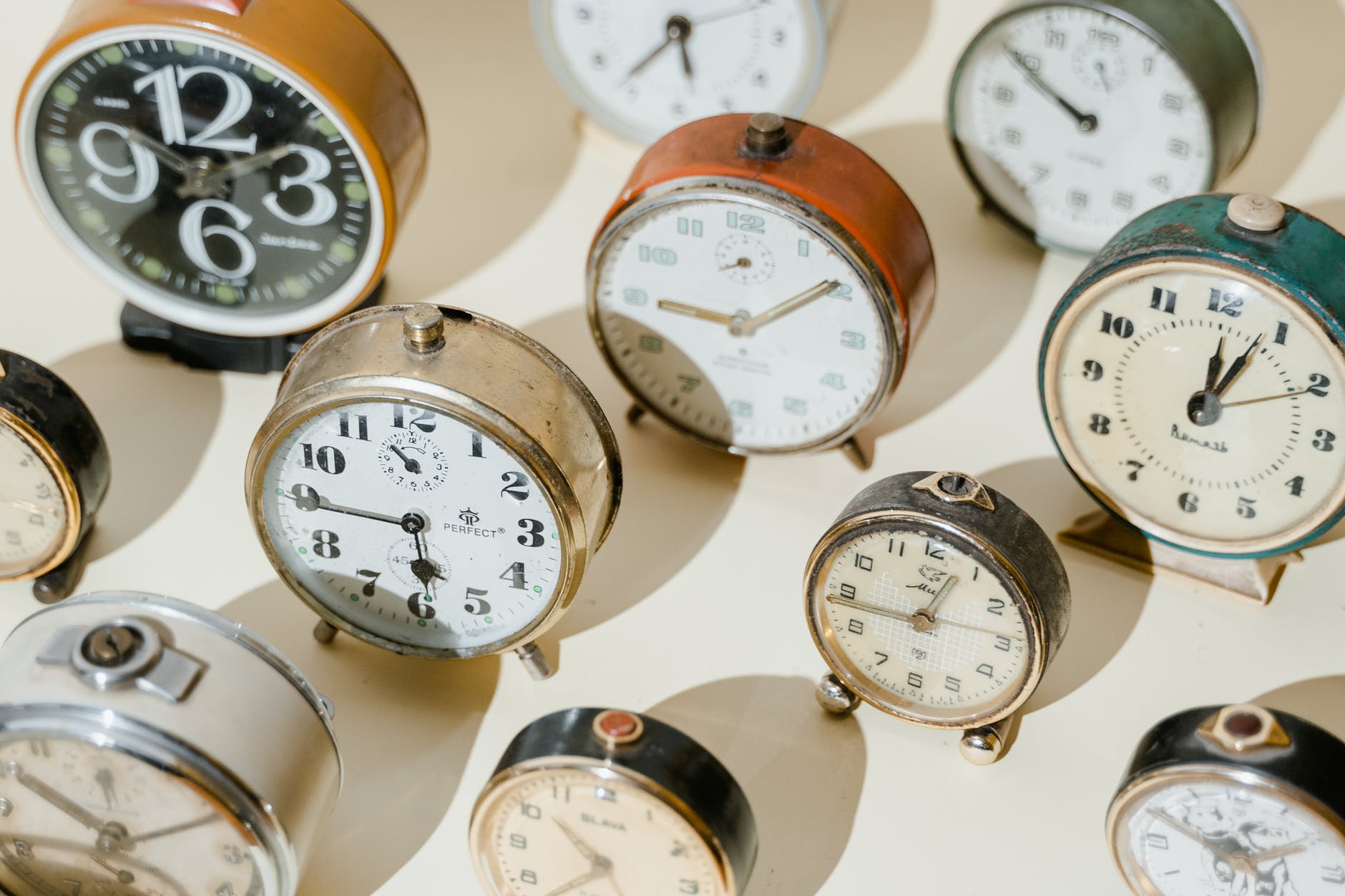
Yesterday, WordPress notified me that I had just published the 900th post on my current daily blogging streak. That surprised me because I didn’t realize it had been so long since I’d started this latest spate of daily blogging. 900 posts in a row means almost two-and-a-half years of finding something to write about every day! That’s a lot. Admittedly, not all of those posts were worth the time they took to write. If I couldn’t think of a topic, I just winged it, writing about anything, no matter how trivial.

Many times during those 900 days, especially on days when I had little time and little in my head, I considered forgoing the day’s blog, but daily blogging is a good habit for a writer. This writer, anyway. So, despite those less than wise and witty and wonderful posts, in the end, it was worth the time. After all, it did force me —- allow me? — to sit and focus on words and writing and thoughts (or no thoughts) for the hour and a half it took to write, edit, add tags, and publish each piece. That in itself was worth the time.

What surprised me more than learning about that 900th post, is learning that daylight savings time starts tomorrow. Huh? How is that possible? Didn’t we just turn back the clocks? I get so confused. I know the clock hands spring forward an hour (spring forward in the spring is how I remember it), but does that mean I lose an hour of sleep in the morning? I think so. If six become 7, that also means according to clock time, I will get to sleep in a bit longer before the rising sun wakes me up. In body time, it comes out to be the same because I’ll be going to bed later, too.

Colorado is attempting to go on permanent daylight savings time, which is weird to me. If the legislators decide not to dicker with time changes anymore, why not just leave it at regular time? Studies have shown that, despite the reason for daylight saving — saving energy — there is little or no effect on energy savings. Still, whichever time they choose, it’s good to stick with it because car accidents and work-related injuries increase the week after the spring and fall changes.

What didn’t surprise me is what a good time I had today. I went with friends on a day-long trek to the big city. I jokingly refer to a nearby town with a Walmart and a Safeway as “the big city,” but today’s excursion really was to a big city. For most people, a metro area with a population of 160,000 isn’t a big city, but compared to where I live, it’s immense with immense stores and more restaurants than a person can visit in two lifetimes. We stopped at a sporting goods store where I bought some shoes, wandered around a bookstore, checked out a discount clothing store and picked up a few groceries. On the way home, we stopped at a new Asian restaurant in a nearby town and had Thai food. In respect for what they thought were my more plebian tastes, they ordered the Thai food without a lot of heat, though I don’t think that was necessary. As long as the hot spices don’t sear my esophagus, I like spicy foods. Still, heat or no, the food was good. Even my friends — an Asian and an American who’s back temporarily from a year-long stay in Bangkok — enjoyed the food.

That’s about all I can think of tonight on the topic of time, which is good because it’s late and I am out of time. Pleasant dreams.

***

What if God decided S/He didn’t like how the world turned out, and turned it over to a development company from the planet Xerxes for re-creation? Would you survive? Could you survive?

A fun book for not-so-fun times.

Click here to buy Bob, The Right Hand of God.

Sanctioned Con Men

I came across an interesting line in a book so uninteresting I don’t even remember the title or what the story was about. I wouldn’t have remembered the line, either, except that I was so taken with it (and so untaken with the story) that I set the book aside to jot down the words: Beyond the reach of thought police and sanctioned con men . . .

What came after those few words, I don’t remember. And it doesn’t matter. Those last three words explain so much — to me, anyway — about the world we are living in.

Most of us are familiar with the thought police — we encounter it every day in places like Twitter and Facebook, where anything posted that goes beyond their “guidelines” is censored. You can still think whatever you want, but if goes against “groupthink,” then you darn well better keep it to yourself or suffer the consequences. As of right now, the only consequences are being censured by fellow users or by being put in FB jail and banned from posting anything for a certain number of days. (Unless, of course, one of their bots label your blog as spam — which is what happened to me — in which case it is banned for all time with no recourse and no possibility of a review by a real person.)

But “sanctioned con men”? That is a new one on me, though I know exactly what is meant by the term. I feel the effects of their con all the way down to my belly and sometimes back up again. The con is so insidious, few people call it a con, and yet it is. And not just con men, but also con women. I think the women are worse because they are better at portraying not just sincerity but also sympath.

In case you haven’t figured it out, I’m talking about the news we are fed on television. The sanctioned news. The “legitimate” press as it is called. The non-fake news (which is actually faker than the fakest fake news.) I’m sure it’s the same in the print news, but I haven’t seen a real newspaper in ages, and the only reason I am aware of broadcast news is that the woman I help care for likes to watch it.

Does anyone really believe they are being told the truth when they watch the news? Do they really believe they are being given a glimpse of the truth that lies in the dark underbelly of national or international politics? If so, it’s understandable because it’s hard not to believe that what we are being told is the truth when we see photos of unvaccinated people sick with The Bob; medical personnel sobbing about unnecessary deaths; cities being bombed by evil emperors; pretty and personable people telling us horrific tales with oh, so much compassion.

I’ve spent too many years of my life studying the truth behind the old headlines to believe any headline that I now read or hear. I can’t even begin to guess what is truly going on anywhere in the world, nor do I care to delve as deep as I would need to in order to find out the truth (though a few articles by alternate presses elsewhere in the world paint a different picture from what the sanctioned con men and women are portraying). All I know is that somehow, some way, we are being conned about all sorts of different things, and that current events fit someone’s agenda. Because what I learned during all those decades of study is that history doesn’t just happen. Someone (or a group of someone’s) make it happen.

I have no idea what got me on my soap opera tonight, especially since I realize few people agree with me (the best cons convince people the con is not a con), but I’m going to post this commentary about sanctioned con men anyway (nonspecific though it might be) because I spent so much time writing it that I now have no time to write something different.

***

Pat Bertram is the author of intriguing fiction and insightful works of grief.

Beach Read

The term “beach read” was first used in 1990 as a way for publishers to market books to people going on vacation. These so-called “beach reads” have mass appeal, are not intellectually stimulating, are guaranteed not to ruin your summer vacation with unwanted — and unpleasant —- feelings or thoughts, and most of all, are easy to digest. Shortly after the term became popular, readers were inundated with novels sporting beach-themed covers and beach-themed stories, as if an entire generation of writers decided to take “beach read” literally.

It strikes me as strange that people would take a beach-themed beach book to the beach to read while at the beach. If one is at the beach, why read a book about the beach? Why not experience the beach at first hand? But then, I suppose, people who spend a lot of time at the beach get tired of the relentless tides and the incessant noise of the breaking waves and need something to divert their attention. It makes a sort of sense, then, to read about the beach because if you’re at the beach, you don’t want to be reading about backpacking in the mountains, otherwise it might confuse you about where you are and what you are doing.

I just finished such a beach read (out of desperation since I couldn’t get to the library), and what most intrigued me (and why I kept reading) is that, like so many of this genre, the story took place in the Outer Banks, with the ocean on one side and Pimlico Sound on the other. I knew the place because I’d been there — it was one the many locations I’d experienced during my cross-country trip.

There is something special about being able to place yourself in a book. When I was young, so many books were set in New York, so I knew New York better than any other city except my own native Denver. It helped that I had been to New York several times, so I knew the sound and the smell and the vibe of the place, but still, I knew so much more about the city than I could have known by real life experience. Oddly, although I knew Denver by experience, I never knew it literarily. Very few books were — and are — set in Denver; it has always been considered a literary backwash. A staple of my childhood, the Beanie Malone books by Lenora Mattingly Weber were a rare exception.

[Writing this made me remember a career day in high school when I was instrumental in bringing Weber (who lived in Denver) to speak to us about the writing life. Considering that I wasn’t blessed with self-esteem and wasn’t knowledgeable in the ways of the world — meaning I didn’t know how to do much of anything — you’d think I would remember how I did something so out of character rather than just recalling the end result, but I haven’t a clue how I got Weber there.]

Four of my books are set in Denver, though I’d never be able to use that city as a setting for any possible books in the future because it has changed so drastically since I last lived there, not just the skyline, but the ideology and politics of the place.

Despite my having spent time at various beaches on three coasts (east, west, gulf), I wouldn’t be able to write a real beach book, either, since I only know a fraction of the mood of those places, and my ignorance would be apparent. I suppose I could create a beach in my back yard — get some sand and a kiddy pool — but that certainly wouldn’t be the same.

I guess I’ll just read about beach places and remember how it felt — how I felt — when I was there.

***

What if God decided S/He didn’t like how the world turned out, and turned it over to a development company from the planet Xerxes for re-creation? Would you survive? Could you survive?

A fun book for not-so-fun times.

Click here to buy Bob, The Right Hand of God.

What Is Brought by the Wind

I heard a proverb the other day that is sticking with me: What is brought by the wind will be carried away by the wind. There seem to be various meanings for this proverb, such as “easy come, easy go,” or “what one hand gives, the other takes away” or maybe even “you reap what you sow.”

It is also similar to “what goes around comes around,” though in this case, it would be “what comes around goes around.”

Like many such sayings, at first hearing, it seems to be steeped with import, but on reflection, seems rather simplistic. Things come and things go. Ho-hum. “What goes around, comes around” as well as “you reap what you sow,” at least say there are consequences to one’s actions, though in real life, that’s not always true. People who are unkind are often treated with kindness, and people who are kind are just as often treated with unkindness. So, actions have consequences. But sometimes not.

Still, there is a comfort in believing such adages, to believe that whatever unpleasantness that randomly comes into our lives will just as randomly leave one day. Of course, it also means that luck won’t hold — anything good that randomly comes will also leave — so enjoy it while you can.

Whatever the metaphoric or figurative meaning of this particular adage, I do know for a fact that What is brought by the wind will be carried away by the wind is not literally true. On the open plains, for sure. Thing are blown into an area and then blown away. But in a fenced yard? Nope. Not in my fenced yard, anyway. In the fall, leaves from the neighbors’ trees are blown into my yard and there they stay until I rake them up. Same with trash. On windy days (which around here are frequent) trash of all sorts is blown into my yard, and there it stays until I can pull on some sort of protective glove to dispose of the debris

I never used to be wary of wind-blown trash of any kind, but ever since the onset of The Bob, I’ve been leery of barehandedly picking up food wrappers, masks, bottles, cans — anything that could have been dropped by a possibly infected person. Bottles and cans, of course, don’t get blown into my yard, but people do litter, and so there are often cans or bottles left on my property outside the fence.

And oh, yes. Winds also bring the seeds of weeds. Those seeds don’t blow away, but plant themselves and stay.

Still, I like the mysteriousness of “what is brought by the wind.” You never know what could suddenly blow into your life by the whim of the winds. Something good perhaps. Maybe even today.

***

Pat Bertram is the author of intriguing fiction and insightful works of grief.

Homo Unsapiens

I sometimes watch Judge Judy reruns with the woman I help care for, and boy is that an eyeopener! I know that the cases are chosen specifically because of the bizarre nature of either the problem or the people involved, so I try not to let that interfere with my concept of the world today, or rather my concept of the people in the world. (I already have a poor opinion of people in general, though individually, I like people just fine.) Still, I can’t help but be appalled by people and their behavior. It makes me wonder if, despite the already low regard I have for them, I have greatly overestimated the intelligence and integrity of humanity.

But, as I said, I try not to extrapolate any greater meaning from this small segment of the human population.

What is an eyeopener, however, is how often people who are in the wrong will sue their victim. It’s not as if they are trying to scam the person — they truly seem to believe as if they have right on their side. Several times, people who have tried to cheat the system by getting childcare costs or elder care costs they didn’t really qualify for will sue their accomplice for not turning over their share of the funds. (In a couple of cases, the defendant applied to be a certain person’s caregiver, even though they weren’t going to be doing the job, and the litigant wanted their share of the money.) Sometimes, a person who is getting childcare from the other parent of their child even though they share joint custody (in which case, neither parent should have to pay the other) will sue for additional funds. Or someone who is driving without insurance and who makes an illegal turn will sue the person with the right of way who ran into them so they can get the money to fix their uninsured car.

What interests me from a writer’s point of view, is the total belief in the rightness of their cause. I don’t often see this in books — too often antagonists make excuses to themselves (and eventually to the cops who catch them) for their behavior. If they truly believed they were in the right, they wouldn’t need to justify their actions. They would simply know they were the victim. (Even burglars who get shot at when breaking into a house don’t deny their crime; they just believe there shouldn’t have been any repercussions.) Every time I watch this behavior — the belief of the wrongdoer that they are the rightdoer — I remind myself to use this for a character in my next book (whenever that might be).

Another eyeopener is the constant and ubiquitous use of “had.” For example, “I had went to the store.” If all the “had”s were edited out of the show, I’m sure the shows would be at least five minutes shorter. It’s surprising to me that while Judge Judy feels compelled to scold people for using fill words like “basically,” idioms like “like,” and bad grammar, she never mentions all the “had”s. I suppose she picks whatever most offends her at the time. Or whatever seems most rant-worthy.

What amuses me most are the obvious signs that people have been coached. People who use such constructions as “Basically, like I had went to the store” simply do not use words such as “property” when referring to their stuff or “altercation” when referring to a kerfuffle.

It also makes me laugh to think that humans named themselves “homo sapiens sapiens” when there seemingly is so little sapience involved in human interactions. A better term, perhaps, especially after watching the people who come before Judge Judy, would be “homo unsapiens.”

Photo by Sora Shimazaki on Pexels.com

***

What if God decided S/He didn’t like how the world turned out, and turned it over to a development company from the planet Xerxes for re-creation? Would you survive? Could you survive?

A fun book for not-so-fun times.

Click here to buy Bob, The Right Hand of God.

Research

“Research” is a rather innocuous word with various definitions, such as “careful or detailed study,” “studious inquiry,” and “collecting information about a particular subject.” This word didn’t used to present a problem, but nowadays, the word “research” has become a trigger for contempt of others.

Some people are contemptuous of those who find out their information via Facebook or other such sources, but the truth is, depending on who your friends are and how committed they are to the truth and serious research, you can be steered toward all sorts of interesting, scientific, and thought-provoking articles.

Some people are contemptuous of those who Google a subject, read an article or two and call it research.

Some people are contemptuous of those who read a scientific paper but don’t go beyond that to do any of their own thinking or collecting any additional information.

Because “research” is such a trigger word, I have become uncomfortable talking about the research I’ve done for my books, though my research was not of the Facebook or Google or reading a couple of articles variety. My research was done before I knew what any of those online things were — before I’d ever even used a computer — and entailed reading hundreds of books, presenting all sides of the issues I discussed in my novels, as well as spending a lot of time in libraries. It’s because of all the research I did for A Spark of Heavenly Fire, my novel of a pandemic that preceded the real world one by a decade, that I am leery of any “research” people currently tell me about and expect me to believe. There have been so many shenanigans over the years, and suddenly, we are to believe that those in control of the drugs (any drugs) have our best interests at heart.

I mentioned a few weeks ago that when the woman I take care of is napping, I read her Reader’s Digest Condensed Books, and recently one of the books that showed up was novelization of troubles in the pharmaceutical industry. Thalidomide, anyone? Fen-phen? Eugenics? DES? Statins?

Oops. I didn’t mean to get into that. This wasn’t supposed to be about my distrust of the drug companies but simply a discussion of how the word “research” has become an emotional quagmire. But despite the quagmire, I really don’t have to feel bad about calling the information I get for my books “research,” because if nothing else what I do certainly falls under the category of collecting all sorts of information about a particular subject, or even several subjects, since each of my three “conspiracy” novels focused on a different area of study.

***

What if God decided S/He didn’t like how the world turned out, and turned it over to a development company from the planet Xerxes for re-creation? Would you survive? Could you survive?

A fun book for not-so-fun times.

Click here to buy Bob, The Right Hand of God.

The Unexamined Life

Sometimes I can only shake my head at myself. I used to think it silly when people wrote about such things as the weather or the mundane tasks of their day, and yet lately, I am writing about those very things. It used to be that I could justify such trite topics by trying to find a moral to my day’s tale or meaning in my activities, but I’ve noticed that I seldom do that anymore. Perhaps I no longer need to search for meaning in the mundane. Perhaps the mundane — the minutiae that make up most of our lives — is enough in itself. Perhaps living is enough.

We humans always seem to want more — more meaning, more money, more material goods — but whatever we have, whatever we do, should be enough because it’s all part of living.

I used to agree with Socrates that the unexamined life is not worth living, but now I don’t know how important such scrutiny really is. It is important to the person who wishes to live an examined life, as I used to, but obviously, it’s not important to those who simply live without questioning their motives and morals. (Whew! I sure am using a lot of “m” words in this post!)

But examined or not, every life is worth living, or at least it should be. Admittedly, this is easy for me to say because at the moment, there is nothing wrong with my life. In the years to come, I might change my mind about the worthwhileness of it all as I get feeble or wracked with pain or incur financial difficulties, but that’s straying from the topic of an examined vs an unexamined life. The more I think about it, it can’t matter except to those of us who do like to examine ourselves and our surroundings. After all, small children simply live. They have no need to examine their lives. For them, what is, is. There’s nothing beyond the moment. And no one would ever say that a child’s life — unexamined though it is — is not worth living.

It seems like I’m spending a lot of words to justify my blog posts that present the weather as well as my doings with regards to the weather (shoveling snow, watering grass, planting seeds) without delving into deeper meanings. I guess what I am saying is that I am okay with whatever ends up on the page, whether my words explore my inner worlds or my outer world or simply lay out the experiences of the day. No more shaking my head at my own inanity.

Oh, yes . . . the weather. I almost forgot! It was cold today and will be even colder tomorrow.

***

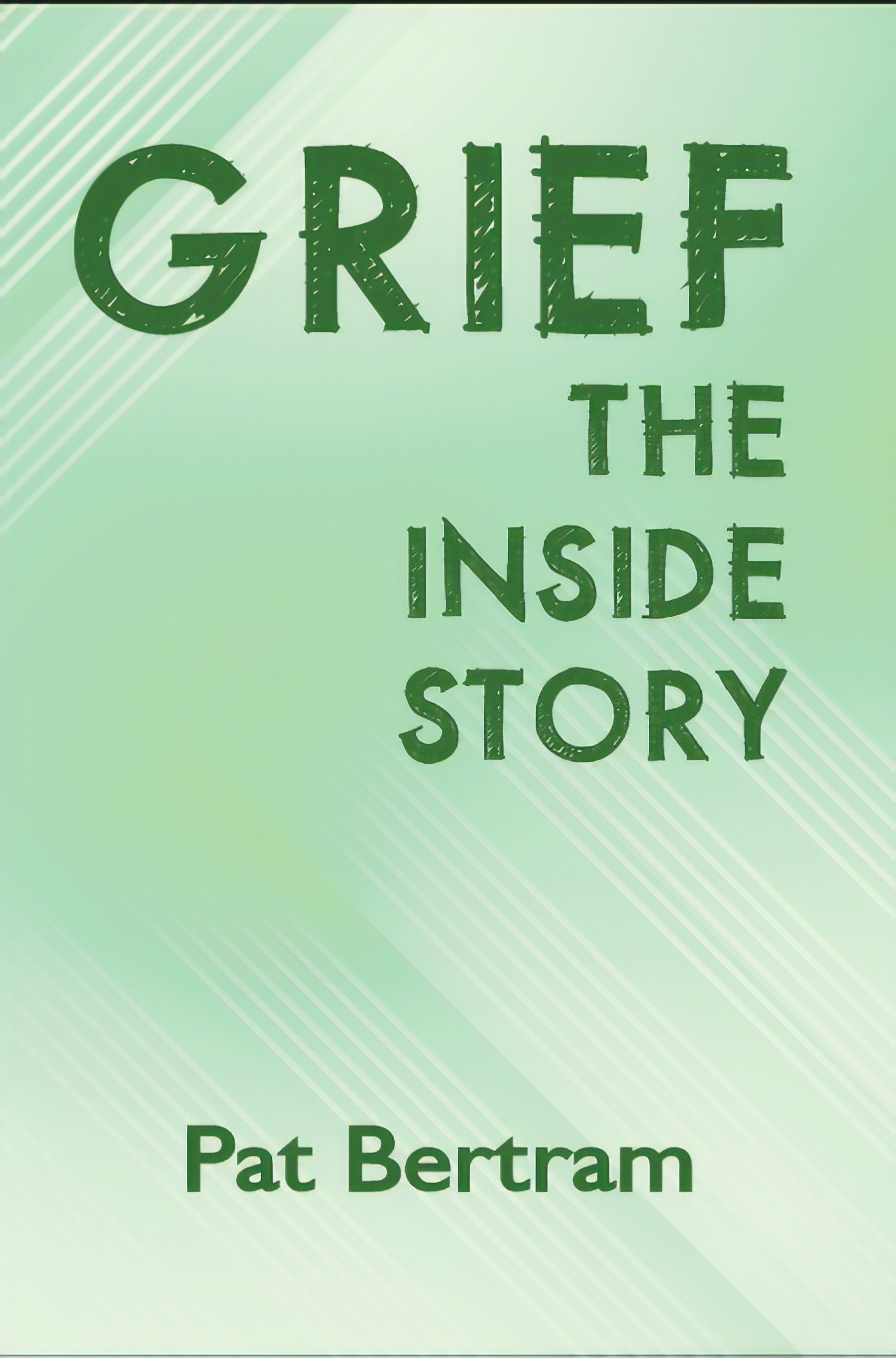
Pat Bertram is the author of Grief: The Inside Story – A Guide to Surviving the Loss of a Loved One. “Grief: The Inside Story is perfect and that is not hyperbole! It is exactly what folk who are grieving need to read.” –Leesa Healy, RN, GDAS GDAT, Emotional/Mental Health Therapist & Educator.