Wake Up and Die Right

At an exercise class today, we talked a bit about the murder mystery I’m going to write about the class (assuming I get myself in gear), and then we did warm up exercises while the teacher sorted through her music to find the recording she wanted to play. When she couldn’t find the right DVD, she muttered, “Wake up and die right,” which stopped me in my tracks.

“What did you say?” I asked, not sure I heard correctly. She repeated the phrase, and I laughed. I’d never heard the saying before, and coming as it did right after a discussion about our fictional murder, it seemed even more amusing. And a bit gruesome.

Wake up and die right. Oh, my.

Odd words, phrases, and sayings often stay with me, rattling around in my brain until I can make sense of them. (In fact, just yesterday I railed against the appalling sentiment, “He deserved to die.”) The more I thought about “wake up and die right,” the more it made sense. We die right if at the end, we have no regrets. We die right if we’ve lived life to the fullest and used ourselves up, if we’ve danced and laughed, if we’ve enjoyed the company of those who enrich us, if we feel the sunsets and smell the rain-washed air. (If you live in the desert, of course, that rain-washed air comes so infrequently you better smell it when you can because it might be many months before you get another chance.)

Wake up and die right. Oh, yes.

Apparently, the saying came from World War II. Soldiers who let their attention wander were told to “Wake up and die right” — to pay attention, to fight, to get a grip, to die like a soldier if necessary. The adage migrated to the general population and seems to have been prevalent during the late forties and early fifties, but its use faded as memory of the war years became supplanted by other invasions with other jargons — the Beatles, the Viet Nam “police action,” the drug wars.

Today, more than sixty years after the maxim had been laid to rest, it came to life once again. I suppose in a way, it’s reminding me to just sit down and write the book about the class because, of course, I would regret not having written the story. I just need to wake up and do it so my designated victim can die right.

***

Pat Bertram is the author of the suspense novels Light Bringer, More Deaths Than One, A Spark of Heavenly Fire, and Daughter Am I. Bertram is also the author of Grief: The Great Yearning, “an exquisite book, wrenching to read, and at the same time full of profound truths.” Connect with Pat on Google+. Like Pat on Facebook.


I Am Not an Arthur

Last night I got together with some people for a group walk and the first thing one of the women said to me was, “Are you an arthur?” Although my name is not Arthur, I knew what she was asking. A bit hesitantly, not sure if it were something to be proud of or ashamed about, I admitted I was an author.

The woman said, “I’ve just started writing. You should come over to my house so you can take a look at what I wrote and tell me what you think.”

I didn’t know this woman. Had just met her a few seconds before. And she wanted me to look at her writing? Eek.

As graciously as I could, I said, “I’m sorry, I don’t do that.”

“Why?” she asked.

“Because it’s a good way of making enemies,” I responded.

“Why?” she asked.

“Because people don’t like what I tell them.”

“Why?”

“Because I tell the truth.”

“That’s what I want,” she said. “The truth.”

knightBy this time, I was feeling besieged. I live with people who constantly want/need things from me. I am always fielding online requests for help from people I don’t know and a few that I do. What I needed last night was a respite from such burdens.

Still trying to be gracious, though my irritation seeped through, I said. “No you don’t.”

And it’s true, whether she knew it or not: she did not want the truth as I see it. She had no writing experience. She wrote longhand and, because her wrists hurt, she hadn’t written much. She admitted she didn’t know how to spell, and when I told her that computers did that for her, she said she didn’t have a computer, didn’t know how to use one. She didn’t know grammar, either. Didn’t read books on how to write, didn’t read anything, actually, except a very occasional Stephen King.

So yes, I can guarantee she wouldn’t like anything I had to say about a few scribbled pages full of misspellings and grammar errors, and an absence of story elements. What she wanted was 1) for me to tell her that underneath all the obvious errors her writing was great and 2) for me to tell her everything I knew about writing in a few quick sentences. And there was no way I would do either. Besides, even if her writing was execrable, it’s not my place to tell her so and ruin her enjoyment.

I suggested that she read, but her wrinkled brow told me she couldn’t see the similarity between writing and reading. Finally, I told her just to write. To have fun with it. Not to worry about anything else. (Without a computer and with no desire to learn how to use one, she could never be anything but a hobbyist, so she might as well have fun.)

I learned something from last night’s experience, though — the next time anyone asks me if I’m an arthur, I’m going to say no.

***

Pat Bertram is the author of the suspense novels Light Bringer, More Deaths Than One, A Spark of Heavenly Fire, and Daughter Am I. Bertram is also the author of Grief: The Great Yearning, “an exquisite book, wrenching to read, and at the same time full of profound truths.” Connect with Pat on Google+. Like Pat on Facebook.

Cliché, Classic, Cheat, or Convention?

I’ve been collecting mystery genre clichés to use in a whimsical mystery story. Some of the suggestions people have given me are true clichés — clues, characters, or plot devises that have been so overused they hold no surprise anymore. For example, “the butler did it.” The butler was such a ubiquitous character in older mysteries, and such an unobtrusive character, that the choice of the butler for villain was innovative the first time or two, but it quickly became clichéd. After the butler as villain became prevalent, there came a series of mysteries where the butler was the first suspect, but he was so obvious because evebutlerryone knew the butler usually did it, that he was quickly dismissed as a suspect, but the wily detective eventually discovered that it was, in truth, the butler. Then there were the mysteries where the butler became the detective. Now, of course, any use of a butler is clichéd, but it doesn’t matter because no one has a butler anyway. I suppose it would work if a character was named Butler. Hmmm. Might be a possibility for my mystery. Could be a fun gag if nothing else.

A convention is the way something is done. For example, in a mystery there must be a mystery, otherwise it wouldn’t be a mystery. There must be someone trying to unravel the mystery, and there must be clues, false trails, and various other common conventions that make up a mystery novel. And especially there must be a satisfying ending to tie up all the story threads. Just because these elements are in all mysteries, it doesn’t make them clichés. A cliché is something that has become so overused that it no longer holds any meaning or surprise, and the whole point of the mystery genre is meaningful and surprising revelations.

The mystery itself, or a specific type of ending could be clichéd, though. For example, the ending where a detective gathers all the suspects together has become a cliché, mostly because everyone today has at least a modicum of an idea of how the police really work, and the cops simply do not gather all the suspects together to unravel their case in public. Even amateur sleuths, such as the clichéd old lady who noses around because she thinks the police are bumbling idiots, don’t do such clichéd gatherings because they should be smart enough to know that’s how people get killed. And anyway, even if she does do a group unveiling, what difference does it make? Any unveiling of the killer or any confession wouldn’t hold up in court. (We did such a gathering for the end of Rubicon Ranch: Riley’s Story, a collaborative novel I wrote with several other authors, but what made it tolerable was my character’s derision of the whole idea.)

The only ending worse than the clichéd gathering is when the villain has the hero cornered, but spends so much time bragging about how he (or she) did it that the hero gets the upper hand. (Or vice versa — the hero has the villain cornered, but spends so much time congratulation himself that the villain gets away.)

Some clichés aren’t really clichés, but are more of a classic story element. For example, a locked room. Locked room mysteries are a subgenre of murder mysteries, and in fact, I will be using a locked room in my story. Locked rooms add a separate element to the mystery, because not only do you have to figure out who killed the victim and why, you also have to figure out how the heck they got into the locked room. And, of course, the locked room has to be an integral part of the story, otherwise it becomes a cheat with no other reason for being than to add cheap suspense. In my case, I can’t do anything but the locked room mystery. The mystery will revolve around a dance studio, and the only time the studio is unlocked is when people are there. It’s hard to commit a murder unseen in a crowd, though it has been done.

Occasionally clichés are cheats. Someone gets a letter from the victim or killer at the beginning of the story, the person puts the note in a pocket or desk drawer unread, but finds it at the end in time to keep the killer from killing again. It’s a cheat because if the fool had read the letter at the beginning, there would be no story.

In a mystery, the main characters have to act to the best of their ability at all times. A woman who is told not to go some place where danger lurks, and she goes simply because she was told not to, is someone who is not acting to the best of her ability. Stupidity is not a plot ploy. It is a cheat.

So, there you have it, a brief primer on the differences between clichés, classics, cheats, and conventions.

**

Pat Bertram is the author of the suspense novels Light Bringer, More Deaths Than One, A Spark of Heavenly Fire, and Daughter Am I. Bertram is also the author of Grief: The Great Yearning, “an exquisite book, wrenching to read, and at the same time full of profound truths.” Connect with Pat on Google+. Like Pat on Facebook.
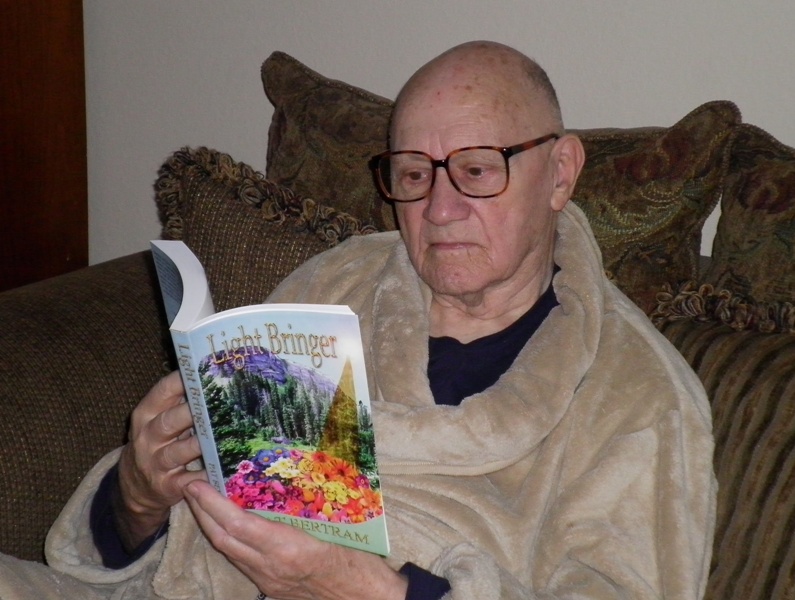
Let’s Play the Cliché Game!

My exercise class suggested I write a book about them. One woman even volunteered to be the victim, though I can’t imagine why anyone would want to kill her. She is lovely, charming, and utterly delightful. I wasn’t going to write the story since it seemed a good way to lose a lot of friends, but at the lunch the other day, I almost whacked one of my classmates with my exercise bag, and she deadpanned, “I’m not the one who volunteered to be the murder victim.” So I decided to write the book. I mean, how could I not use such a perfect line?

I’d like to do the book campy with exaggerated uses and sly mentions of mystery clichés. For instance, I could get a call from one of the women who says she has information, but won’t give it to me over the phone. I immediately rush over there, of course, since such a call is a precursor to being murdered in cheap mysteries, but when I get there I find . . . I don’t know. Something innocuous. That the cell phone battery went dead. (Or better yet, I call the cops, and they think I’m hysterical.) Then there’s the “Don’t Go There” ploy, advice that a character ignores. When she does Go There, she almost gets herself killed. (Someone suggested this should be a buxom blonde, and of course, I know the perfect person for the role — a lady in red who is a buxom blonde or rather a buxom sometimes-blonde, and she definitely would Go There.) Of course I would also mention the old fictional women from small towns who stumble on so many murders, there couldn’t possibly be anyone left alive in the vicinity. Perhaps even use the alcoholic, donut-eating cop, misogynous cop.

I’m going to start out writing the book the way the idea unfolded in real life, beginning with the suggestion of my writing the book, our planning the murder, etc. leading up to the day we go to class and find her dead for real. The victim is such a good sport, she let me take a photo of her being dead to use for the book cover. (She sank to the ground gracefully, and fell into the perfect pose. Hmm. Maybe she is an eminently suitable victim after all. In the mystery world, she would be too good to be true.)

For now, I’m collecting clichés to use in the book. What do you think are the top clichés in mystery/suspense/thriller fiction? Who are the stock characters? What clichés and other mystery genre conventions do you absolutely hate?

But be careful! You might just end up in the book.

***

Pat Bertram is the author of the suspense novels Light Bringer, More Deaths Than One, A Spark of Heavenly Fire, and Daughter Am I. Bertram is also the author of Grief: The Great Yearning, “an exquisite book, wrenching to read, and at the same time full of profound truths.” Connect with Pat on Google+. Like Pat on Facebook.
Why We Read Blogs

At lunch with friends today, one woman said she was computer literate, but admitted she didn’t understand why anyone would read my blog, or any blog, actually. Another friend said she read my blog because it was interesting. I was glad she supplied a response because my mind had gone blank — why would anyone read my blog?

People unfamiliar with blogging often equate these web logs — these online journals — with the diaries many of us kept as children. “I had oatmeal for breakfast. I went to school. Bobby pulled my hair. I did my homework then Mom let me watch television.” Deadly dull lists of activities no one, including us, ever cared about. Admittedly, many bloggers do relate the minutiae of their day, but mostly people talk about what is important to them.

One online friend, a woman who lost her soul mate a month before I lost mine, started a blog to chronicle her new life. She’s about to become a nomad, living and traveling in a small motor home. Among other things, she will be searching for a new life, a new place, maybe even happiness. Her blog tells of her preparations, and once she’s on the road, that blog will tell of her adventures.

Many online author friends blog about their available books, their publishing experiences, the books they read and review, the stories they are writing.

People with expertise in various fields give advice. Literary agents tell authors how to get published, hikers tell about their experiences in the wilderness, mothers give advice or seek support with raising children, businesses blog about their products, crafty folk share patterns and photos of finished projects, techno-types discuss the newest technology.

And me . . . I write about myself — my ideas, my hopes, my experiences, what I’ve learned from those experiences — and anything that captures the attention of my magpie mind. I write this blog because . . . well, because I am a writer. Nothing seems real to me until I’ve put it into words, though I am learning to be in the moment, to be alive without needing to explain to myself what I am feeling.

Until the past few months, most people who read this blog have been online friends or strangers, which was — is — wonderful, but now people I know in real life are also reading this blog. There is a quiet joy in being told, “I read your blog last night.”

Of course, that’s more about why I write this blog than why people read it. I’d planned to talk about how important stories are, how stories connect us, how the life stories people choose to share with us show us our similarities. I’d planned to say we read blogs for the same reason we read fiction — to live and learn and grow vicariously. Not all of us might be able to live on the road, for example, yet we can all share in the struggles and triumphs of those who do. In the end, I decided not to focus on the storytelling aspect of blogging. The truth is much simpler than that. As my friend said, we read a particular blog because it’s interesting.

***

Pat Bertram is the author of the suspense novels Light Bringer, More Deaths Than One, A Spark of Heavenly Fire, and Daughter Am I. Bertram is also the author of Grief: The Great Yearning, “an exquisite book, wrenching to read, and at the same time full of profound truths.” Connect with Pat on Google+. Like Pat on Facebook.

Break Time Now Available on Amazon!

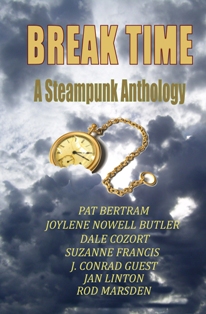
Break TimeBreak Time, the steampunk anthology I’ve been collaborating on with six other authors has now been published. You can find the kindle edition here:  Break Time on Kindle And the print edition here: Break Time in print. Soon it will be available on Smashwords and on Barnes and Noble.

To whet your appetite for the story, here is an excerpt from Break Time:

***

(Interim) Florence Giston, 1966 by Pat Bertram

Five minutes after the time machine winked out in a rainbow of light and harmonious sounds, it still hadn’t returned. Flo had watched the machine leave and arrive back within minutes during Al’s journeys to their shared past, so she thought she knew what to expect, but she hadn’t experienced this lag time before. Maybe something had gone wrong?

She waited another minute, then slowly turned around in a circle, hoping that the machine had somehow appeared behind her, but the black pyramid remained absent.

She’d felt helpless after the death of her husband, knowing there was nothing she could do to bring him back to her, but even that feeling of powerlessness paled in comparison to this new conundrum. Death, despite its awesome mysteriousness, was still somehow ordinary. Except for those alive today, everyone who had ever been born was now dead.

Could Al be dead? Her father-in-law had said he was going to kill steam, but could someone have killed him before he could accomplish his task? Could the time machine have somehow gone off course, or crashed? If Al was lost somewhere in the break in time, how would she ever find him?

She took a deep breath. No matter how long Al might have been traveling in time—misplaced or not— he’d only been gone a few minutes.

No need to panic.

Just wait. See what happens. Believe he will return.

***

Pat Bertram is the author of the suspense novels Light Bringer, More Deaths Than One, A Spark of Heavenly Fire, and Daughter Am I. Bertram is also the author of Grief: The Great Yearning, “an exquisite book, wrenching to read, and at the same time full of profound truths.” Connect with Pat on Google+. Like Pat on Facebook.
Call for Submissions

rangelSecond Wind Publishing is accepting short stories, essays and poetry for its upcoming anthology, Wind Through an Open Door.

All submissions should deal with the question: what happens to us when we pass from this life? Remembrances of lost loved ones, personal experiences, profound recognitions of the afterlife (or its absence)—regardless of religious persuasion—are all welcome.

There is no cost to submit an entry. There is a maximum of 7000 words for essays or short stories. All entries must be submitted no later than June 10, 2014. Those whose work is included in the anthology will receive two contributor copies. Additional copies will be available for purchase, with contributors receiving a 60% discount. Submissions and questions should be sent to mike@secondwindpublishing.com. Be sure to use “Wind Through an Open Door submission” in the subject line.

Best of luck to everyone!

All Good Stories Begin and End in the Heart of a Man . . . or a Woman

I just finished watching Last of the Dogmen for the fourth or fifth time, and I am still under the spell of powerful storytelling. The story itself is good, but what makes it special is the narration by Wilford Brimley. Oddly, the narration was added after filming and over the objection of the writer/director who was so upset by the use of supplementary text that he refused to write Brimley’s words. Apparently, in some versions of the movie, the narration was subsequently cut way down and redone in another voice, probably in response to viewer complaints since most people seemed to think the narrative annoying, so I’m lucky to have the version I do.

What’s interesting about the narration from a writer’s standpoint is that it’s a good example of tell don’t show. Normally, showing is the way to go, but there are many intangibles that cannot be shown, especially in a movie. What’s interesting about the narration from a viewer’s standpoint is that it adds a different dimension to the film, taking it beyond a fantasy/romance/western into the category of myth.

Broken heartThe narration starts out with Brimley intoning that “the story begins where all good stories begin and end — in the heart of a man . . . or a woman.” I like that line, mostly because of its truth. If a story doesn’t delve into what matters, then the story doesn’t matter. Another line of Brimley’s is “Sometimes you have to put your faith in something you can’t see.”

And that, of course, is why the movie speaks to me. Both characters are searching for something beyond their ordinary lives, as am I, and they find wonder and mystery they could never even have imagined.

Perhaps we are all looking for what lies beyond the façade of normal life, because really, how can this culture of ours be the apex of billions of years of creation? There must be a world of wonder running concurrently with this world of wage slavery and commercialism. We can’t all find Dogmen, of course, but we can find . . . something.

For thirty-four years, I did find “something.” Although I wasn’t looking for it, I found love, companionship, connection with another human being, which was magical in its own way. And now that he’s gone, I want a different form of magic, though I couldn’t even begin to define what I am looking for. Just . . . something.

And that “something” lies where the rest of my story is — in my heart. It’s just a feeling I have, that there’s something out there — or in me — to find. In Joe vs. the Volcano, another favorite movie of mine, Meg Ryan tells Tom Hanks, “My father says that almost the whole world is asleep. Everybody you know. Everybody you see. Everybody you talk to. He says that only a few people are awake and they live in a state of constant total amazement.”

While living in a state of constant total amazement sounds exhausting, it would be nice to waken just once.

As for movies, apparently what appeals to me in film is the mythic quest. Joe vs. the Volcano, like Last of the Dogmen, is another story of people finding what they never knew they were searching for. And it’s a story of luggage, but luggage is a topic for another day.

***

Pat Bertram is the author of the suspense novels Light Bringer, More Deaths Than One, A Spark of Heavenly Fire, and Daughter Am I. Bertram is also the author of Grief: The Great Yearning, “an exquisite book, wrenching to read, and at the same time full of profound truths.” Connect with Pat on Google+. Like Pat on Facebook.

A Breathtaking Piece of Folly

In 1953, a 44-year-old woman set out to walk for peace. She left everything behind, even her name, calling herself “The Peace Pilgrim.” When she hit 25,000 miles in 1964, she stopped keeping track, but she kept going for many more years. She was walking in response to a spiritual awakening, and she’d taken a vow to “remain a wanderer until mankind has learned the way of peace, walking until given shelter and fasting until given food.” A minimalist hiker, she carried only a pen, a comb, a toothbrush, and a map, trusting to those she met to supply what she needed, though she never asked for anything. Her pilgrimage ended with her death in 1981.

The Peace Pilgrim had a mission, one that people responded to (though sometimes the response wasn’t what you might expect. On at least one occasion, she ended up in jail on a vagrancy charge). But what about someone who just sets off without a mission? Would food, water, and shelter appear when needed? And wouldn’t it be a bit presumptuous to expect others to supply one’s needs?

On the home page of The Peacewalker Society, a group that existed to support another peace walker’s mission, is the quote, “Let go, trust and just take the first step. The path will unfold before you.”

Sounds to me like a recipe for death.

When I took my trip to hunt the wild poppy, I paid attention to the miles rolling past as if I were walking instead of driving, and that is when I realized the true foolhardiness of an epic walk. All I saw were miles and miles of windy, dusty, very hot roads with nothing to break the monotony. No water. No stores. No shade. It would have taken me many days of walking across that bleak landscape before I finally found what passes for an oasis in our modern world — a small shopping center with a convenience store, gas station, and fast food place.

That experience along with the reality of water tended to quash my idea of walking long distances.

And yet, and yet . . .

There the idea sits, like a toad in the back of my mind, waiting to leap at the first chance it gets. What would happen if I just took off? No heavy backpacks filled with water, food, and camping gear. No thoughts. No plans. Nothing but me and the next step.

Do I have the trust? Do I have the courage? And more importantly, do I have the mission? It’s that mission, I think, that keeps people going long after good sense tells them to stop. My life has always been about a quest for truth, and I imagine there would be much truth to be found on an epic adventure, but would truth be enough of a mission to fuel resolve?

O. Henry wrote, “The true adventurer goes forth aimless and uncalculating to meet and greet unknown fate.”

Makes me wonder — does a true adventurer take along a computer of some sort? At the beginning, The Peace Pilgrim kept a journal, but it was stolen, so she just wrote her life in the wind. But me, being an inveterate blogger, would need to post my thoughts, experiences, and photos online. Seems foolish — doesn’t it? — but then the whole idea is folly.

Still, as Mrs. Brown said in National Velvet, “I, too, believe that everyone should have a chance at a breathtaking piece of folly once in her life.”

Right now I still have responsibilities, but one day they will end. And then . . . perhaps it will be time for my own breathtaking piece of folly, whatever that might be

***

Pat Bertram is the author of the suspense novels Light Bringer, More Deaths Than One, A Spark of Heavenly Fire, and Daughter Am I. Bertram is also the author of Grief: The Great Yearning, “an exquisite book, wrenching to read, and at the same time full of profound truths.” Connect with Pat on Google+. Like Pat on Facebook.

Bad Luck?

I’ve never considered myself especially lucky. I don’t win contests, though occasionally I do come in second or third. (Most recently, I was a runner-up for the Sharp Writ Book awards in the category of science fiction for my novel Light Bringer.) In group gift exchanges, I always get the gift that no one quite seems to be able to identify or figure out what it does. I seldom win a door prize, and I’ve never won a raffle of any kind.

Today I attended a fundraiser witluckh friends. There were a couple of dozen gift baskets being raffled, and we got to choose which basket(s) we would like to win. I found one basket that only one other person had chosen, so I used all of my raffle tickets for that basket, thinking to up the odds. When I didn’t win, I laughed with my friend about my bad luck, but then on the way home I reconsidered.

Bad luck?

I’d driven to the event center in a 42-year-old car that still runs well, spent the day with good friends and other congenial people, shared smiles and laughter, ate a nice lunch, danced a bit, enjoyed playing with the raffle tickets, and on top of all that, got to help support a good cause.

Seems to me as if I’m very lucky!

***

Pat Bertram is the author of the suspense novels Light Bringer, More Deaths Than One, A Spark of Heavenly Fire, and Daughter Am I. Bertram is also the author of Grief: The Great Yearning, “an exquisite book, wrenching to read, and at the same time full of profound truths.” Connect with Pat on Google+. Like Pat on Facebook.




