I’m a Guest on the Second Wind Publishing Blog

I am blogging at my publisher’s blog today, talking about Finding the Truth of a Story,

We are steeped in story. From birth to death, story forms our lives. Today, more stories are available to us in more media than ever before in history, including the stories we share with each other and ourselves. What is a daydream if not a story of the future we tell ourselves? And at night, while sleeping, our dreams tell us other stories. No wonder we have such a hard time finding a story that is not clichéd. Continue reading—>

 My previous guest post for Second Wind Publishing was Writing: A Universe of Choices.

When we choose to write, we are faced with a universe of choices where all things are possible. Many would-be writers never put a single word on the page because the number of choices to be made seem insurmountable. First, we have to choose what to write about. The topic can be anything: love, abuse, super novas. Next we have to choose how to present the topic. As fiction or nonfiction? As a blog? A poem? A short story? A novel?

By making these decisions, we begin to limit our universe of choices. A blog has certain criteria to be met; it must be brief and interesting or we run the risk of losing our readers. A short story can contain complex ideas, but a novel has the scope for us to develop those ideas more fully. Continue reading—>

If you’re not bored yet, feel free to check out my highest ranked post on the Second Wind Blog: What is Your Character’s Favorite Color?

***

Pat Bertram is the author of the suspense novels Light Bringer, More Deaths Than One, A Spark of Heavenly Fire, and Daughter Am I. Bertram is also the author of Grief: The Great Yearning, “an exquisite book, wrenching to read, and at the same time full of profound truths.” Connect with Pat on Google+. Like Pat on Facebook.

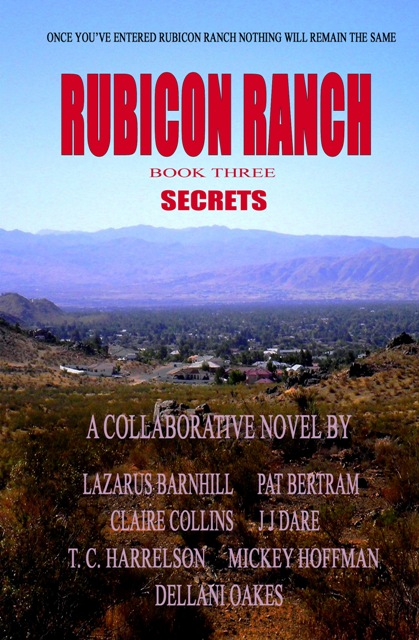
Rubicon Ranch: Secrets — My Current Chapter

RRBookThreemidsizeRubicon Ranch is a collaborative and innovative crime series set in the fictional desert community of Rubicon Ranch and is being written online by the authors of Second Wind Publishing.

In the current story, the  body of a local realtor is found beneath the wheels of an inflatable figure of a Santa on a motorcycle. The realtor took great delight in ferreting out secrets, and everyone in this upscale housing development is hiding something. Could she have discovered a secret someone would kill to protect? There will be suspects galore, including a psychic, a con man, a woman trying to set up an online call-girl service, and the philandering sheriff himself. Not only is the victim someone he had an affair with, but he will also have to contend with an ex-wife who has moved back in with him and a jilted lover, both with their own reasons for wanting the realtor dead.

We hope you will enjoy seeing the story develop as we write it. Let the mystery begin! Whodunit? No one knows, not even the writers, and we won’t know until the very end! If you don’t want to miss further chapters, please go to the blog and click on “sign me up” on the right sidebar to get notifications of new chapters.

(If the Christmas theme seems unseasonal, well . . . considering how long it takes to write a book at the rate of a chapter a week, in a few months, the season will catch up to us!)

Chapter 25: Melanie Gray
by Pat Bertram

Sunday, December 24, 9:00am

Melanie stayed up most of the night sending emails to people on Alexander’s and her contact lists, asking what they knew about her husband. She told them—untruthfully—that she planned to write his biography, and so needed to know anything that could help explain his life and especially his death

She didn’t really expect to discover his secrets this easily, but she hoped that she could at least find a place to start looking for answers. The immediate responses were condolences from those who hadn’t known about his death and from those who hadn’t taken the time to write five months ago when he’d died in what had seemed to be a car accident. A few responses included an anecdote about Alexander, but no one dropped a hint about what he could have done to trigger an assassination.

Only one response surprised her. She’d expected their agent to gush with delight at the prospect of the book, but Dottie wrote: Are you sure this is a wise idea, darling? You might not like what you find out. And isn’t it better to remember him as a real man rather than a character in a book, even one as brilliant as I’m sure yours would be?

Too tired to think of a response to her agent’s message, Melanie dragged herself to bed. She dozed off but jerked herself awake to escape the shadowy creatures who chased her into a building with no windows and no way out.

She thought she’d been asleep for only a few minutes, but the brightness of the room told her she’d slept far into the new morning. She lay in bed, unwilling to face another day in the horror that Rubicon Ranch had become, when she realized she heard something strange for this neighborhood—silence.

She jumped out of bed, ran upstairs to her loft office, and glanced out the window. No tour buses, no streams of cars with gawking passengers, no young people (or old people for that matter) dressed as Halloween ghouls. The only things out of the ordinary were the sheriff’s department vehicles cruising the street—at least four of them. One of the tan vehicles pulled up to the curb in front of her rented house, and Sheriff Seth Bryan climbed out.

Melanie dashed down the stairs to the bathroom, splashed water on her face, ran a brush through her hair, and grabbed a dress from the closet. The off-shoulder peasant dress wouldn’t have been her choice for the first encounter with the sheriff in two months, but she didn’t have time to rummage in her closet for something more appropriate.

The doorbell rang. Barefoot, she went to answer it.

The sheriff’s jeans and white shirt still fit his lean, flat-bellied body as if they’d been tailored for him. As when they first met, he wore a blue ball cap with “Sheriff” embroidered in yellow, but his hair curled around the cap as if it had been awhile since he’d taken the time to get it cut. For once he’d left off the mirrored sunglasses, and he looked as if he’d aged two years since she’d seen him last. Apparently, his attempt to make his marriage work hadn’t succeeded. Or maybe the marriage was succeeding, and his haggard expression and weary dark eyes came from too much time in bed with his wife.

Why do you care?

“Good morning, Ms. Gray,” Sheriff Bryan said, his tone as formal as his words.

“Good morning, sheriff.” Melanie stepped outside, put a hand above her eyes to shade them, and made a show of peering up and down the street. “What happened?”

“The people’s right to free expression and lawful assembly destroyed our crime scenes and impeded our investigation, so we cleared the area of anyone who didn’t live here.”

The chill of the concrete crept up Melanie’s bare legs, but she held herself in place. “You call that lawful assembly? So, if there hadn’t been a murder, you’d have just let all those necrophiliacs continue overrunning the neighborhood?”

“Not murder, Ms. Gray. Murders—two of them. And arson.”

“How did you get rid of all the ghouls and gawkers?”

“We have a deputy stationed on Delano Road and Tehachapi, checking to make sure only people who belong here enter the street. And those who were already here—well, we told them we’d arrest them as accessories to murder. When that didn’t work, we reminded them that tomorrow was Christmas, and that Santa didn’t deliver presents to bad little boys and girls in jail.”

“So, you’re the UnSanta Claus?”

The sheriff quirked one eyebrow as if surprised to discover she had a sense of humor, but Melanie had to admit to herself that in their relationship—if a few meetings and a couple of meals could be called a relationship—there’d been no room for humor. There’d been too much death, too much pressure, too many unanswered questions.

“Have you found out anything more about Alexander’s assassination?” Melanie asked.

“We’re doing what we can, Ms. Gray, but there’s nothing to go on. Just skid marks on an open road.”

“What about Alexander’s missing cameras? If someone stole them from the car right after the accident, there might be a witness.”

“We haven’t found a witness, but if a bystander took the opportunity to steal what you said were expensive cameras, I’m sure he or she wouldn’t be interested in informing us of that fact. Have you looked for the cameras? Maybe they’re inside the house somewhere.”

Melanie wanted to stamp her foot, but she refrained. She didn’t want the sheriff to see her acting so childishly, especially since he was being so damned formal. Besides, it would hurt her bare foot. “I told you. I put the cameras in the car myself.”

“Did he drive off immediately?”

Melanie gazed at the driveway where the car had been parked that morning. She’d put the cameras in the trunk. Alexander had yelled at her from inside the house that she had a phone call. She’d slammed the trunk shut and hurried inside.

The call had been from Dottie, their agent, wanting to know if they’d get the book done by the deadline. Melanie had been annoyed with Alexander for not talking to their agent himself because it would have taken him less time to assure Dottie than to shout for Melanie.

When she hung up the phone and went outside, she found that Alexander had left. She never saw him again, never got to say good-bye.

“Ms. Gray?”

The sheriff’s voice, smooth as melted chocolate, startled her.

“Stop calling me that,” she snapped.

“What would you like me to call you?” he asked.

“Nothing. Stop using my name every sentence as if you’re some kind of used car salesman with a lemon you want to get off your hands.”

“Yes, ma’am.”

Melanie clamped her mouth shut, refusing to rise to the bait.

The sheriff smirked, and the haggardness disappeared from his face. “I need you to tell me what you know about Nancy Garcetti, Clark Bailey, and the fire.”

Melanie glanced back at the door of the house, wondering if she could slip inside for shoes to warm her icy feet, but she didn’t want to have to invite the sheriff into the house. It would feel too much like a fly inviting a spider to visit.

“Go put your shoes on, I’ll wait out here.”

Melanie ran inside, put on socks and shoes, and then sedately ambled back outside. The sheriff hadn’t moved.

“I wish I could help you, sheriff,” she said. “But I don’t know much.”

“I asked you once to call me Seth.”

Melanie shook her head. “Not exactly appropriate.”

“Ah, yes, I’d forgotten how very ‘appropriate’ you always were.”

Melanie narrowed her eyes, wondering if that had been a dig, but he continued as if unaware of her reaction.

“Had you ever met Nancy?”

Melanie tried to remain as still as the sheriff. Or was that the wrong way to act? Did her stillness indicate guilt? Crap, being a maybe murderer was hard.

“I met her once, but we only exchanged a few words.” I know you killed your husband.

“And what about Clark Bailey?”

Melanie relaxed, knowing she had nothing to do with anyone by that name. “Never met him.”

“Oh, but you did. You met him last night. After the fact, so to speak. He’s the man you found wearing the Santa hat.”

“I guess maybe I should have called it in—”

“Ya think?” the sheriff interjected.

Melanie winced at his sarcastic tone. “But I just could not face being known once again as the cadaver dog. I suppose Moody had no choice but to tell you.”

Sheriff Bryan gave her an avuncular smile. “Moody didn’t tell us. She left you out of it. Be careful. She has her own agenda, and she eats innocent women like you for breakfast.”

Melanie straightened her shoulders. “I can take care of myself.”

“Perhaps. Be careful, anyway.” The sheriff turned to leave, then glanced back. “What do you know about Lydia Galvin?”

“Lydia Galvin?” Melanie frowned. “Your Lydia?”

“It’s not how I’d put it, but yes, that Lydia.”

“I don’t know anything about her. Why, is she here?” Melanie laughed, feeling suddenly lighthearted. “She is, isn’t she? Oh, poor Seth. All his chickens coming home to roost. Your wife. Now Lydia. Maybe you’re the one who needs to be careful.”

When Seth cut across her property to the Sinclair house, Melanie realized he hadn’t asked her about the arson. He didn’t forget such matters. Like Moody, he had his own agenda, kept his own counsel.

Melanie went inside, locked the door behind her, and climbed the stairs to the office to see if she’d received any new emails. There was just one from an unfamiliar gmail address:

You never know when to leave well enough alone, do you? Alexander Gray is dead. Let him rest in peace.

***

Pat Bertram is the author of the suspense novels Light Bringer, More Deaths Than One, A Spark of Heavenly Fire, and Daughter Am I. Bertram is also the author of Grief: The Great Yearning, “an exquisite book, wrenching to read, and at the same time full of profound truths.” All Bertram’s books are published by Second Wind Publishing. Connect with Pat on Google+

Zigzagging in Writing and Life

I walk in the desert, sometimes on straightaways, sometimes on hills. I learned something from the hill walks: she who goes up, must come down. And sometimes “down” means a very steep grade. I discovered that it was much easier to get to the bottom of these steep hills if I zigzagged from one edge of the path to the other. By descending diagonally, I can cut the steepness of the hill and am able keep my footing.

This seems to be a good metaphor for plot. While writing, we zigzag down an increasingly steep slope, never quite letting our readers know what direction they are traveling, but always keeping them on the path to the end. Or perhaps they are going up a hill, but the point is still the same: zigzagging.

I sent More Deaths Than One to hundreds of agents and editors, and the consensus was that my writing style was too matter-of-fact for the overly complicated plot. This from people who never read more than a few chapters. (Luckily for me, I finally found a publisher — Second Wind – who read the whole novel and understood what I wanted to accomplish.)

It could be that as readers head down the steep slope of my story, zigzagging from side to side, the plot does seem complicated, but when they reach the end and look back, they can see that the story is very simple. A straight path. A man discovers that what he knows about himself is a lie, and he sets out to discover the truth. Very simple. All the complications are simply the zigzagging path.

***

Pat Bertram is the author of the suspense novels Light Bringer, More Deaths Than One, A Spark of Heavenly Fire, and Daughter Am I. Bertram is also the author of Grief: The Great Yearning, “an exquisite book, wrenching to read, and at the same time full of profound truths.” Connect with Pat on Google+. Like Pat on Facebook.

Everything Happens For the Best — Oh, Yeah?

Twice today I was told, “Everything happens for the best.” Everything? Is it best when a child dies? When an earthquake hits? When people lose their home and end up on the street? In books, everything does happen for the best, whether good or bad. That is the point of writing — to make sense of senseless happenings. There has to be a lesson to be gleaned from the story events — perhaps character growth or a fitting resolution. If the story events happened without reason, the way things happen in life, readers would throw the book across the room and never pick up another one.

Venice Beach PierOddly enough, our brains do that same work for us. When a tragedy has passed and we have come to terms with it, when we have found a way to live despite the pain life dishes out, we often look back and think, “Everything did happen for the best.”

Sometimes now I feel that the death of my life mate/sould mate and my ensuing grief all happened for the best. If he hadn’t died, our lives would have remained on the same treadmill of pain (him) and despair (me). His death set me free — free from his illness, free from the financial constraints that his illness caused, and even free from the chains of such a deep love.

He almost died twenty years ago, and so every day I made a point of recognizing and appreciating his continued existence in my life. Because I knew our time together would be cut short (and it was, just not as short as that earlier brush with death would have indicated), whenever there was a choice of doing something with him or by myself or even with another person, I always chose him. And so, gradually the chains of love were forged. Now if there is an opportunity to do something, being with him is not an option, which has opened my life to many new possibilities.

But was his death really for the best or is my brain simply doing what it can to make sense of everything that happened in the past two decades, and especially the past few years? His death ended our pain and set us both free, but what would have happened if he could have gone into intermission? Would I have ended up in the same place even if the tragedy hadn’t occurred? It’s impossible to tell, but I do know not everything happens for the best. We make the best of what happens. It’s called life.

***

Pat Bertram is the author of the suspense novels Light Bringer, More Deaths Than One, A Spark of Heavenly Fire, and Daughter Am I. Bertram is also the author of Grief: The Great Yearning, “an exquisite book, wrenching to read, and at the same time full of profound truths.” Connect with Pat on Google+. Like Pat on Facebook.

The Rule of the Gun and Card Tricks in the Dark

Thinking often takes the place of writing for me, which can be a problem. If I know the whole story, what I want to say and how I want to say it, I seem to find little interest in actually writing the book. On the other hand, if I don’t know the major elements of the story, I find little interest in writing. I’ve been performing this balancing act with my grieving woman book. trying to put all the pieces together enough to get the story finished. For example, the woman finds a gun in her husband’s bathrobe pocket, and I’ve been wondering what to do with it. Chekhov said that if you show a gun in the first scene you have to fire it in the third. I followed Chekhov’s rule for Daughter Am I, but I don’t see the woman in my IIP shooting the weapon. (I’ve written so little of the book it’s not a Work-in-Progress but an IIP — Idea in Progress.) The gun could be more of a symbol, something so out of place in her husband’s life that she realizes she didn’t know him at all, and hence she doesn’t know herself. So the book would turn out to be a search for identity, as are all of my novels.

gunIn googling “the rule of the gun” to find its author (I’d forgotten it was Chekhov), I came across a wonderful site: Glossary of Terms Useful in Critiquing Science Fiction. Only a few terms are specific to science fiction, so it’s a fun glossary for anyone who writes. I especially like:

Black box scene analysis. A convenient means of evaluating how important a scene is. Think of the scene as a black box: characters go in to it and come out of it. What have they gained or lost? What irrevocable things have happened? How are they different people afterwards than before? The black-box scene analysis is a useful means of separating local dexterity (entertaining imagery) from important plot or character development. (CSFW: David Smith)

Card tricks in the dark. Authorial cleverness to no visible purpose. Wit without dramatic payoff. (Lewis Shiner)

Eyeball kick. A perfect, telling detail that creates an instant and powerful visual image. (Rudy Rucker)

Head fake. A plot action that appears to be significant but is rapidly proved to be a net null, leaving the plot moving in exactly the same direction. Excessive head fakes undermine the reader’s engagement because the reader becomes trained that they are not real. (CSFW: David Smith)

Inappropriate mystery. An author will often use mystery as a means of propelling a reader forward: characters speak of things that are opaque to the reader, a character goes offstage to do something important, or a development is referred to indirectly (“I was just heading out the door when the phone rang, with terrible news”). Mystery is inappropriate when the expected dramatic follow-up is lacking: the offstage action proves to be a diversion, or the suspense proves false. (CSFW: Steve Popkes)

Laughtrack. Emotional countersinking, where the characters’ give cues that tell the reader how to react. They laugh at their own jokes, cry crocodile tears at their own pain, and, by feeling everything themselves, eliminate the reader’s imperative to do so, so the reader disengages. (Lewis Shiner)

Laughtrack is one I am going to have to be particularly careful of in my grieving woman story. In my previous books, I’ve tried to show the story and let readers infer the emotion, but tears are such a part of grieving that I will have to figure out how to engage readers despite the tears.

***

Pat Bertram is the author of the suspense novels Light Bringer, More Deaths Than One, A Spark of Heavenly Fire, and Daughter Am I. Bertram is also the author of Grief: The Great Yearning, “an exquisite book, wrenching to read, and at the same time full of profound truths.” Connect with Pat on Google+. Like Pat on Facebook.

Happy Bloggiversary To Me!

I created this blog exactly six years ago today, back when I hadn’t yet become a published author, back when I didn’t even know what a blog was. I’d read how important blogging was for authors, both as a way of getting known and as a way of connecting with readers, so I decided to “act as if” I were going to be published in the hopes of making it happen. I had nothing to say, no one to say it to, no reason to say anything, but I didn’t let that stop me. I started blogging on September 24, 2007, and haven’t stopped since.

Did acting as if I were goinballoons1g to get published work? Perhaps, though there is no direct connection that I know of. Still, one and a half years after starting this blog, my first two books were published by Second Wind Publishing. They have now published five of my books — four suspense novels and one non-fiction book about grief. More importantly — at least blog-wise — I am still blogging, still making connections, still making friends. Still having fun.



One thing I never expected when I set up Bertram’s Blog, is how much I would like writing and publishing my articles. I feel safe here, away from the constant promos, ideological ravings, and mindless ratings on other sites, and it gives me the freedom to say what I want, no matter how personal. Three and a half years ago, my life mate/soul mate died, and his death catapulted me into such a world of such pain that it bled over into my posts. This blog became a place where I could try to make sense of what I was going through, to offer comfort and be comforted, to find my way to renewed life.

It’s nice to know that whatever life throws at me, whatever problems I encounter, whatever challenges come my way, this blog will be here for me.

Although I’d planned to post every day, during the first four years I only managed to blog three or four times a week, but exactly two years ago today, I made a 100-day commitment to post a daily blog, and I continued to post every day once that initial commitment was fulfilled. (Which makes this a double anniversary — 6 years for blogging, 2 years for daily blogging.)

It amazes me that anyone wants to read anything that I write here. This is so much a place for just letting my thoughts roam, for thinking through problems, and (I admit it) for pontificating a bit. It’s been a kick, writing this blog, and I want to thank all of you for indulging my whims and whimseys.

Thank you for reading. Thank you all for your comments, your likes, your support. They have meant more to me (especially this past three and a half years) than you can ever imagine.

***

Pat Bertram is the author of the suspense novels Light Bringer, More Deaths Than One, A Spark of Heavenly Fire, and Daughter Am I. Bertram is also the author of Grief: The Great Yearning, “an exquisite book, wrenching to read, and at the same time full of profound truths.” Connect with Pat on Google+. Like Pat on Facebook.

Feeling Like a Celebrity

Have you ever met one of those lonely old people who are willing to talk to anyone who happens to wander into their life? They don’t care if you had the wrong address and knocked on their door by mistake. They still ask you to come in, stay and chat awhile, have a glass of fresh-squeezed lemonade or a plate of homemade cookies.

Honey oatmeal cookiesUsually people find their way to this blog by googling such topics as things your mother should have told you, three on a matchdescribing a scene in an interesting way, or my soul mate died, but sometimes they find there way here fthrough topics that have nothing to do with this blog such as sex with sister tips. However people find their way here, I’m glad they came knocking on my blog’s door. I just wish I had some lemonade to offer them, or a plate of fresh-baked cookies. Probably would get more traffic if I did, but I have yet to figure out how to send such goodies through cyberspace.

Even better than having people stop by to read something I wrote is when they leave a comment. Getting comments from strangers makes me feel like a celebrity.  A person I had never met read what I wrote, and liked it enough to tell me so. Wow!

In the end isn’t that what we’re all looking for, whether we’re young or old, lonely or befriended? Aren’t we all looking for someone to acknowledge us? Someone to see us as apart from all the other billions of people in the world, even if only for a moment? We writers and bloggers spew out billions, trillions of sentences each day, and every single one of them says the same thing: “Notice ME.”

Well, when someone leaves a comment, it tells me that for a single blip of time, I was noticed.

***

Pat Bertram is the author of the suspense novels Light Bringer, More Deaths Than One, A Spark of Heavenly Fire, and Daughter Am I. Bertram is also the author of Grief: The Great Yearning, “an exquisite book, wrenching to read, and at the same time full of profound truths.” Connect with Pat on Google+. Like Pat on Facebook.

Echoes

Writers need to watch out for echoes — a duplication of words, phrases, effects, details, scenes that reverberate in readers’ minds and dilute the work. As an example: originally I’d written the first sentence of this blog as “Writers need to watch out for echoes — a duplication of words, phrases, effects, details that echo in readers’ minds and dilute the work,” but the second “echo” echoed the first and diluted the effect of both, so I changed the second “echo” to “reverberate.” In the same way, if you have two scenes that make the same point without adding anything new, then the scene is not only redundant, but echoes in readers’ minds, and makes them feel as if the story is going nowhere.

Sometimes, however, an echo can be used to good effect in writing, such as when you’re trying to play on a theme, but it’s especially effective in photography. A roof can be an interesting subject for an image, but showing the roof against an analogous background — peaks against peaks — can strengthen the image rather than dilute it.

There is no shortage of peaks around here — roof peaks, mountain peaks, hill peaks — and I was able to find shots of peaks perfectly echoed against peaks to illustrate my point.

peak to peak

peak to peak

peak to peak

peak to peak

peak to peak

***

Pat Bertram is the author of the suspense novels Light Bringer, More Deaths Than One, A Spark of Heavenly Fire, and Daughter Am I. Bertram is also the author of Grief: The Great Yearning, “an exquisite book, wrenching to read, and at the same time full of profound truths.” Connect with Pat on Google+. Like Pat on Facebook.

Help Prevent the Disappearance Of Native American Languages

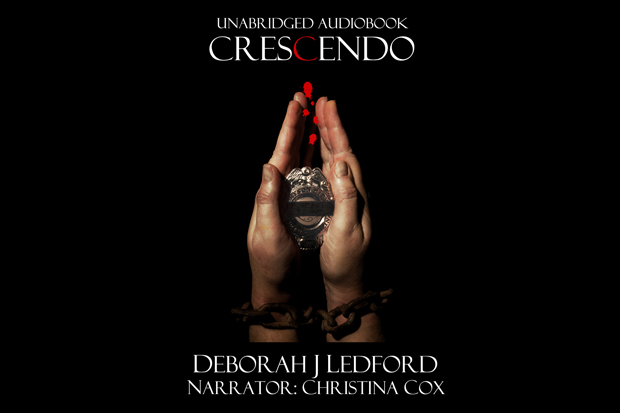
Deborah J Ledford, an award-winning author and one of my very first online (and later offline) friends, has come up with an innovative way to finance her next project. IOF Productions Ltd. established the NatAmGoGo crowd funding campaign on Indiegogo to produce and distribute the audiobook version of her latest thriller novel, Crescendo from Second Wind Publishing.

The NatAmGoGo campaign will also benefit The Blue Feather Corporation, a Native American language and culture nonprofit organization.

The professional audiobook presentation of Crescendo will be narrated by TV and film actress Christina Cox, who has appeared in a variety of films and television episodes including NCIS, Dexter, 24, Castle, Chronicles of Riddick, Better Than Chocolate and Nikki & Nora. IOF Productions Ltd will record Crescendo in November at Costa Mesa Studios in Southern California for download and to purchase as CDs for a December 2013 release.

CRESCENDO_CD“We are thrilled to have Christina Cox set to perform Crescendo. Her exquisite voice and acting prowess will truly bring my words to life,” Ledford says. “The audiobook will be recorded by an experienced staff, with the quality that will equal narrated books presented by top publishing houses.”

Contributor packages for the Indiegogo/ NatAmGoGo project include a PDF version of Staccato, the first book in the Steven Hawk/Inola Walela mystery series; autographed poster of the Crescendo audiobook cover signed by Christina Cox and Ledford; print versions of book series, including Staccato, Snare and Crescendo, signed and personalized by the author; a leather bound package containing all discs of the Crescendo audiobook with booklet signed by Cox and Ledford; a full content edit by Ledford of a manuscript up to 90,000 words, and hand-crafted jewelry created by a renowned Navajo, Hopi and Taos Pueblo artists.

Ledford spent her summers growing up in the Great Smoky Mountains of western North Carolina, where her novels are set. She met Floyd “Mountain Walking Cane” Gomez in 2006 while doing research for her award-winning novel, Snare. Several years later, Floyd expressed the need to protect languages and culture on reservations throughout the United   States, which is why he is establishing the Blue Feather Corporation.

“The storytelling campaign is an effort to prevent the disappearance of Native American languages and culture,” says Arizona author Ledford, who is part Eastern Band Cherokee.

“Native tribal languages and ancient ways are dying on our nation’s reservations,” Ledford explains. “We want to ensure that ancient societies survive.”

The Native American nonprofit foundation will receive 50% of the royalties from downloads and sales of the Crescendo audiobook. “But once the funding goal is reached, any excess will benefit the foundation 100 percent,” Ledford adds. “We can’t let another language or culture disappear,” Ledford concludes. “‘Wado,’ which means ‘thank you’ in Cherokee.”

Creating the Fictional Town of Chalcedony

I needed a special setting for my latest novel Light Bringer. It needed to be part of the world but isolated, a place where people were free to be themselves without ridicule, where UFOs sightings could have had a major impact, where a secret government-sanctioned project could be hidden. Luckily, I had to look no further than out my living room window.

At the time, I was living in the shadow of the Grand Mesa, in ranching country, and much of that terrain formed the backdrop of my story. Chalcedony is the name of a fictional county sandwiched between Mesa County and Delta County. It is a beautiful place with mountains and valleys, wide-open spaces, cattle and horses, new buildings and old.

But beneath the mountains in this peaceful fictional world, unpeaceful things are happening.

Grand Mesa (The view from my living room window)
~~~

Calcedony County
~~~

Road Into Chalcedony
~~~

Mountain View
~~~

Another view of Grand Mesa
~~~

Chalcedony County
~~~

Luke’s Ranch
~~~

Pasture Gate
~~~

Ranch House in Chacedony
~~~

What lurks beneath these mountains? Read Light Bringer, and find out!
~~~
LBLight Bringer: Becka Johnson had been abandoned on the doorstep of a remote cabin in Chalcedony, Colorado when she was a baby. Now, thirty-seven years later, she has returned to Chalcedony to discover her identity, but she only finds more questions. Who has been looking for her all those years? Why are those same people interested in fellow newcomer Philip Hansen? Who is Philip, and why does her body sing in harmony with his? And what do either of them have to do with a shadow corporation that once operated a secret underground installation in the area?

Click here to read the first chapter of: Light Bringer

***

Pat Bertram is the author of the suspense novels Light Bringer, More Deaths Than One, A Spark of Heavenly Fire, and Daughter Am I. Bertram is also the author of Grief: The Great Yearning, “an exquisite book, wrenching to read, and at the same time full of profound truths.” Connect with Pat on Google+. Like Pat on Facebook.