Rubicon Ranch: Necropieces — The Story Continues

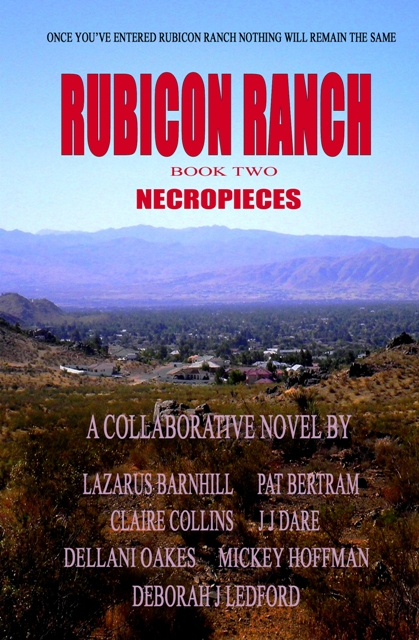
Rubicon Ranch is a collaborative and innovative crime series set in the desert community of Rubicon Ranch and is being written online by the authors of Second Wind Publishing. Seven authors, including me, are involved in the current story — Rubicon Ranch: Necropieces.

Residents of Rubicon Ranch are finding body parts scattered all over the desert. Who was the victim and why did someone want him so very dead? Everyone in this upscale housing development is hiding something. Everyone has an agenda. Everyone’s life will be different after they have encountered the Rubicon. Rubicon Ranch, that is.

Although some of the characters were introduced in Rubicon Ranch: Riley’s Story, a previous collaboration, Rubicon Ranch: Necropieces is a stand-alone novel. The first chapter will be posted on Monday, June 11, and one chapter will be posted every Monday after that.

We hope you will enjoy seeing the story develop as we write it. Let the mystery begin! Whodunit? No one knows, not even the writers, and we won’t know until the very end!

Chapter 17: Melanie Gray
by Pat Bertram

Melanie stood at the window of her upstairs office, waiting for the photos of Eloy’s dog to finish printing.

Waiting. Always waiting.

Still waiting for Alexander to come home or call, though he had been dead for more than three months. Still waiting for the sheriff to investigate her husband’s accident—if in fact it had been an accident that killed Alexander. Still waiting for her grief to end and her life to begin.

The printer chugged as if deliberating over each line of data. Finally, it spit out the last photo of the puppy. Melanie shook her head at the amateurish product. She’d used high-grade photo copy paper, and the image was a good one, but the picture didn’t have the hard finish of a professionally developed photo.

This was the first place they’d lived where Alexander hadn’t set up a darkroom. She wouldn’t have known how to use the equipment even if she had it, but the absence of the chemical smells underlined the absence of her husband. They were only going to stay in this rental property a short while, just long enough to do the job and move on, and setting up a darkroom wouldn’t be worth the trouble, or so Alexander had claimed. He’d never said where their next job would take them, but he’d seemed anxious about the assignment. And now it didn’t matter. He was dead and she was . . . waiting.

Melanie fanned out the printed photos. Four eight-by-eleven pictures of the puppy, each a different pose, each charming. She printed a fifth page with smaller versions of the images, gathered up the papers, stuffed them in a large Manila envelope, and headed outside.

The cloudless sky was pale blue, and though not particularly hot, the air felt oppressive and humid. The small effort of walking the few steps to Delano Road made Melanie’s skin feel sticky. Normally she would have taken this as a sign that a storm would soon be passing through, but nothing appeared to work normally in Rubicon Ranch.

A curtain in the front window of the Sinclair house twitched. Was someone watching her? Melanie quickened her steps and let out a sigh of relief when she’d passed the house. She hesitated in front of Eloy’s place. The old man’s empty chair stood empty. She’d planned to hand him the photos and slip away before he could get awkwardly avuncular again. So, now what? Wait for him?

Waiting. Always waiting.

Melanie marched to the front door and rang the bell. Silence. Not even a bark or a yip from the puppy. Had something happened to the old man? Maybe he’d meddled in something he shouldn’t have.

In the months she’d lived here, she hadn’t seen Eloy do anything but sit on his front porch and glower at everyone who went by, and the recent change in him seemed suspect. If he’d wanted a dog, a monstrous canine would have better fit his image, but he’d gotten a puppy, for cripe’s sake. And what did he mean when he’d said Morris wouldn’t be bothering her any longer? Why would he make her welfare his concern? Besides, she knew how to take care of herself—Alexander had made sure of that, insisting she take lessons in self-defense and weaponry before they started traveling to dangerous locales. They’d lived in a whole alphabet of perilous countries, from Afghanistan to Zambia, and she’d survived them all.  When they’d moved here to Rubicon Ranch, she’d felt safe for the first time in years, but this quiet community had turned out to be the deadliest place of all.

Melanie pressed the doorbell once more on the off chance the old man and young pup were simply napping, but the chimes still elicited no response. Grateful she didn’t have to talk to the old man, she slipped a corner of the envelope beneath the welcome mat to anchor it. Wondering why that most unwelcoming man had a welcome mat on his porch, Melanie trudged to the street.

Moody half walked, half trotted toward her, a hand raised in greeting. “I need to talk to you.”

Melanie waited for her neighbor. “I need to talk to you, too. A couple of weeks ago Morris told me—”

“That Alexander had been taking photos of necropieces for him? I overheard my father talking to you that day. I’m sorry he upset you. He won’t bother you again.”

Anger surged through Melanie, temporarily displacing the sorrow that weighed on her. “Why does everyone think I need protection? I’ve dealt with worse things than a nasty old man who needed to be exterminated.”

Moody held up her hands, palms out. “Sorry. I didn’t realize protection was an issue with you.”

Melanie gritted her teeth to keep from blurting out a denial. She remembered that Moody had once been a psychologist, and any further discussion would give the woman fodder for more assumptions. She pivoted on one foot, getting ready to walk away, then turned back. Her neighbor might be a psychologist and a Sinclair, but she was the only one who could explain why Morris had accused her of killing Alexander.

“Your father mentioned something else that day. He said Riley told you she’d seen me messing with our car.”

Moody blew out a breath. “The bastard lied. Riley only said she’d seen someone messing with the car. That’s all. Never mentioned a name. I didn’t believe her, though. If you knew Riley, you’d know she loved to cause mischief. Even I found it hard to discern when she was telling the truth.”

“But could she have seen someone messing with the car?”

Moody put a finger to her chin and said slowly, “It’s possible. Generally, Riley’s lies were quite detailed—more like stories—but she made the remark about the car in an offhand manner. Are you thinking someone deliberately caused your husband’s accident?”

“Sheriff Bryan told me the accident looked suspicious, but . . .”

“You don’t trust him.”

Melanie focused on the peak of a distant knoll. Did she trust the sheriff? She lowered her gaze to meet Moody’s. “I think he has . . . agendas.”

Moody nodded. “That’s my take on the sheriff, too. I also think he’s on a quest for redemption, whether he’s aware of it yet or not. I’ll let you know if I recall anything else Riley said about your car or Alexander.”

“Thank you.” Melanie turned and started walking up Delano Street toward the desert.

“Wait. Please?”

Melanie stopped.

Waiting. Always waiting.

“I need to warn you about Jake,” Moody said, a new urgency in her voice.

Melanie spun to face the woman. “Are you trying to protect me again? I can take care of myself.”

“Yes. You said. But Jake . . . Jake’s my brother. He wears a cloak of righteousness, but his heart is as black as the rest of the Sinclairs’.”

Melanie frowned at her neighbor. Moody was a Sinclair, too. Could she be warning Melanie that as Morris’s daughter, Moody also had a black heart? A lifetime with Alexander should have prepared her to deal with the Sinclairs, but she sensed nuances of evil in the family next door that made Alexander’s machinations seem like child’s play.

“You don’t believe me,” Moody said flatly.

“Why are you worried about me all of a sudden?”

“I haven’t seen Jake in years, and he just showed up. Supposedly he’s been in the area for several weeks participating in some sort of revival, and he heard about Morris being missing. So now he’s come to . . .”

Interested despite herself, Melanie said, “So now he’s come to—what?”

Moody shrugged, a strange look on her face. Fear, maybe? She glanced toward her house, then fixed an intense gaze on Melanie. “He knows about you. Knows you found the foot yesterday. Don’t believe a word he says. And whatever you do, don’t get yourself in a situation where you are alone with him.”

Melanie watched her neighbor hurry back to Morris’s house. As Moody walked up the driveway, the door opened, and a man walked out.

Melanie gave a start. Morris! Couldn’t be. This man looked younger than the writer. Must be Jake, the son.

Jake glared at Moody, then turned his head toward Melanie. He seemed to study her, the Sinclair dead-fish stare frozen on his face.

And then he smiled.

Melanie fled to the desert. She inhaled the humid, creosote-scented air, trying to remove the stench of the Sinclairs from her nostrils, but no cleansing breath could remove the memory of that evil leer.

Forget the Sinclairs. Focus.

Melanie took a swig of water from her canteen, screwed the cap back on, and reached in her pocket for her little digital camera. Thinking of the last photos she took, the photos of Eloy’s dog, she wondered if her photos would be better if she had professional equipment. She made a mental note to ask the sheriff about her husband’s cameras—Alexander had taken them when he left on that fatal car trip, and they hadn’t been returned to her.

Melanie shot a few photos at random—a jogger in red shorts, a wadded fast food wrapper that looked like a yellow rose nestled in the scrub, a frisky puppy running circles around an old man. Captain and Eloy. Seeing Eloy in the desert again made her shoulders itch. Too much strangeness. Too much change.

She picked her way up the steep rock-strewn track to the top of the knoll, past the place where she’d found Riley’s body stuffed in a television console, past the place where she’d found the foot. She stopped to snap a few shots of the vast desert wilderness spread out before her, a sight that never failed to bring her comfort.

Distant shouts rising above the whine of idling motors caught her attention. She cut to the left until she glimpsed the altercation. Two people, one in red racing gear and one in silver, were standing by a canoe, balancing motor bikes with one hand while gesturing with the other.

“No!” bellowed the red-garbed racer. He hopped on his red bike and sped toward Melanie.

The silver racer got on his bike and chased after his companion. “Someone got chainsaw massacred. We have to call the cops and tell them we found a part of a body.”

“No,” yelled the red racer again. “We can’t. My mom will kill me. I’m supposed to be home looking after my little sister.”

They hurtled past Melanie, still shouting. She took pictures of the two boys, then of the canoe. She’d often seen the abandoned canoe in her treks, but until today, the boat had always been turned upside down. Apparently the boys had found something hidden beneath the canoe. A necropiece.

Could she take a chance that the boys hadn’t seen her, and so pass on calling the sheriff? She hadn’t found the body part, but she felt sure the sheriff would use her presence as an excuse to lay the blame at her feet. She sighed and pulled her phone out of a pocket. Even if the boys didn’t say anything, the sheriff would eventually find out she had been in the vicinity of more death. Not notifying him would seem more suspicious than making the call.

She talked to the dispatcher, explained the situation, described the boys and gave directions on how to find the canoe from Tehachapi Road.

“Wait right there,” the dispatcher said. “Someone will arrive as soon as possible.”

Melanie shoved the phone in her pocket, and shifted from foot to foot.

Waiting. Always waiting.

To hell with that. If the sheriff wanted her, he knew where to find her.

Melanie turned away from the canoe and tramped across the desert expanse, heading toward the storm clouds gathering on the horizon.

Novel Writing Tips and Techniques From Authors of Second Wind Publishing

Novel Writing Tips and Techniques from Authors of Second Wind Publishing is the 100th book published by Second Wind. I am thrilled to be a part of this extraordinary project.

“As someone who constantly evaluates novels for publication, I was astonished at the breadth and clarity of the wonderful advice contained in this handbook. It addresses concerns as grand as plot development and as simple but essential as formatting your submission. It offers crucial advice on literary topics ranging from character development to the description of action. Virtually every subject that is of great concern to publishers — and therefore to authors — is covered in this clear, humorous and enormously useful guide.” –Mike Simpson, Chief Editor of Second Wind Publishing

Table of Contents

A Publisher’s Top and Bottom Five: What We’re Looking For vs. What We’re Watching For by Mike Simpson
On Becoming an Author by Susan Surman
Finding Time to Write & Overcoming Writer’s Block by Mairead Walpole
Creating Incredible but Credible Characters by Pat Bertram
How to Begin and End a Story by Lazarus Barnhill
Plot Twists: Three Little Questions by Norm Brown
Points of View by Juliet Waldron
Moving Smoothly: Transitioning in Writing by Jan Linton (JJ Dare)
Captivating Settings by Deborah J Ledford
Foreshadowing by Nancy A Niles
Timing by Claire Collins
Don’t Keep Me Dangling by Sherrie Hansen
Sex SCENES not SEX Scenes by Pat Bertram
Film as Literary Influence on the Novel: How to Approach Scenes by Eric Wasserman
How Much Narrative is Too Much by J. Conrad Guest
A Jerk’s Guide to Comedy Writing by Noah Baird
The Challenges and Joys of Writing a Novel Series by Christine Husom
Creating a Believable Science-Fiction Environment by Dellani Oakes
Write it Right by Dellani Oakes
The Importance of Formatting by Deborah J Ledford
Writing Aids and Organizational Tools by Coco Ihle

Novel Writing Tips and Techniques is available from Second Wind Publishing, Amazon (Print & Kindle), Barnes and Noble (Nook), Smashwords (all ebook formats including palm devices)

Click here to Help Us Celebrate the Publication of Our 100th Book!!

So, Why Are We Supposed to Care?

The above-the-fold story on the front page of the newspaper today was about the hardships of small marijuana farmers. That once fabulously lucrative crop now only nets one-fourth the money that it did in its heyday (or perhaps I should say “hayday”). Industrial growers, new seeds geared toward indoor plants, and the push for legalization have made things tough for small, independent growers.

This seemed sort of a tactless (I’m being kind here) article to publish after a summer of droughts when food crops dried up and family farms disintegrated to dust, but beyond that, why are we supposed to care about the small independent marijuana farmer? This is like having to feel sorry for burglars because corporate greed has left nothing for them to steal. Marijuana may someday be legal, but it is not now (except for a few isolated instances) and it certainly wasn’t back in the seventies when these people started their “farm.”

It’s a good object lesson for writers, though. If you want readers to care about the plight of your characters, you have to give them something and someone to care about. In this case, the writer tried to paint a sympathetic picture — after the crop is cashed in, the farmers won’t have enough left to take their usual celebratory trip to Hawaii. Again — why are we supposed to care? They worked outside the law for decades, and while the law never caught up with them, the laws of supply and demand finally did. Seems like justice to me. So, why are we supposed to care?

This is a good question to keep in mind when you are writing your books. Too often people take short cuts, for example, relying on a mother character with rebellious teenagers to garner empathy. Such a character may gain immediate sympathy from women in that same situation, but readers who have never had children need something more than a flat insert-self-here-character to make them care. The character needs to be struggling with something more universal, such as the character’s feelings of rejection or abandonment from her almost-adult children, or conflicting loyalties between her husband and her children, or her struggles to deal with her own rites of passage.

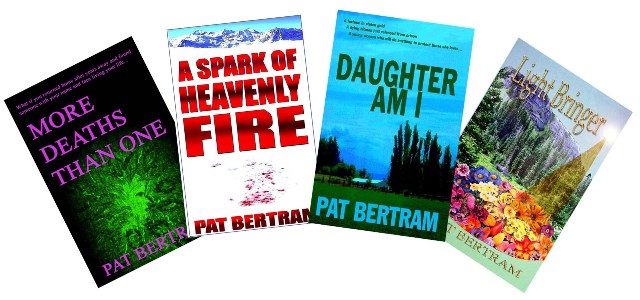
Sometimes all you need to do to make a character sympathetic is to give them simple wants. In A Spark of Heavenly Fire, all Kate wants is a good night’s sleep. She’s been haunted by her not always thoughtful behavior during her husband’s long dying, and sleep eludes her. Ideally, her plight should gain empathy — most of us have struggled with insomnia, most of us struggle with regrets, and most of us have dealt with loss. At one point in the story, Kate does step outside the law (though the law of survival took precedence over the interim laws of the quarantine), but by then, you know the character, her motivations, her struggles, and, you don’t have to pause in your reading to ask, “So why are we supposed to care?”

Are you writing to reach a particular kind of reader?

I am the reader I was writing for. There were stories I wanted to read and couldn’t find, so I wrote them. The dichotomy of this is that I always wanted to reach a large readership and make a living by writing, so it would have been more practical to write books that a large number of people would like. To be honest, though, I don’t like what the majority of readers like, so it would be impossible for me to write such a book. At least, if I write for myself, I know that one person will like the book. But I’m lucky — I’ve found others who like my books.

Here are some responses from other authors about the particular kind of reader they are trying to reach. The comments are taken from interviews posted at Pat Bertram Introduces . . .

From an interview with Alan Place, Author of “Pat Canella: The Dockland Murders”

I am not writing to any particular readers as my works cross genres. I think if you write to a type of reader you raise the chance of missing your target. Take Pat Canella, is she for the Mike Hammer fans, is she a ghost story or is she ladies who want a strong female lead?. OR is she all to everybody?

From an interview with Chuck Barrett, Author of “The Toymaker”

Absolutely. I like to write what I like to read—thrillers, with a touch of mystery thrown in just to keep the reader off balance…but enthralled. I like when a writer throws me a curve ball, so in like fashion, I throw a few myself.

From an interview with J. Conrad Guest, Author of One Hot January

The reader I wish to reach seeks something a little different—something that combines or mixes genres. A reader who enjoys the turn of a phrase, who believes how a story is told is as important as the story itself. I hope my readers remember the stories I tell long after they’ve closed the cover for the last time.

From an interview with Sandy Nathan, Author of Tecolote: The Little Horse That Could

Yes. I write for readers who are interested in making a difference and growing personally and spiritually. My readers also want a well written, fast paced, and extraordinary read that takes them to places they never imagined.

What about you? Are you writing to reach a particular kind of reader?

(If you’d like me to interview you, please check out my author questionnaire http://patbertram.wordpress.com/author-questionnaire/ and follow the instruction.)

Can We Be Whoever We Want to Be?

There is a fallacy that dogs us our whole lives, instilled in us by our parents, teachers, preachers, writers, and everyone else who has influence over young minds. We are told over and over again that we can be whoever we want to be, but this simply is not true. We can never be anyone other than ourselves, no matter how hard we try, and anyone who has ever taken a vacation to get away from it all knows this. No matter where you go, there you are.

We can participate in the creation of ourselves, trying on new styles of dressing and living, for example, but that does not change the essence of our being. We go through many metamorphoses during the course of our lives, from infant to adolescent, from adolescent to adult, from adult to . . . whatever one is called in the last stage of life. (Odd that there isn’t a noun to denote such a person. There are words to describe all the other stages of life, but not that one.) We also go through traumas and grief and come out the other side feeling like a different person, but that person is just another facet of our being, not a completely new entity.

Often when we are told we can be whoever we want to be, the speaker is referring to our occupation or vocation, not our essence, but even this variation of the saying is a fallacy, because we cannot always be whoever we want to be. For example, a short, fifty-year-old man with small hands and an inability to handle a basketball will never be a professional basketball player, garning millions of dollars and fans, no matter how much he desires it. Not every girl who dreams of being romanced by the love of her life and living happily ever after achieves her dream. Too often the frogs she kisses are simply frogs. Or the love of her life dies before the relationship can come to full flower, leaving her alone and grieving, which happens way more than we ever imagine.

Even worse than being made to believe we can be whoever we want is being made to believe that we cannot be who we want to be.

When I was in high school, my sophomore English teacher told me that she saved papers from all the students she thought would make it as a writer but that she never saved any of mine. It was sort of a strange and very cruel thing to say, particularly since she knew I planned to write. I never thought of her as cruel, so her words puzzled me, but other than that, the slur never really mattered. I had no burning desire to be a writer — my saying so was more of a statement of my love of words, and I have kept that love throughout all my life.

I never really had dreams, though I often wanted not to be me, which is why my current commitment to being me is so important. But now I wonder if I need to find (or create) a dream, too. Are impossible dreams important, helping us through the traumas of our lives? Or does the unfilfillment of those dreams cause other traumas? Sometimes a miracle does happen, and the impossible suddenly becomes possible, but a dependence on miracles seems a rather inept way of planning for one’s future, no matter what our age. So maybe the fallacy that we can be whoever we want to be isn’t important. Perhaps it’s the instillation of dreams that is important.

Blog Posts I (Sort of) Wish I Hadn’t Written

It’s easy to forget how far-reaching the internet is. I tend to think I am holding court here in my own corner of the blogosphere, but the truth is, anyone who happens to search for the right term (or wrong term) can land on this blog.

Mostly people get here by using various search terms having to do with writing or grief, but occasionally I post an article that gets hits of a sort I never intended. For example, three years ago, I posted a transcript of a conversation I had with my sister “Was It Bizarre Reading a S** Scene Written By Your Sister?” A couple months later, when I realized that the article was attracting a huge number of hits from people who wanted to have s** with their sisters — 1,954 hits as of right now — I posted the list of the search terms people had used to get to here: S** With Sister Tips. Um…Yeah. That list has garnered 16,790 hits in the past three years. Two days later, I wrote S** With Sister Tips — Writing Tips, That Is. It was my idea of humor — if they wanted tips for having incestuous s**, I’d give them writing tips, sort of as a gentle chastisement. The article itself wasn’t humorous. It was a very pragmatic look at the pitfalls of writing about sibling s**. That article has garnered 9,272 hits.

The whole situation ceased to amuse me years ago, and now makes me rather uneasy. (Which is why the asterisks — I’m trying to keep the search engines from finding yet another s** with sister article.

The other post that makes me a bit uneasy because of all the attention is How Many Books Are Going to be Published in 2012? (Prepare for a Shock). I’d only written the article as a way of trying to make sense of the current book climate and to show the meteoric increase in the number of books available, not to establish myself as any authority on the subject.

Although the article was posted only five months ago, it has had 1,536 hits as of right now. I don’t mind that, of course, but I do mind being touted either as an authority or as an idiot. Several sites that offer book publicity services use that article as a reason for authors to sign up for expensive promotions, and others write scathing articles calling me an idiot who shouldn’t be allowed around statistics since I misuse them.

The truth is, there is no way to extrapolate from the information I gave as to how many books will be published in 2012. Bowker estimates they will issue 15,000,000 ISBNs this year, as compared to 407,000 in 2007, but the truth is, many people use several ISBNs for the same book since some retailers want separate ISBNs for ebooks and print books. And many self-publishers don’t use ISBNs at all, especially if they are only going to sell on Amazon and B&N since both companies will issue their own product numbers. So there could be 5,000,000 books published, or 15,000,000, or even 150,000,000.

This was supposed to be a cautionary tale about being careful what you post since it could haunt you for many years, but it in the end, telling your truth of the moment, no matter what the fallout, is the important thing. It does sadden me, though, that some of my best writing — inspirational and thoughtful posts — sink into oblivion, while these posts get many views.

Thank You for Five Incredible Blog Years

Five years ago today I started this blog. I’d only been on the internet a few months (four months to be exact), had no idea what a blog was but knew enough about book promotion to know that I needed one to help establish my online presence. I spent a few days researching the various blogging platforms and ended up here on WordPress.

My first post was tentative, a mere dipping of my pen in the metaphorical ink of the blogosphere. All that post said was:

Am I an aspiring writer? I have written 4 books, rewritten them, and will continue rewriting them until they are perfected.

No. I am not an aspiring writer. I am aspiring to be a published writer.

Not a bad statement of intent for a new blogger. In the beginning I wrote about my struggles to find an agent or a publisher, my attempts to learn all I could about how to become a bestselling author (still don’t know — drats!), my efforts at establishing my online presence. In the beginning, I used no photo of me, just an initial. I still hadn’t decided if I wanted to use a male pseudonym or any pseudonym at all. I’d also started writing a new novel that I now call my work-in-pause since it’s been sitting there, half-finished for almost five years.

Much has happened to me since I started this blog. I entered a couple of writing contests and made it to the semi-finals in both, (one was the very first ABNA contest). My mother died. I found a publisher. My father had quadruple bypass surgery. My life mate/soul mate got sicker and sicker. And throughout those two and a half years of turmoil, this blog sustained me. It gave me a place to escape from my daily life, a place I could count on.

And then, two and a half years ago, my soul mate died. His death catapulted me into a world of such pain, that it bled over into this blog. My posts became not so much a way to escape, but a place to try to make sense of what I was going through, to offer comfort and be comforted, to find my way to renewed life.

This blog also helped me to re-establish my life as a writer because, after all, blogging is writing, too. A year ago, I made a commitment to blog every day for 100 days, and somehow I never stopped. And today marks an entire year, 366 days of blogging every single day. (Leap year, in case you’re wondering why 366 instead of 365.) I recently recommitted to another 100-day challenge. It’s nice to know that whatever life throws at me, whatever problems I encounter, whatever challenges come my way, this blog will be here for me.

I started with meager aspirations, hoping for the seemingly unrealistic goal of 12,000 views a year, and as of right now, this blog has had 215,817 all time views. On my busiest day, I had 3,542 people stopping by. I’ve been Freshly-pressed three times, written 1,003 posts (including this one), received 7,159 comments and almost 3000 likes and shares. My best ranking on Alexa.com was 607,198 out of 350 million websites. Quite an achievement for someone who, five years ago, did not even know what a blog was.

I never told you how much your reading my posts has meant to me, so I want to do so now. Thank you all for your comments, your likes, your support. They have meant more to me (especially this past two and a half years) than you can ever imagine.

Writing My Life

I’m writing a short story for the Second Wind Publishing holiday anthology, and it just occurred to me that the main character is the first one I have created since the death of my life mate/soul mate who isn’t a grieving widow.

I started a novel a couple of years ago, wanting to capture what it felt like to lose a spouse while my feelings were fresh, but I haven’t finished the book. The pain that seeps into the story is too raw for me to handle yet, and besides, I still don’t know what the point of the story is. Is it primarily to show what it feels like to grieve? Is it primarily the mystery of why her minister husband would get out of his deathbed to kill a neighbor? Is it primarily the mystery of who she is now that she is no longer a minister’s wife? Is it a story of renewal, love, acceptance? Unless I figure it out, that poor widow is doomed to grieve forever in the pages of that unfinished manuscript.

The next piece of fiction I attempted was in Rubicon Ranch, a collaborative mystery series I’m writing online with other Second Wind authors. My character is Melanie Gray, a writer whose husband died in a car accident, but certain inconsistencies are showing up in the investigation, pointing to something other than an accident. Melanie’s attempts to come to terms with her life and to find the truth of his death are a couple of the unifying themes in the series, though they are not the focus of the stories.

The third piece of fiction I wrote was “The Willow,” a short story I did for Change is in the Wind, a previous Second Wind anthology. My character in that story is a woman who found renewal in the spring of her second year of grief.

My fourth project is a steampunk collaboration I am doing with several authors I met online. It should come as no surprise that my character is grieving woman. The deaths of her husband and his mother are the catalyst for the story, since her father-in-law goes back in time to try to save them. This sentence hints that maybe her grief (and mine) is waning: Flo stood motionless and stared at her husband. She wanted to run to him, to embrace him, but he looked different somehow. Unapproachable. There seemed to be a bit of flabbiness around his middle, a discontented tilt to his head, a defeated slump to his shoulders. What had happened to the radiant young man she remembered? Had her vision of him changed over the past year, become idealized? Or had she stopped seeing the truth of him even before he died?

In the story I am currently writing, the character’s boyfriend doesn’t die. He leaves her. She doesn’t go into paroxysms of grief, at least not much, but she does cut her hair in an entirely unconscious symbol of mourning (so biblical!). I had her lopping off her long tresses more out rebellion than out of sorrow, since he had always demanded that she didn’t change.

It is strange to see such a pattern show up in my writing. From stark grief, to sustained grief, to a semblance of peace, to seeing the deceased as not so perfect, to easing the focus on grief. Apparently, no matter what I write, I am somehow writing my life (though oddly, the characters are getting progressively younger).

I’ll be interested to see what I write next.

My 1000th Blog Post!!!!

This is my 1000th blog post for this blog, and what do you know. I haven’t a thing to say. You’d think after writing 1000 articles on subjects that range from reading to writing, from being in grief to being in the moment, from social networking to socializing, I’d be able to come up with a few pithy words to celebrate the occasion,  but here I am, at a loss for ideas.

You’re probably curious how I managed to write all those articles — well, it took five years, one topic at a time, one word, at a time. You can see all the posts here: Archives — All My Posts.

Here are are a few of my favorite posts, though to be honest, a list of my favorites would include either my entire ouevre or merely the last one I wrote. I enjoyed writing all of them, and at the time of writing, each was my absolute favorite. Life changes, though, and so does perspective; what once seemed profound later seems merely mundane.

The Slang Game
Write Lofty and Carry a Big Chisel
How Often Has This Happened To You? (Close Encounters Of the Buffalo Kind)
What Kind of Blogger Are You?
Sports As Story
A Terrible Writing Accident
The Living Language of Dying
Pat Bertram And Lazarus Barnhill Discuss Writing as Destiny
Waiting For an April Time
Self-Editing — The List From Hell
Creatures of the Corn
On Writing: Looking Up
Free Exclamation Points for Everyone!!!
The Slamming of the Doors

These posts are all from my first couple of years of blogging. I don’t remember why I wrote some of them, such as The Slamming of the Doors, perhaps as a writing prompt. Others I had fun creating, such as my list of bloggers in What Kind of Blogger Are You? and my quiz The Slang Game, and I was disappointed at how few people ever saw the posts.

Thank you, everyone, who has read any of my posts or commented on them. It’s been a pleasure blogging with you.

Why the Struggle to Write?

While checking my Facebook feed yesterday, which is mostly comprised of updates by other authors, it struck me how many of them are struggling with writing. They are struggling to find the time to write. They are struggling to reach word-count goals. They are struggling to overcome writer’s block. So much struggling!

One writer posted an article about how to find the time to write, and the post had such a drill sergeant approach that it appalled me. The point of the article was that we must find time to write every day, and to do so we might have to sacrifice an outing with a friend, a trip to the movies, and other such “treats.”

Why? What is so important about writing that we need to forego time with family and friends in order to string a few words together? Truly, it is an unimportant skill. It can’t comfort a crying baby, can’t smile at a friend, can’t add another minute to a dying man’s life. It’s an inherently selfish activity since it’s about communing with ourselves. It’s also an unhealthy activity because we sit with limited motion for hours at a stretch. The hope is that ultimately others will read and understand what we write (and so understand us), and perhaps even allow us to make a living from our efforts, but still, writing is communication at one reserve. We are not sitting conversing with a loved one, and to supplant such a real conversation in the now with one in our heads seems a paltry trade.

Of course, if you have a contract that must be fulfilled, that is one thing, but if you are merely writing to satisfy yourself (and if you’re not, what’s the point of writing?) that is something completely different.

I can hear you now. “But I have to write!” If writing fulfills a need, then you don’t need to be urged to write — you are already doing it. If you have to write but don’t, then obviously, you don’t have to write. The world is not coming to an end because you are not writing. It hums along just fine without your words.

Many people do feel more in tune with themselves when writing, and why not? It’s therapeutic to let all the built-up words and pent-up emotions flow out of your head, just as blowing out a deep breath lets pent-up stress flow out of your body. And yet, for some people, such as mothers with small children and a demanding outside job, there simply is no time. To make such writers feel as if they are doing something wrong by not writing every day is unconscionable. For other people, such as those caring for a dying spouse or an aged parent, they might have the physical time but not the mental time — they might not be able to let themselves get immersed in their writing since their inattention could have disastrous results.

Nowadays, books aren’t even a physical thing — they are merely stray electrons temporarily held together by creative energy. So why the struggle to write? I truly don’t know. It seems simple to me: write, or don’t write.

For me, writing is a tool I use to help me make sense of life. It’s a means of being creative, a way of being playful, even, but writing is not life. Living is what’s important. If I don’t live, sense, experience, there’s nothing to write about. When I don’t feel like writing, I don’t struggle to overcome that feeling, and I certainly don’t let drill sergeant tactics make me feel bad about not writing every day. I know the truth: it’s not how much you write that makes you a writer, but what you say.

So I go with the flow, being me, living each day as it comes, and eventually, when the time is right, when I have something to say, I simply start writing.