Dialogue: Accents and Dialects

Dialect and regional accents are especially tricky to write. It used to be that writers tried to show dialect and accent through the laborious use of phonetic spellings and a blizzard of apostrophes. Today, though, we readers don’t like having to decipher the author’s personal code. Nor do we writers need to take the time to create the code. It’s better to use colloquialisms and broken language to show regional differences. For example, “I done died and gone to heaven.” Not an apostrophe or phonetic spelling in sight, though you know immediately the speaker is not a high-toned college professor from Boston.

If your character has a foreign accent, you don’t have to bludgeon a reader with it. All that is necessary to portray an accent is to say the character speaks with an accent. If you wish, you can use phrasing to remind the reader of the accent, such as, “We will go to the store. No?” or “I’ll put a couple of shrimp on the barbie, mate.”

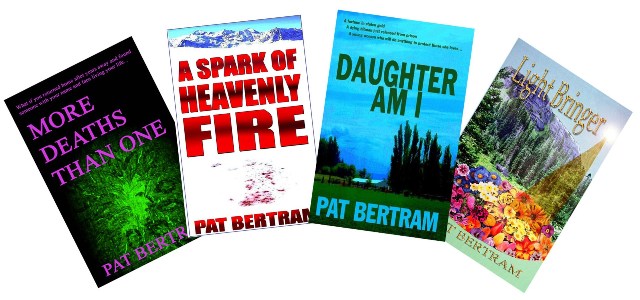
This snippet from Daughter Am I shows Crunchy’s difficulty with English:

“Mary’s trying to find out about her grandparents,” Kid Rags said. “His name was James Angus Stuart.”

Crunchy shook his head. “Don’t know no James Agnes Stuart.”

“What about Regina DeBrizzi Stuart?” Mary asked.

“Don’t know her neither.”

Later in the story is this snippet.

[Mary says]“Why did you lie to me? Everyone’s lied about my grandparents my whole life, and I’m sick of it.”

Crunchy edged away from her, and for the first time his eyes didn’t sparkle when he looked at her. “I didn’t lie. I don’t know no James Agnes Stuart. You never asked me about Jimmy Boots.”

“I didn’t lie either.” Kid Rags sounded as unfriendly as when Mary first met him. “I just didn’t tell you the whole truth. We didn’t come from nice suburban neighborhoods where things are relatively safe. For our own protection, we had to learn not to talk about ourselves or anyone else.”

Some writers still insist on writing accents phonetically, and in this new world of publishing where everyone is making up their own rules, you can do it to. Just be aware that it is not ideal and will cost you readers because of the difficulty of deciphering your particular code.

Learning to Use Beats in Dialogue

One of the hardest techniques for new writers to handle is dialogue. When I first started out, my characters never just said something. They agreed, cautioned, reminded, mimicked, answered, contributed, guessed, explained, responded, admonished, confessed, encouraged, clarified, blurted, pointed, winced, replied, corrected, acknowledged, returned, laughed, challenged, chided, objected, contested, quipped, offered, moaned, complained, repeated, stammered, pleaded, inquired, mumbled, interrupted, confirmed, addressed, countered, advised, completed, allowed, supplied, ordered, asked, continued, chided, answered, whispered, teased, requested, hollered, echoed, declared, informed, spoke, bellowed, spit out, thundered, hissed. All within a few pages. Whew!

Even worse, I would sit and agonize over the way my characters spoke. “He responded sparingly.” “She informed him haughtily.” He mumbled sadly.” Ouch.

It was a joy to discover that modern dialogue relies primarily on “said,” such a common word, the reader’s gaze glides over it as if it were invisible. It was even more of a joy to discover that adverbs were frowned on. The dialogue itself, or the beat — the bit of action accompanying the dialogue — should show the character’s emotion. “I hate you”, she said angrily tells us what the character is feeling. She picked up a rock and threw it at him. “I hate you!” shows us what she is feeling, allowing us to become intimately involved with the character. The only time an adverb is necessary is when the character’s words are at odds with his mood, such as: “I had a great time,” he said sadly. You can also use an occasional “ly”adverb to describe the tonal quality of the character’s voice. “I hate you,” he said softly.

Besides helping identify who is speaking, beats help set the stage, tell us about the character’s personality, and vary the rhythm of the dialogue. Overdone, the beats are as distracting as any other speaker attribute, so the secret is to pay attention to the flow. Do you want short snappy dialogue? Don’t use beats. Do you want to slow things down a bit, keep the dialogue from seeming too disembodied? Use a few beats.

It’s hard to write crowd scenes and keep each character identified without resorting to copious “said”s, but beats keep the scene moving and, if you use beats that are specific to your character, you make the various characters come alive.

This excerpt from my novel Daughter Am I shows the use of beats. The scene is between my hero Mary, a young woman in search of her grandparents’ murderer, and a group of feisty octogenarians who are trying to help.

*     *     *

The man stopped bouncing and let his arms drop to his sides. Now that he stood relatively still, Mary could see he was skinnier than she’d first thought. A gray slouch hat tilted toward one eye, but the baggy pants cinched high above his waist and the bright flowery shirt several sizes too large marred the jaunty effect. His hands shook uncontrollably. Parkinson’s disease?

“You must be Happy,” she said.

Frowning, Happy patted his torso. “Must I be happy?” His voice deepened to what Mary assumed was his normal tone. “Can I be happy? Can anyone truly be happy?”

“His name is Barry Hapworth,” Kid Rags said, flicking a bit of lint off his navy pinstriped suit jacket. “For several obvious reasons, everyone calls him Happy.”

Mary glanced from the bus to Happy. “Were you driving this thing?”

Happy puffed out his meager chest. “Sure was.”

“And did you almost run over Mrs. Werner’s cat?”

“I’ll take the fifth.” Happy paused for a fraction of a second. “A fifth of bourbon.”

“Did someone say bourbon?” Kid Rags removed the flask from his hip pocket, took a swig, and passed it around.

“Who are all these people?” Bill asked from behind Mary.

Mary turned, wondering how she could explain the situation to her fiancé, but Teach saved her the trouble and made the introductions. Arms still folded across his chest, Crunchy nodded to Bill, then stepped close to Mary. Happy punched the air, but stopped when Bill showed no inclination to fight.

Kid Rags shook Bill’s hand. “You’re a lucky man.”

“What are you all doing here?” Mary asked. “I was supposed to pick you up. And why is Happy here?”

“Happy is a friend of Kid Rags,” Teach began, but Kid Rags interrupted him, saying hastily, “Not a friend. Just a fellow I know.”

“Happy knows someone who knows Iron Sam,” Teach continued, “and since we knew your car wasn’t big enough for all of us, we accepted Happy’s offer to drive us in his bus.”

“Who’s Iron Sam?” Bill asked, sounding plaintive.

“Butcher Boy,” Kid Rags said.

Bill’s eyebrows drew together. “Butcher Boy? Mary, are you sure you know what you’re doing?”

Mary laughed, suddenly feeling lighthearted and carefree. “I haven’t a clue.”


Dialogue vs. Conversation

Dialogue is an artificial construct. Dialogue does not mimic conversation but instead gives readers the impression of realistic conversation.

Books on how to write dialogue often suggest listening to people talk to learn how to write dialogue. Seems like good advice, but have you ever truly listened? “We . . . um . . . we, like . . . you know . . . we stammer and like we repeat ourselves and um . . . you know.”

Even when we speak coherently, we don’t converse. We lecture. We tell long, boring, convoluted stories. We interrupt others and talk over them. We use clichés. We tell jokes that take forever to get to the punch line. None of which helps us write dialogue. If characters in books talked the way we talk in real life, who would bother reading? We want our characters to sound like us, just not talk like us. We also want their conversations to be witty, to the point, and conflicted.

In life, most of us cannot come up with that clever quip when we need it — it comes to mind (if at all) late at night when no one is around to be impressed. Our characters don’t have to suffer from that malady because they have us and our late night epiphanies on their side. We can change their words as often as necessary to get it right.

And get it right we must. Good dialogue advances a story and shows character interacting with other characters. Good dialogue makes a reader keep reading. Bad dialogue, no matter how crucial to the story, makes readers go in search of other amusements.

The following is another excerpt from Daughter Am I showing the use of dialogue.

*     *     *

Mary noticed, for the first time, her father’s receding hairline, the deep crinkles at the corners of his brown eyes. Soon he would be as old as Kid Rags, Teach, and Crunchy.

Tears stung her eyes at the thought of her father living alone in a dingy hovel, and she vowed she would not let that happen.

Realizing the silence was stretching out awkwardly, she opened her mouth to speak, but he held up a palm to forestall her.

“I don’t want to know what you’re doing,” he said. “Whatever it is, I know it’s something you feel you have to do. I thought you should be aware you’re upsetting your mother.”

“I don’t mean to.”

He heaved himself out of the chair. “That’s all I came to say.”

“I’m glad you stopped by,” she said. “I planned on calling you later anyway to tell you I’m going to be away for a few days.”

He stared at her for a moment, then shrugged. “I don’t understand what you’re trying to accomplish, but I suppose you know your own mind.”

You are so wrong. I don’t know anything.

He walked to the door, paused with his hand on the knob for a second, then turned to face her.

“I love you,” he said softly.

She swallowed. “Oh, Dad. I love you too.”

He opened the door. “Be careful, okay, honey? You don’t know what you’re getting yourself into.”

Consistency is No Hobgoblin When it Comes to Writing

A foolish consistency is the hobgoblin of little minds, adored by little statesmen and philosophers and divines. Most people leave off the word “foolish” when they quote this sentence by Ralph Waldo Emerson, leading us to believe that any consistency is the sign of a little mind, and interestingly, that is exactly what Emerson said.

Here is the entire passage: A foolish consistency is the hobgoblin of little minds, adored by little statesmen and philosophers and divines. With consistency a great soul has simply nothing to do. He may as well concern himself with his shadow on the wall. Speak what you think now in hard words, and to-morrow speak what to-morrow thinks in hard words again, though it contradict every thing you said to-day. — ‘Ah, so you shall be sure to be misunderstood.’ — Is it so bad, then, to be misunderstood? Pythagoras was misunderstood, and Socrates, and Jesus, and Luther, and Copernicus, and Galileo, and Newton, and every pure and wise spirit that ever took flesh. To be great is to be misunderstood.

Despite Emerson’s condemnation of consistency, the truth is, foolish or not, consistency is an attribute of a good writer. Readers will forgive a writer almost anything except inconsistencies that interrupt the flow of the story.

I once started to read a book where a man spirited away the Shah of Iran. According to the author, the Shah lived fifteen years beyond his supposed death in 1980. The operation was so secret and successful that no one knew about it. But . . . It took only this one very high profile achievement to assure a solid client base for the man. Supposedly, word travels quickly in the very elite circles of power, and so the demand for the man’s services was always in excess of his ability to produce.

What?????? If no one knew that the Shah survived his death, how could word travel? And if word did travel, how could high profile clients remain “dead,” especially since most of them were hiding from those in the elite circles of power? The inconsistency took me out of the story, and I never did finish reading the book.

It’s almost impossible to keep inconsistencies from slipping into a story, which is why self-editing, though vital, cannot be the final editing process. We writers see consistency because we see what we meant to say. Others only see the inconsistency. I am grateful to one of my editors for finding a blatant inconsistency in Daughter Am I. The editor wrote, “It’s not clear here whether or not Mary completely removed her shirt. If she did, when she stood up and ran to the bathroom, then turned around and had the conversation with Tim, she’d have been completely topless. Given their feelings for each other, and their state of undress, it seems unlikely they would have been able to have such a lengthy conversation without biology taking over sooner.”

Oops. I completely missed that. Mary took off her shirt so Tim could massage her sore back, and when the massage turned heated, Mary (engaged to someone else) runs from her feelings and hides in the bathroom. Inadvertently, I had her brazenly opening the bathroom door, standing half-naked, and starting a casual conversation—not at all what my poor innocent Mary would have done. After traveling halfway across the country in the company of seven old gangsters (well, six gangsters and one aged ex-night hall dancer) she’d lost most of her naiveté, but still, she would not have flaunted her naked breasts.

Naked breasts may pale in comparison with unsecret secret operations, but the inconsistency could have dammed the flow of the story for discerning readers. So, the moral of this tale is, if you remove your heroine’s shirt or other apparel, make sure you remember her state of undress and write accordingly.

Gone With the Electronic Wind

I seem to be changing, whether I realize it on a daily basis or not. For the most part, I am more patient than I used to be. I have a greater ability to wait because there’s no reason to be one place rather than another. I am also aware the future will come whether I will it or not. But . . . I have a lot less patience for disrespect. And I am not as I nice as I once was.

Take today, for example. I got a friend request from someone on LinkedIn. I accepted the request, then she sent me an invitation to join her crime writers group. After I did so, she sent a message suggesting I post a bit about one of my books in the group’s discussion boards. Which I did. Then she said to post a link to the book (though I had already done so) and after I posted the second link, she left a comment on the very public post saying the book sounded interesting, but she wasn’t going to buy it. Huh? Why not just say it sounded interesting and leave it at that? Even worse, she went on a rant about ebook pricing. Apparently, J. Konrath has decided that $2.99 is the perfect ebook price (who made him king, anyway?) so the LinkedIn woman decided that any book priced more than that is overpriced. Her reasoning? Some of the major publishers were selling ebooks at almost the same price as a print book, and since there was nothing changing hands — no actual printed book — she figured that the publishers were cheating her.

My publisher prices my ebooks at less than a third of the print price, so why was she griping about my book? Aren’t publishers (and authors!!) allowed to make money anymore? Amazon skims 30% right off the top of all books (70% off $.99 books), and for this skim, they don’t do anything except offer the book as a download. There is no human involvement, so no payroll, no expenses except for a few cents worth of computer time. Apparently the woman has no objection to a huge near monopoly like Amazon raking in the dough. But a small publishing house? Oh, no. They aren’t allowed to make a profit! Sure the ebook is only a few electrons, and no physical product is exchanging hands, but what about the hundreds of hours that goes into publishing a book? (I’m not even counting the hours it takes to write the book.) It takes time and money to format, edit, create a cover, copyedit it, proof it. And yet she complains the publishers are selling nothing.

Perhaps her rant would have made sense if I had been the one to ask to be connected, if I had been the one to ask to join her group, if I had posted the book link without permission. But she instigated the whole situation, and then she was unbearably rude.

So I got even. I deleted her from my online world. Poof! Gone with the electronic wind.

What’s the most surprising part of being a writer?

What’s the most surprising part of being a writer?

The most surprising part for me is that I know how to write. For many years, my life was shadowed by the sadness of having no innate talent for writing. I’m not being modest — I really couldn’t write a novel or anything worth reading except for some snippets of poetic thoughts. When I decided to write a novel despite that lack of talent, I set out to learn everything I could about developing a readable story. Most of the how-to books confused the heck out of me — the authors would talk about rising conflicts and motivation/reaction units, and I didn’t have a clue what they meant. It’s only recently that I realized I actually know what I’m doing.

Here are some responses from others authors about the most surprising part of being a writer. The comments are taken from interviews posted at Pat Bertram Introduces . . .

From an interview with J J Dare, Author of False Positive and False World

The most surprising aspect of being a published writer is the positive feedback I’ve received from readers. Only a few weeks ago, I had a reader ask when the third book in the Joe Daniels’ trilogy would be coming out.

From an interview with Smoky Trudeau Zeidel, Author of “On the Choptank Shores”

The awe some people display when they find out I’ve not only written a book, but written several! Really, I don’t tell people I’m an author to stun them! It’s what I do, just like some people are gardeners or bank tellers or forest rangers. But there is something about being a writer that makes other people think you’re pretty cool — even if you aren’t!

From an interview with Sheila Deeth, Author of “Flower Child”

I’ve surprised myself by finally learning to tell people I’m a writer — maybe that’s what I should have said has changed since my first book was published.

From an interview with Beth Groundwater, Author of “A Real Basket Case”

The amount of non-writing work involved! There’s the contracting process, research, promotion, networking and all of the other ancillary activities that are part of having a writing career, but that take precious time away from the writing itself.

So, for you, what’s the most surprising part of being a writer?

(If you’d like me to interview you, please check out my author questionnaire http://patbertram.wordpress.com/author-questionnaire/ and follow the instruction.)

Sneak Preview of Rubicon Ranch: Necropieces

Rubicon Ranch is a collaborative and innovative crime series set in the desert community of Rubicon Ranch and is being written online by the authors of Second Wind Publishing. Seven authors, including me, are involved in the current story — Rubicon Ranch: Necropieces.

Residents of Rubicon Ranch are finding body parts scattered all over the desert. Who was the victim and why did someone want him so very dead? Everyone in this upscale housing development is hiding something. Everyone has an agenda. Everyone’s life will be different after they have encountered the Rubicon. Rubicon Ranch, that is.

Although some of the characters were introduced in Rubicon Ranch: Riley’s Story, a previous collaboration, Rubicon Ranch: Necropieces is a stand-alone novel. The first chapter will be posted on Monday, June 11, and one chapter will be posted every Monday after that.

We hope you will enjoy seeing the story develop as we write it. Let the mystery begin! Whodunit? No one knows, not even the writers, and we won’t know until the very end!

Chapter 1: Melanie Gray
by Pat Bertram

Melanie Gray woke with tears on her face. She sat up in the bed she’d shared with her husband Alexander, put her elbows on crossed knees, and cradled her face in her hands. The pain she tried to hide even from herself erupted, filling her chest with such agony she could only breathe in shuddering gasps.

She’d been doing so well, concentrating on shooting the photographs to finish their coffee table book on desert life, photos that Alexander should have taken, would have taken if he hadn’t died. So why the upsurge in grief? Then it came to her—today marked the third month since Alexander’s death.

Three months! Melanie saw the months marching on, one by one, each carefully counted while she grew old alone. She was only forty-three, which meant a lifetime of loneliness ahead of her.

I can’t do this.

But she’d already been doing it—living each shocking day as it came.

First, she’d found out that Alexander had died in a one-car crash under suspicious circumstances — maybe an accident, or maybe something worse, something she couldn’t bear to think about. Then she had discovered that he’d been texting a woman when he died, a woman who claimed to be his mistress. Finally, she learned that somehow he’d managed to spend the considerable advance they’d received for their book, leaving her with a six-month paid lease on this house, barely enough cash for groceries, and a book contract she needed to fulfill. No savings. And no car.

At least the desert was close, so she didn’t need a car to do her job. Rubicon Ranch, the bedroom community where they’d rented the house, bordered on the high desert of inland California, and offered gorgeous vistas, wildlife . . . and death.

“Damn you, Alexander! Why did you have to die? You were the one who was supposed to shoot the photos. I only wrote the words. If you’d paid attention to your driving, you’d still be alive, and I’d never have found that little girl’s body.”

Poor little Riley Peterson. Kidnapped as a baby, dead at age nine without ever knowing that her biological parents had spent her whole life searching for her.

Melanie let her tears fall for a few more minutes, took one more shuddering breath, and hauled herself to her feet. As bleak as her life seemed, as sad and as lonely as she felt, she was still alive. And she had work to do.

As always, she dressed in white — loose cotton pants, billowing long-sleeved top, wide-brimmed straw hat, flowing scarf. She checked her pockets to make sure she had her cell phone, camera, and extra memory card. Then she grabbed a canteen of water, slung the strap over her shoulder like a bandolier, and stepped outside.

A perfect early fall day. Clear blue skies, the deepest blue she’d seen since she’d moved to Rubicon Ranch. A hint of a sweet-scented breeze wafting up Delano Road. Temperatures in the high seventies, though they would probably rise to the mid-eighties by noon.

The grizzled homeowner across the street picked up a newspaper from his driveway, waved it at Melanie, turned, and stood still. Wondering what had caught his attention, Melanie followed his gaze.

A tan bullmastiff towed a pretty woman up the street. The woman’s dark hair, drawn into a ponytail, swished jauntily as she ran to keep up with her exuberant dog. What should have looked like a carefree moment seemed one of desperation to Melanie, as if the woman were running from demons only she could see.

“Funny how art often imitates life, eh?” came a deep voice from behind Melanie.

She jerked her head in the direction of the voice, and gaped at Morris Sinclair, her next-door neighbor, who had managed to sneak up on her without her noticing.

Morris, an international bestselling horror novelist had been a suspect in Riley Peterson’s death. The sheriff had declared the author innocent of the murder but guilty of buying stolen crime scene photos. And guilty of feigning Alzheimer’s. Melanie didn’t know how the sheriff had come to that conclusion. As far as she could see, if Morris had been feigning Alzheimer’s, he must have been trying to hide the truth — that he was insanely evil. Or evilly insane.

“Or maybe, in her case, life is imitating art,” Morris said.

“What are you doing here,” Melanie demanded. “Does Moody know you’re on the loose?” Moody, Morris’s daughter, had spent time in prison for the accidental death of a child. You’d think a man as perverse as Morris would be proud of her for that accomplishment, but he treated his daughter with even less regard than he treated everyone else.

“Am I my daughter’s keeper?” Morris intoned.

Melanie backed away from him. “I’m sorry. I don’t have time for this.”

“I know. You have to go out into the desert to shoot more of your little photos.” He bared his long, old-ivory-colored teeth at her in what might have been meant as a smile but came across as a predatory leer. Pointing a bony finger at her camera, he added, “You know how to use that thing, right?”

Melanie lifted her chin. “I do.”

“I’ll offer you the same arrangement I had with your husband.”

“You had an arrangement with Alexander?”

“Yeah. Alexander. Did you have more than one husband?”

Melanie stared at him in confusion, but when his dark opaque eyes met her gaze, she ducked her head.

“Alexander used to take certain . . . photos for me.” Morris raised his voice. “Photos of body parts.”

“Body parts?” Melanie asked. “You mean like arms and legs? You can find photos of those anywhere.”

“But I need amputated body parts. Dead parts. Lots of blood and gore. Necropieces.”

Melanie recognized the name of Morris’s most famous horror series — Necropieces — but none of his other words made sense. “You’re telling me Alexander took photos of amputated limbs for you?”

“And entrails. And organs. He loved shooting the images. Had a nicely developed sense of the macabre.”

“No,” Melanie said in a normal tone of voice. Then, all at once, the agony of the past few months gathered itself and launched a scream. “Nooooo.”

The word seemed to echo up and down the quiet street. She caught a glimpse of movement on the porch a couple of houses away, and she realized the old man who lived there, Eloy Franklin, had heard her shriek, but she didn’t care. She had enough of insanity and things that didn’t make sense.

“You leave me alone, Sinclair,” she shouted as loud as she could so that Morris would get the message, “or I’ll be shooting your dead body parts.”

“Every one of you bastards wants me dead!” Morris screamed, matching her decibel for decibel. He threw his arms wide as if to address the neighborhood. “Kill me! Kill me! Kill me. Cowards, every one of you! None of you have the guts to do anything but sit in your dark little caves and try to wish me away. Cowards! And you—” He turned to face Melanie. “I dare you. Kill me like you killed Alexander.”

Melanie gasped. “Alexander died in an accident.”

“An accident you created,” Morris said calmly, as if he’d never raised his voice. “Before that little girl died, she told Moody you’d messed with your car.”

“You’re lying.” Melanie’s words barely squeaked through her clenched teeth.

“Ask Moody.” Morris put a finger to his chin and cocked his head to one side. “So, will you take the photos for me? I’ll pay you well.”

Getting My Kicks on Route 66

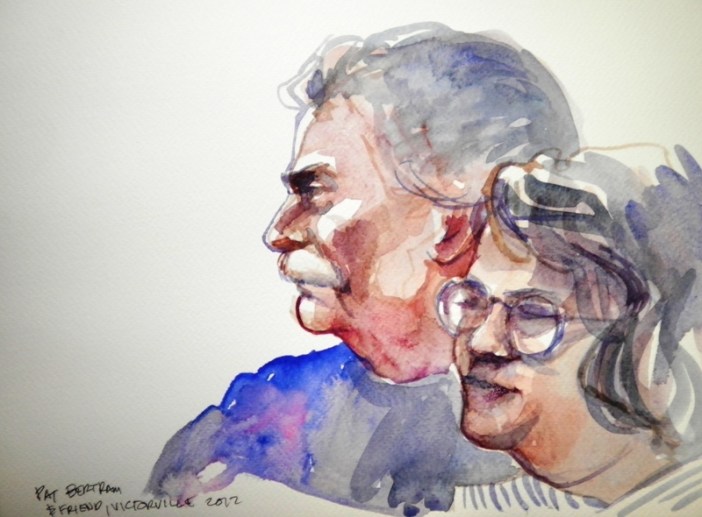
Each year,  the California Historic Route 66 Association selects one of the eight states through which Route 66 runs to host the Route 66 International Festival. This year, the festival will be held from August 9-12, 2012 at the San Bernardino County Fairgrounds in Victorville, CA. Making it an even more historic event, the fairgrounds are on old Route 66!  With the theme “California Dreamin’ on Route 66”, the Route 66 International Festival 2012 will attract thousands of Route 66 enthusiasts, historians, fans and custodians of the “Mother Road” from across the country; including international visitors from 17 different countries, as well as local residents. And me.

I’ve been accepted as a participant in the festival, and I’ll be there signing my books on August 10th and 11th. Except for Daughter Am I, the story of a road trip from Colorado to Chicago, my books don’t have anything to do with Route 66, but I’ve had little luck with writer’s conferences and library presentations, so I’m going to try something completely different. It should be interesting. I’ll have to stay for the two days rather than do what I normally do at festivals — walk around for a few minutes then leave. (I never did know how to have fun. At least not what other people consider fun.)

So, if you’re going to be in Victorville on August 10 and 11th, be sure to stop by the fairgrounds and look me up. I’ll be waiting for you.

“I don’t worry about a thing because I know nothing is going to be all right.”

A friend told me about an old woman who was the most joyful person she knew, though the woman had suffered grievous losses in her life. I couldn’t fathom how the woman could be so joyful, and yet now I can. . . . almost. Perhaps the woman knows that everything comes to an end. Perhaps she knows that the little things are important. Perhaps she has found herself in all of the losses.

Or, like me, perhaps she has an awareness of death, of knowing, deep down, that her life will end, maybe even badly. Since I’ve become steeped in the grief culture, I’ve heard stories of terrible deaths, either doctors keeping people alive past any usefulness or alertness, or the person’s own will keeping them alive long after they wanted to be done with it. I’ve heard stories of so much pain and suffering that it’s amazing any of us ever manage to smile let alone be joyful in such a world.

We all know we are going to die, but after the death of someone we are profoundly connected with, we KNOW deep within our psyches. People tell me not to dwell on death, and I don’t. It’s more that the knowledge of death now is a part of the very fabric of my being and can never again be unknowable. This knowledge makes life on Earth seem both more and less significant, which adds a strange flavor to my days. I don’t know how this knowledge will affect me long term, but there is freedom in knowing that things will end.

I heard a song today by Mose Allison. “I don’t worry about a thing because I know nothing is going to be all right.” It sounds cynical, but it isn’t necessarily negative unless you give up and stop trying to do whatever you can. Does it matter what success you had here on earth when you are dead? Does it matter how many toys you had when you died? Of course not. It only matters that you lived.

It’s like writing — all stories are the stories of someone’s life, and as such, end in death. What we as writers do is end the book at an upbeat point for a happy ending and an ironic place for a more tragic ending, but still, life continues on past those significant moments.

I know how my life is going to end — the same way all of our lives are going to end. It will end in death. I’ve always been a bit of a worrier, but with death on the horizon (the far horizon, considering my longevity genetics) worry seems a bit foolish. All that counts is today — not future successes or failures, not future acquisitions or losses. Just today.

There is peace in that, maybe even joy.

The Story Behind Rubicon Ranch

Almost a year ago, I got the idea to write a collaborative novel online. I broached Second Wind Publishing authors with the concept, and I found eight other writers willing to participate in the experiment. It took a few months to hammer out the details, which seemed an endless task back then, but now I see as incredibly swift. The story was, after all, a committee production.

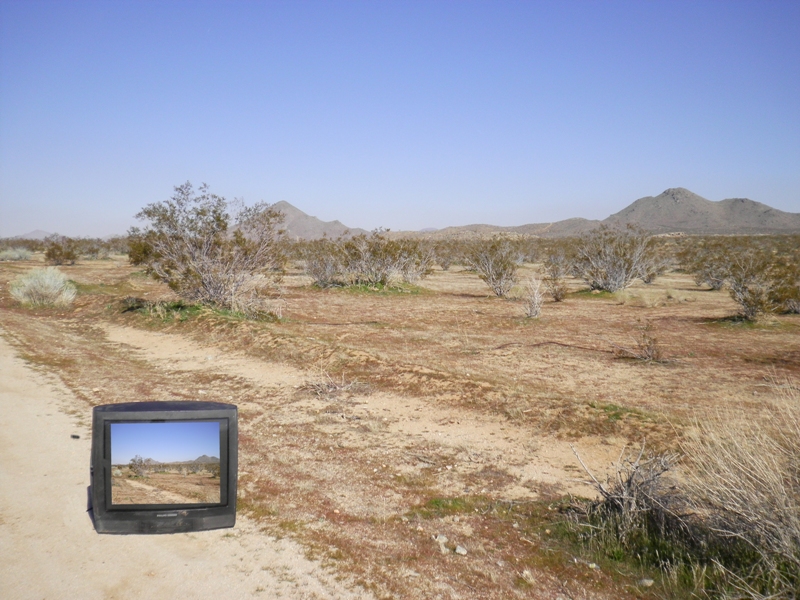
We started out with what we considered the most heinous of crimes — the death of a little girl. In the first chapter: Chapter 1: Melanie Gray — by Pat Bertram, which was posted on October 24, 2010, Melanie found the girl’s body stuffed in an abandoned television console when she was wandering in the desert, trying to come to terms with the death of her husband. Poor Melanie. So much death!

Each author created a character who might have a reason to kill little Riley. And each character was hiding something.

Could Kourtney and Jeff Peterson have killed their daughter, mischievous nine-year-old Riley, to protect their secret?

Moody Sinclair had once killed an eight-year-old boy. Has she killed again?

Fifteen-year-old Dylan McKenzie is a straight A honor student. By day. Did Riley discover the other Dylan, the one who prowls at night?

Cooper Dahlsing does strange things while sleepwalking. Could he have killed and not known it?

Mark and Jamie Westbrook, self-styled private investigators, show up to help solve the murder, but perhaps they had a hand in creating the crime?

Eighty-two-year-old Eloy Franklin sits on his porch and watches. But does he do more than watch?

Forty-three-year-old Melanie Gray found Riley’s body stuffed in a television console that had been dumped in the desert. But is she as innocent as she seems?

Sheriff Seth Bryan is bitter and cynical at having lost everything he values. Is he manufacturing crimes to bring him the notoriety he craves?

So many villainous characters! And until the very end, no one knew who committed the dastardly deed, not even the writers.

The novel was supposed to be a promotion stunt, but halfway through, it got derailed by life. One author had to deal with colon cancer, including three debilitating operations. Another author had to deal with a flooded house that was uninhabitable for six months. Still other authors had to deal with grief after the loss of significant people in their lives or heavy job pressures. When we started in again, we’d lost all our readers, so there was no longer any promotional value, but still we persevered.

And now the book is finished. You can read the entire novel online for free. If you prefer to read the book on an ereading device, Rubicon Ranch: Riley’s Story is available as a Kindle or in the ebook format of your choice from Smashwords. It’s also available in print from Amazon and Second Wind Publishing.

But . . .

That is not the end of Rubicon Ranch! Though some of the authors went on to other projects, enough wanted to continue the Rubicon Ranch saga, so we lassoed a few additional authors into creating characters. And now we have a new story.

Three months after finding the body of the little girl, poor Melanie is again wandering in the desert, still having a hard time dealing with her husband’s death, when she sees a congress of ravens pecking at a dismembered foot. Who was the victim and why did someone want him so very dead? Everyone in this upscale housing development is hiding something. Everyone has an agenda. Everyone’s life will be different after they have encountered the Rubicon. Rubicon Ranch, that is.

Although some of the characters from the previous collaboration are featured in the new story, Rubicon Ranch: Necropieces is a stand-alone novel. The first chapter will be posted Monday, June 11, 2012 on the Rubicon Ranch blog, and a new chapter will be posted every Monday after that.

I hope you will join us in this new serial adventure. It should be a devious tale.

Map of Rubicon Ranch.
A) Melanie Gray
B) Moody Sinclair
C) Eloy Franklin
D) Leia Menendez
E) Ward Preminger
F) Egypt Hayes
G) the Peterson house