Which is more important, character or plot?

Some people think character is most important, others think plot is the most important, but you really can’t separate the two. Plot is what happens to a character, what a character does, or both. You cannot have a character without a plot. To show who or what a character is, you need to show the character acting, and that is plot. You also cannot have a plot without a character. If an unknown planet is coming toward earth, that might be newsworthy, but it’s not a story until you have characters reacting to the coming planet. How is it going to change their lives? What do they do to prepare for the coming cataclysm? What happens to them as a consequence of their actions? That’s what makes a story.

Here are some responses from others authors about whether character or plot is more important. The comments are taken from interviews posted at Pat Bertram Introduces . . .

From an interview with J. Conrad Guest, author of Backstop and One Hot January

For me, the most essential quality of a good story is characters with whom I can connect. Finding a good story to write is easy; but writing about characters the reader cares about is more difficult. Hannibal Lecter is one of the most demented characters ever conceived, yet he was fascinating, a train wreck away from which we want to look but can’t.

From an interview with Joylene Nowell Butler, Author of “Broken but not Dead”

You need good characters your reader can relate to almost immediately. They talk about plot-driven vs. character-driven stories, but honestly you can’t have one without the other. Readers want to live vicariously through your characters, but first they need to trust you, trust that you’ll take them on a journey they’ll connect to with characters they care about. Even if what you’re asking them to believe takes place on a foreign planet with outrageous settings and descriptions, if you do your job correctly, it won’t matter how strange the setting or how weird-looking the residing peoples are, human nature can transcend all that weirdness and endear any reader quickly and for the duration of the story. Think “Dune”, “Harry Potter”, or “Wizard of Oz”.

So, in your opinion, which is more important, character or plot? (You can respond as a reader or a writer.)

(If you’d like me to interview you, please check out my author questionnaire http://patbertram.wordpress.com/author-questionnaire/ and follow the instruction.)

What, in your opinion, are the essential qualities of a good story?

The most important quality of a good story is the ability to take readers somewhere else and make them glad they went. It’s also essential to make the writing easy to read, which means the writing must be grammatically correct. Nothing takes an experienced reader out of a story faster than having to decipher convoluted sentences with improper punctuation. Ideally, a story should leave readers a bit better off than they were before, either because of what they learned about the world and themselves, or because of the respite from their everyday lives.

Here are some responses from others authors about the essential qualities of a good story. The comments are taken from interviews posted at Pat Bertram Introduces . . .

From an interview with J J Dare, Author of False Positive and False World

The hook is the essential part of a story; with a good hook, the reader won’t want to put a book down. I try to draw the reader in immediately with a one-two punch.

From an interview with Mickey Hoffman, author of School of Lies

I want the main characters to have a “quest.” The quest can be a real journey or one in their heads and if there’s mystery involved all the better.

From an interview with Michael Murphy, author of Scorpion Bay

In my opinion a good story has conflict throughout and characters the reader will care about. I don’t believe the story, what happens to the characters is nearly as important has how these events impact the character’s lives, how they’ve evolved and grown, or in some instances, how they’ve stuck to their principles and are not changed by events in the story. An example of this type of story would be the movie High Noon.

From an interview with John Grover, Author of “Feminine Wiles”

A good story is about style, the style it is written in makes it unique and second is to make the reader care about your characters. Without empathy for your characters readers won’t care what happens to them. Once they care, you can really rev things up. I think it is all in the way you tell the story and how the characters come to life. Write about what you know, add in touches from your life and real people and it will come to life.

So, what, in your opinion, are the essential qualities of a good story?

(If you’d like me to interview you, please check out my author questionnaire http://patbertram.wordpress.com/author-questionnaire/ and follow the instruction.)

Suspense/Thriller Writers Self-Promotion Extravaganza!

Every Saturday, I host a self-promotion extravaganza for my Suspense/Thriller Writers Group on Facebook. You don’t have to belong to the group to join the event and participate in the extravaganza, so if you are an author with a book to promote, I hope you will join us! While you’re there, be sure to check out the books of the other authors. You can find the event here: Suspense/Thriller Writers Self-Promotion Extravaganza! Just click on “join” and tell us about your book.

You already know my books, but if you are using Internet Explorer to view this blog, you won’t be able to see the cover images on the sidebar until WordPress fixes a glitch, so I’m listing them here. If you’d like to read the first chapter of any of them, just click on the cover.

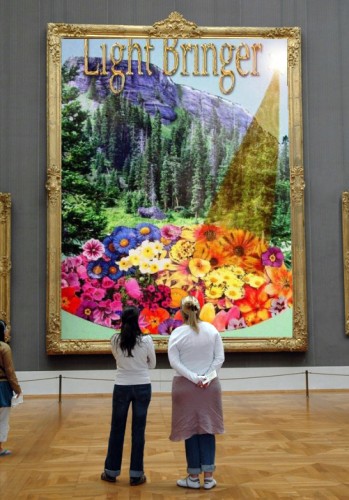
Light Bringer: Becka Johnson had been abandoned on the doorstep of a remote cabin in Chalcedony, Colorado when she was a baby. Now, thirty-seven years later, she has returned to Chalcedony to discover her identity, but she only finds more questions. Who has been looking for her all those years? Why are those same people interested in fellow newcomer Philip Hansen? Who is Philip, and why does her body sing in harmony with his? And what do either of them have to do with a shadow corporation that once operated a secret underground installation in the area?

DAIDaughter Am I: When twenty-five-year-old Mary Stuart learns she inherited a farm from her recently murdered grandparents — grandparents her father claimed had died before she was born — she becomes obsessed with finding out who they were and why someone wanted them dead. Along the way she accumulates a crew of feisty octogenarians — former gangsters and friends of her grandfather. She meets and falls in love Tim Olson, whose grandfather shared a deadly secret with her great-grandfather. Now Mary and Tim need to stay one step ahead of the killer who is desperate to dig up that secret.

More Deaths Than One: Bob Stark returns to Denver after 18 years in Southeast Asia to discover that the mother he buried before he left is dead again. He attends her new funeral and sees . . . himself. Is his other self a hoaxer, or is something more sinister going on? And why are two men who appear to be government agents hunting for him? With the help of Kerry Casillas, a baffling young woman Bob meets in a coffee shop, he uncovers the unimaginable truth.

A Spark of Heavenly Fire: In quarantined Colorado, where hundreds of thousands of people are dying from an unstoppable disease called the red death, insomniac Kate Cummings struggles to find the courage to live and to love. Investigative reporter Greg Pullman, is determined to discover who unleashed the deadly organism and why they did it, until the cost — Kate’s life — becomes more than he can pay.

Is Facebook Still Cool?

For years now, writers have been told that to promote their books, they need to sign up for Facebook, mostly because when Facebook was new, very few authors used social networking sites to engage with readers so those who did found a goldmine. Ever since then, authors by the hundreds of thousands have joined Facebook to find readers and found only other writers. Why? Unless you are a known writer, readers aren’t searching you out. Writers try to connect with everyone FB suggests or anyone they come in contact with, but readers don’t. They have no reason to connect because they have nothing to gain by it.

Because of the peculiarities of Facebook, I am connected to very few people outside the writer’s community (and those few non-writer connections are mostly family or real life friends). It’s hard to believe that with over 900 million users, I can’t break out of this tight enclave into the mainstream of Facebook, but I have nothing to say to anyone besides what every other author says, “Buy my books,” and even I know that doesn’t sell books. Mostly what I do is use Facebook as a bulletin board to post links to my blog posts. I also scan my feed to see if anything interesting is going on, (so-and-so’s book is being given away free on Amazon, such-and-such a book is on sale for 99¢ . . . yawn) and finally check in with my writing discussion group.

Shouldn’t there be more to such a vast network than a writer’s group? But then, I have made a lot of online friends through Facebook, I keep up with many of my fellow Second Wind authors on Facebook, and I try to get to know the people I am connected with. Considering that joining Facebook used to be a coming-of-age ritual for thirteen-year-olds, it’s amazing I’ve found anything to do on the site! I mean really, what could I possibly have in common with such new and untried persons?

Along with all the other problems Facebook is having (such as not finding enough ways to gouge money out of us via ads), they now have to contend with the loss of their youngest members. Among some young teens, it’s no longer considered cool to join facebook — they prefer to text or to join sites where they are not pressured to connect to everyone in their class. No wonder there are so many offline traumas instigated by online life. The unpopular kids can never get away from their unpopularity. And anyway, why would they join a network that is aging? Facebook is eight years old, which in online years has to be closing in on 57. (Assuming web years are equivalent to dog years.) Even worse, from the point of view of a young teen, is that more than one-fourth of FB users are 50 to 64 years old.

I’m not sure where I’m going with this post. It started out as a light-hearted commentary about the whole Facebook phenomena, and I planned to end up with saying that there are worst things that joining Facebook to connect with readers and finding only writers of a certain age, but I’ve since discovered a fb author friend plagiarized something I posted on Facebook, which is so not cool. So now I have no end to this post. Except maybe to say that I need to stop spending so much time online.

Have you ever had difficulty killing off a favorite character in your story?

No. For me, story is sovereign. Everything must serve the story, and if the death of a favorite character will serve the story, then that’s the way it has to be. To be honest, though, I haven’t yet killed off a favorite character. The ones I have killed were created to be killed, and I took great glee in doing so. Mostly, I’m not one for being selective in my killings. In A Spark of Heavenly Fire, I decimate Colorado. (I am using the word in its proper context here — I kill off a tenth of the population.) In Light Bringer, I hint at the destruction of vast numbers of people, and in my current work (that isn’t progressing very rapidly) I do, in fact, kill off almost the entire population of the world. After all that carnage, what’s one more character killed off, favorite or not?

Here are some responses from others authors about difficulty of killing off a favorite character. The comments are taken from interviews posted at Pat Bertram Introduces . . .

From an interview with Dellani Oakes, Author of Lone Wolf

I greatly dislike killing a character and avoid it if I can. However, there are times when a character must die to advance the plot. The one who upset me the most was a guy named Murdock Pickford. He’s in a prequel to my sci-fi series. Murdock is a nice guy. He’s kind, capable, loving and forgiving. He’s engaged to a woman who’s pregnant with another man’s baby & he agrees to raise her as his own. He’s thrilled about the baby, excited about getting married—and he has to die, horribly, brutally, for the book to move forward. I’m not ashamed to admit that I cried when I had to kill him off.

From an interview with Jocelyn Modo, Author of “Revolution Lovers”

In Revolution Lovers something truly horrible happens to Adie…I’ve avoided that scene since I wrote it. I can’t look at what I did to her, don’t want to face what I did to my beloved character. I feel silly saying it, but I feel guilty about hurting her.

From an interview with Rod Marsden, Author of “Disco Evil” and “Ghost Dance”

When you deal with the supernatural killing off a characters doesn’t mean they won’t return. I have had characters return a number of times after death to either help or hinder the living.

From an interview with Christine Lindsay, Author of “Shadowed in Silk”

I have to laugh at this as it may sound horribly brutal. But I have no problem killing my characters off at all.  In all of my books I kill off at least one secondary character, sometimes more as is the case of Shadowed in Silk.

I love having my strongest Christians die. I often cry as I write the scenes where they are ready to meet their Lord. And sometimes bad characters have to die too. I try hard not to think of their eternal situation, and remind myself that they are fictional characters — not flesh and blood — and I am not God.

What about you? Have you ever had difficulty killing off a favorite character in your story?

(If you’d like me to interview you, please check out my author questionnaire http://patbertram.wordpress.com/author-questionnaire/ and follow the instruction.)

“A Spark of Heavenly Fire” is a well paced thriller

The following is a review of my novel A Spark of Heavenly Fire, and was written by Dellani Oakes.

***

Kate Cummings works in a medical clinic as a patient advocate. Since the death of her husband, she’s led a quiet, uneventful life. All that changes when a jogger in the park falls on her, hemorrhages and dies. This event is strange enough, but when the same symptoms appear in a woman at the clinic, Kate realizes that something more is going on.

At the park, Kate meets Greg Pullman, a reporter for the newspaper. He’s somewhat younger than she, but they click on many different levels. When his fiancee, Pippi O’Brian, dumps him, he finds friendship and solace with Kate.

Together, Kate and Greg begin investigating the odd circumstances surrounding the deaths of the jogger and the woman at her office. As more and more people get ill, the city of Denver finds itself under military quarantine.

“A Spark of Heavenly Fire” is a well paced thriller. Kate and Greg race against time, trying to find the cause of the outbreak as well as survive in the aftermath. The characters are 3 dimensional and believable. The reader feels a link with them, and hope that they will somehow survive.

I highly recommend “A Spark of Heavenly Fire” for anyone who likes a good mystery with a dash of romance. It’s an excellent book and I look forward to reading Pat Bertram’s other novels – “More Deaths Than One”, “Daughter Am I”, “Lightbringer” and “Grief: The Great Yearning” (non-fiction).

Look for all Ms. Bertram’s books at www.secondwindpublishing.com as well as Amazon.com, BN.com and Smashwords.com

“More Deaths Than One” will leave you breathless

The following is a review of my novel More Deaths Than One, and was written by Dellani Oakes. I didn’t bribe her into saying such nice things. I promise.

***

“More Deaths Than One” by Pat Bertram will leave you breathless—first with anticipation, finally with a contented sigh of a job well done. Set in 1988, this well crafted, fast paced novel of love and intrigue spans the globe from Denver, Colorado to Bangkok, Thailand.

Bob Stark is a quiet man. A Vietnam vet, he’s returned to the states after nearly 18 years in Thailand. He came back to his childhood home of Denver because his life in Thailand couldn’t continue. His friend and mentor, Hsiang-li, left on a personal quest to find a golden Buddha in the jungle—the place where he had to bury his wife and child after they were murdered.

Kerry Casillas works nights in the diner Bob frequents. One night, she introduces herself and they get to know one another. Soon after meeting Kerry, strange things start to happen. Bob and Kerry find themselves embroiled in a mystery far beyond their understanding.

“More Deaths Than One” is an interesting tale of one man’s journey to find the truth. The character of Bob Stark is deep and many faceted. He’s quiet, kind and resourceful, showing abilities even he didn’t know he possessed.

Kerry is a fun loving character and the opposite of Bob in many ways. She’s talkative, outgoing and imaginative. She is the perfect partner and counterpart to Bob. She, too, has hidden talents that surprise and please Bob.

The well-paced plot of “More Deaths Than One”, keeps the reader riveted, waiting to discover the many mysteries in Bob’s past. I enjoyed the fact that though I guessed at all of these secrets, I was right about only a few. Bertram truly kept me hopping as I made my way through the book. I like when a novel isn’t so predictable that I know the end before it arrives.


Three Simple Ways to Increase Views on Your WordPress Blog

In my travels around the internet, I see a lot of blogs. There is nothing more annoying than to stop at an interesting article, want to see more by the writer, and have no other articles available to see. Many people use the standard archives widget, which is nothing more than a listing by date. What good does that do anyone? A date is not exactly a compelling reason to check out more of the blog.

In case anyone is curious what I wrote on a particular day, I do have the date widget, as you can see toward the bottom of my right sidebar, but I use a drop down box in place of a long list of dates. I also have “categories” toward the bottom of my left sidebar, but that is almost as useless. “Grief” and “writing” and “life” are almost as dull as a date. However, if you will look toward the top of my left side bar, you will see “Recent Posts” and “Top Posts.” Recent posts, obviously, are the most recent posts, and top posts are the ones that got the most views for the past forty-eight hours. This gives anyone who is interested in reading more of my articles a sampling of my writing. If you don’t use such widgets on your WordPress blog, why not? It takes only a few minutes to add the widgets.  Here’s how:

Rest the mouse cursor on the name of your blog in the top left hand corner until you get a dropdown box. Click on “widgets.” On the widget page, find “Recent Posts” and “Top Posts and Pages,” and drag them to your sidebar. If you have more than one sidebar, as I do, drag them to the sidebar where you’d like to see them featured. Title the widget if you want, or leave the title WordPress gives them, choose the number of posts you’d like to display, and click “save.” That’s it. Simple, right?

What’s even simpler is creating a page with an archive of all your posts. Supposing you have a lot of posts you are proud of and you want people to be able to see all your titles at a glance — it will take forever to list them, won’t it? Nope. Won’t take but a minute.  Here’s how:

Rest the mouse cursor on the name of your blog in the top left hand corner until you get a dropdown box.  Let the cursor rest on “new” then click “page.” Add a title to the page, then in the body of the post, write [a r c h i v e s]. Use the brackets, and don’t put spaces between the letters. I had to add spaces, otherwise you wouldn’t see the shortcode, you would only see the list of all my blog posts.

Now, the next time I visit your blog, I’ll have a reason to stay and read awhile.

Drowning in a Sea of “It”s

I’ve started going through my poor old work-in-pause. (The manuscript has been neglected so long, I can’t in all honesty say the work is in progress.) At first, I only intended to read what I’d written to plant myself in the story so I could figure out what my hero does next, but I’m appalled by the bad writing. Actually, the writing is okay, but the work is in dire need of editing. And no wonder — I wrote these chapters five years ago, long before I learned how to edit.

The worst problem I find is a copious use of pronouns, especially “it.” “It” serves only to tell a reader that the writer couldn’t be bothered to figure out a better way of saying “it,” so the writer used the placeholder word in the hopes that readers would be prescient enough to understand what “it” meant. To many “it”s make writing seem vague, because . . . well, because “it” is vague. For example:

“She’s my mother. I can’t just throw her out.” He hefted the bag of dry cat food, then paused, arrested by the image of himself pushing Isabel out the door of his apartment. As tempting as it might be, he couldn’t do it. When he was a child, she’d worked two jobs to support him, and he owed her.

I’m not sure how to replace the “it”s without causing echoes by repeating words such as “mother” and phrases such as “throw her out,” but the “it”s slapped me in the face when I was reading that passage, and that is never a good sign.

From the very next page: A chime intruded into Chet’s thoughts. It took a second for him to recognize it as the bell over the door. He seldom heard it so clearly; usually the clamor of the birds and animals drowned it out.

And this from a few pages later: He heaved his computer off the dresser top where he’d been storing it, lugged it to his office, and set it on the desk. He turned it on, ordered the lemon drops, then pulled up his plans for the refuge.

Yikes. I feel as if I’m drowning in a sea of “it”s. Maybe by the time I edit these chapters and find concrete words to replace all the “it”s, I’ll be so deeply involved in the story, I’ll have no trouble segueing into writer mode. Despite being infected by a bad case of ititis, the story deserves more than to be packed away as a work-in-pause for five more years.

Aaron Lazar’s Review of A SPARK OF HEAVENLY FIRE

A Spark of Heavenly Fire
by Pat Bertram
Publisher: Second Wind Publishing
ISBN number: 978-1-935171-23-2
Review by Aaron Paul Lazar
Lazarbooks.com

Who says you can’t squeeze romance into a thriller? And while you’re at it, how about weaving in a deeply moving story about human redemption?

Author Pat Bertram says you can. And she’ll convince you before you can say chimera — the lethal combination of virus, bacterium, fungus, and human genes that causes the rapid spread of the “red death,” a bio-engineered weapon threatening the entire state of Colorado.

Kate Cummings is trying to deal with the loss of her husband, who drove his car off a mountain after a long battle with Multiple Sclerosis. She passes by his bedroom without daring to enter, and slogs through life in a solemn daze, feeling guilty for every time she waited a few extra minutes to answer his summons, or for each time she became angry. His loss haunts her, and although her work at the Bowers Medical Clinic is fulfilling, it can’t heal the hole in her heart.

When a jogger stumbles into Kate with red eyes blazing, he vomits blood on her and dies instantly. A rash of similar deaths follows, decimating the state. Orange paint markers on front doors –– signifying a “red death” in the marked homes — begin to appear with frightening regularity. Panicked parents discard their red-eyed children, fearful of contagion.

Enter Greg Pullman, reporter for the Denver News, who’s engaged to the ditzy beauty, Pippi O’Brien, local TV weather girl. But when he bumps into Kate after Pippi heads for the border in search of safety, things change. Together, Kate and Greg investigate and unearth the shocking source of the horror that has shut down their state and caused a rogue wing of the military to terrorize Colorado’s remaining citizens. Basic human amenities – so often taken for granted –– become grounds for murder. And the streets are no longer safe to walk unescorted.

In addition to a killer story line, smooth writing, and phenomenal characterization, this page turning thriller features fine examples of charity through glimpses into Kate’s huge heart. The remarkable heroine opens her home to survivors who are homeless and hungry. Soon, partnered with a destitute woman named Dee, Kate’s home becomes a refuge for survivors. And in the midst of the massive deaths, terror, and horror, Kate finds salvation.

The tension in A Spark of Heavenly Fire is electric. Taut suspense pulls you along at a rapid pace. This reader was up way past his bedtime three nights in a row. And yes, it was that good.

***

Thank you, Aaron!

Be sure to check out Aaron Paul Lazar’s books at http://www.lazarbooks.com/