Gather ‘Round and You Shall Hear . . . The Story of My Online Life

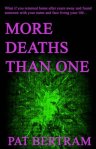
In October 2007, I entered a contest on gather.com — Court TV Search for the Next Great Crime Writer contest. The winner of the contest would win a $5,000 advance and a publishing contract. My entry, More Deaths Than One, was not a detective story, and it certainly is not a cozy mystery, but it is the story of a crime: identity theft. This theft is an actual theft of a man’s identity, not a paper one. So it did fit with the contest, though from reading the first chapter (all that was posted online for the contest), many people assumed it was a supernatural tale — as the blurb says, When Bob Stark returns home after spending eighteen years in Southeast Asia, he discovers that his mother Lydia Loretta Stark is dead again. When he attends her second funeral, he sees his brother, his college girlfriend, and . . . himself.

I did very well in that contest, too. As of November 17, 2007, I was ranked number one, but I finished up about sixth or seventh. (I could tell you it was because my mother died and I had to go to California for her funeral and I broke my ankle while there and was off the internet for a week so I couldn’t solicit votes, but the truth is . . . come to think of it, I don’t know what the truth is.)

The contest started out being great fun but devolved into all sorts of infighting, faked votes, and terrible reviews that were posted for no other reason than meanness. Still, it turned out to be a pivotal point in my online life and my writing career.

I became friends with many of the contestants, and casual acquaintances with others. (As Jeffrey Siger, one of the contestants said, it’s “sort of like the camaraderie born of battle or surviving a natural disaster: never to be taken as an endorsement of the event that engendered such strong ties among the the participants.”)

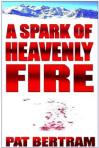
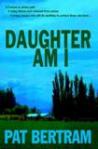
I met the group The Writin’ Wombats on Gather because of the contest, and ended up hanging around with them for all these years. Because of the contest, I eventually found a publisher. The link to the publisher’s website was posted on a Wombat thread, and since I was in querying mode, I immediately shot off a query letter. He loved my book A Spark of Heavenly Fire, and sent me a contract. Turns out, I already knew him through the contest, and he asked if More Deaths Than One was still available. It was. Second Wind Publishing has now published five of my books — four novels and one non-fiction book, Grief: The Great Yearning.

Until the crime writer contest, my online presence had been confined to my blog (I’d only had a computer and the internet a few months) but after the contest I posted articles on Gather, and I also migrated to other sites, such as Facebook, Goodreads, and Twitter. I mostly hang around Facebook now because of my discussion groups there, but I always return to Gather, especially on Thursday evening when I do a live chat with my No Whine, Just Champagne discussion group. I started out knowing only a few people online, now I know hundreds.

And all because of a contest.

So, what was the pivotal point of your online life?

Comment Spam

Sometimes the most amusing comments that are posted on the internet are the mangled bits of spam that clog the blogoshere. Here the most current ones that graced this blog:

1.Definitely believe that that you said. Your favourite justification seemed to be on the internet the easiest thing to understand of. I say to you, I definitely get irked while other folks consider worries that they plainly do not know about. You managed to hit the nail upon the highest and defined out the whole thing with no need side effect , people can take a signal. Will probably be again to get more. Thank you!

2. I was studying some of your content on this site and I believe this web site is very informative ! Continue putting up.

3. I merely needed to appreciate you once more. I do not know that the things that I would have done without the actual ways documented by you directly on such area of interest. It truly was the fearsome condition in my circumstances, in spite of this , looking up a skilled form you treated it forced me to weep with delight. I am grateful for this support and in addition have high hopes you have been aware of the great job you are carrying out educating quite a lot of people all through your blog. I identify that you haven’t got to recognize all of us.

4. A person essentially help to make critically articles I would state. This is the first time I frequented your website page and thus far? I surprised with the research you made to create this particular put up extraordinary. Magnificent job!

5. Its such as you learn my mind! You seem to grasp so much approximately this, such as you wrote the e-book in it or something. I think that you just can do with some % to force the message house a bit, but instead of that, this is great blog. An excellent read. I will certainly be back.

This last one actually makes sense, but then it would have to since it’s promoting a site called “genius love” (a site so dangerous, my internet protection wouldn’t let me check it out):

6. The difficulties you meet will resolve themselves as you advance. Proceed, and light will dawn, and shine with increasing clearness on your path.

Finding Time to Write

I’ve been trying to get back into writing, but I never seem to able to find the time. There are always so many things that need to be done. Take yesterday, for example. I started out the morning answering emails. I don’t get as many emails as most people, but still, writing responses to the ones that required my attention took me over an hour.

Then I wrote a simple blog post. It was a recap of on online discussion, so it shouldn’t have taken me long, but it did. I’ve heard that people should allocate twenty minutes to updating their blogs, but somehow, my twenty-minute blogs end up taking hours. Writing is how I think, and sometimes it takes a while for the thoughts to coalesce. Sometimes it takes a while to find the right words to express the thoughts. And sometimes it takes a while to edit and copyedit the article to make sure it’s readable and that my point is clear. All those “a while”s added up to three hours yesterday.

When I finally posted the blog, I took time out for a walk and a meal, then I returned to the computer and had an email conversation with a friend who had also suffered the loss of her mate. Since she seems to have reached a place of peace, I wanted to know how she did it. I know I can go on alone since I am doing it, but the thing that still makes me feel as if I’m about to fall off the earth is that he is dead. No matter how well I do, no matter how much peace I attain, he will always be dead. Of course she had no answers for me — one person’s way of learning to live without is not the same as another’s — but she did say something that struck a chord: “the world comes back.” This was an important conversation for me, and I’m glad I had the time to spend, but still, writing my side of the exchange took a couple of hours.

I love comments on my blog, and always enjoy communicating with those who do comment, but that takes time. Yesterday evening, it took me almost an hour to write my responses.

And finally, Facebook. Need I say more? Well, maybe I do. I had several messages that required replies, discussions that needed input, updates that cried out for comments. In all, that added a couple more hours of writing to my writing time.

That’s when I realized why I have no time to write — I spend all my time writing! So, to find time to write, all I need to do is stop writing.

Why is Writing Important?

With such a staggering number of books on the market and more to come, why is writing important? Only a small percentage of writers have ever made a living at writing (and most of those were people who wrote books on how to make a living at writing), and that percentage seems to be shrinking. More than 80% of books sell fewer than 100 copies. Maybe 50% sell only about ten copies or so. So, why write? The wonder of writing fiction is that a story born in one mind grows to full power in another mind. But what if you don’t have readers, or at least not many? And why take the time to learn the craft since some of the books that do sell are poorly written tripe?

If nothing else, this conundrum that writers face today makes us focus on what we get out of the writing process itself.

For me, writing is something that connects the parts of my life, even though I don’t always write. I once quit a job to write a novel, but found I had no intrinsic talent. I was young and didn’t have the wisdom to know that there are two types of talent — the intrinsic kind that’s called talent, and the learned kind that is in itself a kind of talent, the kind that that comes from trial and error. Even if I had known about the second kind, I didn’t have the patience to write the million words it supposedly takes to learn how to write, so when life got in the way, I let it. Other things simply were more important. (Some people believe you have to have a passion for writing, that it has to take precedence over everything else, but writing is not always “life” nor is life always “writing.” If one does not live, one has no reason to write.) Years later when my life had pretty much come to a standstill because of various misfortunes, I took up writing again, but when my life mate died, I lost the desire to write fiction. Perhaps one day the desire will come back along with a different focus and possibly a different talent.

Writing for me is also an emotional outlet and a way of discovering why I feel the way I do. While struggling to deal with the death of my long-time mate, I poured out my heart and my soul and my grief into journal entries, letters to my deceased mate, and blog posts. I don’t know if I could have survived without that outlet. A book compiled of some of the best writings of that time, Grief: The Great Yearning, has now been published, yet when I wrote during this time (except for the blogs, of course), I had no expectation of my words ever being read. I wrote for me.

Reasons for writing are as varied as those who write. For example, in a recent online discussion, horror writer Rob M. Miller said, “I write because I have something to say, and I want it to be heard.” Even if there was a chance he wouldn’t be heard, he would still write because, as he says, “I write to self-explore my mind, to self-medicate, to share my worldview.”

I like those reasons for writing. Too often when I ask writers why they write, they say they only want to entertain, which makes me cringe. If entertaining others is the only reason for writing, then why bother? The “others” can find a lot more entertaining things to do than to slog through someone’s unseasoned prose. But if you’re writing to share your worldview or to explore your mind, then your writing actually has value. Of course we want people to enjoy what we write, but entertainment can’t be the only reason to write, unless it’s for our own entertainment. Writing is a good way of passing the time. It’s better than watching television and it could change someone’s life, perhaps our own.

Writing Worth Reading

In a world where anyone can write a book and get it published regardless of  its merit or readability, authors have come to believe they can write however they wish. And of course, they can. Who is going to stop them? There are no longer any gatekeepers to the world of publishing. But still, writing is about communicating. If a writer cannot communicate what he or she wants to say so that another person can follow the story or article without sorting through typos, unruly punctuation, or poor sentence structure, then the writer has failed.

Whether we are bloggers, content producers for various websites, novelists, these are all tenets we must heed:

1. Use dynamic verbs and concrete nouns, and keep adjectives and adverbs to a minimum. Watch for word qualifiers such as “a little,” “quite,” “somewhat.” They undermine our authority and make our writing seem indecisive.

2. Action first; reaction second. Cause first, effect second. “He finished smoking his cigar, then he aired out the room.” Not: “He aired out the room after he finished smoking his cigar.” When we don’t use the proper sequence, our writing seems unfocused.

3. Use active voice; too much use of passive makes our writing seem muffled.

4. Don’t be clever just for the sake of cleverness, don’t complicate the obvious, and don’t be unconventional for the sake of being exotic; ultimately, our readers will feel used or confused, and we will lose them.

5. Punctuation, spelling, and grammar do count. Content is important, but what good is all our wisdom if we come across as dolts?

6. Strive for clarity, economy, grace, and dignity. We can string words together, but without at least a couple of these particular elements, our writing will not be worth reading.

Do you think writing your book changed your life?

I wish I could say writing my latest novel Light Bringer changed my life, it would make a good story, but the fact is, it made little difference outside of bringing to a close a lifetime of research. It was the fourth novel I wrote. I’d already experienced the joy and sense of accomplishment completing a novel gives one, and I’d already experienced the disappointment that comes from having a novel rejected. I’d already experienced the joy of getting published and the disappointment of lackluster sales. Now, if Light Bringer would go viral, that would change my life!

Writing Grief: The Great Yearning, my non-fiction book about surviving grief, didn’t change my life, either. In fact, my life had changed first. Writing was how I coped with the changes.

Here are some responses from fellow Second Wind Publishing authors about how writing their book changed their lives. The comments are taken from interviews posted at Pat Bertram Introduces . . .

From an interview with: J J Dare, Author of False Positive and False World

Writing my first book a few years ago gave me confidence. I believe it was an exercise to prepare me for the challenges I would shortly face in my personal life.

From an interview with: Noah Baird, Author of Donations to Clarity

I think people thought I was pretty weird before the book. They still think I’m weird, but I think I get a pass now because I’m a writer.

From an interview with: Calvin Davis, Author of The Phantom Lady of Paris

After penning the Phantom Lady, I was not the same person. The actual writing of the novel took about five and a half years. During that period, I wrote and rewrote again and again, etc. That said, the truth is, it took me all my life to write the Phantom Lady. The penning of my two other novels was preparing me to write TPLOP. The production of my countless short stories was also tutoring me on how to create the Phantom Lady. And during all this time of schooling, “the lady” was inside me clamoring to be liberated, as I was clamoring to liberate her. “Free me…free me,” she screamed. When I completed the last sentence of the novel, the lady was finally liberated. “Thank you, Calvin,” she said. “Thank you.” Finally, she was free…and so was I.

From an interview with: Sherrie Hansen, Author of Merry Go Round

I think each book that I’ve written has changed my life. I remember an episode of Star Trek, Next Generation, when Jean Luc Picard was swept away to live out his life on another planet. He eventually fell in love, married, had children, and learned to play a musical instrument. When his new world came to an end, he learned that he had never left the Enterprise, and that the whole alternate life experience had occurred only in his mind, in a few days time. I feel like that every time I finish a book. It’s like I’ve visited some alternate reality and lived the life of my character from start to finish, feeling what they feel and experiencing what they experience, when in reality, I’ve just been sitting at my desk, typing away. In a very real way, I think each book makes me a richer, more multi-faceted, more understanding person because I’ve walked a mile (or a hundred) in my character’s shoes.

From an interview with: Coco Ihle, author of She Had to Know

Absolutely. In a couple of ways. My sister and I talked in detail about our lives before we met, and how we felt about all the things that happened and didn’t happen through the years. Our talks created a stronger bond between us.

Another way my life changed was, my adopted mother used to accuse me of starting projects and losing interest before finishing them. Well, I took that criticism to heart.  I know she’s up there smiling down at me, because I finish projects now.

So, do you think writing your book changed your life?

How Many Books Are Going to be Published in 2012? (Prepare for a Shock)

I hadn’t planned to write any more about the book world. For one, it’s too depressing, and for another, I’m getting to where I’m okay with it. I’ve never had much use for 99.99% of books published anyway, so it doesn’t really matter if the world is being overrun with terrible books. It always has been. And, truth be told, I don’t enjoy reading much any more. After having read more than 20,000 books, I’m way past the first flush of enthusiasm when it comes to new books. (Okay, I admit it, I’m jaded.) When people start writing before they have read thousands of books, they don’t know that the story they are telling has been written a zillion times before. Nor do their equally unread readers know or care. It’s new and fresh to them. So, perhaps I should leave the book world to those who still embrace it.

So why am I writing about the book world again? I came across a statistic tonight that totally staggered me (All information comes from Bowkers, the company in the U.S. who issues ISBN numbers).

300,000 books were published in the U.S. 2003.

411,422 books were published in the U.S. in 2007.

1,052,803 books were published in the U.S. 2009.

Approximately 3,000,000 books were published in the U.S. in 2011.

And . . . drum roll, please . . . in an online interview, Seth Godin suggests that 15,000, 000 books will be published in 2012.

15,000,000. Yikes.

Google estimates that as of August 2010, there were 129,864,880 books in existence. Which means that the total number of books that could be published in 2012 is more than 1/10 of all the books in existence. That is an unfathomable jump, a 500% increase in a single year. (That is correct, right? 3,000,000 times 500% = 15,000,000.) Unbelievable.

I got an email from a book marketer today, wanting me to write an article about what the publishing landscape will look like in 2016. I cannot imagine what it will look like. Even if the number of books published returns to the more typical 200% increase per year, by the year 2016, we will have doubled all the books that were in existence in 2011.

Who is going to read all those books? Who is going to buy them?

Creativity Has No Price

A couple of days ago, I posted a bloggery What is the Price of Creativity, where I lamented the devaluation of books. What everyone believes they can do, no one values, and so readers today expect to get ebooks for a nominal sum, or even free.  Mickey Hoffman, author of School of Lies and Deadly Traffic, wrote such an insightful rebuttal to that article that I thought it deserved to be featured here (though truthfully, everyone made important  points). Mickey wrote:

Rembrandt died poor. He’s now regarded as one of the creative geniuses of the art world. This stuff has been going on forever. In ancient times the people who carved the famous statues in Greece didn’t even put their names on their work. Creativity has never been as useful to humans or held as high a value as the ability to make money, to manipulate others, to convince the masses that one is a god, etc.

The ability to write used to be admired only because for centuries most people could not even read or write their own names. And only the Bible was deemed worthy of reading. When reading no longer was such a mysterious process done only by a monk or priest and people realized it wasn’t so difficult to learn to do it for themselves, then they began to read, but still mostly religious tomes. If you look at many countries today, the kids are taught to read only for the purpose of reading the Koran. So it still happens.

In the West, as the ability to read became more common, writing became more common. Letter writing was the rage and those who could write creatively were held in high esteem. But were they actually paid well for it? Not often. Rich people had books but didn’t read them, they used them like trophies to show they were cultured. Writers still struggled to make a living and always have. Only a few have been able to support themselves that way. There have always been trashy publications and well written ones. Just more of both now.

You could argue against public libraries too, and make an argument that the ability to read for free would devalue writing. I don’t think the availablity has much to do with it. What’s changed are two things. One is the cultural idea that’s infected education: Everyone’s a winner. No one can be told they’re not good at something for fear of damaging their self-esteem. Kids aren’t reading well-written books in elementary or high school anymore so they have no means of comparison. They don’t have to learn how to write well either unless it’s on a test. College professors are getting essays with abbreviated text messaging words in them. My brother, a professor, used to read me some of the stuff his students wrote. These things were so unintelligible I didn’t know whether to cry or laugh. Somehow they made it into college anyway.

Second, television and films. Need I say more? I think we’ve all noticed that best sellers read like they’ve been written to be made into an action/thriller movie. And if they are, then they’re actually composed with different elements in mind than a writer puts into a story made for reading only.

So how is the public to know they’re reading garbage? Just throw in a vampire or a ghost or a serial killer or a few sex scenes and that’s enough to find an audience. And the agents and publishers know this. Don’t blame Amazon or anyone else, blame US.

What is the Price of Creativity?

The book business continues to dishearten me. The recent pursuit by the government against the major publishers and Apple on antitrust charges gives Amazon a virtual monopoly with the ability to charge whatever prices they want, eternally undercutting the competition. This also gives Amazon control of the royalties the authors earn, which is little enough to begin with, and makes self-publishing on Amazon an even more attractive option. Which gives Amazon even more control.

Perhaps the publishers were charging more than people would have liked, but frankly, as much as I hate the major publishers, there is more at stake here than simple manufacturing costs. Admittedly, it doesn’t cost anything beyond an initial investment to produce an ebook, but what about the value of the contents, the creative output, the artistry of the writing itself? No one complains that the painting they bought for $100,000 is overpriced even though it merely cost the artist a few dollars worth of paint and canvas, so why do readers begrudge writers compensation for their creativity? What didn’t exist now does. Shouldn’t there be value to that?

And that is the real issue here. Value.

Readers don’t seem to care that the art of writing no longer has any value. They can get an endless supply of books free or close to free. They seem to believe that good writing will rise to the top, that bad writing will simply fade away, but that is not true. What sells is adequate writing, writing that is just good enough to get the job done. Some good books might find a readership, but if they don’t, it does not negate the inherent value of the book. Nor does a barely adequate book become a good book simply because it sells.

Huge numbers of people shrug and say, “Ebooks are here, get over it.” They are thrilled at the disappearance of any “elitism” that might once have been conferred upon published authors. Anyone can write. Anyone can publish. What everyone believes they can do, no one values. People are reading more now because of the low cost and ease of ebooks, but are they reading anything of value, are they becoming better human beings because of the books, or are they simply passing time?

I was shocked the first time I heard that books are considered entertainment, that books compete with movies and video games for entertainment dollars. Books are more than entertainment. Or they should be. The written word becomes part of us. What was conceived in one mind comes to life in another. It’s a connection between two human beings who have never met. Isn’t that of greater consideration than a fight over entertainment dollars? Through books you can travel to other places in the world, and you can travel to other places in your own mind. You can experience feelings, ideas, philosophies that you never knew you had. Isn’t that more than mere entertainment?

I’m not sure I want to participate in a book world that places such a small value on the written word. I’ve been trying to find a reason to write again, but frankly, I don’t I see the point.

My Short Story “The Willow” Has Been Anthologized!

My short story, “The Willow,” has been published in the Second Wind anthology Change is in the Wind. Reviewer Sheila Deeth says:  “Pat Bertram’s ‘The Willow’ haunts with its beautiful portrayal of love and loss.”

I hope you will read this story. It did what I wanted, capturing the essence of timeless love and the new life that comes from loss. You don’t even have to buy the book. I’ll let you download the anthology this week for free! To download the ebook, go to https://www.smashwords.com/books/view/146269, pick the format of your choice, and then use coupon code HG57Y when you purchase the book. Your cost should be $0.00 (Offer expires April 17, 2012)

Excerpt from “The Willow”:

One summer day, shortly after their twenty-fifth wedding anniversary, Gracie was curled on the couch, proofing the catalog for an exhibit of the new modernists, when Scott trudged into the room. Gladness at the sight of him sparked a smile as always, but something in his manner . . .  a hesitation . . . made her smile fade.

“Do we have any plant food?” he asked, his words slurred.

“There should be some in the garage.” She peered at him. “Are you okay?”

“I think I’m dying.”

Gracie bolted upright, heart pounding so hard it shook her body. “What?”

“A little plant food should help.” Scott started to walk away.

“Wait! Just wait a minute, Scott.”

He glanced over his shoulder, a questioning furrow between his brows.

“You can’t just drop a bomb like that and then leave as if nothing happened,” she said.

“What bomb?”

She stared at him for a second, unable to speak, but finally managed to croak out the words. “You said, ‘I think I’m dying.’”

“I didn’t say you were dying.”

“Not me. You. You said you were dying.”

“I said the tree was dying. You never listen, do you?”

The chill in his voice froze her. All she could do was sit immobile on the suddenly uncomfortable couch and watch him. He stumbled as he left the room, and his shoulder hit the doorjamb.

Fear, like fury, flashed through her body. Something was wrong with Scott. Terribly wrong. In all their years together, he’d never spoken to her in such a tone. She hadn’t even known he had such a tone. And that stumble? He was the most graceful man she’d ever met, walking on the high beams of his buildings as if they were earth-bound sidewalks.

She chased after Scott and found him staring up at the canopy of the globe willow. Golden leaves sprinkled down on him as if it were fall instead of just beyond spring.

“Do we have any plant food?” he asked, warmth and worry in his voice.

Gracie put a hand to her mouth to hold back a dry sob. Didn’t he remember that he’d already asked her about the plant food? “Maybe it’s time for you to get a check-up,” she said.

“Me? I feel good.” He grinned at her and held out his arms. “How about a little stress release, love? That’s all I need to make me feel great.”

Blurb from Change is in the Wind:

The assignment was simple: submit a short story dealing with change. The results were astonishing, engaging, and incredibly varied. The stories compiled in this volume range from taut action drama, to stealthy intrigue, to enthralling spirituality, to tangled relationships, to timeless love renewed—or lost, to angelic second chances.  No two of the tales are remotely similar, and yet they are linked in remarkable ways. Each story is tied it to all the others in the anthology with two exquisite threads. The first constant theme is redemption; in each case there is a transformation, often painful, that brings new beginnings, new possibilities and revitalized life. The second theme is love—timeless and true—expressed in a multitude of ways, but unfailing in bringing hope and newness. Change in the Wind is an extraordinary collection of marvelous stories from gifted, eclectic writers who draw us into their worlds and leave us wanting more.

Second Wind Publishing is starting a new short story contest. Perhaps you will be included in the next anthology! For information about this new contest, click here: Holiday short story contest