What challenges did you face when writing your novel?

For More Deaths Than One, my first finished novel, the biggest challenge was learning how to write. Yikes. The original draft was laughably terrible. But I kept reading books on how to write, and I kept rewriting my novel, and eventually I got it right.

For A Spark of Heavenly Fire, my biggest challenge was finding the beginning of the story. I liked the story, and I kept telling myself that if people could just get through the first fifty pages they would like the story, too. Then one day it dawned on me that the solution of getting readers to see the story beyond the less than sparkling beginning was to get rid of the first fifty pages. So I junked those early chapters, wrote a new beginning, and then the real challenge began — getting it published. After two hundred rejections, I finally found a publisher, Second Wind Publishing, who loved the book.

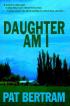
For Daughter Am I, I had one great obstacle — me! The story came to me all in one day. Even the biggest story problem — why the gold was buried — was resolved that very night when I read a book about the war on gold. Still, even though I knew the story, it took me eleven months to write the first draft. Words come slowly to me. I’m not one who can sit down and just write what comes to mind. I have to dredge the words from somewhere deep inside.

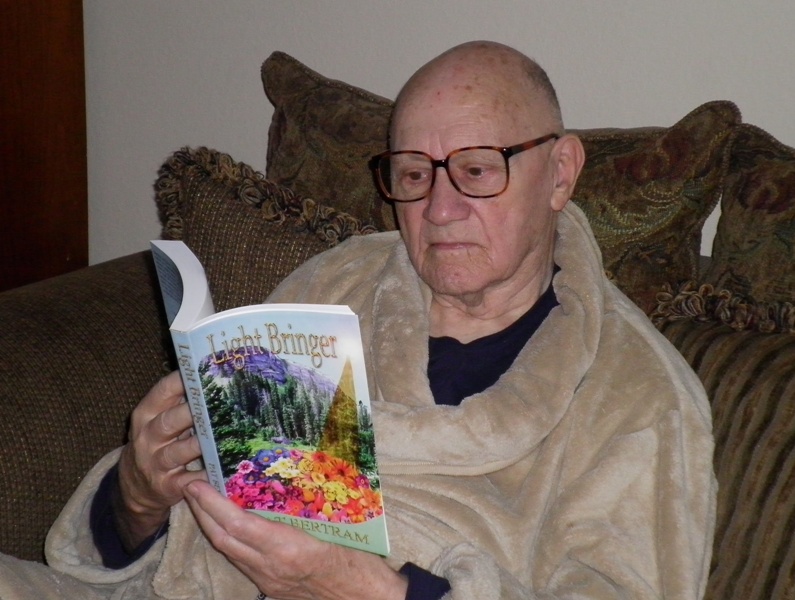
For Light Bringer, my biggest challenge was figuring out who my not-quite-human characters were and where they came from. It was the first of my published novels to be started and the last to be finished. It took that long to discover the truth of the characters.

Here are some responses from others authors about the challenges they faced when writing their book. The comments are taken from interviews posted at Pat Bertram Introduces . . .

From an interview with: Jeffrey Siger, Author of “Target: Tinos”

I always like to immerse my characters in what I see as significant looming issues, but  the book originally planned for a 2012 release was scooped by world events thereby requiring me to scrap it and write an entirely new one. That experience left me a bit gun shy about picking another issue to wrap my story line around. But as I’m sure happens to so many writers, when you relax and just let the keyboard pull you up, voila, magic happens.

From an interview with: Anne Lyken-Garner, Author of “Sunday’s Child”

The obvious challenge was exposing my life story. It’s not and will never be a comfortable thing to do. Once it’s out there, it can be perused by anyone and be open to mockery, disdain etc. People can judge you because they think they can analyse you now that they know so much about your life – even if they’ve never judged you in the past.

From an interview with: Sherrie Hansen, Author of Merry Go Round

The only struggle I seem to face with my writing these days is finding enough hours in the day to sit down and write. I own and operate a bed and breakfast and tea house and am a pastor’s wife. I maintain four houses. It’s a good, but very busy life, and when the day is done, I am often too exhausted to think.

From an interview with: T. C. Isbell, Author of “Southern Cross”

I’m a retired engineer. My first challenge was to learn how to not write like an engineer. My second challenge was to learn everything I missed while staring out the window during my high school English classes.

From an interview with: Linda Nance, Author of “Journey Home”

Life got in the way. When you are raising a family there are many things that make writing the book less of a priority. An almost fatal accident made existance difficult and the idea of finishing the book only a distant dream. I did not give up but when I had the story completed I could see it was still not finished. It needed more. It needed more than I could give.

I enrolled in a class at Arkansas State University and doors opened giving me a new enthusiasm I had never felt with the feeling that I could . . . I could do it. They taught me so much and they helped me to learn to learn. I have always believed that we should learn in everyday and all that we do. The class helped me to view things in more than one way and to use that in what I was working on.

So, what challenges did you face when writing your novel?

(If you’d like me to interview you, please check out my author questionnaire http://patbertram.wordpress.com/author-questionnaire/ and follow the instruction.)

Making an Impact With Our Writing

In Practical Tips for Writing Popular Fiction, Robyn Carr writes, “It is important to know what type of book you are writing, what it is mostly. Different types of novels are meant to accomplish different things. Some are meant to scare, others to thrill or provide vicarious adventure, some should fill the reader with desire. The impact of the story is consistent with its genre. To write a superior novel, the novelist needs a course to follow, a map to lead the way. You must know where you are headed, and what you are doing, and why this works.”

The impact I’ve always hoped for with my novels is shock that such things happen, perhaps fear that they such things could happen to any of us, and a dash of cogitation or at least a soupcon of second thoughts about how one views the current state of affairs. The irony, of course, is that we seldom can change anyone else’s views, so those who are aware of the truth will not be shocked because it’s nothing they haven’t heard before, and those who are not aware of the truth will not be shocked because they will assume the books are entirely fictitious.

Still, I add cupfuls of history to the cauldron when I am stirring up a story, in hopes that some people will see a bit more of the truth, yet I’m not sure what, if anything, that will accomplish. If we truly are living in a controlled society, there isn’t much we can do whether we know the truth or remain blissfully naive.

In case you aren’t familiar with my novels they all fall under the heading of “conspiracy fiction.” I wrote what I knew (from studying secret histories, not from first hand experience), partly to create the impact as stated above, and partly because it would have been a shame to let all that research go to waste.

So, what are you trying to accomplish with your novel? What is the impact you are hoping to make?

Is a Salinger-Like Reclusiveness a Viable Option in Today’s Book World?

Here’s an interesting dichotomy — there are so many books being published today that most will never sell more that 100 or 150 copies in a lifetime, yet an article in the New York Times says that in the e-reader era, writing one book a year is slacking. Name brand authors who once wrote one book a year are now writing two, and those who are sticking to a one-a-year schedule are also writing short stories and novellas to keep their names in view. To quote Lisa Scottoline from the NYT article, “the culture is a great big hungry maw, and you have to feed it.” And it’s not just name brand authors. Self-published authors are feeding the maw, too, sometimes with three or four or even six books a year.

Seems silly to me — authors scrambling to write extra books while many worthwhile books from small independent presses are going unread. There should be a way of evening things out, but people obviously prefer to stay with authors they are comfortable with. How else to explain the James Patterson phenomenon? Twelve books in twelve months? Yikes. Granted, some seem to be ghost written (or should I say guest written?), but still that is an incredible output considering that most people don’t read that many books in a year.

I’ve always loved books — in fact, as a child all I ever wanted when I grew up was time to lose myself in books — but now I’ve mostly lost my taste for reading. Too many books are shallow, even the well-written ones, and no wonder — authors who once had the time to write thoughtful books have to spend more time racking up the words and less time thinking. For me, a story isn’t enough. I want to be tantalized with insights, new ideas, different ways of viewing the world. I realize this is not the wave of the future. How deep can the ideas in a novel be if they are intended to be read on a phone or as an interactive ebook that’s enhanced with video, author interviews and social-networking applications?

I’ve never been one to follow the crowd. Sometimes I don’t even know where the crowd is. So it should come as no surprise that I don’t intend to increase my output of writing. (Though, come to think of it, any writing other than blogs would increase my output.) I couldn’t write more even if I wanted to. I am a slow writer. Even at my fastest, I can only write one book a year, and that doesn’t include editing and copyediting.

I am getting an interest in writing again, though. Sometimes I think about the books I’ve started and wonder what will happen to the characters, and just today I figured out how to develop my grieving woman book, the one I started for NaNoWriMo in 2010. It should be not so much a book about grief but about a woman’s journey into self-discovery, and so I should start the story before her husband dies, because it is during his long dying that she first loses herself.

This could be one of those books that takes a lifetime to write, since perhaps I will have to live the character’s life first. Or maybe I need to write the book as if I am writing my own future, and see what I can make of myself. Either way, the book would not be written in a month or even a year. It would take longer than that to glean the necessary insights.

According to the NYT article, “Publishers also believe that Salinger-like reclusiveness, which once created an aura of intrigue around an author, is not a viable option in the age of interconnectivity.” Luckily, I am neither self-published nor published by a major publisher, so I have the luxury of being as reclusive as I need to be in order to write whatever books might be in my future. (Shhh. It’s our secret. Don’t tell my publisher, Second Wind Publishing, I said that.)

Getting Grief Right in Writing

Long before I knew the truth of grief and its power, I wrote A Spark of Heavenly Fire. The story begins thirteen months after the death of Kate Cummings’ husband, and she is still haunted by her small unkindnesses during his long illness. It surprises me that I got that part right because so much of the grief journey has been a shock to me, including how much I regret my own small undkindnesses toward my life mate/soul mate. I didn’t do anything bad, just lacked generosity of spirit at times during his last year. If he had lived, of course, these lapses would have passed unnoticed in the commotion of daily life, but with his death, they loomed like vultures over my spirit, waiting to tear me to shreds. If I had known how close to death he was, I would have been more patient, more understanding of his dying ways, but I didn’t know. I’ve come to realize that we were under such stress those last years that both of us did the best we could in the untenable situation. Dying is an unpleasant business for both parties.

Here are a couple of excerpts from A Spark of Heavenly Fire that show Kate’s torment. I wasn’t as feisty as Kate. I didn’t kick furniture or slam doors (well, maybe just once), and I didn’t give in to my anger until after he was dead, but otherwise, these passages show how much we bereft regret the small things we did:

Kate hauled herself upright and groped for her eyeglasses. After sitting on the edge of the bed for a moment, gathering her strength, she dressed and wandered through the house. She hesitated by the closed door of the second bedroom where her husband had lived during the last years of his protracted illness, touched the knob with her fingertips. Yanked her hand away.

This is ridiculous. Joe’s been gone for thirteen months.

Taking a deep breath, she grasped the knob, but could not force herself to turn it. She rested her forehead on the door for a minute, wondering if she’d ever be able to face the ghosts of sorrow and regret locked inside, then squared her shoulders and headed for the front closet to grab a coat and hat.

[Later in the book, Kate explains this inability to open the door to her new friend, journalist Greg Pullman.]

“A little over a year ago, during one of Joe’s rare remissions,” Kate said. “I mentioned we were coming up on our fifteenth wedding anniversary. When he ignored me, I asked, ‘Would it kill you to be nice to me once in a while?’

“He didn’t answer.

“I went out for a walk. When I returned, he was gone.”

“Dead?” Greg asked.

“No. Not then. He’d taken our car, an old Volvo, and left. I didn’t know he felt strong enough to drive. He could barely walk and had a hard time gripping so much as a glass of water.

“When the state patrol called to tell me Joe had been in an accident, that he’d driven off a cliff in the mountains and had died instantly, I wasn’t surprised. It did surprise me when they ruled it an accident. It seemed so obvious to me he’d taken his own life that I was sure everyone else could see it, too.”

Kate gave an unamused laugh. “I never did buy another car.”

Greg looked at her, a frown wrinkling his brow. “I don’t see that you did anything shameful.”

Kate toyed with her empty cup. “I’m not proud of what I said, and I hate knowing those were the last words I ever spoke to my husband, but I don’t think it had anything to do with his suicide. I doubt he even heard me.

“About two weeks after the funeral, I decided to clean Joe’s room. I didn’t feel up to sorting out his things, but I thought I should dust and vacuum in there. I cracked opened the door, as if expecting Joe, or at least his spirit, to inhabit the room. I stepped inside, but seconds later I scrambled out again and slammed the door.

“Memories of all the shameful, petty, inconsiderate things I had done over the years haunted the room, and I couldn’t bear to face my own mean spirit. Too many times I snapped at him or purposely waited a few minutes before going to see what he wanted when he called out. Other times I felt so angry at the way life had treated us, I stomped around the house, slamming doors and kicking furniture. Usually, though, I pounded my pillow, or cried. I’m embarrassed to admit how many times I cried, wishing I had a normal life with healthy children to take care of instead of an uncommunicative and disabled man. Sometimes I even hated him for what he had become, as if he chose to get sick. Can you believe that?”

She didn’t pause for a response, but hurried on, wanting to get it all out. “Worst of all, I realized I was not a strong woman who had shouldered her burden with courage, but a weak woman who lacked generosity of spirit.”

Greg reached across the table and put a hand over hers. “We are a sad pair, aren’t we?”

She gave him a wistful smile.

A full minute went by without either of them speaking, then she asked, “Would you like some more hot chocolate?”

Rules of the Writing Game

There are thousands of books on the market telliing us how to write the novel. Balancing those are Somerset Maugham’s oft-quoted adage, “There are three rules for writing the novel. Unfortunately no one knows what they are.”

The truth is, we can change the rules of the game (assuming there are any rules). Why not? After all, it’s our game. We can do anything if we can make it work. But . . . if we want readers, we have to fulfill our side of the contract by fulfilling their expectations. If we write a boring story when we promised a thriller, if we don’t furnish a satisfying ending, if the book is riddled with typos and inconsistencies, then we have not fulfilled reader expectations.

In this anything goes publishing world, readers’ expectations seem at an all time low, otherwise why would they put up with the unedited, poorly constructed books that are downloaded every day by the hundreds of thousands? Still, most of us want more for our books than to be today’s free download fad. We want our books to have a life of their own, a life for which people are willing to pay a fair price. And for that, we need to know how to write, communicate, and tell a story.

Certain aspects of story telling never change — you need a beginning that hooks people, a middle that makes them want to keep reading, and an ending that satisfies. The writing has to be comprehensible. No reader wants to read the same sentence over and over again, trying to make sense of it. They want to find out what happens to the character. Which brings us to an important “must.” You must have a character who wants something desperately enough to drive the action of the story. Even if the character is unwilling to take action at the beginning, somewhere along the line she needs to take things into her own hands. A character who is unwilling to participant in her own story gets boring after awhile, and no matter how things change, that first commandment of writing will always hold true — though shalt not bore thy reader.

So, what are the rules of your game? What traditional rules do you follow? What rules do you make up? If you create your own rules, how do you make your story work?

Do Us All a Favor and Let Your Characters Cry

Writers have a saying: if your character cries, your reader doesn’t. Writers seem to take this to mean that characters can never cry, that a tearful character is not a sypmathetic one, that readers cannot identify with a weeper. But tears are contagious — when watching a movie, I tend to cry if a character does. Still, even if the adage is true and readers don’t cry when a character does , is that so terrible?

As I mentioned in yesterday’s post, Why “Grief: The Great Yearning” is Important, I started writing about grief when I discovered that so many writers get it wrong. Many novels are steeped in death, with bodies piling up like cordwood, yet no one grieves. The surviving spouses think as clearly as they did before the death. They have no magical thinking, holding two disparate thoughts in their minds at once. (For example: I know he will never need his eyeglasses, but I can’t throw them away because how will he see without them?) The characters have no physical symptoms or bouts of tears that are beyond their control. There is no great yearning to see the dead once more (and this yearning is what drives our grief, not the so-called stages). In other words, we are continually conditioned to downplay the very real presence of grief in our lives. If we don’t see people grieve in real life, in movies, in books, where are we to get a blueprint for grief?

It’s simple enough to deal with the situation. Writers can let their bereft cry, and then later figure out a way to get the readers to cry. For example, if the character cries, is unable to staunch his tears, but later gathers himself together to deal dry-eyed with a story task, then the character’s strength and courage will have a heart-breaking quality about it. Or if the character deals with the task despite the tears running down his face, then that also is heartrending.

When my life mate/soul mate was dying in a hospice care center, I couldn’t stop the flow of tears, but I kept after the hospice workers until they made sure he was comfortable. (They screwed up his drug dosages, so he was in a massive amount of pain, and they wouldn’t give him the anti-nausea pill he needed because . . . why? I still don’t know. He was days away from death. What difference did it make?) They kept wanting to comfort me, kept wanting to ease my pain, but I told them every time, “Ignore the tears, they don’t mean anything. I have the rest of my life to grieve. Take care of him.” I couldn’t stop the tears, but, as I said, they didn’t mean anything (well, except that I was sad, in shock, and undergoing an incredible amount of stress). I still managed to do everything I had to do to keep him comfortable, and then later to deal with his funerary arrangements. The following two months, I had to dispose of his effects, clear out the house we’d lived in for twenty years, put my stuff in storage, travel 1000 miles so I could go take care of my 95-year-old father. During most of that time, I was crying (or screaming). Yikes, I never felt such pain and angst, and I hope I never do again. I can’t imagine how I ever survived those months. Yet I did. The point I’m making is that abstaining from tears does not make one heroic. What one does despite the tears — that is heroism. And such heroism will make your readers cry.

Another way writers can deal with a tearful character is to have a POV character overhear the hero sob, but when the character sees the hero a few minutes later, the hero is dry-faced, though perhaps with glistening eyes.

It’s not tears that readers don’t like — it’s self-pity. The surprising thing about grief is that very little of it (at least in the beginning) is self-pity. The questions and worries that beset the bereft are real and have to be dealt with. Ignoring the panic aspect of grief (that the world is forever altered, that there is a huge absence where once there was a presence) is a disservice to your characters and to your readers. You don’t have to let your character wallow — you can use their grief to catapult them to greater efforts. During those first two months when I had so much to accomplish (by myself, I might add), I used my periods of anger to fuel me. When the anger was overtaken by angst, I’d stop for a while.

And forget the “stages of grief” crap. There are no stages of grief, at least not for everyone. The absolutely worst fictional depiction of grief I ever read was “She went through all the stages of grief.” What does that mean? Simply that the author was lazy and didn’t do any research on what grief feels like. Having your character cry might not make your readers cry, but a silly sentence like that won’t make your readers feel anything.

In our society, we seem to believe that tears are a sign of weakness, when in fact they are a necessary stress release. The loss of a spouse is the most stressful thing a person will ever have to deal with. Tears release the hormones that build up in the system. If your protagonist’s loved one is not a major factor in the his/her life, you can get away with no tears, but please, if the loss is a major one, do us all a favor and the poor character cry.

Why “Grief: The Great Yearning” is Important

Yesterday I was on Blog Talk Radio discussing my new non-fiction book Grief: The Great Yearning and explaining why it is important.

I’ve written four novels, all published by Second Wind Publishing, and although I thought the subject matter of each book important enough to spend a year of my life writing and another year editing (to say nothing of the years on the arduous road to publication), I have a hard time telling people the novels are important.

The basic theme of all my novels is conspiracy, focusing on the horrors ordinary citizens have been subjected to by those in power. Most people who have read the books seem to like them (though a few who didn’t like them seemed befuddled by what I was trying to accomplish). Light Bringer in particular seems to arouse a difference of opinion. Written to be the granddaddy of all conspiracy theories, Light Bringer traces the push toward a one-world government back 12,000 years. Based on myths, both modern conspiracy myths and ancient cosmology myths, Light Bringer is a thriller, or mythic fiction perhaps (if there is such a thing). I never intended it to be science fiction since the science is gleaned from ancient records rather than futuristic imaginings, but that is how it is perceived. Still, despite the scope of the book, despite it being my magnum opus and the result of twenty years of research, I can’t in all honesty say it is important to anyone except me. It probably won’t change anyone’s life or anyone’s thinking. For the most part, we bring to books what we believe, and so those who believe in conspiracies see the importance of my novels, while those who don’t have even a smattering of belief that there are machinations we are not privy to might even think them far-fetched.

On the other hand, Grief: The Great Yearning is an important book. It is composed of journal entries, blog posts, and letters to my dead life mate/soul mate, all pieces written while I was trying to deal with the unbearable tsunami of emotions, hormones, physical symptoms, psychological and spiritual torments, identity crisis and the thousand other occurrences we lump under the heading “grief.” Because of this, the emotion in Grief: The Great Yearing is immediate, the experience palpable. This is a comfort to those having to deal with a grievous loss because they can see they are not alone. (One of the side effects of grief is a horrendous feeling of isolation.) They can see that whatever they feel, others have felt, and that whatever seemingly crazy thing they do to bring themselves comfort, others have done.

This book is also important for the families of someone who has suffered a grievous loss. Too often the bereft are told to move on, get over it, perhaps because their families don’t understand what it is the survivor has to deal with. Well, now they can get a glimpse into grief and ideally, be more patient and considerate of their bereft loved ones.

This book is especially important for writers. I’ve mostly given up reading for now because of the unrealness I keep coming across in fiction. So many novels are steeped in death, with bodies piling up like cordwood, yet no one grieves. The surviving spouses think as clearly as they did before the death. They have no magical thinking, holding two disparate thoughts in their minds at once. (For example: I know he will never need his eyeglasses, but I can’t throw them away because how will he see without them?) The characters have no physical symptoms or bouts of tears that are beyond their control. There is no great yearning to see the dead once more (and this yearning is what drives our grief, not the so-called stages). In other words, we are continually conditioned to downplay the very real presence of grief in our lives. If we don’t see people grieve in real life, in movies, in books, where are we to get a blueprint for grief?

As Leesa Healy, Consultant in Emotional-Mental Health wrote, “If people were to ask me for an example of how grief can be faced in order for the healthiest outcome, I would refer them to Grief: The Great Yearning, which should be the grief process bible. Pat Bertram’s willingness to confront grief head on combined with her openness to change is the epitome of good mental health.”

So, yes, Grief the Great Yearning is important, and it was good to have a chance to talk about the book and to spread my message: It is okay to grieve. It is important to grieve. And as impossible as it is to imagine now, you will survive.

If you’d like to listen to me talk (and laugh) and discover that I really am okay despite my continued sadness and occasional upsurges of grief, you can find the show here: Talk Radio Network with Friend and Author Pat Bertram

Click here to find out more about Grief: The Great Yearning

How are characters integral to the setting?

I often troll my site statistics, curious as to how people found this blog, and the other day, several people landed here after Googling “How are characters integral to the setting?” It sounds like they were taking the easy way out doing their homework, but still, it’s a very good question. If the setting is simply a place for events to unfold, then the author has missed out on an opportunity to tighten the story by making the characters an integral part of the setting and the setting an integral part of characterization. Everything should be in service to the story, including the setting.

In my novel, A Spark of Heavenly Fire, the setting and characters are intertwined. The setting is Colorado in the midst of an epidemic. The story is driven by the women, all very ordinary, especially Kate. And that was the point — to tell a story of an ordinary woman who struggled during prosperous times when everyone else was doing well, but who managed to prosper in the dark times when everyone else was having difficulties. Without the epidemic, without the quarantine, without the very terrain of Colorado, Kate would have no being. And without Kate and the other characters, the setting would have no meaning.

Eudora Welty said, “Every story would be another story, and unrecognizable if it took up its characters and plot and happened somewhere else.” Most of my books are set in mountain climes, and the mountains create the characters and the characters complete the setting. A stage is empty and lifeless without the characters. You need characters to interact with the setting to make it come alive.

Think of a desolate area, such as a desert road. It evokes a feeling of loneliness, but if you put a character on that road, you personify the loneliness.

The setting/character relationship is not simply a story construct. We are integral to our settings and vice versa. Gardening and lawn care is one very obvious way we are integral to our settings. If not for gardeners, gardens would not exist. But the settings of our lives extend beyond such evident comparisons.

I used to live off a highway on a dead end road bounded by fenced alfalfa fields, so the only place I could walk was by trudging up and down that .3 mile road. This was indicative of my life at the time. My life mate/soul mate was dying, had been dying for a long time, we were stuck in a terribe situation that seemed to be going nowhere.

He is gone out of my life now, and so are the interminable laps on the short road. I left that place of constraints and came to this desert community to take care of my 95-year-old father. When I first got here, I walked the long straight roads in the nearby desert. They seemed indicative of my new life — emptiness and desolation and loneliness stretching endlessly before me. More recently, I’ve taken to hiking a narrow path up and over the knolls. This too is indicative of my life. The desolation isn’t as pronounced, but the challenges are becoming greater as it sinks it that I will always live with his absence, that I will be growing old alone. The true challenge, though, is to make room for joy along with the continued sadness.

I’ve come to see that this is the true purpose of grief — to stretch our minds, souls, psyches so that we can encompass all that life has to offer. At first I thought I could get over my grief. Then I thought I could bury it with new activities. Now I see that sorrow will always be a part of me, but that doesn’t mean it will be the only part of me. Nor will I always be here in the desert. There will be new places to walk, places that reflect the changing me at the same time as I reflect the places.

How are your characters (or you) integral to the setting?

Review of Grief: The Great Yearning

What a wonderful author Pat is. I found Grief: The Great Yearning so well written and it shows you, as the reader, the full extent of grief at losing a loved one.

I totally recommend you read this author’s books. She has a way with words and knows how to capture her reader right from the start.

Grief: The Great Yearning is an emotional ride and I promise you, you will need a hankie when reading, but I am so glad I have read it and I wish Pat every success with this book.
— review written by Sylvia Kerslake

***

Excerpt from Grief: The Great Yearning

Day 39, Grief Journal

I detest this roller coaster of emotions, though it’s not a roller coaster since there are no ups, only downs. It’s more of a side-to-side shimmy.

I woke this morning in tears. I am still depressed. Still feel way too much mental and physical pain. Still scream for him.

Someone suggested that I concentrate on the enrichment he brought to my life and less on my loss. It’s too soon for that, though — even good memories bring about a spate of grief. I hate feeling so maimed. I hate feeling that there is no one just for me any more. I hate feeling so damn alone.

At the grief group yesterday a woman said she wished her divorced daughter would find someone to grow old with. As if that’s all that was necessary — to find someone. I did have someone to grow old with, and now I don’t. Even if I come out of this okay, he will still be dead, so how is that okay? Damn it! This is not the way our lives were supposed to be!

I’ve been reading old Reader’s Digests, and boy, are those enough to scare a person half to death — stories of awful diseases, dreadful problems of aging, terrible accidents, all the horrors the world has to offer. And from now on, whatever happens to me, I’ll have to deal with it alone.

We always tried to be safe, to be healthy, and still, he got sick. A mutual acquaintance said to me, “How could he have let himself get sick like that?” What??!! As if he chose to get cancer. Sheesh. A woman at the grief group mentioned that this county has a higher than normal rate of cancer. Could that have been a factor? Even if it is, it doesn’t change anything.

I hope he didn’t suffer too much at the very end.

I miss him. I miss working with him, talking with him, watching movies with him, laughing with him. I miss our shared hopes for a better future. It’s a good thing I have so much to do — getting my car ready for the trip, getting ready for the yard sale—otherwise I’d just sit around feeling even sorrier for myself.

I have to steel myself to go on. I will not molder for the rest of my life. If I’m going to be here on Earth, I want to live, laugh, love. But not yet. I’m not ready to let go of my grief. It’s all I have left of him.

***

Grief: The Great Yearning is available from Amazon (both print and kindle), Second Wind Publishing (at a $2.00 discount!), and Smashwords (download the first 20% free in any ebook format).

Rubicon Ranch — The Saga Continues

More than a year and a half ago, nine authors from Second Wind Publishing got together to write a novel online. We knew nothing more than that a little girl’s body had been found in the wilderness near the desert community of Rubicon Ranch. Was it an accident? Or . . . murder! But who would want to kill little Riley? Everyone in this upscale housing development is hiding something. Everyone has an agenda. Everyone’s life will be different after they have encountered the Rubicon. Rubicon Ranch, that is.

From that short proposal grew a novel with intriguing and nefarious characters, each completely different because each was created by a different author.

Jeff and Kourtney Peterson are Riley’s “adoptive” parents who didn’t go through legal channels to get the child they so desperately wanted. Would they kill to protect their secret?

Moody Sinclair had once killed an eight-year-old boy. Has she killed again?

Fifteen-year-old Dylan McKenzie is a straight A honor student. By day. Did Riley discover the other Dylan, the one who prowls at night?

Cooper Dahlsing does strange things while sleepwalking. Could he have killed and not known it?

Mark and Jamie Westbrook, self-styled private investigators, show up to help solve the murder, but perhaps they had a hand in creating the crime?

Eighty-two-year-old Eloy Franklin sits on his porch and watches. But does he do more than watch?

Forty-three-year-old Melanie Gray found Riley’s body stuffed in a television console that had been dumped in the desert. But is she as innocent as she seems?

Sheriff Seth Bryan is bitter and cynical at having lost everything he values. Is he manufacturing crimes to bring him the notoriety he craves?

***

Life sometimes got in the way of this collaboration, so instead of posting a chapter every week, we went through a long hiatus where the authors suffered variously from cancer, death of a family member, house flooding, job loss, but we picked right up where we left off, and now this experimental novel is finished!

The book will be published during the next couple of months, but you can read the entire story online here: Rubicon Ranch, Book One: Riley’s Story

But that is not the end!!! Next week, we will begin posting chapters to a book in the series, Rubicon Ranch, Book Two: Necropieces — Residents of Rubicon Ranch find body parts scattered all over the desert. Who was the victim and why did someone want him so very dead? Eight Second Wind authors are collaborating to create another innovative crime novel set in the desert community of Rubicon Ranch.

Again, we will be posting a new chapter every week. I hope you will join us as the Rubicon Ranch saga continues.