Guesting at Grasping for the Wind!

I am a guest blogger at John Ottinger’s Science Fiction Fantasy News and Reviews blog, Grasping for the Wind. Please stop by and say hi. It will be nice to have company. It’s my first blog appearance for Light Bringer, my first as a science fiction writer (though to be honest, I’m not sure I am).

I never set out to write science fiction, but a funny thing happened on the way to writing Light Bringer, which was conceived as a thriller debunking UFO myths. I was reading everything I could get my hands on about UFOs and UFO technology, when I came across Zecharia Sitchin’s idea of the twelfth planet. . . .

That’s how my guest post begins. Click here to read the rest of the article.

Thank you!! Your support has always been appreciated, especially now as I am beginning a new phase of my life.

On Writing: Ruling Passions

I once read the whole of Danielle Steele’s oeuvre as a research project. I wanted to see what in her books made her so popular. It was the most excruciatingly painful reading experience of my life. Her writing style is surprisingly amateurish, her characters are not well drawn, she tells and explains instead of showing, and she repeats herself as if she can’t remember from page to page what she’s already said.

But I did learn her secret. Her characters are passionate. They never like or dislike anything. They love and hate, but mostly love. “She ate a piece of cherry pie, and she loved it.” “They had sex, and they loved it.”

She also picks issues people are passionate about, and wraps her story around that, so not only do her characters have a ruling passion, so do her readers. When passions are all consuming, as they often are in her books, they create collateral damage. Maybe that is what makes her characters compelling — readers keep waiting for the train wreck.

And yet  .  .  .  all-consuming passions are not the only way to tell a story. Most of my characters aren’t particularly passionate about their ruling passions, but they do have strong motivations, such as a need to discover the truth, whether their particular truth or a more universal truth.
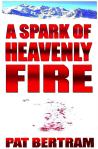
In A Spark of Heavenly Fire, all Kate wants is a good night’s sleep, but first she has to deal with the death of her husband, and then she has to contend with a state-wide epidemic. Although the forces that drive her are fairly tame, many of the characters in that book have stronger passions. Jeremy is consumed with getting out of quarantined Colorado. Pippi is first passionate about Jeremy, then passionate about escaping with him, and finally passionate about returning home. Dee is passionate about helping the homeless. Greg is consumed with the need for truth. The villain is passionate about his deadly little organism. Turns out the only non-passionate person is my heroine! Yet the story revolves around her.
In How to Write a Damn Good Mystery, James N. Frey tells us that our main characters, both the hero and the villain, should have a ruling passion. Alexander Pope, perhaps the first person to use the term “ruling passion,” wrote: “The ruling passion conquers reason still.”

Seems like an interesting conundrum here — a character must have a ruling passion, and a character should be smart  (or at least working to the best of his or her abilities) yet the ruling passion overrides that. Should make for a good inner conflict.

(This article was compiled from comments I made during a live chat. If you’d like to see the entire discussion, you can find it here: Ruling Passions — No Whine, Just Champagne Discussion #146)

On Writing: Family

If a character has well-defined family members — that never-satisfied mother, that demanding great-aunt, that silent father — then we authors don’t have to create that character. The family does it for us.

The family of Mary Stuart in Daughter Am I truly helped create her. When Mary found out that she was the heir of grandparents she never knew existed, she had to find out who they were so she could find out who she was. Once I set the family dynamic, that determined the character of Mary. Her father was close-mouthed, wouldn’t talk about why he disowned his parents or why he told his daughter they were dead. He also bonded more with his daughter’s fiancé than with her. The mother seemed to be mostly a shadow of the father. Because of this, it was inevitable that Mary got engaged to the guy they liked, and it was also inevitable that she dumped him when she became her own person. And even that “own person” was created by family — turns out she was just like her dead grandfather, with his set of values, a desire to build his own life despite social conventions, and an intense loyalty. Even her “adopted” family helped create her. As she followed her quest to learn about her grandparents, she accumulated a crew of travel companions — all friends of her grandparents — who become a new family of sorts.

Rubicon Ranch, the collaborative novel I’m doing with some other Second Wind authors, is all about family. The birth family who’s been searching for the girl and who fall prey to con artists, the couple who wanted a child so bad that they kidnapped one, the old man who suspects his son of the crime, the woman who suspects her father, the boy who is being abused by his father, the sleepwalker who is still haunted by his dead sister, the woman who is grieving for her dead philandering husband. It’s interesting how the theme of family has evolved in such an extemporaneous project. We never planned this theme, but each of us separately chose to deal somehow with family skeletons.

The family of Bob in More Deaths Than One certainly helped create him, especially since that was the basis of the story. He comes home from an 18-year sojourn in Southeast Asia to discover that the mother be buried before he left is dead again. He goes to her funeral and sees his brother, but they had never been close, so he doesn’t make contact. Bob also sees himself, but a doppelganger isn’t really family, so it doesn’t have any part of this discussion.

Lack of family also helps define characters.

In my just-published novel Light Bringer, two of my main characters found each other when they were searching for their birth parents. Those characters were truly a product of their upbringing and their birth. That is the whole crux of the story — who the characters are and why they were birthed.

How does your character’s family make her who she is? (Or make him who he is.) How do they bind her? How do they set her free? Do they add to her conflicts, either internal or external, or do they help her on her life’s journey?

Light Bringer Has Finally Been Birthed!!

It’s been twice nine months since Light Bringer was accepted for publication, but it has finally arrived!! Born on March 27, 2011, it weighs a mere one pound, and is 8.5 inches tall. Small for a human baby, but just the right size for a newborn book. I counted all it’s Ts and Os, and am pleased to announce they are all there. (One defect did show up, a tiny beauty mark, or rather a lack of one — for some reason, a period was left off on a sentence at the end of a chapter, and all the book’s midwives failed to notice). Still, the newborn is beautiful, and when it has been out in the world for a while, perhaps it will make its mark. It was created out of love, and no matter what its destiny, I am proud of my newborn.

If you would like a chance at winning an ebook of Light Bringer, go to the launch party on the Second Wind blog and tell them you would like to read the book. Leave your comment at: New Release Launch Party.

Click here to read the first chapter of: Light Bringer

Click here to read the back cover copy and an excerpt: Light Bringer

Click here to buy: Light Bringer

Light Bringer is also available from Amazon and Smashwords.

What Do You Do With A Bad Review?

I’ve been getting mostly good reviews for my books, so it came as a shock when I noticed that one woman on Goodreads downrated them. She rated more than 100 books, giving all of them five stars except for a couple of 4-star ratings and three 3-star ratings. And guess whose books were all rated three stars? Mine. I couldn’t understand it — first, because most people who have read my books like at least one of them, and second (and the point that really bothered me), if she didn’t like my writing, why read all three? Why not stop after one or two?

I’d never met the woman, only know of her because we have an acquaintance  in common — someone I met because of my books, not a pre-publication friend. “I doubt she read the books,” this acquaintance told me, “she couldn’t possibly have read them and not liked them; your books are fabulous,” which made the whole thing even more incomprehensible. 

Until . . .

I got a really bad 2-star review for A Spark of Heavenly Fire, which made those three stars seem benign:

Not a bad story…but but but. I love post-apocolyptic stories – but a common mistake authors fall into with it is to immediately lose the sense of horror – their characters hardly react to dead bodies piling up around them – Bertram did this from the get-go. And this book was so badly edited that it is astonishing. Someone made the author chop this up without any concern for the reader’s ability to follow the story and understand the characters…fortunately, I didn’t care enough about any of them to worry about it.
  
Made me doubt myself.  Did I lose the sense of horror? But I never intended there to be a sense of horror (or at least not a sense of ghoulish horror). Nor did I intend to write a postapocalyptic story, which shows you the danger of genre expectations. The whole point was the lack of  bodies. After the first dying, when people died in their cars causing a city-wide traffic jam, people stayed in their houses, so that is where they succumbed to the red death. The only way my characters knew of the continued dying were the orange fluorescent markings appearing on the doors of houses where people had died. To me, that was even more horrible than bodies piling up — just this one simple reminder that people were still dying. Even more horrific was the silent city with soldiers patrolling the streets. That would spook the hell out of me! And no, people would not continue to react to the horror. They would become inured to it. It would become the new normal. And how could the reviewer have missed the hellish scene when two of my characters discovered what was being done with the dead human bodies . . . and the bodies of beloved pets?

Besides, the story was seen through the eyes of a soul-dead nurse, a gung-ho reporter, a self-centered, world-famous actor, and a woman who had that star in her eyes. Would any of them have continued to react to the dying? I doubt it. Still, I did wonder. Should I have shown more bodies piling up?

Then . . .

I was out walking along a residential street yesterday, and there was not a single other person in sight. Not a single vehicle on the road. And I knew I was right. No one would see the bodies if all the people in those houses suddenly died. And maybe they had expired — I had no way of knowing.

So, what does one do with a bad review? Blog about it, of course!! 

Searching for a Blog Identity

The best blogs are those with a single focus, or so they say. At the beginning, I blogged about my efforts to get published. When my books were accepted for publishing and before they were released, I concentrated on having guest bloggers. After my books were published, I blogged about writing, promotion, and the progress of my current works (or rather the lack of progress). Then, about a year ago, my soul mate died, and this blog developed a dual personality — the almost dry articles about books and writing and the very wet and weepy articles about grief.

Now I need to decide where I want to go with this blog, to figure out what I want to say. Grief is still a part of my life and will be for some time to come, but I don’t want to be that woman — the one who hugs her sorrow and doesn’t seem to be able to move on. (To a great extent I have moved on. Only you and I know how much I still hurt.) Nor do I want to go back to focusing solely on writing and other literary matters. I’m not sure I have anything to say that hasn’t been said a thousand times before by people far more literate (and interesting) than I.

Even more than having a single focus, the best blogs are written by those who have a unique slant on a subject, who write what only they can write, who chronicle life’s journey in such a manner that the ordinary becomes extraordinary. But . . . it isn’t necessary to be a great blogger to get the benefits of keeping a web log.

In the past couple of years I’ve developed an interest in photography. I have a separate blog for photos — Wayword Wind — and I joined 365 Project, committing to taking a photo every day for a year. This project has helped to turn my focus outward. While walking, I tend to let my mind wander, and it generally wanders to what (or rather who) I have lost, so searching for that special image each day makes me more alert to my surroundings, to what is rather than what is not.

In the same way, blogging helps concentrate my thoughts, makes me more alert to my inner surroundings. Sometimes it seems as if I’m too full of myself, my posts a bit too pedantic, and yet it’s all part of my journey. Like this blog, I seem always to be in a state of flux, searching for some sort of identity . . .  or at least a focus.

If I ever find where I’m going, either with my life or with this blog, I’ll let you know.

On Writing: Rules of Magic

There are two rules for writing about magic:

1. It always has a price
2. It must have limits.

I don’t know who wrote that, but it seems a good pair of rules when it comes to literary magic. As writers, we can do whatever we imagine, yet whatever we imagine must serve the story we are telling. Which means the magic must have a price and it must have limits. (If there are no limits, then there is no conflict and hence, no story. If there was no kryptonite, Superman would be just a ho-hum guy in a cape.)

Literary magic comes in vast array of guises — love, intelligence, beauty, skills, exotic worlds, wonder, wisdom. All have limits, all have a price and consequences. In the non-literary world, sometimes the ripples of such magic are small and unfelt by most people. Such as the magic of a smile. If you smile at someone, they might smile back, and that small exchange might make them feel good enough to smile at someone else. Other small matters might have dire consequences, such as an extra drink before getting on the highway. All lives impinge on others.

I read a story once, an anecdote, really. A guy found a spider swimming in his toilet. He decided to rescue the spider, took it out of the water, and set it on the floor. The next day, he found the spider in his toilet again, and again he took it out. A little later, he found the spider dead. Why, the storyteller asked, did the spider die? The answer: because one life impinged on another.

Whether that statement has validity in real life, it certainly fits with fiction. Everything in a novel should be connected to everything else, which means that small actions could have large consequences. Perhaps that is why fiction is so compelling — it enables us to notice such ramifications. We can’t see far enough in real life to be aware of such connections and their impact, but I’m sure they are there. And isn’t that what magic is? The manipulation of the real and ordinary?

None of my books are about magic as such, but all have an element of magic, even if it is just the magic of a quest, of love, of being different, of finding one’s self. The most magical of my books is Light Bringer, but the magic of the main characters’ harmonic resonance causes problems only because it shows that they are not exactly human. It has limits, since this particular magic doesn’t bring them much happiness — at least not yet. The price they pay could be the fate of the entire world.

What is the magic of your book? What is its price? What are its limits?

Final Edits, Perhaps

I received the final edits for my novel Light Bringer, which will be published later this month. I had a couple of editors go over the book to look for any problems; when I get the proof copy, I want it to be strictly a copy-editing job — checking for typos, the letter I that mysteriously transforms itself into the numeral one, and other such exacting details. When I sent Donna B. Russell the manuscript to edit, I enclosed a message:

Donna, I hope you enjoy this book as much as you did Daughter Am I. Thirty years of research, about six years of writing from start to finish — it’s my magnum opus, though it won’t be so magnum if no one likes the opus.

When Donna sent the manuscript back with the edits, she replied, 

In your last e-mail, you said, “It’s my magnum opus, though it won’t be so magnum if no one likes the opus.”  I don’t think you have to worry about that because I’m sure Light Bringer is much closer to an “opus” than an “oops.” *S*  You have a good beginning, building tension with Helen driving in the snowstorm and finding a baby on her doorstep, and a superb ending.  The double plot twist at the end was absolute genius — a kind of literary whiplash, but in a good sense.  Your vivid descriptions helped me “see” not only the people, but the scenery and locations.  You made them very real.  You made me care about the main characters, and developed both the good guys and the villains very well.

One of my favorite passages in the book didn’t have to do with the main story, but with Hugh’s father (p. 218):

“His father, who had endured years of agony while dying of pancreatic cancer, had once told him pain created its own reality. He said he could no longer remember what it felt like before the pain began, nor could he imagine what it would feel like when it ceased. Nothing else ever existed, or would ever exist, except the eternal pain.”

You’ve captured exactly how many feel who live with chronic pain on a daily basis.

Below are the line edits and some suggestions.  I hope they are helpful.  I wish you all the best with Light Bringer. — Donna

How can you not feel like a real author when people are going around quoting you! Okay, just one person, but still . . .

Standing Tearfully on the Cusp of . . .

My fourth book, Light Bringer, is going to be released later this month. I thought this would be an auspicious time, a time of endings and new beginnings. March is the two-year anniversary of my being published, it’s the anniversary of my birth, and it’s the first anniversary of my soul mate’s death. What I didn’t take into consideration is how emotional this month would be. I mean, I’ve had almost a year to get used to his death. I should be over it by now, right? Apparently not.

After his death, I told myself, “If you can just get through the first month, you’ll be fine.” I wasn’t. So then I told myself, “After the third month, you’ll be fine.” The months passed, and I still grieved, so I told myself, “After six months . . .” And, “after a year.” I’m nearing that first anniversary, but I don’t seem to be completely shedding my grief. Grief follows its own time. It will not, cannot be rushed. Even worse, I seem to be keyed into this same month last year — the final month of his life — and I feel as if I’m counting down to his death . . . again. The big difference is that last year I did not give in to emotion — at least not much and not until the end. His care was all that mattered. Well, I’m feeling now what I didn’t feel then. And just like last year, nothing I do can make him well.

This will be my first birthday without him, and oddly, it saddens me. We didn’t celebrate our birthdays. Sometimes we acknowledged them, sometimes we didn’t, but they were no big deal, just a change of numbers, so I’ve been wondering why this birthday troubles me, and tonight I figured it out. This is one of one of the big 0 birthdays, the one where you can no longer fool yourself into thinking you are still young (even the actuarial tables acknowledge this one as a major change). And here’s the kicker: my mate and I will not be growing old together. There will be no walking hand-in-hand in our twilight years, no reminiscing about our youth, no helping each other overcome the infirmities of age. “The end” has been written on our love story.

If that weren’t enough trauma for one month, Light Bringer is his memorial — his funeral service, obituary, epitaph — all rolled into one. Perhaps I shouldn’t imbue the book with such significance, but it is the culmination of two lifetimes of study — his and mine. It’s the last book he helped me edit, the last one I read to him from beginning to end. Once the book has been launched, it no longer belongs to us — to him and me. It belongs to anyone who reads it. And so one more piece of him will be gone from my life.

I’d hoped to be able to give the book a good send-off, but it’s hard to think of fun, innovative ways to promote when I’m constantly reminded that he won’t be here to help me celebrate. And it is something to celebrate. (Heck, I’m even going to celebrate my birthday!) So, here I am, at the beginning of this auspicious month, standing tearfully on the cusp of . . . what? I don’t know.

The Joy of Lost Words

Bob’s pomarious experience, his frutescent hair, and his squiriferous demeanor made him a popular oporopolist. The only problem was that he tended to be a philargyrist, and there wasn’t a lot of money to be made in his chosen profession. Even worse, the sevidical tongue of his boss gave him ulcers. Luckily, his prandicles were both cheap and soothing and served to adimpleate him, and his wife’s hints that he get a better job were too veteratiorian to affect his digestion. (He was a bit of a foppotee, you see.) He was unaware of her cibosities and her pamphagous proclivities, and since he had no interest in somandric issues, her gutturniformity never bothered him.

Ah, the joy of lost words!!

If you love words, you will enjoy this site: Save the Words. I found all these wonderful words there.

I wasn’t going to tell you what these archaic words mean, but that wouldn’t be fair, (and how can you help bring these words back into play if you don’t know the definitions?) so here they are, in alphabetical order:

Adimpleate: to fill up
Cibosity: store of food
Foppotee: a simple-minded person
Frutescent: resembling a shrub
Gutturniformity: shaped like a water bottle
Oporopolist: fruit seller
Pamphagous: eating or consuming everything
Philargyrist: someone who loves money
Pomarious: of or belonging to a fruit orchard
Prandicles: small meal
Sevidical: speaking in a harsh or cruel manner
Somandric: relating to the human body
Squiriferous: having the characteristics of a gentleman
Veteratiorian: subtle