Fourth Anniversary of Grief

It’s very windy today, with gusts up to 40mph, but the sun is shining through the clouds.

And so begins my fifth year of grief.

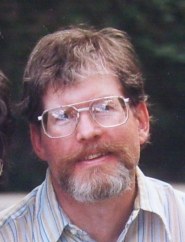
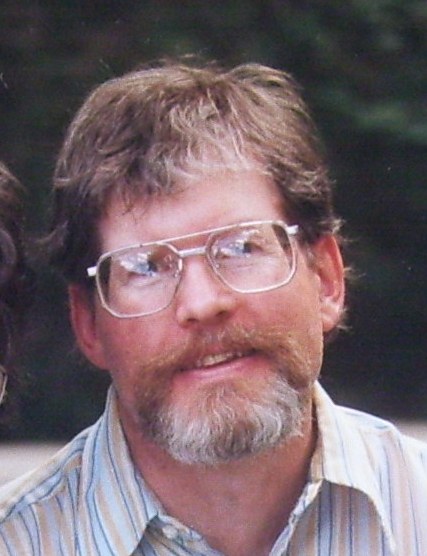
Four years ago today, my life mate/soul mate died without a sound, not even so much as a whimper. His Adam’s apple bobbed once, twice, and then he was gone.

100_1807aThe world is poorer because of his absence. I am poorer. He was the best person I ever knew, kind and helpful to all, not just those who were close to him. (In fact, it was his unfailing kindness to others that cemented my love for him.) He was smart and wise and witty. He was exceedingly knowledgeable about many things — movies, music, mobsters, history, humans, health. It always seemed odd to people that someone so interested in health had physical problems, but his lack of good health is what made him interested in how the body worked and what could be done to make it work even better. He believed in self-discipline and, even at the end, despite pain and debility, he strived to learn, to be better, stronger, wiser.

I’ve gone through a couple of days of sorrow and tears as I neared this anniversary, and I’m glad I did. I seldom cry any more — in fact, I didn’t even know there were tears left in me — and oddly, I miss the tears. Tears kept me connected to him in a way nothing else has since he departed this earth. Besides, he deserves my sorrow now and again. I don’t want to live blithely without a thought for him and what he meant to me.

As always, once the time of his death passed (12:50a.m. MDT), I started to regain my equilibrium. I miss him, but the reality is that as much as I hate it, he isn’t here.

And I am.

Many of my grief mates (those who lost their mates within a few months of when I did) still have relationships with their deceased spouses. Their belief in the continued survival of their soul mates is so strong, they know without a doubt they are still connected; some people can even feel the connection. Others have moved into new relationships. While I . . . I do the best I can on my own, taking each step as it comes, trying not to cling to the past, trying not to fear the future.

And I strive to learn, to be better, stronger, wiser.

It’s what he always did, and I can do no less.

***

Pat Bertram is the author of the suspense novels Light Bringer, More Deaths Than One, A Spark of Heavenly Fire, and Daughter Am I. Bertram is also the author of Grief: The Great Yearning, “an exquisite book, wrenching to read, and at the same time full of profound truths.” Follow Pat on Google+. Like Pat on Facebook.

Terrible Anniversaries of Grief

I always dread the terrible anniversaries of grief, and this up-coming fourth anniversary is no exception. I don’t dread the pain of the day — I have learned that the days of remembrance are easy; the hard part is the grief that visits us beforehand. What I dread even more now than grief’s presence is its absence because the lack of sorrow seems to diminish him from my life even more. Once I was loved. Once I loved greatly. But “once” isn’t much to build a life on.

And so it goes . . . this awful and awe-filled journey we call grief.

In a strange sort of way, I feel lucky that I don’t have to dread grief’s absence today. I was upset over a lost item yesterday, and to console myself, I reminded myself that it wasn’t much in the grand scheme of life and death. And that, of course, reminded me of the loss of my deceased life mate/soul mate, and I couldn’t stop crying.

speedBy now, I’m used to his being gone, but I don’t know if I’ll ever get used to the enormity of death. He isn’t just gone from me, perhaps enjoying a new love or new life thousands of miles from here. He is gone from this earth, so far away I can’t even fathom the distance. The earth hurtles around the sun at 67,000 mph. The sun hurtles around the galaxy at 140 miles per second. The entire universe is also moving and expanding, so today we are a very long way from where we were when he died. (Considering only the speed of the earth, he died 2,349,221,000 miles ago.)

I too am a long way away from where I was when he died. In blog post after blog post during those first couple of years, I remarked that I hadn’t changed at all — it seemed to me that having gone through such a devastating loss, I should have grown stronger or kinder or wiser or changed in some fundamental way. I don’t know about wiser, but I do know I am vastly different from the woman who watched a man slowly die, who wanted the suffering to end, yet whose love was so ineffectual she couldn’t make him well or take away a single moment of his pain. That woman who still felt so broken months after his death. That woman who screamed the pain of her loss to the winds.

Oddly, I didn’t expect to feel any upsurge of sadness this anniversary. It has been four years, and I don’t think about him much any more. If thoughts of him come to me, I don’t hold tightly to them as I used to do, but let them drift away again. If the thoughts brought me closer to him, of course I’d hold on tightly, just as I’d hold him if he showed up on the doorstep.

But the sad truth is (or maybe it’s not a sad truth, maybe it’s a glorious truth), life does go on. The hole he left in my life is gradually closing, as is the hole he left here on earth. And when I am gone, there will be no one left alive who remembers him.

I bought a bottle of sparkling apple-cranberry juice to wash away my sorrows (hard drinker that I am!), but maybe I’ll use it instead to toast his life, and mine.

***

Pat Bertram is the author of the suspense novels Light Bringer, More Deaths Than One, A Spark of Heavenly Fire, and Daughter Am I. Bertram is also the author of Grief: The Great Yearning, “an exquisite book, wrenching to read, and at the same time full of profound truths.” Follow Pat on Google+. Like Pat on Facebook.


Small Losses and Great Losses

I lost something today. It wasn’t important in the grand scheme of life and death, but it was important to me. It made me feel good, for one thing, and it was perfect, for another. I can cobble together a replacement, but I will never find the joy that I did in the original item. It was a symbol, in a way, of my struggles to create a new life for myself, and now . . . well, now the symbol is gone. But only the symbol. My new life is still here. I am still here.

In two days, it will be the fourth anniversary of the death of my life mate/soul mate. The fourth anniversary of my new birth. I’ve come a long way in those years, so much so that I’m not sure the woman I was would recognize the woman I am today, but the inexplicable loss of this symbol reminded me of that other loss, the most important one I ever experienced, and I can’t stop crying. I haven’t cried for him in a long time. When I think of him, I don’t try to hold on to the thoughts as I have in the past. I just let them drift away. But today, when I felt that sick sinking feeling of an inexplicable loss, I was reminded once again that he is gone.

Sometimes it feels as if he’s been gone for decades, yet in some respects, his being gone is still very new. My plans, my thoughts, my dreams continue to be tinted through the dark glass of his goneness. Someday, as he recedes even further from me, the influence of his absence will wane. Or perhaps not. The truth is, it’s his death that inspires my life. He faced the end so courageously, I can only face my life with as much courage. In a strange sort of way, his death set us both free, he from pain, and me from being tied to an invalid (which he would have hated — he always told me that if he ever became incapacitated, I was to walk away. But I couldn’t). A small life, a life of not much, a life of not trying new things would dishonor that act of freedom.

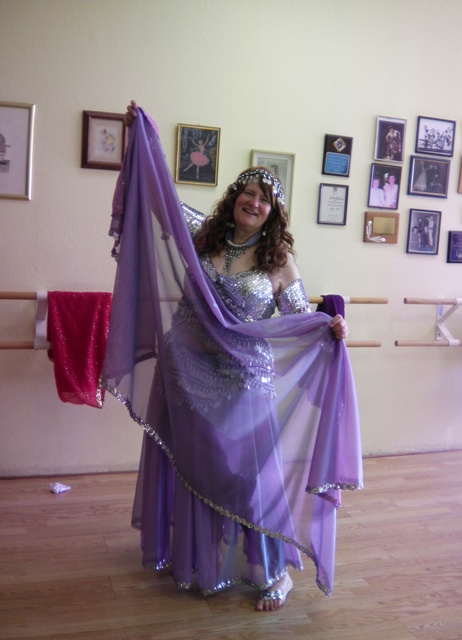
I no longer expect him to call and tell me it’s time to come home, as I did for the first couple of years after he died. I no longer feel his vast goneness from my life, yet I always miss him. I’ve stepped back from the abyss of death, back into a celebration of life. I’m adding so much to my life — friends, excursions, dance — that I feel silly at times for still yearning for one more smile from him. I guess if I want smiles, I’ll have to generate them myself.

And I will. Just not tonight.

***

Pat Bertram is the author of the suspense novels Light Bringer, More Deaths Than One, A Spark of Heavenly Fire, and Daughter Am I. Bertram is also the author of Grief: The Great Yearning, “an exquisite book, wrenching to read, and at the same time full of profound truths.” Follow Pat on Google+. Like Pat on Facebook.

Look What I Caught!

Did you miss me? I was gone from the internet for 24 hours. Went fishing for life. And look what I caught!

Some friends and I went on an excursion to see Les Ballets Trockadero de Monte Carlo, an all male dance troupe that parodies classical ballet. The men, of course, played the women’s parts, too, and it was amusing seeing hairy chests rising above the costumes. The Trocks stumbled at inopportune times, tried to upstage one another, and played up every romantic ballet cliché. Adding to the fun, the performers sported evocative names such as Innokenti Smoktumuchsky, Maya Thickenthighya, and Jacques d’Aniels.

As funny as the performance was, the real treat came in seeing how athletic, graceful, and truly accomplished these men are. The simplest thing they did is beyond most of us. You try standing on tiptoe on one foot, the other foot poised delicately behind with the toe barely skimming the ground, and arms rounded above your head. And do this for many seconds at a time without wobbling. Yeah, right.

A special joy for me was sitting between two accomplished dancers who pointed out any feats or bits of humor that a neophyte such as I might have missed.

More than anything, though, I enjoyed the company of the people I went with. During lunch, they suggested I write a book centered around a dance studio. They all volunteered to be characters in the book, and one lovely woman offered herself up as a victim, though why anyone would want to off her is beyond my imaginings. Interestingly, the would-be-victim’s husband is a criminologist, and she also offered his expertise if I needed help keeping the investigation accurate, which is tempting indeed.

Who knows, I might even follow through on the book someday.

***

Pat Bertram is the author of the suspense novels Light Bringer, More Deaths Than One, A Spark of Heavenly Fire, and Daughter Am I. Bertram is also the author of Grief: The Great Yearning, “an exquisite book, wrenching to read, and at the same time full of profound truths.” Follow Pat on Google+. Like Pat on Facebook.

Gone Fishing

I’m going to turn off my computer for the next twenty-four hours and take myself on a fishing trip. Not to fish for fish, of course — such a hobby is only peaceful for the one fishing; the poor fish are scared, hurt, and fighting for their life — but to fish for life. See what happens when I am disconnected from my usual online pursuits. Just take off for a day. See what I can see. Feel what I can feel.

If you want to contact me, leave a comment and I’ll get back to you tomorrow. Or whenever.

fishes

***

Pat Bertram is the author of the suspense novels Light Bringer, More Deaths Than One, A Spark of Heavenly Fire, and Daughter Am I. Bertram is also the author of Grief: The Great Yearning, “an exquisite book, wrenching to read, and at the same time full of profound truths.” Follow Pat on Google+. Like Pat on Facebook.

Excerpt From “Grief: The Great Yearning” — Day 359

GTGYthmbI’ve come a long way in the three years since I wrote the following journal entry.  I still don’t understand the point of it all, but the questions don’t haunt me quite as much as they did during the first years after Jeff’s death.  I’m learning to live without him, learning even to want to live without him. Sometimes I see his death as freeing us — me — from the horrors of his dying, and I don’t want to waste the sacrifice he made.

I no longer feel as if I am squandering time when I am doing trivial things because I have come to realize there are no trivialities. Everything we do is living, taking part in the great panoply of life. Whatever we do adds to the Eternal Everything.

I still yearn to talk to Jeff, of course. I miss talking to him, miss his insights, miss the conversation that began the day we met and continued for decades until he got too sick to hold up his end of the dialogue. I was truly blessed. He never misunderstood what I said. I could make a simple comment to him, and he understood it was a simple comment. He didn’t make a big issue out of it, just answered back appropriately. It seems now every remark I make to anyone becomes a major deal as I try to explain over and over again what I meant by the first remark. It’s exhausting.

I’m  grateful we met and had so many years together. Grateful for all the words we spoke to each other. Grateful I once had someone to love. Grateful that when my time comes to die, he won’t be here to see me suffer. Grateful he won’t have to grieve for me or be tormented by unaswerable questions.

Excerpt from Grief: The Great Yearning

Day 359, Dear Jeff,

I never felt as if I were wasting time no matter what you and I did—even something trivial like playing a game or watching a movie — so why do I feel I’m wasting time if I do those things alone? Don’t I have just as much worth now that I’m alone as I did when I was with you?

When I was out walking in the desert yesterday, I talked to you. You didn’t answer, of course, or if you did, I didn’t hear. We talked about meaninglessness. If you still exist somewhere, if you still have being, if life doesn’t end with death, then life has an inherent meaning — whatever I do or think or feel, no matter how trivial, has meaning because it adds to the Eternal Everything. If death brings nothing but oblivion, then there is no intrinsic meaning to life. So a search for meaning is meaningless (except on a practical level. We all need to feel we are doing something meaningful so we can get through our days and even thrive). Life either has meaning or it doesn’t. Meaning isn’t something to find but to be. So, I’m going to search for meaninglessness, or at least accept it.

Such thoughts seem as meaningless and as trivial as the rest of life. They get me knowhere. (I’m leaving that error, because . . . wow! So perfect!)

I’ve been watching your Boston Legal tapes again. Nicely meaningless since they put me to sleep. But they make me feel connected to you because we watched them a year ago during your last days at home.

This first year of your being dead is coming to an end, and I still don’t know how to survive the pain of your being gone, but I am surviving. Not thriving, not yet, but I will. There’s still so much to work through — all those years of your being ill, our unhappiness, our shattered dreams. Despite all the bad, we did have a good life, a fulfilling one. We journeyed together as long as we could, now it’s up to me to continue our journey alone. Will it continue to be “our” journey or will it become mine alone? I know who I was when I was with you. Now I need to find out who I am without you. To find worth in being alone.

Adios, compadre. I love you.

Click here to find out more about Grief: The Great Yearning

***

Pat Bertram is the author of the suspense novels Light Bringer, More Deaths Than One, A Spark of Heavenly Fire, and Daughter Am I. Bertram is also the author of Grief: The Great Yearning, “an exquisite book, wrenching to read, and at the same time full of profound truths.” Connect with Pat on Google+. Like Pat on Facebook.


A True Woman’s World

We are bound to the world by society, culture, our shared past. We have no real choice as to what world we are born into — we come as babies to a fully formed structure, learn our way around that structure, and then finally, as adults, either try to live within the structure or try to bend that structure to our needs, hopes, dreams.

warriorI wrote a blog the other day about not believing in women’s issues. The point I tried to make is that both men and women have issues, and that what I believed in were human issues, non-gender issues, such as fairness and respect for everyone. In response, a friend texted me: “You are entitled not to be a feminist. A lot of very brave, determined women won you that right.” Although I commend his willingness to disagree with me since many people don’t want to voice disagreement with my commentaries, his remark hit me wrong. It presupposes that as a woman I have an obligation to be a feminist and that it’s my “right” to choose to forego that obligation.

For thirty-four years, I was deeply connected to another human being — a man. Because of this relationship, I understood the unfairnesses of a man’s life as much as I did the unfairnesses of a woman’s life. I want fairness for everyone, so much so that I have often done the fair thing when it was to my detriment simply because it was the fair thing to do.

It seems to me that those who champion women’s issues don’t want fairness. They want the tables turned where it’s women in the forefront of economic and societal structures. And it’s happening. According to a new analysis of 2,000 communities by a market research company, in 147 out of 150 of the biggest cities in the U.S., the median full-time salaries of young women are 8% higher than those of the guys in their peer group. In two cities, Atlanta and Memphis, those women are making about 20% more. This squares with earlier research from Queens College, New York, that had suggested that this was happening in major metropolises. But the new study suggests that the gap is bigger than previously thought, with young women in New York City, Los Angeles and San Diego making 17%, 12% and 15% more than their male peers, respectively. And it also holds true even in reasonably small areas like the Raleigh-Durham region and Charlotte in North Carolina (both 14% more), and Jacksonville, Fla. (6%).

This disparity is seen as an advance in women’s rights, but where’s the fairness? Are we supposed to continue to champion an equality where one gender is more equal than another?

If it is true that I owe those brave, determined feminists a debt, then I owe it to men, too. It was the urban world the early suffragettes were born into that gave them the time to fight for such things as equality. Women (and men) in non-urban areas were too busy keeping alive to worry about jobs outside the home or politics or bodily automony. So in a way, it was the industrial revolution, the legacy of men, that brought about the conditions that ultimately led to the fight for women’s rights. Oddly, it was urbanization in ancient times that originally contributed to the loss of women’s power, women’s religions, women goddesses. So there is no one to thank, no one to blame, no one to be indebted to for my “right” not to be a feminist — I was simply born into a particular world, the sum of everything that has  gone before.

Besides, I believe feminists are settling for too little. Instead of demanding entry into the so-called “men’s world,” I always thought women should create their own world, not the housewifey world that is usually considered a woman’s world though is merely an adjunct to the man’s world, but a true woman’s world — the world of mysteries, wildness, goddessness that is our birthright. A world superior to the world that we were born into.

But perhaps the structures of this materialistic world are too well entrenched, and all we can do is change who controls the materials.

***

Pat Bertram is the author of the suspense novels Light Bringer, More Deaths Than One, A Spark of Heavenly Fire, and Daughter Am I. Bertram is also the author of Grief: The Great Yearning, “an exquisite book, wrenching to read, and at the same time full of profound truths.” Follow Pat on Google+. Like Pat on Facebook.

Embracing My Wild Divinity

When I tell people I want to lead a wild life, to find the wild woman within, some women instinctively understand what I mean, while other folks just give me a blank stare. During my school days, the wild kids were those who smoked and drank, played loud music, partied, gave little consideration to rules or consequences. As young adults, the wild ones were … well, they were pretty much like the wild kids. Smoking and drinking, playing loud music, partying, giving little consideration to rules or consequences, sometimes riding motorcycles, hanging around bars, picking up mates for a night.

I have a hunch that when I tell the blank-stared folks of my desire for wildness, such images come to their minds, but the truth is, I have no interest in that particular kind of tameness. I call it tameness because although it seemed wild to us at the time, the activities were all part of the rebelliousness of youth, a reaction to the strictures of our lives, and, while not perfectly acceptable, perhaps, they were an adjunct to the urbanization and corporatizing of our tame world.

020bTo tell the truth, I’m not exactly sure what I mean by “wild woman.” I tried to do a bit of research into the mythology of wild women and kept bumping into the book Women Who Run With Wolves. My first reaction, of course, was to get the book, but then I changed my mind. I don’t want to know what other people mean by wildness. I want to find out what I mean. I do know that being a wild woman isn’t about getting into trouble or dangerous situations, it’s about embracing my connection to life, being the person I was meant to be without the structure of societal conventions or the bonds of other people’s expectations. It’s about finding the things that call to me from the soul rather than what beckons me from without. It’s about extending my reach, to want what up to now has escaped me. It’s about finding what feeds the hungry beast inside me. It’s about striking out on my own, trusting my instincts yet relying on experience. It’s about the having the courage and boldness to go where I must. It’s about living a natural life, following my own rhythms, being true to myself.

I’ve always been fascinated by the wild places of the world. The places deep within the Amazon that have never been touched by the modern world. The depths of the oceans that lie beyond our instruments. Deep caverns that have never been explored. I don’t suppose there are any of those places left except in my imagination, but still, I am caught by the lure of what might lie beyond our modern society and culture, what might exist beyond man-made (and woman-made) laws and conventions. Of course, any such cultures would have their own conventions that bind their members, so perhaps even the figments of my imaginings are tame in their own way.

And yet, and yet . . .

I wonder what wild places lie in my heart, my mind, my soul. What passions might I feel that I have not yet discovered? What ideas could I have that would spring forth as if from the earth itself? What unheard songs does the universe sing to me?

That is where I will find my wildness, not in bars, in a bottle, or dangling from a bungee cord.

Blessings from John O’Donohue:

“May the angel of wildness disturb the places where your life is domesticated and safe, take you to the territories of true otherness where all that is awkward in you can fall into its own rhythm.”

and

“May the beauty of your life become more visible to you, that you may glimpse your wild divinity.”

***

Pat Bertram is the author of the suspense novels Light Bringer, More Deaths Than One, A Spark of Heavenly Fire, and Daughter Am I. Bertram is also the author of Grief: The Great Yearning, “an exquisite book, wrenching to read, and at the same time full of profound truths.” Follow Pat on Google+. Like Pat on Facebook.
Email Absurdities

Sometimes life online gets a bit too absurd for me. Once a long time ago, I had a fellow author I met on Facebook as a guest on my blog. Back then, I was less concerned with giving out my email address, and besides, at that time, you couldn’t include attachments in FB messages, so I really had no choice.

Computer attackEvery once in a while I’d get a promo message from him, but those emails were sporadic, so they simply got swallowed up in the great maw of Yahoo mail. More recently, I got a couple of mass emailings asking for support for his indigogo campaign. He is still a long way from his goal, and so needs the help of his “friends” to help fund his project.

After the first email, I sent him a message asking him to remove me from his mailing list. Just a pleasant non-confrontational request. (I despise group emails unless I am actually part of a group, and even then, I don’t particularly like them though I have to tolerate them.) Today, I got another email from him again asking for support.

I messaged him back: I have asked you to please remove me from your mailing list. A favor I did once a long time ago — having you as a guest on my blog — should not be punished by unwanted emails. Please remove me from your mailing list. I admit this wasn’t the kindest of messages, but since I am connected to thousands of authors all over the internet, the deluge of promos gets to be a bit much.

He responded: Just to let you know, I removed you from my contact list so you will never receive any emails from me again. Breathe easy. The punishment for your kindness is over. Thanks and good luck.

Me: Thank you

Him: You’re welcome. Please stop emailing me. I no longer want to hear from you. Ever.

I didn’t respond, of course, but a little later I got another message from him: I’m very sorry that I’ve upset you. It will never happen again. Ever. You will never hear from me again. Ever.

Then, fifteen minutes later, I got yet another message: Thanks for your understanding that I’m only human and have made a mistake. It will never happen again. Ever. Good luck.

Ah! The joys of the internet age.

***

Pat Bertram is the author of the suspense novels Light Bringer, More Deaths Than One, A Spark of Heavenly Fire, and Daughter Am I. Bertram is also the author of Grief: The Great Yearning, “an exquisite book, wrenching to read, and at the same time full of profound truths.” Follow Pat on Google+. Like Pat on Facebook.
Escaping the Cage

I have always been a highly civilized person. For the most part, I am considerate of others. I am never intentionally rude or bad mannered or insulting. I am not uncouth. I don’t make scenes in public (or private, for that matter). I seldom raise my voice. I listen more than I talk. I dress modestly. I use correct English and am not given to crudeties or foul language. If it’s in my power and nature, I almost always do what others ask. I try to be helpful. In other words, I am tame.

Wheprisonn I was young, a lot of this tameness came from being fearful of doing the wrong thing. I grew up in a shifting emotional atmosphere where from one minute to the next, I didn’t know how I would be treated, so I did the only thing I could — be a good girl. I obeyed. I never talked back. I keep my rebellious thoughts to myself. I did what was expected of me, often before such expectations were even expressed.

As an adult, I continued to be tame. I seemed to know instinctively that any fierce disagreement would only lead to fiercer disagreements, escalating until one of the parties killed the other. Of course, such hostilities generally don’t end in death because somewhere along the line, one of the combatants gives in. Since I knew that in any conflict I would be the one to give in, I never took up the battle in the first place. If I were going to give in, I figured I might as well do so before any damage was done.

I’m still tame, of course. By now it’s not just a habit, it’s who I am. Kind. Conciliatory. Even-tempered. I do experience anger once in a very great while, but those infrequent outbursts flare up quickly and die just as quickly.

Still . . .

There is a untamed side to me — an inner savage, a wild woman, a primitive and elemental being — that I get glimpses of once in a while. I first noticed this untameness when grief descended on me with the all the power of Thor’s hammer. I had no idea I was capable of such feral emotions. Even if I had wanted to, I could not have controlled my grief as I had always controlled my emotions. Grief came in an instant then grew and grew until there was so much pain I wanted to scream. And so I did. Mild-mannered me, tame me, good girl me screamed my agony to the winds.

For the past four years, ever since the death of my life mate/soul mate, I’ve been feeling an itch for “more.” I have never known what this undefined “more” is, but I’m getting an inkling that it is my wild side. I’m not sure how to unleash the wildness, though. Perhaps just by being aware of my connection to the earth. Perhaps by letting the winds take me where they wish. Perhaps by being spontaneous.

As John O’Donohue wrote in Aman Cara, “To be spontaneous is to escape the cage of the ego by trusting that which is beyond the self.”

To escape the cage. To be wild.

Oh, yes.

***

Pat Bertram is the author of the suspense novels Light Bringer, More Deaths Than One, A Spark of Heavenly Fire, and Daughter Am I. Bertram is also the author of Grief: The Great Yearning, “an exquisite book, wrenching to read, and at the same time full of profound truths.” Follow Pat on Google+. Like Pat on Facebook.