Stop Wasting Food!

A few days ago I wrote Haunted by an Image of Pizza, a post about the huge mounds of half-eaten pizza I saw in dumpster behind a restaurant. I’ve always believed that food was sacred, and that it was a sin to waste anything edible. I despise food fights in movies and scenes where people trash leftovers instead of carefully saving them. Too often, the characters take a few bites of food and scrape the rest in the trash can or garbage disposal, and this ruins the movie for me. It shows a pattern of disregard for food that viewers consciously or unconsciously pick up on.

Besides, how can I empathize with a character who wastes food? I never waste food. I buy only what I can eat before the food goes bad, and when/if I cook, I always store what is left. Leftovers is a term I never use. I believe there is no such thing as leftover food, just a precooked meal. (And to way of thinking, if food smells and looks fresh, it’s still edible. Expiration dates seem more like an expiration of liability than the expiration of food. I’ve eaten eggs that are still fresh two weeks after the expiration date, and canned goods a year or even two after the date.)

Someone left a comment on that post that I would like to share with you. I ended my blog with “I can’t do anything about the situation, either to help the homeless fellow or deal with the discarded food, but still, the image stays with me.” She responded:

Why do you feel like you can’t do anything about the situation? Who do you think can? I will link a couple of articles and a video that I think you (and everyone else) should read/watch. Note the quote “Everybody is waiting for somebody else to take action.”

http://www.thinkeatsave.org/index.php/stop-wasting-food

http://www.themindfulword.org/2011/designed-starvation-food-waste/

http://www.ted.com/talks/tristram_stuart_the_global_food_waste_scandal.html

I can’t emphasise enough that this IS everybody’s responsibility, especially those of us in the privileged position to live in countries with surplus food as opposed to none, and you CAN do something to help the situation.

People are starving all over the world, yet we are so greedy, we order/cook/buy more than we can eat, and throw away the rest. The world produces enough food to feed each person on the globe 2,700 calories per day. (Read more at http://www.themindfulword.org/2011/designed-starvation-food-waste/#yh1IrXaCweEPe6J8.99). No one needs to go hungry.

We’ve been taught that the aesthetics of food is important, and we can be taught that food with blemishes and such things as crooked carrots can be pleasing, too.

As Mahatma Ghandi said, “The world has enough for everyone’s need, but not enough for everyone’s greed.”

***

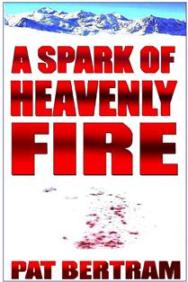
Pat Bertram is the author of the suspense novels Light Bringer, More Deaths Than One, A Spark of Heavenly Fire, and Daughter Am I. Bertram is also the author of Grief: The Great Yearning, “an exquisite book, wrenching to read, and at the same time full of profound truths.” Connect with Pat on Google+. Like Pat on Facebook.

How Mountains Shape My Stories

Because I’ve always lived in the shadow of mountains, mountains always shadow my writing. This is especially true in Light Bringer. The story begins when a baby is found on the doorstep of a remote cabin in the shadows of the Rocky Mountains, and continues years later when the foundling, now an adult, returns to the high country to find out who she is. The mountains in my novel are both protective and secretive — the hills protect those who live in their shadow, yet the mountains also harbor terrible and awesome secrets that threaten those same people.

Whenever I needed a hiding place for the secrets of the ages in Light Bringer, I searched maps for isolated mountain ranges, and ended up with a library beneath the Ahaggar Mountains in Algeria, ancient artifacts beneath the Beishanmai Mountains in the Gobi Desert, and experimental spacecraft beneath the McDonnell Ranges in Australia. I’d heard about  the mountains in Australia where the experiments were being done, and in my research I’d come across hints of what lay beneath the Ahaggar Mountains, but the Gobi location was strictly a guess, though later I discovered that in fact, caves deep inside the Beishanmai Mountains were repositories for ancient treasures.

Maybe the mountains themselves were helping with the book.

Excerpt from Light Bringer (Incidentally, though not all the treasures mentioned might have been found beneath the Ahaggar mountains, they do exist):

Of all the extraordinary things Teodora had seen since starting work on her current assignment, the library, deep within the Ahaggar Mountains in Algeria, had been the most stunning. She did not know who had created the library or how it had come into IISA’s possession, but she had the privilege of being one of the few people to have seen the place.

The passageways, dug thousands of years ago, were painted with pictures of cities that had crumbled to dust before history was born. Those tunnels led to a series of vast modernized rooms—climate-controlled, dust-free, computerized.

One room contained row upon row of glass cases, which protected manuscripts and scrolls too fragile to handle. Another room contained an untold number of clay tablets, some written in languages that had yet to be identified. A third room contained crystals and optical discs that held digitalized information, and other discs that gave off holographic images when spun. Though seemingly futuristic, they were relics of an incredibly remote past.

The final room contained bound books, most of which were less than two thousand years old. Tens of thousands of these books were alchemical texts that detailed such things as perpetual lamps, the manipulation of matter to produce force fields, and simple ways of creating sustainable energy. A few also talked about how certain churches in France were linked together to create a message, which pre-dated Christianity. These churches were built on ancient power points that had been mapped by astronomers and geomancers who wanted to warn future generations of the heavenly body that would come to destroy earth.

***

Pat Bertram is the author of the suspense novels Light Bringer, More Deaths Than One, A Spark of Heavenly Fire, and Daughter Am I. Bertram is also the author of Grief: The Great Yearning, “an exquisite book, wrenching to read, and at the same time full of profound truths.” Connect with Pat on Google+. Like Pat on Facebook.
I’m a Guest on the Second Wind Publishing Blog!

I am blogging at my publisher’s blog today, talking about Crashing the (Science Fiction) Party,

Once a long time ago, I crashed a Halloween party. Sounds very bold, doesn’t it? But truly, it was out of character for me, and besides, I was in costume so in a way the person who crashed the party wasn’t really me. I remember that the party was given by a friend of a friend, but I have no idea how or why I decided to go — perhaps as a joke to see how long it would take for people to realize they didn’t know me. Continue reading—>witch

My previous guest post for Second Wind Publishing was Finding the Truth of a Story,

We are steeped in story. From birth to death, story forms our lives. Today, more stories are available to us in more media than ever before in history, including the stories we share with each other and ourselves. What is a daydream if not a story of the future we tell ourselves? And at night, while sleeping, our dreams tell us other stories. No wonder we have such a hard time finding a story that is not clichéd. Continue reading—>

My most popular post on the Second Wind Blog is: What is Your Character’s Favorite Color?

Because colors have meaning, a character’s favorite color can tell us a lot about him or her. Red for an ambitious extrovert. Pink for an affectionate, compassionate person. Yellow for an optimistic artist. Green for a benevolent humanist. Blue for a cool, confident conservative. Purple for an intuitive, spiritually oriented person. Brown for a down-to-earth type. Continue reading—>

***

Pat Bertram is the author of the suspense novels Light Bringer, More Deaths Than One, A Spark of Heavenly Fire, and Daughter Am I. Bertram is also the author of Grief: The Great Yearning, “an exquisite book, wrenching to read, and at the same time full of profound truths.” Connect with Pat on Google+. Like Pat on Facebook.

Writing: Passion or Puzzle?

Most how-to books on writing suggest getting the first draft down as quickly as possible so that the passion shines through. This is good advice, and I would follow it if stories came easy to me, but they never do. I worried about this (for five minutes or so), wondering if my novels would feel dry and unemotional because I approach them as a puzzle, but the only difference between my way of writing and the so-called right way is that I do my thinking as I write rather than as I lbjigsawrewrite.

Is one way better than another? I don’t know, but if we accomplish what we set out to do, both the logical writers and the passionate ones can end up with interesting stories that will evoke emotions in our readers. In my case, during rewrites I get rid of much of the dryness that comes from the puzzle approach. In your case, perhaps, you lose some of that freewheeling passion when you organize what you have written into a more cohesive story.

We all have to find the best way to write. I am not condoning poor grammar, typographical errors, bad plotting, ignorance of story elements, or any of those other rules that new writers rail against. I’m talking about the fun of writing, the passion, the puzzle.

Samuel Johnson remarked, “No man but a blockhead ever wrote, except for money.” I guess that makes most of us blockheads, because we write knowing that except for a select group, there is little money to be made from writing. We need other reasons for spending so much time bleeding words.

For me, it’s the puzzle. As frustrating as it gets, I love figuring out plots, character’s motives, new ways of presenting common thoughts. Beats crossword puzzles any day.

***

Pat Bertram is the author of the suspense novels Light Bringer, More Deaths Than One, A Spark of Heavenly Fire, and Daughter Am I. Bertram is also the author of Grief: The Great Yearning, “an exquisite book, wrenching to read, and at the same time full of profound truths.” Connect with Pat on Google+. Like Pat on Facebook.

Haunted by an Image of Pizza

I saw something unsettling the other day that I can’t get out of my mind. A homeless man was standing at a dumpster behind a pizza place, feasting on discarded slices. That wasn’t the unsettling thing since it seemed oddly normal — we humans have origins as hunter/gatherers, finding food wherever we might. It wasn’t even that the food had been previously nibbled on, because it hadn’t been. Most of the slices of pizza were whole.

PizzahuttWhat haunts me is the sheer bulk of the discarded food. Hundreds of slices of pizza. Huge bags full. Mounds of it. (Did you ever see Space Balls? Pizza the Hutt? The piles of pizza looked like that.)

I have such a respect for food, that even seeing food wasted in a movie, such as a food fight, turns my stomach. Somehow I had assumed others had the same respect for comestibles. And yet, there was a dumpster full of food that people had ordered and not eaten.

Ignoring the dubious designation of pizza as food, it is edible, and supplies needed calories. Only in a society that views food as disposable and calories as something bad can such a situation occur. I don’t know what the solution is, or if there is a solution. Restaurants can’t really donate used food to homeless shelters, though some restaurants do donate leftover food. (I was a at a family-style dinner once where they kept bringing huge platters of food long after everyone had eaten their fill, and those platters of food were taken to a nearby shelter. They could have fed an army that night with our leftovers alone.)

I can’t do anything about the situation, either to help the homeless fellow or deal with the discarded food, but still, the image stays with me.

***

Pat Bertram is the author of the suspense novels Light Bringer, More Deaths Than One, A Spark of Heavenly Fire, and Daughter Am I. Bertram is also the author of Grief: The Great Yearning, “an exquisite book, wrenching to read, and at the same time full of profound truths.” Connect with Pat on Google+. Like Pat on Facebook.

Do the Dead Miss Us?

I had an odd dream last night. The setting wasn’t very detailed — just a simple bed in the middle of an empty white room that my waking self doesn’t recognize. I was lying in the bed, the white sheet pulled up to my chest. My deceased life mate/soul mate walked into the room wearing only white underwear. I got the impression he was coming from somewhere else or someone else, and that we weren’t still together. He stopped by my feet, gave them an affectionate rub, then came around to the empty side of the bed. He bedlay on the bed on top of the sheet, cuddled up close to me, and said softly, “I miss you.”

I woke, and tears came to my eyes. I’ve been keeping myself busy lately, and haven’t been thinking about him much, and the dream reminded me how much I missed him. I lay in bed waiting for a full-blown grief upsurge, but after a minute or two, I simply went back to sleep.

This is the closest I’ve ever had to what I would consider a “visitation” dream, and it’s left wondering if it was some sort of real encounter.

In various updates about grief on this blog, I mention that I talk to him, and I always make a facetious remark about his silence, such as this comment in a letter to him I posted a few days ago: so far you’ve been mum about your situation. Just one more thing to hate—the silence of the grave. (Well, the silence of the funerary urn.)

Could the dream have been an attempt to contact me? I don’t really believe it, but still, this is the first of the handful of dreams I’ve had about him in the past three and a half years that ever mentioned how he might be feeling. Could it be that the dead miss us as much as we miss them? Could they be feeling as amputated as we do?

Whatever the truth of the dream, it adds one more facet to this strange and incomprehensible state we call grief.

***

Pat Bertram is the author of the suspense novels Light Bringer, More Deaths Than One, A Spark of Heavenly Fire, and Daughter Am I. Bertram is also the author of Grief: The Great Yearning, “an exquisite book, wrenching to read, and at the same time full of profound truths.” Connect with Pat on Google+. Like Pat on Facebook.
When a Writer is Silent . . .

I am not shy around people, though I am more of a listener than a talker, particularly when they are discussing subjects of which I have no interest or knowledge, such as celebrities, TV shows, high profile court cases. Even when people are talking about things I can speak of, I generally don’t fight for the floor except when the conversation sparks a new idea and I want to give it voice.

My propensity for being the “designated listener” has never been a problem because most people seem to prefer to talk, but things are different now when people discover that I am a writer. My silence makes them wonder if I am studying them to use as characters in a book.

Strangely, this never occurred to me. I spend so much time alone that simply being with people is a treat. I bask in their words and the camaraderie no matter what the topic of conversation. I know this is not the case with other writers. They do study people to learn more about how their characters should/could act. They also use people they know as characters in their boFriendsoks. As Anne Lamott said, “You own everything that happened to you. Tell your stories. If people wanted you to write warmly about them, they should’ve behaved better.”

My characters rise out of the needs of the story. If the character needs to be shy, I make him shy. If she needs to be interested in the minutiae of everyone’s life, I make her so. Occasionally, I base a character on an actor in a movie, especially if I need to describe the character to someone. For example, Greg Pullman in A Spark of Heavenly Fire was loosely based on Jack, Bill Pullman’s character from While You Were Sleeping. I wanted Greg to be movie-star handsome as well as nice, and I named him Pullman to remind me of these two characteristics every time I wrote about him. But for the most part, the character of Greg evolved to fit the needs of the story. The same thing happened with Mary Stuart, the hero of Daughter Am I. I based her loosely on Lisa Walker, the character of Mary Stuart Masterson played in Bed of Roses, and I used the name Mary Stuart for my character to remind me that my Mary, like Lisa, was both strong and vulnerable. The name was supposed to be a working name — I planned to change it when I found a better name, but the character and the name evolved together, and could not be separated.

So, if you are ever in a conversation with me, and I am silent, you never have to worry about appearing in one of my books.

Well, hardly ever.

***

Pat Bertram is the author of the suspense novels Light Bringer, More Deaths Than One, A Spark of Heavenly Fire, and Daughter Am I. Bertram is also the author of Grief: The Great Yearning, “an exquisite book, wrenching to read, and at the same time full of profound truths.” Connect with Pat on Google+. Like Pat on Facebook.
I Am Not an Authoress!!!!

Recently, someone called me an authoress, and I could feel the word grate up and down my spine. What an atrocious word to use today! It’s even worse than co-ed, a despicably sexist and patronizing term. (Coed is short for coeducational and refers to the women who were allowed into previously all male colleges and universities. Perhaps it had meaning back in the nineteen-thirties, but its use today is demeaning. It says men are educated, and women are co-educated. Like a pilot and co-pilot. So please, do not use co-ed. Student is sufficient, or woman student if you have to differentiate.)

Authoress is an old term and was used as early as 1485. It grew in popularity until the mid 1800’s and found it’s nadir in 1998. Now “authoress” is on the rise again. Why? Not only is it old fashioned, of use only in historical dramas or other historical contexts, it is ugly and demeaning and redundant since “author” includes both males and females. According to the free dictionary, author means a) The writer of a book, article, or other text. B) One who practices writing as a profession.

If I had to describe myself as an “authoress,” I would never admit that I am a published writer. I even refuse to accept a friend request on Facebook from anyone who uses “authoress” as a title before or after her user name. Of course, I don’t friend anyone who uses “author” as a title either because I have doubts about their sincerity in wanting to be a friend.

If I need to describe my writing self, I tell people I’ve written books. I give them my card to show them what books I have written. Sometimes I even tell them I am a writer. Even though I tend to believe that an author is one who makes a living at writing and I have not yet achieved that status, I have even called myself an author once or twice.

But authoress? Never!

Use of "Authoress"

Use of “Authoress”

***

Pat Bertram is the author of the suspense novels Light Bringer, More Deaths Than One, A Spark of Heavenly Fire, and Daughter Am I. Bertram is also the author of Grief: The Great Yearning, “an exquisite book, wrenching to read, and at the same time full of profound truths.” Connect with Pat on Google+. Like Pat on Facebook.

Are You Your Brother’s Keeper?

I went to lunch with a few friends today. One is dealing with an aged mother who seems to either be bipolar or downright evil, jealous of her own daughter and unable to say a single nice thing to her. Another woman had such a mother, and the mother’s death set her free.

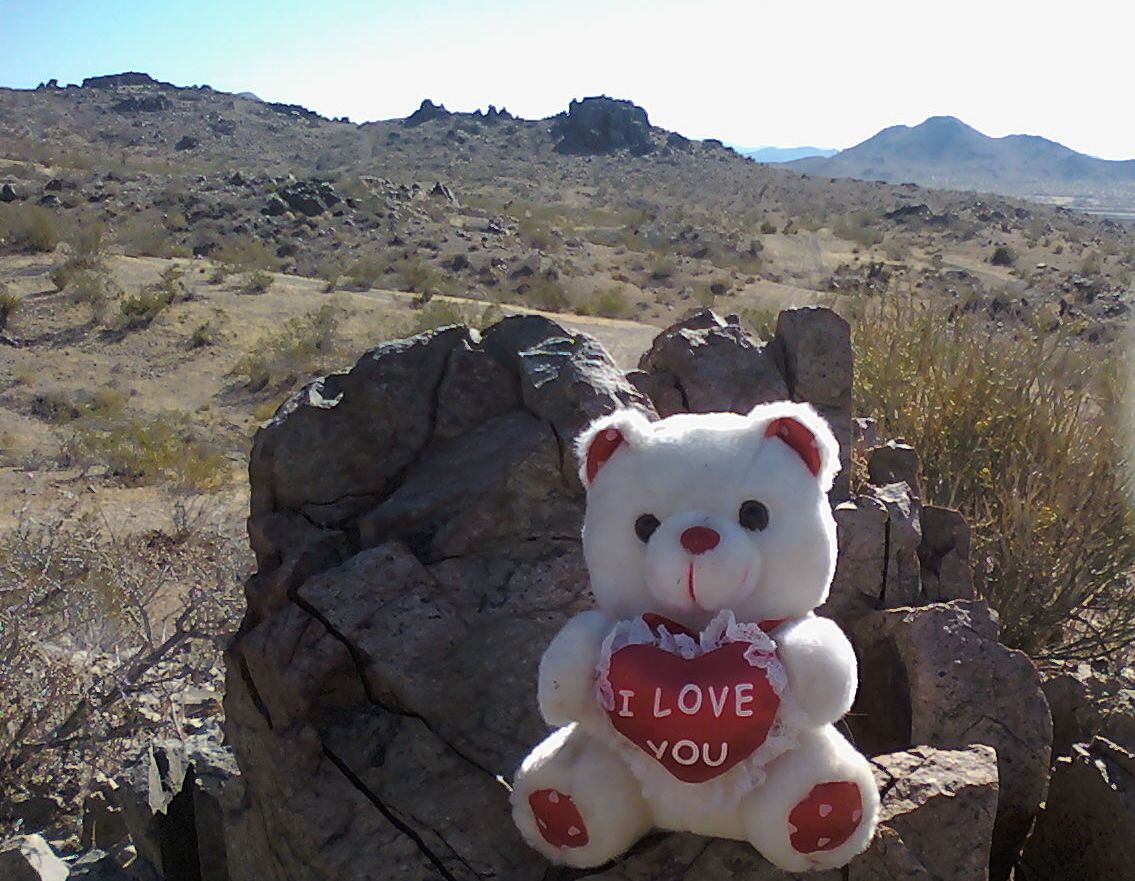
desert knollsWhen it comes to a parent, I can see that perhaps you have no choice but to deal with her (or him) as best as you can, but how much responsibility does one grown sibling have for another? If the sibling has some sort of mood disorder (undiagnosed and untreated), are you obligated to put up with their invectives and haranguing? And if so, how do you deal with it without being destroyed in the process?

If the mood-disordered sibling is also homeless, are you obligated to give that sibling a home? If you’re not in a position to give the sibling a home, what then are you supposed to do? Is it ever okay to walk away and leave the sibling to deal with life as best as possible on the streets? What if the sibling is suffering  with once broken bones that were never set and other painful issues because of a lack of insurance? And what if the sibling is also an alcoholic? How much responsibility do you have then, especially if the sibling doesn’t want to hear anything you have to say and misinterprets even the smallest gesture of kindness, such as the offer of a bit of food?

Is one ever free from the situation? If you walk away, how do you keep your heart from breaking? If you stay in contact, being subjected to so much anger and hatred, how do you keep your spirit from breaking?

***

Pat Bertram is the author of the suspense novels Light Bringer, More Deaths Than One, A Spark of Heavenly Fire, and Daughter Am I. Bertram is also the author of Grief: The Great Yearning, “an exquisite book, wrenching to read, and at the same time full of profound truths.” Connect with Pat on Google+. Like Pat on Facebook.
Excerpt From “Grief: The Great Yearning” — Day 197

I’ve come a long way in the three years since I wrote the following letter.  I still don’t understand the nature of life or death. Still don’t understand the point of it all, but I am embracing life, trying to create my own meaning out of small occurrences.  I’m learning to live without him, learning even to want to live without him. Sometimes I see his death as freeing us — me — from the horrors of his dying, and I don’t want to waste the sacrifice he made.

I still wish I could go home to him when my current responsibilities come to an end, but even that desire is waning. It took me a long time to feel the truth — that he is gone from this earth, and I am here. I still miss him, and I probably always will, but I’m learning to be comfortable in my own skin again. When one of “our” things disappears from my life through attrition, it no longer pains me — they are merely things, not “us”.

I’m  grateful we met and had so many years together. Grateful I once had someone to love. Grateful that when my time comes to die, he won’t be here to see me suffer. Grateful he won’t have to grieve for me.

Excerpt from Grief: The Great Yearning

Day 197, Dear Jeff,

It’s been a while since I’ve written, but I’ve been thinking about you. Are you glad you’re dead? You said you were ready to die, to be done with your suffering, yet at the very end you seemed reluctant to go.

I didn’t want to throw you away. Despite all the problems with your restlessness and the disorientation from the drugs, I wasn’t ready for you to leave me. I still am not. Nor do I want to go back to where we were that last year, waiting for you to die. We were both so miserable, but honestly, this is even worse. I can live without you. The problem is, I don’t want to, and I don’t see why I have to.

I want to come home. Please, can I come home? I have a good place to stay, but without you, I feel homeless. Sometimes I watch movies from your collection and imagine you’re watching with me, but that makes me cry because I know you’re not here. Your ashes are, but you’re not.

I broke a cup today, one more thing gone out of the life we shared. Our stuff is going to break, wear out, get used up. I’ll replace some of it, add new things, write new books, and it will dilute what we shared. Is there going to be anything left of “us”? I feel uncomfortable in this new skin, this new life, as if it’s not mine. As if I’m wearing clothes too big and too small all at the same time.

There’s so much I hate about your being gone—hate it for me and hate it for you. It might be easier if I knew you were glad to be dead, but so far you’ve been mum about your situation. Just one more thing to hate—the silence of the grave. (Well, the silence of the funerary urn.)

Adios, compadre. If you get a chance, let me know you’re okay.

***
Click here to find Grief: The Great Yearning in print or on Kindle from Amazon.


***

Pat Bertram is the author of the suspense novels Light Bringer, More Deaths Than One, A Spark of Heavenly Fire, and Daughter Am I. Bertram is also the author of Grief: The Great Yearning, “an exquisite book, wrenching to read, and at the same time full of profound truths.” Connect with Pat on Google+. Like Pat on Facebook.