I Don’t Want Your Sympathy

If you think I write about grief to elicit sympathy or to look for a shoulder to lean on, well . . .  you just don’t get it.

As I’ve said so often, I started writing about grief to make sense of my own feelings, and I kept doing so as a rebellion against a society that reveres happiness at all costs.

Although I am a private person, not given to airing my problems in public, I thought it wrong to continue the charade that life goes on as normal after losing the one person who makes life worth living. So, over the past three years, I have made it my mission to tell the truth about grief. Even though I have mostly reached the stage of peace, and life is opening up again, at least a little bit, grief is still a part of my life. There is a void in my world — an absence — where he once was, and that void shadows me and probably always will. Although his death changed the circumstances of my life, thrusting me into an alien world, grief — living with it, dealing with it, accepting it — changed me . . . forever. It has made me who I am today and who I will become tomorrow — strong, confident, and able to handle anything that comes my way. (And maybe even a bit tough to deal with at times.)

Would I prefer to have him in my life? Absolutely. But that is not an option. All I can do, all any of us can do, is deal with what lies before us, regardless of a society that frowns on mourning.

But I don’t need sympathy, I don’t need you to bleed for me, and I don’t need your shoulder to lean on. So what if I’m unhappy? Does that diminish your happiness? If it does, then that’s your problem, not mine. And you miss the point of these grief blogs —  to survive a horrifyingly grievous loss by finding my footing in an unbalanced and alien world.

I do want something from you, though. If you are still coupled, I want you to smile at your loved one tonight instead of kicking him or her in the shin as you might prefer to do. I want you pause to hug him or her, and maybe give an extra kiss. This is an incredible gift I am giving you — a memory to cling to if ever you should become one of us bereft.

***

Pat Bertram is the author of the suspense novels Light Bringer, More Deaths Than One, A Spark of Heavenly Fire, and Daughter Am I. Bertram is also the author of Grief: The Great Yearning, “an exquisite book, wrenching to read, and at the same time full of profound truths.” Connect with Pat on Google+. Like Pat on Facebook.

Pick a Flower and See What Ebook You Won!

Second Wind is celebrating May with a giveaway. Pick a flower and win a free ebook from Second Wind Publishing! Each number represents a Second Wind novel — even numbers for romance and chick lit; odd numbers for mystery, mainstream, and adventure. So, do you feel lucky? Go the the Second Wind blog (just click on the photo) and follow the directions. You won’t get a real flower, of course, since they are only virtual, but you will get a coupon for a free ebook in the format of your choice. (You need to post the number on the Second Wind blog, or else you won’t get your free ebook.)

Best of luck to you!

Offer ends May 15, 2013.

Grief Archives

I’ve had so many people stopping by to read one of my grief posts and then staying to read more, that I’m making it easy for everyone. I set up a separate page for all the articles I posted about grief. You can find them here:  Archives — Grief Posts.

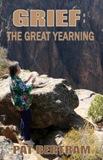
These are not the only writing about grief that I did. As you can see from the list, I hardly posted anything at all those first few months, but I still wrote. I was so lost, so lonely, so sick with grief and bewildered by all I was experiencing, that the only way I could try to make sense of it all was to put my feelings into words. Whether I was writing letters to Jeff (my deceased life mate/soul mate) or simply pouring out my feelings in a journal, it helped me feel close to him, as if, once again, I was talking things over with him.  Those were such private moments, meant only for me (and him) that I never intended making any of it public, but when I found out how much it helps the bereft to hear about someone else’s grief and understand that their anguish is normal, I published them in my book Grief: The Great Yearning.

If you know someone who is grieving for a husband or a mother or a child, I hope you will consider gifting them with a copy, or at least sending them the link to my grief posts.  Thank you.

Grief:  The Great Yearning

***

Pat Bertram is the author of the suspense novels Light Bringer, More Deaths Than One, A Spark of Heavenly Fire, and Daughter Am I. Bertram is also the author of Grief: The Great Yearning, “an exquisite book, wrenching to read, and at the same time full of profound truths.” Connect with Pat on Google+. Like Pat on Facebook.

My Aching Breaking Heart

My heart is breaking. I thought when my life mate/soul mate died that the organ had shattered beyond repair, but it must have healed because I feel as if it is breaking again.

When I first entered the world of grief, I was stunned by the constant assault of emotions, physical reactions, mental conflicts and torments because I’d never heard of such grief. Well, there was that one old woman who wore black the whole of her life, celebrating her widowhood, and occasionally there would be talk of someone keening in agony at her husband’s funeral. I thought those were isolated cases of unbalanced women, but I am not unbalanced. (And probably they weren’t, either.)

I wrote about what I was going through so I could try to make sense of the onslaught, and it helped. Blogging about grief also helped because I met many others on the same journey, which brought me comfort, and a few who were years ahead of me, which brought me hope.

Somewhere in the back of my mind, I thought this fathomless grief set me aside from everyone else, and perhaps I even thought I should have special consideration because of my situation. Then others I knew lost someone they loved, and I realized grief didn’t make me special. It just made me . . . bereft.

After three years, I am still sad. I tend to think I’m not making any progress, but then I hear from women who just lost their husbands, and I am drenched in tears, remembering what it was like when grief was new. And I can see how very far I have come. Sail AwayBut I also know what these women are feeling and how much they will have to deal with in the coming months and years, and my heart breaks for them.

How is it possible that so many of us have lost our mates and soul mates? It’s like a bizarre dance of butterflies, where those we love flit into our lives, bringing wonder and color and joy, and then they flit away, leaving us devastated. How can the world survive when it is so awash in grief? (Perhaps that’s where the oceans came from — the tears of the bereft. After all, throughout the ages, billions of people have mourned for their dead.)

Sometimes I see a photo of or an article about a couple who has been married for forty or fifty years. They always have helpful advice about how they stayed together for so long, but the truth is, despite all their ways of keeping love alive, the reason they were together so long is that one of them didn’t die. Not every loving couple gets that opportunity.

And my heart breaks for the ones left behind.

***

Pat Bertram is the author of the suspense novels Light Bringer, More Deaths Than One, A Spark of Heavenly Fire, and Daughter Am I. Bertram is also the author of Grief: The Great Yearning, “an exquisite book, wrenching to read, and at the same time full of profound truths.” Connect with Pat on Google+. Like Pat on Facebook.

Doxxing Is Not What a Doxy Does

It’s amazing all the redundant terms people come up with to describe the invasive activities they do on the internet. The latest is doxxing. Sheesh. Sounds like something a doxy would do, but doxxing is the barely legal practice of scouring through public documents, finding persofloozynal information about people, and posting it on the internet. Doxxing stems from the .dox ending for documents, and is a form of cyber stalking and even identity theft.

In this era of “sharing” so often things only we used to know are now available to everyone courtesy of sites like Facebook. Banks used to ask for your mother’s maiden name as an identity check, but now if you list your mother as a relative on FB, everyone knows her name. And, unfortunately, social security numbers are prevalent and easy for those in the know to find. For many years, social security numbers were used freely as sort of a national identity number, and were required for most documents, even if the paper had nothing to do with social security. A case in point — my optometrist always demanded the number even though I didn’t have insurance for eye exams and was going to pay cash. (I finally wised up and instead of fighting it, gave him a scribbled and unreadable number.)

And of course, if you have the above information, you can use it to log into credit bureaus, pretending to be the person you are stalking (Let’s call it what it is, and forget the oh-so-cute appellation of “doxxing”). And the credit bureaus yield even more information.

Luckily for us non-celebrities, chances are we will never be subject to such behavior. I mean, what prurient interest would posting my phone number arise in those who have never heard of me? (Or in those who have heard of me, for that matter.) None. Zero. Zilch.

Just in case I ever do become a celebrity (it could happen even if only in an alternate universe), I protect myself the best I can by posting only information I want people to have, such as my name, books, blog, and web addresses. And you can too. Even though some sites demand your true birth date, who’s to say if you give a phony one? And why do you have to list your mother’s real name or your pets’ names, especially if you use either of them in security questions or passwords?

Things to think about to keep from pondering on the preponderance of cyber appellations . . .

***

Pat Bertram is the author of the suspense novels Light Bringer, More Deaths Than One, A Spark of Heavenly Fire, and Daughter Am I. Bertram is also the author of Grief: The Great Yearning, “an exquisite book, wrenching to read, and at the same time full of profound truths.” Connect with Pat on Google+. Like Pat on Facebook.

Thirty-Seven Months of Grief

Today it is 37 months since my life mate/soul mate died. It is also a Saturday, and for more than two and a half years, Saturday was my sadder day. He died late Friday night or early Saturday morning, depending on how you look at it, and often my mind/body saw it both ways, with an upswing of grief on Friday that grew to a crescendo on Saturday and didn’t dissipate until sometime on Sunday. Even if I paid no attention to the calendar, grief surged, which always mystified me — how could my body know when I didn’t? And when the date of his death (the 27th) fell on a Saturday, that was always a double whammy of grief.

But today, I don’t feel much of anything. Well, the usual thread of sadness that bastes my life together, but other than that, I am mostly . . . blank. And tired. I am tired of his being gone. Tired of being sad. Tired of being lonely. Tired of this alien world that still, after all this time, doesn’t quite seem normal with him out of it. Tired of trying to be positive and open to new experiences. Tired of trying to find a way to live through the rest of my life. (Hmmm. Maybe I’m just tired?)

Those who still have their mates simply live. We live without. It colors our world and depletes our energy.

I’m sitting here staring at the page, too blank to think of anything to say about grief that I haven’t already said a dozens times before: I miss him. I yearn for one more smile from hm. I hope he is happy. I hope he is. That’s just the way it is, and probably always will be.

***

Pat Bertram is the author of the suspense novels Light Bringer, More Deaths Than One, A Spark of Heavenly Fire, and Daughter Am I. Bertram is also the author of Grief: The Great Yearning, “an exquisite book, wrenching to read, and at the same time full of profound truths.” Connect with Pat on Google+. Like Pat on Facebook.

Whispers of My Soul

When I mention my idea of Taking a Leap Into the Impossible and living on the go, I get the full spectrum of responses — from those who think it’s a wonderful idea to those who think I’m an idiot for considering such a risky adventure.

Perhaps such a lifestyle is risky, but then, what isn’t? Life is a risk. You can be running in a marathon with hundreds of thousands of others and get blown up. You can be sitting in a suburban classroom and be murdered. The whole point of such a venture as mine is to accept that learning to live with insecurity is the only security there is. You can never truly protect yourself, and I don’t want to live a life where safety and/or security are all that matter. What would I be safe for? A life of stagnation, with no spark of love to keep me vital?

Admittedly, there is no guarantee that a more settled life would be a life of stagnation, (though I do fear such an outcome). I would find something to do, probably the same things I’m doing now — taking walks, going to lunch with friends occasionally, spending way too much time on the internet, writing blog posts, trying to devise ways of making me stand out from the hordes of writers who, incidentally, are also trying to make themselves stand out. (It’s as if we’re in a dance. We all move one way then another, swaying to the sound of success that wafts from the distance.)

This isn’t a bad life, but there is a small voice in the depths of my soul whispering, “Is this all there is?”

Maybe I will find, as have others who undertook such a quest, that there is no difference between being settled and being on the go. Life is where we find it. I do understand that. But still, I want to broaden my horizons, both internally and externally. I have a hunch there is a whole side of me I have never met and will never meet by doing what I have always done.

Several people have mentioned that a person living such a life attracts unsavory characters, and that could be true. But there are a lot of unsavory characters online, and I don’t seem to attract them. I’m more in contact with those who have lively minds and questing souls, and I tend to believe I will do the same on the road.

I will take precautions, of course, such as not wandering around at night or dawdling while daydreaming. I will also have the best protection I know of — ostentation. Human predators go after the weak and vulnerable, those who aren’t paying attention, those who make themselves small and unmemorable. But I will be traveling as an Author. Capital A. I’ll play the part, wearing flamboyant hats to attract attention, talking to people about the book I’m writing, giving away gift bags.

It’s also possible this trip might never happen. The desire to be on the go might turn out to be just another passing phase of grief — so many of us with old grief gravitate toward the idea of an unsettled life. My 96-year-old father (who I’m currently looking after) might outlive me. I might find someone and settle down. I might start selling tons of books and need to stay put to write another. Lots of things can happen.

But meantime, in the belief that I will pursue this dream, I am collecting hats.

***

Pat Bertram is the author of the suspense novels Light Bringer, More Deaths Than One, A Spark of Heavenly Fire, and Daughter Am I. Bertram is also the author of Grief: The Great Yearning, “an exquisite book, wrenching to read, and at the same time full of profound truths.” Connect with Pat on Google+. Like Pat on Facebook.

Where do you get the names for your characters?

Most of the characters in Daughter Am I are aged gangsters, and they kept the monikers they used when they were young. I patterned my gangsters after those in the 1930s movies, though in the book they didn’t actually reach their prime until the 1950s or even 60s. Some names I stole, like Kid Rags, which was the name of a 1900s gangster in Hell’s Kitchen, and others were inevitable, like the morbid wheelman named Happy.

Bob Stark in More Deaths Than One was so named because he was supposed to seem an “everyman,” hence the common first name. He was also supposed to be stark of speech and action, and so the surname was a reminder to make sure he didn’t get too flowery. Despite his name, Bob Stark turned out to be rather wordy at times and not the silent, uncommunicative loner I had planned.

Greg Pullman in A Spark of Heavenly Fire was named after Bill Pullman in While You Were Sleeping to remind me that Greg was good-looking and very nice.

Rena in Light Bringer was so named because it was short for Ahkrena, which was a word I created to be the name of an unknown ancient race. When the character was small and someone asked her name, all she could say was Rena. Her name was supposed to be a clue to her identity after her research uncovered stories of the Ahkrena, but when I discovered Sumerian creation myths, the book went a different direction. I got rid of Ahkrena, but kept Rena, since by then the character and her name had become intertwined

Here are some responses from other authors about how they named their characters. The comments are taken from interviews posted at Pat Bertram Introduces . . .

From an interview with Donna Small, Author of “Just Between Friends”

Names for characters are tough for me. I will write chapters using ‘ajdfjkd’ instead of names. I just have a hard time finding the right one for the character since I’m a huge believer in your name being having an impact on who you become. Both of my daughters play sports so I keep the rosters from their events and refer to them for different and unique names that will fit my characters. I also Google a lot!

From an interview with John Stack, author of “Cody’s Almost Trip to the Zoo”

Names are fun and usually mean something special. I use kids that I have taught, daughters, grandsons, and friends. Family can be cool because you can often capture their personality in the character and no one really gets offended.

From an interview with Smith Hagaman, Author of “Off the Chart”

You’ve heard the old story. Adam was naming the animals. God said, “What will you call that one?” Adam said, “Hippopotamus.” God said, “Well, you can call it anything you want to, but why Hippopotamus?” Adam looked at him puzzled, “Because it looks like a hippopotamus!” That’s how I get my names.

What about you? Where do you get the names for your characters?  (Or your children or your pets or your plants.)

(If you’d like me to interview you, please check out my author questionnaire http://patbertram.wordpress.com/author-questionnaire/ and follow the instruction.)

***

Pat Bertram is the author of the suspense novels Light Bringer, More Deaths Than One, A Spark of Heavenly Fire, and Daughter Am I. Bertram is also the author of Grief: The Great Yearning, “an exquisite book, wrenching to read, and at the same time full of profound truths.” Connect with Pat on Google+. Like Pat on Facebook.

Have you always wanted to be a writer?

I always wanted to be a reader. That’s really all I ever wanted to do. I did try writing a novel many years ago, but the words never came flowing out of me the way I thought they should — in fact, there were no words at all — so I accepted that I had no natural talent for writing. About ten or eleven years ago I decided phooey with talent, and I started writing again. I thought it would be a good way of taking my mind off my problems. I also read books about writing, publishing, and promoting, so basically I gave myself a crash course in the whole writing spectrum.

Here are some responses from other authors about whether they’d always wanted to be writers. The comments are taken from interviews posted at Pat Bertram Introduces . . .

From an interview with Siobhán Nolan, Author of “Old Man Harry”

No, I haven’t. I didn’t even consider myself a writer until I saw my book in print. That was only a few weeks ago, but there’s something so powerful about that moment when you hold your published work in your hands for the first time and can truly say to yourself, “Wow, I did it. I’m a writer.”

From an interview with Lazarus Barnhill, Author of “The Medicine People”

When I was a child of four or five, Wednesday nights were “dollar nights” at the Riverside Drive In: a whole car load of people could see the movie for a buck. My parents and sister would sit in the front seat and I’d sit in the back. Periodically during the show, I would say what the character on the screen was about to say. Eventually my parents got really tired of that and forbade it. But something took root in me even back then. As an elementary school child I would constantly start stories that ended up being only a page or two long — and made me feel like a failure. When I was in sixth grade I lay awake one night and created a story that involved every child in my homeroom class. With the blessing of Miss Roach (and, no, I did not make up that name), I laboriously wrote the story down — probably thirty-five or forty pages — and was given permission on the last day of school to read it to the class. With about five pages left (I was just about to be machine gunned by the villains, having recovered the money they stole from the bank), the principal came in and said that we were free to go to the playground or to stay inside. The students immediately bolted — not one even asking how the story ended. I decided then to write the sort of stories that people would not be able to put down . . . and I’m still working on that.

From an interview with J. P. Lane, Author of “The Tangled Web”

I’ve been a writer by profession most of my adult life, but there wasn’t any point when I thought I wanted to be a writer. I just fell into writing quite by chance – just the way The Tangled Web came about – by chance. There was no thought of wanting to write a book. One day, I sat down and started writing and about a year later, there was a novel on my computer. Mind you, I was an advertising and marketing writer and I also had articles published in major Florida publications, so I wasn’t exactly green when I ventured into the world of fiction. Advertising writing requires tremendous discipline, so I was already reasonably equipped to be an author.

What about you? Have you always wanted to be a writer? Or, like me, have you always wanted to be a reader?

(If you’d like me to interview you, please check out my author questionnaire http://patbertram.wordpress.com/author-questionnaire/ and follow the instruction.)

***

Pat Bertram is the author of the suspense novels Light Bringer, More Deaths Than One, A Spark of Heavenly Fire, and Daughter Am I. Bertram is also the author of Grief: The Great Yearning, “an exquisite book, wrenching to read, and at the same time full of profound truths.” Connect with Pat on Google+. Like Pat on Facebook.

Meet Malcolm R. Campbell and “The Seeker”

Malcolm R. Campbell is the author of the contemporary fantasies, The Sun Singer, Sarabande, The Seeker, and the satire, Jock Stewart and the Missing Sea of Fire. He is also a prolific blogger, posting interesting articles and reviews, and collecting Book Bits, the most fascinating and relevant book-related links on the internet.

I recently interviewed Malcolm to find out more about his new book and his writing practices. The interview is posted on my Pat Bertram Introduces . . . blog, but I’m posting a few responses here to whet your appetite to read more. I hope you will enjoy meeting Malcolm R. Campbell.

SeekerCoverMalcolm, What is your book about?

In The Seeker, David and Anne meet while working as seasonal employees at Many Glacier Hotel in Glacier National Park. He comes from the Montana high county where he is at home with totem animals, magic and mountain climbing. She comes from the Florida Panhandle where she is at home with botany, beaches and coastal swamps. Their intense summer romance leads them to believe they’ll be lovers forever. Typically, the realities of college life in separate towns get in the way. Then, when David’s intuition tells him Anne is in danger, he uses ancient magic to rescue her. However, cheating fate brings consequences and misunderstandings that threaten to drive them apart.

What inspired you to write this particular story?

The story was inspired by my work as a summer employee in Glacier National Park as well as my love of both the Rocky Mountains and the Florida Gulf Coast where I grew up. To my Florida friends, my going to Montana for summer work and Colorado for summer school was tantamount to traveling to another planet. The worlds are so different. So, I wondered whether two people from such diverse regions could maintain a relationship once the summer was fading away into the past.

How much of yourself is hidden in the characters in the book?

David Ward is very much like me. We both love climbing mountains, following our intuition, and consorting with totem animals. In the upcoming second and third books of the trilogy, my experiences are somewhat similar to David’s aboard a Vietnam-era aircraft carrier in The Sailor, and my work as a college journalism instructor leads to David’s teaching work in The Betrayed.

Tell us a little about your main characters. Who was your favorite? Why?

David’s grandparents, the medicine woman Katoya, and the sheep rancher Jayee, are very influential in his life. Katoya teaches in magic. Jayee teaches him logic and the practical work labor-intensive jobs. Katoya and Jayee come from different worlds, having married for reasons of necessity, so they’re at odds with each other about almost everything. I had fun writing about their love/hate relationship and how it impacted their grandson. Yet, I don’t let them steal the show from protagonist David Ward, a mountain climber who really would refer working on the railroad to going to college, and Anne who is a very earth-centered, environmentally conscious young woman who doesn’t like what we’re doing to the planet.

Click here to read the rest of the interview: Malcolm R. Campbell, Author of “The Seeker”

You can find Malcolm on his website at http://www.malcolmrcampbell.com as well as on his Facebook author’s page at https://www.facebook.com/Malcolm.R.Campbell.Author

image001