 Rubicon Ranch is a collaborative and innovative crime series set in the fictional desert community of Rubicon Ranch and is being written online by the authors of Second Wind Publishing. The very first chapter of the very first book (Rubicon Ranch: Riley’s Story) was posted on October 24, 2010, and we are still going strong! In fact, we are getting better and better. Seven authors, including me, are involved in the current story — Rubicon Ranch: Secrets, which is shaping up to be a psychological thriller.
The body of a local realtor is found beneath the wheels of an inflatable figure of a Santa on a motorcycle. The realtor took great delight in ferreting out secrets, and everyone in this upscale housing development is hiding something. Could she have discovered a secret someone would kill to protect? There will be suspects galore, including a psychic, a con man, a woman trying to set up an online call-girl service, and the philandering sheriff himself. Not only is the victim someone he had an affair with, but he will also have to contend with an ex-wife who has moved back in with him and a jilted lover, both with their own reasons for wanting the realtor dead.
Although some of the characters were introduced in Rubicon Ranch: Riley’s Story, the first collaboration in the series, and further developed in Rubicon Ranch: Necropieces, Rubicon Ranch: Secrets is a stand-alone novel, so don’t worry if you are new to Rubicon Ranch. A new chapter will be posted every Monday on the Rubicon Ranch blog. Normally I only write the character of Melanie Gray, but the authors who wrote the possible suspects seemed to have so much fun with their villains, that I am doing a second character, Lydia Galvin, the sheriff’s jilted lover.
We hope you will enjoy seeing the story develop as we write it. Let the mystery begin! Whodunit? No one knows, not even the writers, and we won’t know until the very end! If you don’t want to miss further chapters, please go to the blog and click on “sign me up” on the right sidebar to get notifications of new chapters.
(If the Christmas theme seems unseasonal, well . . . considering how long it takes to write a book at the rate of a chapter a week, in a few months, the season will catch up to us!)
Chapter 6: Lydia Galvin
by Pat Bertram
Sunday, December 22, 11:55pm
Lydia Galvin stood like stone behind the partially closed plantation shutters in her bay window. From this spot, she had a good view of her front yard where Nancy Garcetti’s body had been found. Lydia had remained vigilant for hours, beginning even before that Melanie person had stumbled on the scene, and she’d heard enough to know who all the players were in her own private police drama.
But now, the body had been cleared away, the crime scene technicians had packed up their evidence, the department photographer had decamped, the sheriff had come and gone. All that remained was lurid yellow crime scene tape draped around the deflating figure of Santa on a motorcycle . . . and the two deputies in charge—Lieutenant Rosario Frio and Deputy Kelvin Midget. Lydia could hear snatches of their conversation. They were comparing notes about canvassing the neighborhood, but they spoke so softly she couldn’t hear many details. And then, as if he knew she was within earshot, Deputy Midget raised his voice.
“I’ve knocked on the door several times,” he all but shouted. “Maybe nobody lives here.”
“But why would someone bother to put up decorations at an empty house?” Frio responded in a voice just as loud.
“Who knows what anyone does in this ghoulish neighborhood.”
Lydia thought she saw Midget wink at Frio, perhaps in acknowledgment that he himself now lived in Rubicon Ranch, but the wink could have been a trick of the moonlight.
Would it surprise them to know that putting up the decoration had merely been a whim? She’d found the silly figure in the garage of the rental house, and it had somehow seemed fitting considering the rebellious atmosphere of the neighborhood.
“I’m surprised Seth doesn’t do anything to clean up the area, especially since she lives here,” Frio said.
Lydia knew the “she” Frio referred to was Melanie Gray, the very woman who inadvertently brought her here. In newspaper articles, television coverage, online stories and blogs about the Rubicon Ranch murders, Melanie Gray had earned as much space as Seth himself. Only one or two photos showed the two of them together, but their images had been placed side-by-side often enough to make it seem as if they were a couple. And Melanie Gray seemed just Seth’s type—smart, remote, vulnerable, and ripe for sweet words that soothed the soul. But in the two months Lydia had been watching Melanie, hoping to catch Seth in action, the sheriff never once put in an appearance. Even the brief phone calls she’d heard on the tapped line had been strictly business.
“Do you think the people who live here are hiding from us?” Midget asked.
“It’s possible,” Frio said. “But I don’t know why. The innocent never have anything to fear.”
Lydia almost snorted, but caught herself before she made a sound. The innocent had nothing to fear from the cops? Who was Frio trying to kid? The innocent had everything to fear since they had only their innocence as protection, and innocence was tissue-paper thin.
“Maybe one of residents killed the woman,” Midget said, still playing the naïf.
“And dragged the body under the wheel of their own Christmas decoration? No one is that stupid.”
Maybe it wasn’t smart, Lydia admitted to herself, but it had almost done the trick. Melanie found the body as Lydia had hoped, but the woman left before Seth arrived. How could she have known when she arranged the tableau that Seth would be with his wife Monica—Nic—instead of rushing to the scene? He detested Nic almost as much as Lydia did. The only good thing about this situation was that Seth finally got a taste of what it felt like to suffer. And he deserved it after what he put her through.
He’d fed her and bedded her. Treated her as if she were the most special woman in the world. She’d been leery of him at first, knowing his reputation, but when he’d looked her in the eye and said with a sad little boy sigh, “I’ve been more open to you than I’ve ever been to any other woman,” she was lost. She had the feeling they’d found refuge together, he from his demanding wife and she from her abusive husband, but when she discovered the romancing had all been part of his come-on, her heart broke.
She hadn’t really expected him to leave his wife when she suggested it. She just wanted a bit of assurance that she came first, at least part of the time, but he turned on her. Called her a vituperative bitch. Whatever that meant. She’d never intended to confront Nic, but Seth must have believed she would and confessed the affair to his wife, making Lydia out to be the villain. Seth brought Nic to her house and stood there while his wife told her to be content with what she had with Seth and just let the rest go, that the affair was messing up all their lives. Her husband overheard the conversation, and later that night, he beat Lydia, smiling with every lash.
And it had all been Seth’s fault. If he had only left her alone. . . . It was bad enough getting abuse from her husband, but she couldn’t bear to be treated badly by the man who once called her the love of his life. She told their captain of the affair, insisting Seth had misused his power. Although a disciplinary action had been filed, Seth got off, of course, but both of them lost their jobs.
On their last day, she found him standing in the police department parking lot, watching the custodian paint over his name. Her heart had gone out to him. They hurt each other badly, but still, she could feel a connection.
“Can’t you understand how much I love you?” she’d said softly, tearfully.
He’d just stared at her with the icy non-caring eyes of a predatory bird and said, “I’m still licensed to carry a sidearm in California and if you come near me again I’m going to shoot you between the eyes.”
What was left of her broken heart turned to stone. And she’d been stone ever since.
She hadn’t felt anything when she left that day even though she’d lost both her last chance at love and her hard-won spot as a lieutenant in the police department. She hadn’t felt anything when she didn’t find another job while Seth, golden boy still, had landed himself a great position. She hadn’t felt anything when her husband ended up murdered, leaving her with enough money to get her through the coming empty years.
And she didn’t feel anything now when Frio and Midget marched to her entryway and banged on the front door.
“This is the sheriff’s department. Open up,” Frio shouted, sounding authoritative. If Lydia hadn’t once practiced such a voice herself, she might have been intimidated enough to answer the door. But all she did was stand and wait for Seth’s two deputies to give up and drive away.
Even if the deputies suspected that someone lived in the house, they couldn’t prove it as long as no one saw her. Only Nancy Garcetti knew she lived there. Nancy owned the house, one of the many she’d purchased at a steal because of the declining real estate market in Rubicon Ranch, and she’d rented it to Lydia for a bundle of cash and a promise of no paperwork work or records.
Now Nancy was dead.
Seth and Nic were together.
And Lydia was stone.
***
Pat Bertram is the author of the suspense novels Light Bringer, More Deaths Than One, A Spark of Heavenly Fire, and Daughter Am I. Bertram is also the author of Grief: The Great Yearning, “an exquisite book, wrenching to read, and at the same time full of profound truths.” All Bertram’s books are published by Second Wind Publishing. Connect with Pat on Google+
 I knew what to do with most things because toward the end he had rallied enough to tell me, but still, there were a few items that blindsided me, such as photos and business cards from his first store (where we met). Every single item he owned was emotionally laden, both with his feelings and mine, and I cried the entire time, huge tears dripping unchecked, soaking my collar.
 like my books (unless they are romance readers who accidentally stumble into the wrong story), but I’ve never reached “the masses” and I never will for the simple reason that I don’t know what “the masses” want. (Normally I don’t use terms such as “the masses” because who among us ever sees him or herself as one of the masses? But still, when you are talking about 80 to 100 million readers, as some notorious writers have gained, those are massive numbers.)
 to create characters that come alive, how to describe a scene without losing the momentum of the story. And then you need to put it all together into a cohesive whole that engages the reader’s attention.
 ence fiction setting. Dennis Quaid is stranded on a desert planet — an island in space — and in true robinsonade fashion, nature is viewed as harsh and ungiving (as opposed to The Swiss Family Robinson, which views nature in a more benign fashion). Although Enemy Mine doesn’t follow the genre form of building a civilization out of that wilderness, Quaid does find a way to survive and to form a civilization of sorts with his marooned enemy, a Drac, played by Lou Gosset Jr.
 saw the glimmers of new technologies and possibilities on the horizon. They, being brilliant tacticians, kept the lucrative long-distance business and parceled out the money draining local service. Phone rates went up and up and up. These new companies restructured their businesses so that towns even a few miles away were considered “local long distance.” And you had to buy your own phones.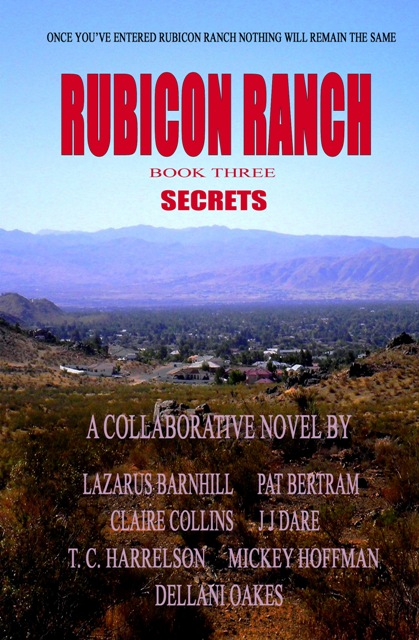











 Bertram's Blog