Writing and Research: When in Doubt, Twist Things About

When you have lost your way, either in your writing or researching, twist things around, and perhaps it will help you find what you are seeking.

For example, I had to write a story for Second Helpings, the Second Wind Publishing holiday short story and recipe anthology. (Which, incidentally, has now been published. Hint. Hint.) My idea was to tell the story of a woman with an unromantic and inattentive husband. To show her discontent, she kept “poisoning” him by making his favorite fat and sugar-laden chocolate chip cookies. She had an affair with a man who seldom had time for her, and finding that she was just as unhappy, she decided to stay with the man who was present in her life. She broke off the affair, and at the end, she fed her husband cookies made with applesauce and honey instead of butter and sugar to show her change of heart. It was a nice story, but nothing special until I twisted it around and gave her live-in boyfriend the affair. (Since I was changing things, I demoted the husband to boyfriend — I didn’t want to have to deal with a possible divorce.) And then the story took off.

I always knew twisting things around in writing was a good idea, but research? Apparently twisting works for that, too. I’d spent a couple of days researching “thinking caps” for yesterday’s post, and wasn’t getting anywhere. The term only goes back a couple of hundred years (at least in print), though the term “considering cap” goes back four hundred years (again, in print).

I knew the term had to be older than that, mostly because of a gut feeling that there had actually been such things as “thinking caps” and that the term hadn’t always been rhetorical. So I got to thinking about the opposite of thinking caps, which are dunce caps, and wouldn’t you know — there was the answer I was seeking. As I said yesterday, originally dunce caps were thinking caps. The apex represented knowledge, and that knowledge was funneled through the cap to the brain. Although dunce caps stemmed from the 1200s, they were based on wizard’s caps, and went so far back into the mists of time, that there is no way to ever trace the origin.

It gave me a thrill when I realized that my intuition about the relationship between dunce caps and thinking cap was correct. Now, when I can’t find the answer I want, I will look at the opposite.

So, when in doubt, twist things about.

***

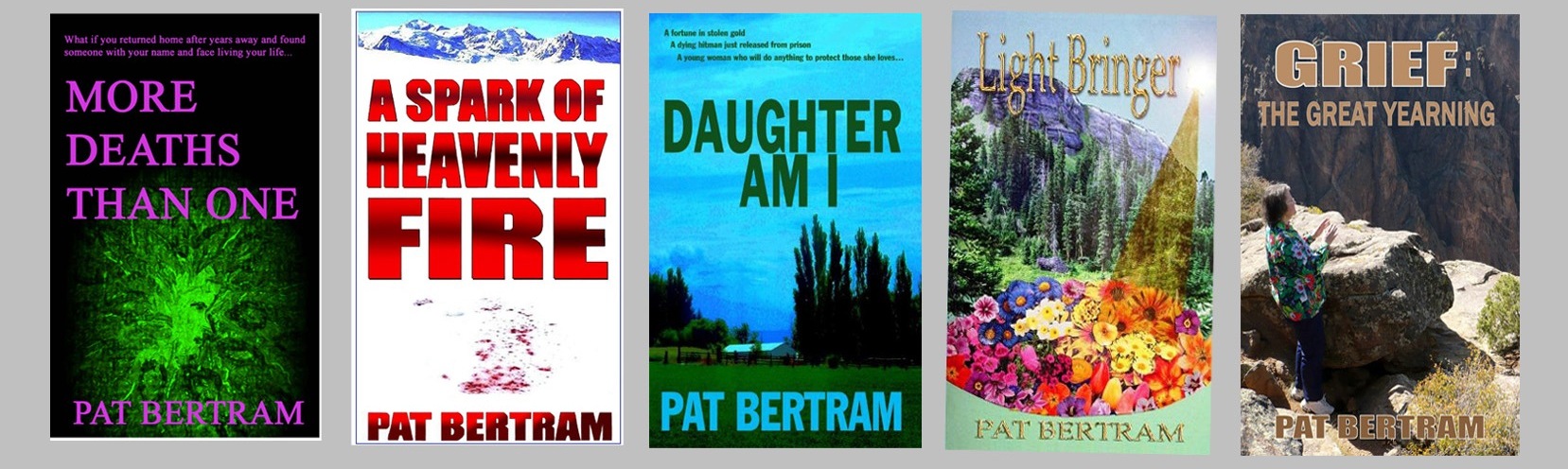
Pat Bertram is the author of the conspiracy novels Light Bringer, More Deaths Than One, A Spark of Heavenly Fire, and Daughter Am I. Bertram is also the author of Grief: The Great Yearning, “an exquisite book, wrenching to read, and at the same time full of profound truths.” Connect with Pat on Google+

Put On a Thinking Cap to Help Increase Creativity

The phrase “thinking cap” or “considering cap” goes back at least 400 years, probably much longer since by the time it first appeared in print, the phrase needed no definition. Most people assume the cap has always been metaphoric, but donning a real cap can help focus one’s thoughts.

In an odd twist, “dunce cap,” which has become synonymous with stupidity and foolishness, started out as a thinking cap. John Duns Scotus, a master philosopher born in 1266 in Duns, Scotland, believed that wearing a high conical cap helped funnel knowledge to the brain. (He’d noted that wizards wore them.) In the 1600’s, when his philosophies were ridiculed as foolish and obtuse, the dunce cap became known not as thinking cap but a fool’s cap.

Scientists today have created a high-tech thinking cap that stimulates the brain and seems to increase creativity, but you don’t need hi-tech devices. If you are dealing with writer’s block, for example, you can use colored caps.

How color vision actually works is still a mystery, but there is no mystery about the profound effect color has on human physiology. Red tends to raise blood pressure, increase pulse rate, and excite brain waves. Blue tends to have the reverse effect, and green tends to be neutral.

So, if you wish to increase your creativity, try a little color therapy. It can’t hurt; at the very least it will give you something besides your computer screen or those same old walls to stare at. And it has the benefit of being exceedingly simple. All you have to do is choose your color from the following list, wear it, hang it on the wall, find a knickknack or a bouquet of flowers that color to put on your desk, then focus on it.

Purple will boost your creativity, and help stimulate your intuitive abilities.

Yellow can help you feel optimistic if your blockage is making you anxious and depressed. It can also induce enlightenment, which is what you are looking for.

Dark blue encourages meditative thinking, so it’s especially helpful if are having difficulty focusing.

Green helps promote harmony if your inability to write is making you irritable.

Red will energize you if you’re too tired to think.

Even if the color therapy doesn’t bring about the effect you wish, playing around with all those colors will give your mind a rest from writing, and perhaps when you return to your keyboard, the problem will have resolved itself.

A couple of other suggestions to cap off this article: you can give your character a thinking cap, such as Sherlock Holmes’ deerstalker cap, which might help you refocus on your story.

Or you can forget writing altogether, put on any hat, go for a walk and let your thoughts wander — that’s what I do.

***

Pat Bertram is the author of the conspiracy novels Light Bringer, More Deaths Than One, A Spark of Heavenly Fire, and Daughter Am I. Bertram is also the author of Grief: The Great Yearning, “an exquisite book, wrenching to read, and at the same time full of profound truths.” Connect with Pat on Google+

A Legacy of Words

Early in the twentieth century, Ivar Kreuger, a match manufacturer, managed to corner the match market. Through various deals, he ended up with the exclusive rights to sell matches in many countries, including most of Europe, but this monopoly was not enough for him. Back then, it was a common practice for two or three people to light their cigarettes from the same match. Ivar realized that if he could somehow keep that third person from using the match, he could greatly increase his sales, so he had his advertising department start the rumor that it was unlucky to light three cigarettes from the same match. Tales were told of dreadful things happening to the third person who used a match, like the bride who had been left at the altar and the soldier who was killed after each had lit a cigarette from a match that two others had already used. Even today, though most people use lighters, the superstition that it’s unlucky to light three cigarettes from the same match persists.

Kreugar’s story shows the power of words, but how many of us use them wisely? We toss out words as if they were as ubiquitous as dandelion fluff and as valueless, yet words have the ability to affect the speaker just as much as they affect the listener. For example, saying “I love you,” not only makes the recipient feel good, it makes the speaker feel good, and it intensifies the bond between the two people. Screaming, “I hate you” effectively disconnects us from ourselves as well as the other person.

The realization that the words can change us as writers as well as others is making me think about my responsibility as writer. If words are so powerful that they can change readers and writers both, then they deserve my best. I don’t think I’ve achieved my best. At least, I hope I haven’t. Once you have achieved your best, you have no place to go but down, and in many respects, I am still at the beginning of my journey as a writer. Supposedly, a writer doesn’t reach maturity until after s/he has written a million words, and I am still far short of that, even including blog words. (Because, though I tend to forget, blogging is writing, too.)

Still, no matter how much better I get at writing, I don’t think I will ever achieve the success with my words that Ivar Kreuger did, and that’s okay. The legacy of his words is a lie. I would prefer the legacy of my words to be a truth.

***

Pat Bertram is the author of the conspiracy novels Light Bringer, More Deaths Than One, A Spark of Heavenly Fire, and Daughter Am I. Bertram is also the author of Grief: The Great Yearning, “an exquisite book, wrenching to read, and at the same time full of profound truths.” Connect with Pat on Google+

Kill Your Darlings or Murder Them

“Kill your darlings,” is a quote by Stephen King. No, it was William Faulkner. No, it was Agatha Christie. No, it was F. Scott Fitzgerald. Well, of course, they all said it, but the first use of the construction appeared in print a hundred years ago by Sir Arthur Quiller-Couch, who urged wannabe writers to murder their darlings. (Quiller-Couch was the inspiration for Rat in “The Wind in the Willows.” It’s amazing the things you can find out with a bit of research!)

By definition, darlings — those parts of our manuscripts that we love even when they serve no purpose — are painful to kill, but some are more painful than others. Originally, More Deaths Than One was designed to be a series of stories told to Bob Stark (so named to remind me that he seems an ordinary fellow, but is stark of speech). It was through listening to the various stories that he was to discover the truth about himself, but though the idea had merit, the first draft was terrible. Bob barely surfaced in his own story, and the storytellers themselves seemed disembodied. I rewrote the book several times, trying to find the right way to tell the story, but it wasn’t until the fourth draft when I gave Bob a love interest, a waitress he met at a coffee shop, that the story took off. He had someone to butt heads with, someone to ooh and aah over his achievements, someone to be horrified at what had been done to him.

After the story took focus, the original idea of Bob learning about himself from tales told to him had to be scrapped, and some of those darlings were so difficult to kill that although I removed them from the book, I couldn’t delete them permanently.

This painfully mudered darling is set it in Vietnam, but the incident it is based on took place during World War Two. The story is being told to Bob (Sarge) by his journalist friend, William Henry Harrison.

***

I heard about this kid, a gentle kid, really. He was tall, broad in the shoulders, good-looking, with reddish-gold hair. But what really made him stand out was his smile. He always smiled.

This kid was so thrilled to be doing something for his country that nothing bothered him, not even the climate. Since he was a swamp rat from Louisiana, he felt right at home.

He came from a very large, very poor family who never had enough food; when he was drafted into the army, he felt as if he had won the lottery. He always had plenty to eat and, compared to the meals he had grown up with, it seemed like haute cuisine. He even loved the c-rations, including the ones that everyone else threw away, like ham and lima beans.

He was delighted with his government issue clothes, too. In his entire life, he had never worn anything new or had boots that fit. He felt like a king. No matter what happened, it was better than his life back in the swamps of Louisiana, and he could not help smiling.

His platoon was stationed near a Vietnamese village. Those people hated the Americans, but for some reason they took a liking to this smiling kid. They called him Wa-ky number one. Wa-ky was what they called the Americans, and number one meant the best. They also called him dinky-dao, which means retarded or mentally ill, because he was always smiling. They thought it was the funniest thing that the best American was dinky-dao.

The one person who hated the kid was his sergeant, a really nasty piece of work, who felt he was being mocked by that constant smile.

One day, in a fit of anger, the sergeant took an empty sandbag, and made a crude mask by cutting holes for the eyes and nose. He yanked it over the kid’s head, and snarled, ‘I never want to see your fucking smile again.’

When the kid removed the hood, he was still smiling — he thought it had been a joke. This really infuriated the sergeant. He slammed the butt of his rifle into the kid’s face, grabbed the hood, and jammed it back on the kid’s head, screaming, ‘I’ll kill you, you motherfucker, if you ever take this fucking bag off again.’

After a few days of wearing the hood, a change came over the kid. He would wade into the center of a battle and just let loose as if he thought he were invincible, or as if he no longer cared whether he lived or died. Afterwards, he would bayonet the dead bodies and mash their faces with the butt of his M-l6.

All of this made the sergeant very nervous. He ordered the kid to take off the hood. The kid refused.

As time went on, the man in the hood — you notice I say man, Sarge? That’s because there was nothing left of the kid he once was — got more and more out of control. He would go off by himself to hunt VC, and would return wearing a necklace of still-warm ears. Everyone was scared of the man in hood, particularly the sergeant, who was certain he would be fragged, but the man just ignored them and went about his job of methodically eliminating the VC.

Finally the time came for the man in the hood to be rotated out. That morning he arose, casually took off the hood, folded it neatly, then packed it with the rest of his gear.

Everyone gasped in shock when they saw him — his face was hideously deformed. When the sergeant had butt-stroked the kid, he had destroyed the kid’s left cheek and orbital bone, and they had never been repaired; no one even knew that he had been badly injured.

He still had a smile on his face, however, but this time it was the rictus of pain, or of death.

And his eyes . . . You’ve heard of the thousand yard stare, Sarge? This was a ten thousand-yard stare, as if the man in the hood had looked too long into hell, and now hell was all he knew.

***

Pat Bertram is the author of the conspiracy novels Light Bringer, More Deaths Than One, A Spark of Heavenly Fire, and Daughter Am I. Bertram is also the author of Grief: The Great Yearning, “an exquisite book, wrenching to read, and at the same time full of profound truths.” Connect with Pat on Google+

When Describing Your Characters, Don’t Forget Their Hands.

I’m not sure it’s true any more that a picture is worth a thousand words considering that a thousand words takes up only a few kilobytes of computer memory while a good high resolution picture takes up three to four megabytes. And anyway, it doesn’t take a thousand words to describe something so that it becomes real. It takes only a few words, if they are the right words, to create vivid portraits. The secret is to choose significant details — details that mean something, that promote the story, that evoke emotion — rather than to write long passages of trivia.

Take hands for example. By describing a character’s hands, we can describe the character. A man with manicured and buffed fingernails is different from one with grime permanently etched into his cuticles. A woman with bitten fingernails is different from one with dirty, broken nails, and both are different from a woman wearing designer acrylic nails. The color of nail polish a woman chooses tells us about her character. And clear nail polish on a man would tell us about his character.

We can describe hands in many ways: claw-like, thin, scrawny, big-knuckled, blue-veined, plump, fat, chubby, arthritic. Characters can have tattooed hands. They can wear gloves, a simple wedding band, or multiple rings on each finger.

Hands also do things. They wave, point, gesture, touch chins or noses, and each of these gestures and mannerisms tells us about the character. Hands can slap another character or caress a cheek, and such actions tell us about the relationship between the characters.

Here are a few examples of hands and what they do, taken from Light Bringer,.

The kid smoothed his neatly combed hair, swung his callused hands front to back as if he didn’t know what to do with them, then stuck them in his pockets.

Arthur Shillitani took his thin, long-fingered hands off the controls and slicked back his dark hair.

Rena studied her hands. . . . They were paler than usual, making the blue veins seem more prominent, and the nails were in need of a clipping, but otherwise they looked like the hands she’d lived with for the past thirty-seven years. What made them different from anyone else’s? What made her different?

Some examples from More Deaths Than One:

The staff sergeant was only 5’9” or 5’10”, but he had a powerful build with thick wrists, a massive chest, and hands that looked able to crush a larynx without any effort at all.

No one who crossed the threshold had the pampered arrogance of Evans’s men or the soft hands of a corporate drone.

The backs of his hands were crepey and mottled with age spots, but he seemed only about ten years older than Bob.

Kerry folded her hands primly in her lap, but her body seemed to vibrate with suppressed excitement.

And a couple of examples from Daughter Am I:

Mr. Browning shuffled through the papers on his massive black walnut desk. His age-mottled hands moved slowly, as if weighted by the six turquoise rings he wore.

Not hearing Happy, she looked back — he was heading her way, fumbling with his gun. He seemed to be trying to point it at the woods, but his hands shook so badly, the weapon wobbled all over the place.

So, when describing your character, don’t forget their hands. Hands make the character.

***

Pat Bertram is the author of the conspiracy novels Light Bringer, More Deaths Than One, A Spark of Heavenly Fire, and Daughter Am I. Bertram is also the author of Grief: The Great Yearning, “an exquisite book, wrenching to read, and at the same time full of profound truths.” Connect with Pat on Google+

35,000 Days and Counting

Just by chance I discovered that in a couple of weeks my father will be 35,000 days old. Such an astonishing number of days should not go unacknowledged, so I’ve been trying to figure out various ways of illustrating that vast number of days.

I thought of giving him a jar of 35,000 bits of confetti in recognition of his days, but confetti comes in ounce packages, and I am not about to count out 35,000 pieces of anything. Can you imagine counting out 34,895 and then losing your place? Admittedly, I could count what was in one package and extrapolate from that how many packages I’d need, but still, there are a lot of pieces in those bags, and anyway, confetti has no significance to his life.

Perhaps give him 35,000 pennies? But 35,000 pennies would be 700 rolls, cost $350.00, and would weigh 210 pounds.

Perhaps licorice jelly beans? Considering that there are approximately 400 Jelly Belly jelly beans in a pound, I would need almost 88 pounds and at 8 dollars per pound, they would cost $704. Freight, however, would be free.

Perhaps personalized M&Ms? But 35,000 of them would cost more than $1,725, excluding freight. And anyway, they would just go to waste. He hates M&Ms.

He does like Snickers bars, so I considered sending him 35,000 calories of the candy, but that would be 125 bars. Since he’s almost 96 years old, it would take him the rest of his life to eat that many candy bars, and they would get stale long before then.

Perhaps 35 1000-piece jigsaw puzzles? But his fingers don’t work that well to manipulate those pieces, his eyesight is bad, and he never liked doing jigsaw puzzles. (Now, if my mother were still alive, I could get them for him and let her work them.)

In the end, I decided to print and cut out 35,000 copies of his initials, each one representing a day on this earth. Will take me about 12 hours to cut all of those bits of paper, but what the heck. It’s a wonderfully symbolic gesture.

I’ll also decorate the house, or at least his breakfast nook, to surprise him. (I haven’t mentioned the 35,000 days date to him, and if any of my siblings ruin the surprise, I will never forgive them.)

***

Pat Bertram is the author of the conspiracy novels Light Bringer, More Deaths Than One, A Spark of Heavenly Fire, and Daughter Am I. Bertram is also the author of Grief: The Great Yearning, “an exquisite book, wrenching to read, and at the same time full of profound truths.” Connect with Pat on Google+

Genre vs. Traditional Fiction

Yesterday I wrote about traditional stories, the kind of untagged, unlabeled, uncategorized and ungenrefied fiction we grew up on. There used to be certain sections for genres in libraries and bookstores, but most books were shelved alphabetically under “fiction.” I read all types of books without discrimination, but I found the most satisfying books not with the genre stories, but in with the general fiction. And that’s the kind of book I tried to write.

I don’t know why genre became the core of the book business rather than the peripheral it once was, but it’s probably because of marketing — as one editor who rejected Light Bringer told me, “I loved the story, and your writing is excellent, but I don’t know how to sell it. It doesn’t have enough science fiction elements to be science fiction, and it has too much science fiction to be anything else.” (The truth is, Light Bringer was never meant to be science fiction. It a traditional story based on both modern conspiracy theory and the Sumerian cosmology, though I admit, it does have elements that are construed as science fiction. Luckily, I eventually found a publisher who publishes traditional fiction as well as genre.)

I don’t know what came first — readers’ need to buy books that fit into certain categories or book marketers’ need to funnel readers into those categories, but it doesn’t really matter. Either way, this genreization of the book business makes me an outsider, both as a reader and a writer. I have a hard time sorting through the 130,000,000 million books available to find ones I want to read, and I have a hard time fitting my books into the available genres. (When I have to give a category, I say “conspiracy fiction.” That’s not a genre, or at least I don’t think it is, but it gives me a pithy and realistic way of labeling my books.)

The hardest of my books to categorize, besides Light Bringer, is More Deaths Than One. It has many of the elements of a thriller, but the story is not about what happened to the main character (Bob) but who is he and how he reacts to what happened to him. In a thriller, there should be some sort of showdown between the hero and villain, but in More Deaths Than One, that showdown is given to an offscreen character, and Bob hears of it second hand. Some readers think the scene is a cheat. Even I think it’s a cheat, or rather I would think so if More Deaths Than One was a thriller. The hero should always be the one who performs the decisive action in the story, but in this case, the decisive action is not the discovery of the truth, but how Bob and Kerry (the woman he loves) deal with that truth.

I could have had the showdown and then Bob and Kerry’s scene afterward, but then their scene becomes anti-climactic. I could have had the two scenes concurrent — the showdown and their reactions, but there is no way Bob would have opened up to her with a dangerous creature in the room. And most of all, he would never have brought her to the attention of the villain since he would have wanted to protect her at all costs.

You’d think that with the emphasis on the two characters that More Deaths Than One is romantic suspense, but it is far more than that (and far less. Those who have read it for romantic suspense don’t like it because the romance isn’t forefront. Nor is the conflict a romantic one — Bob and Kerry get along from the beginning). More Deaths Than One is traditional fiction — a story that demanded to be written in a certain way, regardless of any genre conventions.

As Mickey Hoffman, author of School of Lies and Deadly Traffic, said, “What are you waiting for? Read this book. Now. More Deaths Than One is much better than any ‘bestseller’ out there. The plot is constantly surprising and intricate, the characters draw you into the tale and the overall writing is top notch.”

***

Pat Bertram is the author of the conspiracy novels Light Bringer, More Deaths Than One, A Spark of Heavenly Fire, and Daughter Am I. Bertram is also the author of Grief: The Great Yearning, “an exquisite book, wrenching to read, and at the same time full of profound truths.” Connect with Pat on Google+

The Kind of Fiction I Grew Up On

On Malcom Campbell’s blog post yesterday, BOOK BITS: ‘Black Beauty,’ Plagiarism, Donna Small, Larry McMurtry’s ‘Custer,’ Book stories for the election, he described “traditional fiction” as the kind of fiction we grew up on before novels started getting whittled down to novella-lengths and forced into marketing categories. Dare I say, literary fiction is what’s left after publishers and booksellers have sliced and diced readers and books into every possible pigeonhole, slot and category they can possibly imagine? We are, I think, so scared of making our own decisions about what we read these days, that we cannot pick up a book without knowing how it’s been tagged, labeled, categorized and genrefied.”

Ah! Now I have a term for the sort of fiction I write, and it’s the perfect term — traditional fiction. My novels are not genre fiction in any way, and those who try to fit the stories into such pigeonholes end up not liking them. There is not enough romance for the romance readers, not enough horror for the apocalyptic crowd, not enough villainry for the thriller lovers, not enough grue for the horror aficionados, not enough science or fantasy for the scifi folks.

Each of those elements has a place in my books, of course, since each aspect is part of the story’s big picture (in the same way those elements make up the big picture of our lives), but none overwhelms the basic intent of my stories, which is to tell a satisfying tale with archetypal characters and classic themes that can last beyond the fads of the day. In other words, a traditional novel.

In A Spark of Heavenly Fire, for example, there is plenty of horror, such as the gruesome end of those afflicted with the red death, but generally the horror is more subtle than visceral — empty streets instead of bodies piled everywhere, struggles to maintain a semblance of normality instead of rioting. The experiments done on humans during both the hot wars and the cold wars twentieth century are not experienced first hand by the characters, but the slow reveal of those old horrors affect them deeply nonetheless.

A Spark of Heavenly Fire explores the theme of love in all its guises, not just romance, but friendship, caring, trust. There is love mixed in the villainry, too, because someone had to have lovingly created the organism that caused the red death. Unlike genre stories, there is no hero trying to stop the villain before he can release his “baby.” The deed had been committed before the story even began. We don’t see the story from the villain’s eyes as in a thriller, and it’s only at the end that we realize with what love and glee the villain had set his creation free.

More than horror or history, romance or mystery, A Spark of Heavenly Fire is the story of ordinary women who found only failure in the ordinary world where everyone else seemed to find success, but when the world turned upside down, they found their place and their worth, and they came alive. As Washington Irving wrote, “There is in every true woman’s heart, a spark of heavenly fire, which lies dormant in the broad daylight of prosperity, but which kindles up and beams and blazes in the dark hour of adversity.

This is the kind of fiction I grew up on as a reader, the sort of traditional story that digs deep so that what affects the characters also affects the readers, the sort of ungenrefied story I have always loved. And it’s the kind of fiction I grew up on as a writer. It was halfway through writing A Spark of Heavenly Fire that everything clicked and I became a writer.

***

Pat Bertram is the author of the conspiracy novels Light Bringer, More Deaths Than One, A Spark of Heavenly Fire, and Daughter Am I. Bertram is also the author of Grief: The Great Yearning, “an exquisite book, wrenching to read, and at the same time full of profound truths.” Connect with Pat on Google+

If Everyone Wants Peace, Why are there Wars?

Yesterday, along with thousands of other people, I blogged for peace. If you saw my peace post, you will know that my message focused on being at peace with the world rather than world peace. I don’t believe in “world peace” as a cause, though of course, I do wish for a world at peace.

I can feel your hackles rise and can hear your outraged “What sort of insensitive clod are you? How can you not believe in ‘world peace’ as a cause?” For the record, let me state that I, personally, have never started a war. I don’t think I’ve ever even bloodied another person accidentally or otherwise, and even if I were prone to violence, I still would not be creating world havoc. The truth is, wars don’t just happen. Wars are something politicians and other reprehensible characters create, and never on my behalf and always for their own ends. To say I believe in “world peace” would be like saying I believe in politicians telling the truth. It’s a nice sentiment, but isn’t going to happen until those creating the problem decide to stop creating it.

Traditionally, the United States is a peaceful country. Or at least its citizenry is. We have never wanted war. Politicians, military advisors, tycoons, and other greedy characters are the hawks among us, and they not only have created wars, they have inveigled us into accepting their dictates, sometimes on pain of death. During WWI, so many young men ignored the draft that the only way the warmongers could force them to fight in a war that 90% of USA citizens did not want was to make draft avoidance punishable by death.

A few years later, when world hostilities were fomented anew, the citizens of the USA again did not want to go to war. It took Roosevelt’s manipulations to get people irate enough to want to go. Some of you might have heard but do not believe that Roosevelt knew about the attack on Pearl Harbor and allowed it to occur anyway, but it is the truth. The USA and Britain had broken the purple codes (so-called because that was the color of the folder the codes were kept in) in time to warn those at Pearl Harbor, but Roosevelt and his hawkish advisors chose not to give the warning in order to coerce the USA into the war. (They did manage to move their newest and best warships and submarines out of the line of fire, though.)

Killing is not a basic instinct. Many of today’s — and yesterday’s — video games were developed by the military because studies had shown that repeated images of violence and death inured people to killing. During World War Two, as many as 85% of soldiers fired over enemies’ heads or did not fire at all. After World War Two, there was a concerted effort by the military to overcome this natural reluctance to kill, and apparently they succeeded because during close combat in Vietnam, only about 5% of soldiers failed to aim to kill. (These same desensitizing “games” were later released as toys for children. Is it any wonder that teens today seem desensitized to violence?)

Author Lee Child says that we don’t write what we know, we write what we fear, and that certainly is true in my case. I fear the machinations of the powerful, deadly, and calculating men and women who control our lives behind the scenes. This theme is most prevalent in More Deaths Than One (in fact, I came across the information about desensitization while researching the military, soldiers, and killing for that particular novel) though it shows up in milder forms in all of my novels.

So see? We are naturally a peaceful people who do not want war. It is others who force it on us whether we wish it or not.

***

Pat Bertram is the author of the conspiracy novels Light Bringer, More Deaths Than One, A Spark of Heavenly Fire, and Daughter Am I. Bertram is also the author of Grief: The Great Yearning, “an exquisite book, wrenching to read, and at the same time full of profound truths.” Connect with Pat on Google+

Dona Nobis Pacem

Thousands of bloggers from all over the globe are Blogging for Peace today.

One subject. One voice. One day.

Words are powerful . . . this matters.