Conflict: Desire Meeting Resistance

In fiction, conflict is desire meeting resistance.

Many authors, professional and amateur, confuse bickering with conflict, but unless there is an element of desire, such as one of the characters wanting information that the other doesn’t want to give, then there is no conflict, merely disagreement. I learned this particular lesson when writing Light Bringer. I had a lot of historical information I needed to impart, so I had a group of people arguing about various theories in the hope that the scene would seem more immediate, but since there was no compelling desire, just the relatively unimportant desire of the characters wanting to be heard, the dialogue came across as bickering rather than conflict. I kept the sections because they were a more interesting way of presenting the material than a lecture, and they did show the personalities of the characters in a fun and humorous way, but they didn’t have the immediacy true conflict would have brought to the piece.

In a novel, there are many conflicts. Characters can be in conflict with each other, they can be in conflict with the environment, they can be in conflict with themselves. As disparate as these conflicts seem, in essence they are the same. Characters want something and someone or something is preventing them from getting it. The greater the forces keeping the characters from fulfilling their desires, the greater the conflict, and hence the greater the tension. Time constraints add urgency to a conflict, and become a source for conflict themselves, as when one character needs (desires) to rescue another before a bomb goes off.

So, to ramp up the conflict in your novel, figure out what your characters want and who or what is keeping them from getting it, show or tell the reader what is a stake (this is very important — if the reader doesn’t know what the characters want and doesn’t know what is at stake, then the conflict is muted) and then let the characters fight it out. It’s as simple as that.

An Excerpt From Light Bringer with Bickering Characters

They barely had time to exchange more than a few words when Philip heard a thundering knock.

“That’s Faye.” Emery went to let her in.

Faye strode into the living room with all the delicacy of a drill sergeant. “Who’s this?” she barked, fixing her gaze on Philip. “Oh, yes. Now I recall. Toothbrush, toothpaste, shaving cream, disposable razors.”

Philip recoiled, wondering if this woman in the royal blue, turquoise, and orange dress was crazy, then he remembered she clerked at the grocery store where he’d purchased those very items. “Over-qualified for her job,” Emery had told him, “but there aren’t a lot of opportunities for an ample woman in her fifties.”

He stepped forward. “I’m Philip.”

She grabbed his extended hand and pumped it as if trying to draw water. Or blood.

“Glad you could join us,” she said.

A brisk rap seemed to catch her attention. She dropped Philip’s hand and bellowed, “Go away, you gormless lummox. We don’t need your kind here.”

“Let me in, you draggle-tailed witch,” came a muffled voice from outside.

She opened the door and in walked a sharp-featured man wearing a yellow pullover shirt and plaid golfing pants.

“So how many widows and orphans did you fleece today?” she asked.

“Stupid ostrich! You know I’m retired.”

“Now you spend all your time trying to hit defenseless balls and hitting on show ghouls.”

He looked down his nose at her. “Show ghouls? That the best you can do? And anyway, Doreen is a sweet girl.”

She punched him on the arm.

An elderly, bow-legged man with a face the color and texture of walnut shells pushed past them.

“Gil isn’t coming,” he said, throwing up his hands.

Faye rolled her eyes. “Always so dramatic, Chester.”

Chester lowered his arms. “Aren’t you going to ask me why?”

“Oh, all right. Why?”

“He has a meeting with Santero. Santero’s selling his antique store.”

Faye hooted. “Antiques! Junk’s more like it. Broken rocking chairs, moldy patchwork quilts, and dusty canning jars. Who’d buy a place like that?”

“It’s a good location,” Emery said. “A downtown corner, not far from that monstrosity Luke’s remodeling into a bed and breakfast. Must be worth a bundle.”

Brian nodded. “The building’s in good condition, too — all new plumbing.”

“Well, anyway,” Faye said, “we don’t need Gil. Counting Philip there’s six of us.”

Philip held up his palms. “I’m not playing.”

“Nonsense.” She seized him by an arm and dragged him to the table.

He shot a beseeching look at Emery, who merely grinned.

“If he doesn’t want to play, he doesn’t have to play, you overbearing hag,” the golfer said. By process of elimination, Philip decided he must be Scott, the ex-banker.

Faye stuck out her tongue at Scott. “Flush you.”

***

Want to read more? You can find the first chapter here, download the first 20% of Light Bringer here, or buy the book from  Second Wind Publishing, Amazon, B&N and Smashwords.

Reaching a Bridge in My Life

An online friend occasionally does free one-card tarot readings on Facebook. In April, I asked her, “Does the card promise me joy?” She drew the Sun Reversed card, and she explained, “Had this card been upright I would have said a definite yes, but the card is telling me there have been some disappointments from the past that still are with you. It says there can be happiness and joy, but for now it’s you that seems to be clouding it for yourself.” (You can read the rest of the response here: Being Open to the Possibility of Joy.)

The reading took place shortly after the two-year anniversary of the death of my life mate/soul mate, when I was still feeling very sorrowful, still subject to upsurges of grief. I was tired of feeling bad all the time, hence my question, but paradoxically, I had not yet reached a stage where I could welcome happiness. Grief continued to hold me in its embrace, but even more than that, I still felt the unfairness of it all — his life being cut short, my having to continue without him.

And then a few weeks ago, everything changed. It happened suddenly, almost from one minute to the next. Part of it came from an odd random thought that flitted through my mind, “He beat the system, he’s out of it now,” though why I thought he beat the system, I don’t know, when he suffered for years. But he’s finished with pain now, and I’m finished with my worry that he had been denied additional years.

I’ve also been spending time consciously being me. We’re always us, but we’re not always aware of it. I’m trying to feel how I fit with the world around me, so I go out in the desert and stand there, not thinking. A couple of times I’ve had the awesome feeling that I was exactly where I was supposed to be. Don’t know where all this is going to lead in the end, but it felt good at the time, and it’s helped me with the search for meaning that was such a weight after he died. If I am being me, I don’t have to search for meaning. Being is my meaning. Of course, one of these days, when my father is gone, I will have to search for a place to live and something to do, but for now, this is all I expect of me.

Last night, in an emailed conversation with my tarot-reading friend, I asked, “Does the tarot have any words of wisdom for me?”

Her response:

“I chose the Alchemical Renewed deck and as I was shuffling, the Lady of Vessels jumped out and her message to you is to be aware of your own feelings, appreciate your own talents and allow those inner thoughts, feelings and wisdom to rise and come to the forefront of your mind. What she is telling you is that this is a time for inner reflection and the ability to recognise and allow your intuition to guide you because that inner knowledge always knows what you should do and what is the best course of action for you to take. She also tells you it’s time to be self confident and let all that is good about you shine out.

“The Lady of Vessels breaks down to a 2, that’s the number of duality, compromise, balance and choice. What she tells you here is that it’s time to restore that balance, to settle down that duality that exists, and to bring together any opposing forces that exist so that they may work together for a more stable future. This is a time where you have reached a bridge in your life, and it is what you learn at this point that will carry you over that bridge and onto a new path.”

Isn’t that beautiful? The future spooks me if I think about it since I will be growing old alone, but the person who is growing old alone won’t be the me of today, it will be the me I become, the me on the other side of the bridge.

The Lady of Vessels seems to agree that I am where I am supposed to be, doing what I am already doing. Even though I would have continued following the same path, feeling and being me, it’s nice to know it’s in the cards.

How to Begin Writing a Novel

A woman left a comment on a writing discussion today saying she decided she wanted to write a novel, then she requested advice on how to begin.

My advice?

Write a word. Any word. That’s all it takes to start writing.

A book begins with a single word. Many novice writers get intimidated by the thought of writing an entire book, but all you ever need to write is one word. I know that’s not much of a goal, but in the end, it is the only goal. That’s how every book all through the ages got written — one word at a time. By stringing single words together, you get sentences, then paragraphs, pages, chapters, an entire book.

So, to begin with, just write. Get a feel for words. Read fiction. Get a feel for how a story flows. Once you are in the habit of writing, read books on how to write. Sometimes it takes a long time for it all to click. I’d written two and a half books, read dozens of books on how to write in addition to the thousands of novels I’d read, before it all clicked. Most of what the how-to-write books said didn’t make sense at first. Rising conflict? Stakes? Showing? Telling? I hadn’t a clue what they meant, but I stuck with it, and became a good writer. I’m not naturally talented, but I discovered that it is possible to learn the craft. Don’t let anyone tell you otherwise.

Writing is not always about writing. Sometimes it’s about thinking. Some authors can sit down and let the words flow and lo! There is a story! Other authors write extensive outlines, detailing the entire story before they ever set one word to the page. I don’t do either. I think about what story I want to write and why I want to write it. I figure out who the main characters are, what they want, how they are going to get it, who is going to stop them getting it. I figure out the beginning and the end (because I need to know where to begin and where I am going), and I figure out a couple of scenes in the middle, to give me an idea of how to get there. Then write. I am a very slow writer, but still, being a slow writer, I’ve written five books that have been published.

The best skill to learn after you’ve written your book is how to rewrite. Chances are, you dumped too much information in the first chapter because you assume people need to know everything about your character before they can understand her, so usually the first thing you do in rewriting is dump the first chapter. But to rewrite, you have to have written. So just write. And write what you want. Writing is all about practice. A person who wants to learn how to play the piano doesn’t just sit down at a piano and immediately start playing. You have to learn the basics, have to practice, but still, you can plunk at the keys to get a feel for piano playing. The same thing goes for writing.

All too often, inexperienced writers tiptoe through their novels, letting major events — fistfights, gunplay, murders, betrayals — take place off-page. It’s much easier to let characters emote afterward than for the writer to take the time and trouble to tackle the action scene. I know I have passed on opportunities to create such scenes, thinking the characters’ reactions all-important, but I forgot one thing: readers need to experience the drama.

Sometimes it’s hard to find the confidence to bring such complex scenes to life, to juggle the many elements that comprise an action scene, but the only way to learn is to plunge headfirst into action. Write it fast and fearlessly; let the words fall where they may. You can always clean up the mess in rewrites.

And while you’re at it, don’t forget to study the publishing business. Learn everything you can about good prose, story elements, query letters, promotion. With so many millions of people out there who have written a book or who want to write a book, the competition is fierce. A writer does not attain maturity as a writer until he or she has written 1,000,000 words, or so they say. (I’m only halfway there.) So write. Your next book might be the one that captures people’s imaginations and catapults you into fame and fortune. Not writing another book guarantees you will never will reach that goal. It also keeps you from doing what you were meant to do.

Protecting Myself from the Sun, Rattlers, and Weird Old Dentists

I took my father to the dentist the other day. When we were out in the waiting, getting ready to leave, my father told that weird old guy that I often walked in the desert for a couple of hours at a time.

The dentist said, “Come here.” Um, yeah . . . like I’m going to do what a weird old guy says. For all I know, he could have instruments of torture he wanted to try out, or ancient dental equipment he wanted to use up.

I backed away, and he shook his head at me and said, “Have you ever seen skin cancer?”

I admitted I hadn’t.

“I want to show you what it looks like,” he said. “Come here.”

I stood my ground, so he called one of his assistants to the front, grabbed her by the arm and said, “Look.”

The woman had two small sores close to the elbow on her left arm. She told me it was skin cancer, that people who drove were prone to getting cancer on the left arm because of its exposure to the sun through the driver’s side window, which probably is true, but she also had the leathery skin of a person who’d once spent too much time sunbathing and who thought a sun visor sufficed for a hat.

He dismissed his assistant, then said, “That’s what the sun can do to you.”

“Do I really look stupid?” I asked.

He just frowned at me, and said, “I didn’t say you were.”

I told him I could take care of myself and left. The guy was not a doctor, he was a dentist, and not even my dentist. He could see I wasn’t tanned, or at least that my face wasn’t, since the rest of me was covered up, so why the concern? I mean, I’d only just met the guy.

I am not one of the fashionably unclad. I don’t wear short shorts, cropped tops, and flip-flops, and I especially don’t wear such things outside. If you saw me in the summer sun in my long pants, long-sleeved and high-necked shirts, my sturdy shoes and socks, my broad brimmed hat, my hand coverings, my face shiny from day cream with sunscreen, walking stick, a bottle of water in one pocket, my cell phone in another pocket, you’d probably think I was weird, but the truth is, I dress properly for the desert. Because of life’s ironies, I realize I will probably get skin cancer before my deeply tanned sister does, but I do the best I can to protect myself. (There is nothing one can do to protect against those ironies that life seems to delight in.)

Admittedly, the walking stick isn’t a garment, but it is necessary for hiking in the desert — it helps me keep my balance on steep rocky slopes, and it could provide some protection if I were to meet a rattler up close. I also make a point of never leaving the house without a bottle of water and my cell phone. Although many people around here treat the desert as if it were a cross between a park and a city dump, I never forget that I am an interloper in a wild place.

Portraying Grief Correctly

So often writers get grief over the loss of a spouse wrong, perhaps because unless you have been there, you cannot know the global effect grief has. There are so many mental, emotional, spiritual, physical, even geographical changes thrown at you that it’s almost impossible to understand what is happening.

Grief that has matured, meaning grief that is no longer new and raw, is easier to portray, but even that is often done wrong, since the characters seem to have no yearnings. And grief is so much about yearnings.

One movie that portrayed long time grief well was The Last Dance with Maureen O’Hara and Eric Stolz. O’Hara teared up when she thought of her husband, she treasured the records she had bought of the songs they had danced to (calling them her “memories”), but most of all, she yearned for one last dance from him. And that yearning made her grief real. We who have lost our mates eventually come to terms with going on alone, but we all have yearnings for one last kiss, one last hug, one last smile, one last word. Such simple things, but being deprived of them underscores our loss.

Another example of grief done right occurred in the old television show Golden Girls, of all places. In that particular episode, Blanche dreams that her husband, dead for nine years, comes home. This is a recurring dream, but instead of bringing her sadness as always, this time the dream brings her peace because in the dream, she got to hug him one last time.

Even though I am doing well two years and four months after the death of my life mate/soul mate, I still yearn for one last smile from him, one last hug, one last visit with him at his store where we met. It seems impossible these yearnings will go unfulfilled for the rest of my life. Like Maureen O’Hara’s character, though, I have my “memories” but in my case they are not shared songs but movies he taped. I’ve been going through his movies, weeding out the ones I will never watch again, and each movie I am keeping makes me remember a conversation we had about the movie, a particular time we watched them, a feeling I once had when he watched the movie with me.

Many of the movies he taped toward the end of his life, like The Last Dance, are about people going on alone after the death of a mate. It almost seems as if he is/was trying to help me find my way through the horror to a new peace. Some of these movies, again like The Last Dance, he edited to take out the parts he didn’t like. So not only do I have movies he taped, I have versions no one else in the entire world has. For example, he edited out all the flashbacks in The Last Dance, so I never see Maureen O’Hara’s young husband. I only know him through her love, her tears, her feelings about the possessions she is getting rid of in preparation for her own death, and in the stories she tells Eric Stolz and his family. This makes for a stronger story, keeping it all in the present, and it makes the relationship between O’Hara and Stolz more compelling.

But more than that, it makes it my story, a story about a woman yearning for one last moment with the man she loved.

A Gift From the Universe

I’m continuing my experiment in sanity, doing the same thing over and over again and expecting different results, so as usual today, I went for a walk in the desert, following the same rocky paths I’d trodden the past few days. It was exceedingly hot, much hotter than yesterday or the day before, and I was drenched in sweat by the time I got to my standing spot — the spot where I stood the past couple of days and let myself just be.

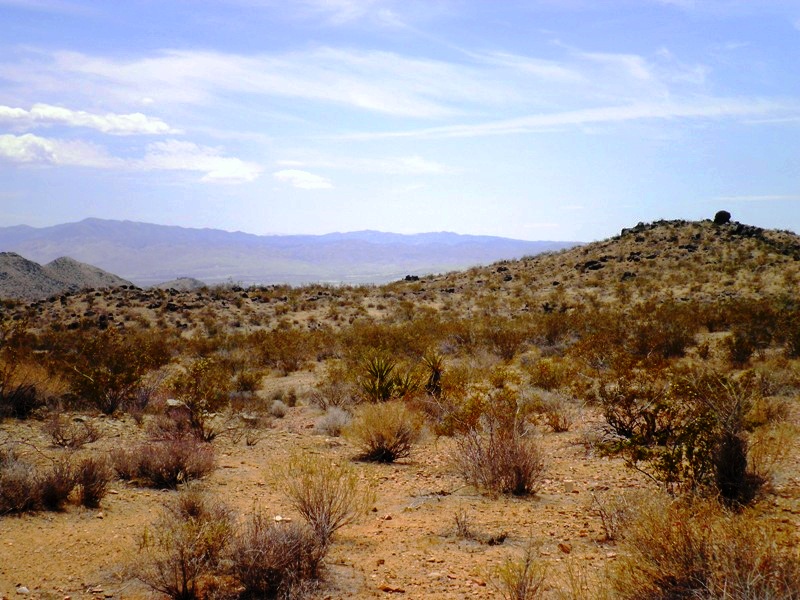
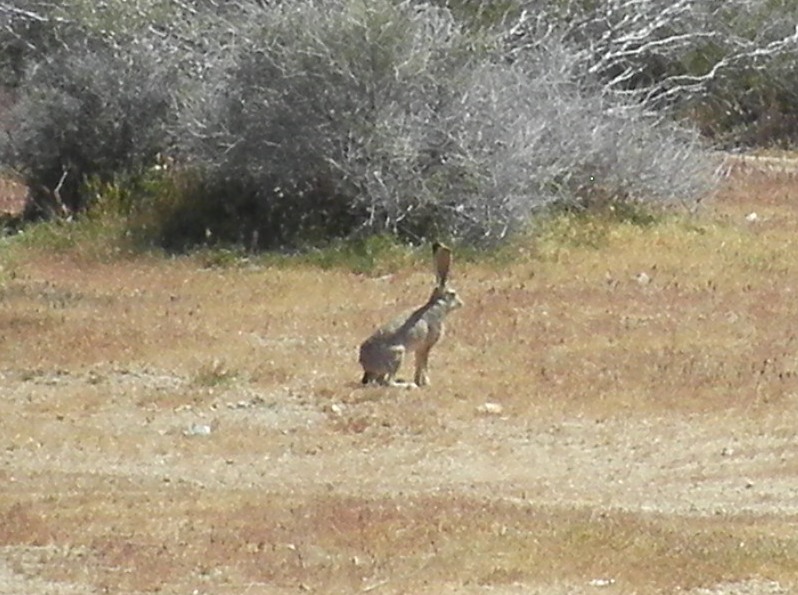
The air was still. I heard the far-off whine of an airplane, the faint alarm of a distant piece of heavy equipment backing up, the buzz of a fly as it whizzed past my head. Today I saw no jackrabbit, no humans. There was just me, those few slight sounds, the desert knolls surrounding the area, the creosote bushes dotting the sandy expanse, the hot still air, the clear blue sky.

I quieted my thoughts, then after a minute or so, I spoke my new mantra.

This “mantra” appeared when I tagged my article Being Where I am Supposed to Be. I used the tags “being happy,” “being me,” “being where I am supposed to be,” and I had to smile at the sappy little ditty those tags formed. So today, out there in the desert, in the still of the heat, I said, “I am happy. I am being me. I am where I am supposed to be.” As soon as I finished speaking the word “be,” a cool current of air flowed by.

I stood there, blissfully comfortable, until the air stilled again, then I continued my walk.

I do not believe in signs or intentional gifts from the universe. The truth is, a small breeze shows in up the desert at about that same time every day, and the timing was entirely coincidental. (People think I’m silly for walking in the desert heat, but that mid-morning breeze makes the desert cooler than the city.)

Still, intentional or not, coincidental or not, that coolness was a wonderful gift, and it made me realize that once again, I was exactly where I was supposed to be. It also proved my point, that as long as one is not indulging in self-destructive or insane behavior, sanity is doing the same thing over and over again and expecting different results.

Insanity, Alchemy, and Me

It’s been said that the definition of insanity is doing the same thing over and over and expecting different results, but the saying only holds true when referring to insane or destructive behaviors. In our normal lives, we constantly do the same thing over and over, expecting different results . . . and we get them. We rise at the same time each morning, eat the same breakfast, drive the same way to work, go to the same job, but we don’t expect each day to be exactly the same as the day before. It can’t be the same — there are too many variables.

In a closed system, perhaps, the saying would hold true, but since there are no closed systems, we normally get different results. Writers and other creative people experience this every day. We sit in the same place, pen in hand or fingers on the keyboard, and open our selves up to the creative process. Sometimes the words flow and sometimes they don’t. Athletes deal with differences in performance, sometimes they are in the zone and everything is perfect, and sometimes, though they do exactly the same thing as always, their performance is off.

This expectation of different results was the basis for alchemy. We picture the alchemists doing the same procedure repeatedly to perfect their experiment, but the truth is, they did the same thing over and over again in exactly the same way in the hope of getting different results. Sometimes everything came together as they hoped, and they got the desired results, transforming lead into gold or themselves into a higher form of life or atoms into energy. (Or so the legends say.)

Why would the alchemists expect different results by doing exactly the same thing? Because they knew they did not live in a closed system. The earth hurtles around the sun at 67,000 mph. The sun hurtles around the galaxy at 140 miles per second. The entire universe is also moving and expanding, so from one second to the next we are in a completely different place with a possibility of different factors. Add in more localized variables, such as humidity, temperature, sun spot activity and solar winds, and it would seem insane to do the same thing over and over again and expect the same results.

After my moment of happiness yesterday, when I could feel that I was exactly where I was supposed to be, doing exactly what I was supposed to be doing (simply “being”), I decided to do the same thing again today. Not surprisingly, the results were different. I stood in the same place, repeated the same mantra (“I am happy”), felt the breeze and the heat, smelled the sun-warmed creosote bushes, inhaled the clean air. It was nice, and I felt peaceful, but there was no moment of clarity as there was yesterday. I truly did not expect the same results. I know about variables. The day was hotter, the sky a paler blue, no jackrabbit loped by but humans in their motorized vehicles were driving around disturbing the air currents and creating sound vibrations. I might not have slept as well as I had the previous night, or perhaps I’d dissipated my mystic energies in exercising before going for my walk, which I didn’t do yesterday. Still, it felt good standing in the desert, doing nothing but being, so I intend to do that very same thing over and over, expecting different results each time. And therein lies sanity.

Being Where I am Supposed to Be

I was happy today. I didn’t feel giddily gleeful, just a quiet peace that came from knowing I was where I was supposed to be.

I’d been walking in the desert, ruminating over my petty concerns. I have no major problems at the moment — I have a place to stay and food to eat, and I feel no great lingering sorrow over the death of my life mate/soul mate — but there are small matters that niggle at me. I seem to have crossed some invisible line where I no longer attract people through my words, but am actually starting to repel them — people have been blocking me on Facebook, and often it’s because of a simple non-combative comment I made in one of my discussion groups. I also wonder how to entice people to read my books, and I still ponder the whole issue of my writing. Although I am coming to an accommodation with continuing to write despite lackluster sales, I still am not comfortable with the idea of being a writer among millions of other writers — never have liked being a face in the crowd.

So there I was, walking, thinking, talking a bit to my deceased mate, when it suddenly dawned on me that at that very moment, I was not a face in the crowd. There was no crowd — just me. I stopped and looked around. A jackrabbit loped by, but other than that, no creature made itself known. I felt the breeze cooling my sweat, heard the air whistling faintly as it passed my ears. I stilled my thoughts and simply stood there in the middle of the desert, deep blue skies above, sun-warmed soil beneath the soles of my shoes, desert knolls surrounding me and blocking any view of the nearby city.

A friend who has endured far worse grief than I have, told me that she is finding peace by telling herself that she is happy. Alone out there in the desert, I decided I was finally ready to take the next step in going on with my life, so I thought, “I am happy.” And I realized that was the truth of it. Right then, I was happy. I had no sense of longing for something or someone, no sense of waiting. My entire life — all the joys and pains, the learning and creating, the loves and losses — had led to that very moment, and I felt as if I had arrived where I was supposed to be. There was no reason for me to be there, nothing to for me to do, no task to accomplish. All I had to do was simply . . . be.

One cannot stand in the middle of the desert forever, so eventually, I continued my walk, still feeling the effects of that moment. There are few perfect moments in life, but that was one of them. (I’m smiling as I write this. Can you tell?)

Is it Better to Write for Yourself or to Write for Readers?

For many writers, maybe even most, finding a readership is crucial. They write to entertain, which they cannot do without readers. Or they write to communicate, which they also cannot do without readers. Or they write to sell so they can continue to write, and for that, they need not only readers but customers — readers who are willing to buy books.

The lucky writers are those who write the books they love and the books they love just happen to be the books readers want to read and buy. The rest of us have a conundrum to deal with — do we write the books we need to write, regardless of what readers want, or do we try to write the books we think readers will read?

In discussion after discussion, writers put forth the idea that to get readers, one must write what readers want. And perhaps that is the smart and lucrative way to write, but it’s not the only way.  Besides, if I look at the situation from my point of view as a reader, it seems a cheat. I want a story filtered through the writer’s life/voice, not something the author thinks I would like.

In my case, I have no choice — I can only write the stories that speak to me. Even if I wanted to write solely in the hopes of getting a large readership, I’m not sure I could do it. Readers can tell when they are being pandered to, though there are exceptions to this, most notably a couple of now very wealthy men who write romances for women. For some reason, most women don’t feel the manipulation of those books and so fall in love with the stories, while others, perhaps less interested in the romance genre, hate the feeling of someone trying to tug on their emotions by writing books they think women would like. To a certain extent, all books are manipulation — authors write in such a way to elicit emotional reactions from readers — but sometimes, like with these men, the tugs are quite apparent.

Writers who also read the genre they love know the nuances of the genre (assuming, for example, there are nuances in category romance) and so can more easily write to their readers tastes. But what if you can’t write genre fiction (or, more probably, can’t force yourself to write it)? You end up writing for yourself.

There might not be money to be made by writing for oneself, but there are other advantages. For one thing, you can make your writing as intelligent as you wish without having to worry about losing your audience. For another, there will always be one person who loves your work — you. And there is a third reason, perhaps the most important: We are so much more than we know, and writing is a way of communicating not just with readers, but with the unknown us. If we just write what we know we know, we are the poorer for it. And maybe, just maybe, by writing the book only we can write, we will end up writing something spectacular.

Who Wants to be a Character in a Book?

Grief: The Great Yearning is a compilation of blog posts, letters, and essays I wrote while struggling to survive the first year of grief after the death of my life mate/soul mate. We’d been together almost thirty-four years. I thought I was prepared for his dying, but his death shattered me beyond anything I could ever have imagined. The only way I could survive the agony was to write about it. Although Grief: The Great Yearning is non-fiction (obviously), it has all the elements of great fiction — emotion that weeps off the page, a conflicted character who yearns desperately for something, a love that lives on even after death.

Such is the pendulum swing of life that now, one year and four months after the publication of Grief: The Great Yearning, I would no longer make a good character in a book. I have no real wants or desires; no wishes, dreams, or hopes; no great love (no hate, either). I have nothing to avenge, no strong beliefs, no regrets, no guilt, no fears, no anger.

From the beginning, I’ve been bewildered by my lack of change. Shouldn’t such a soul quake cause ripples of change forever after? I didn’t feel any different, but apparently changes were taking place. All the conflicts of my life seem to be in hiatus, as if the slate of me was wiped clean to make ready for the changes that will be coming to my life. Some of the changes will come because of decisions I make, others changes will simply happen as the rest of my life unfolds.

Character change in itself is not enough either to pilot a story or to plot a book. Change in a character is generally the result of other actions, and shows us how the events of the story affect the character. So, basically, a book needs to begin with a compelling character, and I am missing all the elements that makes a character compelling. On the other hand, since I am not a character in a book, I will enjoy this hiatus from conflict and strong emotion. I mean really, who wants to be a character in a book? Life is hard enough without having to deal with all the torments we put our characters through.