Upcoming House Anniversary

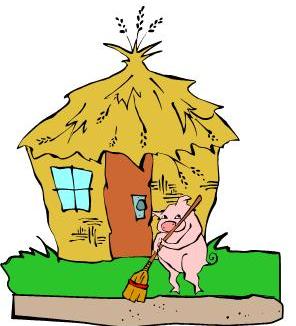
One week from today will be the third anniversary of “wedding” my house. It seems a weird way of describing the purchase, but the house offers me much that has been missing from my life since Jeff’s death — stability, a home, comfort. It also offers safety and security, at least as much as is possible in turbulent times. Of course, it can’t offer companionship or conversation or love, though it does give me something to love and care for, which is important when one is alone and hasn’t any inclination for pets.

Because of this upcoming anniversary, I feel as if I should get the house a gift, though the house is spoiled enough as it is, with all the money I’ve lavished on it — not just a new foundation for the porch, but a basement floor, landscaping, sod, a garage, and a whole slew of minor gifts.

Still, if I think of something, I might consider getting something to honor the occasion.

The traditional third anniversary gift is leather, though there isn’t anything of leather my house and I need. Come to think of it, I can’t even remember the last leather thing I bought. I doubt there is even a single strip of leather on my shoes.

The modern third anniversary gift is glass, but even though I do have and do use things of glass, I don’t need anything beyond what I have. I wouldn’t mind another goblet to add to my collection of miscellaneous goblets, but there isn’t room in the cabinet, and besides, I seldom use stemware. My water receptacle of choice is an old glass peanut butter jar because I can put a lid on it to keep from spilling and to keep bugs out in the summer. (Too many times at night I’d reach over for the glass of water on my bedside table and miss. By the time I got out of bed and cleaned the mess, that would be the end of any chance of sleep. Even worse are the times I accidentally drank a bug a night. Eek.)

In the end, I doubt I’ll get anything to mark the occasion. After all, I celebrate this wonderful house and home every day.

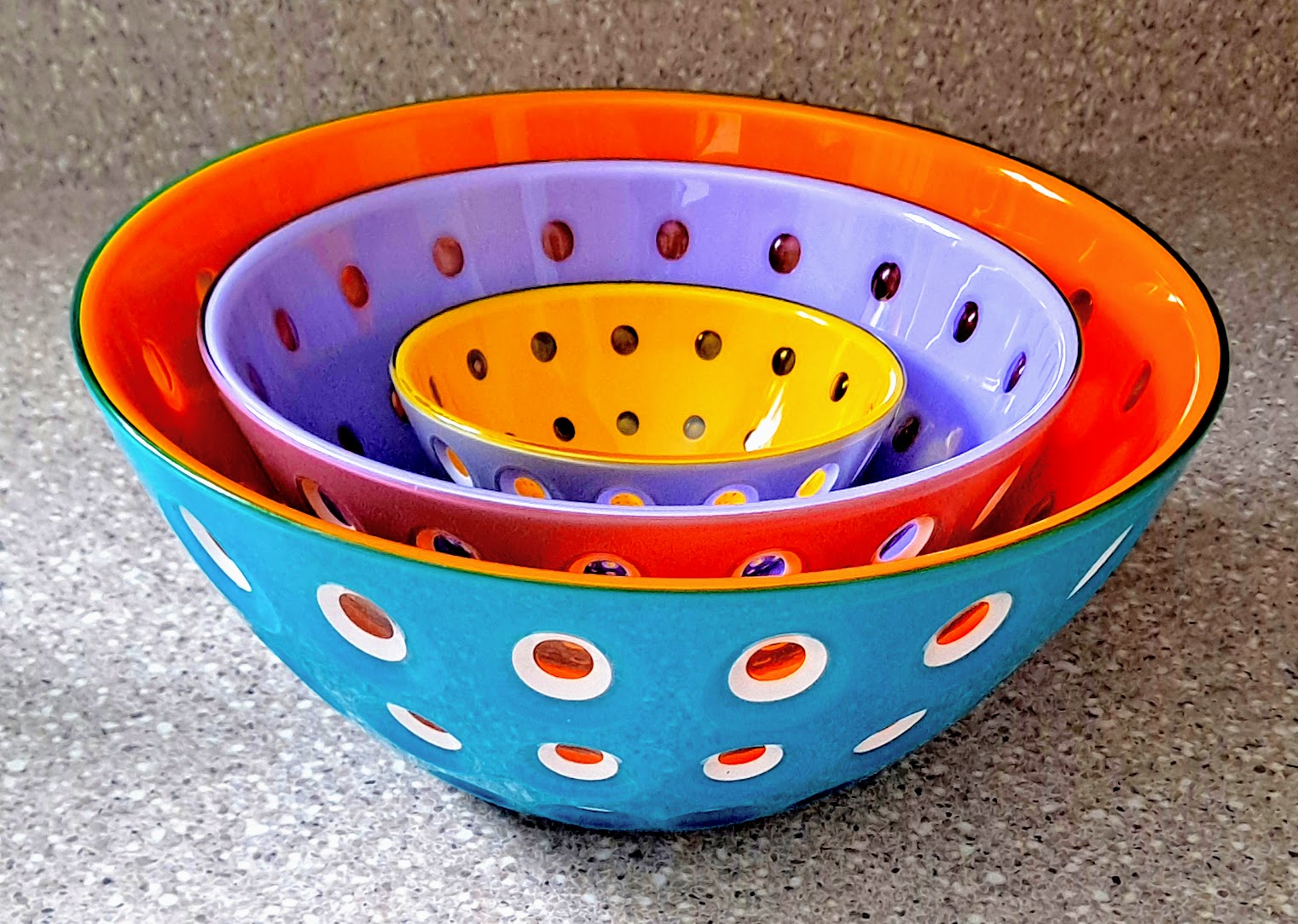
I did get a present from my sister, though, which is very nice. She thought these bowls would make me smile, and they do. The house has yet to let me know what it thinks of our gift.
***

Pat Bertram is the author of Grief: The Inside Story – A Guide to Surviving the Loss of a Loved One. “Grief: The Inside Story is perfect and that is not hyperbole! It is exactly what folk who are grieving need to read.” –Leesa Healy, RN, GDAS GDAT, Emotional/Mental Health Therapist & Educator.

Beach Read

The term “beach read” was first used in 1990 as a way for publishers to market books to people going on vacation. These so-called “beach reads” have mass appeal, are not intellectually stimulating, are guaranteed not to ruin your summer vacation with unwanted — and unpleasant —- feelings or thoughts, and most of all, are easy to digest. Shortly after the term became popular, readers were inundated with novels sporting beach-themed covers and beach-themed stories, as if an entire generation of writers decided to take “beach read” literally.

It strikes me as strange that people would take a beach-themed beach book to the beach to read while at the beach. If one is at the beach, why read a book about the beach? Why not experience the beach at first hand? But then, I suppose, people who spend a lot of time at the beach get tired of the relentless tides and the incessant noise of the breaking waves and need something to divert their attention. It makes a sort of sense, then, to read about the beach because if you’re at the beach, you don’t want to be reading about backpacking in the mountains, otherwise it might confuse you about where you are and what you are doing.

I just finished such a beach read (out of desperation since I couldn’t get to the library), and what most intrigued me (and why I kept reading) is that, like so many of this genre, the story took place in the Outer Banks, with the ocean on one side and Pimlico Sound on the other. I knew the place because I’d been there — it was one the many locations I’d experienced during my cross-country trip.

There is something special about being able to place yourself in a book. When I was young, so many books were set in New York, so I knew New York better than any other city except my own native Denver. It helped that I had been to New York several times, so I knew the sound and the smell and the vibe of the place, but still, I knew so much more about the city than I could have known by real life experience. Oddly, although I knew Denver by experience, I never knew it literarily. Very few books were — and are — set in Denver; it has always been considered a literary backwash. A staple of my childhood, the Beanie Malone books by Lenora Mattingly Weber were a rare exception.

[Writing this made me remember a career day in high school when I was instrumental in bringing Weber (who lived in Denver) to speak to us about the writing life. Considering that I wasn’t blessed with self-esteem and wasn’t knowledgeable in the ways of the world — meaning I didn’t know how to do much of anything — you’d think I would remember how I did something so out of character rather than just recalling the end result, but I haven’t a clue how I got Weber there.]

Four of my books are set in Denver, though I’d never be able to use that city as a setting for any possible books in the future because it has changed so drastically since I last lived there, not just the skyline, but the ideology and politics of the place.

Despite my having spent time at various beaches on three coasts (east, west, gulf), I wouldn’t be able to write a real beach book, either, since I only know a fraction of the mood of those places, and my ignorance would be apparent. I suppose I could create a beach in my back yard — get some sand and a kiddy pool — but that certainly wouldn’t be the same.

I guess I’ll just read about beach places and remember how it felt — how I felt — when I was there.

***

What if God decided S/He didn’t like how the world turned out, and turned it over to a development company from the planet Xerxes for re-creation? Would you survive? Could you survive?

A fun book for not-so-fun times.

Click here to buy Bob, The Right Hand of God.

How the Bob Has Affected Me

I’ve been saying that The Bob hasn’t affected me much at all. Even the stay-at-home mandates and quarantine times haven’t been a problem since they fed into my natural inclination to be a quasi-recluse. But as it turns out, The Bob has affected me, though so far, it hasn’t infected me.

Admittedly, it will be hard for me ever to get back into the socializing that I’d tried so hard to accomplish, but I don’t think it’s so much a lack of inclination (though there is that, too) but rather a hesitation to open myself to the possibility of getting sick. Because of The Bob, I am conscious of how disease spreads through even small gatherings, and I’m not sure I want to open myself up to that quite yet. It’s possible I’ll never again want to be that vulnerable, though never is a very long time.

Still, except for allergies (because of the winds, this is not a good area to live if one is allergic to dust), I haven’t been sick a single day since The Bob arrived in town. And oddly, it arrived here long before the P word was even mentioned. (P=Pandemic.) There was a horrendous flu that roared through here in late December 2019 before anyone had heard of The Bob. In retrospect, it seems as if that flu was The Bob, and is probably why this town seemed to offer a natural immunity for a while. I’d never understood how it got here, but I recently found out that a woman came directly here from Wuhan to visit a friend of hers, and so started that horrid pre-Bob flu season.

I didn’t get sick during that first wave, though I’d been around a lot of the people who got sick, and I didn’t get sick during subsequent waves, not even after I was directly exposed a couple of months ago, leading to a time of quarantine. Nor did I catch a cold or laryngitis or any of the other illnesses going around. This is the longest I’ve ever gone without even a cold, and I’m sure it’s because I see so few people. I suppose I should say so few different people. Because of my job, I do spend time with people, it’s just that they are the same people every day.

Not only am I leery of crowds, but I am leery of travelers. People who hang around where they live come in contact with a relatively small group of people (relative to the world’s population, that is), but travelers are within a couple of degrees of coming in contact with a vast number of people. (If you’re sitting next to someone on an airplane, for example, you’re not just in contact with them, but also one degree removed from everyone they have been in contact with, and two degrees removed from everyone those contacts had been in contact with.) And after all, that’s how The Bob originally spread, not just to here, but to everywhere.

When my sister reneged on a visit to come see me, I was actually relieved. Though I would have liked to see her, I wasn’t sure what sort of extra, unwanted baggage she would carry off the plane, and I was glad not to have to deal with it.

I’ve been taking care of a house for a friend who’s been out of the country for almost a year, and he called today to tell me he was back and to ask if he could stop by so I could bring him current on all that happened when he was gone. It’s not something I would have ever done before The Bob, but I asked him if it was okay if we waited a week. Although he’s not in quarantine (apparently, there is no quarantine for vaccinated folks, though they can still get sick from The Bob, and can still transmit The Bob to others), I couldn’t help but think of all those people he was in contact with during his very long and arduous trip from halfway around the world.

Luckily, he was okay with my request. Even more luckily, from my point of view, he has a lot of work to catch up on, so I don’t have to feel guilty about his being alone for the week. Of course, even if he wasn’t okay with my putting off our get together, he’d have to agree if he wants me to continue looking after his house when he leaves again. And, of course, because of how The Bob has affected me, not only do I not feel guilty, I don’t feel guilty about not feeling guilty.

[If you don’t already know, I call it The Bob because of a conversation in A Spark of Heavenly Fire, my novel about a novel disease. Click here to read that conversation: The Bob | Bertram’s Blog (bertramsblog.com)]

***

Pat Bertram is the author of intriguing fiction and insightful works of grief.

Too Concerned with Age?

People tell me I’m too concerned with age, and perhaps that’s true, but I don’t necessarily see such concern as a bad thing. It keeps me focused on what I can do now to protect myself later. For example, I do balance exercises, stretching, walking, knee exercises to strengthen my knees, and various other activities. There might come a time when I can’t do these things anymore, and so I do them now when I can, and when it counts. Exercise always counts, of course, but it’s a lot easier to maintain one’s muscles than to redevelop them after they have atrophied.

I am also cognizant of where I am and where I place my feet. I hear over and over again (and I see the proof in people I have known) that if you want to live to a vital old age, don’t fall. In fact, the last advice the orthopedic surgeon gave me during my final appointment after he’d done what he could to fix the wrist, arm, and elbow I’d destroyed in a fall, was, “Don’t fall.”

I have fallen since then, though luckily, I didn’t even bruise myself any of those times. I am aware, however, that such luck might not always hold. After all, it deserted me back when I took that horrible fall after a dance performance. (I was heading back to my car and when I walked between two cars, the motion-activated parking lot lights went off, and in the darkness, I tripped over a misplaced parking berm. Actually, the berm wasn’t misplaced. The idiots who maintained the parking lot repainted the lines for the parking spaces so that cars were parked in the open spaces between two berms.) Come to think of it, I was lucky back then, too. With all the damage, I could have lost the arm, but I didn’t, and I even managed to gain normal usage

I come by my wariness of falling through experience rather than advancing years, but I am still aware of how necessarily it is for a healthy old age to refrain at all possible from falling. Surprisingly, this awareness of a need for not falling doesn’t set me up for a fall, though you’d think it would. Like if you’re trying not to think of a pink elephant, that’s all you can think of. (I bet you thought of a pink elephant, didn’t you?) Because of this, I use my hiking poles, even though at times it makes me feel old, as if I were so feeble, I needed two canes. But better to use them when I can rather than when I have to.

To be honest, I don’t think I’d be so concerned with age if I weren’t a caregiver. When one is young, you never equate yourself with the elderly. You simply know that in the division of life, you are young, and they are old. But now that I am getting older, I see myself in these nonagenarians, and I wonder what I will be like at that age (assuming I live that old. Both my mother and her mother died in their middle eighties). Some problems are inevitable, but are all of them? I don’t know. But the question arises every day, and so I do what I can to hold back the growing tsunami of my years.

All things considered, I am doing well for my age. Doing well for a younger age, actually. A lot of that “doing well” is because of my concern with growing older, because despite what people might think, I don’t sit and stew. I do.

***

Pat Bertram is the author of Grief: The Inside Story – A Guide to Surviving the Loss of a Loved One. “Grief: The Inside Story is perfect and that is not hyperbole! It is exactly what folk who are grieving need to read.” –Leesa Healy, RN, GDAS GDAT, Emotional/Mental Health Therapist & Educator.

What Is Brought by the Wind

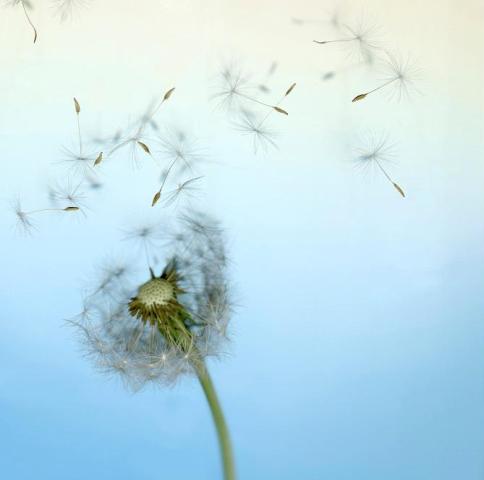
I heard a proverb the other day that is sticking with me: What is brought by the wind will be carried away by the wind. There seem to be various meanings for this proverb, such as “easy come, easy go,” or “what one hand gives, the other takes away” or maybe even “you reap what you sow.”

It is also similar to “what goes around comes around,” though in this case, it would be “what comes around goes around.”

Like many such sayings, at first hearing, it seems to be steeped with import, but on reflection, seems rather simplistic. Things come and things go. Ho-hum. “What goes around, comes around” as well as “you reap what you sow,” at least say there are consequences to one’s actions, though in real life, that’s not always true. People who are unkind are often treated with kindness, and people who are kind are just as often treated with unkindness. So, actions have consequences. But sometimes not.

Still, there is a comfort in believing such adages, to believe that whatever unpleasantness that randomly comes into our lives will just as randomly leave one day. Of course, it also means that luck won’t hold — anything good that randomly comes will also leave — so enjoy it while you can.

Whatever the metaphoric or figurative meaning of this particular adage, I do know for a fact that What is brought by the wind will be carried away by the wind is not literally true. On the open plains, for sure. Thing are blown into an area and then blown away. But in a fenced yard? Nope. Not in my fenced yard, anyway. In the fall, leaves from the neighbors’ trees are blown into my yard and there they stay until I rake them up. Same with trash. On windy days (which around here are frequent) trash of all sorts is blown into my yard, and there it stays until I can pull on some sort of protective glove to dispose of the debris

I never used to be wary of wind-blown trash of any kind, but ever since the onset of The Bob, I’ve been leery of barehandedly picking up food wrappers, masks, bottles, cans — anything that could have been dropped by a possibly infected person. Bottles and cans, of course, don’t get blown into my yard, but people do litter, and so there are often cans or bottles left on my property outside the fence.

And oh, yes. Winds also bring the seeds of weeds. Those seeds don’t blow away, but plant themselves and stay.

Still, I like the mysteriousness of “what is brought by the wind.” You never know what could suddenly blow into your life by the whim of the winds. Something good perhaps. Maybe even today.

***

Pat Bertram is the author of intriguing fiction and insightful works of grief.

Homo Unsapiens

I sometimes watch Judge Judy reruns with the woman I help care for, and boy is that an eyeopener! I know that the cases are chosen specifically because of the bizarre nature of either the problem or the people involved, so I try not to let that interfere with my concept of the world today, or rather my concept of the people in the world. (I already have a poor opinion of people in general, though individually, I like people just fine.) Still, I can’t help but be appalled by people and their behavior. It makes me wonder if, despite the already low regard I have for them, I have greatly overestimated the intelligence and integrity of humanity.

But, as I said, I try not to extrapolate any greater meaning from this small segment of the human population.

What is an eyeopener, however, is how often people who are in the wrong will sue their victim. It’s not as if they are trying to scam the person — they truly seem to believe as if they have right on their side. Several times, people who have tried to cheat the system by getting childcare costs or elder care costs they didn’t really qualify for will sue their accomplice for not turning over their share of the funds. (In a couple of cases, the defendant applied to be a certain person’s caregiver, even though they weren’t going to be doing the job, and the litigant wanted their share of the money.) Sometimes, a person who is getting childcare from the other parent of their child even though they share joint custody (in which case, neither parent should have to pay the other) will sue for additional funds. Or someone who is driving without insurance and who makes an illegal turn will sue the person with the right of way who ran into them so they can get the money to fix their uninsured car.

What interests me from a writer’s point of view, is the total belief in the rightness of their cause. I don’t often see this in books — too often antagonists make excuses to themselves (and eventually to the cops who catch them) for their behavior. If they truly believed they were in the right, they wouldn’t need to justify their actions. They would simply know they were the victim. (Even burglars who get shot at when breaking into a house don’t deny their crime; they just believe there shouldn’t have been any repercussions.) Every time I watch this behavior — the belief of the wrongdoer that they are the rightdoer — I remind myself to use this for a character in my next book (whenever that might be).

Another eyeopener is the constant and ubiquitous use of “had.” For example, “I had went to the store.” If all the “had”s were edited out of the show, I’m sure the shows would be at least five minutes shorter. It’s surprising to me that while Judge Judy feels compelled to scold people for using fill words like “basically,” idioms like “like,” and bad grammar, she never mentions all the “had”s. I suppose she picks whatever most offends her at the time. Or whatever seems most rant-worthy.

What amuses me most are the obvious signs that people have been coached. People who use such constructions as “Basically, like I had went to the store” simply do not use words such as “property” when referring to their stuff or “altercation” when referring to a kerfuffle.

It also makes me laugh to think that humans named themselves “homo sapiens sapiens” when there seemingly is so little sapience involved in human interactions. A better term, perhaps, especially after watching the people who come before Judge Judy, would be “homo unsapiens.”

Photo by Sora Shimazaki on Pexels.com

***

What if God decided S/He didn’t like how the world turned out, and turned it over to a development company from the planet Xerxes for re-creation? Would you survive? Could you survive?

A fun book for not-so-fun times.

Click here to buy Bob, The Right Hand of God.

Age Is Not Just a Number

Numbers are important in our lives. Or at least, we’ve made them important. Today seems a significant day, a rare Twosday — not only is it a day of twos (2/22/22), but it’s also Tuesday.

Dates are important to us; if nothing else, the numbers on the calendar make it easier for us to navigate our complicated lives. More than that, we give some numbers on the calendar a special significance. For example, we make a big deal about New Year’s Day (1/1) even though it has no real significance other than a change of calendars. In fact, the new year in other cultures starts on a different day.

Temperature numbers are especially significant to us. This morning when I got up, it was 7 degrees. I don’t really need the number to tell me that it is cold — a brief step outside would fulfill the same function — but somehow, knowing the number makes it official.

And yet, when it comes to age, especially an elder age, any concern a person might have about growing older is met with a dismissive, “Age is just a number.”

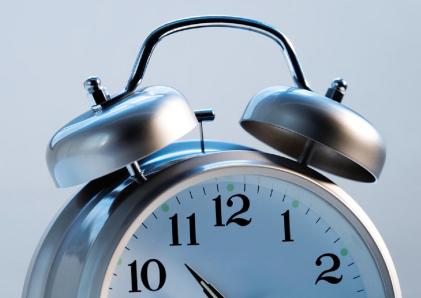
Age is not just a number. It tells us the time on our biological clock. We only hear about “biological clocks” when it comes to childless women nearing the end of their reproductive years, and yet time is ticking for all of us. We might not know the end, but we do know the end is coming, and the older we are, the more the end looms.

A friend who was about to turn seventy was really freaking out about her age, and she was embarrassed about her reaction to the birthday, but to me, her reaction was totally understandable and nothing to be embarrassed about. In fact, seventy is a significant birthday and worth freaking out over.

All through their sixties, people can convince themselves they are still middle-aged — late middle age, perhaps, but still solidly in the middle years. Then comes seventy, and any pretense of still being young are gone. Especially now, with the pandemic and all, seventy-year-olds are stigmatized as “elderly.” True, they are elderly, but not as eld as they will become. That dang clock is clicking louder and louder as it counts down the last years of life. Oh, sure, they might still have two or even three decades left, but changes will be coming more rapidly.

There is not a significant physical change between the ages of forty and fifty. Nor between fifty and sixty. Or even sixty and seventy. But there is a huge difference between seventy (with the blush of middle age still on one’s cheeks) and eighty (which by anyone’s definition — except perhaps an eighty-year-old’s — really is old). An informal poll tells me that seventy-five is when most people notice a substantial change, but still, at seventy, there are signs of decrepitude. Mentally, people may feel the same, but physically, by seventy, most people are slowing down. Joints hurt. Doctor visits are more frequent. Medications aren’t just a quick cure but are a permanent fixture. The possibility of a frail old age, once unthinkable, becomes . . . thinkable.

When you’re young, old age is for other people. Youth is eternal. Until it’s not. And suddenly, there you are, wondering who the old person is looking back at you in the mirror.

It’s not really a surprise, then, that people want to believe that age is just a number. To think beyond the number is to accept truths that people might not want to accept. Still, when you’re at peace, when the aches and pains are momentarily absent, when the ticking clock silently recedes into the background of your mind, then you feel like . . . you.

When my sister was 35, she asked my mother, who was then in her seventies, how old she felt, and my mother said she thought of herself as thirty-five. My sister thought it wonderful that she and our mother were the same age. I don’t know how much longer after that my mother continued to think of herself as thirty-five. It’s not the sort of thing she and I ever talked about. But no matter how she felt, she did start having health issues, and she definitely showed her age. Then, a few years later, after my brother died, she suddenly grew old and ill and died within the year.

So, yes. Age is just a number, and yet it’s not.

***

Pat Bertram is the author of Grief: The Inside Story – A Guide to Surviving the Loss of a Loved One. “Grief: The Inside Story is perfect and that is not hyperbole! It is exactly what folk who are grieving need to read.” –Leesa Healy, RN, GDAS GDAT, Emotional/Mental Health Therapist & Educator.

A Small Life

It’s amazing how many hours there are in a day when one gets up early, like way too early, before the sun is even a hint in the sky. Already I’ve read, played on the computer, cleaned house, went for a walk, fixed a meal, and now here I am, trying to put together today’s blog.

For a change, I have plenty of time to write; it’s just a shame I don’t have anything exciting to write about. There’s just me, and that for sure is not exciting. I am not one of those folks who live large. I’m certainly not lavish or extravagant (though I did recently splurge on a winter coat that was marked down for clearance). Nor am I living in what is considered luxury by other people’s standards.

The truth is, I live small. I spend most of my time alone. Even before the whole Bob mess, I stopped going to restaurants or any place groups of people hang out. (Groups were never really my thing, anyway.)

And yet, my life seems luxurious to me. I have a lovely small house and a comfortable home. (Although in today’s world, “house” and “home” are synonymous, I don’t consider them so because you can have a house that’s not a home and a home that’s not a house.) I have a small job so I can afford luxuries like eating. I drive a small car that was paid for decades ago. I have all the books I want to read a small walk away. So, yes, luxurious!

Still, luxury in my eyes is not exciting to others by any means. And even though I mention such things as my house out of gratitude at this still-surprising upturn in my life, I fear sounding braggadocious if I expound too much. But basically, this is my life. A small life.

And yet, I do wish I had something more exciting to write about than me.

Maybe someday . . .

***

Pat Bertram is the author of intriguing fiction and insightful works of grief.

Strife, Strife, and More Strife

This is one of those perfect days: clear blue skies, bright sun, light-jacket temperatures, still air. Admittedly, there are a lot of such days throughout the year, but there’s something even more perfect about such a day appearing between two glacial fronts. You delight in the warmth when coming out of a cold spell, and you make a special effort to enjoy the day when more cold weather is on the way. (Tomorrow will another warm day, but desperate winds will be blowing in a new storm that will drop the temperature more than 60 degrees tomorrow night.)

In memory of the cold weather we just had and in preparation for the cold to come, I am making chili, which also adds to the perfection of the day. I like to cook but I don’t often feel like making big batches of anything, so there will be enough to last a while. Also, this is Jeff’s chili recipe. It took me almost a year after he died before I could make it (even the thought of the meals we shared made me sick to my stomach). It’s been two years since the last I made his chili, though I don’t really know why except that I haven’t been cooking much of anything that takes an effort.

I have also the windows open to air out the place. It never smells musty, which is interesting for such an old house, but the air coming in makes the house smell sweet and clean.

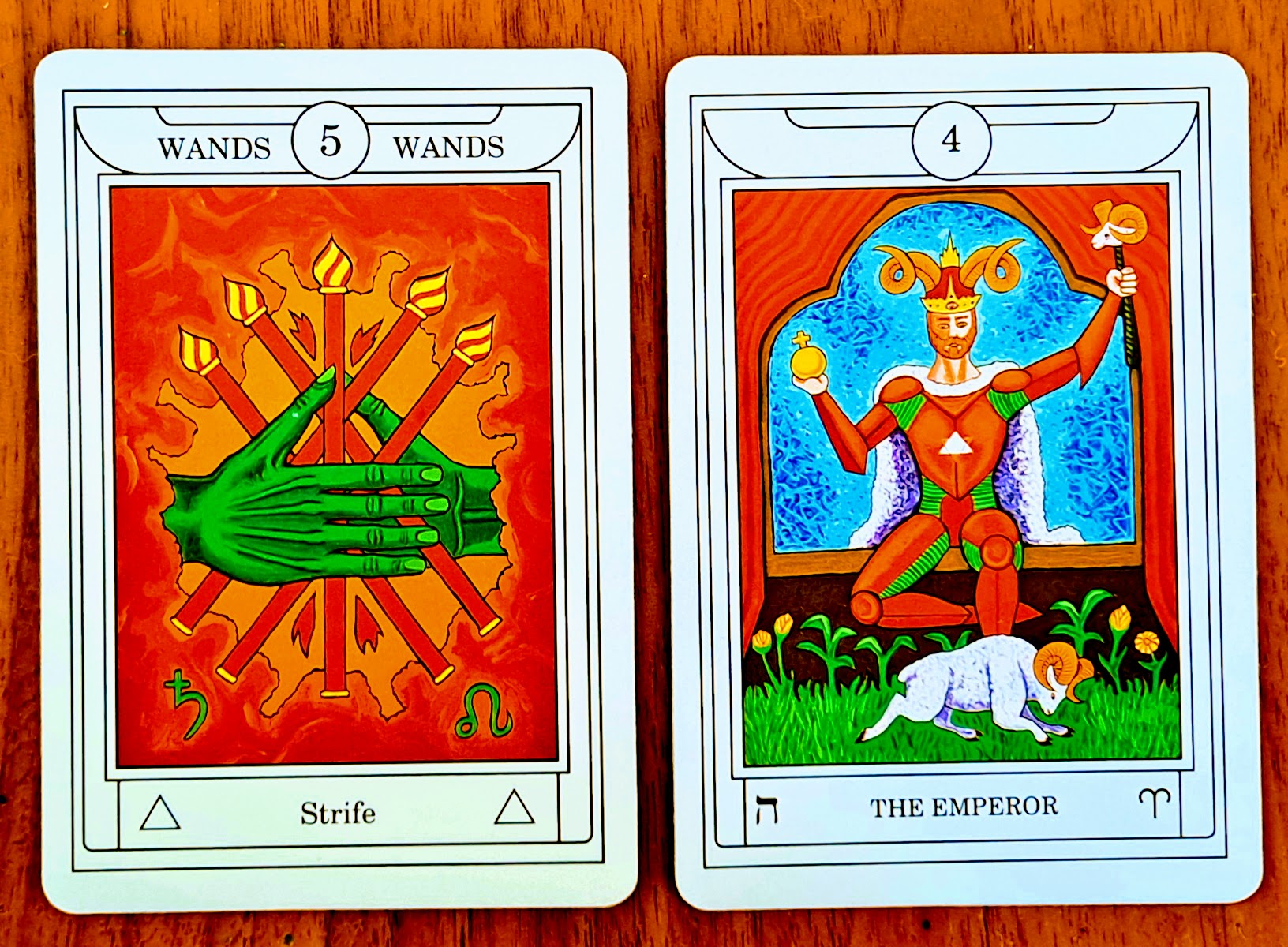
Considering the perfection of the day, it’s odd that my two-card tarot today was all about strife. The first card, the five of wands is about violent strife and contest, boldness, and rashness. The second card, which is supposed to temper the first card, is The Emperor, which in this deck is about war, strife, war, conquest, and ambition.

Admittedly, my question “what do I need to know today” is so vague the response is not necessarily about me, so although I am planning on taking care of myself and keeping calm so there’s no strife in my life today, I can’t do anything about what is going on in the rest of the world — strife, strife, and more strife. I’m not sure why I need to know this, but I do know it anyway. Even if I didn’t want to know (which I don’t) it’s hard not to learn of such things.

I suppose it’s possible the tarot is telling me to enjoy my strifeless time as I do the interval between two winter storms, because like it or not, there will always be strife.

***

Pat Bertram is the author of Grief: The Inside Story – A Guide to Surviving the Loss of a Loved One. “Grief: The Inside Story is perfect and that is not hyperbole! It is exactly what folk who are grieving need to read.” –Leesa Healy, RN, GDAS GDAT, Emotional/Mental Health Therapist & Educator.
House Responsibilities

Today I went to take one last look at the house I’ve been looking after because the owner is returning and I wanted to make sure everything looked okay. And it did. Nothing out of place, nothing broken, the roof fixed where the shingles had blown off during a windstorm.

At least, everything looked good on the outside. On the inside? Not so much. Although I’d merely agreed to check on the place occasionally, I’d tried to keep the plants alive, thinking it would be hard for him to come back to an empty house, and even harder to come back to dead plants. The plants did fine for ten months, then suddenly, whatever I was doing was the wrong thing, and several of the most expensive plants died. Too much water for some plants, perhaps, and not enough for others, though I’d stuck to the twice a month schedule that I’d been doing all along. I suppose the house temperature, set for 55 degrees in winter, could be a mitigating factor once the cold hit, but whatever the reason, those poor plants look awful. The way I figure it, though, if he was really concerned about the plants, he’d have given me specific instructions other than simply for me to check on the house once or twice a month.

I’ll be glad not to have to worry about his house for a while. Taking care of my own house is enough of a responsibility, without worrying about anyone else’s. (My water meter situation still isn’t resolved, for example.)

I have a hunch I’ll be back taking care of his house again in another month or two, because once he gets his papers in order, he’ll be rejoining his wife in Thailand. She’s doing well, but apparently not well enough to travel, though to be honest, I can’t imagine anyone being well enough to handle such a trip — talk about planes, trains and automobiles! Buses, too. Yikes.

I feel sort of mean, but I won’t stop by to see him for a week or ten days until he’s out of quarantine. So, not only will the poor fellow be coming home alone to a house full of dead plants, he’ll continue to be alone for a while until he’s safe from catching and spreading The Bob. (Other people, though, might be friendlier and less picky than I am.) Even worse, he’ll be coming back during one of the coldest spells we’ve had all winter. Tomorrow and the next day we’ll be getting up almost to seventy degrees Fahrenheit, but then Monday night, temperatures will drop more than sixty degrees into the low single digits. The daytime highs for the following few days won’t get out of the twenties. Brrr!

Luckily, I’ll only have to worry about my own house, so although that won’t help him at all, it will help me get through the winter blast that’s coming.

***

What if God decided S/He didn’t like how the world turned out, and turned it over to a development company from the planet Xerxes for re-creation? Would you survive? Could you survive?

A fun book for not-so-fun times.

Click here to buy Bob, The Right Hand of God.