Conjuring Literary Genius

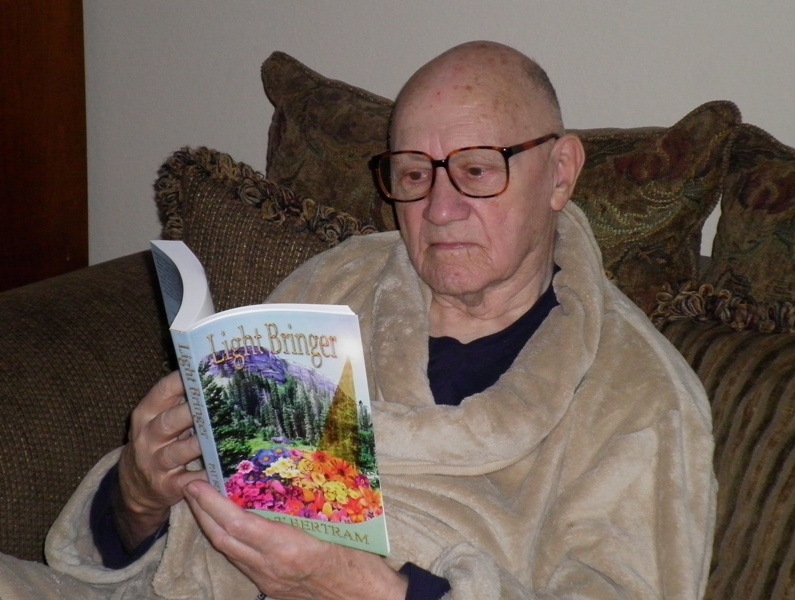
I’m reading a book based on the premise that there was a previous version of Macbeth using an actual witch’s spell, but because the spell conjured up real evil during rehearsals, Shakespeare hurriedly rewrote the witches’ scenes. The story also postulates that Shakespeare had observed such a rite, and in fact, the rite was done to imbue him with literary genius.

Despite the pseudo-scholarliness of the book, I doubt there’s any way for anyone to know the truth of the legend — after all, those whose life work is a study of Shakespeare and his writings can’t even decide who Shakespeare was and if he did in fact write all that is attributed to him. Nor is there any way to know if he was divinely inspired, if his gift was an inborn one, or if it was magically conjured up. (Apparently, a lot of cauldron spells and conjuring had to do with gaining knowledge and inspiration.) And not everyone believes he is a literary genius. After all, he wrote for the lowest common denominator in his day, and though that might have conferred a special literary prowess on him, it doesn’t necessarily make him a genius.

All you have to do is look at the writers today who have earned great success by writing rather mediocre or even passably literate novels, to realize that success doesn’t necessarily equate to great writing. (Does anyone think the Shades of Gray books are literary or or even passably literate?)

All of this has led me to wonder about a modern-day Shakespeare wannabe. What if a successful literary hack wants it all — not just the wealth that comes from selling books to the masses, but also wants to be acclaimed as a literary genius. So she tracks down Shakespeare’s spell, and even though it might entail a blood sacrifice, as well as other criminal offenses, she goes through the rite and ends up a literary genius.

The only problem is, who today would even recognize literary genius? Her lowest-common-denominator readers certainly wouldn’t, and in fact, they’d abandon her in droves because they wouldn’t be able to figure out what the heck she’s talking about. To be honest, neither would I. There have been several books over the years that I thought were pure bunk even though they had been hailed as genius and ended up winning all the major awards.

So, in typical fairytale fashion, what would really happen is that the author who wanted it all would end up in prison with nothing because not only would people not find her new style inspiring, they wouldn’t approve of how she got it. Well, some people would think the end justifies the means, but even they wouldn’t appreciate her literary genius.

I guess the moral of the story (at least for me as a writer) is to leave well enough alone. Although it would be nice to be hailed as a literary genius and a brilliant writer, it would be even nicer to be able to sleep at night. Though selling a few more books than I do would be good.

***

What if God decided S/He didn’t like how the world turned out, and turned it over to a development company from the planet Xerxes for re-creation? Would you survive? Could you survive?

A fun book for not-so-fun times.

Click here to buy Bob, The Right Hand of God.
Magic!

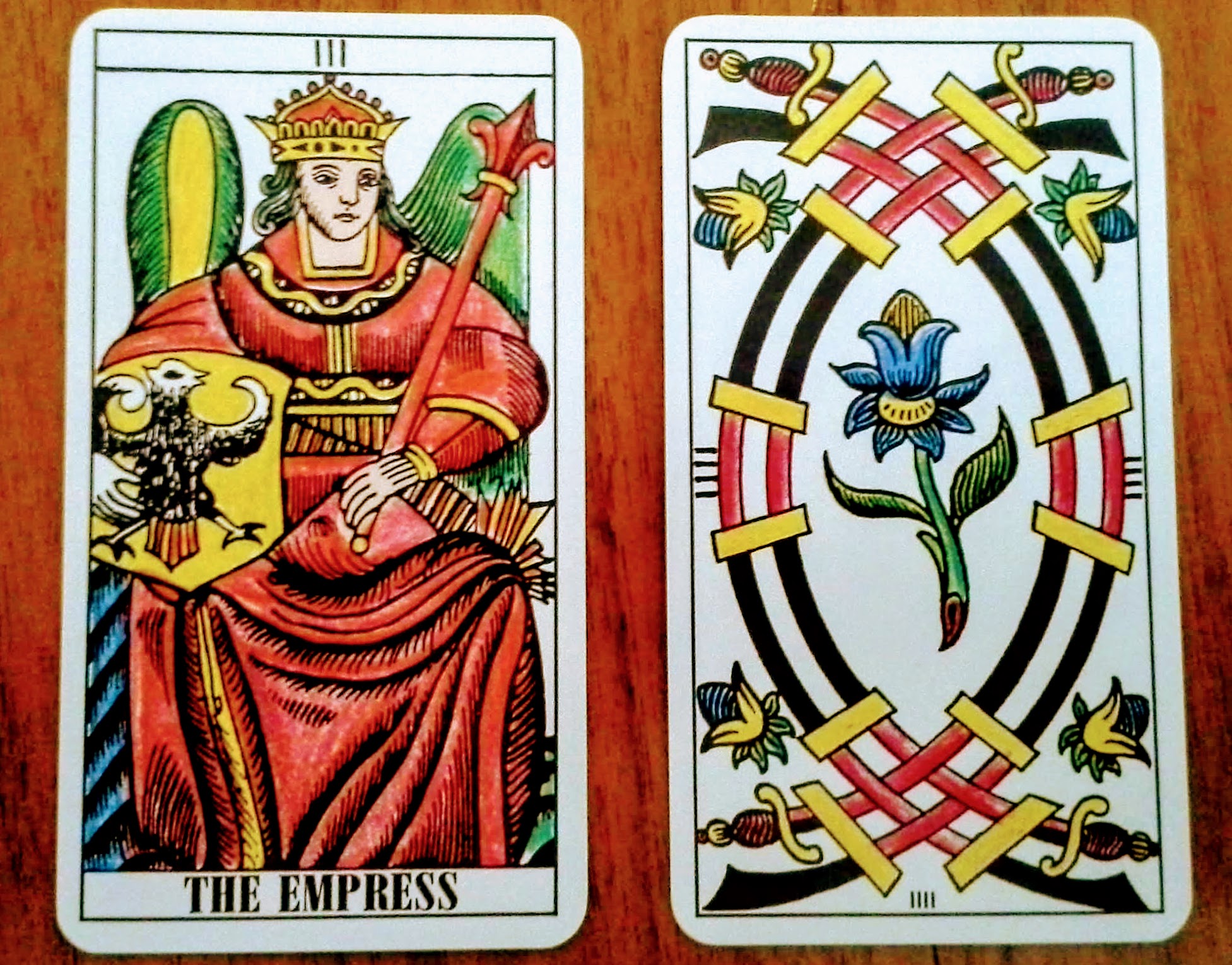
Aleister Crowley was an early twentieth century occultist and magician who unabashedly did what he wanted, and hence earned the name, “the wickedest man in the world.” I have no idea how wicked he really was, but I do know he thought his work was good because it freed people from earthly rules and opened them to spiritual experiences. He was heavily involved in a secret group called the Hermetic Order of the Golden Dawn, and designed a tarot deck that is used to this day. (I somehow ended up with a slew of his decks in three different sizes, but because a couple of the images on the cards creep me out, I haven’t yet used any of those decks.)

Crowley even founded his own religion based on the idea that the key principle of life was the pursuit of each individual’s will. (“Do what thou wilt shall be the whole of the law.”)

He was a great proponent of magic, which he defined as, “the science and art of causing change to occur in conformity with will.”

And that’s the point I’ve been leading up to.

I find Crowley’s definition of magic provocative because it basically turns art and writing (and even just living) into magic, which of course, we already knew. We take something that doesn’t exist — a story or a painting — and out of our own will, we bring it forth into the world. Truly magical. By this definition, almost anything can be magic — a garden, a family, a friendship. And, again, of course these things are all magic.

We normally think of magic as legerdemain — conjuring tricks — or even something otherworldly, where a person can conjure something into being without trickery and using only his or her mind.

I’d love to have that sort of magic — conjuring something from nothing but the energy around me.

I had to stop there and think. Would I really want that sort of magic? To be honest, I don’t know. I like the sort of every day magic we pretend to understand. (I say “pretend” because does anyone really understand where a story or a piece of art comes from?)

In many respects, this blog is magic. I can write down whatever I am thinking, and potentially, people all over the world can peak into the world I have created.

Because I have willed it, so it is.

Very magical!

***

What if God decided S/He didn’t like how the world turned out, and turned it over to a development company from the planet Xerxes for re-creation? Would you survive? Could you survive?

A fun book for not-so-fun times.

Click here to buy Bob, The Right Hand of God.

Blogworthy

I’ve fallen into a weird sort of alter world when it comes to reading. Every book I pick up now seems to be a reflection of other recently read books, or a continuation of a series, no matter who the authors are and how far apart the books were published.

For example, two books I read one right after the other were of the “doctor in peril” genre, with both doctors being plastic surgeons who used the money they made from fixing the faces of rich women to fix various problems of poor kids, such as repairing a cleft lip. In both cases, the doctors were framed for murder by someone who misunderstood them and misidentified them and wanted revenge. Oddly, the doctors in both books had a similar name — in fact there were only a couple of letters difference between the names. A third book I read about that same time was of the same genre, but the doctor wasn’t a plastic and had a completely different name.

I’m not sure how that happened — I certainly didn’t go searching for doctors-in-peril thrillers; mostly when I am at the library, I pick books at random, either because I like the title or it’s by an author I can bear to read. (Though there aren’t any authors I truly like, there are way too many I can’t tolerate.)

The next time I got a batch of books, two of them were about women who “adopted” a fertilized egg from someone who wasn’t going to use them, and so they gave birth but the child wasn’t their genetic offspring.

In that same batch of books, was the story of an athlete who had his career cut short through bad luck. Years later, he found out he had a child. He had donated sperm, and the clerk in the sperm bank wanted his baby, so she got inseminated.

A few weeks later, I read a book in a series about an athlete who got his pro career cut short because of bad luck. Throughout the story, he kept referring to the son he had recently met, a son who’d been conceived by the clerk in a sperm bank. I kept nodding my head remembering that I had read the previous book in the series where he discovered his son, when suddenly I realized the book where the athlete had discovered his son was a completely different series, written by another author in completely different genre. (One was a paranormal/horror version of a fairy tale; one was a thriller. And yes, my reading does range that widely since I read whatever comes my way.)

Every book I read now seems a continuation of all previous books. Normally, I’d consider this to be a case of having misspent my life reading. I’ve read tens of thousands of books — all genres of fiction and all subject matters of non-fiction — so almost all books are familiar in some sense. There aren’t many books that tell completely new stories. (I tried to do that with my books, and not surprisingly, people who read sporadically find them hard to read, while people who read a lot seem to enjoy them.) And yet, these books that seem a continuation of all others are ones I’ve picked up in recent weeks.

It’s not a big deal — it’s certainly not creepy enough to get me to stop reading — but I do find the experience blogworthy.

***

Pat Bertram is the author of Grief: The Inside Story – A Guide to Surviving the Loss of a Loved One. “Grief: The Inside Story is perfect and that is not hyperbole! It is exactly what folk who are grieving need to read.” –Leesa Healy, RN, GDAS GDAT, Emotional/Mental Health Therapist & Educator

Warm World View

I’ve been feeling good today — lighthearted, actually. Although I often write (or at least infer) that I am happy, I am actually more contented than happy (since to me, being happy connotes a bit of giddiness perhaps). Being lighthearted is something else, though I’m not sure what the difference is except that today I feel . . . lighter . . . than I generally do.

Part of this feeling of lightness has to do with the blue skies and warm sun. Even a chill wind doesn’t offset the pleasure of an otherwise nice day.

Part of the feeling of lightness has to do with being out and about on foot. I’d run (walked, rather) an errand this morning, and I still felt strong, so I headed to the grocery store to pick up a couple of items. I was almost there when I felt a twinge in my right knee. [The right knee started out being my bad knee since I’d damaged it a few years ago doing ballet exercises. Then, after it healed, I woke one morning with the left knee out of kilter. That’s the knee — the bad knee — that caused me so much trouble a year ago. But now, the left knee seems to be doing better, and the right knee seems to be the bad knee. Sheesh.] I wasn’t worried about getting back home. The store is about a half a mile away, and I knew I’d make it back okay if I only picked up the two or three things I needed.

Another part of the feeling of lightness has to do with living in a small town. Because this is such a small town, I always seem to meet someone I know at the store, and today was no different. My friend offered me a ride, and because of my knee (and because my car issues have kept me from being able to do any real grocery shopping), I accepted. We had a lovely time wandering the aisles together (I even found pequin powder, a rare item I thought I’d have to order online), with her filling up one section of the cart, me the other.

When I got home, I still had that same feeling — the lighthearted feeling I mentioned above.

It seems odd to me that no matter where I am or what I am doing, I feel at home here, whether I am out walking, meeting people at the grocery store, or waving back at the folks who wave to me as they pass by in their cars. Sometimes I think I’m living in a fool’s paradise, but I never feel in danger. Nor do I know of a lot of truly bad things that happen here. Oh, there is petty crime, but any violence is with people who know one another, not stranger to stranger. People seem to look out for one another, to be casually friendly without being annoyingly in-your-face.

Mostly, I think, I feel good about this place because I’ve stopped believing in the Mean World.

The idea of Mean World Syndrome has been around since the 1980s and basically postulates that the more one watches television (and, since these are the internet days, the more one pays attention to social networking sites and online news sources) the more one comes to accept that the world is much meaner than it actually is. It’s no surprise that fearful people are more dependent, more easily manipulated and controlled, and agree more quickly to hardline safety measures. This sort of programming reinforces people’s worst fears, so they tend to react more quickly and more aggressively to slights. Even worse, people are hard-wired for compassion, and the Mean World Syndrome tends to circumvent that, so we end up with a cynical population rather than a compassionate one.

I think I first noticed this (without knowing the name of the syndrome) back when I was in the hospital after I destroyed my arm. That was one of those times when the whole country was up at arms (literally) about racism and immigration. But there I was, in a hospital, totally dependent upon people of various skin colors and nationalities, and they all seemed to get along, and all treated me well. In fact, the only negative comment came from a white nurse who said to another in my hearing, “Doesn’t she ever exercise?” The other woman said, “Didn’t you know? She fell after a dance performance.”

As you can see, the experience left me feeling almost as confused as my trip through the old south, where racial tensions seemed almost non-existent compared to the hype, and not at all like the aggression I was used to from those living in the gang-ridden area near where I had been staying in California.

I much prefer a Warm World View (nothing to do with global warming, and everything to do with feeling warmly about one’s surroundings and the people that inhabit those environs). I’m not naïve; I do know bad things happen — I have even experienced bad things — but I also know they don’t happen anywhere near as often as we are led to believe. That the bad things are real, doesn’t matter. When I was growing up, the world seemed safer, not because it was (to be honest, it wasn’t — we lived in a fringe neighborhood where our bikes were stolen, property was vandalized, and my brothers were beaten up). The difference was the relative lack, back then, of non-local news (world news was but a small subsection of the news), a relatively small media group, a relatively short period dedicated to the news. Now that the news media is huge and constant, so is the need for product. So something bad happening halfway across the country — or the world — is broadcast as if it is an immediate danger to us all and so creates fear in everyone.

I don’t watch the news — won’t watch the news even if I have an opportunity — for this very reason. I don’t follow news sources online, don’t participate in social sites except to post a link to this blog (in the case of Facebook, I post a link to a post that links to this blog, since I’m still considered persona non grata), and I shy away from any discussions of today’s issues. Those issues aren’t my issues. My issues are local. My issues contribute to a Warm World View, to compassion and calmness.

And yes, to the lightheartedness I feel today.

***

What if God decided S/He didn’t like how the world turned out, and turned it over to a development company from the planet Xerxes for re-creation? Would you survive? Could you survive?

A fun book for not-so-fun times.

Click here to buy Bob, The Right Hand of God.

Rebooting Ourselves

I had a bit of a problem yesterday with one of the programs on my computer, so before I got worked up about it, I restarted the computer. And as I hoped, the problem was resolved.

Which got me to thinking — what would it be life if we could reboot ourselves when things go wrong? Not to do a factory reset — I mean, I for one, wouldn’t want to have to start my life over as a baby. It’s taken me decades to get to the point where I am now. A full factory reset would force me to live all those years over again, and the very idea seems unutterably horrific. But to be able to reset what isn’t working right while keeping memories and experience intact? To get back to where we older folk can walk effortlessly without having to place each foot solidly on the ground before moving forward? To get our cells back to replicating exactly without all the little “mistakes” that add up to aging?

And then think about the other “programs” we could use, such as virus protection and virus removal. Add to that any supplemental “hardware” such as more memory.

The idea is staggering.

Alas, although our bodies seem to work like computers at times, we don’t have the capability they have for self-repair. (Though for the most part, our immune systems do a good job, at least until they are overwhelmed by age or other detrimental factors.)

On the other hand, computers don’t have the capacity for enjoyment and beauty and feelings that we have. At least not yet.

I might not be able to reboot myself (except in the winter when I have to reboot myself to go back outside to finish shoveling snow or something like that), but there are offsetting factors like . . . well, like tulips!

Although winter temperatures returned, with lows in the twenties (Fahrenheit), a few tulips managed to bloom anyway, bringing a dollop of color to an otherwise murky morning.

That for sure is worth something.

***

What if God decided S/He didn’t like how the world turned out, and turned it over to a development company from the planet Xerxes for re-creation? Would you survive? Could you survive?

A fun book for not-so-fun times.

Click here to buy Bob, The Right Hand of God.
Let Grief Be

Sometimes people ask me questions on a Q&A internet site about grief that I cannot answer because the question makes no sense. For example, one person asked if interrupting the grieving process makes it harder to complete the process. Someone else asked how people could start the grief process for the loss of a loved one when they still haven’t even been able to process that the loved one was gone. And of course, there is the ever-popular question about how to help a griever move on.

To me, questions like this are like asking “How do you peel an orange if you only have an apple?” Totally nonsensical. I suppose it’s a good sign that people are asking questions about grief since it’s a subject few people understand, and I suppose it’s good that they know grief is a process even though they haven’t a clue what that process is.

Processing the loss of a loved one, processing that they are gone, is the grief process. It is how we move on.

From what I understand about grief, there is no real volition to the matter. You don’t start the grief process and you can’t interrupt it. Grief is in control. Some people can bury their grief; others can simply decide not to grieve, others don’t feel grief at all. Generally, though, if the person who died was an intrinsic part of the survivor’s life, such as a spouse or a child, grief is not a process you can direct or an emotion you can redirect, but is a thing of the body, mind, soul. Such a profound death leaves behind a void that the survivor can never fill. It creates enormous stress (and is in fact the most stressful life event a person can experience, causing a 25% increase in the chance of the survivor dying, too). The death of a person deeply connected to you changes your brain chemistry, makes hormones (especially adrenaline) go out of whack, kills your sense of self, and plunges your life into chaos because what once was — the pair bonding, for lack of a better word — is no longer.

Oddly, the more you try to process your grief, the more chaotic it all becomes. So much of life is habit, and when one’s habits are obliterated, as so often happens after the death of a spouse, then the brain goes into overdrive because not only is it trying to process the meaning of the person’s absence and trying to understand death, which is something it cannot understand, the brain has to think about how to do things that you once did out of habit. And some of those habits die hard — for example, if you’re used to making coffee for two people in the morning, sometimes you forget that there is only you, and you inadvertently make a whole pot instead of half.

I’m not sure what it would even mean to “complete the process.” To a certain extent, we who have lost our mates are always somewhere in the process because the death affects us for the rest of our lives. We might not always be actively mourning, might even find happiness again, might find new habits and new loves, but still, the loved one is always gone so the void they left behind will always be there.

When it comes to grief, all you can really do is let grief take you where you need to go. You don’t try to start it, don’t try to stop it, don’t try to interrupt it. For some people, especially those with young children or aged parents to take care of, or if the survivor has a serious illness, grief bides its time. When they no longer have to focus on other needs, then grief comes and helps them move toward the next phase of their life. (I met several of these people at my grief support group; even though the death they mourned happened years previously, the grief was new.)

There are, of course, people who have the ability to bury their grief, but it still makes itself known in various ways — in illness, in mental issues, in emotional traumas — so my theory is always to let grief be; to let it do what it wants to do. As so often happens, if you do this, there is a good chance that years later you will end up in a completely different place — mentally, emotionally, or geographically — a place you could not even imagine but that brings you comfort and perhaps even joy.

I make grief sound like a good thing, don’t I? Perhaps it is. Although it is painful, grief is not the problem. The problem is that a person we loved more than life itself is dead. Grief is how we move from a shared life with that person to a new life that is ours alone.

***

Pat Bertram is the author of Grief: The Inside Story – A Guide to Surviving the Loss of a Loved One. “Grief: The Inside Story is perfect and that is not hyperbole! It is exactly what folk who are grieving need to read.” –Leesa Healy, RN, GDAS GDAT, Emotional/Mental Health Therapist & Educator

Ten Things Everyone Should Know About Grief

According to the US Census Bureau, there are now more than 52 million people in the USA who are over the age of 65, and that number will increase to over 70 million by 2030. Many of the Baby Boomer generation (usually defined as those born between 1946 and 1964) are now in their late 60s and early 70s, and the unhappy experience of losing a spouse or partner is going to be a reality for increasing numbers of Americans. The need for clear and practical information about grief has never been more urgent.

Grief is often shoved out of sight, but grief, no matter how painful, is important.

1) Grief is a normal reaction to an abnormal situation. It’s how the body and mind deals with the death of a loved one. It helps the bereaved cope with the profound changes and trauma of the loss.

2) All losses aren’t equal for the simple reason that not all relationships are equal. Studies have shown that the most stressful event in a person’s life by far is the death of a life mate or a child. The closer the relationship, the more the survivor will grieve.

3) Grief does not come in neatly packaged stages. Grief for a life mate or child is more complicated and agonizing than any grief model can describe. Grief is not just emotional. It is also physical, spiritual, psychological, and affects all parts of the bereaved person’s life.

4) Tears are not a sign of weakness, but a way of relieving the stress of grief. Some scientists think that crying caused by grief is actually good for you. Biochemist Dr. William Frey says that people “may be removing, in their tears, chemicals that build up during emotional stress.”

5) Grief can manifest as illness, especially in those who cannot cry. If bereaved people find themselves frequently going to the doctor, they should mention their loss.

6) TV shows and movies often depict grieving as a process that lasts just a few weeks, but in reality fully adjusting to the loss of a partner or close family member often takes from three to five years.

7) Many bereaved people find that it is difficult to explain the emotions they feel and for their friends and family to understand. Being a good friend to someone who is bereaved involves showing patience, listening to them, and allowing them to grieve at their own pace without urging them to move on.

8) Upsurges of grief are common on anniversaries, such as the anniversary of the death. The body remembers even if the bereaved doesn’t, and this body memory accentuates the strong emotional impact of anniversaries. Understanding the process can help grievers and their loved get through these upsurges of sorrow.

9) Short-term memory problems, and a general inability to concentrate, are common effects of grief.  Making important decisions, such as whether to move to a new home, are often best delayed because of this.

10) Those who lost someone intrinsic to their lives, such as a life mate or child, can never go back to the way they were, but as grief wanes, they can go forward into a new life and eventual happiness.

***

Pat Bertram is the author of Grief: The Inside Story – A Guide to Surviving the Loss of a Loved One. “Grief: The Inside Story is perfect and that is not hyperbole! It is exactly what folk who are grieving need to read.” –Leesa Healy, RN, GDAS GDAT, Emotional/Mental Health Therapist & Educator

Moldy Blueberries

I sometimes watch Judge Judy with the woman I help care for, and one thing I’ve learned from the show is that often the people on both sides of the case deserve each other. If the person at fault would simply own to up to the fault, or if they’d at least offer to help defray the costs of their part in the fiasco, there would be no problem. And if the person who thinks s/he was wronged would be willing to compromise, then again there would be no problem. But if both blame the other, if both want what they think they are owed (rather than what they really are owed), then there is a problem. So parents sue their offspring. Grown children sue their parents. Friends and roommates sue each other. All because they can’t sit down like the adults they pretend to be, and figure things out. So they go before Judge Judy and let her harangue them.

Another thing I’ve learned is that when money is involved, people always believe they deserve it. If someone lends a friend or relative or significant other a sum of money, whether or not actual terms of repayment are discussed, the lendees (at least the ones on the show) believe they don’t need to pay it back. Often the friend or ex-lover or whoever doesn’t actually ask to borrow the money, but he or she whines piteously to the lender, and because the lender either wants to help or wants the lendee to shut up, the friend offers to lend the money. And because the lendee didn’t come right out and ask for the money, the lendee thinks s/he has no obligation in the matter. (I have had experience in this sort of thing. A relative used to call me up and whine and whine about her financial problems, and because I felt bad for her — and wanted to shut her up — I’d lend her money, and she was always shocked when I asked her to repay it because, as she said, “I never asked you for it.”)

Then there are all the tenant and landlord disagreements. So often I find both people in the wrong, even though I should side with the tenants because I’m one of those who seldom got my deposit back — the landlords always took out money to pay for normal wear and tear rather than for anything I did. (I mean, if you live somewhere for twenty years, as Jeff and I did, there will be a lot of wear and tear, as well as a carpet that needs to be cleaned, rather than actual damages.) Since I’m not litigious, my modus operandi when dealing with landlords was to make sure the deposit was never more than I could afford to lose.

Some of the issues on the show have to deal with products bought or sold, such as vehicles or collectables: a case not just of “buyer beware,” but also “seller beware.” Which is why I have a garage full of things I should/could sell, but I don’t trust people enough to do a long-distance transaction.

And of course, there are a lot of problems with contractors, mechanics, and other fee-for-service businesses who take the fees and don’t do the service. The hirers might not have a choice who they get to work for them, especially in areas with limited services, but there has never been a single one of these cases where I would have ever hired the worker. Their shifty-eyes and fake smiles, if nothing else, would make me back away, though I have been cheated by car mechanics, and as anyone who has read any of my posts about fixing up my house and yard knows, I have a contractor who sometimes comes to work for me, sometimes doesn’t. Mostly I try to make sure I never pay him too much in advance, not because I don’t trust him, but because I don’t trust life. If something happens to him, and he still owes me work, I would never, could never go to his widow and the mother of his small children and demand a refund. She’d have more than enough to contend with in that situation.

There was only one show I saw where neither party was to blame and both were victims. The defendant was driving by the plaintiff’s house when the defendant was shot by an unknown person, and because he lost control of his car, he rammed into the plaintiff’s vehicle and totaled it. The plaintiff sued the defendant because he needed a new car and the defendant’s insurance company refused to pay on the grounds that the driver wasn’t the proximate cause of the accident. Yikes.

As you can see, I cannot even watch a silly television show without trying to learn a life lesson, and what I’ve learned — as I said — is that so often people deserve each other.

After all, moldy blueberries tend to attract other moldy blueberries.

It’s the moldy blueberry analogy that I’ve been smiling about lately and what actually prompted this post. In that particular case, a mother gave her teenage son a car for his use, and because the son was drinking and getting high with some buddies and was too wasted to drive, he lent the vehicle to a still-sober friend so the friend could go and get some treats. It was snowing, the streets were slick, and the driver got in an accident. The mother was suing the friend for damages to the car.

You’d recognize the friend — oh, not by name of course, but by type. He’s every ostensibly clean-cut, self-righteous rich kid in every teenage movie you’ve ever seen. He of course didn’t think he was to blame; after all, he wasn’t the one drinking or taking drugs.

So Judge Judy compared his situation to moldy blueberries. She mentioned that when customers are looking to purchase blueberries, if they see even a single moldy blueberry in the carton, the customers won’t buy the carton because they know that mold spreads.

The rest of the show, she never called the co-defendant (the son who lent the car) by name, only called him “the moldy blueberry.”

That, in the end, is the main thing I’ve learned from watching the show: stay away from moldy blueberries.

***

What if God decided S/He didn’t like how the world turned out, and turned it over to a development company from the planet Xerxes for re-creation? Would you survive? Could you survive?

A fun book for not-so-fun times.

Click here to buy Bob, The Right Hand of God.

Dealing With Death

Death is such a strange thing. A person lives and then something happens, and they are gone. The survivors have to deal with all the terrible death tasks — arranging a funeral, taking care of finances, getting rid of the person’s effects. And then life closes around where the person used to be, and to the world at large, it’s as if the deceased has never been.

It’s only the loved ones left behind who feel the absence, who have to deal with the grief, the angst, the loss, the missing, the yearning. When grief is new, all of those chaotic feelings fill the void where the loved one used to be, and then years later, many years later, even those feelings dissipate, and what’s left behind is a photo that begins to seem like that of a stranger. Even the void left behind loses its name — it becomes just a feeling of something that should be there but isn’t.

Even with all my experience with grief, I’m just as tongue-tied as anyone when it comes to offering words of condolence. In my case, it’s not ignorance of what the person is feeling, but a recognition of the terrible angst they are going through and will continue to go through for a very long time.

Some people never get a chance to work through all those feelings. If an elderly woman loses a son, as did my mother, chances are she will die with those feelings. In my mother’s case, the death of her fifty-four-year-old son killed her. Oh, not immediately, but she never got over the shock of his death or the horror of seeing him in a casket. She got sick within a couple of months, and she died right before the one-year anniversary of his death.

A friend has recently lost her son, and I can’t help thinking of my mother and what the death of my brother did to her. In light of that, it’s almost impossible to find consoling words for something I know cannot be consoled. As I’ve often told people — it’s not what you say that matters, it’s what you do. It’s being there. It’s letting the bereaved find what comfort they can in your presence.

For a while, people do rally around the bereaved, and then gradually, they move on, getting back into the swing of their own lives, leaving the bereaved alone to deal with their grief the best way they can.

It’s not the best system, perhaps, but it is what it is. After all, as people often have said, life is for the living, and it’s the living who gradually fill in the void where the deceased used to be — someone will take over their job, someone will wear their clothes and use their things, someone will move into their house. Gradually, the remnants of the deceased’s presence will disappear and life will continue largely unchanged for most people. But for the people who lost their loved one? The void remains, and their life will never be the same.

***

Pat Bertram is the author of Grief: The Inside Story – A Guide to Surviving the Loss of a Loved One. “Grief: The Inside Story is perfect and that is not hyperbole! It is exactly what folk who are grieving need to read.” –Leesa Healy, RN, GDAS GDAT, Emotional/Mental Health Therapist & Educator

Nothing Comes from Nothing

Deep thoughts as well as “duh” moments can come from the most mundane actions.

This morning I was walking around the house, waiting for it to heat up, and I marveled at my good fortune to own such a place. I wondered what I had done to deserve such largesse, but the truth is, none of us ever truly deserve either the good or the bad that happens to us. The best we can do, I think, is survive the bad times and be grateful for the good.

Because of this internal discussion, I found myself humming the refrain from that song, “Nothing comes from nothing, nothing ever could.”

And that’s when my thoughts went into a whole other direction. If nothing can come from nothing, where did we get something? It’s not possible to have nothing and then have something because something has to come from something. (This is not a religious discussion — I know all the various religious beliefs. This is just my mind playing games with me.) So I got to thinking that neither infinity nor time (assuming time exists and isn’t just a construct of our minds) can be a straight line because a straight line connotes a beginning if not an end. So I thought infinity had to a circle. And then, as I continued down that same mental path, I thought that infinity was probably more akin to a mobius strip than a circle, and that’s when the “duh” hit.

The symbol for infinity is a mobius strip — a sideways 8 — a structure that has no beginning and no end.

And I knew that.

Of course, then there is the whole discussion of where time and the actual figure eight structure of the universe came into being, if in fact it did, but I think I’ll stop here around about where I began, somewhere in the middle of the mobius strip I call my mind.

***

What if God decided S/He didn’t like how the world turned out, and turned it over to a development company from the planet Xerxes for re-creation? Would you survive? Could you survive?

A fun book for not-so-fun times.

Click here to buy Bob, The Right Hand of God.