Sample Sunday

If you’ve been wanting to check out my books, now is your chance to read the first chapter of each novel online.

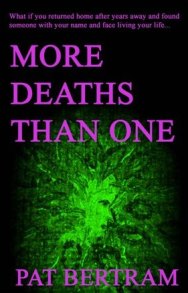
More Deaths Than OneBob Stark returns to Denver after 18 years in SE Asia to discover that the mother he buried before he left is dead again. At her new funeral, he sees . . . himself. Is his other self a hoaxer, or is something more sinister going on?

Click here to read the first chapter: More Deaths Than One

***

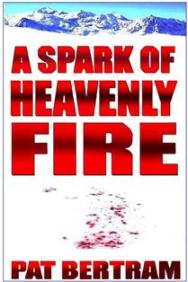
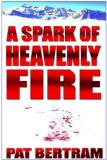
A Spark of Heavenly FireIn quarantined Colorado, where hundreds of thousands of people are dying from an unstoppable, bio-engineered disease, investigative reporter Greg Pullman risks everything to discover the truth: Who unleashed the deadly organism? And why?

Click here to read the first chapter of: A Spark of Heavenly Fire

***

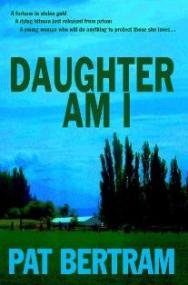
DAIWhen twenty-five-year-old Mary Stuart learns she inherited a farm from her recently murdered grandparents — grandparents her father claimed had died before she was born — she becomes obsessed with finding out who they were and why someone wanted them dead.

Click here to read the first chapter of: Daughter Am I

***

Thirty-seven years after being abandoned on the doorstep of a remote cabin in Colorado, Becka Johnson  returns to try to discover her identity, but she only finds more questions. Who has been looking for her all those years? And why are those same people interested in fellow newcomer Philip Hansen?

Click here to read the first chapter of: Light Bringer

***

Pat Bertram is the author of Light Bringer, More Deaths Than One, A Spark of Heavenly Fire, and Daughter Am I.All Bertram’s books are available both in print and in ebook format. You can get them online at Second Wind Publishing, Amazon, B&N and Smashwords.  At Smashwords, the books are available in all ebook formats including palm reading devices, and you can download the first 20-30% free!

Have you ever had difficulty killing off a favorite character in your story?

No. For me, story is sovereign. Everything must serve the story, and if the death of a favorite character will serve the story, then that’s the way it has to be. To be honest, though, I haven’t yet killed off a favorite character. The ones I have killed were created to be killed, and I took great glee in doing so. Mostly, I’m not one for being selective in my killings. In A Spark of Heavenly Fire, I decimate Colorado. (I am using the word in its proper context here — I kill off a tenth of the population.) In Light Bringer, I hint at the destruction of vast numbers of people, and in my current work (that isn’t progressing very rapidly) I do, in fact, kill off almost the entire population of the world. After all that carnage, what’s one more character killed off, favorite or not?

Here are some responses from others authors about difficulty of killing off a favorite character. The comments are taken from interviews posted at Pat Bertram Introduces . . .

From an interview with Dellani Oakes, Author of Lone Wolf

I greatly dislike killing a character and avoid it if I can. However, there are times when a character must die to advance the plot. The one who upset me the most was a guy named Murdock Pickford. He’s in a prequel to my sci-fi series. Murdock is a nice guy. He’s kind, capable, loving and forgiving. He’s engaged to a woman who’s pregnant with another man’s baby & he agrees to raise her as his own. He’s thrilled about the baby, excited about getting married—and he has to die, horribly, brutally, for the book to move forward. I’m not ashamed to admit that I cried when I had to kill him off.

From an interview with Jocelyn Modo, Author of “Revolution Lovers”

In Revolution Lovers something truly horrible happens to Adie…I’ve avoided that scene since I wrote it. I can’t look at what I did to her, don’t want to face what I did to my beloved character. I feel silly saying it, but I feel guilty about hurting her.

From an interview with Rod Marsden, Author of “Disco Evil” and “Ghost Dance”

When you deal with the supernatural killing off a characters doesn’t mean they won’t return. I have had characters return a number of times after death to either help or hinder the living.

From an interview with Christine Lindsay, Author of “Shadowed in Silk”

I have to laugh at this as it may sound horribly brutal. But I have no problem killing my characters off at all.  In all of my books I kill off at least one secondary character, sometimes more as is the case of Shadowed in Silk.

I love having my strongest Christians die. I often cry as I write the scenes where they are ready to meet their Lord. And sometimes bad characters have to die too. I try hard not to think of their eternal situation, and remind myself that they are fictional characters — not flesh and blood — and I am not God.

What about you? Have you ever had difficulty killing off a favorite character in your story?

(If you’d like me to interview you, please check out my author questionnaire http://patbertram.wordpress.com/author-questionnaire/ and follow the instruction.)

“A Spark of Heavenly Fire” is a well paced thriller

The following is a review of my novel A Spark of Heavenly Fire, and was written by Dellani Oakes.

***

Kate Cummings works in a medical clinic as a patient advocate. Since the death of her husband, she’s led a quiet, uneventful life. All that changes when a jogger in the park falls on her, hemorrhages and dies. This event is strange enough, but when the same symptoms appear in a woman at the clinic, Kate realizes that something more is going on.

At the park, Kate meets Greg Pullman, a reporter for the newspaper. He’s somewhat younger than she, but they click on many different levels. When his fiancee, Pippi O’Brian, dumps him, he finds friendship and solace with Kate.

Together, Kate and Greg begin investigating the odd circumstances surrounding the deaths of the jogger and the woman at her office. As more and more people get ill, the city of Denver finds itself under military quarantine.

“A Spark of Heavenly Fire” is a well paced thriller. Kate and Greg race against time, trying to find the cause of the outbreak as well as survive in the aftermath. The characters are 3 dimensional and believable. The reader feels a link with them, and hope that they will somehow survive.

I highly recommend “A Spark of Heavenly Fire” for anyone who likes a good mystery with a dash of romance. It’s an excellent book and I look forward to reading Pat Bertram’s other novels – “More Deaths Than One”, “Daughter Am I”, “Lightbringer” and “Grief: The Great Yearning” (non-fiction).

Look for all Ms. Bertram’s books at www.secondwindpublishing.com as well as Amazon.com, BN.com and Smashwords.com

Aaron Lazar’s Review of A SPARK OF HEAVENLY FIRE

A Spark of Heavenly Fire
by Pat Bertram
Publisher: Second Wind Publishing
ISBN number: 978-1-935171-23-2
Review by Aaron Paul Lazar
Lazarbooks.com

Who says you can’t squeeze romance into a thriller? And while you’re at it, how about weaving in a deeply moving story about human redemption?

Author Pat Bertram says you can. And she’ll convince you before you can say chimera — the lethal combination of virus, bacterium, fungus, and human genes that causes the rapid spread of the “red death,” a bio-engineered weapon threatening the entire state of Colorado.

Kate Cummings is trying to deal with the loss of her husband, who drove his car off a mountain after a long battle with Multiple Sclerosis. She passes by his bedroom without daring to enter, and slogs through life in a solemn daze, feeling guilty for every time she waited a few extra minutes to answer his summons, or for each time she became angry. His loss haunts her, and although her work at the Bowers Medical Clinic is fulfilling, it can’t heal the hole in her heart.

When a jogger stumbles into Kate with red eyes blazing, he vomits blood on her and dies instantly. A rash of similar deaths follows, decimating the state. Orange paint markers on front doors –– signifying a “red death” in the marked homes — begin to appear with frightening regularity. Panicked parents discard their red-eyed children, fearful of contagion.

Enter Greg Pullman, reporter for the Denver News, who’s engaged to the ditzy beauty, Pippi O’Brien, local TV weather girl. But when he bumps into Kate after Pippi heads for the border in search of safety, things change. Together, Kate and Greg investigate and unearth the shocking source of the horror that has shut down their state and caused a rogue wing of the military to terrorize Colorado’s remaining citizens. Basic human amenities – so often taken for granted –– become grounds for murder. And the streets are no longer safe to walk unescorted.

In addition to a killer story line, smooth writing, and phenomenal characterization, this page turning thriller features fine examples of charity through glimpses into Kate’s huge heart. The remarkable heroine opens her home to survivors who are homeless and hungry. Soon, partnered with a destitute woman named Dee, Kate’s home becomes a refuge for survivors. And in the midst of the massive deaths, terror, and horror, Kate finds salvation.

The tension in A Spark of Heavenly Fire is electric. Taut suspense pulls you along at a rapid pace. This reader was up way past his bedtime three nights in a row. And yes, it was that good.

***

Thank you, Aaron!

Be sure to check out Aaron Paul Lazar’s books at http://www.lazarbooks.com/

Getting Grief Right in Writing

Long before I knew the truth of grief and its power, I wrote A Spark of Heavenly Fire. The story begins thirteen months after the death of Kate Cummings’ husband, and she is still haunted by her small unkindnesses during his long illness. It surprises me that I got that part right because so much of the grief journey has been a shock to me, including how much I regret my own small undkindnesses toward my life mate/soul mate. I didn’t do anything bad, just lacked generosity of spirit at times during his last year. If he had lived, of course, these lapses would have passed unnoticed in the commotion of daily life, but with his death, they loomed like vultures over my spirit, waiting to tear me to shreds. If I had known how close to death he was, I would have been more patient, more understanding of his dying ways, but I didn’t know. I’ve come to realize that we were under such stress those last years that both of us did the best we could in the untenable situation. Dying is an unpleasant business for both parties.

Here are a couple of excerpts from A Spark of Heavenly Fire that show Kate’s torment. I wasn’t as feisty as Kate. I didn’t kick furniture or slam doors (well, maybe just once), and I didn’t give in to my anger until after he was dead, but otherwise, these passages show how much we bereft regret the small things we did:

Kate hauled herself upright and groped for her eyeglasses. After sitting on the edge of the bed for a moment, gathering her strength, she dressed and wandered through the house. She hesitated by the closed door of the second bedroom where her husband had lived during the last years of his protracted illness, touched the knob with her fingertips. Yanked her hand away.

This is ridiculous. Joe’s been gone for thirteen months.

Taking a deep breath, she grasped the knob, but could not force herself to turn it. She rested her forehead on the door for a minute, wondering if she’d ever be able to face the ghosts of sorrow and regret locked inside, then squared her shoulders and headed for the front closet to grab a coat and hat.

[Later in the book, Kate explains this inability to open the door to her new friend, journalist Greg Pullman.]

“A little over a year ago, during one of Joe’s rare remissions,” Kate said. “I mentioned we were coming up on our fifteenth wedding anniversary. When he ignored me, I asked, ‘Would it kill you to be nice to me once in a while?’

“He didn’t answer.

“I went out for a walk. When I returned, he was gone.”

“Dead?” Greg asked.

“No. Not then. He’d taken our car, an old Volvo, and left. I didn’t know he felt strong enough to drive. He could barely walk and had a hard time gripping so much as a glass of water.

“When the state patrol called to tell me Joe had been in an accident, that he’d driven off a cliff in the mountains and had died instantly, I wasn’t surprised. It did surprise me when they ruled it an accident. It seemed so obvious to me he’d taken his own life that I was sure everyone else could see it, too.”

Kate gave an unamused laugh. “I never did buy another car.”

Greg looked at her, a frown wrinkling his brow. “I don’t see that you did anything shameful.”

Kate toyed with her empty cup. “I’m not proud of what I said, and I hate knowing those were the last words I ever spoke to my husband, but I don’t think it had anything to do with his suicide. I doubt he even heard me.

“About two weeks after the funeral, I decided to clean Joe’s room. I didn’t feel up to sorting out his things, but I thought I should dust and vacuum in there. I cracked opened the door, as if expecting Joe, or at least his spirit, to inhabit the room. I stepped inside, but seconds later I scrambled out again and slammed the door.

“Memories of all the shameful, petty, inconsiderate things I had done over the years haunted the room, and I couldn’t bear to face my own mean spirit. Too many times I snapped at him or purposely waited a few minutes before going to see what he wanted when he called out. Other times I felt so angry at the way life had treated us, I stomped around the house, slamming doors and kicking furniture. Usually, though, I pounded my pillow, or cried. I’m embarrassed to admit how many times I cried, wishing I had a normal life with healthy children to take care of instead of an uncommunicative and disabled man. Sometimes I even hated him for what he had become, as if he chose to get sick. Can you believe that?”

She didn’t pause for a response, but hurried on, wanting to get it all out. “Worst of all, I realized I was not a strong woman who had shouldered her burden with courage, but a weak woman who lacked generosity of spirit.”

Greg reached across the table and put a hand over hers. “We are a sad pair, aren’t we?”

She gave him a wistful smile.

A full minute went by without either of them speaking, then she asked, “Would you like some more hot chocolate?”
Choosing Book Titles

The title of a book is important. It’s the first thing a prospective reader sees . . . or at least it used to be. Now the author’s name generally comes first and apparently is a much better selling tool than the title ever was. A title is still important, however. It often sets the mood for the book, it lays out the theme, and it tantalizes readers into opening the book. Think of Gone With the Wind. With such a title, you expect a wide sweep of a story. The title speaks of loss and perhaps survival in the face of broad changes. Even before you open the book, you are primed to find out what is lost and why it disappeared into the wind. Imagine then, how different your feeling would be if the book had been published under its working title. Pansy. Would the book, the movie, the character have ever had such an impact if that had been the name? Of course not.

Another major work with last minute name changes was Catch 22 by Joseph Heller. Originally Catch 18, it was changed because of another book that was coming out at the same time: Leon Uris’s Mila 18. And 1984 was originally 1948. So not the same feeling!

Choosing a title is not an easy task. My novels all had simple working titles: The Red Death, The Chameleon, The Gangster Book, The Alien Book, but except for The Red Death, none of those titles were ever possible for the real title.

For A Spark of Heavenly Fire, I considered using the title The Red Death since my quarantine mirrored the middle ages, though in a hi-tech way, but the name had already been used several times. And anyway, from the very first, I’d planned on using A Spark of Heavenly Fire. That was my inspiration for the book, the Washington Irving quote: “There is in every true woman’s heart a spark of heavenly fire, which lies dormant in the broad daylight of prosperity; but which kindles up, and beams and blazes in the dark hour of adversity.” I wanted to tell the story of ordinary women, women who seemed colorless in ordinary times, but who blazed brightly in dark times. When I found no takers for the book, I thought perhaps the title didn’t reflect the story, so I changed it to In the Dark Hour. And I got an agent. She couldn’t sell the book, so when my contract was up, I changed the title back to A Spark of Heavenly Fire. And that’s the title Second Wind Publishing released it under.
I had to try several times before I got the title of More Deaths Than One right. The working title was The Chameleon but that was never a real contender since I didn’t want to give the story away. So first I used the Law of the Jungle, which amused me since the jungle was so much a part of the story. Also, at one point I had my hero say that the villain might be above the law, but he wasn’t above the law of the jungle. Both the line in the book and the title ended up being deleted because they were too trite, so next I went with Nature of the Beast. It was adequate, and I would have stuck with it despite its triteness, but then I came across a couplet from Oscar Wilde’s “Ballad of Reading Gaol”: He who lives more lives than one/More deaths than one must die. Since my hero appeared to have more lives (and deaths) than one, More Deaths Than One struck me as the perfect title.
Daughter Am I, my gangster book, only had one previous title: Sins of the Fathers, though really it should have been Sins of the Grandfathers. Then I found the Rudyard Kipling quote: “Daughter am I in my mother’s house but mistress in my own.” The quote would have more accurately described the theme of the book if it were “daughter am I in my father’s house,” but I was taken with the title Daughter Am I and decided it was close enough.

Which brings me to my most recent novel, Light Bringer. Sad to say, I haven’t a single story to tell about the title. Even though the working title was The Alien Book, I always knew the title was Light Bringer. Light is the theme of the book, and the Light Bringer (planet X) was the reason for the story.

So, as a reader, what are your favorite titles? As an author, how did you come up with the names of your books?

What challenges did you face as you wrote your book?

My biggest challenge in writing A Spark of Heavenly Fire was finding the beginning of the story. I liked the story, and I kept telling myself that if people could just get through the first fifty pages they would like the story, too. Then one day it dawned on me that the solution of getting readers to see the story beyond the less than sparkling beginning was to get rid of the first fifty pages. So I junked those early chapters, wrote a new beginning, and then the real challenge began — getting it published. After two hundred rejections, I finally found a publisher who loved the book.

Here are some challenges other authors faced as they wrote their books. The comments are taken from interviews posted at Pat Bertram Introduces . . .

From an interview with Gisela (Gigi) Sedlmayer, Author of “Talon, Come Fly With Me”

To face myself. When I started to write the book, I never thought of the things they came out then. I wanted to write an adventure story for children and see what came out of that. Because, like Matica, I was rejected in school, not because of the growth handicap she has. I had other things. I had to face what Matica is facing and learned, even from writing the book, more and more to cope with myself, to overcome my own rejection and to realise that I have survived a deadly disease.

From an interview with Louis Bertrand Shalako, Author of ‘Redemption: an Inspector Gilles Maintenon mystery’

I moved three times during the writing of the book, as well as cleaning out my father’s house and selling it. There were lots of disruptions and quite a bit of lost sleep.

From an interview with Viola Russell, Author of “Love at War”

The most difficult part was that I wanted to be accurate about the history and facts, and I tend to be a perfectionist. I’d be in the middle of a scene, and I’d then have to move quickly to the internet to confirm a detail. I wanted accuracy on things like the types of weapons the various armies used and on the various uniforms.

From an interview with Malcolm R. Campbell, Author of “Sarabande”

I write from a third person restricted point of view. This means that I am always with only one character from start to finish; everything in the book is filtered directly or indirectly through that character’s eyes, ears and thoughts. The challenge here, especially with some of the deeply personal women’s issues in the plot, was putting myself into a woman’s point of view and keeping it realistic. I did not want the book to sound like it was written by a man who was speculating about how a woman might talk, act, and re-act to the ordeals in the storyline. The challenge was making the story truly seem as though it were being told by a woman and that all of it rang true to the women reading the book.

From an interview with Noah Baird, Author of Donations to Clarity

I didn’t have people around who supported my writing. They weren’t taking it as seriously as I was. As a unpublished writer, it was difficult to convince them this was something I needed to do. It was also hard to know if the writing or the story was good. It takes a great deal of faith in yourself and the story to see it all of the way through.

So, what challenges did you face as you wrote your book?

(If you’d like me to interview you, please check out my author questionnaire http://patbertram.wordpress.com/author-questionnaire/ and follow the instruction.)

What inspires you to write a particular story?

Like most writers, I’ve written the beginnings of a few books that have gone nowhere. I have zero interest in pursuing them. On the other hand, for various reasons, the books I did write took hold of my imagination and didn’t let go until they were completed. For example, A Spark of Heavenly Fire came about because of a Washington Irving quote: “There is in every true woman’s heart a spark of heavenly fire, which lies dormant in the broad daylight of prosperity, but which kindles up, and beams and blazes in the dark hour of adversity.” I loved the idea of a woman who felt half-dead when everyone else was doing well, but in a time of dying, she came to life. Since I didn’t want to do a war story, I created a plague — the red death. I had fun with that, and the story so captured my imagination that I had no choice but to pursue it.

Here are a few inspirations other authors. The comments are taken from interviews posted at Pat Bertram Introduces . . .

I was inspired to write Disco Evil because I believe everyone deserves a fair go and that people who go out of their way to be nasty to others really do build up bad karma for themselves. I happen to like quest/adventures stories so that’s how Ghost Dance came about. Two of the women in Ghost Dance are based on certain stand up and be counted sort of ladies I know and love in real life.

From an interview of Malcolm R. Campbell, Author of “Sarabande”

“The Sun Singer” is about a young man’s solar journey. I wanted to look at the other side of the coin, so to speak, and write about the lunar-oriented ordeals of a young woman. Sarabande, my protagonist first appeared in “The Sun Singer.” However, I have written her story so that it can be read as a standalone novel, a woman’s story that could be whole in and of itself.

From an interview of J J Dare, Author of False Positive and False World

I was inspired to write about hidden government agendas and their devastating aftereffects when I thought about why we, as a nation, involve our resources in other nations’ conflicts. My biggest inspiration: the eternal, What if?

From an interview of Joylene Nowell Butler, Author of “Broken but not Dead”

Honestly, one day it occurred to me that there weren’t enough stories about fantastic 50-year-old women. I wasn’t quite 50, but decided that while it might be nice to be young and beautiful like Cheryl Ladd and all those other famous ladies from my era, there’s nothing quite like the wisdom and empowerment that comes with age.

I was inspired to write the book after reading some nonfiction books about contemporary domestic slavery and human trafficking.

From an interview of Sheila Deeth, Author of “Flower Child”

Actually it was a writing competition at our local writing group. The prompt was to write a short piece inspired by music, and I had John Denver’s Rhymes and Reasons spinning around in my head — For the children and the flowers / Are my sisters and my brothers… I found myself putting a childhood misunderstanding together with my adult experience.

If you’re a writer, what inspired you to write a particular story? If you’re a reader, what inspires you to read a particular story?

Writing a Book I Didn’t Know I Was Writing

In Style: Writing as the Discovery of Outlook, Richard M Eastman says: “You don’t begin to write with a complete message or experience already imagined, which is then to be wrapped in language as a means of sending it to your readers. Writing isn’t so much communication as creation. In a real sense, you don’t have an outlook on anything without first having written on it. This outlook comes into being through the dozens of tests, choices, and unexpected chances which turn up as you write on some engaging topic; and most writers agree that the final creation isn’t anything you could have precisely anticipated when you first set pen to paper.”

Eastman’s discovery of outlook holds true for my fiction.  I know the story when I begin, I know the ending, and I know a few important scenes, which should mean that I know the whole story, but I don’t. I am not the same, my outlook is not the same, when I finish writing the story as when I began, so the story is not exactly as I intended. The creation process itself creates the change in outlook. Writing is all about the choices we make, and continue to make, all through the creating, editing, proofing. Sometimes I find that I’ve written a book I didn’t know I was writing. A Spark of Heavenly Fire was supposed to be the story of women who could barely cope during times of prosperity when everyone else was doing just fine, but they came alive and dazzled during dark times when everyone else could barely cope. That story is still there in A Spark of Heavenly Fire, but the overriding story is the story of love in all its guises: self-less love, self-love, friendship, romantic love, parental love, obsession.  This theme of love came about through the various elemental choices I made during the course of the book, and it makes novel strong, much stronger than it would have been if it remained simply the story of women who come alive in times of hardship.

And Eastman’s discovery of outlook especially holds true for my non-fiction. I wrote a book about grief, a book I didn’t know I was writing. After the death of my life mate/soul mate twenty-one months ago, I found solace in writing about his death and my grief, in blogging about it, in writing letters to him. And now, some of those writings have coalesced into a book that people have called “exquisite,” “profound,” “raw and real.” I wrote to help me come to terms with the soulquake I experienced after he died and with my continued grief. But what the book ends up being is a great love story, the story of a love that transcends time and physical bonds. He might be dead, my love for him is still strong.

I know what you’re going to ask, but no, the book isn’t published yet, but it should be released in March 2012. I’m putting the finishing touches on the book now, adding the few photos I have to further illustrate our life, and then it heads back to my publisher so they can add a cover and get it published.

One unintended benefit of getting the book published is that afterward, this blog will not be quite so schizophrenic. Part of the time I write about writing, the rest of the time I write about grief. The book will pull both parts of this blog together, and it will become a cohesive whole. I wonder if the book will do the same for me, help pull me together somehow, bridging two very different parts of my life — the part where I once shared a life,  and the part where I’m left alone to pick up the pieces of that shattered life.

“A Spark of Heavenly Fire” Embodies the Essence of Christmas

Washington Irving wrote: “There is in every true woman’s heart a spark of heavenly fire, which lies dormant in the broad daylight of prosperity; but which kindles up, and beams and blazes in the dark hour of adversity.” As I read these words several years ago, I could see her, a drab woman, defeated by life, dragging herself through her days in the normal world, but in an abnormal world of strife and danger, she would come alive and inspire others. And so Kate Cummings, the hero of my novel A Spark of Heavenly Fire was born. But born into what world?

I didn’t want to write a book about war, which is a common setting for such a character-driven story, so I created the red death, an unstoppable, bio-engineered disease that ravages Colorado. Martial law is declared, rationing is put into effect, and the entire state is quarantined. During this time when so many are dying, Kate comes alive and gradually pulls others into her sphere of kindness and generosity. First enters Dee Allenby, another woman defeated by normal life, then enter the homeless — the group hardest hit by the militated restrictions. Finally, enters Greg Pullman, a movie-star-handsome reporter who is determined to find out who created the red death and why they did it.

Kate and her friends build a new world, a new normal, to help one another survive, but other characters, such as Jeremy King, a world-class actor who gets caught in the quarantine, and Pippi O’Brien, a local weather girl, think of only of their own survival, and they are determined to leave the state even if it kills them.

The world of the red death brings out the worst in some characters while bringing out the best in others. Most of all, the prism of death and survival reflects what each values most. Kate values love. Dee values purpose. Greg values truth. Jeremy values freedom. Pippi, who values nothing, learns to value herself.

Though this book has been classified by some readers as a thriller — and there are plenty of thrills and lots of danger — A Spark of Heavenly Fire is fundamentally a Christmas book. The story begins on December 2, builds to a climax on Christmas, and ends with renewal in the Spring. There are no Santas, no elves, no shopping malls or presents, nothing that resembles a Christmas card holiday, but the story — especially Kate’s story — embodies the essence of Christmas: generosity of spirit.

(Why does A Spark of Heavenly Fire begin on December 2 instead of December 1? Glad you asked that. All through the writing of the book, I kept thinking: if only people could get through the first fifty pages, I know they will like this book. So finally came my duh moment. Get rid of the first fifty pages!! With all the deletions and rewriting, I couldn’t make the story start on December 1 as I’d originally intended, but that’s okay since it didn’t end on December 25 as I had hoped. The story overgrew it’s bounds, but the symbolism still held since it ends around Easter.)

Amazon: http://www.amazon.com/Spark-Heavenly-Fire-Pat-Bertram/dp/1935171232/ref=ntt_at_ep_dpt_4

Smashwords: http://www.smashwords.com/books/view/1842 (You can download the book in any ebook format, including a format for palm held reading devices!! Even better, you can download 30% absolutely free to see if you like the story.)

Barnes and Noble: http://www.barnesandnoble.com/w/spark-of-heavenly-fire-pat-bertram/1100632312?ean=9781935171232&itm=2&usri=pat+bertram