Gardens, Now and Then

I recently finished reading a book that was so unmemorable, just about the only thing I remember is how bad it was. I certainly don’t remember the title or the author. I do remember, however, all the talk of eighteenth-century gardens.

I didn’t know that there were various styles of gardens. I just figured people did what I am doing — create their own garden using the space, the climate, the soil, and their own sense of practicality to best utilize the area.

I started with a gravel border around my house to protect the foundation, which unfortunately didn’t keep one corner from collapsing. Luckily, that’s fixed, now. Whew!

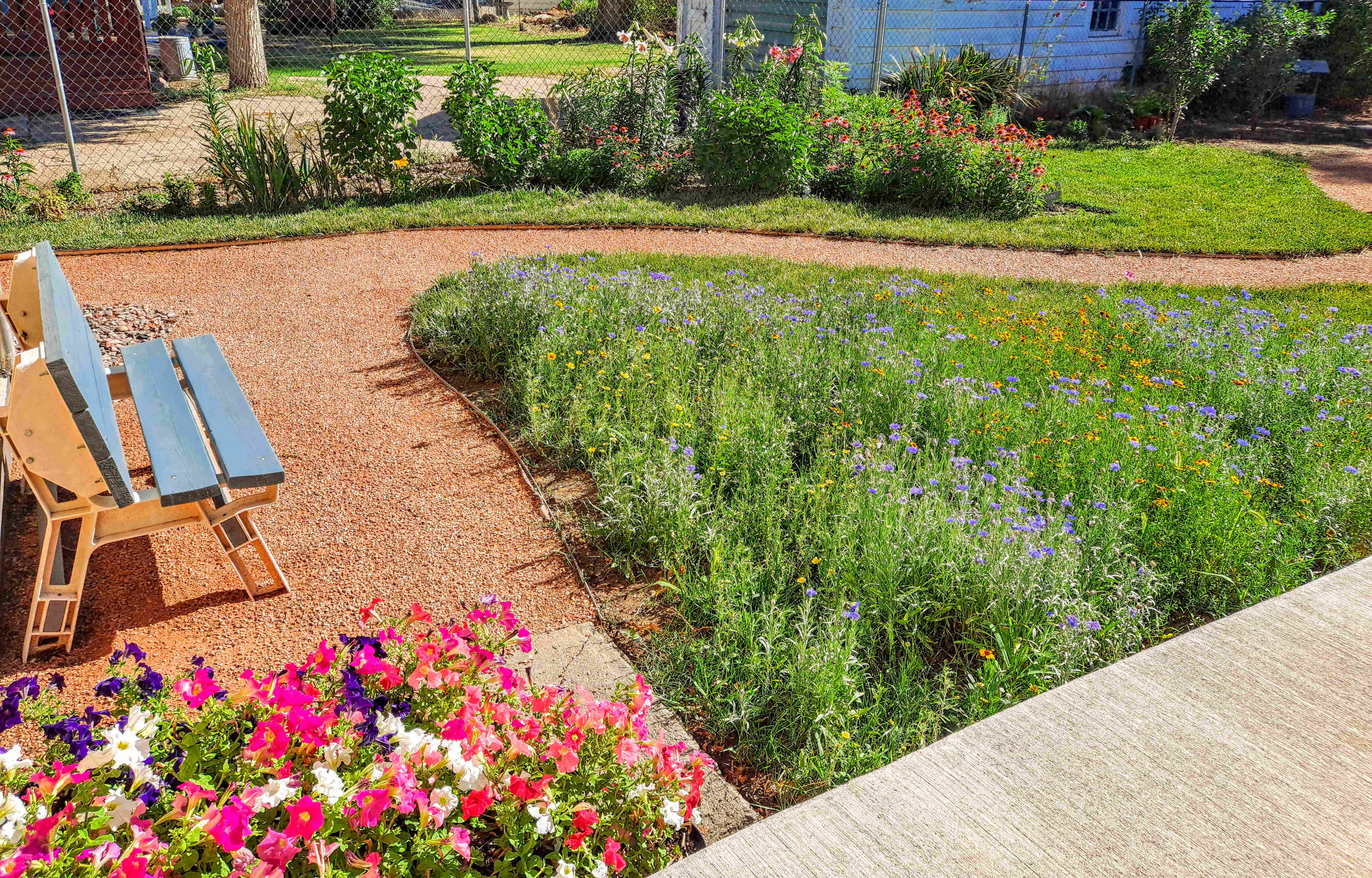
Then I figured out where I would want to walk in the yard, and had pathways put in. When I moved here, there were only weeds and rocks and uneven ground to trip the unwary, so those pathways were important, especially as I knew I wouldn’t be getting any younger. (Though, who knows. Stranger things have happened, I’m sure.)

When the old garage was torn down, the concrete slab in front of that derelict building was left in place, so I used that as a foundation for a gazebo. And where the garage was, I had a raised garden built.

The rest of the yard, I filled in with bushes, grass, a couple of trees, and lots of flowers. That part of the garden is always a work in progress since plants die, seed themselves, and new flowers beg to be planted.

So, there is some balance in my yard: a few distinct areas, a couple of places to sit, grassy areas, places to grow vegetables. Best of all, it gives me something different to look at with every turn of the path.

Apparently, this isn’t the way everyone gardens, or even the way people used to garden. The Hanging Gardens of Babylon were definitely planned out. They weren’t actually hanging gardens (if they even existed), but were “overhanging” gardens, supposedly built as ascending terraces, planted with trees, bushes, and flowers, to create a luxurious green hill.

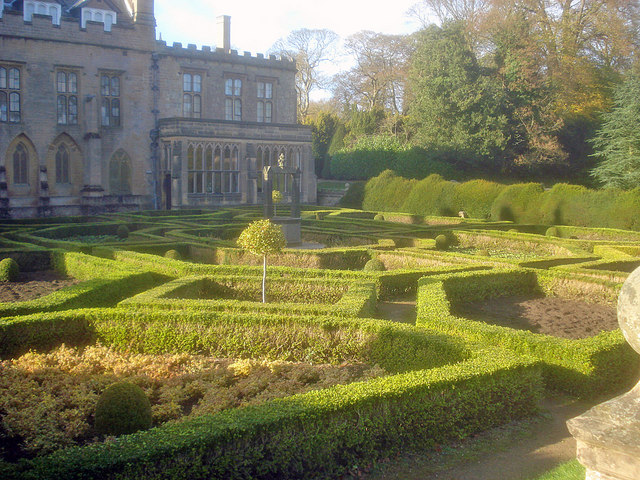
In the eighteenth century (what all this was leading up to), gardens were geometric, with the various pieces of the geometry shape enclosed by hedges to create outside rooms. A pleasure garden for picnicking. A kitchen garden. flower gardens. Topiary gardens. Gazebos and other outbuildings. Water décor such as fountains and ponds. And tree-lined paths to connect the sections.

Such gardens, as well as gardens before and after, needed architects to get everything correct. Even though in my haphazard way, I have a few elements of an eighteenth-century garden, such as distinct garden areas, paths, and a gazebo. Unlike eighteenth century gardens, I have grassy areas, as well as wild areas. But then, I didn’t set out to create such an historical garden. Didn’t even know they existed, to be honest.

Admittedly, my yard is a lot smaller than the usual eighteenth century garden, and I spent a fraction of the cost, but that was never the point. The point, for me, was . . . Hmmm. I’m not sure what the point was of creating my garden. What I wanted when I moved here was a work-free yard, one that took care of itself. And yet, what I have is . . . well, a mini park that takes a lot of work!

***

Pat Bertram is the author of Grief: The Inside Story – A Guide to Surviving the Loss of a Loved One.

A Real Garden

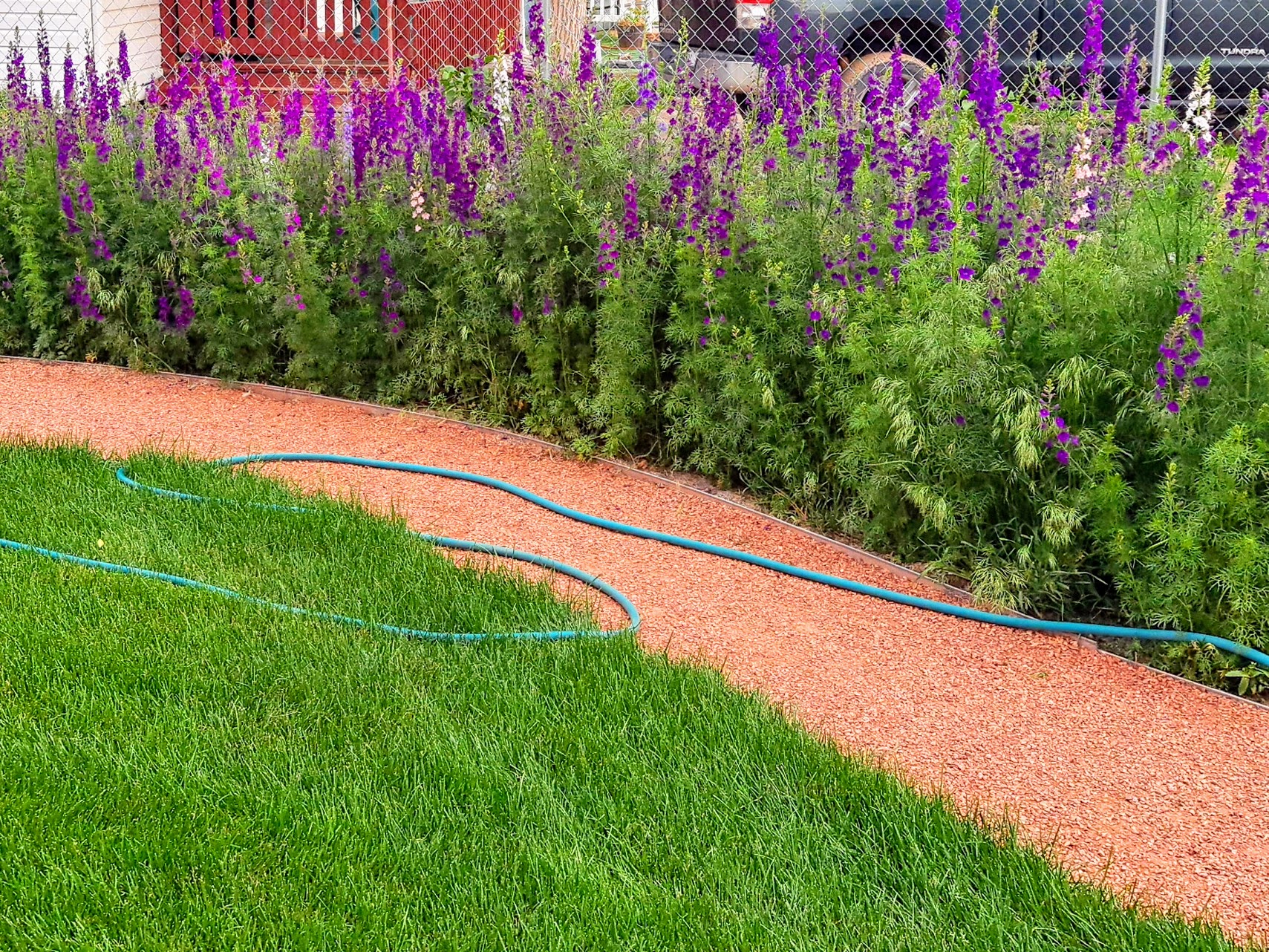
During the past three or four years, I’ve often posted photos of the flowers in my yard, which made it seem as if I had a real garden rather than the truth — that those flowers were the totality of my garden. A couple of days ago, as I was showing an acquaintance around my yard, it occurred to me that this year, I actually had a real garden. There is so much to see! The wall of larkspur, of course, that planted itself where the grass died and that mesmerizes everyone who sees it.

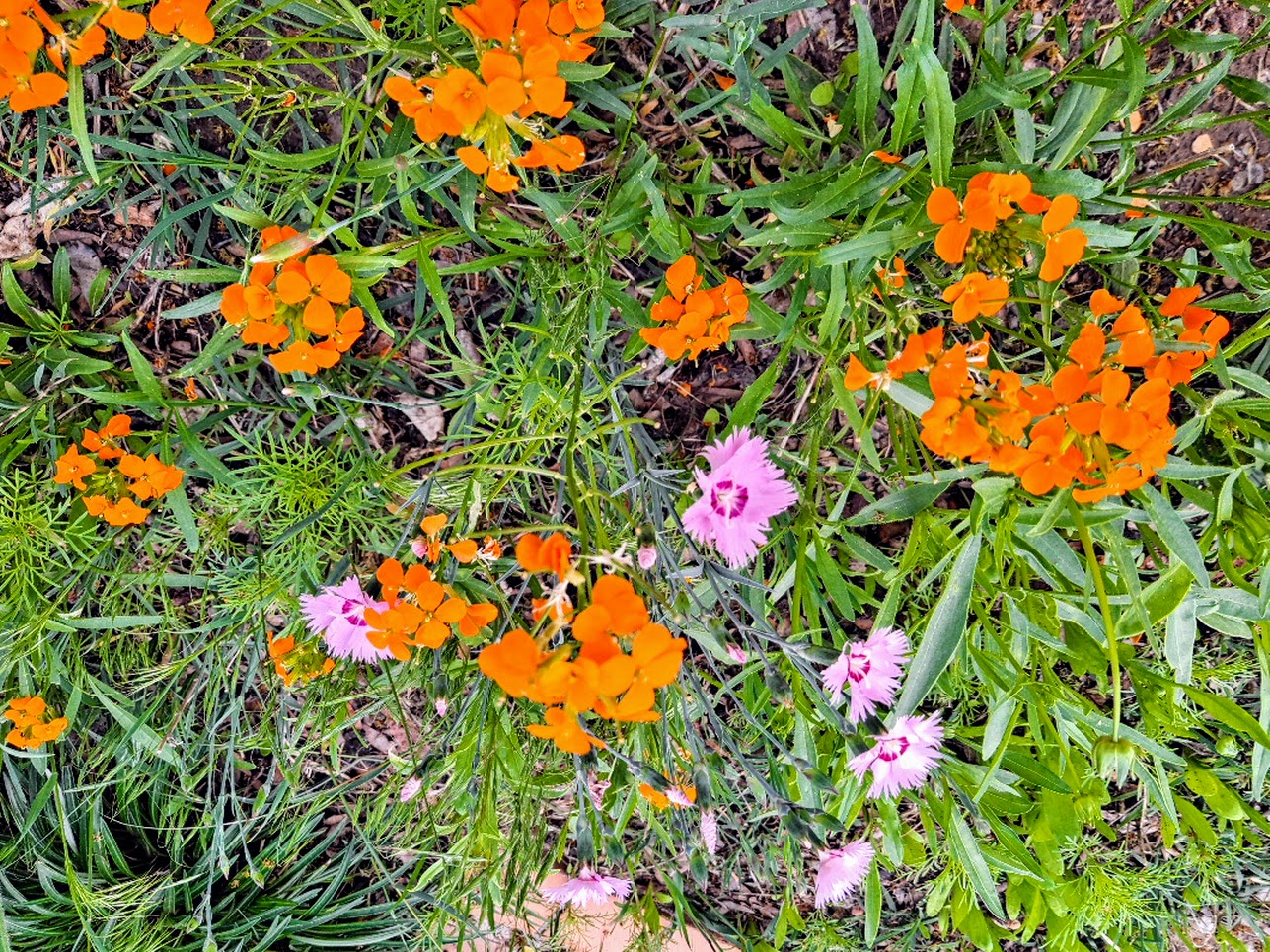
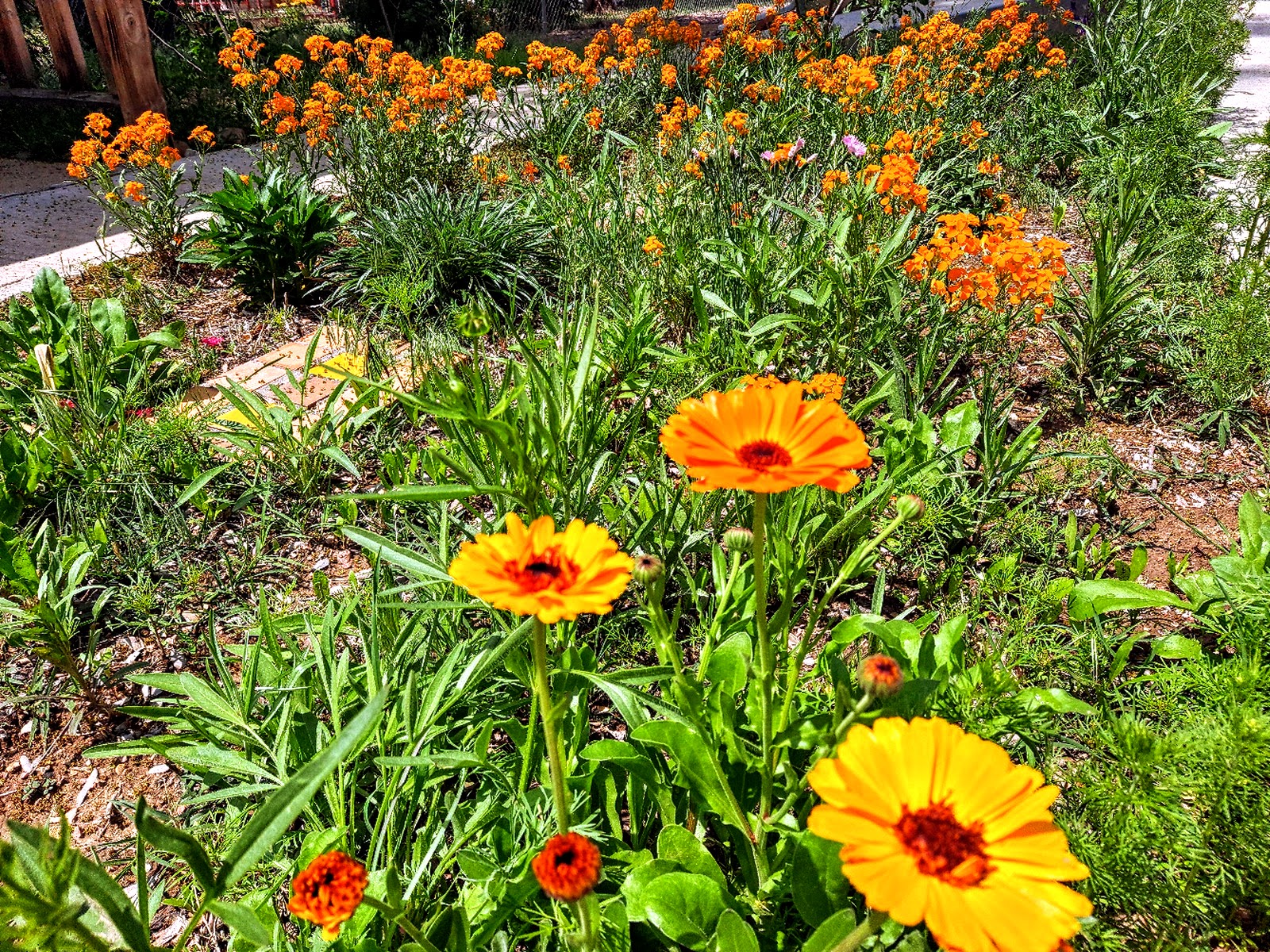
Siberian wallflowers have made a big presence in one of my garden areas, though I’m not sure where they came from. There were a few seeds in a wildflower mix I threw out there a few years ago, but this was the first time I’d seen any of flowers. They are such a vibrant color! The pink flowers are cottage pinks, returning from last year’s planting.

At the forefront of the wallflowers are coreopsis, also returning from last year.

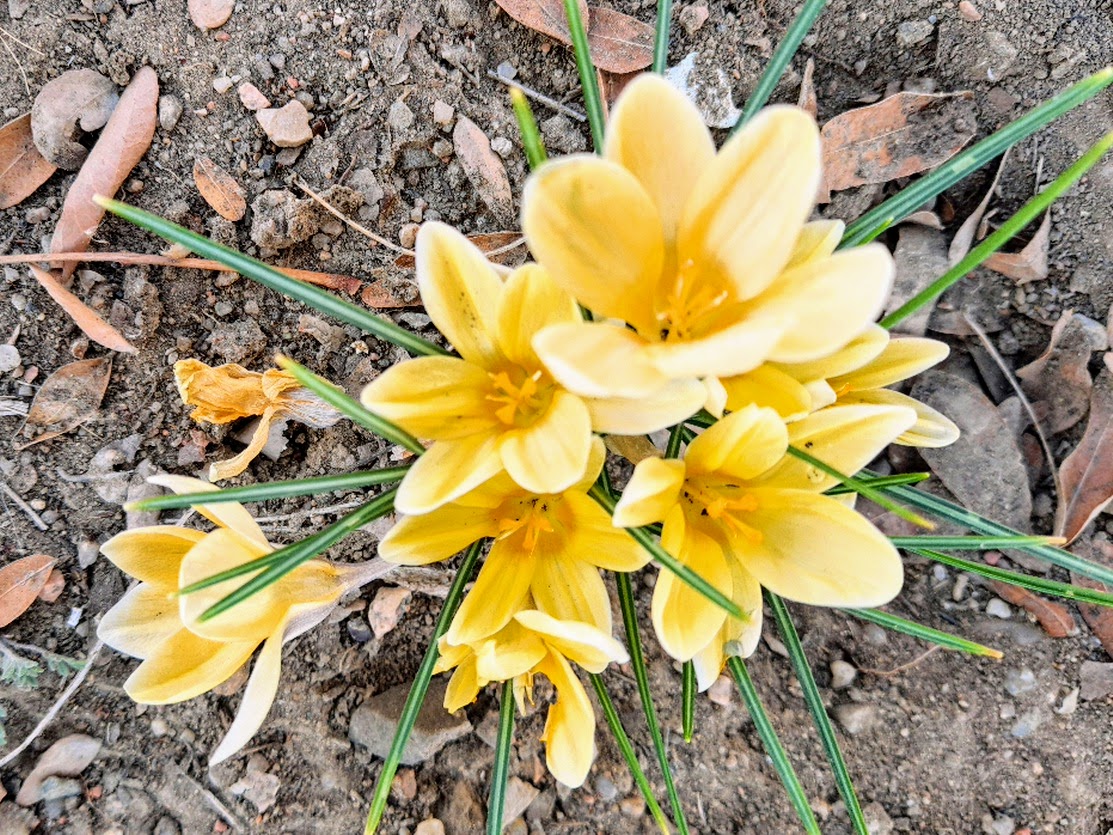
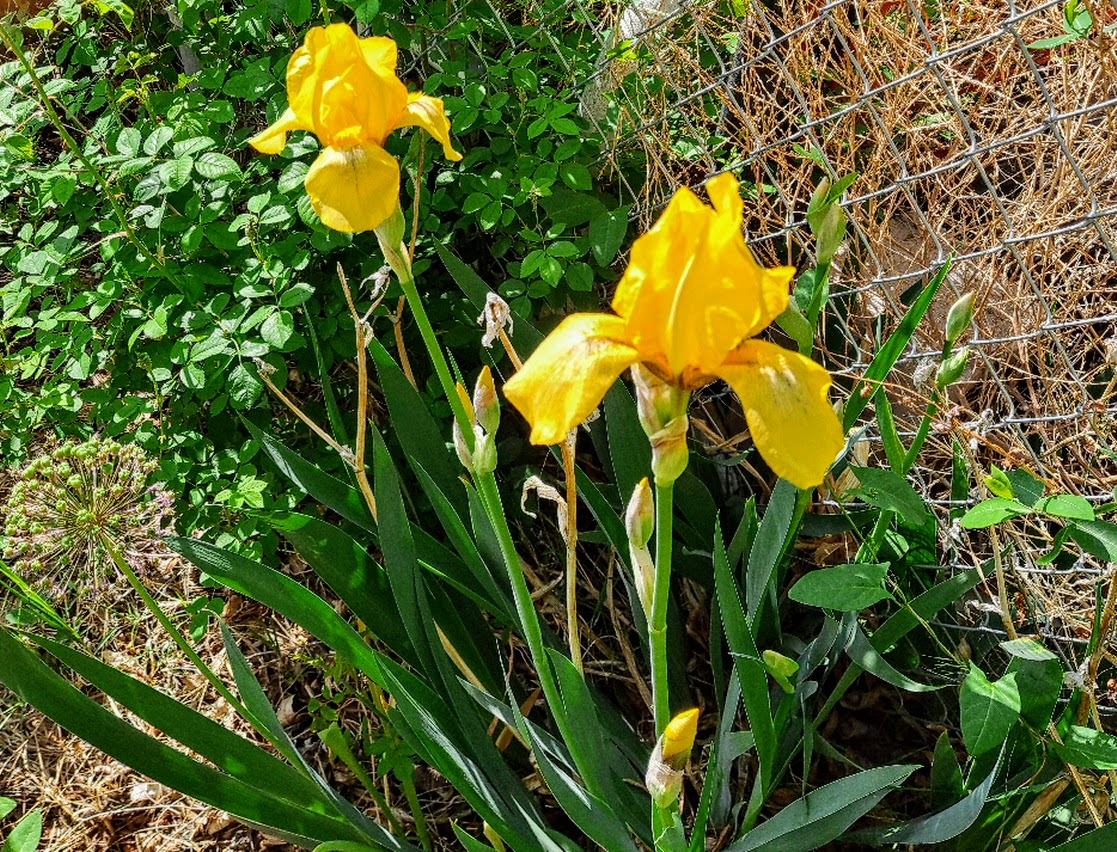
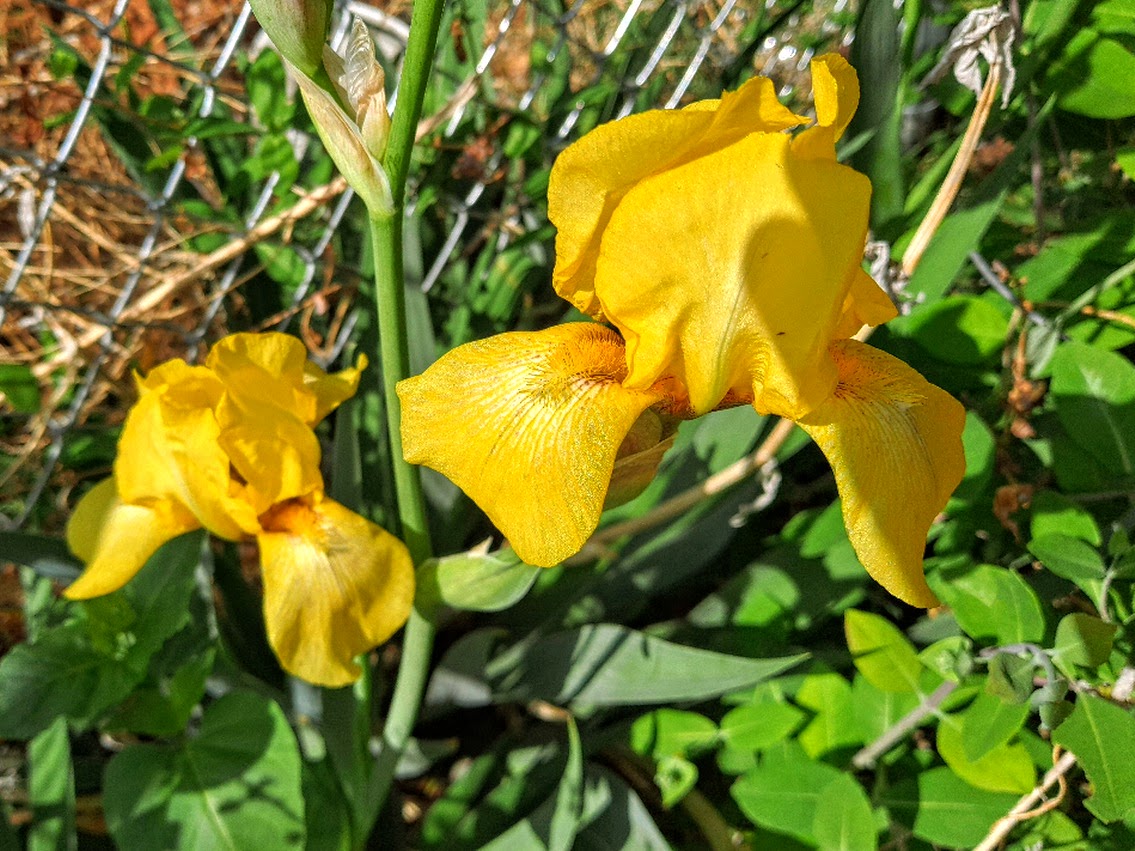
My yellow iris are beautiful this year.

Although they’ve been coming up each spring, they never seemed healthy, but this year, they are doing exceptionally well.

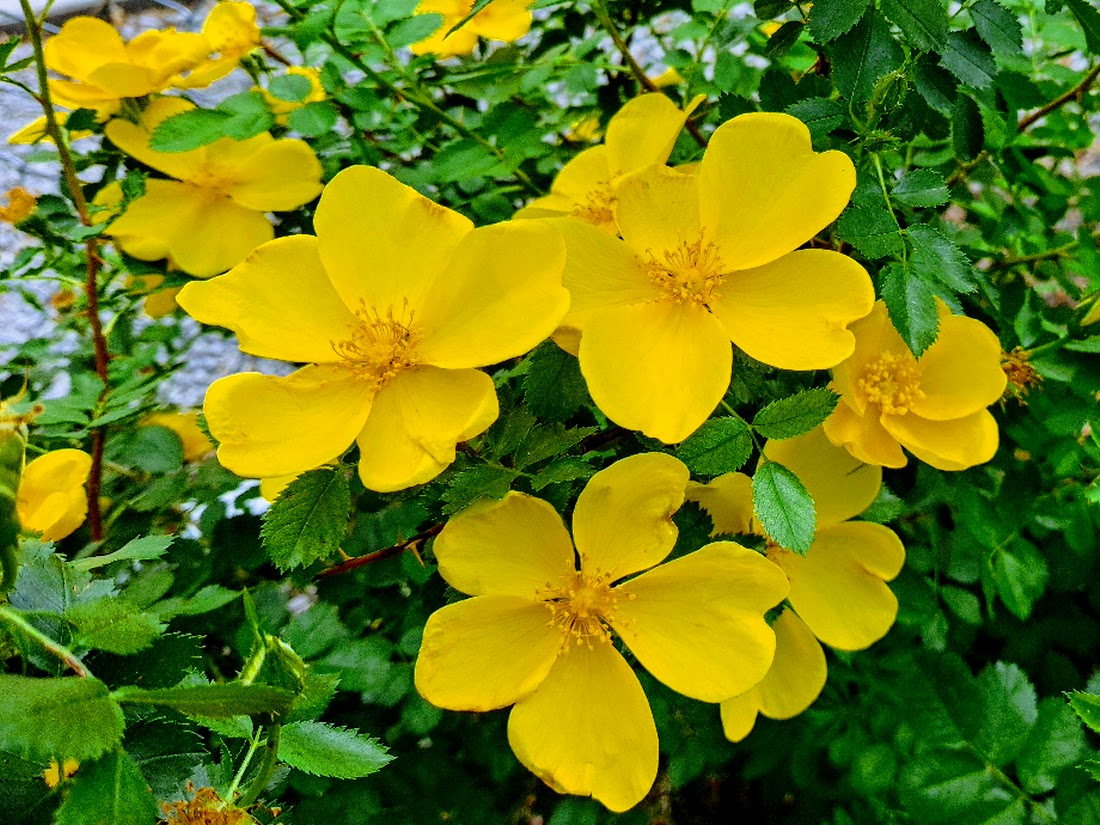
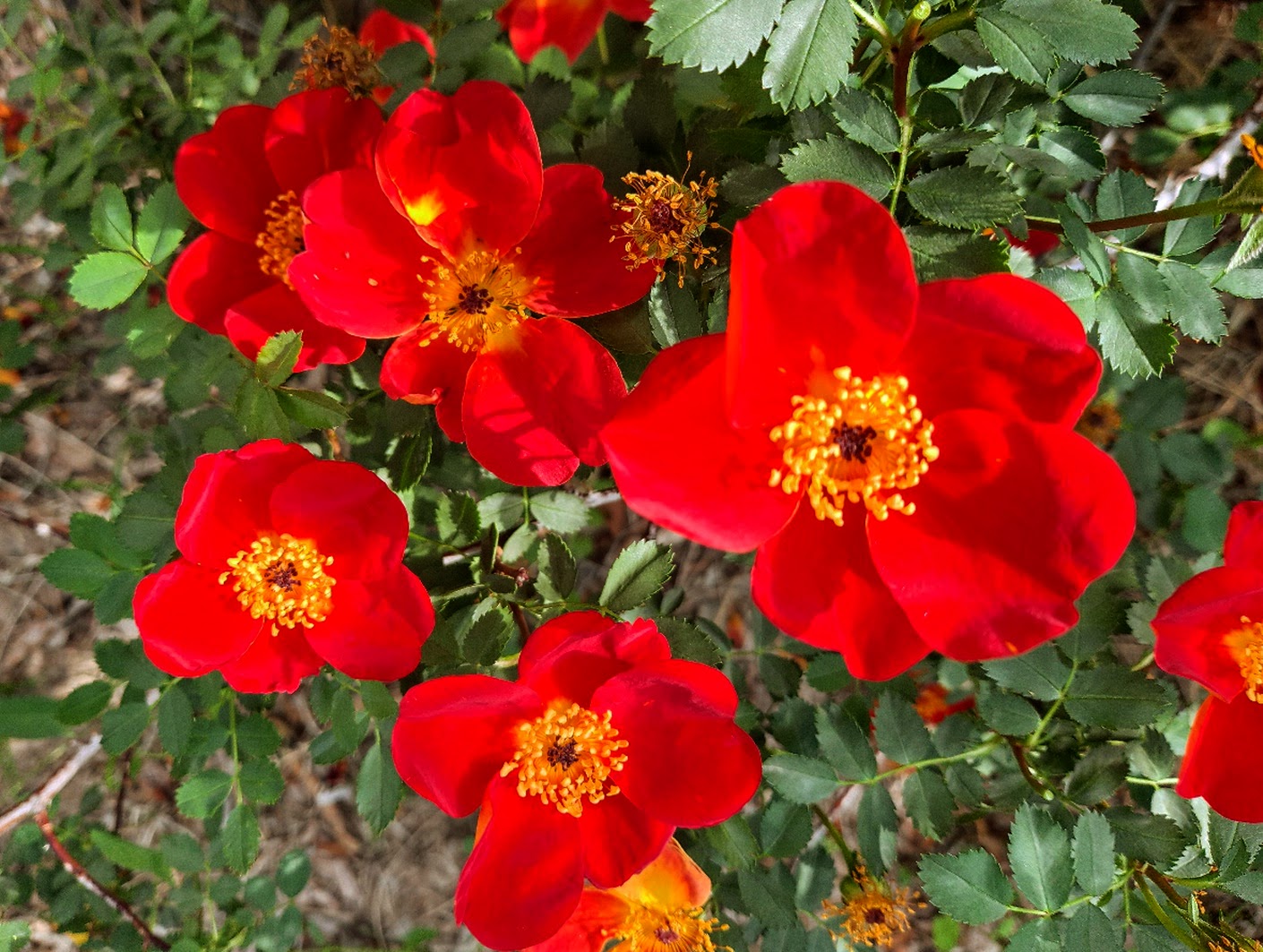
The wild roses always do well, both the yellow

and the red. Unfortunately, the flowers don’t last long, but that makes me more appreciative of them when they are in bloom.

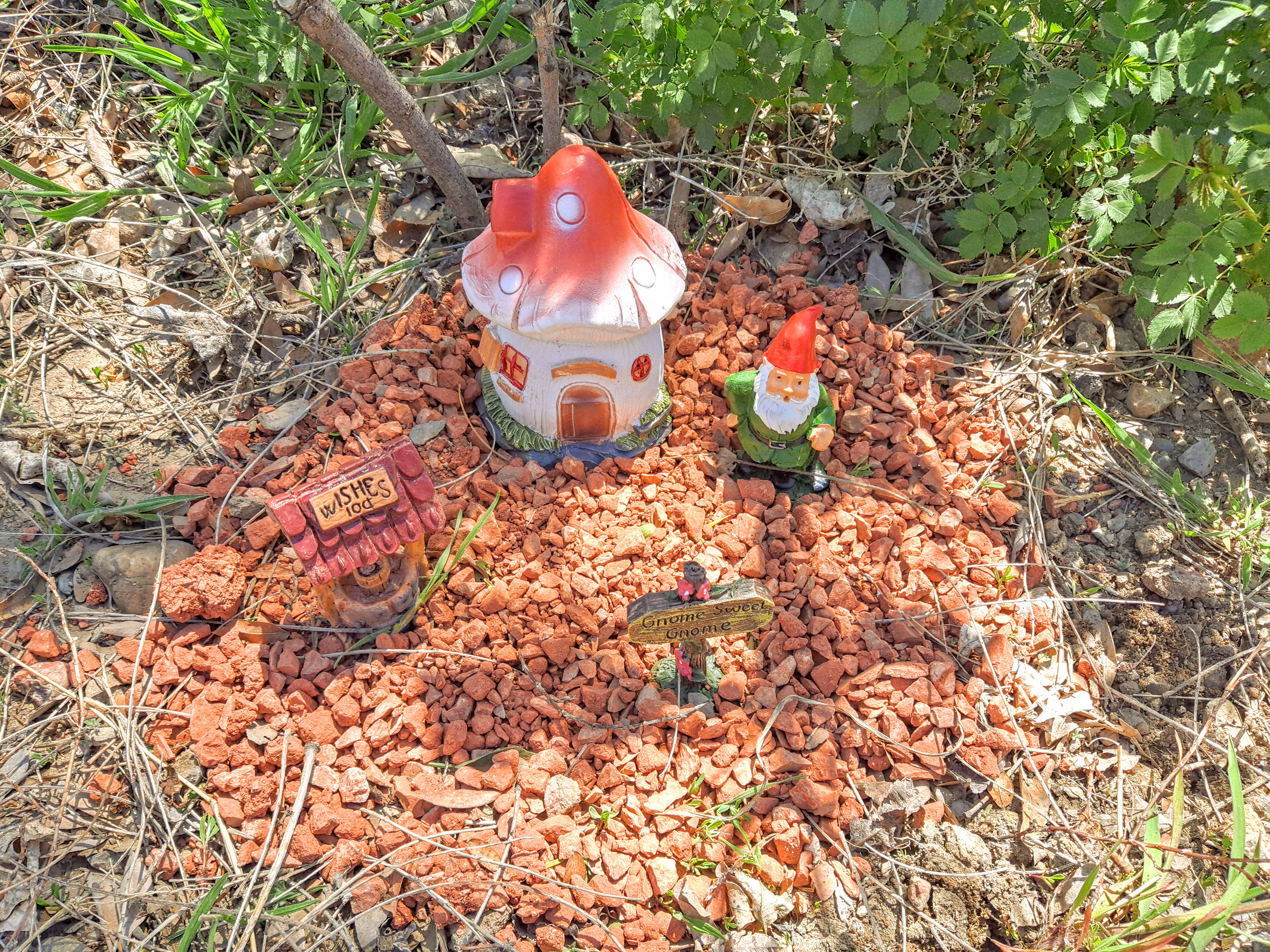
I always try to create whimsical vignettes, such as my miniature gnome house,

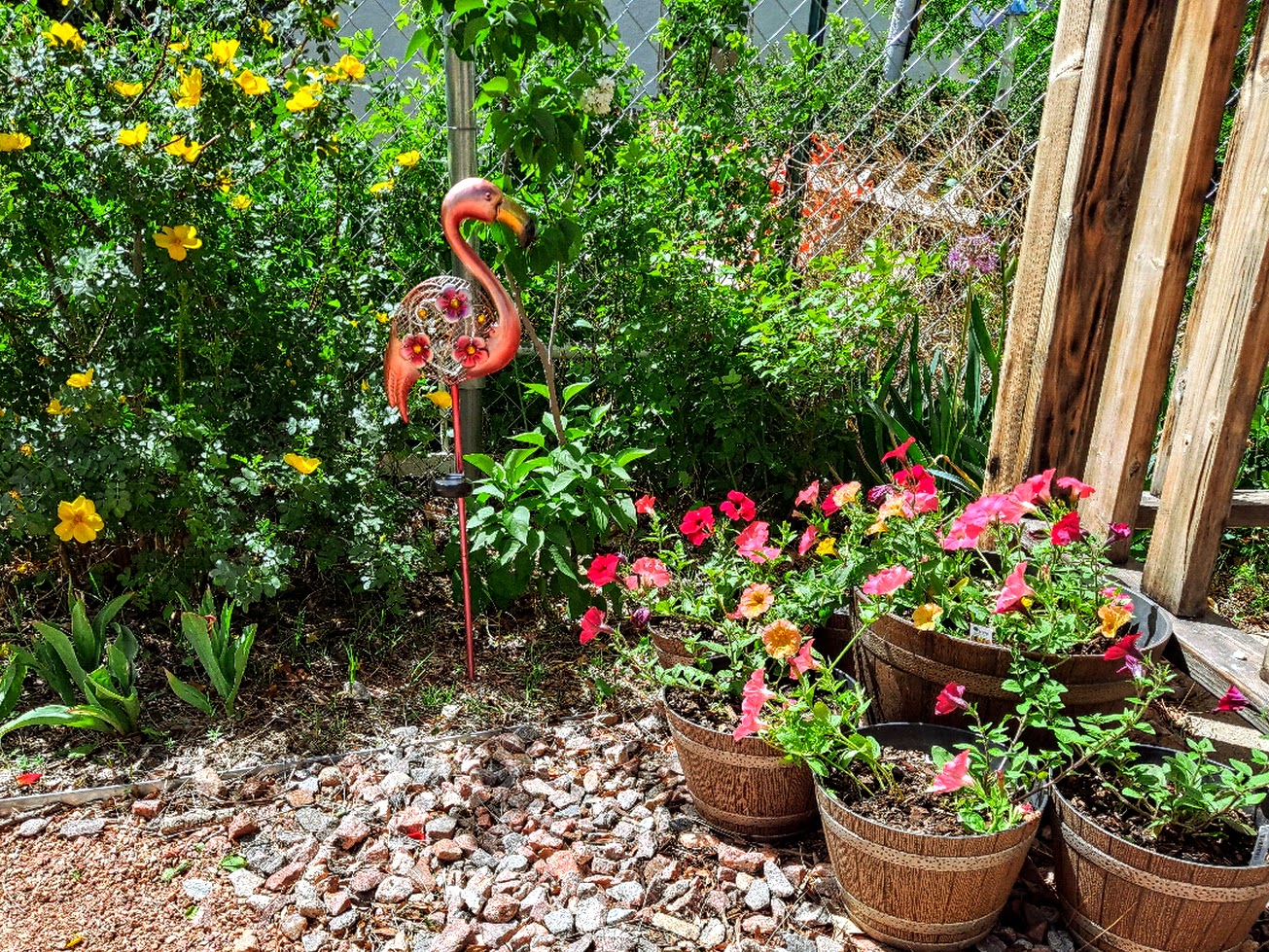
and corners that come as a surprise. Gardens that can be seen at a glance are beautiful, of course, but I wanted to be able to see different things as I wandered around my yard. One of my favorite corners this year is the flamingo corner. The flamingo was a gift from a friend, and though I didn’t purposely choose colors of petunias for the planters to match the flamingo, they turned out to be the perfect choice.

In another couple of weeks, the spring flowers will all be gone, but then there will be summer flowers coming into bloom, and if not, well, there are always seeds I can plant or seedlings to purchase at the local hardware store.

It’s amazing how with a bit of persistence and a lot of luck, all of a sudden one day, a person can end up with a real garden.

***

Pat Bertram is the author of Grief: The Inside Story – A Guide to Surviving the Loss of a Loved One. “Grief: The Inside Story is perfect and that is not hyperbole! It is exactly what folk who are grieving need to read.” –Leesa Healy, RN, GDAS GDAT, Emotional/Mental Health Therapist & Educator.
A Garden is but a Dream

Today was another digging day. Since the ground still retained some moisture from the last rain, I thought it would be a good idea to finish clearing out more weeds before the sun baked the clay soil into some sort of adobe. I’m sure a better idea would have been to rest up today after yesterday’s exertions, but I wanted to finish weeding one particular section.

I considered putting sod in that area, but I will lay down sod for a patch of lawn in the front yard, and I really don’t want to spend the time and effort — and water — to groom two lawn areas. As I was digging up weeds, I noticed there was plenty of knotweed in the area, which passes for grass in this arid climate, so I considered just watering the area and letting the “grass” grow to add a bit of green to the backyard.

But, as I was weeding, I had another thought. When I first moved here, before I got into landscaping and gardening, I’d considered turning my yard into a meadow. Even that takes a lot work, so I abandoned the idea, but a small meadow would be perfect for the area I’ve been weeding. That triangular plot of land will be sectioned off by hard pathways on two sides and the sidewalk on the third side, and I can see all sorts of wildflowers blooming there. Even better, it won’t matter if the “grass” grows between the flowers or if an occasional weed gets a roothold, because that’s the point of a meadow — anything goes.

The real issue for me is to get a mix of short wild flowers. I’ve been researching wildflower and wildflower mixes, and so many of the flowers grow four to six feet tall. Eek! I’d get claustrophobic with such tall plants in an open area! They would be perfect for outlying areas along the fence, but I’ve already planned other flowers for those areas — hollyhocks in one spot and a lily forest in another.

I finally found the right mixture at a seed place that caters to farmers and businesses with acreage to fill, so I’ll have to buy more than I need, but it will be a lot cheaper (and quicker) in the long run than trying to buy individual flowers seed packets and mixing the seeds myself. The good thing about having so many seeds is that I can plant half in the fall, and if they don’t come up next spring, I can plant the other half and see what happens.

Even after all this time, my landscaped yard with lush garden spots is still little more than a vision I dream when I am doing such mundane chores as digging weeds and turning soil, but you never know. Someday I might actually dream that vision into reality.

***

Pat Bertram is the author of Grief: The Inside Story – A Guide to Surviving the Loss of a Loved One. “Grief: The Inside Story is perfect and that is not hyperbole! It is exactly what folk who are grieving need to read.” –Leesa Healy, RN, GDAS GDAT, Emotional/Mental Health Therapist & Educator