Sample Sunday

If you’ve been wanting to check out my books, now is your chance to read the first chapter of each novel online.

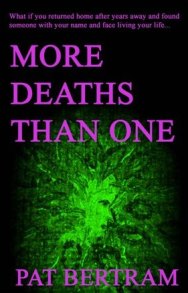
More Deaths Than OneBob Stark returns to Denver after 18 years in SE Asia to discover that the mother he buried before he left is dead again. At her new funeral, he sees . . . himself. Is his other self a hoaxer, or is something more sinister going on?

Click here to read the first chapter: More Deaths Than One

***

A Spark of Heavenly FireIn quarantined Colorado, where hundreds of thousands of people are dying from an unstoppable, bio-engineered disease, investigative reporter Greg Pullman risks everything to discover the truth: Who unleashed the deadly organism? And why?

Click here to read the first chapter of: A Spark of Heavenly Fire

***

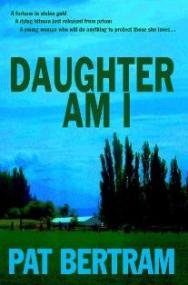
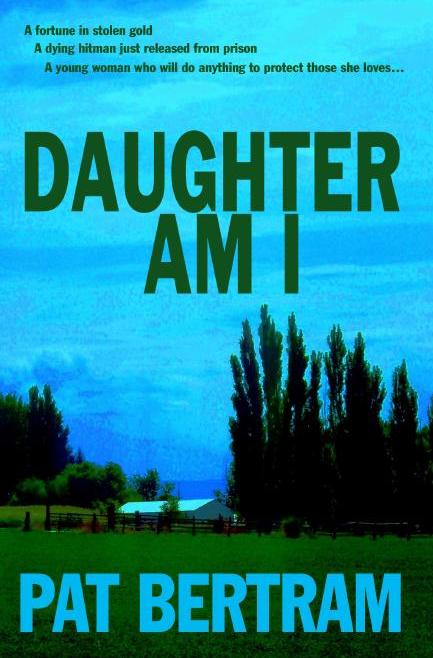
DAIWhen twenty-five-year-old Mary Stuart learns she inherited a farm from her recently murdered grandparents — grandparents her father claimed had died before she was born — she becomes obsessed with finding out who they were and why someone wanted them dead.

Click here to read the first chapter of: Daughter Am I

***

Thirty-seven years after being abandoned on the doorstep of a remote cabin in Colorado, Becka Johnson  returns to try to discover her identity, but she only finds more questions. Who has been looking for her all those years? And why are those same people interested in fellow newcomer Philip Hansen?

Click here to read the first chapter of: Light Bringer

***

Pat Bertram is the author of Light Bringer, More Deaths Than One, A Spark of Heavenly Fire, and Daughter Am I.All Bertram’s books are available both in print and in ebook format. You can get them online at Second Wind Publishing, Amazon, B&N and Smashwords.  At Smashwords, the books are available in all ebook formats including palm reading devices, and you can download the first 20-30% free!

The Flaw of Flawed Characters

I cringe every time I see authors brag about their “flawed characters” as if that’s a good thing. Apparently, somewhere along the line, writers were told not to write perfect characters but to give them flaws, and so writers everywhere are assiduously flawing their characters. Well, they are wrong.

There is no such thing as a perfect character. If a character can do everything, meet every challenge the first time, and do it all without damaging a single hair on his/her head, the only thing perfect about that character is that it is perfectly boring, which makes it far from a perfect character. Adding flaws to such a character only compounds the problem, making the character not only boring but trite. Aren’t you sick of the cynical detective struggling with a drinking problem? Or the overextended single mother struggling with the rebellious teenager? Or the lonely person struggling to find love but who is too stupid to see the love disguised as a friend or even enemy? Well, you might not be, but I sure am.

The best characters are not flawed characters, but those facing terrible dilemmas who are forced to work against their strengths. If they have a lot of knowledge, they are most compelling when they need to act without being able to use the knowledge, perhaps using logic, intuition, or snap judgments instead. If they have armed services experience or strong physical skills, they are most interesting when forced to use their minds and wits. If they tend to be serious, they are most fun when forced to rely on their humor, or vice versa. Anything else is just cheap.

One thing most people say about my main characters is that they are real. And guess what? There isn’t a flawed character in the bunch. Not a single character drinks too much (okay, Kid Rags in Daughter Am I might tipple, but he never gets drunk or lets his drinking get in the way of business). Not a single character cheats on his or her spouse. Not a single character is mean. Not a single character makes stupid mistakes. Not a single character is self-absorbed. (Well, Jeremy King, the world-renowned actor in A Spark of Heavenly Fire is focused on himself, but that isn’t a flaw but the personality trait that makes him a great actor.) Not a single character gets into fights just for the sake of proving how flawed they are — all the fights are to protect themselves or others. Every character acts to the best of his or her ability at all times, and if the best isn’t good enough, they get better.

Instead of flaws, my characters have character traits. For example, in Daughter Am I, at first the hero Mary Stuart tends be a bit of a pushover, going with the flow because she simply doesn’t care enough about the outcome of any situation to fight over it. When she makes the decision to find out who her grandparents were and why someone wanted them dead, she becomes almost obsessive in her quest, even going so far as arranging a meeting with a notorious hit man and various other shady characters. And when she finds something to care deeply about — the octogenarians who accompanied her on her journey — she becomes steely in her determination to protect them at all costs. Are these traits indications of flaws? Of course not. They are indications of a true-to-life character grabbing her destiny with both hands and going along for the ride. Flaws would only get in the way.

Learning to Use Beats in Dialogue

One of the hardest techniques for new writers to handle is dialogue. When I first started out, my characters never just said something. They agreed, cautioned, reminded, mimicked, answered, contributed, guessed, explained, responded, admonished, confessed, encouraged, clarified, blurted, pointed, winced, replied, corrected, acknowledged, returned, laughed, challenged, chided, objected, contested, quipped, offered, moaned, complained, repeated, stammered, pleaded, inquired, mumbled, interrupted, confirmed, addressed, countered, advised, completed, allowed, supplied, ordered, asked, continued, chided, answered, whispered, teased, requested, hollered, echoed, declared, informed, spoke, bellowed, spit out, thundered, hissed. All within a few pages. Whew!

Even worse, I would sit and agonize over the way my characters spoke. “He responded sparingly.” “She informed him haughtily.” He mumbled sadly.” Ouch.

It was a joy to discover that modern dialogue relies primarily on “said,” such a common word, the reader’s gaze glides over it as if it were invisible. It was even more of a joy to discover that adverbs were frowned on. The dialogue itself, or the beat — the bit of action accompanying the dialogue — should show the character’s emotion. “I hate you”, she said angrily tells us what the character is feeling. She picked up a rock and threw it at him. “I hate you!” shows us what she is feeling, allowing us to become intimately involved with the character. The only time an adverb is necessary is when the character’s words are at odds with his mood, such as: “I had a great time,” he said sadly. You can also use an occasional “ly”adverb to describe the tonal quality of the character’s voice. “I hate you,” he said softly.

Besides helping identify who is speaking, beats help set the stage, tell us about the character’s personality, and vary the rhythm of the dialogue. Overdone, the beats are as distracting as any other speaker attribute, so the secret is to pay attention to the flow. Do you want short snappy dialogue? Don’t use beats. Do you want to slow things down a bit, keep the dialogue from seeming too disembodied? Use a few beats.

It’s hard to write crowd scenes and keep each character identified without resorting to copious “said”s, but beats keep the scene moving and, if you use beats that are specific to your character, you make the various characters come alive.

This excerpt from my novel Daughter Am I shows the use of beats. The scene is between my hero Mary, a young woman in search of her grandparents’ murderer, and a group of feisty octogenarians who are trying to help.

*     *     *

The man stopped bouncing and let his arms drop to his sides. Now that he stood relatively still, Mary could see he was skinnier than she’d first thought. A gray slouch hat tilted toward one eye, but the baggy pants cinched high above his waist and the bright flowery shirt several sizes too large marred the jaunty effect. His hands shook uncontrollably. Parkinson’s disease?

“You must be Happy,” she said.

Frowning, Happy patted his torso. “Must I be happy?” His voice deepened to what Mary assumed was his normal tone. “Can I be happy? Can anyone truly be happy?”

“His name is Barry Hapworth,” Kid Rags said, flicking a bit of lint off his navy pinstriped suit jacket. “For several obvious reasons, everyone calls him Happy.”

Mary glanced from the bus to Happy. “Were you driving this thing?”

Happy puffed out his meager chest. “Sure was.”

“And did you almost run over Mrs. Werner’s cat?”

“I’ll take the fifth.” Happy paused for a fraction of a second. “A fifth of bourbon.”

“Did someone say bourbon?” Kid Rags removed the flask from his hip pocket, took a swig, and passed it around.

“Who are all these people?” Bill asked from behind Mary.

Mary turned, wondering how she could explain the situation to her fiancé, but Teach saved her the trouble and made the introductions. Arms still folded across his chest, Crunchy nodded to Bill, then stepped close to Mary. Happy punched the air, but stopped when Bill showed no inclination to fight.

Kid Rags shook Bill’s hand. “You’re a lucky man.”

“What are you all doing here?” Mary asked. “I was supposed to pick you up. And why is Happy here?”

“Happy is a friend of Kid Rags,” Teach began, but Kid Rags interrupted him, saying hastily, “Not a friend. Just a fellow I know.”

“Happy knows someone who knows Iron Sam,” Teach continued, “and since we knew your car wasn’t big enough for all of us, we accepted Happy’s offer to drive us in his bus.”

“Who’s Iron Sam?” Bill asked, sounding plaintive.

“Butcher Boy,” Kid Rags said.

Bill’s eyebrows drew together. “Butcher Boy? Mary, are you sure you know what you’re doing?”

Mary laughed, suddenly feeling lighthearted and carefree. “I haven’t a clue.”


Purposely-Flawed Characters. Or Not.

Interesting characters make interesting stories, not the other way around. An author develops interesting characters by putting them under pressure, giving them much to lose, and letting them change because of their experiences. And the author makes these characters at least a bit larger than life. Who wants to read about characters who sit around watching television all the time or who repeatedly have the same tiresome argument with their children or who can’t resolve their problems? We deal with that every day. We don’t need to read about it. On the other hand, if the traits are too idealized, characters come across as comic book silly.

Depth of character is revealed in the choices a character makes while at risk. Without the element of risk, there is no real story, only a string of episodes. Think what Superman would be like without Kryptonite — totally uninteresting and flawed in his perfection. But Kryptonite is a purposeful flaw, put there to make Superman more interesting, which makes him seem even more of a comic book character. Oh, wait. He’s supposed to be a comic book character!

To offset the problem of idealized characters, many writers try to create a purposely-flawed character, such as a boozing cop or a mother who can’t communicate with her teenager, but this seems an unnecessary distraction unless, of course, it is a vital part of the character’s motivation. So many flawed characters, particularly the hero with a drinking problem, have been done to death. I know there is a long tradition of hard-drinking detectives, but there has to be a more creative way of giving characters flaws. Or not.  Writers are so enthralled with the idea of flawed heroes, that they are missing the point. They don’t have to give their heroes obvious flaws. Writers are flawed. By making their heroes realistic, the heroes are automatically flawed.

A character must lose occasionally or make mistakes. Where is the suspense if every time a character attempts to do something she succeeds? And in that loss is a shadow of the flaw, because the setback must be realistic. Did the character lose because of arrogance, assuming she knew what to do when she didn’t? Did the character lose because she wasn’t physically fit or knowledgeable enough? Did the character lose because she didn’t plan correctly, because she was unfocused, because of her inner conflicts? Such losses force a fully realized character to change so in the end she can succeed.

In the beginning of Daughter Am I, twenty-five-year-old Mary Stuart has no real direction, no purpose, but when she learns she inherited a farm from her recently murdered grandparents — grandparents her father claimed had died before she was born — she becomes obsessed with finding out who they were and why someone wanted them dead. She drives halfway across the country with a feisty crew of octogenarians, friends of her grandparents, and even though she discovers they all had ties to the mob, she doesn’t let her good sense override her obsession. This understandable obsession is her flaw (though I did not write her to be a flawed charater), and if she doesn’t grow during the course of the story, if she doesn’t learn from her setbacks, the obsession could become a fatal flaw. Fatal or not, flaw or not, Mary’s obsession makes her real, makes her a bit larger than life, and makes her interesting.

What is the easiest part of the writing process? What is the most difficult?

The easiest aspect of writing for me is editing. The words are all there, it’s just a matter of making sure they are the right ones and that they say what I want them to say. The most rewarding is knowing I wrote a book worth reading. People tell me they really enjoy Daughter Am I, that they “hate saying goodbye to these wonderful characters.”

The most difficult part of writing for me right now is just sitting down and writing. I have no real inclination to write fiction, and I find it hard to focus on a long project. I’m sure the desire will come back, probably when I stop spending so much time on the Internet.

Here are some responses from other authors about the easiest and hardest parts of the writing process. The comments are taken from interviews posted at Pat Bertram Introduces . . .

From an interview with J J Dare, Author of False Positive and False World

The easiest part of the writing process is inspiration. When it’s there, the words flow like a raging river. If the story is in my head and I’ve been tapped by my muse (and she stays with me), I can write a novel in a week.

The hardest part of the writing process is inspiration. When it’s not there, it can’t be faked. Constipated writing can be unbearable.

From an interview with Dale Cozort, Author of “Exchange

For me, the easiest part is writing the rough draft. Once I have characters and a plot outline I can write the rough draft of a novel in four to six weeks and I enjoy doing it. What happens before and after writing the rough draft is far more difficult and time-consuming.

The most difficult part is the last five percent of the editing process, the part that gets you from almost the right words to exactly the right words. For me that takes more time than writing the rough draft.

From an interview with A. F. Stewart, Author of Once Upon a Dark and Eerie

For me, the easiest element of writing is the dialogue. I rarely have a problem with the flow of dialogue. Possibly because I can hear all those character voices whispering in my head.

The most difficult part is writing the middle section of the plot. I’m great at churning out beginnings and endings, but I always have to work at writing the stuff in between.

So, for you, What is the easiest part of the writing process? What is the most difficult?

(If you’d like me to interview you, please check out my author questionnaire http://patbertram.wordpress.com/author-questionnaire/ and follow the instruction.)

Do you think writing this book changed your life?

Speaking of Daughter Am I, I wish I could say writing this book changed my life since would make a good story, but the fact is, it made little difference. It was the third novel I wrote. I’d already experienced the joy and sense of accomplishment completing a novel gives one, and I’d already experienced the disappointment that comes from having a novel rejected. I’d already experience the joys of being published and the disappointment that comes from not having the book take off immediately. Now, if Daughter Am I would go viral, that would change my life!

Here are some challenges other authors faced as they wrote their books. The comments are taken from interviews posted at Pat Bertram Introduces . . .

From an Interview with Harold Michael Harvey, Author of “Paper Puzzle”

Yes I do think writing this book has changed my life. After leaving the practice of law I had to redefine myself, reinvent me if you will. And writing has gotten me back to the original childhood dream of what I wanted to do in life. The joy of writing legal thrillers is a lot less stressful than fighting to keep the State of Georgia from killing my client with a lethal injection as deadly as those given to Michael Jackson by Dr. Conrad Murray.

From an Interview with J J Dare, Author of False Positive and False World

Writing my first book a few years ago gave me confidence. I believe it was an exercise to prepare me for the challenges I would shortly face in my personal life.

From an Interview with Noah Baird, Author of Donations to Clarity

I think people thought I was pretty weird before the book. They still think I’m weird, but I think I get a pass now because I’m a writer.

From an Interview with Calvin Davis, Author of The Phantom Lady of Paris

After penning the Phantom Lady, I was not the same person. The actual writing of the novel took about five and a half years. During that period, I wrote and rewrote again and again, etc. That said, the truth is, it took me all my life to write the Phantom Lady. The penning of my two other novels was preparing me to write TPLOP. The production of my countless short stories was also tutoring me on how to create the Phantom Lady. And during all this time of schooling, “the lady” was inside me clamoring to be liberated, as I was clamoring to liberate her. “Free me…free me,” she screamed. When I completed the last sentence of the novel, the lady was finally liberated. “Thank you, Calvin,” she said. “Thank you.” Finally, she was free…and so was I.

From an Interview with Sherrie Hansen, Author of Merry Go Round

I think each book that I’ve written has changed my life. I remember an episode of Star Trek, Next Generation, when Jean Luc Picard was swept away to live out his life on another planet. He eventually fell in love, married, had children, and learned to play a musical instrument. When his new world came to an end, he learned that he had never left the Enterprise, and that the whole alternate life experience had occurred only in his mind, in a few days time. I feel like that every time I finish a book. It’s like I’ve visited some alternate reality and lived the life of my character from start to finish, feeling what they feel and experiencing what they experience, when in reality, I’ve just been sitting at my desk, typing away. In a very real way, I think each book makes me a richer, more multi-faceted, more understanding person because when I’ve walked a mile (or a hundred) in my character’s shoes.

Excerpt From “Daughter Am I” by Pat Bertram

DAIDaughter Am I: When twenty-five-year-old Mary Stuart learns she inherited a farm from her recently murdered grandparents — grandparents her father claimed had died before she was born — she becomes obsessed with finding out who they were and why someone wanted them dead. Along the way she accumulates a crew of feisty octogenarians — former gangsters and friends of her grandfather. She meets and falls in love Tim Olson, whose grandfather shared a deadly secret with her great-grandfather. Now Mary and Tim need to stay one step ahead of the killer who is desperate to dig up that secret.

Excerpt:

Mary blinked in the sudden brightness, then blinked again when she saw Iron Sam. He seemed to be the personification of the inorganic being, as Happy called it. His skin looked ashen. Charcoal bags hung below slate eyes. His hair, still thick, still with the deep widow’s peak, had faded to pewter. The only hint of color in his face was the gold tooth visible between slightly parted gunmetal-gray lips.

He glanced up as they entered, but no other part of his body moved. Nor did he speak.

“Hi, Sam,” Lila Lorraine said.

The slate eyes shifted toward her.

“It’s me. Lila Lorraine.”

Iron Sam nodded, the merest inclination of his head.

Happy stepped forward. “Remember me? Happy?”

Again the tiny nod.

Mary wondered if he were paralyzed, but if so, wouldn’t he be in a wheelchair instead of an ordinary wooden chair?

Any compassion she might have felt withered when his eyes met hers. Feeling like a bug impaled on a pin, she gazed at him, unable to look away, unable to move a single muscle. After what seemed like a long time, but must have been only seconds, he turned his attention to Kid Rags, leaving her feeling limp and very thirsty, as if her vital fluids had been sucked right out of her.

With nonchalance Mary could only marvel at, Kid Rags pulled out his flask and offered it to Iron Sam. When Iron Sam nodded toward the plastic cup sitting on the bedside table, Kid Rags poured two fingers of bourbon and handed the cup to him. He sniffed it, inhaling deeply with closed eyes, then took a mouthful and held it a moment before swallowing it. His lips twitched — a smile perhaps? — then he took another sip.

The alcohol fumes mingling with the hospital odors and the stench of decay emanating from Iron Sam’s pores turned Mary’s stomach. She swallowed hard, then swallowed again, knowing she shouldn’t show weakness in front of Iron Sam, and somehow she managed to get her queasiness under control.

He flicked a look in her direction, as if sensing her struggle, then concentrated on his drink once more.

“My name is Mary Stuart,” she said when she could no longer stand the heavy silence. She introduced Kid Rags, Crunchy, and Teach, then explained about her grandparents’ deaths.

“What can you tell me about my grandparents? You might have known them as Jimmy Boots and Gina Dale.”

***

Pat Bertram is the author of the suspense novels Light Bringer, More Deaths Than One, A Spark of Heavenly Fire, and Daughter Am I. Bertram is also the author of Grief: The Great Yearning, “an exquisite book, wrenching to read, and at the same time full of profound truths.” Follow Pat on Google+. Like Pat on Facebook.

Shamrock-N-Sirens Readers’ Event Introduces . . . Me!

*
12 Day Reader’s Event SHAMROCKS-N-SIRENS
Click here for all the contests and a chance to win a set of special mugs:
SHAMROCKS-N-SIRENS … AN IRISH EVENT!!!

I am participating in a twelve-day readers’ event in celebration of St. Patrick’s Day. My day to be interviewed is today, so please stop by 12 Day Reader’s Event SHAMROCKS-N-SIRENS Welcomes Featured Author Pat Bertram  (or if you’re leary about entering a non-G rated site, you can see the interview at Pat Bertram, Author of “Daughter Am I”.

I answer questions with world-shaking impact, such as where and when I do my writing, how I write, my favorite quote, and what thing I would never leave behind were I to attend a St. Patrick’s Day party.

And best of all,

From now until March 18, Daughter Am I is on sale for $2.99 on Kindle at: Amazon

*

How do you develop and differentiate your characters?

Usually I try to do scenes with only two characters since it’s easy to differentiate between two characters, but in Daughter Am I, I ended up with twenty-five-year-old Mary Stuart driving around the country with a busload of funny and heartbreaking octogenarians, including a con artist, a dying hit man, and a gangster’s moll. Because these characters were always together, I had to give each a specific characteristic — a foible — and I had to make sure those foibles became part of the story, otherwise the characters might have turned into caricatures. For example, Happy (an ex-wheelman for the mob) has Parkinson’s disease. He also carries a gun, which terrifies the others since he can’t hold the gun steady. Mary ends up confiscating the gun. The weapon, Happy, and Mary’s relationship to both gun and man become a part of the story. Another character, Crunchy, used to be a mob enforcer, and he becomes Mary’s protector, promising to crunch anyone who does her harm. This promise, too, becomes part of the story, as he learns his limits and she learns to take care of herself.

As for dialogue, each character has a specific way of talking. For example, Happy is prone to gloomy pronouncements, Teach loves to lecture, Crunch speaks in broken sentences, Kid Rags always talks food and drink. Especially drink.

Here are some ways other authors develop and differentiate their characters. The comments are taken from interviews posted at Pat Bertram Introduces . . .

From an interview with Sherrie Hansen, Author of Merry Go Round:

I think my characters have very distinctive personalities, and in Merry Go Round, the differences in the sisters is very apparent when they’re all in the same scene, interacting with one another. I try to get into their heads and consistently think and act like they would.

From an interview with R.M. Doyon, author of Upcountry:

Like most novelists, my characters are based on many real people.  I liked to take one quirk here, one detail there from many different individuals and create a new person.   Once you build a character, particularly a principal player, the most important questions I had to ask myself were: would he or she DO something like this?  Would he or she SAY something like this?  Are they true to themselves?  You must give them a personality, but at the same time a very human element.  Humans are not perfect.  They make mistakes in judgment, and so it was important to keep them true to themselves.

So, how do you develop and differentiate your characters?

(If you’d like me to interview you, please check out my author questionnaire http://patbertram.wordpress.com/author-questionnaire/ and follow the instruction.)

How Did You Do the Research for Your Novel?

I researched my novel Daughter Am I for two years, but I also had help from a historian friend, and in fact, he was the one who inspired me to write the book. He used to regale me with tales of gangsters. It got to the point where I couldn’t watch a gangster film with him because he’d keep up a running commentary about all the things the filmmaker got wrong, and I’d miss half the story. I did a lot of research myself, though, and it was a special joy when I discovered something he didn’t know! Most of the information isn’t on the internet, but resides in . . . gasp! . . . books.

Here are a few ways other authors did research for their books. The comments are taken from interviews posted at Pat Bertram Introduces . . .

From an interview by Deborah J Ledford, Author of Snare and Staccato

I’m part Eastern Band Cherokee and knew that I wanted the Native American element to be instrumental for SNARE. Once I decided on the Tribe to focus on I came into contact with the communications director on the Taos Pueblo in New Mexico. Floyd “Mountain Walking Cane” Gomez read every word of the manuscript as I composed each draft. He either approved scenes, characters and elements, or told me flat out “No, you cannot use this.” (he told me this quite often!) Elements Floyd wasn’t sure about were cleared by elders and the Taos Pueblo Tribal Council.

From an interview by T. C. Isbell, Author of “Southern Cross”

I spent a great deal of time researching my book. I used period magazines like Post, Life, and National Geographic. Some research was accomplished using old books and the Internet. However, information on the Internet has to be approached with a grain of salt.

From an interview by Polly Iyer, Author of “Hooked”

You’d be surprised how many upscale women write about their adventures as a call girl. Like Tawny, these are smart women who think why not get paid for something they’re giving away free. The top women go places with exciting, rich men and make big bucks to do it. Just click on Google, and there they are, telling all.

From an interview with Bonnie Toews, Author of “The Consummate Traitor”

I do intense research so that my facts are as realistic as can be in a fictional setting. I scour libraries, Google, read travelogues of areas I have not visited so that my descriptions are as true to life as possible, either today or in the time of the book’s setting. For that I interview people who lived and endured during the period. One interview for The Consummate Traitor was with an actual German aerocraft designer Canada protected so he could work on our Avro jet. He began as a fanatical NAZI with access to Hitler’s inner circle (He hated Goring) but by the end of the war, was so disillusioned that he ended up with a disassociated personality. During our interview he split from one to the other depending on what I described that triggered him to relive the past. I gained amazing insight from that interview and gave his hands to my NAZI villain. I have never seen hands like his — his finger tips were square, not rounded, and his shoulders were so slumped that his arms seem to hang too long for his body. I could picture him in an SS uniform with the shoulder paddings squaring off his body. He died a few years ago. He had Parkinson’s.

What about you? How did you do the research for your novel?