Wednesday’s Child

A childhood ditty declares, “Wednesday’s child is full of woe.” I sometimes wonder if there is any truth in the saying — I was born under Wednesday’s curse and I do seem to be more woe oriented than most people I know.

Everything always seems so easy for others. When I mention my tales of woe, such as grief for my deceased life mate/soul mate, people often dismiss my pain and offer their own religious beliefs as consolation. But those are their beliefs. Not mine. And even if they were my beliefs, they wouldn’t affect my grief. Grief is not intellectual. It is visceral, as much of a physical trauma as it is emotional, and as such is not always ameliorated by religious beliefs.

eclipse(I make it seem as if grief is a constant in my life, but it isn’t, not really. I can go weeks without thinking of him or shedding a single tear. This just just doesn’t happen to be one of those weeks.)

I suppose it does seem unimportant, this death that occurred five years ago. And yet, to me, it is all-important. Because of his death, I am where I am today, both spiritually and geographically. Because of his death and all the other deaths that have affected me in recent years, I have to rebuild my life from the ground up. This seems an immense task to me, and yet people shrug it off as if it is an everyday occurrence.

Is life that easy for others? Can they as easily dismiss their own woes as they do mine? After a trauma, can they really go on as if nothing has happened? Do the realities of life and death affect them so lightly? Or is it that they are better at hiding their feelings than I am?

I suppose it’s possible that I lack the resilience necessary to lead an easy life, but it seems to me I am resilient enough. In the past five years, I have closed up a house after the death of its inhabitants not once but twice, getting rid of the earthly possessions of those who no longer have a use for them. I have twice been dislocated and unhoused because of death. I have made friends and lost them, and made new friends. I’ve had my heart broken and my feelings hurt, and endured abuse from my dysfunctional brother. I’ve walked thousands of miles, written hundreds of blogs, laughed and joked, smiled and listened. I’ve learned to dance — not well, perhaps, but well enough to perform on stage with my classmates. And I am still chugging along, dreaming a new future into existence.

For the most part I am happy, grateful, hopeful even. And yet . . . and yet . . .

When he died, it felt like an amputation, and whatever was amputated is still gone. I have become so used to the feeling that I don’t always notice the amputation, but every once in a while grief steals over me like an eclipse, shadowing my life with pain and sorrow. For just a moment I wonder what is wrong, and then it comes to me.

He is dead.

That’s the fact of my life I cannot get around. Where he is, if he is, whether he is subsumed into the whole or maintains individual consciousness, I still have to deal with his goneness, still have to make my own way in the world. Still have to learn to live fully.

And oh, yeah. I have to forget that whole “Wednesday’s Child” thing. I don’t need any more woes.

***

Pat Bertram is the author of the suspense novels Light Bringer, More Deaths Than One, A Spark of Heavenly Fireand Daughter Am I. Bertram is also the author of Grief: The Great Yearning, “an exquisite book, wrenching to read, and at the same time full of profound truths.” Connect with Pat on Google+. Like Pat on Facebook.

Letting Go

My first out-of-town adventure in this new rootless life of mine was going to be a pilgrimage to dispose of Jeff’s ashes. (For those of you who are new to this blog, Jeff was my life mate/soul mate who died five years ago, catapulting me out of our shared life and into a life of accepting whatever comes my way.) I’d been taking care of my nonagenarian father, but now that he’s gone, too, my stuff is in storage. And, I am appalled to admit, so are Jeff’s ashes.

It’s past time for me to dispose of those cremains (as the funeral industry do quaintly calls them), but I don’t know quite where to release the ashes. Disposing of them is more a matter of myth and ritual than reality. I know he is gone and that they have nothing to do with him or his life, but they are his last earthly remains, the inorganic part of his body that was left behind when he was cremated.

I’d planned to take the ashes to northern California when I went to visit a friend, to scatter them in the ocean near the Redwood Forest because he loved both water and trees, but since neither of us had ever been there, it seems wrong, somehow. Disposing of this last vestige of his life should feel right to me —- I am the one left to deal with his goneness. But I don’t feel right about any of it. I don’t feel right about his being gone, though when I subtract him out of the equation of my life, I’m fine. Happy even. I certainly don’t feel right about keeping his remains in a rented storage unit, but they’ve been there five weeks already, so I don’t suppose it matters if they are there a while longer.

People tell me I will know when the time is right, and this time does feel right. It’s the place that confuses me. Do I take him out to the desert on a windy day and let him go where he wishes? Do I take him back to Colorado, back to the creek where we talked about our future, or maybe back to where we lived? Do I take him to Minocqua where he’d dreamed of opening a mom-and-pop store on the lake? But oh! He’d feel so far away. As if he isn’t already so far from me.

In the days after Jeff’s death, a minister friend advised me to save some of the cremains, which was good advice. I’d never planned to keep them but having them with me brought me comfort. But I don’t feel right about keeping some and getting rid of the rest. It would feel so . . . scattered.

Though I have his ashes with me, it feels as if I left him in Colorado. I left his car there. (I donated it to hospice.) I think I would feel better if his ashes were there, too, for no other reason than that is where I picture him. We never talked about what to do with his ashes, but once when I mentioned I was considering taking them to the North Fork a mile or two from where we lived, his eyes lit up.

It will be a while before I get back to Colorado — I have a dance performance coming up, housesitting jobs, and a New Years resolution to keep. (I promised an online friend — my first and staunchest fan! — that we would meet this year for sure, so with or without Jeff’s ashes, I’ll be heading for northern California first chance I get.)

I never thought it would be hard to scatter his ashes — after all, they are doing no earthly good sitting in a storage unit — and now I realize it’s going to be immensely difficult, that final letting go.

But it has to be done. Doesn’t it?

***

(Pat Bertram is the author of the suspense novels Light Bringer, More Deaths Than One, A Spark of Heavenly Fire, and Daughter Am I. Bertram is also the author of Grief: The Great Yearning, “an exquisite book, wrenching to read, and at the same time full of profound truths.”)

***

Haunted by the Specter of Empty Rooms

The last night in my father’s house. I’ve been wandering through the empty rooms to make sure I haven’t overlooked anything, and I can’t stop crying. It seems as if during the past five years I’ve tapped into a well of endless tears, and though the weepfests are fairly rare now, tonight brought them back.

It’s the end of so many things.

I came to this house after the death of Jeff, my life mate/soul mate, to look after my father and ensure he could be as independent as possible during his last years. I fulfilled that task, and now he is gone, too, having survived my mother by almost eight years.

I no longer know who I weep for. All my dead? The woman I once was? Death itself?

I came here shattered by grief — totally desolate with no idea how to go on by myself, no idea how to want to go on by myself. Now I have dance classes, friends, dreams. Would Jeff even know me now? Would the woman I once was know me?

I rememb016ber how at the beginning of my grief, I used to marvel that so great a trauma as the death of the one person who tied me to earth and made life worth living didn’t change me. But something did — perhaps living. There is a whole world out there if I have but the courage to take it, and yet here I am, soaked in tears.

Tomorrow I will gather myself up and forge ahead with hopes and a smile, but tonight, well, tonight there are just too damn many empty rooms. Too damn much sorrow.

I know this is the cycle of life. People are born. They live a few years or many. They die. But my heart doesn’t want to know that particular truth. My heart wants what it can no longer have — to go home to Jeff. But that home is gone, too. Those rooms I emptied before I came here are filled with other people’s belongings. Jeff for sure isn’t there. Nor is he in my future.

The specter of empty rooms haunts me.

I used to love empty rooms. Jeff and I never put furniture in our living room. A weight bench. That was all. But now, empty rooms remind me of ends, not beginnings. And I am tired of ends. (That’s probably why I like the idea of a nomadic life, though I doubt I would like the reality — there are no ends, only beginnings.)

I wish I were strong and wise and brave, but the truth is I simply do what everyone does — keep on going however I can.

And tomorrow I go, leaving these empty rooms behind.

***

Pat Bertram is the author of the suspense novels Light BringerMore Deaths Than OneA Spark of Heavenly Fireand Daughter Am IBertram is also the author of Grief: The Great Yearning, “an exquisite book, wrenching to read, and at the same time full of profound truths.” Connect with Pat on Google+. Like Pat on Facebook.
I Am a Five-Year Grief Survivor

I’ve been doing well recently, trying to be excited and optimistic about the future, accepting the uncertainty of it all as something wonderful, but this afternoon, I crashed.

Today is the fifth anniversary of Jeff’s death.

In my grief blogs, I call him my life mate/soul mate, which gives people an erroneous idea of our state of bliss. We weren’t a romantic couple, and we didn’t bring each other a lot of happiness. In fact, we weren’t happy very often — we had to deal with too many setbacks with both our finances and his health. And yet, through it all, we remained together, connected in a profound way that neither of us ever understood. We used to joke that the trickster gods hated us because of that connection so every time we almost reached success, they toppled our lives, leaving us to start over.

The connection was so great, in fact, I often thought that when he died, I would die too, that he’d pull me with him when he left, and at times it felt that way — as if I were straddling the invisible line between this world and eternity, with half of me a mere shadow of death.

But life isn’t so simple or dramatic.

I survived his death. I survived the breath-stealing and heart-stopping pain of grief. I survived the long bleak years of loneliness. In many ways, I’ve even thrived.

People seem astounded by my ability to accept an uncertain future, but those are people with something to lose. After Jeff died, I came to look after my father, and now that my father is gone and his house sold, my future is up for grabs. I don’t want to settle down, don’t want to deal with a lease, utilities, and all the rest of the responsibilities that come with a “normal” life, and so I will fling myself to the mercy of the winds.

It’s not really a virtue, this acceptance of uncertainty, but more of a necessity. What do you do when the one person who connected you to the world is gone? Where do you go? How do you choose? The truth is, it simply doesn’t matter. If he were alive, of course, I’d go home to him. He was my home. Everywhere else is simply a place. I suppose as time goes on, it will matter where I am, and I will make plans accordingly, but now . . . uncertainty is as good a way to live as any other.

If it works out, of course, I’ll stay in this area and continue to take dance classes. I have friends here. People who care about me. But if it doesn’t work out? I’ll get in my soon-to-be-restored VW Beetle and take off.

I think Jeff would like my feeling so free. He told me once he admired my spontaneity, and how it bothered him that our life together changed me. What he didn’t know is that meeting him and knowing there was someone like him in the world is what inspired me to try new and daring things. Until then, spontaneity had never been one of my defining characteristics. Not that it matters any more what he would like — he left me. I know he didn’t have a choice, but still, he did leave me to fend for myself.

And now I am free for . . . whatever.

Tomorrow I’ll again be optimistic and try to be excited about the world opening up to me, but not tonight. Tonight I’ll remember him, and weep. I’ll indulge in wishful thinking of what might have been. And I’ll give thanks that once I was lucky enough to be so connected to another human being that even five years after his death I can feel his absence.

***

Pat Bertram is the author of the suspense novels Light BringerMore Deaths Than OneA Spark of Heavenly Fireand Daughter Am IBertram is also the author of Grief: The Great Yearning, “an exquisite book, wrenching to read, and at the same time full of profound truths.” Connect with Pat on Google+. Like Pat on Facebook.
Grief: The Great Learning, Day 445

I’ve saved the letters I wrote to my life mate/soul mate after he died, thinking that one day I would write a sequel to Grief: The Great Yearning, the story of my first year of grief. I’d planned to call the sequel Grief: The Great Learning, and detail the lessons gleaned from the second and third years of my grief. Because I no longer want to keep revisiting such angst, there will be no sequel, so I’m publishing the letters here on this blog as a way of safeguarding (and sharing) them.

Although this letter was written three and a half years ago, it reflects much of what I am thinking about now. My father recently died, and now I am facing what I could only think about back then — the vast open plain of the future before me.

I am packing to leave this house and go . . . I know not where. I’ll probably stay around here for a while. I have made new friends after those referred to in this letter disappeared out of my life, and it just occurred to me that I can speak about all of my concerns to at least one of those women. It’s nice and helps offset the loneliness that still hits me every evening.

And oh, yes. I still keep hoping for major changes — good changes.

###

Day 445, Hi, Jeff.

I’ve been going through an upsurge of grief, missing you so damn much. It stuns me, like a snake stunned by a rock thrown at it, to think I’ll never see you again. You’d think I’d have come to an accommodation with that, but such ”acceptance” of that fact does not bring acceptance of what it means — death for you, loneliness for me.

Life involves people, doesn’t it? I’m trying to “people” my life, but it’s not the same thing as being connected to one specific person. We were often lonely even when we were together, but this loneliness is incomprehensible. I’m considering staying here after my father dies because at least I know people here, but so many of the people I have met, especially those from my grief group, have already faded from my life. And if the rest disappear, then what?

It should be exciting to have the vast open plain of the future before me, but all I see is bleakness and aloneness. I have no one to talk to about my concerns. I don’t know how to cope with that. I keep hoping for major changes (good changes), but all that seems to be happening is a slow descent into inevitability.

I hope you’re not lonely. I couldn’t bear that.

***

Pat Bertram is the author of the suspense novels Light Bringer, More Deaths Than One, A Spark of Heavenly Fireand Daughter Am I. Bertram is also the author of Grief: The Great Yearning, “an exquisite book, wrenching to read, and at the same time full of profound truths.” Connect with Pat on Google+. Like Pat on Facebook.
Letter to Jeff, Day 435


Day 435, Hi, Jeff.

Another Saturday. I’m tearing up again, though I’m not sure why. Loneliness, I guess. Feeling sorry for myself. I need to get on with my life, concentrate on myself. But how lonely is that? Perhaps it’s better to have no hope. Just try to take the days as they come. It sounds a lot easier than it is. The damn emotions get in the way.

Will this sorrow ever end? Will anything good ever happen to me? Do you miss me? Do you still exist? Will I ever love again? Will anyone ever love me? Is this all there is — this emptiness? I can fill the emptiness with doing things — reading, writing, walking, whatever comes my way — but as soon as I stop concentrating on the “fill,” the emptiness shows up again.

I need something to hold on to. I need something concrete to build my life on, but there isn’t anything but maybe survival. Survival — that’s what your life ended up being about. Is that all there is? Survival until there is no more survival?

How did you manage to survive as well as you did? Was it worth it living with such pain? I guess, in the end, there isn’t really a choice. You have to play out the hand you’re given. Damn. I wish I weren’t so lonely. I might be able to deal with your being gone if not for that. And I really should be able to deal with it. For cripes sake, I am not a child.

What a mess my life is, well, if emptiness can be called a mess. I wish I cared about something. I wish I could talk to you. I wish you weren’t dead. I wish you hadn’t been so sick for so long.

Maybe I’m being insensitive, whining about my life when you no longer have a life. But then, maybe you got the better end of the deal. I hope so.

I love you.

***

Pat Bertram is the author of the suspense novels UnfinishedMadame ZeeZee’s Nightmare, Light BringerMore Deaths Than OneA Spark of Heavenly Fireand Daughter Am IBertram is also the author of Grief: The Great Yearning, “an exquisite book, wrenching to read, and at the same time full of profound truths.” Connect with Pat on Google+. Like Pat on Facebook.
Too Many Losses

I’m sitting here with tears running down my face, and I don’t really know why. Just too many recent losses, perhaps. Two losses — the death of my father two and a half weeks ago and before that the loss of a dear friend to what seem to be irreconcilable differences — aren’t many, it just seems like a lot because any loss renews my grief for my life mate/soul mate, who died four and a half years ago.

windI tried to wait until the tears passed before writing tonight because I’ve wept way too often on this blog, and I just didn’t want to have to admit to more sorrow. But here I am . . .

I was fine all day until after dance class this afternoon when everyone went home to someone and I returned to a borrowed house. I don’t mind being alone — it’s rather peaceful not having to worry about other people’s ills and crotchets, not having to figure out what someone else wants or needs. But perhaps that’s my problem. After a lifetime of being needed — from a childhood spent taking care of younger brothers and sisters to a recent adulthood spent taking care of the sick and dying — all of a sudden, no one needs me.

It’s not that I want to be needed — I don’t. (It’s long past time for me to figure out what I need rather than what other people need.) It’s more that I’m not used to the emptiness not being needed has left behind, an emptiness I have yet to fill. Dancing helps, of course, but there are only so many classes I can take. I’m filling many of my weekend hours sorting through and packing my stuff for storage, but I can only do that for so long, too, because it’s sad dismantling what’s left of my shared life with my mate. Not only is each item I get rid of one more thing gone from that life, it’s a reminder that I won’t be going home to him. Not now, not ever. The odd thing is, I really had let him go several months ago with the realization that he is a person in and of himself and on his own journey that has nothing to do with me. But preparing for the coming upheaval in my life brings it all back.

Maybe I’m just feeling sorry for myself tonight. Instead of sitting here whining or trying to figure out why the tears, I think I’ll go for a walk. If nothing else, it will be good for me.

***

Pat Bertram is the author of the suspense novels Light Bringer, More Deaths Than One, A Spark of Heavenly Fire, and Daughter Am I. Bertram is also the author of Grief: The Great Yearning, “an exquisite book, wrenching to read, and at the same time full of profound truths.” Connect with Pat on Google+. Like Pat on Facebook.

Dancing My Way Out of Grief

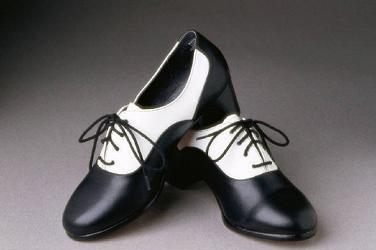
Today was a particularly intense day for me at the dance studio. I took three classes. Ballet, which wants to twist my body in ways it wasn’t meant to go. Advanced tap, where I am totally out of my depth. And advanced jazz, which wasn’t hard, just exhausting.

The difficulty of the day, particularly tap, which is hard enough for me at a beginner’s level but confusingly difficult in a more advanced class, reminded me of my first days at the studio. I started out with jazz, not knowing what to expect, not knowing I would fall in love with dance and end up taking all possible classes. Since I had no background in dance, and since the group had been together for quite a while before I joined, I was more or less just dumped in the middle of a dance and told to follow along as best as I could until the teacher could find time to work with me. I tried to emulate the others, but even the simplest steps were beyond me. But I practiced. And I learned. Even more importanjazz shoest, I learned how to learn to dance, which is vastly different from learning how to learn academic subjects. (Knowing how to learn is the key to learning, as I’m sure you know.) With more cerebral pursuits, you only have to put your mind in gear. With physical lessons, you have to put your body, mind, and soul into the experience, and once I’d learned to walk, I never had to put that much effort into learning physical things for the simple reason that I had no interest in such matters.

Last summer, before I started taking dance classes, I’d gone on excursions, traveled, visited museums, and did whatever I could to get myself to look more to the present and future rather than back at the past, but I was still subject to upsurges in grief. I was happy enough while doing such things, but as soon as they were over, the sadness descended once again. Dance was the first thing I did that rippled into subsequent days, probably because it was so difficult, all-consuming, and exciting, and it brought me to life.

Learning is my talent, my joy, the thing that makes life worth living, and dance plays into that aptitude for learning since as soon as I learn one step or one dance, there is another one to learn. Even more than that, dance helped push aside the physical memories of my shared life with my soul mate.

When someone close to you dies, especially someone whose life is connected to yours on a profound level, you remember him not just with your mind but with your body. So often, when anniversaries came around, such as the anniversary of his cancer diagnosis or the anniversary of our last kiss, I didn’t remember the day, but my body did. Visiting art museums, reading, writing, walking, helped push the mental memories of him into the far reaches of my mind, but until I began to learn how to dance, there was nothing to distance the body memories.

To a great extent, dance is about body memory. If you have to pay attention to every move you’ve learned instead of letting your body remember, you lose the rhythm of the dance as well as any nuance, and chances are, you’d lose the sense of the movement itself. (For example, in ballet class a couple of days ago, we were trying to figure out why my body wouldn’t do what the steps required it to do, and at one point, the teacher stood behind me, put her hands on my shoulders to feel my movements, and told me to walk. I couldn’t move — for that moment, I forgot how to walk. I was trying to remember in my mind how to walk rather than remembering with my body.)

It’s no surprise that some of my classmates have also suffered a severe loss, whether the death of a husband or a horrendous divorce. For us, dance is not just something fun to do, but a pilgrimage to the far reaches of our new lives.

I’ve come a long way in the year since I showed up for my first dance class. I know more than a dozen dances, know all sorts of different steps and combinations, know that no matter how hard a dance is, I will learn it.

And most of all, I know I am alive.

***

Pat Bertram is the author of the suspense novels Light Bringer, More Deaths Than One, A Spark of Heavenly Fire, and Daughter Am I. Bertram is also the author of Grief: The Great Yearning, “an exquisite book, wrenching to read, and at the same time full of profound truths.” Connect with Pat on Google+. Like Pat on Facebook.

Shredding the Past

Four years and three months ago (a mere fifty-five days after his death), I cleaned out my life mate/soul mate’s “effects.” It was truly the worst day of my life.

You would think the worst day would have been the day Jeff died, but that was a sadly inevitable day, one I actually had looked forward to. He’d been sick for so long and in such pain, I was glad he finally let go and drifted away. But the Thursday I spent cleaning out his stuff broke my heart. I cried the entire day, twenty-four sleepless hours. I have never felt such soul-wrenching agony. I didn’t want to block out the pain — didn’t want to risk becoming hardened and unable to feel — but I sure as hell don’t want to ever go through anything like that again. (The only good thing about living the worst day of your life is that every day afterward, no matter how bad, will be better than that day.)

I couldn’t bring myself to dispose of all of his things on that fateful day, so I’ve kept several cartons in storage. I knew I’d have to sort through those boxes someday, but I hoped it would come at a time when it wouldn’t hurt.

Well, today was one of those somedays. And it didn’t hurt.

A couple of weeks ago, when I had to make a copy of his death certificate so I could finally get his name removed from our joint account, it struck me that I shouldn’t even have the certificate. It belongs to him, and he no longer belongs to me. (Not that he ever did belong to me, but we were connected in a very profound way that neither of us ever understood.) All these years of grief and all the effort to regain a new interest in living and trying create a new life for myself has severed the feeling of connection.

It seems strange now to remember that I was once so connected to another human being that his death shattered me. It seems strange to think of how I screamed my agony to the uncaring winds, how I spent hours every day in the desert walking off my sorrow. How I wept so uncontrollably for hours, days, weeks.

Now, whoever he his, whatever he is, wherever he is, he is his own being. He lent himself to me for more than three decades, for whictrashh I am eternally grateful, but life and time have separated us. (Odd that I wrote that “life and time have separated us” rather than that “death and time have separated us.” Just another example of how much I’ve changed during the past four years and five months.)

Today I sorted through some of the stored boxes, and disposed of much of the contents. Files of our old bills (well, they weren’t old at the time I saved them, though they are old today). Our joint bank statements. Notes he’d made. Magazines he’d started to read. Lists of books he’d read or wanted to read.

Our life. His life.

The past. Ripped to shreds.

I threw away a lot of other things such as boxes of music he’d taped from the radio and our old rotary phone.

I have many more boxes to go through — his, mine, and ours — but I stopped when both the trash bin and the recycle bin were full. And not a teardrop in sight.

It’s still possible the sorrow will hit me a bit later, but if so, it will only be for a minute or two. My current life with my aged father and my recent dealings with my dysfunctional brother have been so traumatic that I can barely remember the life I shared with Jeff. (I keep his picture to prove to myself that I once loved, once was loved.)

None of us know where the future will take us, but in my case, I won’t be dragging the past along. Or at least not as much of it.

***

Pat Bertram is the author of the suspense novels Light Bringer, More Deaths Than One, A Spark of Heavenly Fire, and Daughter Am I. Bertram is also the author of Grief: The Great Yearning, “an exquisite book, wrenching to read, and at the same time full of profound truths.” Connect with Pat on Google+. Like Pat on Facebook.

Grief Update: Four Years and Four Months

It’s been four years and four months since Jeff — my life mate/soul mate — died. These have been rough years, first dealing with the heartbreak of his death, then dealing with the agony and the void of his being gone, now dealing with the trauma and drama of my father’s dying, my brother’s dysfunction, my sister’s presence.

I’ve shed a few tears today, but I don’t think they are for my lost love. They seem more self-pitying than that, perhaps tears of exhaustion from trying to rectify a situation I cannot settle — everyone is pushing/pulling me, and it’s impossible to resolve the matter in any way that will satisfy or even half-satisfy everyone. Despite my efforts to help, I know that there is no resolution. Even if it’s not this week, my father’s end is nigh. Even if it’s not this week, my homeless brother will be forced back onto the streets. Even if it’s not this week, my sister will still have to deal with whatever comes, as will I.

The truth is, I can barely remember my life with Jeff. It’s so far away in time, place, emotion, that his being gone seems to have no impact any more, and yet his death defines my life. If he hadn’t died, I wouldn’t be here in this house of horrors, wouldn’t have gone through unimaginable grief, wouldn’t be drifting in this transitional state, waiting for my “real” life to begin. (Silly to think that — as John Lennon supposedly said, “life is what happens while you are busy making other plans.” On the other hand, it’s horrific to think that this is my life. Ouch.)

If he hadn’t died, I wouldn’t have wondered for thousands of hours in the desert. (I meant wandered, of course, but I’m leaving the typo because it is actually truer than what I’d intended to write. I did wonder as I wandered. Wondered about life, death, his current whereabouts, my future, the meaning of it all.) If he hadn’t died, I wouldn’t have made so many wonderful friends. Wouldn’t have found dance (my redemption, my joy, my life).

I miss Jeff, but it’s with the dull ache of a half-remembered dream. I know he was real — he was the most real person I ever met — and yet, though he used to be “my North, my South, my East and West, / My working week and my Sunday rest, / My noon, my midnight, my talk, my song,” he no longer has any substantial reality in my life. I talked to him when I was out walking in the desert today, but I had no feeling of connection. It was just me, the heat, the restless air, the sandy soil, the oppressive low-lying clouds, and perhaps a lizard or two.

I keep a photo of Jeff — the one photo I have — where I can see it to remind me that this was not always my life. Once I loved deeply, so deeply that I still felt shattered years after his death, so deeply that I could only scream the pain of my loss to the uncaring winds.

I still have his ashes, but one day soon I will have to figure out what to do with them. When my father is gone, I’m going to have to put my stuff in storage, and though there is nothing left of Jeff in his “cremains,” I cannot see storing them as if they were just more detritus of my life. And I still have many of Jeff’s things to dispose of, things that once I couldn’t bear to part with because he might need them. Now I know the truth — feel the truth — he will never need them. I will never be taking them home to him. I will never be going home to him. Will never talk with him again.

It’s been four years and four months and six days since Jeff and I talked. Tomorrow it will be four years and four months and seven days.

And so the days pass.

***

Pat Bertram is the author of the suspense novels Light Bringer, More Deaths Than One, A Spark of Heavenly Fire, and Daughter Am I. Bertram is also the author of Grief: The Great Yearning, “an exquisite book, wrenching to read, and at the same time full of profound truths.” Connect with Pat on Google+. Like Pat on Facebook.



